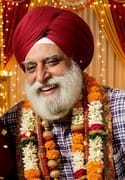
Authored six books on happiness: Cultivating Happiness, Nirvana – The Highest Happiness, Meditate Like the Buddha, Mission Happiness, A Flourishing Life, and The Little Book of Happiness. He served in a bank for thirty-five years and has been propagating happiness and well-being among people for the past twenty years. He is on a mission – Mission Happiness!
🌌 The Accidental Cook and the Birth of Chikki Halwa 🤩
I have never tried my hand at cooking. In fact, my culinary achievements begin and end with tea. I can make tea with reasonable confidence, provided nobody asks me to explain the process scientifically.
But life, as Mark Twain might have observed, is full of surprises—and occasionally of kitchen emergencies.
The other day, I ordered some chikki online. When it arrived, I opened the packet with the anticipation of a man about to enjoy a perfectly respectable piece of childhood nostalgia. Alas! The monsoon had been at work. The chikki had become moist and lost its crispness. It was no longer quite chikki; it was a victim of the weather.
Most people would have sighed and abandoned it.
I saw what everyone was seeing—but thought something else.
Why not turn this moist chikki into something delicious?
That was the moment an accidental cook was born.
I entered the kitchen with the quiet confidence of a scientist whose experiment had not yet gone wrong.
I poured some ghee into a kadhai, lit the flame and added a few teaspoons of sooji. A little cardamom powder followed. I stirred the mixture patiently until the sooji turned golden and the kitchen began to smell suspiciously like a place where someone actually knew how to cook.
Meanwhile, I crushed the unfortunate chikki and soaked it in warm milk. Once suitably softened, I tipped the whole thing into the kadhai.
There was stirring.
There was cooking.
There was concentration.
There may even have been a moment when I looked like a professional chef.
I kept cooking until the mixture began leaving the edges of the kadhai. I added another little dash of cardamom powder and, lo and behold—
Chikki Halwa was born!
Not planned. Not inherited from a grandmother. Not downloaded from YouTube.
Entirely accidental.
I served my creation to the family and a few neighbours with the unmistakable pride of a man presenting his first invention to the world. I made sure everyone knew that this was my maiden venture into the noble profession of cooking.
They ate it.
They smiled.
They praised it.
They even asked for more.
Now comes the only unresolved scientific question in this entire experiment:
Did they genuinely love the Chikki Halwa—or were they merely trying not to discourage the newly discovered cook?
I shall never know.
But I have learnt something important.
Sometimes creativity begins when things don’t turn out the way they were supposed to.
A moist chikki may look like a culinary failure to one person. To another, it may simply be an invitation from the universe:
“Come on, chef. Do something with this.”
And so, after all these years, I finally cooked.
Accidentally.
And, quite accidentally, I discovered that every kitchen has a little bit of creativity waiting to happen. 😄
A Pathway to Authentic Happiness, Well-Being & A Fulfilling Life! We teach skills to lead a healthy, happy and meaningful life.
The Science of Happiness (Positive Psychology), Meditation, Yoga, Spirituality and Laughter Yoga. We conduct talks, seminars, workshops, retreats and training.
Authored six books on happiness: Cultivating Happiness, Nirvana – The Highest Happiness, Meditate Like the Buddha, Mission Happiness, A Flourishing Life, and The Little Book of Happiness. He served in a bank for thirty-five years and has been propagating happiness and well-being among people for the past twenty years. He is on a mission – Mission Happiness!
🪷Online Yoga or In-Person Yoga? 🤔
☘️Two approaches, two different experiences🍁
Yoga has entered the digital age. Online yoga classes offer convenience, flexibility and privacy, while in-person yoga classes offer personal attention, human connection and closer guidance.
Neither is inherently right or wrong. The choice depends on what a practitioner seeks from yoga.
🏠 Online Yoga — Convenience & Flexibility
✔️ Convenient: Choose a suitable time and practise from the privacy and comfort of your home.
✔️ Accessible: There is no need to travel to a yoga studio, making it useful for people with busy schedules or limited mobility.
✘ Limited personal attention: In a large virtual class, it is difficult for the online yoga instructor to observe every practitioner and correct incorrect postures or movements.
✘ One approach for many: Classes are often structured around a common sequence. The same instruction may not be equally suitable for people of different ages, physical abilities or individual needs.
✘ Less personal connection: A screen can transmit instructions, but it cannot fully recreate the warmth, companionship and human bonding that develop in a physical class.
✘ The traditional dimension:The virtual format naturally misses much of the lived experience of the traditional guru–shishya relationship.
🧘 In-Person Yoga — Personalised & Relational
✔️ Individual attention: A smaller class enables the yoga teacher or guru to observe practitioners closely, correct their postures and guide them appropriately.
✔️ Personalised practice: A teacher who knows the practitioners can modify the practice according to their age, physical condition, limitations and individual needs.
✔️ Greater safety: Rather than expecting everyone to perform the same asanas, the teacher can advise a practitioner to avoid or modify practices that may be unsuitable for them.
✔️ Human connection: Meeting face-to-face creates opportunities for personal bonding, encouragement, friendship and a sense of community.
✔️ Living tradition: For many practitioners, learning in the physical presence of a teacher brings alive an important aspect of the ancient guru–shishya parampara—learning not merely through instructions, but through observation, correction, experience and personal guidance.
🌿 One Simple Way to Look at It
An online class can sometimes resemble a doctor prescribing the same medicine to a thousand patients: convenient and useful for many, but unable to account for every individual’s needs.
A good in-person yoga teacher, by contrast, can observe each practitioner, understand their limitations and prescribe a practice more suited to that individual.
The Bottom Line🍃
Online yoga offers convenience.
In-person yoga offers connection.
Online yoga offers accessibility.
In-person yoga offers personalisation.
For someone who already understands yoga, practises safely and needs flexibility, an online class can be an excellent option.
For someone seeking close supervision, personalised guidance, correction, companionship and the deeper teacher–student experience, a small in-person class may offer something that a screen cannot quite provide.
Ultimately, the best yoga class is the one that enables you to practise regularly, safely, mindfully and meaningfully. 🧘♀️🌿
A Pathway to Authentic Happiness, Well-Being & A Fulfilling Life! We teach skills to lead a healthy, happy and meaningful life.
The Science of Happiness (Positive Psychology), Meditation, Yoga, Spirituality and Laughter Yoga. We conduct talks, seminars, workshops, retreats and training.
(Captain Pravin Raghuvanshi—an ex Naval Officer, possesses a multifaceted personality. He served as a Senior Advisor in prestigious Supercomputer organisation C-DAC, Pune. He was involved in various Artificial Intelligence and High-Performance Computing projects of national and international repute. He has got a long experience in the field of ‘Natural Language Processing’, especially, in the domain of Machine Translation. He has taken the mantle of translating the timeless beauties of Indian literature upon himself so that it reaches across the globe. He has also undertaken translation work for Shri Narendra Modi, the Hon’ble Prime Minister of India, which was highly appreciated by him. He is also a member of ‘Bombay Film Writer Association’.
~ Intelligence versus intelligence… ~
Dear Esteemed Readers,
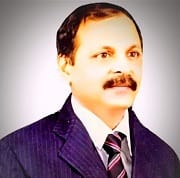
I’d love to share a paper on futuristic warfare built around an AGI-based hypothesis—an “intelligence versus intelligence” scenario and its possible implications for India’s future security.
You may like to take the thought forward, challenge some of the assumptions, or give it a strategic direction of your own. The exact scenario may be futuristic, but I believe the need to start thinking about this is becoming increasingly inescapable.
Would value your thoughts!
Warm regards
~Pravin Raghuvanshi
☆
Futuristic warfare built around an AGI-based hypothesis-an “intelligence versus intelligence” scenario and its possible implications for India’s future security”
I find the scenario both provocative and thought-provoking. More importantly, I believe it deserves to be taken seriously—not necessarily because every element of the scenario is likely to materialise exactly as described, but because the technological direction underlying it is already becoming visible.
I would, however, offer a few mild deviations from the hypothesis—not as a challenge to the thought process, but perhaps as an extension of it.
The central analogy with Operation Safed Sagar is particularly compelling.
In 1999, India was confronted with severe technological and operational constraints. Yet men and machines were pushed to their limits, and human ingenuity compensated for what technology could not provide. Innovation became a necessity rather than a choice.
The next transformation in warfare could be fundamentally different.
Then, it was essentially men using machines against men using machines.
Tomorrow, it could increasingly become intelligence confronting intelligence—with machines capable of sensing, learning, adapting, coordinating and making decisions at speeds beyond human reaction.
That, in my view, is the deeper significance of your hypothesis.
A small deviation from the humanoid assumption
I am not entirely certain that the future threat necessarily has to take the form of humanoids.
Indeed, there may be a reasoned argument for expecting something quite different.
A humanoid configuration has obvious advantages—it can negotiate terrain and infrastructure designed for humans and can potentially use existing tools and weapons. But it also introduces complexity, weight, power requirements, thermal signatures, maintenance challenges and manufacturing costs.
An adversary seeking military effectiveness rather than human resemblance may therefore choose a much simpler configuration: specialised autonomous ground systems, quadrupeds, tracked or wheeled platforms, aerial-ground swarms, or heterogeneous combinations of all of them.
In other words, the threat may be less “100 humanoids on the ridge” and more “100 intelligent autonomous systems adapted specifically to the ridge.”
Paradoxically, that possibility may be even more consequential because such systems need not reproduce the human form at all.
A second possible deviation: AGI may not be necessary
The scenario assumes AGI-level intelligence. That is certainly conceivable as a long-term possibility, but I wonder whether we should make the argument dependent upon true AGI.
A sufficiently capable specialised autonomous intelligence—trained for terrain analysis, target recognition, navigation, logistics, electronic warfare and tactical decision-making—could potentially create a formidable battlefield effect without possessing anything resembling full human-level general intelligence.
That distinction matters because the military threshold may arrive before the AGI threshold.
We may not have to wait for machines that can do everything a human can do.
Machines that can do a limited set of battlefield tasks extraordinarily well, operate continuously, coordinate with one another and learn from battlefield experience could already alter the character of warfare.
The communications assumption also deserves a small qualification
The idea of a post-quantum-secured swarm that is effectively immune to interception or jamming makes for a compelling scenario. But perhaps “immune” is unnecessarily absolute.
In warfare, very few technological advantages are permanent.
A more realistic—and potentially more dangerous—possibility is a communications architecture that is highly resilient, adaptive and difficult to disrupt, with systems capable of continuing to operate with degraded connectivity and making local decisions when communication with the central command is lost.
That would make the swarm dangerous not because it is literally unjammable, but because jamming it may no longer be sufficient to stop it.
That is a subtle but important distinction.
Where I completely agree is the question of scale
This, perhaps, is the most consequential element of the scenario.
The real revolution may not be the humanoid itself.
It may be the possibility of cheap, intelligent, reproducible and rapidly deployable military systems.
The traditional equation of warfare has often favoured exquisite and expensive platforms—fighter aircraft, tanks, ships and missiles.
Autonomous systems could introduce a very different equation:
mass + intelligence + low unit cost + continuous learning.
I would therefore hesitate to put a precise ratio such as “one fighter equals fifty humanoids.” The actual exchange ratio would depend on mission, terrain, sensors, weapons, logistics and survivability.
But the underlying proposition is compelling:
«A relatively inexpensive intelligent system could potentially impose an effect disproportionate to its cost.»
That could fundamentally alter the economics of warfare.
Do we have a doctrine?
Here, I believe the question being asked is entirely legitimate.
India already has significant activity in defence AI, autonomous systems, swarm technologies, robotics, electronic warfare and advanced communications. We therefore should not frame the issue as though India has not begun preparing.
The more important question is whether these capabilities have yet been brought together into a single, coherent warfighting architecture.
What is not publicly evident is a unified tri-service doctrine specifically addressing a large-scale autonomous ground threat of the kind envisaged here.
If a hundred or more autonomous systems were simultaneously deployed in Ladakh and the North East, the questions would extend far beyond technology:
Who owns the response?
What are the rules of engagement?
Who controls the kill chain?
How are autonomous systems authenticated and distinguished from friendly systems?
How do we detect, deceive, disrupt or destroy them?
And what happens when communications with them—or with our own forces—are degraded?
These are questions of doctrine, command, technology and institutional ownership simultaneously.
The institutional question may therefore be more important than the technological one
India has DRDO, the armed services, AI initiatives, technology agencies, startups, academic institutions and several ongoing programmes.
The challenge is that autonomous warfare cuts across all of them.
Perhaps what is required is not another institution, but clear mission-level ownership—someone accountable for integrating AI, robotics, communications, electronic warfare, manufacturing, doctrine, testing and deployment.
In other words, we need to ensure that no part of this emerging threat falls into the gaps between institutions.
And perhaps the biggest lesson from Safed Sagar
In 1999, we demonstrated that India could innovate under extreme pressure.
But the next challenge should ideally be approached differently.
We should innovate before the pressure arrives.
We should not wait for the first autonomous swarm—or the first intelligent ground system—to appear on a Himalayan ridgeline before asking how to counter it.
A mission-mode programme could therefore be considered—not necessarily centred exclusively on AGI, but on the broader objective of autonomous defence and counter-autonomy.
It would need to combine:
– autonomous platforms;
– counter-swarm and counter-autonomy technologies;
– AI at the tactical edge;
– resilient communications and advanced cryptography;
– indigenous compute, data and manufacturing capacity;
– realistic testing in difficult terrain;
– and, equally importantly, doctrine, human control and escalation management.
Because the ultimate question is not merely:
“Can we build intelligent machines?”
It is:
“Can we fight alongside them, fight against them, control them and continuously evolve faster than an adversary?”
That, to me, is the real strategic question embedded within your hypothesis.
The 1999 experience was a contest of men and machines.
The emerging contest may become one of machine intelligence against machine intelligence.
And perhaps the nation that gains the decisive advantage will not simply be the nation that builds the first intelligent machine.
It will be the nation that develops the ability to build, deploy, counter, replenish and continuously improve intelligent systems at scale.
So, while the exact humanoid scenario may be hypothetical, I believe the underlying warning is entirely legitimate.
The question is not whether the future will arrive exactly as imagined.
The question is whether we will be prepared for it if it arrives in a form we did not imagine.
Authored six books on happiness: Cultivating Happiness, Nirvana – The Highest Happiness, Meditate Like the Buddha, Mission Happiness, A Flourishing Life, and The Little Book of Happiness. He served in a bank for thirty-five years and has been propagating happiness and well-being among people for the past twenty years. He is on a mission – Mission Happiness!
🔥The Right to Protest, The Duty to Be Accountable 🌌
A democracy thrives on dissent, but it thrives equally on responsibility.
The right to protest is an essential democratic freedom. However, that right does not extend to paralysing public life, destroying public property, intimidating institutions, or coercing a duly elected government into submission.
Too often, protest leaders claim credit for mobilising crowds when all is peaceful, yet distance themselves from the consequences when violence erupts, blaming “outside elements”. Accountability cannot be so selective. Those who organise and lead a protest must also accept responsibility for its conduct and its consequences.
When barricades are breached, stones are hurled, public property is vandalised, and ordinary citizens are inconvenienced for hours or days, someone must be held accountable. The cost of repairing damaged public assets should not be borne by the taxpayer but recovered from those responsible for the violence and destruction, in accordance with the law.
Equally, criticism of the police must be fair and balanced. If law enforcement is compelled to act because protesters resort to violence or defy lawful restrictions, that context cannot be ignored.
A government elected through a democratic mandate has both the authority and the responsibility to govern in accordance with the Constitution and the promises on which it sought the people’s vote. The opposition has every right to question, criticise, and persuade—but not to replace democratic debate with coercion or disorder.
The freedom to protest is a constitutional right. The freedom to indulge in violence, destroy public property, or hold society to ransom is not.
Rights and responsibilities are inseparable. In a mature democracy, both the State and the protesters must remain within the bounds of the rule of law.
A Pathway to Authentic Happiness, Well-Being & A Fulfilling Life! We teach skills to lead a healthy, happy and meaningful life.
The Science of Happiness (Positive Psychology), Meditation, Yoga, Spirituality and Laughter Yoga. We conduct talks, seminars, workshops, retreats and training.
Authored six books on happiness: Cultivating Happiness, Nirvana – The Highest Happiness, Meditate Like the Buddha, Mission Happiness, A Flourishing Life, and The Little Book of Happiness. He served in a bank for thirty-five years and has been propagating happiness and well-being among people for the past twenty years. He is on a mission – Mission Happiness!
🌌 The Issue with Issues🤔😍 🌌
The world, I have discovered, has only one permanent issue—issues.
They existed when Lord Rama walked the earth. They accompanied Lord Krishna to Kurukshetra. If history is to be believed, even sages occasionally had issues, though they had the good sense to meditate before forming a WhatsApp group.
Now we have reached Kalyug, where issues have become so abundant that they seem to reproduce without parental supervision.
Broadly speaking, there are only two kinds of issues in life.
The first is the kind that every proud parent loves to announce.
“We have been blessed with an issue.”
The second is the kind every apartment resident loves to announce.
“We have an issue.”
The first issue is welcomed with sweets, songs and photographs.
The second is welcomed with emails, messages and extraordinary meetings.
Curiously, both demand sleepless nights.
Parents spend years lovingly nurturing their issues. They educate them, encourage them, and eventually dispatch them to distant lands, where these very issues begin solving the issues of multinational corporations. Some rise so spectacularly that they become CEOs—Chief Executives of Other People’s Issues.
Back home, however, another ecosystem flourishes.
The Residential Society.
Here, issues bloom with remarkable enthusiasm. Some are substantial. Some are microscopic. A few exist only in the fertile imagination of highly gifted observers. Yet every issue enjoys equal constitutional status.
Fortunately, every society has its elected committee, whose unofficial job description appears to be: “To receive every issue with dignity, discuss it patiently, revisit it repeatedly, and occasionally solve it.”
This is no ordinary responsibility.
After all, issues are renewable resources.
Some disappear.
Some merely change their hairstyle.
Others refuse to leave the premises.
I watch these delightful exchanges from a respectful distance, trying to remain what the Bhagavad Gita beautifully calls a tatastha drashta—a detached witness.
It is an extraordinarily entertaining position.
The issue remains exactly where it was yesterday, but the discussion travels through engineering, economics, constitutional law, environmental science, psychology, meteorology and, before long, international diplomacy.
One particularly charming feature of these discussions is that technical matters attract the largest number of non-technical experts. Their confidence is directly proportional to their distance from the subject. Every society, I suspect, contains at least three retired cricket selectors, four constitutional experts, five civil engineers, six financial advisors and an unlimited supply of management consultants—all conveniently discovered during committee discussions.
Knowledge, after all, is free.
Advice is even freer.
Yet amidst all this good-humoured bustle, one truth deserves cheerful acknowledgement.
Committee members quietly devote their own time so that the rest of us may enjoy ours. They coordinate maintenance, respond to complaints, negotiate with vendors, organise Independence Day and Republic Day celebrations, bring neighbours together during Holi Milan and Diwali festivities, arrange Ganesh and Durga Puja, and somehow continue smiling despite receiving fresh issues before breakfast.
For that, they deserve not merely criticism when things go wrong, but appreciation when so much goes right.
Of course, a gentle reminder applies equally to everyone.
Residents should occasionally ask not, “What is society doing for me?” but, “What can I do for society?”
And those fortunate enough to hold office may remember that every office is, in the end, a service centre rather than a command centre. The chair is meant to support the person occupying it—not elevate them above everyone else.
Mayors come and mayors go.
Presidents come and presidents go.
Committee members come and committee members go.
Residential societies remain.
So do their issues.
Every sunrise brings a brand-new issue to the society.
And every now and then, somewhere in a happy family, another brand-new issue arrives—wrapped in a blanket, greeted with applause, and destined, one day, to solve somebody else’s issues.
Such is life.
The issue, dear friends, has never been the existence of issues.
The real issue is whether we can handle our issues with good humour.
Because if we can laugh together, even our biggest issues become… considerably less of an issue. 🪷
A Pathway to Authentic Happiness, Well-Being & A Fulfilling Life! We teach skills to lead a healthy, happy and meaningful life.
The Science of Happiness (Positive Psychology), Meditation, Yoga, Spirituality and Laughter Yoga. We conduct talks, seminars, workshops, retreats and training.
(E-abhivyakti welcomes S. Ranjeet Singh Uppal ji. He is a Mechanical Engineer from the Government Engineering College, Jabalpur. He completed his post graduate diploma in Petroleum Technology from Dibrugarh University. He retired as General Manager Production from the ONGC after years of distinguished service. Confessions of a Contented Omniscient Sardar.)
🌌 From oil wells to WhatsApp wells—what a glorious journey! 🌌 Ranjeet Singh Uppal 🌌
Life has been extraordinarily kind to me.
I am a mechanical engineer with a postgraduate diploma in petroleum technology. After a long and fulfilling career, I retired from ONGC as General Manager (Production). The oilfields gave me far more than a livelihood. They gave me dignity, friendships, countless stories, and a life richer than the dreams of the young man who first stepped into them.
I belong to a traditional Sikh family that crossed over from West Punjab during Partition, carrying little more than courage, faith and hope. Waheguru smiled upon us. I received a good education, loving upbringing and, if I may say so, was a fairly bright student.
There was also a brief period when I was the prettiest girl in school.
It happened during a school play. Blessed with long flowing hair, I was chosen to play the heroine. Draped in costume and complete make-up, I walked home after the performance… only to discover a small procession of admiring boys following me all the way. Some illusions deserve to remain unbroken.
Every morning begins with a ritual dearer to me than meditation. I prepare tea for my wife—only Wagh Bakri will do. I repeat the ceremony in the evening as well. Some people chase world peace. I simply ensure the tea is brewed exactly the way she likes it. Experience has taught me that domestic harmony often begins in a teapot.
I visit the Gurudwara regularly and try to share whatever little Waheguru has blessed me with. I had, I confess, several marriage proposals in my younger days, but destiny had already written my name beside the finest companion I could have wished for. Some investments yield lifelong dividends.
Speaking of investments, a few wise property decisions transformed our modest beginnings into a comfortable retirement, with a handful of apartments and shops in Navi Mumbai. I even dreamt of opening a Patanjali store after retirement. Alas, Baba Ramdev had reached my neighbourhood before I could.
Every morning I walk with a cheerful band of senior citizens. We sit beside a pond where I lovingly feed the fishes. It is said that feeding fish at dawn is a noble deed that earns blessings.
By evening, however, another school of fish voluntarily appears—golden, crisp and delicious—on my dinner plate. Doctors assure me it is good for health. Who am I to argue with either the scriptures or the specialists? Miracles come in many forms.
One of life’s greatest blessings has been friendship. My childhood companions remain exactly that—companions. We still laugh over adolescent crushes, youthful escapades and harmless mischief with complete frankness. We know enough about one another to write biographies, but wisely settle for gentle leg-pulling instead.
If only we could all gather once again in Ranjhi, Jabalpur, where our stories first learnt to walk. I suspect the old lanes still remember our footsteps and occasionally whisper our names to the evening breeze.
In my younger days, I devoured books—from Gulshan Nanda to Premchand. These days, I have accepted a distinguished professorship at the University of WhatsApp.
My classes begin before sunrise and continue well past bedtime. Every worthy piece of knowledge, wisdom, humour, warning, blessing, medical breakthrough, historical revelation, patriotic message and motivational quote is carefully examined by me before being generously redistributed to society.
Whether the recipients graduate happily or silently mute me is entirely their academic decision.
At this glorious stage of life, I have reached a comforting conclusion.
I am practically omniscient. Whatever anyone forwards to me, I already know it.
I am almost omnipotent. There is hardly anything that cannot be solved with confidence, common sense and a suitable WhatsApp forward.
And thanks to AI, social media and live streaming, I have become delightfully omnipresent. A good morning message from me can greet people in several time zones before I have finished my second cup of tea.
Life, I have discovered, is not measured by the oil we extracted from the earth, but by the laughter we leave behind, the friendships we preserve, the tea we brew with love, the fish we feed, the fish we eat, and the messages we keep forwarding in the noble belief that humanity simply cannot manage without them.
(Captain Pravin Raghuvanshi—an ex Naval Officer, possesses a multifaceted personality. He served as a Senior Advisor in prestigious Supercomputer organisation C-DAC, Pune. He was involved in various Artificial Intelligence and High-Performance Computing projects of national and international repute. He has got a long experience in the field of ‘Natural Language Processing’, especially, in the domain of Machine Translation. He has taken the mantle of translating the timeless beauties of Indian literature upon himself so that it reaches across the globe. He has also undertaken translation work for Shri Narendra Modi, the Hon’ble Prime Minister of India, which was highly appreciated by him. He is also a member of ‘Bombay Film Writer Association’.
~ Literature to build bridges of understanding, compassion and friendship across the world…… ~
Dear Friends,
As a proud member of this Group, I would like to share my happiness that over the past few weeks, I have had the privilege of receiving an overwhelming outpouring of appreciation from readers, poets, literary critics, litterateurs and translators across the Hispanic world. Messages have poured in from Spain, Colombia, Venezuela and several other Spanish-speaking countries, responding with remarkable warmth to my poems and their transcreations.
It is neither practical nor possible to share the hundreds of comments and recognitions received. I am, therefore, sharing only a few representative samples.
One literary critic wrote:
“Your poem The Wrinkleless Face is a masterful work of profound introspection… a sublime tribute to resilience and to the enduring mystery of human existence.”
Another reader simply remarked:
“Gracias por compartir… Un gusto leerte, Maestro.”
(“Thank you for sharing… It is a pleasure to read you, Maestro.”)
These words are deeply humbling.
To me, however, this recognition is not about an individual writer. It is a celebration of the timeless richness of Indian literature, whose philosophical depth and human values continue to resonate across cultures, languages and continents.
A poem conceived in India… translated into another language… and embraced by readers thousands of kilometres away…
…is a gentle reminder that literature succeeds where borders, politics and even languages often fail.
If my humble writings have contributed, even in a small measure, towards strengthening the literary and cultural dialogue between India and the Hispanic world, especially the Latin American countries, I shall consider it one of the greatest honours of my literary journey.
I remain deeply grateful to every reader, translator, editor and literary forum that welcomed my work with such warmth and generosity.
May literature continue to build bridges of understanding, compassion and friendship across the world.
Authored six books on happiness: Cultivating Happiness, Nirvana – The Highest Happiness, Meditate Like the Buddha, Mission Happiness, A Flourishing Life, and The Little Book of Happiness. He served in a bank for thirty-five years and has been propagating happiness and well-being among people for the past twenty years. He is on a mission – Mission Happiness!
🌌 A vignette – Serene Morning Exchange 🌌
He stepped out of the park, his heart aglow.
She stood at her doorstep, watching the sunrise.
Two graceful glances. A fleeting glimpse of each other.
The fragrance of that moment lingered through the day.
Authored six books on happiness: Cultivating Happiness, Nirvana – The Highest Happiness, Meditate Like the Buddha, Mission Happiness, A Flourishing Life, and The Little Book of Happiness. He served in a bank for thirty-five years and has been propagating happiness and well-being among people for the past twenty years. He is on a mission – Mission Happiness!
😍 Spouse Flexible Time 🥰
Time, they say, is the most democratic invention of civilisation. It has been neatly divided into zones for the convenience of mankind:
Greenwich Mean Time, Eastern Standard Time, Indian Standard Time, and a few others invented by nations that dislike being late in their own way.
Each serves a noble purpose. Trains run on them, stock markets tremble by them, and governments pretend to function because of them.
As for me, I live by a more practical clock: Spouse Flexible Time (SFT).
It is the most accurate and demanding of all time zones.
I wake up when she wakes up.
I go for a morning walk when she feels the morning deserves a walk.
Breakfast arrives when Her Majesty declares the kitchen open.
Relaxation begins only after official permission has been granted.
Social visits are scheduled according to her planetary alignment.
I laugh when she finds something funny, and look solemn when she remembers an old grievance from 2009.
Television, too, is a matter of diplomacy. I watch when she is free, and what she is free to watch.
Dinner at a restaurant depends not on hunger, but on mood — a force far more powerful and considerably less predictable.
Many men chase happiness through wealth, wisdom, or wilderness retreats. I have discovered a simpler mantra: adjust, agree, and appear cheerful.
It is the shortest route to peace, the cheapest therapy, and the only insurance against domestic thunderstorms.
And now, dear friends, I must leave you. The washing machine awaits, and the utensils are staring at me with the cold authority of destiny — all by her gracious command.
Reflect upon my counsel. Follow it faithfully, and you too may enjoy a long, happy, and mostly uninterrupted life.☺️
A Pathway to Authentic Happiness, Well-Being & A Fulfilling Life! We teach skills to lead a healthy, happy and meaningful life.
The Science of Happiness (Positive Psychology), Meditation, Yoga, Spirituality and Laughter Yoga. We conduct talks, seminars, workshops, retreats and training.
The Yogini whose life-story you are about to read does not dwell in the silence of Himalayan caves, nor does she seek the glow of public applause. She is a simple homemaker in an ordinary town, quietly carrying forward an extraordinary mission — spreading health, happiness and inner peace among women through yoga.
For over two decades, she has served selflessly, away from the noise of social media and advertisement, touching the lives of hundreds of women who today stand as living testimony to her work.
What follows is not merely an article, but a glimpse into a life shaped by discipline, compassion and purpose — a precursor to her forthcoming book, Autobiography of a Yogini.
When we approached her, she wished to remain anonymous, but shared the essence of her vision: that healthy women build healthy families; that yoga empowers young girls with strength, balance and confidence; that it nurtures both body and mind; that it protects against stress and emotional struggles; and above all, that it leads one towards awareness, self-discipline and a meaningful life.
Today, from her modest Yoga Studio for Women, she continues this noble journey with the same humility and dedication. We salute her unwavering spirit and invite our readers to step into her inspiring world through these pages.
Authored six books on happiness: Cultivating Happiness, Nirvana – The Highest Happiness, Meditate Like the Buddha, Mission Happiness, A Flourishing Life, and The Little Book of Happiness. He served in a bank for thirty-five years and has been propagating happiness and well-being among people for the past twenty years. He is on a mission – Mission Happiness!
In the Quiet Service of Breath and Being
There are some beginnings that arrive without noise.
They do not announce themselves with drums or declarations. They come like dawn over a sleeping valley—softly, silently, almost unnoticed. When I look back upon the winding path of my life, I can now see that my journey into yoga began in such a way: gently, like a whisper carried by the wind.
In those days, life moved at a different pace. The air itself seemed unhurried. There was quietude in the atmosphere, a serenity in the surroundings, and a rare authenticity in human relationships. People had time—for conversations, for laughter, for evening walks, and for the little leisure pursuits that stitched joy into ordinary days.
It was destiny that took me to a small township nestled close to the sacred origin of the holy river Narmada.
Even now, when I think of that place, I feel as though I am remembering not merely a location, but a state of consciousness.
It was there that the local ladies’ club invited a Swami ji to teach yoga.
In those times, yoga had not yet become fashionable. There were no yoga mats in every home, no social media poses, no designer leggings, and certainly no one speaking of “core strength” with great seriousness. Yoga was still a quiet, sacred discipline, known to a few and practised by fewer.
Out of curiosity, and perhaps guided by something deeper, I joined the classes with a few of my friends.
That was my first tryst with asanas, pranayama, dhyan, and yoga nidra.
Little did I know then that this first encounter would become the axis around which my entire life would revolve.
When the Swami ji left after completing his sessions, something within us had awakened. A small group of us continued practising together. There was sincerity, innocence, and joy in those sessions. We stumbled through postures, forgot breathing sequences, laughed at our clumsiness, and yet kept returning.
Looking back, I believe it was yoga in the tradition of Swami Satyananda Saraswati, though at that time I knew little of its depth.
Life, as it does, carried me from one place to another. New towns, new homes, new responsibilities. Yet yoga remained my quiet companion. Through the changing landscapes of life, it was my unchanging centre.
I must confess, however, that for many years my understanding of yoga remained limited—confined only to what I had learned in those early days.
But somewhere within me, a longing had begun to grow.
I wished to dive deeper.
Not merely into the postures—but into the spirit behind them.
That longing led me to the writings of Swami Satyananda Saraswati. I gathered his books like a thirsty traveller gathers water. Page after page, practice after practice, a larger world began to unfold before me.
Yoga was no longer exercise.
It became inquiry.
It became discipline.
It became devotion.
As my own practice deepened, I began teaching a small group of ladies in a community hall.
It is one of yoga’s quiet miracles that when you teach sincerely, you become a student all over again.
As I taught them, I learned more.
As I guided them, I was guided.
As I corrected their postures, life corrected mine.
The deeper I went, the more I realised how vast yoga truly was—an ocean where one may spend lifetimes and still remain at the shore.
In time, this quest took me to the foothills of the Himalayas, where I studied the tradition of B. K. S. Iyengar.
I found Iyengar Yoga especially beneficial for middle-aged women. The intelligent use of props—bricks, belts, bolsters—made it possible for many to experience the benefits of asanas that their bodies could not otherwise access.
This touched me deeply.
I had long believed that women are the foundational pillar of a family.
A healthy woman sustains the rhythm of the household. Her vitality nourishes generations. And yet, I have seen countless women sacrifice their health in serving everyone else, until their own bodies begin to protest.
When a woman falls ill, the entire family feels the tremor.
This truth settled in me like a vow.
I resolved to serve womankind through yoga.
For I have come to understand that healthy women create healthy families, healthy families create healthy societies, and healthy societies create a healthy nation.
This has become my life’s quiet mission.
To serve better, I knew I must keep learning.
Yoga does not permit stagnation.
It is a path of continuous refinement.
Over the years, I attended sessions with yoga masters of national and international repute, undertaking long and intense programmes of study, deepening both my knowledge and my practice.
Yet some of the most transformative learning did not happen in classrooms.
It happened on the banks of the holy Ganga.
For long periods, I lived there—studying yoga, the Yoga Sutras of Patanjali, mantra chanting, Vedic rituals, and meditation.
There is something about the Ganga that cannot be explained.
One must sit beside her to understand.
I travelled along the sacred currents of the Alaknanda River, the Bhagirathi River, and many other Himalayan rivers, seeking—not knowledge alone—but the spirit of the ancient rishis who once meditated there.
In those mountains, silence is not emptiness.
It is presence.
Even today, I rise in the Brahma-muhurta.
In those sacred pre-dawn hours, when the world still sleeps and the sky has not yet chosen its colour, I sit in meditation and prayer—for the welfare of all sentient beings.
This prayer has become the fragrance of my mornings.
For more than two decades now, I have been imparting yoga lessons and helping women lead healthier, happier, and more balanced lives.
To witness a woman reclaim her strength, her peace, her confidence—this is among life’s most beautiful rewards.
And now, my heart turns especially toward young girls.
For yoga can shape them at the very foundation of life.
It strengthens the body, increases flexibility, and builds resilience. It improves stamina, balance, and coordination. It sharpens focus and deepens concentration, helping them in their studies and in the shaping of character.
Yoga supports healthy hormonal development, balancing the endocrine system and nurturing emotional well-being.
It improves circulation and allows energy to flow harmoniously through the body.
And gradually, something even more precious happens.
The mind becomes calmer.
Purer.
More peaceful.
Girls who practise yoga regularly are less likely to be overwhelmed by stress, anxiety, or depression.
Yoga encourages holistic growth.
It cultivates self-discipline, restraint, awareness, and mindfulness.
It builds self-confidence and self-respect.
And above all, it opens the doorway to a balanced, meaningful, and fulfilling life.
I have often reflected that there is perhaps nothing more meaningful than dedicating one’s life to a noble cause.
To serve.
To heal.
To uplift.
If, through yoga, I have been able to bring even a little peace into someone’s life, I consider myself blessed.
I am deeply grateful to every woman who has walked this journey with me over the years.
Each one of them has been my companion, my mirror, my teacher.
I am proud of them all.
My only message to them is simple:
Keep going.
Yoga is not merely for the body.
It is for the mind.
For the spirit.
For life itself.
I thank my family and friends who stood beside me in this noble endeavour, offering their love, patience, and unwavering support.
I bow with reverence to all my Gurus, who lit the lamp of yoga within me and made it possible for me to pass that light onward.
And above all, I thank God for this precious gift.
For breath.
For awareness.
For service.
I pray for strength, humility, and inspiration to continue serving humankind till my last breath.
For in the end, this body shall one day return to dust.
But if through these hands some healing has happened,
A Pathway to Authentic Happiness, Well-Being & A Fulfilling Life! We teach skills to lead a healthy, happy and meaningful life.
The Science of Happiness (Positive Psychology), Meditation, Yoga, Spirituality and Laughter Yoga. We conduct talks, seminars, workshops, retreats and training.



 ~ Intelligence versus intelligence…