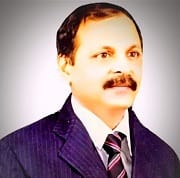
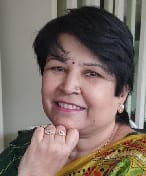
Publications – 4 books (2 in Hindi, 1 each in English and Bengali) and two are yet to come.
Translations – Books and articles are translated in English, Odiya, Marathi and Gujarati.
Awards – CBT awarded stories and novel, “Kamaleshwar Smriti Katha Award (2013, 2017 and 2019)” by Kathabimb.
Honour – “Hindi Sevi Samman” by Mahatma Gandhi Antarrashtriya Hindi Vishwa Vidyalaya, Wardha (December 2016).
☆ Juvenile Fiction ☆ The Tide of will – Part-2 ☆ Dr. Amitabh Shanker Roy Choudhury ☆
The Nest
It’s said that the land of Kerala is God’s own country. The lush green fields are there everywhere to see. And Haripadam is a non-descript village on the bank of the river Pampa. Quite unseen by most of the people.
There are a few important festivals widely celebrated in Kerala. In April when it’s the time to sow the paddy in the field, it’s Vishu. Mostly observed by the Malayalis and the Tuluvas communities. In August September, when it’s time to harvest the paddy from the fields, they celebrate Onam. Then there is Thrissur Pooram, but Onam is the most important among all.
By his habit Sasidharan Narayanan was an early riser. Everyone in the village respected him deeply. It was his daily schedule to walk up to the bank of Pampa for a dip in the river. After having a bath there, he usually came home for his morning meditation and worship.
One morning Gayatri was already awake while he was getting ready for his early morning rendezvous. She came out rubbing her eyes, ‘Appupan, I want to go with you.’
‘Is it? Will you swim in the river?’ he patted her head.
‘But I don’t know how to swim. How can I?’ she was a bit scared probably.
‘Oh, certainly your appupan will be with you. Then why do you worry? Well, get ready soon. Otherwise we’ll be late and the sun will start glaring. It’ll be pretty hot then.’
A few met him on the way. They exchanged the usual pleasantries. He reached the stony platform from where the steps were leading down to the river. Next, he took off his full sleeve shirt, readied himself and dived into the water.
Little Gayattri decided to see everything only from above. She thought, ‘It’s better to stay here at a safe distance. Well, I’m not going to dive into the water. Oh, god, it scares me!’
Narayanan was swimming. He called out from the deep water, ‘Come on Gayatri. You too can do it. Come and join me. At least you take a dip today.’
Gayatri became quite nervous, ‘Oh no, appupan, not today. But some other day I’ll try.’
‘My dear kuchumol, always remember, fear is not a friend but it’s our foe. So….’ Narayanan came out from the water and climbed up the steps, ‘be brave. If you don’t dare how can you go ahead in your life?’
However Narayanan ultimately decided that it was better not to press much. He thought, let her take her own time. He had patience and he knew lessons could never be imparted like bullets. One must wait whole night for a sunrise. Both of them returned home and merrily he roared with laughter, ‘Look, Gayatri didn’t take a dip even in Pampa. O my god! You being my kuchumol, how could you get so much scared?’
Gayatri’s father Manishankaran was sipping his morning coffee, sitting in the courtyard. He said to his father, ‘Achchan (dad), every day you go to Pampa. Why don’t you take Gayatri with you daily? She could then learn swimming at least. Won’t it be good for her?’
Mani had a busy schedule. Every day he had to leave home a bit early. He would catch a ferry to cross the river. Only then he would be able attend his office in Kottayam. By the time he returned home every evening, darkness dawned upon the place. So he didn’t have much time.
Narayanan smiled back to his son and went to the room of worship. It was his daily morning ritual.
By the time everybody went in, something unforeseen happened. And Gayatri had to run to protect her little brother, Rajan, who had just learnt to walk lately. He was sitting there on the floor picking up the puffed rice with his small hands and eating them one by one. He was quite busy in his job. Unmindful of an uninvited guest who had appeared on the scene. It was a crow, sitting on a tree, wobbling its head and eyeing everything. It was an easy opportunity for the bird. It flew from the tree and swooped down near the child. Full with confidence, the crow was marching ahead.
After washing her legs in a corner Gayatri was hanging his grandfather’s wet clothes on the washing line. The moment she saw the crow nearing her brother she shrieked in fright, ‘Hey, go away. Amma, there’s a crow.’
In the meanwhile, rubbing her both the knees, Gayatri’s granny, Lalithambika came out too. Because of her knee pain it was quite difficult for her to walk properly. She called out to Gayatri’s mother, ‘Oh, Ananti, just see for yourself what’s going on. Hey, you black bird shoo, shoo! How dare you come near my grandson?’ waving her hand she tried to shoo the crow away.
But the crow didn’t bother a bit. It knew pretty well that the old lady was not capable of doing any harm to it.
‘Oh Gayatri, where were you? Why don’t you take care of Rajan?’ her mother, Ananthi, dashed out from the kitchen.
But Gayatri was already there. The saviour of her brother. With stretched arms she took Rajan in her lap and started pampering him,
‘Go away O’ black crow, come not to my brother!
A fairy comes to kiss the little emperor!’
Ananthi was the engine of the whole family. It was she only who would look after every household affair. Not only the cooking but she had got loads of stuff in hand to do every day. From early morning, just after Narayanan, she would get up and start her daily routine in the kitchen. Next she would make the prayer room ready for her father-in-law. Besides, she would buy the vegetables and remember the due dates of various bills and all. It was she to remind Narayanan, ‘Achchan, today you’ve to deposit the money for the electricity bill.’
Moreover, Lalithambika, her mother-in-law, was not keeping well lately. Ananthi would send her for a medical checkup. Although she had been suffering from knee pain, nevertheless, she was a great helping hand to Ananthi in her household chores.
Many a time Mani had suggested his mother, ‘Amma, let me take you to Thiruvananthapuram. I’ve heard the Ayurvedic centre over there treats this type of cases successfully.
But Lalitha denied out right, ‘No no, I don’t need all those treatments. If only the god Padmanabhaswamy would wish, I’ll be alright and reach his holy abode of Vaikuntha.’
Hearing this Narayanan would laugh and say, ‘Of course. The god Vishnu would get up from his bed of Anantanaga, the snake god, and welcome you himself, ‘Come Mrs. Lalitha Narayanan, well, did you have any problem reaching here to my abode, Vaikuntha?’
Everyone would laugh at this type of verbal exchanges.
It was in this kind of nest Gayatri was being brought up.
Her grandparents were very much fond of her. And now it was she, around whom the retired headmaster Narayanan had been weaving his hopes. He would dream of her future and quite often ask himself, ‘But how -?’
Publications – 4 books (2 in Hindi, 1 each in English and Bengali) and two are yet to come.
Translations – Books and articles are translated in English, Odiya, Marathi and Gujarati.
Awards – CBT awarded stories and novel, “Kamaleshwar Smriti Katha Award (2013, 2017 and 2019)” by Kathabimb.
Honour – “Hindi Sevi Samman” by Mahatma Gandhi Antarrashtriya Hindi Vishwa Vidyalaya, Wardha (December 2016).
☆ Juvenile Fiction ☆ The Tide of will – Part-1 ☆ Dr. Amitabh Shanker Roy Choudhury ☆
The Headmaster Reads His News Paper
In a faraway corner of Kerala is a small scenic village, named Haripadam. Five little girls were playing there, in a courtyard. They had drawn a few squares on the soil with a piece of stone. Each girl was leaping, when it was her turn, on one of her legs only, from one square to the other. Gayatri, a girl of seven, pulled her ‘puntu’, a ghagra or skirt type dress worn by the girls in Kerala, up a little and giggled, ‘Look Savitha, here I score four points!’
‘No ma’am, you couldn’t reach the next square.’ Her friend Savitha protested.
They started running one after the other.
‘Huh! You couldn’t touch me.’ One girl said to other.
Their giggles floated in the morning air and drifted like a breeze all over the village.
Gayatri’s grandpa Mr. Haripadam Sasidharan Narayanan had built this house. He was the headmaster of the boys’ school over there. After spending his whole life teaching over there, he was retired. He was an administrator of repute as well. However, he was not a stickler for rules. After retirement, he had been spending his days in complete peace. Busy in his daily rituals.
‘Gayatri, come and take the coffee to your appupan (grandpa).’ called out her mother Ananthi, from the house. Gayatri came running. The mother cautioned her, ‘Hold it with care. Don’t spill it. It’s hot.’
Sitting in an easy chair, Narayanan was waiting there in the courtyard.
‘Appupan, here’s your coffee.’Gayatri handed the glass over to her grandpa and ran immediately back to join her friends.
Narayanan blew off the spiralling smoke from the glass to cool it a bit and sipped the coffee. ‘Ah, the tonic of my life!’ pleasurably he exclaimed. Nearby, the banana trees were waving their long green leaves in the breeze. Suddenly he was startled by a thud.
The morning newspaper came flying and crashed near his feet. In his mind he praised the aim of the newspaper boy. The boy was not visible. He had already sailed away riding on his cycle. Narayanan smiled and picked up the paper. As he was turning the pages and browsing through them his brows were knitted. He frowned to himself, ‘Oh, every day the same old news! Accidents, theft, corruption, A kills B and C kills A, and what not!’ He stopped at the editorial page. He was much more interested to know about the birds, the tigers, the colourful insects and the newly discovered species of animals or flowers or something like that. He would think why we can’t protect our precious flora and fauna? Why our holy rivers are dying? Suddenly his eyes were struck by a piece of news on the sports page. His face started glowing in eagerness.
The heading read – ‘Super Beti from Chandannagar!’ It was the story of a twenty-eight-year-old school teacher from West Bengal. She was Piyali Basak. The daughter of a poor man. But her dreams were not poor at all. Since her teen age she had been fascinated by the stories of the snow-covered peaks of Everest. From her very childhood she had been nurturing the dream of going to the village of Khumbu in Nepal, the birthplace of Tenzing Norgay. He was the Sherpa who accompanied Edmund Hillary in his climb to Mount Everest. They were the first in the world to reach the summit.
The report said that Piyali had undergone intensive training in different mountaineering courses at Darjeeling. The latest feather to her cap was to scale the eighth highest peak in the world, Manasalu, at 8163 metres height, with other girls. Once she had even flew her home and went to Nepal. Worked there as a porter but because of political turmoil in that country she couldn’t fulfil her dream of visiting Khumbu.
The headmaster’s chest was full of pride when he came to know that it was Piyali’s teacher, some Apoorva Chakraborty, who helped her a lot financially. The dare devil girl was in Kedarnath with others when that infamous cloud burst took place there. They had to spend five days in a cave during that torrential rain and snow fall without any food or anything. Even with a tumour in her abdomen she was doing all these. Her next aim was to scale the Mount Everest. For which she needed a big amount of money. Narayanan thought of contributing to her cause.
In spite of this, a cloud of sadness started hovering in his mind. He pushed his glasses above his forehead and leant back in the chair. Looking at the distant mountain peaks he was lost in his thoughts. After the span of the paddy fields, the line of tall toddy trees were forever trying to touch the blue sky in the horizon.
He thought – ours is such a vast country. But except for cricket who is interested in other sports? Who knows the name of the sports persons in other fields? Cricket is the queen of all sports but what about the rest? Are they simply back benchers of the class? Of course, P.V.Sindhu and Saina Nehwal are famous in badminton but who else?
Suddenly his eyes fell upon his kuchumol (granddaughter).
One…..two…..three….four….. Jumping from one square to other they were counting their points.
Eyeing her, Narayanan was lost in his thoughts, ‘What’s stored there in the future of this girl? Will she too remain confined to the four walls of kitchen? What does the future keep in store for the girls of this country? Can’t we have one more produnova girl like Dipa Karmakar, the famous gymnast from Tripura?’
Narayanan went on thinking, ‘Can’t Gayatri become an athlete or something? But what -? How to help her grow into a sportswoman?’
(Captain Pravin Raghuvanshi—an ex Naval Officer, possesses a multifaceted personality. He served as a Senior Advisor in prestigious Supercomputer organisation C-DAC, Pune. He was involved in various Artificial Intelligence and High-Performance Computing projects of national and international repute. He has got a long experience in the field of ‘Natural Language Processing’, especially, in the domain of Machine Translation. He has taken the mantle of translating the timeless beauties of Indian literature upon himself so that it reaches across the globe. He has also undertaken translation work for Shri Narendra Modi, the Hon’ble Prime Minister of India, which was highly appreciated by him. He is also a member of ‘Bombay Film Writer Association’.
We present an English Version of Shri Sanjay Bhardwaj’s Hindi short story “~प्रश्नपत्र ~”. We extend our heartiest thanks to the learned author Captain Pravin Raghuvanshi Ji (who is very well conversant with Hindi, Sanskrit, English and Urdu languages) for this beautiful translation and his artwork.)
श्री संजय भारद्वाज जी की मूल रचना
संजय दृष्टि – लघुकथा – प्रश्नपत्र
बारिश मूसलाधार है। ….हो सकता है कि इलाके की बिजली गुल हो जाए। ….हो सकता है कि सुबह तक हर रास्ते पर पानी लबालब भर जाए। ….हो सकता है कि कल की परीक्षा रद्द हो जाए।…आशंका और संभावना समानांतर चलती रहीं।
अगली सुबह आकाश निरभ्र था और वातावरण सुहाना। प्रश्नपत्र देखने के बाद आशंकाओं पर काम करने वालों की निब सूख चली थी पर संभावनाओं को जीने वालों की कलम पूरी रफ़्तार से दौड़ रही थी।
The rain is torrential. …. There may be a power failure in the area. …. It is also possible that by morning there may be a deluge as water will be filled to the brim on every road… May be tomorrow’s exam will get cancelled… Apprehension and possibility kept running parallel.
The next morning the sky was clear and the atmosphere pleasant. After seeing the question paper, the nib of those who worked on apprehensions, had dried up, but the pens of those who lived the possibilities was running at full speed.
(Mrs. Rajni Mishra, born in Mhow, District Indore, is presently residing in Indore (Madhya Pradesh). She is working on the post of Assistant Professor in Higher Education Department for last 34 years. She has done PG Diploma in translation from IGNOU, has also completed A1, A2 and B1 certificate courses in French Language from DELF.
We present an English Version of Dr. Hansa Deep’s Hindi Short Fiction 👉 “टूक-टूक कलेजा” . We extend our heartiest thanks to the learned author Mrs. Rajni Mishra for this beautiful translation. You can also read Marathi Version of this Short Fiction 👉ढासळत चाललय काळीजby Mrs. Ujjwala Kelkar.)
☆ Broken Heart☆ Mrs. Rajni Mishra ☆
The truck had left with the last trunk of the belongings. The children were in a hurry to leave with the loaded truck. They had left in their car, without even waving, as they left. I kept standing for some time, staring at the lonely path, waving my hand, unknowingly. As I came back to my senses, I looked around, shyly, if any of the neighbour was looking at me. On entering the house, I was surrounded by the same silence, which I had imprisoned inside me, while leaving my old house. I started thinking about the time when I had shifted to this new house and left my beloved old house. The same house, in which I had spent the best twelve years of my life. I remember my mother’s words that, a lot of change comes in the period of twelve years. I was not able to figure out, whose time has changed, mine or the house’s. As far as I am concerned, my time was very good in that house. Perhaps, that was the reason why I had shifted to a new place, so that the house may feel a change. The new residents of the house may understand it better than me.
I had taken extreme care in decorating the house. The walls of all the rooms, were adorned by my handmade paintings. The light of every bulb and chandelier had been selected by me. The furniture of the house gave the impression of a five-star hotel. I had showered great love on my home, and it had reciprocated in the same manner. While living there, I had earned everything; name, fame and wealth. After getting everything, what went wrong that I decided to leave it. Perhaps, my family’s dreams were too big to fit into the small house. Although, it had a big heart, so big that it had absorbed all of us. The list of necessities kept on increasing and the walls of the house seemed to be shrinking. Suddenly, everything seemed to be ’small’ so small that my heart was unable to hold my extreme love for that house, it slipped from my hand, like sand.
Dr. Hansa Deep
I still remember the day we had shifted to that house. How enthusiastically I used to explain its chief characteristics to the guests! “Look, the C.N. Tower is clearly visible from here; the beauty of autumn is beyond description. The clumps of trees, loaded with multicoloured leaves are adorable. The sunrise of this place is more beautiful than any hill station. When the sun comes out from the crimson clouds, its rays fall on the glass skyscrapers; get reflected and impart a golden hue to these buildings. They give the impression that they are made of gold. “Poor guests! They must have felt that I am a guide, showing off my museum. To say truly, that small house had really become a museum of my memories. A beautiful, lovable, and comfortable house, where I had invested my complete energy, in my writings. I created many stories and novels, lost in the flash of glittering lights, before me. Took many classes for my online students. Even in the Covid time, the city bathed in light never seemed sad to me, which I could see from here.
Gradually, I became aware of every nook and corner, every problem of that house. My keen eyes would see some part even before it fell apart and got it repaired. Perhaps, it even sensed my tiredness. It didn’t used to look soiled, and I was able to take rest, with a sigh of relief. We had become so used to each other! Even then, I left it and shifted to this new, big house. Although, it is quite big but, is located on the ground ,not standing with its head held high up in the air, like that small house. I have always liked people with a big heart, though small in stature. The chief characteristic of that house was its big heart.
Every morning, watching the rising sun, I have locked its beauty somewhere deep inside me. When I used to paint in words, every minute detail of the house, my family said, “you love the bricks which are inanimate and talk to the floor, which is silent.” But, frankly speaking, I have heard them. Every bit of the house knew my touch. Whenever I cleaned it, I felt the house was talking to me happily.
Leaving such a dear house, I was so worried to load my belongings in the truck, that I couldn’t even bid farewell, properly. I didn’t feel bad, handing over the keys of that house, rather, I was happy and felt like attaining freedom from some kind of imprisonment. I had left silently. The house watched me leaving, sadly. It hoped that I will have tears in my eyes, while leaving. But I was very busy in other things, like completing the paperwork, locking the door and many others. Moving towards a new horizon, I forgot everything. These walls had absorbed all my feelings. They were sad, watching me leave in this manner. Every corner of the house was trying to attract my attention. I had decorated it, sometimes with flowers and sometimes with colourful show pieces of fall. As I stepped out of the house, a piece of cement fell into my hand. I was not able to understand that embrace. On the contrary, the thought which came to my mind was, “the house is falling apart. It’s good we have left it. Old technique, outdated!” I threw that piece into the garbage bin and left in haste with the truck.
Today, when my children left, indifferently, ignoring my teary eyes, I am feeling as if my own body has hardened like cement and bricks. The bricks, which are baked in furnace and silently hold the burden on their shoulders. I feel, every part of my body is frozen in that silence. My children, who never used to leave me and kept the house alive with their laughter. At times, I would be their father too, as mother was always with them, in every breath. Today, I saw a different form of my children. When they were kids, I could feel the pain of separation in their eyes, even when they were leaving for school, kept waving their hands again and again. They were able to understand my mood, even before me. When I sat down to read something, they used to hand me, my spectacles. Today, both of them, did not look at me even once, while leaving for their separate homes.
I had left that house for my children’s convenience. Now they left me for their own. Suddenly, this large house seemed small to them or perhaps, I became small, and they grew in stature. They were free, after handing the extra keys of the house to me. A feeling of freedom from oldness and smallness! They were also in a hurry to leave me, perhaps. I was as strong as steel, and emotionless, like the house for them. They must have felt, I am losing my sheen.
Though my eyes were hurting with dried tears, I felt my body has become stronger than before, as if made of hard walls, free of all emotions. Cement and concrete were not a part of this or that house but had crept deep inside me. I was nothing more than a house for my children. The silent house was resounding with my own words, ‘Old technique, outdated. ‘Even, I have accepted the truth that in the new technique, the house speaks, not human beings.
I am hearing some sounds, perhaps the new house is laughing at me, or the laughter of the old house is also included in it. My heart, which was covered with the plaster of maternal love for all these years, has now broken.
********
Hindi Short fiction – टूक-टूक कलेजा by – Dr. Hansa Deep
(Mrs. Rajni Mishra is working on the post of Assistant Professor in Higher Education Department for last 34 years. She has done P G Diploma in translation from IGNOU, has also completed A1, A2 and B1 certificate courses in French Language from DELF.
We present an English Version of Dr. Hansa Deep’s Hindi Short Fiction 👉 “बड़ों की दुनिया में – भाग – २ ” . We extend our heartiest thanks to the learned author Mrs. Rajni Mishra for this beautiful translation. You can also read Marathi Version of this Short Fiction 👉 मला नाही मोठं व्हायचं… भाग २ by Mrs. Ujjwala Kelkar.)
☆ In the world of Elders Part – 2 ☆ Mrs. Rajni Mishra ☆
She spent a whole week in this confusion. So far, Pari has not been able to think of anything new. Today is Saturday. They are all going out to visit the Royal Ontario Museum. Here, everything looked magnificent. There were big statues, set beautifully in glass boxes. But instead of the beautiful, unique items there, it was the guide who caught Pari’s attention. She was explaining the history of things in a sweet voice, and everyone was listening attentively. Her clothes were also very elegant: black skirt, black blazer, red scarf, and a nametag around her neck. A new idea came to mind! She could do the job of a guide by wearing high-heeled shoes and a name tag around her neck.
Back home, she had to share everything she had done in the day to her other grandmother Nani on FaceTime. This was a good chance for her. She put on Mom’s blazer and high heels, and made a name tag. She took a piece of paper, wrote PARI in capital letters, and hung it around her neck with the help of a woollen string. When she was all ready, she called Nani. She started telling her everything that she had seen, exactly like the guide. She also informed her about her decision to become a guide when she grew up. Nani laughed and said, “Wow! Pari, very nice. My little one wants to do this kind of work. Child, why would you become a guide? Your Nani is a professor. If you want to do something like this, be a professor. You’ll make lots of money.”
Pari was hoping that Nani would understand her feelings, as she loves her very much. How can she make Nani realise that she doesn’t know anything about what a professor does? Do children like them or not? How can she imagine doing something she does not know anything about? Her interest in doing a real job was turning into a riddle with no answer.
Suddenly, her eyes fell on her water colours and crayons, and it clicked in her mind that painting is her hobby. She loves painting. Why didn’t she think of that earlier? How foolish she is! Better late than never. Now she had something which would be liked by everyone. Once her parents had taken her and Chotu to the Art Gallery of Ontario. There was an exhibition of huge paintings there. They had shown her many of these paintings, and had said, “Look, Pari, the wonder of colours! How an artist’s hard work breathes life into the different colours so beautifully! The art of painting is an extraordinary blending of imagination and colour.”
Finally, she had found a new job. Nobody will object to this.
She made many pictures, one after another, and told her parents, “This is my final decision. I will become an artist.”
First, Mom and Dad looked at each other, and then they looked at Pari. She was staring at them. She couldn’t tell whether they were speaking together or separately. But the words were reaching her ears: “You’re already an artist, child. We like this work of yours. But your main job, your full-time work, should be something else; keep art for your spare time. This can be a hobby, or a part-time thing, but not your full-time job. Full-time artists starve.”
Full-time, part-time, spare time – all this was beyond her understanding. And what it meant to starve, she had no idea. Until now, they had praised those huge paintings; today their tone had changed.
Pari is very sad now. She had really tried hard, to choose her work. These elders talk about very big things. They don’t understand that she can dream of doing, only what she has seen and what she likes. How can she do something which she hasn’t seen and doesn’t like? They reject all her favourite jobs.
Now Pari has stopped thinking about growing up. She is good just as she is, and she is looking for her baby teeth, so she can stick them back in her mouth.
☆☆☆☆☆
Hindi Short fiction – बड़ों की दुनिया में by – Dr. Hansa Deep
(Mrs. Rajni Mishra is working on the post of Assistant Professor in Higher Education Department for last 34 years. She has done P G Diploma in translation from IGNOU, has also completed A1, A2 and B1 certificate courses in French Language from DELF.
We present an English Version of Dr. Hansa Deep’s Hindi Short Fiction 👉 “बड़ों की दुनिया में – भाग – १ ” . We extend our heartiest thanks to the learned author Mrs. Rajni Mishra for this beautiful translation. You can also read Marathi Version of this Short Fiction 👉 मला नाही मोठं व्हायचं… भाग १ by Mrs. Ujjwala Kelkar.)
☆ In the world of Elders Part – 1 ☆ Mrs. Rajni Mishra ☆
Pari is eight years old. She is very fond of growing up and wants to grow up fast. Her baby teeth have fallen out recently, and she has stored them carefully in a small box. She has started mingling among the elders, showing off her small, growing adult teeth. Every day after school, she wants to behave like the adults, which will help her grow up. She wants to do all the things they do, which she watches and likes.
She likes her teacher very much, who looks like a Japanese doll. Pari and all the other children like her. Her name is Miss Wang. So her first wish would be to become Miss Wang: to teach, dress and smile like her; to explain the words written on the board, holding a scale in her hand, to talk about science. She knows everything. The whole class was awestruck when she had told them how rain came down from the clouds.
When she got home, she tried to explain the same thing, in the same manner, to her younger brother, Nick (whom she sometimes called Chotu), but he did not pay attention. Pari couldn’t understand that when the same thing was said by Miss Wang in the class, the whole class had exclaimed, ‘Wow!’ But Chotu had not cared about such an amazing thing. Actually, Chotu is a fool, always busy playing. Then she went to her parents and explained the same thing, enthusiastically, but they also just nodded. This made Pari realize that, for some reason, she is not able to explain like Miss Wang. She explains wonderfully. That’s why everybody says, ‘Wow!’
She told her mother that now she will have to work very hard, practice to read, write, and–especially–to explain, as she wanted to become the class teacher of Class II, like Miss Wang. But Mummy didn’t like her idea and said, “How can you become a primary school teacher, Pari? You have to become a doctor.”
“No, Mummy, I don’t want to be a doctor. I would never like to give an injection to anybody or give them bitter medicines. Doctors are bad. Children cry when they see the doctor.” She remembered that they had to wait for a long time when they went for shots to the doctor. When it was their turn, she used to get an injection. Oh! It was so painful. How can anybody pierce a small child for injection. She will never do such a job.
Whenever Pari or Chotu had a fever, they used to go to the doctor’s clinic. Chotu used to start crying as soon as they entered the room and continue crying until they came out. She doesn’t like people who make children cry. That’s why she will never become a doctor, never.
Neither doctor, nor teacher, so then what? Can she start a salon? Everybody visits the salon. She also goes there for a haircut. Father goes every week. Mummy also goes to get her eyebrows done. So today she opened her salon and asked her mother and grandma to come. She offered them tea and coffee; she even tried to do their hair. She pretended to put nail polish on them, and do their eyebrows too, with a thread. She just touched and removed the thread, but her mother started saying, ‘Ooh! Ah!’ She took their real credit card and pretended to swipe it. She was very happy and excited.
Then Papa arrived. She called him into her salon, too, to put in some gel and do his hair. Papa refused and said, ‘What is this, Pari? You can’t do this work. My princess will do everyone’s hair and eyebrows? No, never.”
This work has also been dropped from my list, she thought sadly. Now, what? She had an idea! She could open a nice shop. There are so many old toys at home which are lying unused. Neither of them plays with these toys. So, she set up a shop with their old toys and started selling them. Her younger brother also helped her. Anyone who liked the toys could purchase them from the collection. She would earn a handsome amount if she sold each toy for one dollar, like the dollar shop. Such inexpensive toys will never be available in the market.
But her grandma didn’t like this job. She said, “If you want to open a shop, you need some brand-name products, Pari, not second-hand and used things.”
What to do now? She had another idea! She thought of doing something which Grandma had suggested. Since it was summer, she could sell fresh lemonade outside her house. Even if she takes one dollar for one glass, the people who will pass by would surely buy some. It’s so easy to prepare lemonade: take lots of water, squeeze lemons in it, and add some sugar. Our class had done this in school, and we had the highest sales.
As she was about to arrange the table, glasses and other things, Grandpa interrupted. Apparently, it was his turn to say no. He said, “Don’t think of such a meagre job, Pari. We have a big five-star hotel, the largest in the town. Think of something big.”
Pari knew that Grandpa is the eldest of all. He only likes big things. But she was trying to figure out if all these jobs are done by people in real life, why didn’t their mothers, fathers, grandmas, and grandpas stop them? Nobody likes my work when I want to do anything. This is injustice, so depressing!
Continued….2
Hindi Short fiction – बड़ों की दुनिया में by – Dr. Hansa Deep
(Captain Pravin Raghuvanshi—an ex Naval Officer, possesses a multifaceted personality. He served as Senior Advisor in prestigious Supercomputer organisation C-DAC, Pune. An alumnus of IIM Ahmedabad was involved in various Artificial Intelligence and High-Performance Computing projects of national and international repute. He has got a long experience in the field of ‘Natural Language Processing’, especially, in the domain of Machine Translation. He has taken the mantle of translating the timeless beauties of Indian literature upon himself so that it reaches across the globe. He has also undertaken translation work for Shri Narendra Modi, the Hon’ble Prime Minister of India, which was highly appreciated by him. He is also a member of ‘Bombay Film Writer Association’.)
We present a very interesting Story of Sage Markandey….We extend our heartiest thanks to the learned author Captain Pravin Raghuvanshi Ji, who is very well conversant with Hindi, Sanskrit, English and Urdu languages for sharing this classic poem.
☆ Story of Sage Markandey…☆
Pooja Archana…🙏🌷🌹
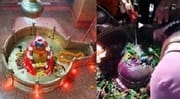
This is the famous temple situated at Kaithi the confluence of Ganga and Gomati rivers in Varanasi, India… where even the Death God Yamaraj had to go back empty-handed…
Story goes like this…
Sage Mrikandu and his wife Marudvati dedicated their life to the worship of the lord, and their only regret was that they had no child to pass on their piety to.
One day, Lord Shiva himself appeared before Mrikandu in response to his prayers, and said, “Mrikandu, I am very happy with you and your wife. I have decided to grant you your dearest wish – a child. However, you have a choice. Do you want a son who will be smart and intelligent, but will only live for 11 years, or do you want a long-lived, but foolish son?”
Mrikandu Rishi Chose the first Option and lord Shiva Granted their wish.
So Markendey Rishi was born and within 10 years of age he became highly educated knowing all the Vedas, Purana and Shastras.
As his eleventh birthday drew near, Sage Mrikandu and Marudvati started becoming apprehensive, remembering Shiva’s wordings and fearing that they would soon lose the son whom they loved so much.
Markandeya noticed his parents’ sadness and asked them the reason for their sadness. Sage Mrikandu explained to him the circumstances of his birth, the conditions laid down by Lord Shiva, and his approaching death.
Markandeya went to the river bank, and, making a Shivling with sand, started praying to it with all his heart and created Maha Mritunnjay mantra.
Om Trayambakam Yajamahe,
Sugandhim Pushtivardhanam,
Urva Rukamiva Bandhanan,
Mrityor Mokshiye Maamritat
Meaning :- We worship the three-eyed one who is fragrant, and who sustains all living beings. May he liberate us from death. May he lead us to immortality, just as the cucumber is released from its bondage.
Days passed, and Markandeya was immersed in his prayers, when Yamraj, the lord of Death, arrived to take his soul from his body. Seeing the fearful form of yamraj, Markandeya hugged the Shivling, tightly.
Yamaraj said “ Nothing and no one can save you now.” Saying this, he threw his noose over the boy, but he was so close to the Shivling that the noose encircled the Shivling along with Markandeya.
As soon as the noose touched the Shivling, Shiva was enraged, and burst out of the Shivling, and kicked Yamraj. “How dare you throw your noose on me!” he shouted . Caught off-guard, Yamraj tried to explain that it was his duty, but Shiva was furious . He said, “This boy has come to me for protection, and he shall have it. Yamraj, you can never touch him. He will be immortal.”
Yamraj was disappointed, but had no choice and thus chastised, left for his abode. Shiva blessed Markandeya not just with a long life, but also with immense knowledge.
Maha Mrituyunjay Mantra is recited to have a long life and to become fearless about death. This mantra helps in escaping from very bad diseases.
(Captain Pravin Raghuvanshi—an ex Naval Officer, possesses a multifaceted personality. He served as Senior Advisor in prestigious Supercomputer organisation C-DAC, Pune. An alumnus of IIM Ahmedabad was involved in various Artificial Intelligence and High-Performance Computing projects of national and international repute. He has got a long experience in the field of ‘Natural Language Processing’, especially, in the domain of Machine Translation. He has taken the mantle of translating the timeless beauties of Indian literature upon himself so that it reaches across the globe. He has also undertaken translation work for Shri Narendra Modi, the Hon’ble Prime Minister of India, which was highly appreciated by him. He is also a member of ‘Bombay Film Writer Association’.)
We present an English Version of Shri Sanjay Bhardwaj’s Hindi short story “सोंध”. We extend our heartiest thanks to the learned author Captain Pravin Raghuvanshi Ji (who is very well conversant with Hindi, Sanskrit, English and Urdu languages) for this beautiful translation and his artwork.)
‘Insense – Perfumers Global Exhibition’.. It was the world’s largest exhibition of perfumers. Thousands of shops in lakhs of square feet of ground, were stamping their proud presence.
Hundreds of bottles of perfume in every store were adorning them. Different sparkle of each bottle, different fragrance of each perfume. Perfume, and more perfume everywhere. All one could see was the stacks of intoxicating perfumes.
As expected, the crowd at the exhibition had gone berserk. People were thronging on shops, with the inebriation of perfumes. It was hard to decide which perfume smelled the best.
Then suddenly, not knowing from where the stream of clouds came, overcasting the sky. With lightening and thundering, thick drops started drenching the ground. The whole atmosphere started to smell with petrichor, due to the union of earth and sky.
The fragrancy of all the perfumes of the world was now losing its charm. The fragrance of earthy petrichor emanating from the soil had encapsulated the entire universe, overshadowing the celestial smell of all the perfumes, collectively…!
(Captain Pravin Raghuvanshi—an ex Naval Officer, possesses a multifaceted personality. Presently, he is serving as Senior Advisor in prestigious Supercomputer organisation C-DAC, Pune. An alumnus of IIM Ahmedabad is involved in various Artificial Intelligence and High-Performance Computing projects of national and international repute. He has got a long experience in the field of ‘Natural Language Processing’, especially, in the domain of Machine Translation. He has taken the mantle of translating the timeless beauties of Indian literature upon himself so that it reaches across the globe. He has also undertaken translation work for Shri Narendra Modi, the Hon’ble Prime Minister of India, which was highly appreciated by him. He is also a member of ‘Bombay Film Writer Association’.)
We present an English Version of Shri Sanjay Bhardwaj’s Hindi Short Story “हिंदी ”. We extend our heartiest thanks to the learned author Captain Pravin Raghuvanshi Ji (who is very well conversant with Hindi, Sanskrit, English and Urdu languages) for this beautiful translation and his artwork.)
☆ Hindi… ☆
Forget about Hindi. Come out of the fantasy world. Hindi can never be the language of education, writing, administration, diplomacy etc. The status of Hindi and English which is as of now is only permanent.
Hearing him, my eyes lit up. This is the same person who said,… Leave the matter of Jammu and Kashmir. The status of J&K which is as of now is permanent.
☆ Story – The Judge and the Judged ☆ Dr. Amitabh Shanker Roy Choudhury ☆
The train has touched the platform and we two are ready. Not many but just a few of us will alight from this compartment. This is the privilege of travelling in the first class. What to talk of the general compartments which are always filled beyond their capacity, even in sleeper coachs people have to fight for their seats. Even to get their reserved seats sometimes they have to run after the T.T. who, under certain circumstances, might put a mask like face and never bother. A great diplomat of everyday life! But away from all these chaos we enjoy all our journey quite peacefully even in an overcrowded train. This is the advantage of being the government’s right hand!
‘Namaste, Saab! Parnam, malkin (ma’am).’
The moment he saw me standing near the door of the compartment, Ramaasre addressed us. Also our driver was with him.
‘Everything fine here?’ I asked and said, ‘Pick up the luggage.’
They were carrying our suitcases and just a few other things.
My wife asked, ‘Everything alright at home?’
‘Yes, malkin.’
We followed them and reached the parking lot. The driver opened the rear doors of the car and we both were seated.
Maneuvering the ups and downs of the road our blue coloured Panther car starts running.
Truly he needs the vacation most who has just returned from a holiday. We really spent a pleasant holiday there in the lap of great Himalaya. Treading the path in the company of pines and deodars. Listening silently to the wind whispering through the leaves of the trees and the music of ever flowing streams. In the horizon the white capped mountain peaks would look like namazis sitting in a row offering their prayer in the courtyard of some mosque. During the sun rise or sunset they would exhibit a kaleidoscope of colours. Who would think of coming back to this place again? The same old city, full of potholes, the ever flowing murky drain waters, the life’s daily chorus of bickering and squabbling!
‘What happened? Again lost in thoughts?’ my wife asked.
‘Oh nothing. Just thinking about that place and our journey.’
But besides all the serene and glorious beauties of the king of mountains an incident had greatly shaken me and my heart was filled up to the brim with old memories. I met Shyam bhaiya there.
From Nazibabad town, near Hardwar, a single railway line goes up to Kotdwar. From that non-descript hill station, leaving the roads to Poudi or Lancedown we drove towards northeastern part of the hills. As such there was no city with a big name on our way. Only a few townships and rural markets on the road side. No TV shop, nothing. Some small sweet shops only, waiting for their customers till it’s dark. You cannot buy a book from anywhere, only a few magazines are available in some book corners.
When we reached our destination the sun was already bidding his farewell. A crimson red hue spread all over, from heaven to the mountain peaks, and we two were shivering in spite of our heavy woolen garments.
‘Right now I badly need a cup of really hot tea.’ I murmured to my wife. But even that was denied by the circumstances. Although the government guest house was already booked for us but the chowkidar was nowhere to be found. An old woman sitting nearby said, ‘He was waiting for you. But now he has gone to bazar for vegetables etc.’
Now what? We had to wait. My wife took shelter inside the car and I, rubbing both my palms, crossed the road to have a look at the river from the cliff above.
Far below the silver coloured waves of Gandhari were dancing. Bent like a sickle the river was running down stream. I was spell bound.
‘Saab, be careful. Don’t go near the edge.’ Someone called out from the stony path below.
I was alarmed and withdrew my steps. I heard the footsteps of someone coming very quickly. Next, the man was standing by my side, ‘Sir, its Gandhari River.’
‘Why Gandhari?’ the moment I turned my face towards him I was stunned.
The man too was startled, ‘You – oh, sir, your face seems to be quite familiar.’
I didn’t say anything. I just first wanted to read his thoughts.
‘You – your face just reminds me one of my cousins. My mamaji’s eldest son, Adi. Although for years we’ve not seen each other.’
Now, all doubts wiped off, I was pretty sure. Adi was my pet name. But presently there was no one to call me by this. The childhood memories overwhelmed in my heart. I clasped his hands, ‘For sure you’re our Shyam bhaiya. Isn’t it?’
‘Oh Adi! What a surprise!’ he took hold of both of my hands. Probably he very much wished to hug me tightly but by our dresses the difference between us was so evident that he restrained himself.
Both of our hearts were overflowed with the emotions and the memories of the past. For a few seconds we just kept on seeing each other without saying a word. Then I smiled, ‘So Shyam bhaiya, why this river is called Gandhari?’
‘Adi, you see, from the valley this flows into a cave and no one knows exactly where it comes out. Just like Gandhari, the queen of Hastinapur, who had blindfolded her own eyes, this river too has disappeared from human eyes. Willingly.’
‘Now tell me how did you come here? And where is Lajo bua (the father’s sister)?’
‘It all happened five years ago when ma breathed her last. Since then I’m all alone and roaming about this place.’
By now we had reached near our car. Silently I gestured to my wife to touch his feet but she didn’t pay any heed. Obviously she was hesitating because of the mark of poverty on his attire and appearance. In our society a book is judged more by its cover than by its content.
‘So you’ve brought her too. Welcome bahu. God bless you!’ Before she herself would pay him respect he cleverly managed the embarrassing situation.
In the meantime the chowkidar came running, ‘When have you reached sahib? I just went down to the bazar to look for you.’
‘And left us shivering here in the cold?’ Naturally my tone was not quite gentle. ‘Well, now can you get us some hot tea?’
‘Adi, wait a bit. I’ll bring it. You two just take a little rest till then.’ said Shyam bhaiya and then he turned to the chowkidar, ‘Dogre, in the mean time you make hot water for your sahib. They must be tired after such a long journey.’
‘Who is this man?’ My wife asked me as soon as we entered our room.
‘He is Shyam bhaiya, son of Lajo bua. I was a child when Lajo bua lost her husband and took shelter in our house with her only son.’
‘I see.’ She had no inclination to hear his story and she went for a wash.
I too was not interested in telling her every detail but who can rein his own thoughts? As if a strong storm broke in and it began turning the pages in my mind. Just like the scenes in a TV screen, all the happenings were visible before my eyes.
Ours was a prosperous family. We had agricultural property in our village, a big house in the city and tremendous social position and recognition earned by my grandfather and father. So when Lajo bua’s husband died in a road accident and her in laws treated her in the same way as is customary in all the villages of India, she, with her eight year old son, had nowhere to go except to beg for a refuge in our house, although she was not my father’s real sister, only a distant relative.
However my father provided her a shelter in the house. At first my mother and all the three aunts were not happy at all. But she became the family cook without any salary so they were all pleased as well.
Shyam bhaiya started going to a school, but he was more of a payless servant for everybody. My elder uncle, taking rest after returning from office, would suddenly make a call, ‘Shyam -!’ He would give him a five rupee note and say, ‘Go quickly and get me a packet of cigarette from Mangru’s betel shop.’
Closing his books Shyam bhaiya would run to the market. In the meantime Bhullan ahir, our cowhand, would appear in the inner courtyard and call out, ‘Bahuji, send the milk bucket.’
Next my grandpa’s voice would be audible from every corner of the house, ‘Shyam! Where is he? Who will now take hold of the calf? God knows where he is gone. Probably loitering with his friends. Does he ever touch his books?’
Without a word Lajo bua would bring the bucket and say to Bhullan, ‘Bhaiya, don’t worry. I’m here to help you. Now start milking the cow.’
‘Oh sister, why should you take this trouble? Where is Shyam?’
We the children too, were well aware of his position in our family. If during our studies someone would become thirsty, he would immediately ask him, ‘Shyam bhaiya, bring a glass of water for me.’
He would immediately put down his books and fetch it.
During our roof top cricket we would not hesitate to hit the ball with all our strength and the moment it would fly onto the other side of the road we would shout in a chorus, ‘Shyam bhaiya, see, the ball has gone there. Bring it soon.’
Still he loved us very much. Especially my younger brother Dhruva Narayan, was the apple of his eye. He would bathe and dress him up. When Dhruva would go to loo in the morning, unhesitatingly he would clean him. Whereas I, his elder brother, could never clean his nose even. He was Dhruva’s partner at play. His riding horse. After all these Dhruva would sleep in his lap only, ‘Tell me that story of yesterday.’
Mother complained sometime, ‘I’m nobody for Chotu. Shyam is everything.’
But she was happy and contented, ‘It’s nice to have some free hours.’
Lajo bua never said anything on his son’s behalf. A sinking man tries to grasp at a piece of straw and here she was afraid of drowning in the whirl pool of life, so …….
I still remember the incident of a Mahashivratri evening. Dadi (my grandma) came out with flower and belpatta (wood apple leaves) on a bronze dish and asked my youngest uncle to take her to the Shiva temple, ‘I must bow before Mahadev and offer milk to him.’
She kept fast on that day and not even a drop of water she would drink. But my uncle flatly denied, ‘Oh ma, I’ve got enough in my hands to do. I don’t have time.’
It was Shyam bhaiya again who ferried dadi’s boat to her destination. And I still remember that night my uncle went to see Rajkapoor’s movie ‘Sangam’ for the seventeenth time. It was the prevailing fashion in those days. There were people who had even made a silver jubilee of viewing it.
So, this way Shyam bhaiya was being groomed and reared in our family. Lajo bua had high hopes that someday his son would be capable to take care of his mother, but he was not interested in his studies and he could not pass high school in his first attempt.
‘How was the tea?’
‘Great!’
‘Hundred percent milk tea. I know how much fond of milk you are. You used to drink a full glass of raw milk, no?’
I had smiled. Now while going home all the scenes from those childhood days and that spent on the Himalayas were moving like a live broadcast in my mind…….
That night the chowkidar had prepared baked brinjal and pulses of arhar for us but next day onwards Shyam bhaiya himself took the responsibility of the kitchen. During the day he would be our travelling guide. Someday he would take us to Kimkaleshwar temple situated at the hill top, next day to some fort made of stone and earth, built by some unknown Garhwali king. Then again a journey to the sun rise or sunset point.
While walking he would often ask me, ‘Adi, do you know the name of this tree?’
It had some berry like fruits on it.
‘It’s Kafal. The famous sweet and sour fruits of Uttarakhand.’ Next day again he would test my knowledge of Botany. Again I would fail and he would smile, ‘It’s Kinkopa!’
It was chowkidar who would prepare the morning breakfast for us. After that we three would go out and when we would return Shyam bhaiya would prepare various dishes. Someday gajar ka halwa, next day a vegetable dish of mountain chillies.
I’ve visited every nook and cranny of our vast country but nowhere was I bestowed with so much of love and affection! Nowhere ever have I enjoyed so much!
One day I had asked him, ‘Shyam bhaiya, what do you do for a living?’
‘Oh my Adi, there is nothing much to talk about me. Just let me know your achievements in life. You must be a big shot now. You were so good in your studies.’
I don’t know how much intelligent I was in my studies but life was always generous to me. Even when I would play ludo in my childhood the dice would turn and turn and most of the time I would get a six. Even if the other chaps couldn’t get a single piece out, my all four pieces would reach ‘Home’, the finishing point. In the same way when all the students, good or mediocre, were running after Biology because there was a huge unemployment among the engineers and suicide by unemployed engineer was an everyday news, I opted for History in High School. Got first division easily. There was no question of crossing the bar of PMT, the Great Wall of China. I did LLB instead and won the hurdle race of service examinations. Those days reservation was not such an issue. My progress in life was smooth indeed.
During our long and short conversations Shyam bhaiya once told me that he had worked in different places after going from our house. He had worked as a garage mechanic, then a truck driver. He had a natural skill in all these manual works. Later he took Lajo bua with him and the great Himalaya became his abode. Sometime a sadness echoed in his voice, ‘Adi, I regret that I’m such a worthless son that I couldn’t fulfil the hopes of my mother.’
The sense of despair choked his voice and the alpine dewdrops rolled from his eyes. His sorrows were buried under the snow covered bosom of Himalaya. As if a gust of wind blew the veil of night from the face of deodar and pines and to me the moaning of leaves became audible!
Silently I clasped his hands.
Shyam bhaiya was our play mate. The kites made by him had no parallel in our neighbourhood. He taught us the art of flying the kite and the kites made by him would frequently touch the sky! On the day of Makar Sankranti, the transition of the Sun into Capricorn in its celestial path, which occurs in mid-January, there was none who could give him a fight in kite flying.
It was the time when because of a happening his total life was changed.
May be, I was in class eighth and he probably had crossed the barrier of class tenth. One day Dhaniya bua, the house maid, had kept two ten rupee notes on a table to buy sweets etc. as she had a plan to visit the temple. But at the end of her domestic chores she found that the notes were gone, ‘O my god! Bhabhi, I had left here twenty rupees. Who has taken that?’
‘What happened? Why are you yelling like that?’
‘See Bhabhi, it’s a poor man’s hard earned money. If somebody has stolen it, he would have leprosy in his hand!’
In those days their monthly salary from a household was not more than thirty or forty rupees. Naturally it was a huge amount for her.
Dad too came out to enquire, ‘Why all this fuss?’
‘Bade babu, I had kept twenty rupees here on the table, but now I can’t find them.’
My dad frowned, ‘Who was here right now?’
Dhania bua herself answered, ‘A few minutes ago Shyam had brought the milk upstairs.’
Immediately my dad burst out, ‘Shyam -!’
Awfully shaken, Lajo bua came out of the kitchen, ‘What happened, Bade bhaiya? Why Shyam? Has he done anything?’
‘Must I answer that to you? Call him first.’
In this hullabaloo Shyam bhaiya appeared on the scene. Everybody was witnessing the drama silently. My father asked, ‘Dhaniya had left twenty rupees on this table, where are they gone?’
‘I don’t know, mamaji.’
‘You don’t, then who should?’
‘Except you who else had come here?’ My youngest uncle asked.
Shyam bhaiya was shaking like a leaf in a storm, ‘I tell you the truth. I don’t know nothing.’
Lajo bua couldn’t restrain herself. She ran madly towards her son and slapped him hard across his face, ‘You, a thief! How dare you do that? Oh, why don’t you die?’
‘Amma, I really don’t know who has stolen the money.’ He was fumbling helplessly.
‘He won’t cough up this way.’ Father took out his belt and started raining it on his back.
Lajo bua was no more in herself. She cried out like an insane, ‘Kill him. Yes, bade bhaiya, for heaven’s sake do it for me.’
Who can say it was a tearless cry of her heart or a futile outcry against her destiny?
Mother tried to stop my dad, ‘Want to take his life? Don’t forget he is none to you.’
No one bothered to ask who the real culprit was. Without caring for any evidence everybody had accepted him as the sinner. For a poor, the poverty itself is his greatest crime.
Anyway, the money was not to be found anywhere. Though dad was restrained by ma but it was now the turn of Lajo bua to beat and kick that unfortunate creature.
Ma gave some money to Dhania bua and she left the place.
Shyam bhaiya, with blood smeared all over his body, was left lying in a corner. No one asked him for the dinner. Lajo bua too didn’t eat anything that night.
Like a coward I hid myself in the adjacent room. I was trembling with fear and witnessing everything.
Many a times Shyam bhaiya had to bear with various insults but this time it was a sheer torture.
Next morning, he was not to be found anywhere.
My uncle commented, ‘Just look if the bird has flown with some other things as well.’
Not a single word was pronounced by his unfortunate mother. Next day onwards she kept a stony silence.
Well, when I grew up I came to know that my uncle had unscrupulously taken a larger share of the family property from my father. Only money was the oxygen for his existence. He wouldn’t even care to spare Lakshmi, the goddess of wealth, if ever he could get a chance to cheat her. He was worthy of his name, Lakshminarayan.
None but Dhruva only wept for Shyam bhaiya. The rider had his horse gone. Throughout the day he would weep and call, ‘Shyam bhaiya, where are you? Come and be my horse, please.’
Lajo bua never shed a drop of tear in front of anybody. She kept her mouth completely shut. If his finger is cut off a man cries in agony but if the whole arm is severed he just collapses.
Probably my dad had made enquiries in our neighbourhood and other places. Two months had passed without any news about him. But nobody bothered.
Then one day a letter came to Lajo bua, ‘Amma, don’t worry about me. Let me settle a bit and then I’ll bring you here.’
After that no more letter, nor any thing. Who could guess what was going on in Lajo bua’s heart?
After six or seven months, suddenly one morning, Shyam bhaiya appeared. He bowed before my father and other elders. No one talked to him. When we two were alone I said, ‘Really you’re now a free bird. No studies, no exam, nothing. You have money in your pocket and you can do whatever you like.’
‘Don’t say that, Adi. Is it a life worth living? Well, you must work hard for your studies. You should earn name, fame and everything. You must be the worthy son of mamaji.’
By the evening he left our house with his mother. For ever. After this, who would bother to ask where they would be staying and who would care for a letter from them?
It was forty five years since. And now I had met him again. Now when I’m on the verge of my retirement, my heart is brimming with a carefree joy and rainbow of colours.
It was our last night in the lap of Himalaya. As the dusk fell, Shyam bhaiya said, ‘Let’s go into the jungle and you’ll see a thing which you can never dream of. There is a place on the bank of the river Gandhari where the wild animals come regularly to drink water. Standing on the edge of the cliff above the river you can watch it. Will you? Don’t worry, there is nothing to be scared of. It’ll be a life time experience.’
But my wife opposed vehemently, ‘Not at all. Is it the time to enter a forest? The night is so dark and there the animals are roaming all around.’
Shyam bhaiya tried to explain, ‘What you’re afraid of, bahu? I’ve been here for last twenty five years. I know pretty well how much we should fear the jungle and how much we should love it. Till I’m with Adi, you just don’t worry.’
I too was very much exited. From Corbett National Park to Periyar – I’ve visited many a forest but my luck didn’t permit me to see even a fox.
My wife’s whining continued. Silently she must be blaming Shyam bhaiya. I tried to make her comfortable and said, ‘Close the door behind us.’
The night time beauty of the forest can only be felt but can’t be expressed in words. It just gives a call to everybody, ‘Come on, if you can dare. Raise the veil from all my mysteries and secrets and see for yourself.’ The cold and breezy wind was biting. Even the hand gloves couldn’t protect the fingers from getting cramps. They became numb. Far off, the snow covered peaks were shining in the moonlight. The breeze was frolicking among the leaves. They were fluttering and the flakes of snow were falling from the trees like some white flowers. As if whole of the jungle was bathed in milk.
Shyam bhaiya had put on a sweater on him and a muffler worn around his face. I had a torch in my hand. Visibly he didn’t bother for the light. He was well acquainted with every corner of this jungle. With the help of torch I was looking if there was any ditch or a stone or a fallen branch of a tree. Or, was I afraid of putting my foot on a snake or something? He was moving ahead as usual. Effortlessly. When I queried him he smiled, ‘Adi, its winter, all the snakes are sleeping in their pits. They won’t come to welcome you.’
With my pen I can never express what I experienced that night. We two were seated between a tree trunk and a big stone. He cautioned me, ‘Keep absolute silence.’
Off and on, there was a snow fall and it seemed the moonlight was frozen on the leaves. Suddenly there came a sort of chuckling sound from the bank of Gandhari, below.
‘Look….’ he gestured in that direction.
Spell bound I was looking at. At last my wish was fulfilled in the lap of Himalaya. As little Dhruva used to do, silently I grasped Shyam bhaiya’s hands.
Just down the slope of the mountain a group of deer and chital was drinking from the river. They would look around to see if there were none and again they would bend their neck on to the water. The moment their brown skin quivered, the white spots there on would glide, as if the stars had descended from the sky and they were dancing in the falling snow!
‘Now we should return. Bahu must be worried at room.’
The experience was totally intoxicating. But one must return to his daily life.
‘I can never forget what you’ve have shown me tonight.’ I whispered.
‘So whenever you’ll think of this place you’ll think of me too?’
‘Don’t say like that bhaiya. How can we forget you?’
He just smiled silently and didn’t say anything.
Frankly, I just had no inkling of what was I going to say. Without any prior thought these words just slipped from my mouth, ‘Unfortunately that day you were accused and punished without anything committed by you.’
‘What else I could do? Could I tell someone else’s name?’
‘Were you aware of?’
I was startled. I looked at him. It seemed to me that as the river Gandhari had willingly disappeared from public eyes, Shyam bhaiya too, knowing everything pretty well, had disappeared. As the story goes in Purana, Shiva didn’t bother for amrit, the nectar of life. He chose the poison and kept it in his throat for ever. Yes, Shyam bhaiya too had to drink the poison of life silently.
‘Oh just forget it, Adi.’
That night when we reached the guest house he prepared aloo ka paratha and chutney of coriander leaves for us. Besides the taste, it was his affection for us that made it really superb.
Next day we had to come about one fifty kilometer down to catch our train. He insisted on accompanying us. I tried to explain it won’t be an easy job for him to cover the distance by bus while he would return. But he was adamant.
When the train started he smiled and said, ‘Adi, you must come again. There are lots of things to see here. You’ll really enjoy. Do come, my brother.’
‘Why don’t you come there to meet us?’
‘Me?’ To me it seemed the water of Gandhari was glistening in his eyes.
The train started moving ……
I simply could not move away from the door of the compartment. I kept on looking at him. My wife called out, ‘Why don’t you come in?’
But I failed to listen to her. It was not because of the clattering of the running wheels of the train but the sound of my father’s belt raining on Shyam bhaiya was reverberating in my ears. Like Neelkanth, the blue necked Shiva, he retained the poison of insult and dishonour within himself, in spite of knowing who had done it.
Actually during those days I had grown fond of cigarette smoking. I had lost a bet among my co smokers and I had to take them to a movie. I thought those were my mother’s money. I told my ma that I was going to the playground and reached the cine hall. Shyam bhaiya had knowledge of all my doings. Quite often he had tried to persuade me, ‘Adi, smoking is not a good thing. If mamaji will come to know of, it will be too bad. See, you’ve to become a respectable and well established man of the society.’
Today I’m well established. I’ve a beautiful bungalow, a costly car, social recognition and what not. But quite often my heart bleeds whenever I remember the happening of that fateful day. Why couldn’t I gather the courage to utter the truth? Probably father was so enraged that too because the maid of the house had lost her money. Moreover the incident took place in our house. It was against our social prestige. I was the sinner but Shyam bhaiya was punished.
And today ……..
‘Grandpa and granny are here! They’ve arrived.’ My grandchildren came out running in the portico. My eldest daughter in law was standing there to welcome us. She pulled her saree on her head.
Our car has reached our home. The guard is opening the gate. He salutes me. What’s written there on the side of the gate? Oh! Is my vision getting blurred? I just can’t read it ……..