English Literature – Weekly Column ☆ Witful Warmth # 62 – The Cholesterol… ☆ Dr. Suresh Kumar Mishra ‘Uratript’ ☆

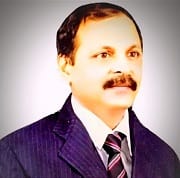
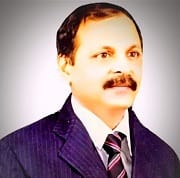
Dr. Suresh Kumar Mishra ‘Uratript’

Dr. Suresh Kumar Mishra, known for his wit and wisdom, is a prolific writer, renowned satirist, children’s literature author, and poet. He has undertaken the monumental task of writing, editing, and coordinating a total of 55 books for the Telangana government at the primary school, college, and university levels. His editorial endeavors also include online editions of works by Acharya Ramchandra Shukla.

As a celebrated satirist, Dr. Suresh Kumar Mishra has carved a niche for himself, with over eight million viewers, readers, and listeners tuning in to his literary musings on the demise of a teacher on the Sahitya AajTak channel. His contributions have earned him prestigious accolades such as the Telangana Hindi Academy’s Shreshtha Navyuva Rachnakaar Samman in 2021, presented by the honorable Chief Minister of Telangana, Mr. Chandrashekhar Rao. He has also been honored with the Vyangya Yatra Ravindranath Tyagi Stairway Award and the Sahitya Srijan Samman, alongside recognition from Prime Minister Narendra Modi and various other esteemed institutions.

Dr. Suresh Kumar Mishra’s journey is not merely one of literary accomplishments but also a testament to his unwavering dedication, creativity, and profound impact on society. His story inspires us to strive for excellence, to use our talents for the betterment of others, and to leave an indelible mark on the world.

Some precious moments of life

  1. Honoured with ‘Shrestha Navayuvva Rachnakar Samman’ by former Chief Minister of Telangana Government, Shri K. Chandrasekhar Rao.
  2. Honoured with Oscar, Grammy, Jnanpith, Sahitya Akademi, Dadasaheb Phalke, Padma Bhushan and many other awards by the most revered Gulzar sahab (Sampurn Singh Kalra), the lighthouse of the world of literature and cinema, during the Sahitya Suman Samman held in Mumbai.
  3. Meeting the famous litterateur Shri Vinod Kumar Shukla Ji, honoured with Jnanpith Award.
  4. Got the privilege of meeting Mr. Perfectionist of Bollywood, actor Aamir Khan.
  5. Meeting the powerful actor Vicky Kaushal on the occasion of being honoured by Vishva Katha Rangmanch.

Today we present his SatireThe Cholesterol.

☆ Witful Warmth# 62 ☆

☆ Satire ☆ The Cholesterol… ☆ Dr. Suresh Kumar Mishra ‘Uratript’ ☆ 

In our great republic, the weighing scale is a tool of the weak, used only by those who have nothing better to do than count the grams of their own insignificance. Here, prosperity is measured not by digits, but by the magnificent circumference of one’s midsection. To call a man “obese” in the hallowed corridors of our local tehsil is not an insult; it is a character certificate. It implies that the man has successfully navigated the treacherous waters of public service and has emerged with enough “surplus” to require a specialized tailor. A thin man, by contrast, is viewed with deep suspicion. If you are thin, you are clearly either a revolutionary, a victim of extreme honesty, or someone whose digestive tract has been compromised by a guilty conscience. A thin man looks like he might actually run to get work done, which is a gross violation of local administrative protocol.

A truly substantial belly commands respect. It is a physical manifestation of a life lived in stationary glory. It says, “I have sat in this plastic chair for twenty years, and I have moved for no one.” It is the ultimate status symbol of the non-performer. Take, for instance, Gaya Deen, whose belly has achieved a sort of sovereign status. It doesn’t just sit on him; it presides over him. When he sits, his belly rests comfortably on his thighs like a loyal pet that has forgotten its own size. Walking, for Gaya Deen, is not a movement; it is a logistical challenge—a rhythmic swaying, a slow-motion tectonic shift. The humble kurta performs a heroic feat of engineering every day, its side-slits gasping for air as they attempt to bridge the gap between front and back.

Modern doctors—those killjoys with their stethoscopes and their obsession with “cholesterol”—try to tell us that this is a “health crisis.” They speak of Body Mass Index as if life were a mathematics exam. But in Chhangamalpur, we know better. Cholesterol is simply the lubricant that keeps the wheels of the soul from grinding too hard against the harsh realities of the world. The primary fuel for this physical expansion is the Samosa, a triangular deity dipped in the holy water of green chutney. In our village, nutrition is a foreign concept, likely imported by some misguided NGO. We believe in the “Deep-Fry Theory of Longevity.” If it has been submerged in oil hot enough to melt lead, it is surely purified of all sins.

When the Block Development Officer arrives, we do not offer him a salad. To offer a man of his stature a salad would be an act of war. We offer him Jalebis—coils of pure sugar that mimic the complexity of our legal system. As the BDO consumes these, his chin begins to multiply. By the third Jalebi, he has three chins. This is seen as a sign of intellectual depth; a man with multiple chins clearly has more layers to his personality. As the local wisdom goes: “A man who counts his calories is a man who cannot be trusted with a secret. If he is so stingy with his own stomach, imagine how stingy he will be with the public funds!”

Obesity in our context is the highest form of non-violence. A fat man cannot chase you. He cannot engage in physical brawls. He can only sit and glare. In a country obsessed with “progress,” the obese man stands—or sits—as a monument to stillness. He is the ultimate practitioner of Dharna. While the West creates “gyms,” those strange torture chambers where people pay to run on belts that go nowhere, we have perfected the art of the “Banya-Lean.” This involves reclining against a gao-takiya at a 45-degree angle, allowing gravity to do the work of distributing one’s mass evenly across the mattress. This is not laziness; it is Strategic Inertia. In the grand scheme of the universe, everything is moving too fast. The obese man, with his labored breathing and his refusal to climb a single flight of stairs, is the only one truly in sync with the slow, grinding pace of Indian justice.

As the sun sets over the stagnant pond of Chhangamalpur, one sees the silhouettes of the village elders. They look like a row of earthen pots, round and sturdy. We are told the world is worried about an “obesity epidemic,” but as long as there is a government subsidy to be skimmed and a chair that doesn’t collapse under the weight of “prosperity,” these great bellies will continue to expand. They are the only things in the village that are actually growing. After all, in a world where everything is uncertain, a man’s weight is the only thing he can truly call his own. It is his private property, his accumulated wealth, and his most visible achievement. To lose weight would be to lose one’s standing in society. And in Chhangamalpur, nobody wants to be a lightweight.

****

© Dr. Suresh Kumar Mishra ‘Uratript’

Contact : Mo. +91 73 8657 8657, Email : drskm786@gmail.com

≈ Blog Editor – Shri Hemant Bawankar/Editor (English) – Captain Pravin Raghuvanshi, NM ≈

Please share your Post !

Shares

English Literature – Poetry ☆ Trishna, —the Cravings… ☆ Captain Pravin Raghuvanshi, NM ☆

Captain Pravin Raghuvanshi, NM
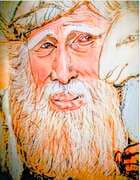
(Captain Pravin Raghuvanshi —an ex Naval Officer, possesses a multifaceted personality. He served as a Senior Advisor in prestigious Supercomputer organisation C-DAC, Pune. He was involved in various Artificial Intelligence and High-Performance Computing projects of national and international repute. He has got a long experience in the field of ‘Natural Language Processing’, especially, in the domain of Machine Translation. He has taken the mantle of translating the timeless beauties of Indian literature upon himself so that it reaches across the globe. He has also undertaken translation work for Shri Narendra Modi, the Hon’ble Prime Minister of India, which was highly appreciated by him. He is also a member of ‘Bombay Film Writer Association’.

We present Capt. Pravin Raghuvanshi ji’s amazing poem “~ Trishna, —the Cravings ~.  We extend our heartiest thanks to the learned author Captain Pravin Raghuvanshi Ji (who is very well conversant with Hindi, Sanskrit, English and Urdu languages) and his artwork.) 

? ~ Trishna, —the Cravings… ??

The more you see the world

the more you understand it

More you know the world

more you unravel the truth

Unquenchable thirst has no shoreline

each fulfillment opens another hunger

Mirages keep multiplying in daylight

desires rampantly echo inside desires

Crowns grow heavy on restless heads

applause fades into distant silence

Every victory demands another victory

every arrival invents a new journey

I watched souls barter with tomorrow

gather unfinished dreams like relics

Then materialized the silent exception

when truth dawned, cravings vanished

~Pravin Raghuvanshi

 © Captain Pravin Raghuvanshi, NM

Pune

≈ Editor – Shri Hemant Bawankar/Editor (English) – Captain Pravin Raghuvanshi, NM ≈
Please share your Post !

Shares

English Literature – Articles ☆ From New York ~ India in USA ☆ Mr. Vivek Ranjan Shrivastava ☆

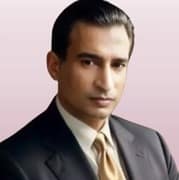
Mr. Vivek Ranjan Shrivastava

🌌 From New York ~ India in USA 🌌 Mr. Vivek Ranjan Shrivastava 🌌

India’s presence in America is not confined to a single event, monument, or immigrant community. It is an expansive cultural, intellectual, and social landscape shaped gradually over time. This presence sometimes appears in the form of a statue installed in a garden, sometimes in lectures delivered in university halls, sometimes in collaborative research inside laboratories, and sometimes in the rhythm of a tabla or the echo of devotional songs in a small town cultural center.

The bust of Mahatma Gandhi installed in the North Lawn Garden of the United Nations Headquarters in New York stands as a powerful symbol of this presence. Unveiled in December 2022 by India’s External Affairs Minister and the United Nations Secretary General, it is the first permanent statue of Gandhi within the UN परिसर. It is noteworthy that Gandhi himself never visited America, yet the country hosts the largest number of his statues and memorials outside India. This reality reflects not a formal diplomatic decision but an ideological acceptance developed within American society for Gandhi’s principles of truth and nonviolence. From the American civil rights movement to various peace movements, the imprint of Gandhi’s ideas is clearly visible.

If one traces the historical beginnings of the intellectual relationship between America and India, Swami Vivekananda’s visit to Chicago in 1893 emerges as a decisive moment. His address at the World’s Parliament of Religions was not merely a speech but a formal introduction of Indian philosophy to the Western world. His vision based on religious tolerance, universality, and human unity was both new and deeply appealing to American audiences. Subsequently, Vivekananda traveled across American cities, propagated Vedanta philosophy, initiated disciples, and laid the institutional foundations of Vedanta Societies. The memorial associated with his spiritual practice at Thousand Island Park in New York State still bears witness to the fact that Indian spiritual tradition established lasting roots on American soil.

In the latter half of the twentieth century, the Indian diaspora in America shaped a new dimension of India’s image. Today, the population of people of Indian origin in the United States exceeds five million, and this community plays an influential role in education, science, medicine, information technology, business, and public life. This is not merely a story of economic success but also of cultural self confidence. By preserving their festivals, languages, arts, and social values, the Indian community has woven them into the American social fabric in a way that is participatory rather than isolated. In some states, state governments have even begun recognizing Diwali as a public holiday.

India Community Centers and cultural centers established across many American states are living examples of this confidence. Whether it is the India Community Center in Milpitas, California, or cultural centers in New Jersey, Utah, and New York, these spaces function like modern day village squares. Along with yoga classes, they offer language instruction for children, music and dance training, programs for senior citizens, and large scale cultural festivals. Here, second and third generation members of the Indian diaspora learn that being Indian and being American are not opposing identities but ones that enrich each other.

Hindu temples, Jain temples, and gurdwaras in America have also moved beyond being mere places of worship. They have become centers of cultural and social activity. Classical dance performances after prayers, plays and devotional singing during festivals, language classes, and community discussions transform these spaces into broader social platforms. In this process, Indian tradition moves beyond the religious sphere and becomes an integral part of cultural and social life. Organizations such as ISKCON, Akshardham, and several Indian spiritual teachers are actively engaged in significant work across many parts of America.

Alongside Mahatma Gandhi, statues of Dr Bhimrao Ambedkar in America also underline India’s ideological presence. The large statue installed in Maryland brings forth a tradition of social justice, equality, and constitutional values that form a shared legacy of both Indian and American democracies. It signals that India in America is not limited to spiritual or cultural symbols alone, but also represents modern democratic thought.

The presence of Indian art and history in American museums forms another important chapter of this narrative. Institutions such as the Metropolitan Museum of Art in New York and the Asian Art Museum in San Francisco present India as a visual classroom through their rich collections of sculpture, painting, and textile art. In these galleries, India appears not merely as an ancient civilization but as a living aesthetic tradition that continues to engage with modern artistic dialogues.

Beyond cultural symbols, collaboration between India and America in science and technology represents a less visible but extremely significant dimension of India’s presence. Platforms such as the Indo US Science and Technology Forum, joint clean energy research centers, and cooperation between ISRO and NASA in space science have deeply connected the scientific communities of both countries. Indian engineering experts working in laboratories alongside American scientists demonstrate that this relationship is not rooted only in the past or in culture, but is equally invested in shaping the future. Indian made clothing and other products are also readily available in American malls, becoming part of everyday consumer experience.

When all these elements are viewed together, it becomes clear that India in America is not a linear story. It is a multidimensional journey that begins with Gandhi and Vivekananda and extends through immigrant communities, cultural centers, temples, museums, and laboratories. On one side stands the world’s oldest modern democracy and on the other the world’s largest democracy. The dialogue between them appears sometimes as an exchange of ideas, sometimes through cultural celebrations, and sometimes through shared scientific projects.

India in America, therefore, is not merely a memory but a living experience. This experience exists wherever Indian values, ideas, and creativity engage in dialogue with American society and enrich it. It is this ongoing dialogue that keeps the relationship dynamic and oriented toward the future.

♥ ♥ ♥ ♥

© Mr. Vivek Ranjan Shrivastava 

Contact: 87, Monitor Street, Jersey City, Opposite Liberty Park, 07304 Mo. +917000375798

≈ Editor – Shri Hemant Bawankar/Editor (English) – Captain Pravin Raghuvanshi, NM

Please share your Post !

Shares

English Literature – Weekly Column ☆ Witful Warmth # 61 – The ‘Viral’ Evolution of Reelpura… ☆ Dr. Suresh Kumar Mishra ‘Uratript’ ☆

Dr. Suresh Kumar Mishra ‘Uratript’

Dr. Suresh Kumar Mishra, known for his wit and wisdom, is a prolific writer, renowned satirist, children’s literature author, and poet. He has undertaken the monumental task of writing, editing, and coordinating a total of 55 books for the Telangana government at the primary school, college, and university levels. His editorial endeavors also include online editions of works by Acharya Ramchandra Shukla.

As a celebrated satirist, Dr. Suresh Kumar Mishra has carved a niche for himself, with over eight million viewers, readers, and listeners tuning in to his literary musings on the demise of a teacher on the Sahitya AajTak channel. His contributions have earned him prestigious accolades such as the Telangana Hindi Academy’s Shreshtha Navyuva Rachnakaar Samman in 2021, presented by the honorable Chief Minister of Telangana, Mr. Chandrashekhar Rao. He has also been honored with the Vyangya Yatra Ravindranath Tyagi Stairway Award and the Sahitya Srijan Samman, alongside recognition from Prime Minister Narendra Modi and various other esteemed institutions.

Dr. Suresh Kumar Mishra’s journey is not merely one of literary accomplishments but also a testament to his unwavering dedication, creativity, and profound impact on society. His story inspires us to strive for excellence, to use our talents for the betterment of others, and to leave an indelible mark on the world.

Some precious moments of life

  1. Honoured with ‘Shrestha Navayuvva Rachnakar Samman’ by former Chief Minister of Telangana Government, Shri K. Chandrasekhar Rao.
  2. Honoured with Oscar, Grammy, Jnanpith, Sahitya Akademi, Dadasaheb Phalke, Padma Bhushan and many other awards by the most revered Gulzar sahab (Sampurn Singh Kalra), the lighthouse of the world of literature and cinema, during the Sahitya Suman Samman held in Mumbai.
  3. Meeting the famous litterateur Shri Vinod Kumar Shukla Ji, honoured with Jnanpith Award.
  4. Got the privilege of meeting Mr. Perfectionist of Bollywood, actor Aamir Khan.
  5. Meeting the powerful actor Vicky Kaushal on the occasion of being honoured by Vishva Katha Rangmanch.

Today we present his SatireThe ‘Viral’ Evolution of Reelpura 

☆ Witful Warmth# 61 ☆

☆ Satire ☆ The ‘Viral’ Evolution of Reelpura… ☆ Dr. Suresh Kumar Mishra ‘Uratript’ ☆ 

In the heart of India lies ‘Reelpura,’ where the Saraswati Higher Secondary School is witnessing a sunrise not of education, but of the ring-light. Here, Master Gajadhar no longer uses chalk to script ‘The Greatness of Akbar’ on the blackboard; instead, he painstakingly mounts a phone on a tripod, lecturing his disciples on the sacred mysteries of ‘Hook Points’ and ‘Attention Spans.’ In Reelpura, the only deity that matters is the ‘Algorithm.’ The Principal has traded issuing ‘Character Certificates’ for auditing the ‘Engagement Rates’ of his students to judge their intellectual prowess. In a land where the hymns of the Upanishads once echoed, the future is now being measured by the ‘beat-drop’ of background music. Gajadhar Babu firmly believes that knowledge isn’t what shapes a life, but what secures a spot on the ‘Explore Page.’ Silence in class no longer signifies discipline; it’s merely a prerequisite for ‘Audio Syncing.’

The scene inside the classroom resembles a bizarre fusion of a tribal war and a modern studio. Yesterday’s child, who would grimace at the mention of ‘Metaphors’ and ‘Alliteration,’ has become such a pundit of ‘Transitions’ and ‘Color Grading’ that Sage Bharata himself might feel the urge to update his Natya Shastra. In one corner, a student—hunting for the ‘Education with Attitude’ hashtag—makes a slow-motion entry as if Lord Yama himself had secured a visa for an Earthly visit. Rather than scolding him, the Masterji advises him on his lighting, because ‘while the future may remain in the dark, the face must be crystal clear.’ Teachers of the old school used to turn students into ‘roosters’ for failing to memorize lessons; modern masters curse them with ‘Shadow-bans’ for low view counts. Here, Saraswati’s Veena is merely a prop, utilized solely to inject ‘Spiritual Vibes’ into ‘Aesthetic Content.’

Homework has morphed into something as terrifying and hilarious as a revolutionary manifesto. The Principal has pinned a notice: ‘Mandatory homework: Two Reels on Patriotism, three on Motivation, and one Dance Reel.’ Patriotism is no longer about martyring oneself at the border; it’s about puffing one’s chest out to the ‘Salaam Rocky Bhai’ BGM while holding the tricolor. As for motivation, the child who couldn’t tie his own shoelaces yesterday is now distributing ‘Secret Mantras for Success’ on camera. Masterji isn’t trailing behind either; he’s shaking a leg with students to everything from ‘Kacha Badam’ to ‘Gulabi Sharara’ just to boost his ‘Reach.’ The ‘Teacher-Disciple’ tradition has dissolved into a ‘Collaboration.’ The proverb has evolved: it’s no longer ‘The teacher is molasses, the student is sugar’; it’s now ‘The teacher is the camera, the student is the filter.’

Don’t even get me started on the exams! In Reelpura, a failure isn’t someone who doesn’t know the ‘Pythagorean Theorem,’ but the wretch who receives fewer ‘heart’ emojis. Instead of answer sheets, screenshots are being graded. The examiner, peering over his spectacles, checks if the student’s ‘SEO’ is on point. Instead of math problems, they draw ‘Audience Retention’ graphs. One student, who scored a zero in History but had a million views on his ‘POV: When you reach school late’ Reel, was bestowed with a ‘Digital Gold Medal.’ The future of education is so bright that it’s impossible to look at without sunglasses. The yardstick for knowledge isn’t ‘Wit,’ but the mania of going ‘Viral.’

The Parent-Teacher Meeting looked like a cross between a prayer meeting and a film premiere. A frail mother, her eyes moist with old-school values, asked, “Madam, why isn’t my son’s Reel hitting the algorithm? Is he putting too little salt in his content?” Masterji replied with gravity, “Sister, your son is still using ‘Logic,’ whereas the internet craves ‘Magic’ and ‘Tragic.’ Tell him to produce more ‘Cringe,’ only then will the Algorithm God be appeased.” The father, who once used a belt to address bad math grades, was now promising his son a new iPhone for his ‘Editing Skills.’ Concerns have shifted; no one cares if the child is learning values—the tragedy is that his ‘Follower Count’ is stagnant.

In this ‘viral’ transformation of society, the language has been so thoroughly desecrated that Panini would likely drown his grammar books in the Ganges. Instead of ‘Truth Alone Triumphs,’ the new anthem is ‘Content Alone Triumphs.’ It is the naked dance of a system where ‘Dignity’ and ‘Decency’ are buried in dictionary pages no one opens. Children are burning their textbooks to use the ash as makeup for that ‘Glamour’ look. The deluge of information is begging for a drop of understanding. In ‘Gen-Z’ lingo, education has become ‘Mid’ and showing off is ‘GOAT.’ We stand at a crossroads where the scrap value of a Reel is prized higher than the scrap value of a Degree.

In this Reelpura culture, ‘Revolution’ isn’t about taking to the streets; it’s about ‘Lip-syncing’ to a trendy audio. Master Gajadhar lives in fear that a student might accidentally read ‘Serious Literature,’ for seriousness is the biggest roadblock to going viral. The performers are truly ‘making it’ because society has crushed its collective intellect under a scrolling finger. In the old days, people performed penance to earn a ‘Name’; now they perform antics to polish a ‘Username.’ Observe the irony: the classroom, once called the nursery of the future, is now a ‘Content Factory.’ The imagery is clear—the future is stuck in today’s ‘Refresh’ button. The proverb fits perfectly: ‘The blind man distributes sweets, but only to his own’—except here, ‘The algorithm distributes reach, and the more you strip your dignity, the more you get.’

This ‘bright’ future of education is leading us down a blind alley where there is no destination, only a ‘Trend.’ When students from Reelpura’s academy enter the world, they won’t hand over resumes for jobs; they’ll hand over their ‘Instagram Handles.’ We’ve dubbed this ‘Smartness.’ Education is no longer what makes a human ‘human,’ but what turns them into a ‘Product.’ The future is ‘Viral,’ and we are all victims of the virus. The saga of Reelpura continues—just waiting for the next ‘Update.’

****

© Dr. Suresh Kumar Mishra ‘Uratript’

Contact : Mo. +91 73 8657 8657, Email : drskm786@gmail.com

≈ Blog Editor – Shri Hemant Bawankar/Editor (English) – Captain Pravin Raghuvanshi, NM ≈
Please share your Post !

Shares

English Literature – Poetry ☆ Fire… ☆ Captain Pravin Raghuvanshi, NM ☆

Captain Pravin Raghuvanshi, NM

(Captain Pravin Raghuvanshi —an ex Naval Officer, possesses a multifaceted personality. He served as a Senior Advisor in prestigious Supercomputer organisation C-DAC, Pune. He was involved in various Artificial Intelligence and High-Performance Computing projects of national and international repute. He has got a long experience in the field of ‘Natural Language Processing’, especially, in the domain of Machine Translation. He has taken the mantle of translating the timeless beauties of Indian literature upon himself so that it reaches across the globe. He has also undertaken translation work for Shri Narendra Modi, the Hon’ble Prime Minister of India, which was highly appreciated by him. He is also a member of ‘Bombay Film Writer Association’.

We present Capt. Pravin Raghuvanshi ji’s amazing poem “~ Fire ~.  We extend our heartiest thanks to the learned author Captain Pravin Raghuvanshi Ji (who is very well conversant with Hindi, Sanskrit, English and Urdu languages) and his artwork.) 

? ~ Fire… ??

Two tribes clashed,

raining stones upon one another

over the right to hunt.

Among the flying rocks,

a few collided midair.

A spark flashed.

Everyone fled in fear.

Except one man.

He stood his ground.

Gathering courage,

he struck one stone against another.

Again, a spark.

Now obsession seized him.

He began to play

with different stones.

He was the first man

to sow fire,

to cultivate fire.

He kindled it.

He cooked on it.

One day,

he perished in it.

Yet he was the same man

who introduced fire to the world,

who taught the difference

between heat and flame.

Who revealed the possibilities

of roasting over fire

and burning within it.

He handed over his life

to fire itself,

so mankind might learn

that even bodies can be reduced to ash.

He was the first man

to prove that

when fire lives within,

the world outside

can be illuminated…!

(Inspired by Shri Sanjay Bhardwaj Ji’s poem आग

हिन्दी साहित्य – मनन चिंतन ☆ संजय दृष्टि –  आग ☆ श्री संजय भारद्वाज ☆

~Pravin Raghuvanshi

 © Captain Pravin Raghuvanshi, NM

Pune

≈ Editor – Shri Hemant Bawankar/Editor (English) – Captain Pravin Raghuvanshi, NM ≈
Please share your Post !

Shares

English Literature – Weekly Column ☆ Witful Warmth # 60 – The Republic of ‘Ghapla-Ganj’… ☆ Dr. Suresh Kumar Mishra ‘Uratript’ ☆

Dr. Suresh Kumar Mishra ‘Uratript’

Dr. Suresh Kumar Mishra, known for his wit and wisdom, is a prolific writer, renowned satirist, children’s literature author, and poet. He has undertaken the monumental task of writing, editing, and coordinating a total of 55 books for the Telangana government at the primary school, college, and university levels. His editorial endeavors also include online editions of works by Acharya Ramchandra Shukla.

As a celebrated satirist, Dr. Suresh Kumar Mishra has carved a niche for himself, with over eight million viewers, readers, and listeners tuning in to his literary musings on the demise of a teacher on the Sahitya AajTak channel. His contributions have earned him prestigious accolades such as the Telangana Hindi Academy’s Shreshtha Navyuva Rachnakaar Samman in 2021, presented by the honorable Chief Minister of Telangana, Mr. Chandrashekhar Rao. He has also been honored with the Vyangya Yatra Ravindranath Tyagi Stairway Award and the Sahitya Srijan Samman, alongside recognition from Prime Minister Narendra Modi and various other esteemed institutions.

Dr. Suresh Kumar Mishra’s journey is not merely one of literary accomplishments but also a testament to his unwavering dedication, creativity, and profound impact on society. His story inspires us to strive for excellence, to use our talents for the betterment of others, and to leave an indelible mark on the world.

Some precious moments of life

  1. Honoured with ‘Shrestha Navayuvva Rachnakar Samman’ by former Chief Minister of Telangana Government, Shri K. Chandrasekhar Rao.
  2. Honoured with Oscar, Grammy, Jnanpith, Sahitya Akademi, Dadasaheb Phalke, Padma Bhushan and many other awards by the most revered Gulzar sahab (Sampurn Singh Kalra), the lighthouse of the world of literature and cinema, during the Sahitya Suman Samman held in Mumbai.
  3. Meeting the famous litterateur Shri Vinod Kumar Shukla Ji, honoured with Jnanpith Award.
  4. Got the privilege of meeting Mr. Perfectionist of Bollywood, actor Aamir Khan.
  5. Meeting the powerful actor Vicky Kaushal on the occasion of being honoured by Vishva Katha Rangmanch.

Today we present his SatireThe Republic of ‘Ghapla-Ganj’ 

☆ Witful Warmth# 60 ☆

☆ Satire ☆ The Republic of ‘Ghapla-Ganj’… ☆ Dr. Suresh Kumar Mishra ‘Uratript’ ☆ 

In the notorious district of ‘Ghapla-Ganj’, the roots of the Republic were exactly as deep as the potholes on its government-funded roads. On the eve of Republic Day, Munshiram ‘Makkhan’ (whose name literally meant ‘Butter’) was busy untangling the flagpole rope with the nervous desperation of a new son-in-law trying to navigate his in-laws’ egos.

Munshiram, a man whose professional career was built on licking the cream off state budgets, was so drowned in the fervor of the ‘Amrit Kaal’ (The Golden Era) that he had hired a painter famous for blackening the faces of opposition posters to whitewash the flagpole. Adjusting his glasses, Munshiram warned, “Listen, if the rope gets stuck tomorrow, consider your patriotism taxed under GST! The Constitution gave us rights, but the right to unfurl the flag belongs only to those whose files move over the table, not under it.”

Just then, Dharamveer ‘Dheeth’ (The Stubborn) appeared, hookah in hand. He kicked the flagpole to test its strength, much like a doctor checks a patient’s pulse—not to see if they are alive, but to gauge the depth of their pockets.

“Arre Munshi!” Dharamveer bellowed in his wooden-staff Haryanvi style. “Are you hosting a ceremony or a garage sale for democracy? This pole is wobbling more than a Chief Minister’s chair after a no-confidence motion. And that Book of Constitution you’ve displayed on the stage? Last time, you used its back pages to tally the tent-house bills! This Republic Day is for the high-rise villas; folks like us just stand below, waiting for a piece of Boondi Laddoo and shouting ‘Jai Hind’ to fill our stomachs.”

Munshiram sighed—a breath less full of patriotism and more of budgetary anxiety. “Dheeth brother, this is a festival. Don’t weigh it on the scales of logic. In this town, even those who hate the ‘Public’ and fear the ‘Republic’ sing the National Anthem.”

The Grand Farce

When Thakur Gajendra Singh ‘Ghasita’ took the stage, even his throat-clearing sounded like a Royal Proclamation. He pulled out a paper titled ‘The Meaning of Freedom,’ though it looked suspiciously like the back of an old ‘Eviction Notice’ file.

“Brothers!” the Thakur roared. “Today, our nation is free! Every citizen is a King!”

Dharamveer nudged his neighbor with a sharp elbow. “Hear that? We are all Kings, but our kingdom is limited to the length of the ration shop queue. The Thakur is preaching equality like a wolf giving a lecture on vegetarianism to a flock of sheep.”

Suddenly, Munshiram announced the climax: the ‘Gantantra Ratna’ (Jewel of the Republic) Award. “Mangal Singh!” he shouted.

The crowd went silent. Mangal Singh was the simple farmer whose land had been ‘swallowed’ last year by one of the Thakur’s cronies for a highway project. The crowd wondered: Was this the ‘Amrit Kaal’ of penance? Was the Thakur finally polishing his stained soul?

“Mangal Singh, come forward!” Munshiram yelled again. No one moved. The silence grew so heavy that even the crows circling the flag forgot to caw. Munshiram’s forehead began to sweat like a sudden ‘deficit’ in a government audit.

The Thakur grabbed the mic. “Perhaps Mangal Singh is overwhelmed with emotion. This award is for the sacrifice a common man makes for this great System!”

Dharamveer spat on the ground. “Sacrifice? Mangal Singh’s sacrifice was completed when your goons sacrificed his bullock cart and two bighas of land at the altar of ‘Development.’ This isn’t an award; it’s like putting a muffler on a corpse. The man you’re calling hasn’t been seen for three months; he either met God or got buried under the weight of your ‘Equality’.”

The Inheritance of Loss

After a panicked whisper from a clerk, Munshiram announced that Mangal Singh’s ten-year-old daughter would accept the award. She walked up—barefoot, but with eyes that could scorch through both khaki uniforms and khadi vests.

The Thakur flashed a cinematic smile for the cameras. “Smile, beta! It’s a Republic Day special shot!” He tried to pat her head, but she jerked away like a sovereign nation shaking off its shackles.

She stepped to the mic and uttered just four words that exploded like a grenade: “Where is my father?”

Munshiram tried to pivot. “Beta, your father is… practicing ‘penance’ at an undisclosed location for the nation’s progress. Here, take this envelope and go home.”

The girl opened the envelope. It wasn’t money. It was the same old auction notice for her land, now stamped: ‘Resolved Successfully.’

Two tears fell. She dropped the shiny trophy right at the Thakur’s polished boots.

“There it is!” Dharamveer’s voice cut through the air. “That’s your Republic! Erase the father, hand a shield to the daughter. Mangal Singh is buried in the very foundation of the Secretariat you’ve decorated with marigolds today. These aren’t sweets you’re distributing; it’s the wreckage of our conscience.”

The girl looked up at the tricolor, her voice trembling but clear: “The flag is high, Sir, but the humanity has fallen very low.”

The Thakur’s SUV sped away, sirens blaring. The flag continued to flutter, but in its shadow, Mangal Singh’s daughter walked back into the crowd, barefoot, leaving the ‘honor’ behind. Republic Day was over. And ‘Ghapla-Ganj’ began to crawl once again through its potholes, celebrating its ‘freedom.’

****

© Dr. Suresh Kumar Mishra ‘Uratript’

Contact : Mo. +91 73 8657 8657, Email : drskm786@gmail.com

≈ Blog Editor – Shri Hemant Bawankar/Editor (English) – Captain Pravin Raghuvanshi, NM ≈

Please share your Post !

Shares

English Literature – Weekly Column ☆ Witful Warmth # 59 – Two-One-za-Two, Two-Two-za-Four… ☆ Dr. Suresh Kumar Mishra ‘Uratript’ ☆

Dr. Suresh Kumar Mishra ‘Uratript’

Dr. Suresh Kumar Mishra, known for his wit and wisdom, is a prolific writer, renowned satirist, children’s literature author, and poet. He has undertaken the monumental task of writing, editing, and coordinating a total of 55 books for the Telangana government at the primary school, college, and university levels. His editorial endeavors also include online editions of works by Acharya Ramchandra Shukla.

As a celebrated satirist, Dr. Suresh Kumar Mishra has carved a niche for himself, with over eight million viewers, readers, and listeners tuning in to his literary musings on the demise of a teacher on the Sahitya AajTak channel. His contributions have earned him prestigious accolades such as the Telangana Hindi Academy’s Shreshtha Navyuva Rachnakaar Samman in 2021, presented by the honorable Chief Minister of Telangana, Mr. Chandrashekhar Rao. He has also been honored with the Vyangya Yatra Ravindranath Tyagi Stairway Award and the Sahitya Srijan Samman, alongside recognition from Prime Minister Narendra Modi and various other esteemed institutions.

Dr. Suresh Kumar Mishra’s journey is not merely one of literary accomplishments but also a testament to his unwavering dedication, creativity, and profound impact on society. His story inspires us to strive for excellence, to use our talents for the betterment of others, and to leave an indelible mark on the world.

Some precious moments of life

  1. Honoured with ‘Shrestha Navayuvva Rachnakar Samman’ by former Chief Minister of Telangana Government, Shri K. Chandrasekhar Rao.
  2. Honoured with Oscar, Grammy, Jnanpith, Sahitya Akademi, Dadasaheb Phalke, Padma Bhushan and many other awards by the most revered Gulzar sahab (Sampurn Singh Kalra), the lighthouse of the world of literature and cinema, during the Sahitya Suman Samman held in Mumbai.
  3. Meeting the famous litterateur Shri Vinod Kumar Shukla Ji, honoured with Jnanpith Award.
  4. Got the privilege of meeting Mr. Perfectionist of Bollywood, actor Aamir Khan.
  5. Meeting the powerful actor Vicky Kaushal on the occasion of being honoured by Vishva Katha Rangmanch.

Today we present his Satire – Two-One-za-Two, Two-Two-za-Four 

☆ Witful Warmth# 59

☆ Satire ☆ Two-One-za-Two, Two-Two-za-Four… ☆ Dr. Suresh Kumar Mishra ‘Uratript’ ☆ 

The story begins with a mysterious object, smaller in size than a secret document of an organization, but with an impact greater than the Hiroshima blast. It wasn’t a bomb, yet the mere sight of it ruined the digestion of seventy percent of children. It was a booklet of ‘Tables’ for which no ‘guide’ was ever written, because there is no manual for death. As soon as an innocent child reached the immigration counter of the second grade with a visa to the world of digits, that invisible witch was secretly slipped into their bag. It weighed barely ten pages, but its stature made Social Science and bulky Science books look like midgets—much like a small ‘death warrant’ presented to a powerhouse. The question was: who created this? Who mixed children’s tears into that ink?

When the house buzzed with the excitement of new books, parents bought everything, but in the name of that ‘Great Scripture,’ you were handed the same old, corner-bent, saliva-stained, decaying corpse of a book belonging to your elder brother. The logic given was that the laws of mathematics are eternal; they don’t change like fashion. They would say— “Hey boy, why are you crying looking at this old book? Have you lost your mind? It was your father’s, then your brother’s, and now it’s yours! Knowledge never grows old, and math stays the same as it was in my time!” With this, that ten-paisa catastrophe was entrusted to you, laying the foundation of the suspense: would you see the sun of the third grade, or would you be martyred in this cycle of ‘two-two-za-four’? The smell of that torn book still lingers in the nostrils like the memory of an old crime.

The real terror of that book began when the ‘Table of One’ (which everyone knew like free advice) breathed its last at the threshold of the ‘Table of Two.’ The Master Saheb would begin in a specific melody that belonged neither to Hindustani classical nor Carnatic music. It wasn’t a recital of ‘Tables’; it was a dirge. The rhythm of “Do-ekkam-do, do-duni-chaar…” was such that if you sang it in a musical assembly, the singer might commit self-immolation. The wonder was: what magic lay in this melody that it established itself alongside Indian classical ragas? If you changed the tune, the table would immediately go into a coma. Perhaps that’s why it was called ‘committing to the throat’ (Kanthasth), because ‘climbing’ this heavy mountain of math (perhaps that’s why it’s called Pahada—resembling Pahad or mountain) was as difficult as making a donkey conquer Everest.

When Master Saheb picked up the cane and struck that chord, even great ‘Vedantists’ would break into a sweat. Wise men would say— “Brother, you can either sing that melody or remember the table; you can’t do both together! If you miss a single note, the Master’s stick will play the tabla on your back! Sing quietly, or I’ll beat you out of shape!” Amidst this melodic torture, the biggest challenge was: why did everyone’s voice shift from ‘base’ to ‘treble’ by the time they reached the table of nine? That melody completely destroyed your childhood ‘vibe,’ turning you into a machine that just screamed without thinking. That screaming wasn’t a table; it was the cry of an innocent soul wanting to be free from that ten-page prison.

Every class was given a ‘mass warning’ no less than a war ultimatum— “Until you have the tables up to twenty (twenty-twenty-za-hundred) memorized by heart, you won’t see the face of the next class!” This was a task so Herculean that no one to date has solved why the limit of human capacity dies at twenty. Did the brain explode upon reading the twenty-first table? As grades progressed, the target expanded—from ten-tens to twelve-twelves, then sixteen, and finally reaching that terrifying twenty.

Standing before Master Saheb to vomit out the tables made one’s heart rate beat the background score of a horror film. Children who could perfectly say ‘six-six-za-thirty-six’ would look at the Master’s terrifying face and choose their fate by saying ‘six-six-za-forty-two.’ Then the Master would roar— “Hey boy, since when did six-six-za become forty-two? Has your brain gone for grazing? Go, stand back in line and die again! Only God can save you today!” At that time, reciting the table of twenty was like hoisting a flag on K-2 without oxygen. The anxiety was: would this war have to be fought again next year, or would the table of twenty-seven suddenly enter the syllabus? That figure of twenty was a wall that every child of that era aimed to scale, but alas, more than half remained buried under it.

But the real thrill lay in Master Saheb’s psychological warfare, where even if you were right, you were made to feel like a criminal. Suppose you said “Eight-seven-za-fifty-six” with perfect rhythm. Master Saheb would narrow his eyes, look over his glasses, and roar— “What? Fifty-six??” That one moment of doubt would trigger a tsunami in that tiny brain. Self-confidence would vanish like public trust after a big scam. Terrified, the child would murder their own correct answer and say— “No sir, sixty-four!” And there, the tragedy was complete. Two strokes of the cane, red hands, and the humiliation of going to the back of the line—this was the ‘trending’ pain of that time, though there were no cameras to record it.

The girls, upon reaching ‘nine-eights,’ would stare at the sky with a vacant gaze as if God Himself would descend to whisper ‘seventy-two’ in their ears. “Hey you wooden-head, you spoke the truth, then why did you flip? Now take the beating and stand in the corner! Your brains have melted away!” God, too, resided only in Master Saheb’s cane, raining down as ‘blessings’ for every wrong answer. The funny thing was: what pleasure did the Master get in saying ‘What?’ to a correct answer? It was a ‘toxic relationship’ where even when you were right, you were always proven wrong.

In every batch, there were one or two creatures whom we might call ‘Main Characters’ today and ‘sycophants’ in the old days. No one knew when or how they drank that poison, but they would vomit tables at rocket speed in front of the Master. When they finished their performance and looked at the rest of us like conquerors of the world, one felt like applying ‘cancel culture’ to them. But such was our helplessness that we could only smolder with jealousy. The question kept arising: what did these creatures eat? Did calculators run in their blood? The disgusting pity on their faces and the helpless tears in our eyes—this was deeper than any modern emotional drama. “Look at this boy, he’s reciting the table of seventeen like he’s singing at a wedding! And you don’t even know the table of one! Have some shame, go drown yourself!”—this jealousy burned in the chest of every average child. These ‘courtiers’ were the Master’s favorites, and we wondered if they would become NASA scientists or just bank cashiers cursing this legacy of tables. Their success was a ‘trauma’ for us that took years to forget, because our beatings doubled in intensity because of them.

Once you memorized the tables forward, Master Saheb would change the ‘rules’ like a villain changing his move at the last moment. He would say— “Now recite it backward!” Starting from two hundred and ending at twenty. This was like telling someone used to walking straight to reach the station by running backward. If some warrior conquered even this, then ‘random firing’ began— “Tell me, what is thirteen-eights?” Now, the melody went to hell. Because the brain had to sing the entire song from the beginning to reach that figure. By the time you reached ‘thirteen-eights’ starting from ‘thirteen-one-za-thirteen,’ Master Saheb’s cane would have changed the geography of your hips. “You fool, why is your mouth hanging open? Will your father tell you thirteen-eight-za? Speak up or I’ll skin you alive! Your intellect is completely dead!” This fear of which number might be fired at you never let the children out of its clutches. This was the peak level of ‘anxiety’ that modern psychologists call a ‘panic attack,’ but then, it was just called ‘the Math hour.’ How many innocents’ self-respect was martyred in that random firing? No data exists in any government file.

Even at home, there was no peace. Any guest who visited didn’t bring samosas; they brought ‘mental harassment.’ As soon as they sipped their tea, their first question— “Son, which class are you in? What is fourteen-seven-za?” As if the world’s economy rested on that child’s table of fourteen. The ‘mathematical terrorism’ of relatives was so great that children would hide in fields or toilets upon seeing them. Had these guests ever been able to recite the table of twenty themselves? “Hey boy, recite a table for me too, or has your brain gone grazing? My son knows up to twenty-five! You have no heart for this!”—amidst such taunts, childhood fluttered like a severed kite. Every relative was a walking ‘villain,’ and the child was a prisoner with no lawyer. If the guest asked the table of fifteen and you recited it, would he take ten rupees out of his pocket or just say ‘well done’ and gobble up the samosas? Usually, he just ate the samosas, and we were left swallowing our ‘defeat.’ That insult still stings like an old wound.

Today, when we look back, that ten-page book didn’t just contain tables. It was a ‘micro-epic’ that taught us how to lose and how to get back up after falling. Beneath every page was hidden a moral, an idiom, or a deep couplet that told us life is much harder than mathematics. The final pages contained names of days, seasons, constellations, and even Hindi and English months. That book told us for the first time that numbers in this country have their own music, which becomes even more melodious after a beating. Today’s generation of calculators and iPads has thrown that book of tables into the trash. Along with it died that melody, that discipline, and that cultural heritage that kept us grounded. The suspense of whether we would ever reach twenty is lost in the world of ‘Google Search.’ “Look child, today’s kids are lost in phones; they’ve forgotten the tables! My time was better; at least the beating brought some sense! Now everything is left to God!” If you really want to save your slowing intelligence, go buy that ‘horror book’ from the market and memorize it backward. Otherwise, while watching these Gen-Z reels, your brain will one day stop at the table of ‘zero,’ and the challenge will remain: will you ever be able to return to that simple world of ‘two-twos-are-four’ where there was love even in the beating?

****

© Dr. Suresh Kumar Mishra ‘Uratript’

Contact : Mo. +91 73 8657 8657, Email : drskm786@gmail.com

≈ Blog Editor – Shri Hemant Bawankar/Editor (English) – Captain Pravin Raghuvanshi, NM ≈

Please share your Post !

Shares

English Literature – Poetry ☆ Beyond Nirvana… ☆ Captain Pravin Raghuvanshi, NM ☆

Captain Pravin Raghuvanshi, NM

(Captain Pravin Raghuvanshi —an ex Naval Officer, possesses a multifaceted personality. He served as a Senior Advisor in prestigious Supercomputer organisation C-DAC, Pune. He was involved in various Artificial Intelligence and High-Performance Computing projects of national and international repute. He has got a long experience in the field of ‘Natural Language Processing’, especially, in the domain of Machine Translation. He has taken the mantle of translating the timeless beauties of Indian literature upon himself so that it reaches across the globe. He has also undertaken translation work for Shri Narendra Modi, the Hon’ble Prime Minister of India, which was highly appreciated by him. He is also a member of ‘Bombay Film Writer Association’.

We present Capt. Pravin Raghuvanshi ji’s amazing poem “~ Beyond Nirvana… ~.  We extend our heartiest thanks to the learned author Captain Pravin Raghuvanshi Ji (who is very well conversant with Hindi, Sanskrit, English and Urdu languages) and his artwork.) 

? ~ Beyond Nirvana… ??

With an unquenchable thirst

to know the boundless

I crossed door after door—

Many doors

Yet more doors

Endless doors

Until at last

I stood before

the gate of liberation…

Light spilled outward

vast, persuasive, complete

promising an end

to every question

But watching my thirst

dissolve into silence

I paused

Questions that still breathe

do not ask for salvation

They demand commitment

So I turned back

from Nirvana

I refuse dissolution

I choose to remain

Not peace—

but total participation

Not escape—

but the

unfinished horizon of creation

~Pravin Raghuvanshi

 © Captain Pravin Raghuvanshi, NM

Pune

17 January 2026

≈ Editor – Shri Hemant Bawankar/Editor (English) – Captain Pravin Raghuvanshi, NM ≈

Please share your Post !

Shares

English Literature – Articles ☆ Thanksgiving and Indian Consciousness: A Reflection of Gratitude ☆ Mr. Vivek Ranjan Shrivastava ☆

Mr. Vivek Ranjan Shrivastava

🌌Thanksgiving and Indian Consciousness: A Reflection of Gratitude 🌌

The celebration of Thanksgiving in the Western world and the expression of gratitude in Indian culture reveal a profound similarity in the fundamental values of humanity. Though the rituals, customs, and expressions may differ, the underlying essence remains the same.

Thanksgiving, celebrated in November, is a time when Americans come together to express gratitude for the harvest and the blessings of life. Similarly, in India, festivals like Baisakhi, Onam, and Pongal are celebrated to acknowledge the bounty of nature. The Indian tradition of offering prayers to the sun, reciting the Gayatri mantra, and expressing gratitude to the elements reflects the same sentiment.

The Indian sages emphasized the importance of gratitude not just as a ritual but as a way of life. The Bhagavad Gita teaches us to dedicate our actions to the divine, recognizing that everything is a gift. This philosophy frees us from the burden of ego and makes us humble, acknowledging our place in the universe.

The American tradition of Thanksgiving highlights the importance of family, community, and sharing with those in need. Similarly, Indian festivals bring people together, strengthening bonds and fostering a sense of belonging.

In today’s materialistic world, the relevance of gratitude cannot be overstated. It is the foundation upon which lasting relationships and achievements are built. By cultivating gratitude, we shift our focus from what we lack to what we have, leading to greater contentment and peace.

The Indian-American community has infused Thanksgiving with a unique blend of cultural flavors, creating a fusion that celebrates the diversity of human experience. As we come together to share meals and stories, we are reminded that gratitude is a universal language that transcends borders and cultures.

Let us strive to make gratitude a part of our daily lives, recognizing the beauty in the world around us and expressing appreciation for the blessings we receive. May the spirit of Thanksgiving inspire us to cultivate a deeper sense of gratitude, compassion, and connection with all beings.

♥ ♥ ♥ ♥

© Mr. Vivek Ranjan Shrivastava 

Contact: 87, Monitor Street, Jersey City, Opposite Liberty Park, 07304 Mo. +917000375798

≈ Editor – Shri Hemant Bawankar/Editor (English) – Captain Pravin Raghuvanshi, NM

Please share your Post !

Shares

English Literature – Weekly Column ☆ Witful Warmth # 58 – The Greedy Poet’s Lok Sabha Shove… ☆ Dr. Suresh Kumar Mishra ‘Uratript’ ☆

Dr. Suresh Kumar Mishra ‘Uratript’

Dr. Suresh Kumar Mishra, known for his wit and wisdom, is a prolific writer, renowned satirist, children’s literature author, and poet. He has undertaken the monumental task of writing, editing, and coordinating a total of 55 books for the Telangana government at the primary school, college, and university levels. His editorial endeavors also include online editions of works by Acharya Ramchandra Shukla.

As a celebrated satirist, Dr. Suresh Kumar Mishra has carved a niche for himself, with over eight million viewers, readers, and listeners tuning in to his literary musings on the demise of a teacher on the Sahitya AajTak channel. His contributions have earned him prestigious accolades such as the Telangana Hindi Academy’s Shreshtha Navyuva Rachnakaar Samman in 2021, presented by the honorable Chief Minister of Telangana, Mr. Chandrashekhar Rao. He has also been honored with the Vyangya Yatra Ravindranath Tyagi Stairway Award and the Sahitya Srijan Samman, alongside recognition from Prime Minister Narendra Modi and various other esteemed institutions.

Dr. Suresh Kumar Mishra’s journey is not merely one of literary accomplishments but also a testament to his unwavering dedication, creativity, and profound impact on society. His story inspires us to strive for excellence, to use our talents for the betterment of others, and to leave an indelible mark on the world.

Some precious moments of life

  1. Honoured with ‘Shrestha Navayuvva Rachnakar Samman’ by former Chief Minister of Telangana Government, Shri K. Chandrasekhar Rao.
  2. Honoured with Oscar, Grammy, Jnanpith, Sahitya Akademi, Dadasaheb Phalke, Padma Bhushan and many other awards by the most revered Gulzar sahab (Sampurn Singh Kalra), the lighthouse of the world of literature and cinema, during the Sahitya Suman Samman held in Mumbai.
  3. Meeting the famous litterateur Shri Vinod Kumar Shukla Ji, honoured with Jnanpith Award.
  4. Got the privilege of meeting Mr. Perfectionist of Bollywood, actor Aamir Khan.
  5. Meeting the powerful actor Vicky Kaushal on the occasion of being honoured by Vishva Katha Rangmanch.

Today we present his SatireThe Greedy Poet’s Lok Sabha Shove 

☆ Witful Warmth# 58 ☆

☆ Satire ☆ The Greedy Poet’s Lok Sabha Shove… ☆ Dr. Suresh Kumar Mishra ‘Uratript’ ☆ 

In the sweltering corridors of Parliament House, where democracy’s drama unfolds, stood Pt. Ramdhari Singh ‘Ramvilas’—self-proclaimed litterateur extraordinaire. His belly protruded like a pot of unpublished poems, and his kurta screamed “award-winning satirist.” But Ramvilas wasn’t here for debates. No, sir. He was a greedy fox in literary sheep’s clothing, eyeing the ultimate prize: a selfie with the Lok Sabha Speaker.

The occasion? A cultural meet for artists and writers. Painters with callused hands clutched canvases that bled patriotism. Dancers balanced on tradition’s edge. And then there was Ramvilas, poet of the people—or so he claimed. “Arre bhai, society ka dard mera gehra hai!” he’d boast at chai stalls, penning verses against capitalism while scrolling Instagram for viral hits.

Spotting the Speaker—dignified, spectacled, flanked by admirers—Ramvilas’s eyes lit up like Diwali crackers. “Yeh photo! Yeh likes! Meri nayi kavita ki book bestseller!” He elbowed through the crowd. A young painter, Ravi, blocked his path unknowingly, adjusting his easel.

“Excuse me, bhaiya,” Ramvilas hissed, shoving Ravi aside. “Main sahityakar hoon! Mujhe aage jaane do!”

Ravi stumbled, paintbrush flying. “Sahityakar? Aap? Kal aapki kavita padhi thi Facebook pe: ‘Capitalism ka jaal, selfie se kya faal?’ Two lines, 500 likes!”

Ramvilas puffed up. “Bewakoof! Yeh lok sabha speaker hai! Unke saath photo matlab national award! Tu to sirf painter hai—deewar sajanewala!”

The shove rippled. A sculptor yelped as Ramvilas bulldozed forward, his saffron shawl whipping like a matador’s cape. “Hato, hato! Janvadi sahitya ki pukar suno!” Women artists muttered, “Yeh kaisa janvadi? Auraton ko dhakka de raha!”

Finally, inches from the Speaker, Ramvilas struck a pose—chin up, hand on heart. “Sir, aapki garima mera prerna srot! Ek photo, please!”

The Speaker blinked, bemused. “Beta, yeh cultural event hai, selfie circus nahi. Sahitya se desh badlo, photo se nahi.”

Ramvilas froze. The crowd snickered. Ravi yelled, “Dekho, greedy kidamba exposed!” Flashbulbs popped—not of Speaker and poet, but of the shove-happy fraud tumbling back.

That night, Ramvilas’s feed exploded—not with glory, but memes: “Sahityakar ka dhakkamukki!” His publisher called: “Book cancel. Ab hasi udayi hai sabki!”

Slumped in his Agra haveli, Ramvilas pondered. “Sahitya sach mein dard deta hai.” But by morning, he was at it again—plotting the next Speaker selfie. After all, in India’s literary circus, greed never retires. It just shoves harder.

****

© Dr. Suresh Kumar Mishra ‘Uratript’

Contact : Mo. +91 73 8657 8657, Email : drskm786@gmail.com

≈ Blog Editor – Shri Hemant Bawankar/Editor (English) – Captain Pravin Raghuvanshi, NM ≈

Please share your Post !

Shares