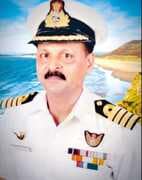
(Captain Pravin Raghuvanshi—an ex Naval Officer, possesses a multifaceted personality. He served as a Senior Advisor in prestigious Supercomputer organisation C-DAC, Pune. He was involved in various Artificial Intelligence and High-Performance Computing projects of national and international repute. He has got a long experience in the field of ‘Natural Language Processing’, especially, in the domain of Machine Translation. He has taken the mantle of translating the timeless beauties of Indian literature upon himself so that it reaches across the globe. He has also undertaken translation work for Shri Narendra Modi, the Hon’ble Prime Minister of India, which was highly appreciated by him. He is also a member of ‘Bombay Film Writer Association’.
WHAT BROUGHT YOU HERE WILL NOT TAKE YOU THERE… – By Capt Pravin Raghuvanshi, NM
☆
Success has a strange way of deceiving us…
What worked yesterday may not work tomorrow
The skills that brought you success at one level may not be enough at the next
The mindset that helped you rise may eventually become the very thing that holds you back…
What Brought You Here Will Not Take You There is a compelling journey into the inevitable transformations required as we move through different levels of responsibility, leadership and life…
Drawing from real-world experience, leadership insights and the realities of a constantly changing world, Pravin Raghuvanshi explores what it takes to evolve, adapt and lead when the rules of the game keep changing…
This book challenges you to ask some uncomfortable but essential questions…
Am I still growing…?
Is what made me successful today enough for tomorrow…?
Have I changed as my responsibilities have changed…?
Am I preparing myself for the next level — or merely repeating what worked at the last one…?
From continuous learning and strategic thinking to people leadership, adaptability, foresight, purpose, transformation and legacy, this book offers practical perspectives for anyone who refuses to become stagnant after achieving success…
Whether you are an aspiring leader, a mid-career professional, an experienced manager or a seasoned executive, this book invites you to look beyond where you are today — and prepare for where you need to go next…
Because…
SUCCESS IS TEMPORARY…
GROWTH IS ETERNAL…
Evolve… Adapt… Lead…
What brought you here will not take you there…
But what you become next can take you much further…
(Captain Pravin Raghuvanshi—an ex Naval Officer, possesses a multifaceted personality. He served as a Senior Advisor in prestigious Supercomputer organisation C-DAC, Pune. He was involved in various Artificial Intelligence and High-Performance Computing projects of national and international repute. He has got a long experience in the field of ‘Natural Language Processing’, especially, in the domain of Machine Translation. He has taken the mantle of translating the timeless beauties of Indian literature upon himself so that it reaches across the globe. He has also undertaken translation work for Shri Narendra Modi, the Hon’ble Prime Minister of India, which was highly appreciated by him. He is also a member of ‘Bombay Film Writer Association’.
The Rifling Effect – By Capt Pravin Raghuvanshi, NM
☆
Every book begins with an idea. Some ideas arrive suddenly. Others take years to reveal themselves.
Every book begins with an idea. Some ideas arrive suddenly. Others take years to reveal themselves.
The Rifling Effect belongs to the second kind.
For more than forty-six years of my professional life, I have had the privilege of experiencing leadership from remarkably different vantage points—military operations, aviation, theatre-level war-gaming, technology, high-performance computing, artificial intelligence and the corporate world.
The environments were different. The vocabulary was different. The challenges were different.
Yet, beneath that diversity, I kept encountering the same fundamental question:
Why do some organisations convert enormous energy into extraordinary outcomes, while others, often possessing equally talented people and resources, struggle to convert effort into meaningful progress?
Over time, I began to see that the answer was not simply more resources, more technology or even greater individual brilliance.
Organisations already possess enormous energy—in their people, ideas, experience, resources, technology and ambition.
The challenge is to direct that energy.
Then came the metaphor.
A rifle barrel may appear smooth from the outside, but within it are carefully engineered grooves called rifling. They do not create the energy that propels a projectile. The energy already exists.
The grooves impart rotation.
Rotation provides stability.
Stability helps preserve trajectory.
And a stable trajectory enables the available energy to be delivered to the target with greater precision and effectiveness.
But there is something more.
The purpose is not merely to reach the target. It is to make the energy count when it gets there.
That distinction stayed with me.
I began to see leadership in much the same way.
Leadership does not create the energy within an organisation. It aligns it, stabilises it and directs it towards purpose.
It converts individual capability into collective strength.
This perspective was shaped by experiences across very different professional environments.
Aviation taught me never to dismiss a near miss simply because an accident did not occur.
War-gaming taught me that challenging an opponent is not about proving superiority, but about discovering weaknesses before reality does.
Technology taught me that greater capability does not automatically produce better judgement.
And organisational leadership taught me that people rarely fail because they lack energy. More often, energy is lost through poor direction, weak alignment, delayed decisions or the inability to learn.
These lessons accumulated quietly over the years.
Eventually, they became impossible to ignore.
And that is when I realised that perhaps the different worlds in which I had worked were not as different as they appeared.
The same fundamental questions kept returning.
Where are we going?
How do we decide?
How do we bring people together?
How do we use technology wisely?
And, ultimately, what difference did our collective effort make?
Those questions became the foundation of this book.
The Rifling Effect is my attempt to bring those observations together—not as a memoir, and not as a conventional management text, but as a reflection on leadership, organisational energy and the forces that determine whether that energy becomes purposeful impact.
The pages that follow are therefore drawn not from one environment, but from a lifetime of moving between them.
They are about:
Direction
Alignment
Judgement
Learning
Synergy, and
Impact
If these pages leave the reader with one enduring question, then my purpose is achieved:
Are we creating more energy—or are we learning how to make the energy we already possess count?
The rifle is only the metaphor.
The real subject is human potential—and what leadership does with it.
☆ FROM THE WAR ROOM TO THE BOARDROOM ☆
The central proposition of this book is simple:
Every organisation possesses energy.
The question is what it does with that energy.
People bring knowledge, experience, creativity, courage and ambition.
Technology brings capability. Resources bring capacity. Strategy provides direction. Leadership brings these elements together. But energy alone does not guarantee progress.
It can be scattered.
It can be consumed by internal friction. It can be directed towards competing objectives. It can generate enormous activity without producing proportionate impact.
Or it can be aligned. When that happens, something remarkable occurs.
Energy becomes synergy.
This book explores the forces that make that transformation possible.
I call them the Power Dynamics of Growth:
Strategy — Where we point.
Decision — When and how we choose.
People — Who carry the mission.
Technology — How we multiply our force.
Impact — What remains after the shot.
These are not five independent management disciplines. They are interconnected forces.
Strategy without sound decisions remains an intention.
Decisions without capable people remain words.
People without direction can generate enormous activity without proportionate progress.
Technology without judgement can multiply both capability and error.
And growth without meaningful impact can become expansion without purpose.
The real power lies in their alignment.
That is where leadership becomes a force multiplier.
The metaphor of rifling provides a way of understanding this alignment. The energy already exists. The grooves give it stability and direction. The resulting trajectory determines how effectively that energy can be translated into impact.
Organisations work in much the same way.
The objective is not necessarily to create more energy. It is to make the energy already present count. That insight connects environments that are otherwise worlds apart.
In a war room, decisions must often be made with incomplete information.
In a boardroom, the information may be different, but uncertainty remains.
In business, a near miss can reveal a vulnerability before it becomes a crisis.
In technology, greater capability expands possibilities but also increases the consequences of poor judgement.
Across all these environments, one principle remains constant:
The quality of the outcome depends not merely on the energy available, but on how intelligently that energy is directed, aligned and applied.
That is why this book moves deliberately from the individual elements to the system they create together.
Part I establishes the principle.
Part II examines the five grooves individually—Strategy, Decision, People, Technology and Impact.
Part III brings them together to explore the Rifled Organisation: an organisation in which diverse energies reinforce rather than oppose one another.
The final chapters then move from organisational synergy to leadership itself, and finally from insight to practice.
Because understanding a principle is only the beginning.
The real test is whether it changes behaviour.
Whether a leader asks a better question.
Whether a team challenges an assumption before reality does.
Whether technology multiplies judgement rather than merely multiplying speed.
Whether people become more capable because they were trusted with responsibility.
Whether an organisation becomes stronger because it was led.
That is the journey this book invites the reader to undertake.
From energy to direction.
From direction to alignment.
From alignment to synergy.
From synergy to impact.
And ultimately, from individual contribution to institutional strength, confronting the challenge:
How do we transform the energy we possess into the outcomes we seek? That is the question at the heart of The Rifling Effect.
(Captain Pravin Raghuvanshi—an ex Naval Officer, possesses a multifaceted personality. He served as a Senior Advisor in prestigious Supercomputer organisation C-DAC, Pune. He was involved in various Artificial Intelligence and High-Performance Computing projects of national and international repute. He has got a long experience in the field of ‘Natural Language Processing’, especially, in the domain of Machine Translation. He has taken the mantle of translating the timeless beauties of Indian literature upon himself so that it reaches across the globe. He has also undertaken translation work for Shri Narendra Modi, the Hon’ble Prime Minister of India, which was highly appreciated by him. He is also a member of ‘Bombay Film Writer Association’.
Book Name – The Evolution Of Intelligence
Amazon –https://link.amazon/B09huT2dr
Google Play – https://play.google.com/store/books/details?id=UxD7EQAAQBAJ
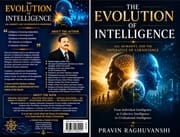
The Evolution of Intelligence – By Capt Pravin Raghuvanshi, NM
☆
(“” which is all about AI and AGI… This book also includes the vision – India 2045… My long stint with C-DAC (Centre for Development of Advanced Computing) in the HPC & Applied AI fields has helped me pen down this book… I was contemplating writing this book for over a decade… finally, it’s ready…)
Dear Friends,
It gives me immense pleasure to share that my latest book, The Evolution of Intelligence, has been launched and is now available on Amazon and Flipkart.
The Evolution of Intelligence explores one of the most profound transformations in human history—the emergence of intelligence beyond the human mind. Going far beyond technology, it examines how Artificial General Intelligence (AGI) is poised to redefine civilization, governance, economics, creativity, and even our understanding of what it means to be human.
Blending scientific insight, strategic foresight, and philosophical depth, the book argues that humanity’s greatest challenge is not merely creating intelligent machines, but learning to coexist with multiple forms of intelligence.
Timely, thought-provoking and deeply insightful, The Evolution of Intelligence offers a compelling roadmap for navigating the next chapter in the evolution of civilization.
It is an essential read for policymakers, business leaders, technologists, educators, students, and every thoughtful citizen, because the future of AI and AGI will shape not just technology, but the destiny of humanity itself.
I would be deeply honoured if you would read the book, bless this endeavour with your good wishes, and share your valuable feedback. Your encouragement and insights will mean a great deal to me.
(Captain Pravin Raghuvanshi—an ex Naval Officer, possesses a multifaceted personality. He served as a Senior Advisor in prestigious Supercomputer organisation C-DAC, Pune. He was involved in various Artificial Intelligence and High-Performance Computing projects of national and international repute. He has got a long experience in the field of ‘Natural Language Processing’, especially, in the domain of Machine Translation. He has taken the mantle of translating the timeless beauties of Indian literature upon himself so that it reaches across the globe. He has also undertaken translation work for Shri Narendra Modi, the Hon’ble Prime Minister of India, which was highly appreciated by him. He is also a member of ‘Bombay Film Writer Association’.
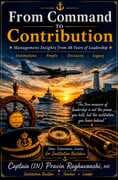
Here’s the cover of my next book, which is going to be launched soon:
From Command To Contribution: Management Insights from 47 years of Leadership – By Capt Pravin Raghuvanshi, NM
☆
Leadership is not about rank.
It is not about power.
It is about the institutions we build, the people we inspire, and the legacy we leave behind.
Over the last almost half a century, I have had the privilege of serving the nation, leading teams in uniform, working with government, industry, technology, and academia, and witnessing leadership in its finest—and sometimes its most challenging—forms.
This book is a distillation of those experiences.
It is not a book of theories. It is a book of lived lessons.
Within these pages are stories of leadership, decision-making, resilience, ethics, institution building, and the countless small choices that quietly shape extraordinary outcomes.
Whether you are a corporate executive, entrepreneur, civil servant, defence officer, educator, student, or someone who aspires to lead with purpose, I hope these insights will help you create value that endures long after titles and positions have faded.
Because the true measure of leadership is not the authority we exercise today, but the institutions and people that continue to flourish tomorrow.
Authored six books on happiness: Cultivating Happiness, Nirvana – The Highest Happiness, Meditate Like the Buddha, Mission Happiness, A Flourishing Life, and The Little Book of Happiness. He served in a bank for thirty-five years and has been propagating happiness and well-being among people for the past twenty years. He is on a mission – Mission Happiness!
☆ Book Review ☆ SHOE DOG 🥾 ☆ Shri Jagat Singh Bisht ☆
When Business Becomes a Run Towards Meaning 🥾
There are autobiographies one reads with admiration. There are others one reads with curiosity. And then, once in a rare while, there comes a memoir that one lives through — breath by breath, doubt by doubt, heartbeat by heartbeat.
This was my experience with Shoe Dog.
I have always loved autobiographies. They allow us to sit quietly beside another human being and listen — not to their achievements alone, but to their fears, their confusions, their missteps. Yet this memoir felt different. It did not read like a polished success story told from a glittering summit. It read like a man sitting across the table, sleeves rolled up, speaking plainly, even vulnerably, about a life that unfolded in chaos, anxiety and relentless uncertainty.
And that is what makes it unforgettable.
A Story Without Armour 🥾
Many founders narrate their journeys with an air of inevitability — as though success was merely waiting for them to arrive. But in Shoe Dog, Phil Knight does something rare: he dismantles the myth of certainty.
The story is messy. It is perilous. It is riddled with mistakes, near-bankruptcies, strained relationships, sleepless nights and heart-in-the-mouth moments. Banks threaten to shut him down. Shipments are delayed. Competitors loom. Cash flow evaporates like morning dew.
And yet, there is no bravado in the telling. No chest-thumping. No self-congratulation.
Instead, there is candour. There is anxiety. There is fear admitted openly.
In a world obsessed with projecting invincibility, here is a man who confesses frailty. He speaks of doubt as though it were an old companion. He acknowledges the terror of payroll deadlines. He reveals how often he felt on the brink of collapse.
That honesty is disarming.
Not Just Shoes, But People 🥾
Though the book chronicles the birth of Nike, it is not merely a corporate saga. It is the story of a “shoe dog” — a man obsessed not with profit margins but with running tracks, athletes’ feet, and the poetry of movement.
There is a deep respect for sportsmen. A reverence for the discipline of runners. A quiet admiration for grit.
But even more touching is the affection for family and colleagues. The early team — eccentric, loyal, imperfect — feels like a band of brothers bound by something far greater than commerce.
These were not employees; they were co-dreamers.
And through it all, one senses a son’s regard for his father, a husband’s gratitude, a friend’s loyalty. There is not even an iota of ego in the narrative. If anything, there is an almost startling humility — an insistence on sharing credit, on exposing weakness, on acknowledging dependence on others.
A Dream That Was Never About Money 🥾
What struck me most deeply was this: money was never the dream.
We are so conditioned to believe that entrepreneurship is fuelled by the hunger for wealth. But Knight’s hunger moved along a different tangent. He writes:
“I wanted to leave a mark on the world. I wanted to win. No, that’s not right. I simply didn’t want to lose… I saw it all before me, exactly what I wanted my life to be. Play.”
That word — play — lingers.
Running, for him, was not just sport; it was revelation. As his “young heart began to thump” and the trees blurred into green streaks, he glimpsed not a balance sheet, but a way of living. A life in motion. A life engaged.
What he sought was not accumulation but aliveness.
The Only Advice That Matters 🥾
In 1962, he told himself:
“Let everyone else call your idea crazy… just keep going. Don’t stop. Don’t even think about stopping until you get there, and don’t give much thought to where ‘there’ is. Whatever comes, just don’t stop.”
This, to me, is perhaps the best advice — maybe the only advice — any of us should ever give.
We spend so much time defining “there”. We obsess over milestones, titles, recognition. Yet the real work is in continuing — especially when the path is foggy, when the numbers don’t add up, when others shake their heads in polite disbelief.
Keep going.
Not blindly, not arrogantly, but steadily.
Keep going when your lungs burn.
Keep going when your accounts tremble.
Keep going when doubt whispers its favourite word — “quit”.
The memoir reminds us that greatness is rarely glamorous in real time. It is repetitive. It is exhausting. It is frightening. But if one keeps moving, one day the blur becomes a landscape.
The Real Victory 🥾
By the time I finished the last page, I did not feel I had read about a global brand. I felt I had walked beside a young man who refused to stop running — even when he had no clear map, no guarantees, no safety net.
Perhaps that is the deeper lesson.
We do not need perfect clarity.
We do not need universal approval.
We do not even need certainty about the destination.
We need only enough courage to take the next stride.
And then the next.
And then the next.
That is how a shoe dog built something lasting.
And that is how any of us might leave our own quiet mark on the world.🥾
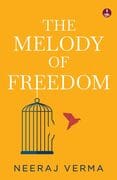
The novel centers on Janki Das Mishra, a fifty-nine-year-old retired bank officer living in Borivali East, Mumbai. His life is defined by a quiet, predictable routine, punctuated only by his interactions with his domestic helper, Lata. Having a son settled in America, Janki Das grapples with the typical silence of a “nest” that has long been empty.
The narrative gains momentum when he meets Kalyani, a retired teacher from Durgapur who has moved to the city to stay with her daughter, Ruma. The two find a common purpose in tutoring Lata’s daughters—Janki Das teaching them mathematics and Kalyani focusing on English. What begins as chance encounters at the local vegetable market evolves into a profound, respectful companionship.
Character Dynamics
The Seniors (Janki Das & Kalyani): They represent a generation that values patience and human connection. Their bond is not one of romantic urgency but of mutual understanding and shared service.
The Corporate Contrast (Ruma): Ruma serves as a foil to the elders. Her life is a high-speed chase for corporate success, marked by stress, alcohol as a coping mechanism, and an emotional distance from her mother.
The Bridge (Lata): As the domestic helper, Lata is the thread that weaves these lives together, highlighting the interdependence between Mumbai’s middle class and the labor that supports it.
Themes and Writing Style
Neeraj Verma writes with a gentle, observant hand. He transforms mundane activities—baking a cake, buying vegetables, or riding an elevator—into meaningful reflections on the human condition.
Urban Loneliness: The book captures the specific isolation of a big city, where millions live side-by-side yet remain strangers.
Legacy through Education: By teaching Lata’s children, the protagonists find a way to remain relevant and useful, proving that aging does not mean an end to contribution.
The Final Takeaway: What the Story Teaches Us
The core message of The Melody of Freedom is that freedom is the liberty to redefine oneself. It suggests that “retirement” is not a withdrawal from life, but an opportunity to compose a new “melody” based on choice rather than obligation.
The book serves as a poignant reminder that in a world obsessed with speed and digital connection, true fulfillment is found in the “slow” moments—in altruism, in the courage to seek new friendships in one’s sunset years, and in the realization that we are never too old to learn or to teach.
A heartwarming, soul-stirring read that finds extraordinary beauty in ordinary lives. It is a must-read for anyone looking to understand the quiet dignity of the older generation and the healing power of simple human kindness.
Authored six books on happiness: Cultivating Happiness, Nirvana – The Highest Happiness, Meditate Like the Buddha, Mission Happiness, A Flourishing Life, and The Little Book of Happiness. He served in a bank for thirty-five years and has been propagating happiness and well-being among people for the past twenty years. He is on a mission – Mission Happiness!
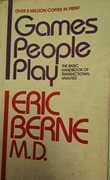
☆ Games People Play, ERIC BERNE M.D. ☆ Compilation: Shri Jagat Singh Bisht ☆
Notes of a Trainer
☆ SOCIAL INTERCOURSE ☆
The theory of social intercourse has been outlined in Transactional Analysis.
Social programming results in traditional ritualistic or semi-ritualistic interchanges. The chief criterion for it is local acceptability, popularly called ‘good manners’. Parents in all parts of the world teach their children manners, which means that they know the proper greeting, eating, emunctory, courting and mourning rituals, and also how to carry on topical conversations with appropriate strictures and reinforcements. The strictures and reinforcements constitute tact or diplomacy, some of which is universal and some local. Usually formal rituals precede semi-ritualistic topical conversations, and the latter may be distinguished by calling them pastimes.
The solitary individual can structure time in two ways: activity and fantasy. An individual can remain solitary even in the presence of others – withdrawal. When one is a member of social aggregation of two or more people, there are several options of structuring time. In order of complexity, these are: (1) Rituals; (2) Pastimes; (3) Games; (4) Intimacy; and (5) Activity. The goal of each member of the aggregation is to obtain as many satisfactions as possible from his transactions with other members. The more accessible he is, the more satisfactions he can obtain. The most gratifying forms of social contact are games and intimacy. Prolonged intimacy is rare; significant social intercourse most commonly takes the form of games.
STRUCTURAL ANALYSIS
Observation of spontaneous social activity reveals that from time to time people show noticeable changes in posture, viewpoint, voice, vocabulary, and other aspects of behaviour. These behavioural changes are often accompanied by shifts in feeling. In a given individual, a certain set of behaviour patterns corresponds to one state of mind, while another set is related to a different psychic attitude, often inconsistent with the first. These changes and differences give rise to the idea of ego states.
An ego state may be described as a coherent system of feelings or behaviour patterns. Each individual seems to have a limited repertoire of such ego states, which are not roles but psychological realities. At any given moment each individual in a social aggregation will exhibit a Parental, Adult or Child ego state. Individuals can shift with varying degrees of readiness from one ego state to another.
‘That is your Parent’ means: ‘You are now in the same state of mind as one of your parents used to be, and you are responding as he would, with the same posture, gestures, vocabulary, feelings, etc.’
‘That is your Adult’ means: “you have just made an autonomous, objective appraisal of the situation and are stating these thought-processes, or the problems you perceive, or the conclusions you have come to, in a non-prejudicial manner.’
‘That is your Child’ means: ‘The manner and intent of your reaction is the same as it would have been when you were a little boy or girl.’
TRANSACTIONAL ANALYSIS
The unit of social intercourse is called a transaction. If two or more people encounter each other in a social aggregation, sooner or later one of them will speak, or give some other indication of acknowledging the presence of others. This is called the transactional stimulus. Another person will then say or do something which is in some way related to this stimulus, and that is called the transactional response.
Simple transactional analysis is concerned with diagnosing which ego state implemented the transactional stimulus, and which one executed the transactional response. The simplest transactions are those in which both stimulus and response arise from Adults of the parties concerned. Next in simplicity are Child-Parent transactions. The fevered child asks for a glass of water, and the nurturing mother brings it.
These transactions are complementary; that is, the response is appropriate and expected and follows the natural order of healthy human relationships. The first rule of communication is that communication will flow smoothly as long as transactions are complementary; and its corollary is that as long as transactions are complementary, communication can, in principle, proceed indefinitely. These rules are independent of the nature and content of the transactions; they are based entirely on the direction of the vectors involved. As long as the transactions are complementary, it is irrelevant to rule whether two people are engaging in critical gossip (Parent-Parent), solving a problem (Adult-Adult), or playing together (Child-Child or Parent-Child).
The converse rule is that communication is broken off when a crossed transaction occurs. A common crossed transaction – The stimulus is Adult-Adult: ‘Maybe we should find out why you’ve been drinking more lately.’
The appropriate Adult-Adult response would be: ‘Maybe we should. I certainly like to know!’
If the respondent flares up, the response will be something like “You’re always criticizing me, just like my father did’.
Simple complementary transactions most commonly occur in superficial working and social relationships, and these are easily disturbed by simple crossed transactions. In fact a superficial relationship may be defined as one which is confined to simple complementary transactions. Such relationships occur in activities, rituals and pastimes.
More complex are ulterior transactions – those involving the activity of more than two ego states simultaneously – and this category is the basis for games. Salesmen are particularly adept at angular transactions, those involving three ego states. A crude but dramatic example of a sales game is illustrated in the following exchange:
Salesman: ‘This one is better, but you can’t afford it.’
Housewife: ‘That’s the one I’ll take.’
PROCEDURES AND RITUALS
The simplest forms of social activity are procedures and rituals. Some of these are universal and some local, but all of them have to be learned. They offer a safe, reassuring, and often enjoyable method of structuring time. Greeting ritual:
1A: Hello, good morning.
1B: Hello, good morning.
2A: How are you?
2B: Fine. How are you?
PASTIMES
Pastimes are typically played at parties or social gatherings in the form of chit-chat or they may become more serious, e.g., argumentative. A large cocktail party often functions as a kind of gallery for the exhibition of pastimes. Pastimes may be classified in different ways. “General Motors’ (comparing cars) and ‘Who Won’ (sports) are both ‘Man Talk’. ‘Grocery’, ‘Kitchen’ and ‘Wardrobe’ are all ‘Lady Talk’. Pastimes form the basis for the selection of acquaintances, and may lead to friendship.
GAMES
A game is an ongoing series of complementary ulterior transactions progressing to a well-defined, predictable outcome. Descriptively it is a recurring set of transactions, often repetition, superficially plausible, with a concealed motivation; or, more colloquially, a series of moves with a snare, or ‘gimmick’.
Games are clearly differentiated from procedures, rituals, and pastimes by two chief characteristics: their ulterior quality and the pay-off. Procedures may be successful, rituals effective, and pastimes profitable, but all of them are by definition candid; they may involve contest, but not conflict, and the ending may be sensational, but it is not dramatic. Every game, on the other hand, is basically dishonest, and the outcome has a dramatic, as distinct from merely exciting quality. The use of the word ‘game’ should not be misleading. It does not necessarily imply fun or even enjoyment.
The most common game played between spouses is colloquially called ‘If It Weren’t For You’. Mrs White complained that her husband severely restricted her social activities, so that she had never learned to dance.
Out of her many suitors she had picked a domineering man for a husband. She was then in a position to complain that she could do all sorts of things ‘if it weren’t for you’. Many of her women friends also had domineering husbands, and when they met for their morning coffee,they spent a good deal of time playing ‘If It Weren’t For Him’.
His prohibitions and her complaints frequently led to quarrels, so that their sex life was seriously impaired. She and her husband had little in common besides their household worries and the children, so that their quarrels stood out as important events; it was mainly on these occasions that they had anything but the most casual conversations.
A Thesaurus of Games:
The games are classified into families according to the situations in which they most commonly occur: Life Games, Marital Games, Party Games, Sexual Games, Underworld Games, Consulting Room Games and Good Games.
Life Games include ‘Alcoholic’, ‘Debtor’, ‘Kick Me’, ‘Now I’ve Got You, You Son of a Bitch’, ‘See What You Made Me Do’ and their principal variants.
Marital Games include ‘Corner’, ‘Courtroom’, ‘Frigid Woman’ and ‘Frigid Man’, ‘Harried’, ‘If It Weren’t For You’, ‘Look How hard I Have Tried’ and ‘Sweetheart’.
Parties are for pastimes, and pastimes are for parties, but as acquaintanceship ripens, games begin to emerge. Party Games include ‘Ain’t It Awful’, ‘Blemish’, ‘Schlemiel’ and ‘Why Don’t You – Yes But’.
Sexual Games are played to exploit or fight off sexual impulses. They include ‘Let’s You and Him Fight’, ‘Perversion’, ‘Rapo’, ‘Stocking Game’ and ‘Uproar’.
Underworld Games include ‘Cops and Robbers’, ‘How Do You Get Out of Here’ and ‘Let’s Pull a Fast One on Joey’.
Consulting Room Games include ‘I’m Only Trying to Help You’, ‘Psychiatry’, ‘Greenhouse’, ‘Indigent’, “Peasant’, ‘Stupid’ and ‘Wooden Leg’.
A ‘Good Game’ is one which contributes both to the well-being of the other players and to the unfolding of the one who is ‘it’. Since even under the best forms of social action and organization a large proportion of the time has to be spent in playing games, the search for ‘good’ ones must be assiduously pursued. Good Games include ‘Busman’s Holiday’, ‘Cavalier’, ‘Happy to Help’, ‘Homely Sage’ and ‘They’ll Be Glad They Knew Me’.
BEYOND GAMES
Games are passed on from generation to generation. The favoured game of any individual can be traced back to his parents and grandparents. Raising children is primarily a matter of teaching them what games to play.
Games are sandwiched between pastimes and intimacy. Pastimes grow boring with repetition and intimacy requires stringent circumspection. Most people compromise for games when they are available, and these fill the major part of the more interesting hours of social intercourse. People pick as friends, associates and intimates other people who play the same games.
AUTONOMY
The attainment of autonomy is manifested by the release or recovery of three capacities: awareness, spontaneity and intimacy.
Awareness:
Awareness means the capacity to see a coffeepot and hear the birds sing in one’s own way, and not the way one was taught. It requires living in the here and now, and not elsewhere, the past or the future. The aware person is alive because he knows how he feels, where he is and when it is.
Spontaneity:
Spontaneity means option, the freedom to choose and express one’s feelings from the assortment available (Parent feelings, Adult feelings and Child feelings). It means liberation, liberation from the compulsion to play games and have the only feelings one was taught to have.
Intimacy:
Intimacy means the spontaneous, game-free candidness of an aware person. Because intimacy is essentially a function of the natural Child, it tends to turn out well if not disturbed by the intervention of games. Usually the adaptation to Parental influences is what spoils it. But before, unless and until they are corrupted, most infants seem to be loving, and that is the essential nature of intimacy.
Parents, deliberately or unaware, teach their children from birth how to behave, think, feel and perceive. Liberation from these influences is no easy matter, since they are deeply ingrained and necessary during the first two or three decades of life for biological and social survival. Indeed, such liberation is only possible at all because the individual starts in an autonomous state, that is, capable of awareness, spontaneity and intimacy, and he has some discretion as to which parts of his parent’s teachings he will accept. At certain specific moments early in life he decides how he is going to adapt to them. It is because his adaptation is in the nature of a series of decisions that it can be undone, since decisions are reversible under favourable conditions.
First, the weight of a family historical tradition has to be lifted, then the influence of the individual parental, social and cultural background has to be thrown off. The same must be done with the demands of contemporary society at large, and finally the advantages derived from one’s immediate social circle have to be partly or wholly sacrificed. The individual must attain personal and social control.
Human life is merely a process of filling in time, with very little choice, is commonplace but not the final answer. For certain fortunate people there is something which transcends all classifications of behaviour, and that is awareness; something which arises above the programming of the past, and that is spontaneity; and something that is more rewarding than games, and that is intimacy.
But all three of these may be frightening and even perilous to the unprepared. Perhaps they are better off as they are, seeking their solutions in popular techniques of social action, such as ‘togetherness’. This may mean that there is no hope for the human race,but there is hope for individual members of it.
A Pathway to Authentic Happiness, Well-Being & A Fulfilling Life! We teach skills to lead a healthy, happy and meaningful life.
The Science of Happiness (Positive Psychology), Meditation, Yoga, Spirituality and Laughter Yoga. We conduct talks, seminars, workshops, retreats and training.
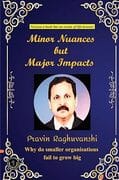
☆ Minor Nuances but Major Impacts – By Captain Pravin Raghuvanshi, NM ☆
With immense joy and gratitude, I’m thrilled to share with the readers that my new book, “Minor Nuances but Major Impacts,” is now published!
It is a story-driven exploration of how small actions create transformational results in strategic leadership and management.
This book distills 45 years of my journey across the uniformed services, corporate world, and strategic management—captured through real experiences, insights, and learnings. Years of observation and reflection, now placed in your hands with lessons and takeaways.
Do read, reflect, and share your thoughts.
Captain Pravin Raghuvanshi, NM
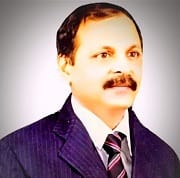
(Captain Pravin Raghuvanshi—an ex Naval Officer, possesses a multifaceted personality. He served as a Senior Advisor in prestigious Supercomputer organisation C-DAC, Pune. He was involved in various Artificial Intelligence and High-Performance Computing projects of national and international repute. He has got a long experience in the field of ‘Natural Language Processing’, especially, in the domain of Machine Translation. He has taken the mantle of translating the timeless beauties of Indian literature upon himself so that it reaches across the globe. He has also undertaken translation work for Shri Narendra Modi, the Hon’ble Prime Minister of India, which was highly appreciated by him. He is also a member of ‘Bombay Film Writer Association’.
About the book: Minor Nuances but Major Impacts
Great empires are not built overnight, nor do they crumble abruptly without reason. Hidden beneath the towering facades of thriving organisations lie the tiny, often invisible elements, those minor nuances that shape the trajectory of success or failure. These are not the headline-making disruptions or glamorous strategies found in case studies, but the everyday choices, overlooked behaviours, and unspoken cultural defaults that silently determine whether a company merely survives or genuinely thrives.
This book is a culmination of my 45 years of hands-on experience in the corporate world, stitched together over seventeen years of reflection, observation, and unwavering curiosity. Through countless boardrooms, shop floors, crisis meetings, and mentoring sessions, I came to recognise a painful pattern: while many small organisations dream of becoming giants, very few actually do. Not because they lack vision, product, or passion, but because they fail to notice the little things that matter.
Each chapter in this book delves into one such nuance. Some will feel familiar, others might be uncomfortable to confront. Yet, each carries within it the seeds of transformation, if only leaders and entrepreneurs are willing to pause, reflect, and act.
But this book is not just a commentary or a checklist. It is a mirror. And like all mirrors, it does not lie. It reveals truths that we sometimes wish to ignore but must confront if we seek growth that is not just quantitative, but also qualitative and sustainable.
The first part of this book builds a strong foundation of lessons and insights drawn from both triumphs and pitfalls. But theory, no matter how sound, is only half the journey. Part Two shifts gear. It steps into the world of a real-life entrepreneur Paresh Mittal whose journey you will walk, stumble, and rise with. It is here that the lessons truly come alive.
This is a book for those who believe that big things are hidden in small details. For those who are brave enough to admit that what’s holding them back might not be the market or the competition, but something much closer often within.
Welcome to a journey where small shifts lead to big outcomes.
I am pleased to present the Foreword written by Dr. Navin Singh.
Dr. Navin Singh
It is a privilege to present the foreword to Minor Nuances but Major Impacts, a distinguished contribution by Captain Pravin Raghuvanshi, NM-an individual whose multifaceted career embodies a rare confluence of strategic insight, professional rigour, and intellectual curiosity.
Over the course of my career in public service and policy, I have engaged with exceptional minds across diverse domains. Captain Raghuvanshi stands out among them not merely for the breadth of his accomplishments, but for the clarity and depth of his thought. A decorated officer of the Indian Navy, an experienced management advisor, a high-level contributor to national and international initiatives, and an acclaimed poet, his profile defies easy classification. This book reflects his uniquely interdisciplinary perspective and a lifetime of reflective practice.
In this work, Captain Raghuvanshi addresses a critical but frequently overlooked phenomenon in organisational dynamics the disproportionate impact of seemingly minor practices, decisions, and behavioural tendencies. Drawing on extensive experience in industrial relations, corporate strategy, Defence, and technological innovation, he presents a structured yet accessible framework for understanding how subtle misalignments can hinder institutional growth and conversely, how mindful refinements can catalyse transformation.
What makes this book particularly valuable is its pragmatic orientation. The author does not offer abstract prescriptions; instead, he grounds his observations in lived corporate realities and practical scenarios. His writing bridges the gap between theory and practice, between leadership intent and organisational outcome. The result is a narrative that is simultaneously reflective, actionable, and enduring in relevance.
The language employed is precise and elegant, marked by clarity of thought and literary finesse. Each chapter engages the reader intellectually while inviting – a rare feat in management literature. The work encourages readers to consider not just what organisations do, but how and why they do it questions central to sustainable excellence.
For leaders, managers, policymakers, and students of management alike, Minor Nuances but Major Impacts offers not only insights but also a mindset a way of perceiving the granular elements that determine institutional success. It challenges assumptions, sharpens strategic thinking, and fosters a more nuanced understanding of human and organisational behaviour.
I commend Captain Pravin Raghuvanshi for this valuable contribution. His work is timely, thought-provoking, and destined to find a meaningful place in boardrooms, classrooms, and among discerning professionals who recognise that in management, as in life, it is often the finer details that shape the grand outcomes.
(प्रतिष्ठित साहित्यकार श्री विवेक रंजन श्रीवास्तव ‘विनम्र’ जी के साप्ताहिक स्तम्भ – “विवेक साहित्य ” में हम श्री विवेक जी की चुनिन्दा रचनाएँ आप तक पहुंचाने का प्रयास करते हैं। श्री विवेक रंजन श्रीवास्तव ‘विनम्र जी, मुख्यअभियंता सिविल (म प्र पूर्व क्षेत्र विद्युत् वितरण कंपनी , जबलपुर ) से सेवानिवृत्त हैं। तकनीकी पृष्ठभूमि के साथ ही उन्हें साहित्यिक अभिरुचि विरासत में मिली है। आपको वैचारिक व सामाजिक लेखन हेतु अनेक पुरस्कारो से सम्मानित किया जा चुका है।आज प्रस्तुत है आपका एक विचारणीय आलेख – लंदन से 7 – बिना टिकिट की वैधानिक यात्रा ।
☆ साप्ताहिक स्तम्भ – विवेक सहित्य # 272 ☆
आलेख – बिना टिकिट की वैधानिक यात्रा
लंदन में परिवहन के लिए सबसे उम्दा साधन ट्यूब मेट्रो है ।
यहां आपको टिकिट नहीं लेना होता, साफ्टवेयर इस तरह का है की जब आप किसी भी स्टेशन पर प्रवेश करते समय गेट खोलने के लिए अपना बैंक कार्ड टैप करते हैं और जब बाहर निकले समय कार्ड टैप करते हैं, तो साफ्टवेयर किराया निकलकर सीधे बैंक से TFL के अकाउंट में चला जाता है।
ट्रांसपोर्ट फॉर लंदन (टीएफएल) शहर के व्यापक सार्वजनिक परिवहन नेटवर्क की देखरेख करता है, जिसमें अंडरग्राउंड, ओवरग्राउंड, बसें, ट्राम, डॉकलैंड्स लाइट रेलवे और यहां तक कि एक केबल कार प्रणाली भी शामिल है जो आपको टेम्स और शहर के क्षितिज के ऊपर ग्लाइडिंग करवाती है।
यहां इंजिन को बिजली की सप्लाई ओवरहेड वायर से नहीं, ट्रेन की पटरियों के साथ लगी एक तीसरी पटरी से मिलती है, इसलिए किसी भी हालत में ट्रेन लाइन पैदल क्रास करने की गलती न करें ।
प्लेटफार्म और ट्रेन के बीच अंतर भारत से बहुत अधिक दिखा, माइंड डी गैप ।
ग्रेटर लंदन नौ क्षेत्रों में विभाजित है। इनमें लंदन शहर और उसके आसपास के 32 उप नगर शामिल हैं। ज़ोन एक में अधिकांश पर्यटक आकर्षण और शहर के स्थल हैं ।272 स्टेशनों पर सेवा देने वाली 11 अलग अलग रंगो नामो की लाइनों से सारे लंदन में जाया जा सकता है।
शहर की सार्वजनिक परिवहन प्रणाली – दुनिया की सबसे पुरानी भूमिगत रेलवे है । ट्यूब हर साल लगभग 1.35 अरब यात्रियों को उनके गंतव्य तक पहुंचाती है, थोड़ी सी तैयारी और गूगल के साथ, आप कुछ ही समय में एक स्थानीय व्यक्ति की तरह अपना रास्ता तय कर सकते हैं।

 WHAT BROUGHT YOU HERE WILL NOT TAKE YOU THERE… – By Capt Pravin Raghuvanshi, NM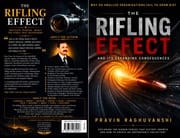






 कवितेचा उत्सव
 आलेख
आलेख