
Shri Jagat Singh Bisht
(Master Teacher: Happiness & Well-Being, Laughter Yoga Master Trainer, Author, Blogger, Educator, and Speaker.)
Authored six books on happiness: Cultivating Happiness, Nirvana – The Highest Happiness, Meditate Like the Buddha, Mission Happiness, A Flourishing Life, and The Little Book of Happiness. He served in a bank for thirty-five years and has been propagating happiness and well-being among people for the past twenty years. He is on a mission – Mission Happiness!
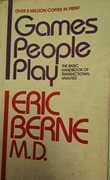
☆ Games People Play, ERIC BERNE M.D. ☆ Compilation: Shri Jagat Singh Bisht ☆
Notes of a Trainer
☆ SOCIAL INTERCOURSE ☆
The theory of social intercourse has been outlined in Transactional Analysis.
Social programming results in traditional ritualistic or semi-ritualistic interchanges. The chief criterion for it is local acceptability, popularly called ‘good manners’. Parents in all parts of the world teach their children manners, which means that they know the proper greeting, eating, emunctory, courting and mourning rituals, and also how to carry on topical conversations with appropriate strictures and reinforcements. The strictures and reinforcements constitute tact or diplomacy, some of which is universal and some local. Usually formal rituals precede semi-ritualistic topical conversations, and the latter may be distinguished by calling them pastimes.
The solitary individual can structure time in two ways: activity and fantasy. An individual can remain solitary even in the presence of others – withdrawal. When one is a member of social aggregation of two or more people, there are several options of structuring time. In order of complexity, these are: (1) Rituals; (2) Pastimes; (3) Games; (4) Intimacy; and (5) Activity. The goal of each member of the aggregation is to obtain as many satisfactions as possible from his transactions with other members. The more accessible he is, the more satisfactions he can obtain. The most gratifying forms of social contact are games and intimacy. Prolonged intimacy is rare; significant social intercourse most commonly takes the form of games.
STRUCTURAL ANALYSIS
Observation of spontaneous social activity reveals that from time to time people show noticeable changes in posture, viewpoint, voice, vocabulary, and other aspects of behaviour. These behavioural changes are often accompanied by shifts in feeling. In a given individual, a certain set of behaviour patterns corresponds to one state of mind, while another set is related to a different psychic attitude, often inconsistent with the first. These changes and differences give rise to the idea of ego states.
An ego state may be described as a coherent system of feelings or behaviour patterns. Each individual seems to have a limited repertoire of such ego states, which are not roles but psychological realities. At any given moment each individual in a social aggregation will exhibit a Parental, Adult or Child ego state. Individuals can shift with varying degrees of readiness from one ego state to another.
‘That is your Parent’ means: ‘You are now in the same state of mind as one of your parents used to be, and you are responding as he would, with the same posture, gestures, vocabulary, feelings, etc.’
‘That is your Adult’ means: “you have just made an autonomous, objective appraisal of the situation and are stating these thought-processes, or the problems you perceive, or the conclusions you have come to, in a non-prejudicial manner.’
‘That is your Child’ means: ‘The manner and intent of your reaction is the same as it would have been when you were a little boy or girl.’
TRANSACTIONAL ANALYSIS
The unit of social intercourse is called a transaction. If two or more people encounter each other in a social aggregation, sooner or later one of them will speak, or give some other indication of acknowledging the presence of others. This is called the transactional stimulus. Another person will then say or do something which is in some way related to this stimulus, and that is called the transactional response.
Simple transactional analysis is concerned with diagnosing which ego state implemented the transactional stimulus, and which one executed the transactional response. The simplest transactions are those in which both stimulus and response arise from Adults of the parties concerned. Next in simplicity are Child-Parent transactions. The fevered child asks for a glass of water, and the nurturing mother brings it.
These transactions are complementary; that is, the response is appropriate and expected and follows the natural order of healthy human relationships. The first rule of communication is that communication will flow smoothly as long as transactions are complementary; and its corollary is that as long as transactions are complementary, communication can, in principle, proceed indefinitely. These rules are independent of the nature and content of the transactions; they are based entirely on the direction of the vectors involved. As long as the transactions are complementary, it is irrelevant to rule whether two people are engaging in critical gossip (Parent-Parent), solving a problem (Adult-Adult), or playing together (Child-Child or Parent-Child).
The converse rule is that communication is broken off when a crossed transaction occurs. A common crossed transaction – The stimulus is Adult-Adult: ‘Maybe we should find out why you’ve been drinking more lately.’
The appropriate Adult-Adult response would be: ‘Maybe we should. I certainly like to know!’
If the respondent flares up, the response will be something like “You’re always criticizing me, just like my father did’.
Simple complementary transactions most commonly occur in superficial working and social relationships, and these are easily disturbed by simple crossed transactions. In fact a superficial relationship may be defined as one which is confined to simple complementary transactions. Such relationships occur in activities, rituals and pastimes.
More complex are ulterior transactions – those involving the activity of more than two ego states simultaneously – and this category is the basis for games. Salesmen are particularly adept at angular transactions, those involving three ego states. A crude but dramatic example of a sales game is illustrated in the following exchange:
Salesman: ‘This one is better, but you can’t afford it.’
Housewife: ‘That’s the one I’ll take.’
PROCEDURES AND RITUALS
The simplest forms of social activity are procedures and rituals. Some of these are universal and some local, but all of them have to be learned. They offer a safe, reassuring, and often enjoyable method of structuring time. Greeting ritual:
1A: Hello, good morning.
1B: Hello, good morning.
2A: How are you?
2B: Fine. How are you?
PASTIMES
Pastimes are typically played at parties or social gatherings in the form of chit-chat or they may become more serious, e.g., argumentative. A large cocktail party often functions as a kind of gallery for the exhibition of pastimes. Pastimes may be classified in different ways. “General Motors’ (comparing cars) and ‘Who Won’ (sports) are both ‘Man Talk’. ‘Grocery’, ‘Kitchen’ and ‘Wardrobe’ are all ‘Lady Talk’. Pastimes form the basis for the selection of acquaintances, and may lead to friendship.
GAMES
A game is an ongoing series of complementary ulterior transactions progressing to a well-defined, predictable outcome. Descriptively it is a recurring set of transactions, often repetition, superficially plausible, with a concealed motivation; or, more colloquially, a series of moves with a snare, or ‘gimmick’.
Games are clearly differentiated from procedures, rituals, and pastimes by two chief characteristics: their ulterior quality and the pay-off. Procedures may be successful, rituals effective, and pastimes profitable, but all of them are by definition candid; they may involve contest, but not conflict, and the ending may be sensational, but it is not dramatic. Every game, on the other hand, is basically dishonest, and the outcome has a dramatic, as distinct from merely exciting quality. The use of the word ‘game’ should not be misleading. It does not necessarily imply fun or even enjoyment.
The most common game played between spouses is colloquially called ‘If It Weren’t For You’. Mrs White complained that her husband severely restricted her social activities, so that she had never learned to dance.
Out of her many suitors she had picked a domineering man for a husband. She was then in a position to complain that she could do all sorts of things ‘if it weren’t for you’. Many of her women friends also had domineering husbands, and when they met for their morning coffee,they spent a good deal of time playing ‘If It Weren’t For Him’.
His prohibitions and her complaints frequently led to quarrels, so that their sex life was seriously impaired. She and her husband had little in common besides their household worries and the children, so that their quarrels stood out as important events; it was mainly on these occasions that they had anything but the most casual conversations.
A Thesaurus of Games:
The games are classified into families according to the situations in which they most commonly occur: Life Games, Marital Games, Party Games, Sexual Games, Underworld Games, Consulting Room Games and Good Games.
Life Games include ‘Alcoholic’, ‘Debtor’, ‘Kick Me’, ‘Now I’ve Got You, You Son of a Bitch’, ‘See What You Made Me Do’ and their principal variants.
Marital Games include ‘Corner’, ‘Courtroom’, ‘Frigid Woman’ and ‘Frigid Man’, ‘Harried’, ‘If It Weren’t For You’, ‘Look How hard I Have Tried’ and ‘Sweetheart’.
Parties are for pastimes, and pastimes are for parties, but as acquaintanceship ripens, games begin to emerge. Party Games include ‘Ain’t It Awful’, ‘Blemish’, ‘Schlemiel’ and ‘Why Don’t You – Yes But’.
Sexual Games are played to exploit or fight off sexual impulses. They include ‘Let’s You and Him Fight’, ‘Perversion’, ‘Rapo’, ‘Stocking Game’ and ‘Uproar’.
Underworld Games include ‘Cops and Robbers’, ‘How Do You Get Out of Here’ and ‘Let’s Pull a Fast One on Joey’.
Consulting Room Games include ‘I’m Only Trying to Help You’, ‘Psychiatry’, ‘Greenhouse’, ‘Indigent’, “Peasant’, ‘Stupid’ and ‘Wooden Leg’.
A ‘Good Game’ is one which contributes both to the well-being of the other players and to the unfolding of the one who is ‘it’. Since even under the best forms of social action and organization a large proportion of the time has to be spent in playing games, the search for ‘good’ ones must be assiduously pursued. Good Games include ‘Busman’s Holiday’, ‘Cavalier’, ‘Happy to Help’, ‘Homely Sage’ and ‘They’ll Be Glad They Knew Me’.
BEYOND GAMES
Games are passed on from generation to generation. The favoured game of any individual can be traced back to his parents and grandparents. Raising children is primarily a matter of teaching them what games to play.
Games are sandwiched between pastimes and intimacy. Pastimes grow boring with repetition and intimacy requires stringent circumspection. Most people compromise for games when they are available, and these fill the major part of the more interesting hours of social intercourse. People pick as friends, associates and intimates other people who play the same games.
AUTONOMY
The attainment of autonomy is manifested by the release or recovery of three capacities: awareness, spontaneity and intimacy.
Awareness:
Awareness means the capacity to see a coffeepot and hear the birds sing in one’s own way, and not the way one was taught. It requires living in the here and now, and not elsewhere, the past or the future. The aware person is alive because he knows how he feels, where he is and when it is.
Spontaneity:
Spontaneity means option, the freedom to choose and express one’s feelings from the assortment available (Parent feelings, Adult feelings and Child feelings). It means liberation, liberation from the compulsion to play games and have the only feelings one was taught to have.
Intimacy:
Intimacy means the spontaneous, game-free candidness of an aware person. Because intimacy is essentially a function of the natural Child, it tends to turn out well if not disturbed by the intervention of games. Usually the adaptation to Parental influences is what spoils it. But before, unless and until they are corrupted, most infants seem to be loving, and that is the essential nature of intimacy.
Parents, deliberately or unaware, teach their children from birth how to behave, think, feel and perceive. Liberation from these influences is no easy matter, since they are deeply ingrained and necessary during the first two or three decades of life for biological and social survival. Indeed, such liberation is only possible at all because the individual starts in an autonomous state, that is, capable of awareness, spontaneity and intimacy, and he has some discretion as to which parts of his parent’s teachings he will accept. At certain specific moments early in life he decides how he is going to adapt to them. It is because his adaptation is in the nature of a series of decisions that it can be undone, since decisions are reversible under favourable conditions.
First, the weight of a family historical tradition has to be lifted, then the influence of the individual parental, social and cultural background has to be thrown off. The same must be done with the demands of contemporary society at large, and finally the advantages derived from one’s immediate social circle have to be partly or wholly sacrificed. The individual must attain personal and social control.
Human life is merely a process of filling in time, with very little choice, is commonplace but not the final answer. For certain fortunate people there is something which transcends all classifications of behaviour, and that is awareness; something which arises above the programming of the past, and that is spontaneity; and something that is more rewarding than games, and that is intimacy.
But all three of these may be frightening and even perilous to the unprepared. Perhaps they are better off as they are, seeking their solutions in popular techniques of social action, such as ‘togetherness’. This may mean that there is no hope for the human race,but there is hope for individual members of it.
♥ ♥ ♥ ♥
Source: Games People Play, ERIC BERNE M.D.
Compilation: Shri Jagat Singh Bisht
Behavioural Science Trainer
Master Teacher: Happiness & Well-Being, Laughter Yoga Master Trainer, Author, Blogger, Educator, and Speaker
Founder
A Pathway to Authentic Happiness, Well-Being & A Fulfilling Life! We teach skills to lead a healthy, happy and meaningful life.
The Science of Happiness (Positive Psychology), Meditation, Yoga, Spirituality and Laughter Yoga. We conduct talks, seminars, workshops, retreats and training.
≈ Editor – Shri Hemant Bawankar/Editor (English) – Captain Pravin Raghuvanshi, NM


