Captain Pravin Raghuvanshi, NM
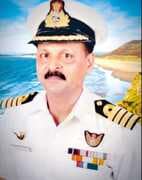
(Captain Pravin Raghuvanshi —an ex Naval Officer, possesses a multifaceted personality. He served as a Senior Advisor in prestigious Supercomputer organisation C-DAC, Pune. He was involved in various Artificial Intelligence and High-Performance Computing projects of national and international repute. He has got a long experience in the field of ‘Natural Language Processing’, especially, in the domain of Machine Translation. He has taken the mantle of translating the timeless beauties of Indian literature upon himself so that it reaches across the globe. He has also undertaken translation work for Shri Narendra Modi, the Hon’ble Prime Minister of India, which was highly appreciated by him. He is also a member of ‘Bombay Film Writer Association’.
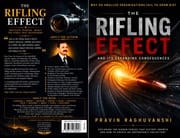
 The Rifling Effect – By Capt Pravin Raghuvanshi, NM
☆
Every book begins with an idea. Some ideas arrive suddenly. Others take years to reveal themselves.
Every book begins with an idea. Some ideas arrive suddenly. Others take years to reveal themselves.
The Rifling Effect belongs to the second kind.
For more than forty-six years of my professional life, I have had the privilege of experiencing leadership from remarkably different vantage points—military operations, aviation, theatre-level war-gaming, technology, high-performance computing, artificial intelligence and the corporate world.
The environments were different. The vocabulary was different. The challenges were different.
Yet, beneath that diversity, I kept encountering the same fundamental question:
Why do some organisations convert enormous energy into extraordinary outcomes, while others, often possessing equally talented people and resources, struggle to convert effort into meaningful progress?
Over time, I began to see that the answer was not simply more resources, more technology or even greater individual brilliance.
Organisations already possess enormous energy—in their people, ideas, experience, resources, technology and ambition.
The challenge is to direct that energy.
Then came the metaphor.
A rifle barrel may appear smooth from the outside, but within it are carefully engineered grooves called rifling. They do not create the energy that propels a projectile. The energy already exists.
The grooves impart rotation.
Rotation provides stability.
Stability helps preserve trajectory.
And a stable trajectory enables the available energy to be delivered to the target with greater precision and effectiveness.
But there is something more.
The purpose is not merely to reach the target. It is to make the energy count when it gets there.
That distinction stayed with me.
I began to see leadership in much the same way.
Leadership does not create the energy within an organisation. It aligns it, stabilises it and directs it towards purpose.
It converts individual capability into collective strength.
This perspective was shaped by experiences across very different professional environments.
Aviation taught me never to dismiss a near miss simply because an accident did not occur.
War-gaming taught me that challenging an opponent is not about proving superiority, but about discovering weaknesses before reality does.
Technology taught me that greater capability does not automatically produce better judgement.
And organisational leadership taught me that people rarely fail because they lack energy. More often, energy is lost through poor direction, weak alignment, delayed decisions or the inability to learn.
These lessons accumulated quietly over the years.
Eventually, they became impossible to ignore.
And that is when I realised that perhaps the different worlds in which I had worked were not as different as they appeared.
The same fundamental questions kept returning.
Where are we going?
How do we decide?
How do we bring people together?
How do we use technology wisely?
And, ultimately, what difference did our collective effort make?
Those questions became the foundation of this book.
The Rifling Effect is my attempt to bring those observations together—not as a memoir, and not as a conventional management text, but as a reflection on leadership, organisational energy and the forces that determine whether that energy becomes purposeful impact.
The pages that follow are therefore drawn not from one environment, but from a lifetime of moving between them.
They are about:
- Direction
- Alignment
- Judgement
- Learning
- Synergy, and
- Impact
If these pages leave the reader with one enduring question, then my purpose is achieved:
Are we creating more energy—or are we learning how to make the energy we already possess count?
The rifle is only the metaphor.
The real subject is human potential—and what leadership does with it.
☆ FROM THE WAR ROOM TO THE BOARDROOM ☆
The central proposition of this book is simple:
Every organisation possesses energy.
The question is what it does with that energy.
People bring knowledge, experience, creativity, courage and ambition.
Technology brings capability. Resources bring capacity. Strategy provides direction. Leadership brings these elements together. But energy alone does not guarantee progress.
It can be scattered.
It can be consumed by internal friction. It can be directed towards competing objectives. It can generate enormous activity without producing proportionate impact.
Or it can be aligned. When that happens, something remarkable occurs.
Energy becomes synergy.
This book explores the forces that make that transformation possible.
I call them the Power Dynamics of Growth:
- Strategy — Where we point.
- Decision — When and how we choose.
- People — Who carry the mission.
- Technology — How we multiply our force.
- Impact — What remains after the shot.
These are not five independent management disciplines. They are interconnected forces.
- Strategy without sound decisions remains an intention.
- Decisions without capable people remain words.
- People without direction can generate enormous activity without proportionate progress.
- Technology without judgement can multiply both capability and error.
- And growth without meaningful impact can become expansion without purpose.
The real power lies in their alignment.
That is where leadership becomes a force multiplier.
The metaphor of rifling provides a way of understanding this alignment. The energy already exists. The grooves give it stability and direction. The resulting trajectory determines how effectively that energy can be translated into impact.
Organisations work in much the same way.
The objective is not necessarily to create more energy. It is to make the energy already present count. That insight connects environments that are otherwise worlds apart.
- In a war room, decisions must often be made with incomplete information.
- In a boardroom, the information may be different, but uncertainty remains.
- In business, a near miss can reveal a vulnerability before it becomes a crisis.
- In technology, greater capability expands possibilities but also increases the consequences of poor judgement.
Across all these environments, one principle remains constant:
The quality of the outcome depends not merely on the energy available, but on how intelligently that energy is directed, aligned and applied.
That is why this book moves deliberately from the individual elements to the system they create together.
- Part I establishes the principle.
- Part II examines the five grooves individually—Strategy, Decision, People, Technology and Impact.
- Part III brings them together to explore the Rifled Organisation: an organisation in which diverse energies reinforce rather than oppose one another.
The final chapters then move from organisational synergy to leadership itself, and finally from insight to practice.
Because understanding a principle is only the beginning.
- The real test is whether it changes behaviour.
- Whether a leader asks a better question.
- Whether a team challenges an assumption before reality does.
- Whether technology multiplies judgement rather than merely multiplying speed.
- Whether people become more capable because they were trusted with responsibility.
- Whether an organisation becomes stronger because it was led.
That is the journey this book invites the reader to undertake.
- From energy to direction.
- From direction to alignment.
- From alignment to synergy.
- From synergy to impact.
And ultimately, from individual contribution to institutional strength, confronting the challenge:
How do we transform the energy we possess into the outcomes we seek? That is the question at the heart of The Rifling Effect.
~Pravin Raghuvanshi
© Captain Pravin Raghuvanshi, NM
≈ Founder Editor – Shri Hemant Bawankar/Editor (English) – Captain Pravin Raghuvanshi, NM ≈


