
Shri Jagat Singh Bisht
(Master Teacher: Happiness & Well-Being, Laughter Yoga Master Trainer, Author, Blogger, Educator, and Speaker.)
Authored six books on happiness: Cultivating Happiness, Nirvana – The Highest Happiness, Meditate Like the Buddha, Mission Happiness, A Flourishing Life, and The Little Book of Happiness. He served in a bank for thirty-five years and has been propagating happiness and well-being among people for the past twenty years. He is on a mission – Mission Happiness!
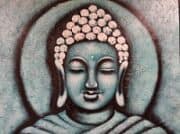
🍀Meditate, He Said: The Heart of the Buddha’s Path 🌺
Of all the teachings the Buddha offered, the one he pressed closest to his heart—again and again, like a mother reminding her child of the way home—was this: 🍀Meditate!🌺
Not once. Not twice. But with the steady urgency of a compassionate friend, he told his disciples, “Do not waste your precious life in idle chatter or the pursuit of empty theories. Meditate!”
For the Buddha, meditation was not a spiritual hobby or an exotic practice for mountain monks. It was the lifeblood of inner awakening. It was the very path to peace, the art of knowing oneself, and the road to liberation from all suffering.
🍀Why Meditate?🌺
Because the human mind, left untended, becomes a tangled jungle. Thoughts jump like monkeys, emotions swirl like storms, and we’re swept away by every mood, memory, or desire. The Buddha saw this clearly and gave us tools to tame the mind, not with force but with awareness and gentle effort.
He famously said, “Mindfulness of in-and-out breathing, when developed and pursued, is of great fruit, of great benefit.” Simple words. But behind them lies a practice that opens the door to serenity, clarity, and profound wisdom.
🍀The Two Wings of Meditation🌺
The Buddha’s system of meditation unfolds like a bird with two wings—serenity (samatha) and insight (vipassanā). Both are essential. One calms the mind, the other enlightens it.
- Serenity Meditation (Samatha)🍀
This is the art of stilling the restless waters of the mind. It trains the attention to stay steady—like a candle flame undisturbed by wind.
The goal is samādhi, or deep concentration. This state brings peace, joy, and a sense of wholeness. Practitioners can experience the four jhānas, exquisite absorptions of stillness and clarity, which were known even before the Buddha’s time. But the Buddha gave them a deeper purpose: to use them as a springboard to insight.
A favourite method to develop serenity is mindfulness of breathing. The breath is always with us—free, quiet, and subtle. By simply observing each inhalation and exhalation, the mind becomes anchored, like a boat moored against the tide.
Another beautiful pathway to serenity is through the brahmavihāras, the four divine abodes:
🌿Loving-kindness (mettā) – the wish for all beings to be happy,
🌿Compassion (karuṇā) – the response to suffering,
🌿Altruistic joy (muditā) – rejoicing in others’ happiness,
🌿Equanimity (upekkhā) – the calm acceptance of life’s ups and downs.
These are not mere ideals but powerful meditations that soften the heart and refine the mind.
- Insight Meditation (Vipassanā)🍀
Once the mind is calm, it becomes a mirror—clear enough to see the truth.
Insight meditation is not about zoning out or chasing visions. It’s about seeing things as they really are. Through gentle, mindful observation, one watches the arising and passing of thoughts, feelings, bodily sensations, and mental states.
This flux of experience reveals a profound truth: everything is changing, unsatisfactory, and not truly ours. This realisation—felt, not just thought—is the beginning of wisdom (paññā).
🍀The Buddha’s Greatest Teaching on Meditation🌺
The crown jewel of the Buddha’s meditation teachings is found in the Satipaṭṭhāna Sutta, the Discourse on the Foundations of Mindfulness. This is not a text to be read and shelved. It is a map to be walked.
In it, the Buddha outlines four great fields of mindfulness:
- Mindfulness of the body – breath, posture, movements, and the body’s nature. 🌿
- Mindfulness of feelings – pleasant, unpleasant, and neutral sensations. 🌿
- Mindfulness of the mind – whether it is greedy, angry, deluded, concentrated, distracted. 🌿
- Mindfulness of mental objects – teachings, principles, and inner phenomena. 🌿
Practised with sincerity, this teaching leads the meditator beyond confusion to clarity, beyond sorrow to freedom.
🍀In Closing: A Gentle Call to Sit🌺
The Buddha never asked for blind faith. He simply said: Try it for yourself. Sit quietly. Breathe. Observe. Be present.
The world outside will keep spinning. But the world inside, once glimpsed through meditation, reveals a stillness more beautiful than words can express.
He didn’t say: Argue. Analyse. Accumulate beliefs.
He said: 🌺🍀Meditate!🍀🌺
And perhaps that one word is enough to begin.
♥ ♥ ♥ ♥
© Jagat Singh Bisht
Master Teacher: Happiness & Well-Being, Laughter Yoga Master Trainer, Author, Blogger, Educator, and Speaker
Founder
A Pathway to Authentic Happiness, Well-Being & A Fulfilling Life! We teach skills to lead a healthy, happy and meaningful life.
The Science of Happiness (Positive Psychology), Meditation, Yoga, Spirituality and Laughter Yoga. We conduct talks, seminars, workshops, retreats and training.
≈ Editor – Shri Hemant Bawankar/Editor (English) – Captain Pravin Raghuvanshi, NM


So well explained! Simple n succinct !