Dr. Suresh Kumar Mishra ‘Uratript’
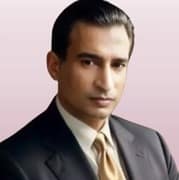
Dr. Suresh Kumar Mishra, widely known in the world of satire by his pen name ‘Uratipt’, expresses his emotions and thoughts with profound honesty and depth. His multifaceted talent is evident in his contributions across various literary genres. He is not only a renowned satirist but also a poet and a children’s author.
His satirical writings have earned him a special place in the literary world. His satire, ‘Shikshak Ki Mout’, went massively viral on the Sahitya Aajtak channel, garnering over a million views and reads—a monumental achievement in the history of Hindi satire. His collection of satires, ‘Ek Tinka Ikyavan Aankhen’ (A Straw and Fifty-One Eyes), is also highly acclaimed and includes his timeless work, ‘Kitabon Ki Antim Yatra’ (The Last Journey of Books). Other celebrated collections include ‘Mayaan Ek, Talwar Anek’ (One Sheath, Many Swords), ‘Gapodi Adda’ (The Gossiper’s Den), and ‘Sab Rang Mein Mere Rang’ (My Colors in Every Hue). His satirical novel, ‘Idhar-Udhar Ke Beech Mein’ (In Between Here and There), is a unique and groundbreaking work focused on the third world.
His significant contributions to literature have been widely recognized. He was honored with the Best Young Creator Award, 2021 by the Telangana Hindi Academy and the Government of Telangana, an award presented by Chief Minister K. Chandrasekhar Rao. The Rajasthan Children’s Literature Academy also honored him for his children’s book, ‘Nanhon Ka Srijan Aasmaan’ (The Creative Sky of Little Ones). Additionally, he has received the Vyanga Yatra Ravindranath Tyagi Sopaan Samman and the Sahitya Srijan Samman from Prime Minister Narendra Modi.
Dr. Uratript has also played a pivotal role in writing, editing, and coordinating a total of 55 books for the Government of Telangana for primary school, college, and university levels. His work is included in university textbooks in Bihar, Chhattisgarh, and Telangana, where his satirical creations are part of the curriculum. This recognition underscores that young readers can identify and appreciate quality and impactful writing.
Key Accolades and Works
- Viral Satire: ‘Teacher’s Death’ (over 1 million views)
- Satire Collections: ‘Ek Tinka Ikyavan Aankhen’, ‘Mayaan Ek, Talwar Anek’, ‘Gapodi Adda’
- Unique Satirical Novel: ‘Idhar-Udar Ke Beech Mein’
- Awards: Shreshtha Navyuva Samman (Telangana), Sahitya Srijan Samman (PM Modi), and more.
- Educational Contribution: Authored and edited 55 books for the Telangana government.
Some precious moments of life

- Honoured with ‘Shrestha Navayuvva Rachnakar Samman’ by former Chief Minister of Telangana Government, Shri K. Chandrasekhar Rao.
- Honoured with Oscar, Grammy, Jnanpith, Sahitya Akademi, Dadasaheb Phalke, Padma Bhushan and many other awards by the most revered Gulzar sahab (Sampurn Singh Kalra), the lighthouse of the world of literature and cinema, during the Sahitya Suman Samman held in Mumbai.
- Meeting the famous litterateur Shri Vinod Kumar Shukla Ji, honoured with Jnanpith Award.
- Got the privilege of meeting Mr. Perfectionist of Bollywood, actor Aamir Khan.
- Meeting the powerful actor Vicky Kaushal on the occasion of being honoured by Vishva Katha Rangmanch.
Today we present his satire The Brass Shears.
☆ Witful Warmth# 119 ☆
☆ Satire ☆ The Brass Shears… ☆ Dr. Suresh Kumar Mishra ‘Uratript’ ☆
Upon the whitewashed brickwork of the main colonnade of the parish Women’s Welfare Centre—a municipal establishment devoted to the moral polishing and industrial elevation of the destitute female—there had hung, suspended within a mouldering timber case for upwards of twenty revolving years, a pair of brass shears of monstrous weight and antique pattern. Time, with that impartiality with which it scatters soot upon church monuments and pauper graves alike, had coated their shearing edges with a grim incrustation of rust and neglect.
Directly beneath this curious instrument of state, upon a fractured bench of peeling cement, there was wont to appear each morning, as the parish bell chimed the hour of eight, one Parvati Amma, an ancient matron leaning upon a knotty stick. Clad in the coarsest homespun white, and clutching between trembling fingers a withered remnant of faded velvet, Parvati Amma sat the livelong day, fastening her dim, unblinking eyes upon those elevated shears.
On this particular morning, the gravelled avenues of the Centre groaned beneath the varnished wheels of modern philanthropic carriages; ladies of high fashion, advanced education, and formidable civic reputation swept about the precincts, scattering tracts upon female equality and the inalienable prerogatives of the sex, whilst the dazzling flashes of the photographic engines cast an unearthly glare across the flags. Neither the sleek reformers in their crisp silks nor the choir of school-misses shrilling the official hymn of welcome deigned to cast a glance toward that cobwebbed relic in the corner.
Only Mangroo, the aged messenger of the establishment, whose back had long since been curved into a respectful bow by four decades of carrying tea-kettles for his betters, felt an inward tremor whenever his path crossed that stone-like apparition.
“Tell me, Mangroo,” the dame would murmur in a thin, tremulous voice that sounded like dry rushes in the wind, “on this grand Women’s Equality Day, has the mandate come forth to cut some noble new ribbon with these antique blades? Or is the platform dispensing once again nothing but the thin gruel of hollow promises?”
Whereupon Mangroo, hanging his head as though he bore the collective guilt of the entire Board of Guardians, would heave a heavy sigh and shuffle away into the dark corridors without a word.
Now, there had recently arrived from the central ministry a new District Officer of Female Upliftment—one Miss Anuradha Sharma—a lady of brisk step, iron brow, and that formidable administrative rectitude which views human frailty as an unpardonable breach of departmental regulations. In the course of perambulating the grounds with her portfolios and dispatch-boxes, her sharp official eye was continually arrested by the spectacle of Parvati Amma glued to her cracked bench, offering her silent devotions to a pair of discarded tailor’s shears. To the enlightened intellect of Miss Sharma, the exhibition of a decrepit crone performing what appeared to be idolatrous ceremonies before a scrap of scrap-iron in the midst of a great national jubilee of Female Emancipation was an outrage against civic decorum.
Accordingly, no sooner had the principal harangue of the opening session concluded and the VIPs retired to the committee-room to recruit their exhausted energies with tea and sweetmeats, than Miss Sharma bore down upon the old woman, leaving her retinue of clerks gasping in her wake.
“My good woman!” began Miss Sharma, in that clear, penetrating treble reserved by public authorities for the deaf, the poor, and the obstinate, “why do you obstruct the public concourse at your time of life? If it be an alms-allowance, a widow’s mite, or the loan of a parochial treadle you require, proceed through the green baize door and subscribe to the prescribed schedules. Staring at an obsolete implement upon the wall will purchase you neither bread nor civic rights!”
Parvati Amma brought her palms together with a meekness that was infinitely more terrible than defiance. “Madam,” she whispered, her voice trembling like an autumn leaf, “I sit not here to crave the crumbs of your official charity, nor do I wait upon a pauper’s pension. I keep vigil for the dawn of that day when the edge of those shears shall sever the invisible bonds that were forged and laid upon my shoulders within this very porch.”
Miss Sharma surveyed the old woman with that look of indignant perplexity with which an algebraist might regard an unruly equation. “What bonds can you possibly speak of, dame? Does not the State expend untold treasuries of gold and shower the district with illuminated scrolls to make womankind independent? What ridiculous riddle is hidden within this rusty scrap of brass?”
Hereupon Pandit Kripashankar, the ancient chief clerk of the precinct—a gentleman whose waistcoat buttons had borne testimony to thirty years of departmental prevarication—advanced from the shadows, bowing with ink-stained reverence: “Pray, Miss Sharma, account not the poor soul’s discourse as mere dotage. When this foundation was first called into being twenty summers ago, Amma’s only child, poor Kalyani, achieved a name that was on every tongue from here to the provincial capital.”
“And pray, what did this prodigy accomplish,” inquired the officer, tapping her file with ill-concealed impatience, “that her memory should remain glued to a pair of second-hand shears?”
“Ah, madam,” sighed the old scribe, shaking his powdered head, “she was the brightest and boldest maiden in all the shire! To deliver the destitute daughters of the soil from the grinding mills of domestic tyranny, she laid the stones of this very needlework guild. It was her own hand that hung those brass shears upon yonder wall; and upon them she swore a terrible oath—that until every down-trodden girl in this parish possessed equal honour and bread with the men, those shears should remain suspended as an unredeemed pledge!”
Parvati Amma raised her withered hand, touching the cold metal shank with fingers that shook with an ague of memory. “Aye, madam,” she took up the tale, her accents piercing the heart like a dirge; “my Kalyani stood upon that rude platform and said: ‘Mother, these blades are not fashioned merely to sever calico; they are the standard of woman’s freedom, to be unfurled by my own hands! When I return from the capital, crowned with the grandest laurel of the National Commission, I shall cut a golden ribbon with these very shears and convert this refuge into an asylum for every broken heart in the realm.’”
A sudden moisture dimmed the brisk spectacles of Miss Sharma. “And did she never return? Did the great city swallow her up? Did the vanity of high office cause her to blot from her remembrance her aged parent and this humble corner of the earth?”
“No, madam,” wept the crone; “my Kalyani wrote to me: ‘Keep your eye upon the brass shears, mother; on the day when the equality of women becomes a living truth in this land, I shall lay my greatest triumph at your feet.’”
A fever of curiosity seized upon the soul of Miss Sharma. Quitting the porch with rapid strides, she descended into the damp and vaulted recesses of the parish archives, commanding the astonished beadle to unearth the dust-choked registers of the guild’s foundation.
Two hours of frantic rummaging amidst mouldering calf-skin, cobwebs, and mice-eaten dockets brought to light a bundle bound in faded red tape. Miss Sharma broke the seal and turned the yellowed folios.
As she read the confidential minutes, the audits of diverted funds, and the final inquisitions of the Crown Commissioners, the blood froze in her veins; her limbs shook so violently that the papers fluttered like dry leaves upon the desk.
There, inscribed in cold, bureaucratic copperplate, lay the record of a monstrous transaction. Twenty years ago, when the maiden Kalyani had raised her crusade, the high magistrates and great lords of the treasury had swallowed up the imperial millions voted for the relief of womankind into their own private coffers. When the courageous girl dared to cry out against the theft, the powers that be had compassed her round with threats of ruin and persecution; and when terror failed, they offered the grand seduction—a lucrative directorship upon the high Board of the Commission, a palace in the capital, and a seat amongst the rulers of the land. And Kalyani, casting her sacred vows to the winds, had signed the shameful covenant! She had taken the bribe, smothered her conscience in velvet, and grown into the most opulent and celebrated patroness of the fashionable drawing-rooms.
Miss Sharma turned the final page, and a cry of horror died upon her lips. Looking up from the yellow parchment was the likeness of the great personage who sat this very moment upon the dais above—the Grand Patroness of the National Commission, the Chief Guest of the day, whose honeyed eloquence on the sacred rights of womankind was even now echoing across the hall!
It was Kalyani herself!
With a face as pale as grave-clothes, Miss Sharma fled back to the colonnade, where Parvati Amma still leaned her forehead against the icy brass of the shears.
Grasping the old woman’s withered hand, the officer cried out in an agony of tears: “Amma! She for whom you keep this holy vigil—she whose pure gospel of liberty you expect—sold her immortal soul twenty years ago for a carriage and a palace! It is she who sits upon the dais yonder, preaching equality to the multitude! Why—oh, why do you waste your failing sight weeping before these rusty blades for a traitress?”
The old woman turned her dim, sunken orbs upon the lady of office; and upon her withered lips there broke a smile so bitter, so awful in its hopeless desolation, that the whole hollow fabric of municipal benevolence seemed to shrivel before it.
Slowly, from the folds of her tattered raiment, she drew forth an ancient, creased missive bearing the ministerial crest.
“Alas, my child,” wept the broken mother, her voice sinking to a dreadful whisper, “think you that a mother’s heart did not know of the bargain? I have known these twenty winters that my child had become a great lady of state.”
Miss Sharma stood transfixed: “Then why, in heaven’s name, do you return to this pillory day after day?”
“I come, daughter,” sobbed the old soul, while great tears fell like rain upon the stones, “not in the foolish hope of greeting a daughter clothed in purple and fine linen; I come merely to ask of this stone-blind world: when these great ladies mount their carpets to preach sacrifice and sisterhood to the crowd, whilst leaving their own unlettered, toothless mothers to perish in rags upon the parish flagstones—does this deaf and unfeeling generation never scent the corruption that rots behind their purchased equality?”
Miss Anuradha Sharma stood mute and trembling, staring at the brass shears; and over the grand Hall of Emancipation there settled a silence so profound, so terrible and biting, that the very stones seemed to blush for the sham that masqueraded within their shadow.
****
© Dr. Suresh Kumar Mishra ‘Uratript’
Contact : Mo. +91 73 8657 8657, Email : drskm786@gmail.com
≈ Blog Editor – Shri Hemant Bawankar/Editor (English) – Captain Pravin Raghuvanshi, NM ≈


