English Literature – Satire ☆ Witful Warmth # 122 – The Old Stethoscope Hanging in the Hospital Corridor… ☆ Dr. Suresh Kumar Mishra ‘Uratript’ ☆

Dr. Suresh Kumar Mishra ‘Uratript’
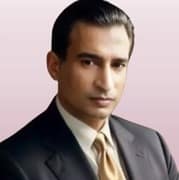
Dr. Suresh Kumar Mishra, widely known in the world of satire by his pen name ‘Uratipt’, expresses his emotions and thoughts with profound honesty and depth. His multifaceted talent is evident in his contributions across various literary genres. He is not only a renowned satirist but also a poet and a children’s author.

His satirical writings have earned him a special place in the literary world. His satire, ‘Shikshak Ki Mout’, went massively viral on the Sahitya Aajtak channel, garnering over a million views and reads—a monumental achievement in the history of Hindi satire. His collection of satires, ‘Ek Tinka Ikyavan Aankhen’ (A Straw and Fifty-One Eyes), is also highly acclaimed and includes his timeless work, ‘Kitabon Ki Antim Yatra’ (The Last Journey of Books). Other celebrated collections include ‘Mayaan Ek, Talwar Anek’ (One Sheath, Many Swords), ‘Gapodi Adda’ (The Gossiper’s Den), and ‘Sab Rang Mein Mere Rang’ (My Colors in Every Hue). His satirical novel, ‘Idhar-Udhar Ke Beech Mein’ (In Between Here and There), is a unique and groundbreaking work focused on the third world.

His significant contributions to literature have been widely recognized. He was honored with the Best Young Creator Award, 2021 by the Telangana Hindi Academy and the Government of Telangana, an award presented by Chief Minister K. Chandrasekhar Rao. The Rajasthan Children’s Literature Academy also honored him for his children’s book, ‘Nanhon Ka Srijan Aasmaan’ (The Creative Sky of Little Ones). Additionally, he has received the Vyanga Yatra Ravindranath Tyagi Sopaan Samman and the Sahitya Srijan Samman from Prime Minister Narendra Modi.

Dr. Uratript has also played a pivotal role in writing, editing, and coordinating a total of 55 books for the Government of Telangana for primary school, college, and university levels. His work is included in university textbooks in Bihar, Chhattisgarh, and Telangana, where his satirical creations are part of the curriculum. This recognition underscores that young readers can identify and appreciate quality and impactful writing.

Key Accolades and Works

  • Viral Satire: ‘Teacher’s Death’ (over 1 million views)
  • Satire Collections: ‘Ek Tinka Ikyavan Aankhen’, ‘Mayaan Ek, Talwar Anek’, ‘Gapodi Adda’
  • Unique Satirical Novel: ‘Idhar-Udar Ke Beech Mein’
  • Awards: Shreshtha Navyuva Samman (Telangana), Sahitya Srijan Samman (PM Modi), and more.
  • Educational Contribution: Authored and edited 55 books for the Telangana government.

Some precious moments of life

  1. Honoured with ‘Shrestha Navayuvva Rachnakar Samman’ by former Chief Minister of Telangana Government, Shri K. Chandrasekhar Rao.
  2. Honoured with Oscar, Grammy, Jnanpith, Sahitya Akademi, Dadasaheb Phalke, Padma Bhushan and many other awards by the most revered Gulzar sahab (Sampurn Singh Kalra), the lighthouse of the world of literature and cinema, during the Sahitya Suman Samman held in Mumbai.
  3. Meeting the famous litterateur Shri Vinod Kumar Shukla Ji, honoured with Jnanpith Award.
  4. Got the privilege of meeting Mr. Perfectionist of Bollywood, actor Aamir Khan.
  5. Meeting the powerful actor Vicky Kaushal on the occasion of being honoured by Vishva Katha Rangmanch.

Today we present his satire The Old Stethoscope Hanging in the Hospital Corridor.  

☆ Witful Warmth# 122 ☆

☆ Satire ☆ The Old Stethoscope Hanging in the Hospital Corridor… ☆ Dr. Suresh Kumar Mishra ‘Uratript’ ☆

On the damp wall of the main OPD corridor in the town’s oldest government cardiology institute, an old brass-framed stethoscope had been hanging from an iron peg for the past twenty years. Its rubber tubing, hardened by sun and air, was cracked in several places. A thick layer of time’s dust coated the circular chest piece that once revealed the truth of racing or slowing heartbeats. Every morning, right as the clock struck seven, Vaidya Dinanath Kaka would walk up, leaning on his old rosewood staff, and sit on the cracked cement ledge right beneath that wall. Clad in a torn white khadi kurta with a soiled towel slung over his shoulder, Dinanath Kaka spent the entire day staring with petrified eyes at the stethoscope with its stiffened tube.

Since morning, glossy cars belonging to corporate doctors and officials from major private city hospitals had been arriving across the hospital grounds to showcase modern cardiac ambulances, artificial valves, and expensive pacemaker machines. Grand speeches about saving heartbeats boomed over loudspeakers from the dais. Those modern cardiologists and suited officials had nothing to do with that scrap-like relic hanging in the corner of the wall. Whenever Lakhan, the old ward boy, passed that way carrying bundles of ECG paper rolls, he would shudder at the sight of the old man’s still, silent figure. In a trembling, feeble voice, Kaka would ask him, “Lakhan, did any order come during this World Heart Day fair to listen to a poor man’s heartbeat using this old stethoscope, or are only speech-bound heartbeats being sold from the stage today as well?” Lakhan would merely lower his gaze, heave a deep, cold sigh, and walk away in silence.

Dr. Animesh Agnihotri, who had recently arrived from the capital’s Directorate of Medical Promotion as the new Chief Medical Superintendent, was known to be a strict officer, an expert in modern interventional cardiology, and an uncompromising disciplinarian. Whenever Animesh stepped out of his gleaming official car to inspect the new cath lab, his eyes first fell upon Dinanath Kaka seated on that ledge, eyes perpetually fixed on the old stethoscope hanging on the wall. In an era of grand government spectacles for World Heart Day and digital cardiac monitors, Animesh viewed an impoverished elder coming daily to fold hands before a piece of scrap as obsolete superstition and an affront to hospital discipline.

When the main session concluded in the afternoon and the VIP guests headed to the lounge for lunch, Animesh left his security detail behind and walked straight up to Dinanath Kaka. In an authoritative voice with a sharp edge, Animesh demanded, “Kaka, why do you sit in the main passage every day at this age? If you need free heart medication or a government pension slip, go inside to the OPD counter. Sitting outside like this and staring at an old, useless stethoscope hanging on the wall is not going to cure this country’s heart diseases.”

Dinanath Kaka folded his trembling hands with utter grace and replied in a quavering voice, “Superintendent Sir, I am not sitting here begging for a cure to any illness of mine. I am merely awaiting the day when the lost heartbeat returns to this stethoscope—the one stolen from me at this very threshold long ago.”

Animesh found Kaka’s reply to be a philosophical riddle and asked in bewilderment, “Kaka, what lost heartbeat are you talking about? The government allocates budgets worth crores every year on World Heart Day to run free stent programs for the poor. What secret does this stiff old tube hold?”

Pandit Someshwar, an elderly retired ECG technician standing nearby who had witnessed every patient and every pulse at the center for forty years, stepped forward at once. “Superintendent Sir, do not dismiss Kaka’s words as madness,” he said. “Twenty years ago, when poor laborers in this entire region writhed in agony and died of heart attacks, Kaka’s only son, Manas, stood in this very veranda and lit the greatest torch for safeguarding the poor man’s heart.”

Curious, Animesh asked, “What did Manas do that keeps him tied to this old stethoscope to this day?”

Pandit Someshwar took a deep breath and began, “Sir, Manas was the most brilliant and proud young cardiologist in the entire state back then. When large private hospitals extorted thousands just to lay a hand on a poor man’s chest, Manas rode his bicycle with this very stethoscope from village to village at all hours of the night to examine destitute patients suffering from chest pain for free. He hung this instrument on that peg and swore an oath: until the last impoverished patient in this town could access heart treatment without money, he would never bow to any foreign medical lobby.”

Taking up Someshwar’s tale, Dinanath Kaka touched the stethoscope’s chest piece with trembling fingers and spoke in an agonizing tone, “Yes, Sir. That day, standing on this ledge, my Manas told me: ‘Bapu, this stethoscope is not just a tube to put in your ears; it is the true guardian of the poor man’s pulse.’ He promised that the day he returned from Delhi with the largest free rural cardiac care project under the National Heart Health Mission, he would personally listen to the beat in my chest with this stethoscope and make me the chief guest on the nation’s biggest stage.”

A deep curiosity stirred within Animesh. He immediately went to the archives to dig up that twenty-year-old cardiac project file. As Animesh read through the final pages of that confidential dossier, the ground slipped beneath his feet. The records explicitly stated that when Manas launched his crusade to treat the poor twenty years ago, a syndicate of foreign stent manufacturers and corporate hospitals moved to crush the movement by buying him off—offering him the role of chief cardiac surgeon at their flagship super-specialty hospital chain alongside a covert twenty-five percent partnership. Cast aside were all his ideals and the sacred vow of that stethoscope; Manas signed the agreements. Riding on that very wealth, he transformed into the nation’s most notorious billionaire heart-surgeon mafia boss—now the biggest merchant of greed, forcing unnecessary, exorbitant fake stents into the chests of impoverished patients.

When Animesh walked out on unsteady legs and revealed with a choked voice that Manas had himself become the greatest butcher of human heartbeats, Kaka wept and said, “Sir, I knew all along that my son had sold out. I come here every day only to see whether this deaf society—when people sit on stages pretending to save lives on World Heart Day while mortgaging their own roots and their own father’s heartbeat inside the cath lab of profit—can sense the stench rising from such traded empathy.”

Animesh stood frozen, staring at the dust-covered stethoscope, as the entire cardiology institute sank into a disgraced hush, drowned in the silence of a helpless father’s tears.

****

© Dr. Suresh Kumar Mishra ‘Uratript’

Contact : Mo. +91 73 8657 8657, Email : drskm786@gmail.com

≈ Blog Editor – Shri Hemant Bawankar/Editor (English) – Captain Pravin Raghuvanshi, NM ≈

Please share your Post !

Shares

English Literature – Satire ☆ Witful Warmth # 121 – Zero Balance… ☆ Dr. Suresh Kumar Mishra ‘Uratript’ ☆

Dr. Suresh Kumar Mishra ‘Uratript’

Dr. Suresh Kumar Mishra, widely known in the world of satire by his pen name ‘Uratipt’, expresses his emotions and thoughts with profound honesty and depth. His multifaceted talent is evident in his contributions across various literary genres. He is not only a renowned satirist but also a poet and a children’s author.

His satirical writings have earned him a special place in the literary world. His satire, ‘Shikshak Ki Mout’, went massively viral on the Sahitya Aajtak channel, garnering over a million views and reads—a monumental achievement in the history of Hindi satire. His collection of satires, ‘Ek Tinka Ikyavan Aankhen’ (A Straw and Fifty-One Eyes), is also highly acclaimed and includes his timeless work, ‘Kitabon Ki Antim Yatra’ (The Last Journey of Books). Other celebrated collections include ‘Mayaan Ek, Talwar Anek’ (One Sheath, Many Swords), ‘Gapodi Adda’ (The Gossiper’s Den), and ‘Sab Rang Mein Mere Rang’ (My Colors in Every Hue). His satirical novel, ‘Idhar-Udhar Ke Beech Mein’ (In Between Here and There), is a unique and groundbreaking work focused on the third world.

His significant contributions to literature have been widely recognized. He was honored with the Best Young Creator Award, 2021 by the Telangana Hindi Academy and the Government of Telangana, an award presented by Chief Minister K. Chandrasekhar Rao. The Rajasthan Children’s Literature Academy also honored him for his children’s book, ‘Nanhon Ka Srijan Aasmaan’ (The Creative Sky of Little Ones). Additionally, he has received the Vyanga Yatra Ravindranath Tyagi Sopaan Samman and the Sahitya Srijan Samman from Prime Minister Narendra Modi.

Dr. Uratript has also played a pivotal role in writing, editing, and coordinating a total of 55 books for the Government of Telangana for primary school, college, and university levels. His work is included in university textbooks in Bihar, Chhattisgarh, and Telangana, where his satirical creations are part of the curriculum. This recognition underscores that young readers can identify and appreciate quality and impactful writing.

Key Accolades and Works

  • Viral Satire: ‘Teacher’s Death’ (over 1 million views)
  • Satire Collections: ‘Ek Tinka Ikyavan Aankhen’, ‘Mayaan Ek, Talwar Anek’, ‘Gapodi Adda’
  • Unique Satirical Novel: ‘Idhar-Udar Ke Beech Mein’
  • Awards: Shreshtha Navyuva Samman (Telangana), Sahitya Srijan Samman (PM Modi), and more.
  • Educational Contribution: Authored and edited 55 books for the Telangana government.

Some precious moments of life

  1. Honoured with ‘Shrestha Navayuvva Rachnakar Samman’ by former Chief Minister of Telangana Government, Shri K. Chandrasekhar Rao.
  2. Honoured with Oscar, Grammy, Jnanpith, Sahitya Akademi, Dadasaheb Phalke, Padma Bhushan and many other awards by the most revered Gulzar sahab (Sampurn Singh Kalra), the lighthouse of the world of literature and cinema, during the Sahitya Suman Samman held in Mumbai.
  3. Meeting the famous litterateur Shri Vinod Kumar Shukla Ji, honoured with Jnanpith Award.
  4. Got the privilege of meeting Mr. Perfectionist of Bollywood, actor Aamir Khan.
  5. Meeting the powerful actor Vicky Kaushal on the occasion of being honoured by Vishva Katha Rangmanch.

Today we present his satire Zero Balance.  

☆ Witful Warmth# 121 ☆

☆ Satire ☆ Zero Balance… ☆ Dr. Suresh Kumar Mishra ‘Uratript’ ☆

Upon every recurring Friday, precisely as the parish chime struck the hour of ten, there was wont to appear upon the icy cement steps fronting the principal office of the premier Nationalized Bank—a magnificent temple of commerce dedicated to the mysterious worship of Compound Interest and National Prosperity—one Mr. Parmanand, a venerable pilgrim of seventy-two winters. In his palsied fingers he bore, with as much religious solemnity as though it were the illuminated missal of a saint, an antique bank passbook of a sickly green hue, accompanied by a rubbed and battered two-rupee coin whose brassy surface had long since surrendered its lustre to the dirt of circulation.

Today being the twenty-eighth day of August—solemnly consecrated in the civic calendar as the National Anniversary of Universal Financial Inclusion—the sentinel at the portal, an imposing fellow in brass buttons whose musketry was kept in high polish, observed the patriarch posted upon the flags. Shifting his weapon with immense professional dignity, he was pleased to explode into bureaucratic merriment: “Hullo, grandfather! When the whole imperial realm is making merry over millions of miraculous ledgers and the celestial march of digital coin, what midsummer madness drives you to parade this tattered pamphlet before our governors, clutching an empty leaf to your bosom like a mendicant displaying a bogus sore?”

Whereupon old Parmanand, wiping the clouded lenses of his spectacles with the frayed hem of his cotton raiment, returned an answer of sweet and unruffled melancholy: “Alas, my son, this hollow register is no mere scrap of stationer’s refuse; it is the naked, unvarnished skeleton of your glittering financial labyrinth, which all the illuminated screens of your counting-houses can never quite contrive to hide.”

The assorted jobbers, usurers, and prosperous depositors who crowded the vestibule made it their Christian duty to laugh the graybeard to scorn, declaring that his intellect had evidently gone a-drifting down the river, that he should fancy a zero-balance ledger to be a title-deed of consequence wherewith to summon the High Board of Directors to judgment. Yet the old man, untroubled by their mocking tongues, did but stroke the yellowed parchment with shaking fingers, keeping his patient, unblinking vigil for the rumbling chariots of the high financial commissioners.

In process of time, the scribes and cash-counters of the establishment became so entirely habituated to this weekly apparition that they accounted him a harmless, obstinate nuisance, and brushed him from their reckonings with that exemplary dispatch for which all well-regulated public counting-houses are justly celebrated.

Whenever the Chief Cashier—a gentleman of immense girth and severe deportment, bearing an enormous cargo of crisp bank-notes toward the sanctuary of the Branch Governor—swept through the wickets, Mr. Parmanand would hoist himself upon his knotty crutch, bring his withered palms together, and sigh: “Honoured sir, hath his worship discovered any stray mite of government subsidy trickling into that zero-balance ledger of mine?”

At which the great accountant, rattling the brass grille of his cage in a paroxysm of official irritation, would snarl: “Bless my soul, old fellow! Until the High Treasury above deigns to discharge its electronic manna, and until the celestial server flashes its green illumination, an empty vault your book shall remain; and so you may go on perambulating this porch with your two-penny piece till the crack of doom!”

The venerable soul offered no retort; he merely crept back to his flagstone and fell to pressing the worn coin against the opening page—a futile experiment, for the little disc of metal invariably wobbled, slipped, and rolled back into the hollow of his lap. The parish gossips whispered that the dotard was doubtless pursuing some ancient debt or phantom discharge; but not a solitary clerk in the precinct possessed the imagination to suspect the dark and terrifying secret that bound that green booklet to the grand proclamations of the Universal Banking Jubilee.

High noon arrived, and with it, the sudden, majestic visitation of the Regional Director of the Ministry of Finance himself, attended by a cloud of heralds, arriving in immense state to inspect the Grand Credit Camp and review the progress of Financial Literacy.

At the screeching of the ministerial horns, the entire precinct was thrown into that delightful paroxysm of terror and obsequiousness which only high rank can inspire: sapphire streamers and festive bladders were hung across the granite pillars with frantic haste, lest the official eye should encounter an unadorned archway, and fresh carpeting was laid over the cracks in the pavement. The solemn lamps were ignited; a soaring homily was pronounced from the platform upon the imperial duty of sweeping every pauper into the golden tide of commerce; and when at length the Great Dignitary emerged, hemmed in by an obsequious herd of journalists with ready quills, his discerning eye was arrested by the figure of Parmanand, sitting motionless upon the stairs, the green passbook upon his knees.

Perceiving here an admirable occasion to exhibit that tender, paternal sympathy which reads so charmingly in the morning gazettes, the Director, attended by his scribes, bore down upon the old man with an air of sublime condescension: “Venerable father,” said he, with that honeyed benevolence which costs nothing and yields great harvest, “upon this historic day of economic emancipation we salute the impoverished and the aged. Disclose your grievance without fear, that the hand of Authority may strike off your afflictions. Hath the bounty of the State’s banking facilities failed to bless your threshold?”

Parmanand raised his dim, stony eyes to that august visage. With trembling hands, he extended the faded booklet straight towards the well-manicured palm of the Director: “Sir,” whispered he, with a quietude more terrible than thunder, “if Justice be indeed the merchandise of your high calling, open this record, and read the sentence inscribed in red ink upon its final leaves.”

The Director took the pamphlet into his hands, and as his eye fell upon the folios, his vision was blasted by a spectacle that made his countenance turn as pale as ashes. There, marshalled in grim and unrelenting ranks, stood the record of dozen upon dozen of pitiless exactions: fines for an insufficient balance, forfeits for the maintenance of the ledger, and penalties for the transmission of electronic dispatches—a long, black catalogue of extortion.

Two great, scalding tears broke from the old man’s rheumy eyes and splashed upon the battered two-rupee coin.

“Sir,” said Parmanand, his voice cracking like dry timber under the burden of grief, “twelve long years ago, when you went through the villages with pipes and tabors to enroll me in your zero-balance paradise, you swore that this house was the poor man’s sanctuary. Yet in these five winters past, every copper coin scraped together for my ailing wife’s medicine was secretly swallowed up by your ledger-keepers under the pretext of fines and charges; and when the well was drained dry, your menials thrust me into the gutter with a curse! My poor woman lies at this very hour upon her pallet, moaning in the agony of sickness, because the bread of her relief was devoured by your righteous machinery. I come today merely to cast this last, worthless piece of brass into your treasury—a parting tribute to show unto your great, usurious empire that the palace in which you banquet upon the name of Financial Inclusion was reared out of the very pockets you picked from the starving poor!”

The Director’s head drooped upon his breast, stricken with an overpowering shame; and through all the marbled vaults of that great counting-house there fell a silence so awful, so profound and penetrating, that the sleeping conscience of every money-changer present awoke, shuddered, and was afraid.

****

© Dr. Suresh Kumar Mishra ‘Uratript’

Contact : Mo. +91 73 8657 8657, Email : drskm786@gmail.com

≈ Blog Editor – Shri Hemant Bawankar/Editor (English) – Captain Pravin Raghuvanshi, NM ≈

Please share your Post !

Shares

English Literature – Satire ☆ Witful Warmth # 120 – The Thumbprint… ☆ Dr. Suresh Kumar Mishra ‘Uratript’ ☆

Dr. Suresh Kumar Mishra ‘Uratript’

Dr. Suresh Kumar Mishra, widely known in the world of satire by his pen name ‘Uratipt’, expresses his emotions and thoughts with profound honesty and depth. His multifaceted talent is evident in his contributions across various literary genres. He is not only a renowned satirist but also a poet and a children’s author.

His satirical writings have earned him a special place in the literary world. His satire, ‘Shikshak Ki Mout’, went massively viral on the Sahitya Aajtak channel, garnering over a million views and reads—a monumental achievement in the history of Hindi satire. His collection of satires, ‘Ek Tinka Ikyavan Aankhen’ (A Straw and Fifty-One Eyes), is also highly acclaimed and includes his timeless work, ‘Kitabon Ki Antim Yatra’ (The Last Journey of Books). Other celebrated collections include ‘Mayaan Ek, Talwar Anek’ (One Sheath, Many Swords), ‘Gapodi Adda’ (The Gossiper’s Den), and ‘Sab Rang Mein Mere Rang’ (My Colors in Every Hue). His satirical novel, ‘Idhar-Udhar Ke Beech Mein’ (In Between Here and There), is a unique and groundbreaking work focused on the third world.

His significant contributions to literature have been widely recognized. He was honored with the Best Young Creator Award, 2021 by the Telangana Hindi Academy and the Government of Telangana, an award presented by Chief Minister K. Chandrasekhar Rao. The Rajasthan Children’s Literature Academy also honored him for his children’s book, ‘Nanhon Ka Srijan Aasmaan’ (The Creative Sky of Little Ones). Additionally, he has received the Vyanga Yatra Ravindranath Tyagi Sopaan Samman and the Sahitya Srijan Samman from Prime Minister Narendra Modi.

Dr. Uratript has also played a pivotal role in writing, editing, and coordinating a total of 55 books for the Government of Telangana for primary school, college, and university levels. His work is included in university textbooks in Bihar, Chhattisgarh, and Telangana, where his satirical creations are part of the curriculum. This recognition underscores that young readers can identify and appreciate quality and impactful writing.

Key Accolades and Works

  • Viral Satire: ‘Teacher’s Death’ (over 1 million views)
  • Satire Collections: ‘Ek Tinka Ikyavan Aankhen’, ‘Mayaan Ek, Talwar Anek’, ‘Gapodi Adda’
  • Unique Satirical Novel: ‘Idhar-Udar Ke Beech Mein’
  • Awards: Shreshtha Navyuva Samman (Telangana), Sahitya Srijan Samman (PM Modi), and more.
  • Educational Contribution: Authored and edited 55 books for the Telangana government.

Some precious moments of life

  1. Honoured with ‘Shrestha Navayuvva Rachnakar Samman’ by former Chief Minister of Telangana Government, Shri K. Chandrasekhar Rao.
  2. Honoured with Oscar, Grammy, Jnanpith, Sahitya Akademi, Dadasaheb Phalke, Padma Bhushan and many other awards by the most revered Gulzar sahab (Sampurn Singh Kalra), the lighthouse of the world of literature and cinema, during the Sahitya Suman Samman held in Mumbai.
  3. Meeting the famous litterateur Shri Vinod Kumar Shukla Ji, honoured with Jnanpith Award.
  4. Got the privilege of meeting Mr. Perfectionist of Bollywood, actor Aamir Khan.
  5. Meeting the powerful actor Vicky Kaushal on the occasion of being honoured by Vishva Katha Rangmanch.

Today we present his satire The Thumbprint.  

☆ Witful Warmth# 120 ☆

☆ Satire ☆ The Thumbprint… ☆ Dr. Suresh Kumar Mishra ‘Uratript’ ☆

Upon every recurring Thursday, precisely as the town clock chimed the stroke of ten, there was wont to appear upon the raised masonry beneath the shade of the ancient neem tree—fronting the divisional chambers of the Department of Food and Civil Supplies, a stately warehouse dedicated to the magnificent distribution of imperial breadstuffs—one Jagdev Baba, a venerable soul of some seventy-five winters. In his trembling hands, as though it were the ark of some forgotten covenant, he bore a limp, soiled sack of coarse jute, upon whose flank the vermilion device of the Public Granary had long since faded into a dismal smear.

Whenever the newest porter of the establishment—a spruce, noisy stripling whose respect for human misery had been thoroughly refined away by three weeks of parish authority—beheld him posted upon the flags, he was pleased to dash his terracotta cup upon the board and roar with bureaucratic hilarity: “Hark ye, grandfather! When the village shambles are overflowing with the State’s gratuitous barley, what midsummer madness drives you to parade this tattered rag before our betters, hugging an empty bag to your breast like a beadle with a lean collection-plate?”

Whereupon old Jagdev Baba, adjusting the clouded lenses of his antique spectacles, would return an answer in accents as gentle as a tolling bell: “Alas, my son, this hollow piece of sackcloth is no mere scrap of hemp; it is the blind, stony heart of your high department, which hath locked up an old man’s hunger within the glowing glass of an electronic engine.”

The assembled clerks and small-beer attorneys who loitered about the portico, carrying reams of foolscap under their arms, made it their business to laugh the dotard to scorn, declaring that his wits had gone a-woolgathering, that he should imagine an empty sack could serve as a shield against the mighty machinery of Civic Provision. Yet the patriarch, heedless of their mocking tongues, did but pass his shaking fingers across the coarse twine of the seams, keeping his solitary and unwearied watch for the rumbling carriages of the high commissioners.

In process of time, the menials and pen-pushers of the department became so entirely habituated to this weekly apparition that they accounted him a harmless, pig-headed nuisance, and brushed him aside with that admirable dispatch for which all public offices are justly celebrated.

Whenever the Senior Clerk—a gentleman of majestic girth, bearing an enormous portfolio of licensed victuallers towards the inner sanctum of the District Purveyor—swept through the passage, Jagdev Baba would hoist himself upon his crutch, bring his trembling palms together, and sigh: “Honoured master, hath his worship set his hand unto that humble plea touching the identity papers and the thumbprint?”

At which the great scribe, flinging his files upon the cedar table with a crash, would snarl: “Bless my soul, old fellow! Until your antique skin agrees with the electronic mechanism of the Point-of-Sale apparatus, and until the celestial server at the capital deigns to flash its green illumination, not a grain of chaff shall you receive; and so you may go on perambulating this threshold with your greasy sack till the day of doom!”

The old man offered no retort; he merely crept back to his seat upon the stone, and fell to scrubbing the worn whorls of his thumbs against the rough folds of his cotton skirt—a mournful, hopeless endeavor to restore what half a century of labour had obliterated. The parish gossips whispered that the old soul was doubtless pursuing some shadowy, ancestral allotment; but not a man among them possessed the imagination to suspect the dark and terrifying secret that bound that empty bag of hemp to the grand proclamations of the National Granary.

High noon arrived, and with it, the sudden, majestic visitation of the Minister of Food and Civil Supplies himself, arrived in immense state to inspect the Fortnight of National Food Security.

At the screeching of the ministerial horns, the entire precinct was thrown into that delightful paroxysm of terror and obsequiousness which only high rank can inspire: grandiloquent banners were run up with frantic haste, lest the official eye should encounter an unpainted wall, and fresh sand was strewn across the yard. The sacred lamps were ignited; an eloquent homily was delivered from the dais upon the imperial duty of pouring corn into the lap of the poor; and when at length the Great Dignitary emerged, hemmed in by an obsequious herd of journalists with ready tablets, his discerning glance was arrested by the figure of Jagdev Baba, sitting motionless upon the bench, the withered sack upon his knees.

Perceiving here an admirable occasion to exhibit that tender, paternal sympathy which looks so charming in the morning gazettes, the Minister, attended by his scribes, bore down upon the old man with an air of sublime condescension: “Venerable father,” said he, with that honeyed benevolence which costs nothing and yields great harvest, “upon this jubilee of universal nourishment we salute the aged and the poor. Unfold your grievance without fear, that the hand of Authority may strike off your afflictions. Hath the State’s bounty of free corn failed to reach your dwelling?”

Jagdev Baba raised his dim, stony eyes to that august countenance. With trembling hands, he drew forth the hollow sack and extended it straight towards the minister: “Sir,” whispered he, with a quietude more terrible than thunder, “if Justice be indeed the business of your high calling, reach into this void, touch this poor slip of paper, and read the sentence inscribed upon my flesh.”

The Minister took the crumpled docket from the sack. It was the fatal red chit cast forth by the digital engine, whereon was inscribed, in the cold, unfeeling copperplate of the mechanism, the monstrous decree: Biometric Authentication Refused: Ridges Indistinct.

Two great, scalding tears broke from the old man’s rheumy eyes and splashed upon the cold jute.

“Sir,” said Jagdev Baba, his voice cracking like dry timber under the burden of grief, “for fifty long years these hands turned the heavy sod and guided the plough, wringing wheat from the stubborn earth to feed this nation, until the very skin upon my thumbs was ground away upon the soil. And today, when I crave but two mouthfuls of crust to keep life in an old frame, your miraculous engine declares that because my prints are erased, my very existence as a living man is a lie! For eight weary months my household hath kept vigil with starvation, quenching the belly with water under the cold night sky. I bring this empty sack to your portal week after week merely to show unto your grand electronic empire that the very laborer whose worn hands baked your bread has been struck off by your machines, and declared dead upon the register while his breath yet burns within him!”

The Minister’s head drooped upon his breast, stricken with an overpowering shame; and through all the corridors of the great Department there fell a silence so awful, so profound and penetrating, that the sleeping conscience of every man present awoke, shuddered, and was afraid.

****

© Dr. Suresh Kumar Mishra ‘Uratript’

Contact : Mo. +91 73 8657 8657, Email : drskm786@gmail.com

≈ Blog Editor – Shri Hemant Bawankar/Editor (English) – Captain Pravin Raghuvanshi, NM ≈

Please share your Post !

Shares

English Literature – Satire ☆ Witful Warmth # 119 – The Brass Shears… ☆ Dr. Suresh Kumar Mishra ‘Uratript’ ☆

Dr. Suresh Kumar Mishra ‘Uratript’

Dr. Suresh Kumar Mishra, widely known in the world of satire by his pen name ‘Uratipt’, expresses his emotions and thoughts with profound honesty and depth. His multifaceted talent is evident in his contributions across various literary genres. He is not only a renowned satirist but also a poet and a children’s author.

His satirical writings have earned him a special place in the literary world. His satire, ‘Shikshak Ki Mout’, went massively viral on the Sahitya Aajtak channel, garnering over a million views and reads—a monumental achievement in the history of Hindi satire. His collection of satires, ‘Ek Tinka Ikyavan Aankhen’ (A Straw and Fifty-One Eyes), is also highly acclaimed and includes his timeless work, ‘Kitabon Ki Antim Yatra’ (The Last Journey of Books). Other celebrated collections include ‘Mayaan Ek, Talwar Anek’ (One Sheath, Many Swords), ‘Gapodi Adda’ (The Gossiper’s Den), and ‘Sab Rang Mein Mere Rang’ (My Colors in Every Hue). His satirical novel, ‘Idhar-Udhar Ke Beech Mein’ (In Between Here and There), is a unique and groundbreaking work focused on the third world.

His significant contributions to literature have been widely recognized. He was honored with the Best Young Creator Award, 2021 by the Telangana Hindi Academy and the Government of Telangana, an award presented by Chief Minister K. Chandrasekhar Rao. The Rajasthan Children’s Literature Academy also honored him for his children’s book, ‘Nanhon Ka Srijan Aasmaan’ (The Creative Sky of Little Ones). Additionally, he has received the Vyanga Yatra Ravindranath Tyagi Sopaan Samman and the Sahitya Srijan Samman from Prime Minister Narendra Modi.

Dr. Uratript has also played a pivotal role in writing, editing, and coordinating a total of 55 books for the Government of Telangana for primary school, college, and university levels. His work is included in university textbooks in Bihar, Chhattisgarh, and Telangana, where his satirical creations are part of the curriculum. This recognition underscores that young readers can identify and appreciate quality and impactful writing.

Key Accolades and Works

  • Viral Satire: ‘Teacher’s Death’ (over 1 million views)
  • Satire Collections: ‘Ek Tinka Ikyavan Aankhen’, ‘Mayaan Ek, Talwar Anek’, ‘Gapodi Adda’
  • Unique Satirical Novel: ‘Idhar-Udar Ke Beech Mein’
  • Awards: Shreshtha Navyuva Samman (Telangana), Sahitya Srijan Samman (PM Modi), and more.
  • Educational Contribution: Authored and edited 55 books for the Telangana government.

Some precious moments of life

  1. Honoured with ‘Shrestha Navayuvva Rachnakar Samman’ by former Chief Minister of Telangana Government, Shri K. Chandrasekhar Rao.
  2. Honoured with Oscar, Grammy, Jnanpith, Sahitya Akademi, Dadasaheb Phalke, Padma Bhushan and many other awards by the most revered Gulzar sahab (Sampurn Singh Kalra), the lighthouse of the world of literature and cinema, during the Sahitya Suman Samman held in Mumbai.
  3. Meeting the famous litterateur Shri Vinod Kumar Shukla Ji, honoured with Jnanpith Award.
  4. Got the privilege of meeting Mr. Perfectionist of Bollywood, actor Aamir Khan.
  5. Meeting the powerful actor Vicky Kaushal on the occasion of being honoured by Vishva Katha Rangmanch.

Today we present his satire The Brass Shears.  

☆ Witful Warmth# 119 ☆

☆ Satire ☆ The Brass Shears… ☆ Dr. Suresh Kumar Mishra ‘Uratript’ ☆

Upon the whitewashed brickwork of the main colonnade of the parish Women’s Welfare Centre—a municipal establishment devoted to the moral polishing and industrial elevation of the destitute female—there had hung, suspended within a mouldering timber case for upwards of twenty revolving years, a pair of brass shears of monstrous weight and antique pattern. Time, with that impartiality with which it scatters soot upon church monuments and pauper graves alike, had coated their shearing edges with a grim incrustation of rust and neglect.

Directly beneath this curious instrument of state, upon a fractured bench of peeling cement, there was wont to appear each morning, as the parish bell chimed the hour of eight, one Parvati Amma, an ancient matron leaning upon a knotty stick. Clad in the coarsest homespun white, and clutching between trembling fingers a withered remnant of faded velvet, Parvati Amma sat the livelong day, fastening her dim, unblinking eyes upon those elevated shears.

On this particular morning, the gravelled avenues of the Centre groaned beneath the varnished wheels of modern philanthropic carriages; ladies of high fashion, advanced education, and formidable civic reputation swept about the precincts, scattering tracts upon female equality and the inalienable prerogatives of the sex, whilst the dazzling flashes of the photographic engines cast an unearthly glare across the flags. Neither the sleek reformers in their crisp silks nor the choir of school-misses shrilling the official hymn of welcome deigned to cast a glance toward that cobwebbed relic in the corner.

Only Mangroo, the aged messenger of the establishment, whose back had long since been curved into a respectful bow by four decades of carrying tea-kettles for his betters, felt an inward tremor whenever his path crossed that stone-like apparition.

“Tell me, Mangroo,” the dame would murmur in a thin, tremulous voice that sounded like dry rushes in the wind, “on this grand Women’s Equality Day, has the mandate come forth to cut some noble new ribbon with these antique blades? Or is the platform dispensing once again nothing but the thin gruel of hollow promises?”

Whereupon Mangroo, hanging his head as though he bore the collective guilt of the entire Board of Guardians, would heave a heavy sigh and shuffle away into the dark corridors without a word.

Now, there had recently arrived from the central ministry a new District Officer of Female Upliftment—one Miss Anuradha Sharma—a lady of brisk step, iron brow, and that formidable administrative rectitude which views human frailty as an unpardonable breach of departmental regulations. In the course of perambulating the grounds with her portfolios and dispatch-boxes, her sharp official eye was continually arrested by the spectacle of Parvati Amma glued to her cracked bench, offering her silent devotions to a pair of discarded tailor’s shears. To the enlightened intellect of Miss Sharma, the exhibition of a decrepit crone performing what appeared to be idolatrous ceremonies before a scrap of scrap-iron in the midst of a great national jubilee of Female Emancipation was an outrage against civic decorum.

Accordingly, no sooner had the principal harangue of the opening session concluded and the VIPs retired to the committee-room to recruit their exhausted energies with tea and sweetmeats, than Miss Sharma bore down upon the old woman, leaving her retinue of clerks gasping in her wake.

“My good woman!” began Miss Sharma, in that clear, penetrating treble reserved by public authorities for the deaf, the poor, and the obstinate, “why do you obstruct the public concourse at your time of life? If it be an alms-allowance, a widow’s mite, or the loan of a parochial treadle you require, proceed through the green baize door and subscribe to the prescribed schedules. Staring at an obsolete implement upon the wall will purchase you neither bread nor civic rights!”

Parvati Amma brought her palms together with a meekness that was infinitely more terrible than defiance. “Madam,” she whispered, her voice trembling like an autumn leaf, “I sit not here to crave the crumbs of your official charity, nor do I wait upon a pauper’s pension. I keep vigil for the dawn of that day when the edge of those shears shall sever the invisible bonds that were forged and laid upon my shoulders within this very porch.”

Miss Sharma surveyed the old woman with that look of indignant perplexity with which an algebraist might regard an unruly equation. “What bonds can you possibly speak of, dame? Does not the State expend untold treasuries of gold and shower the district with illuminated scrolls to make womankind independent? What ridiculous riddle is hidden within this rusty scrap of brass?”

Hereupon Pandit Kripashankar, the ancient chief clerk of the precinct—a gentleman whose waistcoat buttons had borne testimony to thirty years of departmental prevarication—advanced from the shadows, bowing with ink-stained reverence: “Pray, Miss Sharma, account not the poor soul’s discourse as mere dotage. When this foundation was first called into being twenty summers ago, Amma’s only child, poor Kalyani, achieved a name that was on every tongue from here to the provincial capital.”

“And pray, what did this prodigy accomplish,” inquired the officer, tapping her file with ill-concealed impatience, “that her memory should remain glued to a pair of second-hand shears?”

“Ah, madam,” sighed the old scribe, shaking his powdered head, “she was the brightest and boldest maiden in all the shire! To deliver the destitute daughters of the soil from the grinding mills of domestic tyranny, she laid the stones of this very needlework guild. It was her own hand that hung those brass shears upon yonder wall; and upon them she swore a terrible oath—that until every down-trodden girl in this parish possessed equal honour and bread with the men, those shears should remain suspended as an unredeemed pledge!”

Parvati Amma raised her withered hand, touching the cold metal shank with fingers that shook with an ague of memory. “Aye, madam,” she took up the tale, her accents piercing the heart like a dirge; “my Kalyani stood upon that rude platform and said: ‘Mother, these blades are not fashioned merely to sever calico; they are the standard of woman’s freedom, to be unfurled by my own hands! When I return from the capital, crowned with the grandest laurel of the National Commission, I shall cut a golden ribbon with these very shears and convert this refuge into an asylum for every broken heart in the realm.’”

A sudden moisture dimmed the brisk spectacles of Miss Sharma. “And did she never return? Did the great city swallow her up? Did the vanity of high office cause her to blot from her remembrance her aged parent and this humble corner of the earth?”

“No, madam,” wept the crone; “my Kalyani wrote to me: ‘Keep your eye upon the brass shears, mother; on the day when the equality of women becomes a living truth in this land, I shall lay my greatest triumph at your feet.’”

A fever of curiosity seized upon the soul of Miss Sharma. Quitting the porch with rapid strides, she descended into the damp and vaulted recesses of the parish archives, commanding the astonished beadle to unearth the dust-choked registers of the guild’s foundation.

Two hours of frantic rummaging amidst mouldering calf-skin, cobwebs, and mice-eaten dockets brought to light a bundle bound in faded red tape. Miss Sharma broke the seal and turned the yellowed folios.

As she read the confidential minutes, the audits of diverted funds, and the final inquisitions of the Crown Commissioners, the blood froze in her veins; her limbs shook so violently that the papers fluttered like dry leaves upon the desk.

There, inscribed in cold, bureaucratic copperplate, lay the record of a monstrous transaction. Twenty years ago, when the maiden Kalyani had raised her crusade, the high magistrates and great lords of the treasury had swallowed up the imperial millions voted for the relief of womankind into their own private coffers. When the courageous girl dared to cry out against the theft, the powers that be had compassed her round with threats of ruin and persecution; and when terror failed, they offered the grand seduction—a lucrative directorship upon the high Board of the Commission, a palace in the capital, and a seat amongst the rulers of the land. And Kalyani, casting her sacred vows to the winds, had signed the shameful covenant! She had taken the bribe, smothered her conscience in velvet, and grown into the most opulent and celebrated patroness of the fashionable drawing-rooms.

Miss Sharma turned the final page, and a cry of horror died upon her lips. Looking up from the yellow parchment was the likeness of the great personage who sat this very moment upon the dais above—the Grand Patroness of the National Commission, the Chief Guest of the day, whose honeyed eloquence on the sacred rights of womankind was even now echoing across the hall!

It was Kalyani herself!

With a face as pale as grave-clothes, Miss Sharma fled back to the colonnade, where Parvati Amma still leaned her forehead against the icy brass of the shears.

Grasping the old woman’s withered hand, the officer cried out in an agony of tears: “Amma! She for whom you keep this holy vigil—she whose pure gospel of liberty you expect—sold her immortal soul twenty years ago for a carriage and a palace! It is she who sits upon the dais yonder, preaching equality to the multitude! Why—oh, why do you waste your failing sight weeping before these rusty blades for a traitress?”

The old woman turned her dim, sunken orbs upon the lady of office; and upon her withered lips there broke a smile so bitter, so awful in its hopeless desolation, that the whole hollow fabric of municipal benevolence seemed to shrivel before it.

Slowly, from the folds of her tattered raiment, she drew forth an ancient, creased missive bearing the ministerial crest.

“Alas, my child,” wept the broken mother, her voice sinking to a dreadful whisper, “think you that a mother’s heart did not know of the bargain? I have known these twenty winters that my child had become a great lady of state.”

Miss Sharma stood transfixed: “Then why, in heaven’s name, do you return to this pillory day after day?”

“I come, daughter,” sobbed the old soul, while great tears fell like rain upon the stones, “not in the foolish hope of greeting a daughter clothed in purple and fine linen; I come merely to ask of this stone-blind world: when these great ladies mount their carpets to preach sacrifice and sisterhood to the crowd, whilst leaving their own unlettered, toothless mothers to perish in rags upon the parish flagstones—does this deaf and unfeeling generation never scent the corruption that rots behind their purchased equality?”

Miss Anuradha Sharma stood mute and trembling, staring at the brass shears; and over the grand Hall of Emancipation there settled a silence so profound, so terrible and biting, that the very stones seemed to blush for the sham that masqueraded within their shadow.

****

© Dr. Suresh Kumar Mishra ‘Uratript’

Contact : Mo. +91 73 8657 8657, Email : drskm786@gmail.com

≈ Blog Editor – Shri Hemant Bawankar/Editor (English) – Captain Pravin Raghuvanshi, NM ≈

Please share your Post !

Shares

English Literature – Satire ☆ Witful Warmth # 118 – The Department of Women’s Welfare… ☆ Dr. Suresh Kumar Mishra ‘Uratript’ ☆

Dr. Suresh Kumar Mishra ‘Uratript’

Dr. Suresh Kumar Mishra, widely known in the world of satire by his pen name ‘Uratipt’, expresses his emotions and thoughts with profound honesty and depth. His multifaceted talent is evident in his contributions across various literary genres. He is not only a renowned satirist but also a poet and a children’s author.

His satirical writings have earned him a special place in the literary world. His satire, ‘Shikshak Ki Mout’, went massively viral on the Sahitya Aajtak channel, garnering over a million views and reads—a monumental achievement in the history of Hindi satire. His collection of satires, ‘Ek Tinka Ikyavan Aankhen’ (A Straw and Fifty-One Eyes), is also highly acclaimed and includes his timeless work, ‘Kitabon Ki Antim Yatra’ (The Last Journey of Books). Other celebrated collections include ‘Mayaan Ek, Talwar Anek’ (One Sheath, Many Swords), ‘Gapodi Adda’ (The Gossiper’s Den), and ‘Sab Rang Mein Mere Rang’ (My Colors in Every Hue). His satirical novel, ‘Idhar-Udhar Ke Beech Mein’ (In Between Here and There), is a unique and groundbreaking work focused on the third world.

His significant contributions to literature have been widely recognized. He was honored with the Best Young Creator Award, 2021 by the Telangana Hindi Academy and the Government of Telangana, an award presented by Chief Minister K. Chandrasekhar Rao. The Rajasthan Children’s Literature Academy also honored him for his children’s book, ‘Nanhon Ka Srijan Aasmaan’ (The Creative Sky of Little Ones). Additionally, he has received the Vyanga Yatra Ravindranath Tyagi Sopaan Samman and the Sahitya Srijan Samman from Prime Minister Narendra Modi.

Dr. Uratript has also played a pivotal role in writing, editing, and coordinating a total of 55 books for the Government of Telangana for primary school, college, and university levels. His work is included in university textbooks in Bihar, Chhattisgarh, and Telangana, where his satirical creations are part of the curriculum. This recognition underscores that young readers can identify and appreciate quality and impactful writing.

Key Accolades and Works

  • Viral Satire: ‘Teacher’s Death’ (over 1 million views)
  • Satire Collections: ‘Ek Tinka Ikyavan Aankhen’, ‘Mayaan Ek, Talwar Anek’, ‘Gapodi Adda’
  • Unique Satirical Novel: ‘Idhar-Udar Ke Beech Mein’
  • Awards: Shreshtha Navyuva Samman (Telangana), Sahitya Srijan Samman (PM Modi), and more.
  • Educational Contribution: Authored and edited 55 books for the Telangana government.

Some precious moments of life

  1. Honoured with ‘Shrestha Navayuvva Rachnakar Samman’ by former Chief Minister of Telangana Government, Shri K. Chandrasekhar Rao.
  2. Honoured with Oscar, Grammy, Jnanpith, Sahitya Akademi, Dadasaheb Phalke, Padma Bhushan and many other awards by the most revered Gulzar sahab (Sampurn Singh Kalra), the lighthouse of the world of literature and cinema, during the Sahitya Suman Samman held in Mumbai.
  3. Meeting the famous litterateur Shri Vinod Kumar Shukla Ji, honoured with Jnanpith Award.
  4. Got the privilege of meeting Mr. Perfectionist of Bollywood, actor Aamir Khan.
  5. Meeting the powerful actor Vicky Kaushal on the occasion of being honoured by Vishva Katha Rangmanch.

Today we present his satire The Department of Women’s Welfare.  

☆ Witful Warmth# 118 ☆

☆ Satire ☆ The Department of Women’s Welfare… ☆ Dr. Suresh Kumar Mishra ‘Uratript’ ☆

Upon every recurring Wednesday, precisely as the parish clock struck the hour of ten, there was wont to appear upon the ancient stone masonry beneath the sacred fig tree fronting the Hall of Progress—a grand edifice wherein the sub-committee for the Upliftment of Womankind conducted its sublime mysteries—one Mrs. Kaushalya Devi, a matron of seventy-two winters. In her trembling lap, sustained with as much religious tenderness as if it were the relics of a canonized martyr, lay the rusty, cast-iron fly-wheel of a defunct sewing machine, accompanied by a bent needle innocent of thread.

Whenever the newly appointed menial of the precinct—a brisk lad whose official insolence had already attained to a very promising maturity—chanced to behold her perched thus in the glare of the noon-day sun, he was pleased to dash his terracotta tea-cup upon the bench, and roar with bureaucratic hilarity: “Hullo, grandmother! When the Great Man himself, the Principal Secretary, is expected this very twenty-sixth day of August—being Women’s Equality Day in the pious almanac of the Department—expressly to distribute shining new treadles and munificent drafts, what madness possesses you to exhibit this scrap of parish lumber before our eyes, hugging that tattered spoke to your bosom like a pauper at the beadle’s hatch?”

Whereupon old Kaushalya Devi, wiping the clouded lenses of her antique spectacles with the ragged hem of her cotton garment, would bestow upon the fellow a smile of mournful and patient forbearance: “Alas, my good lad, this circular iron relic is no mere scrap of the junk-shop; it is the broken axle-tree of this entire Department of Benevolence, upon which the modest honour of my poor daughter was ground to dust, and buried beneath mountains of official ink.”

The assorted clerks and scribes, young gentlemen who carried about their small persons a vast assortment of rulers, red tape, and self-consequence, were pleased to make merry at her expense, affirming with many sagacious winks that the old soul’s wits had evidently gone wandering into the wilderness, leaving her to pelt her harmless obstinacy against the noble temple of Civic Piety. Yet the dame, untroubled by their barbed tongues, did but stroke the cold, pitted rim of that cast-off wheel with shaking fingers, keeping her silent and solitary vigil for the dust and thunder of the official carriages.

In the fulness of time, the menials and pen-pushers of the department became so entirely habituated to this weekly apparition that they classified her comfortably as an incurable lunatic, and dismissed her from their thoughts with that neat dispatch characteristic of all well-ordered public establishments.

Whenever the Head Clerk—a gentleman puffed up with an enormous cargo of dockets, warrants, and importance—advanced majestically towards the Director’s inner sanctuary, Mrs. Kaushalya Devi would hitch herself up by the aid of her knotty stick, fold her withered hands, and say, in the plaintive tone of a suppliant at Chancery: “Kind sir, has the Magistrate or Director set his illustrious sign-manual unto that petition touching a poor maiden’s self-reliance grant and protection?”

At which the great scribe, dashing his files upon the counter in a paroxysm of official wrath, would snarl: “Bless my soul, old woman! Until the digital portal has satisfied its electronic hunger and verified the credentials of your identity, and until the Revenue Bailiff has vomited forth his supplemental inquisitions, not an inch shall the parchment budge; and so you may go on perambulating this porch with your rusty rubbish till the crack of doom!”

The venerable dame offered no retort; she merely crept back to her stone slab, and fell to setting the wheel spinning upon her palm—a futile exercise, for the poor broken engine invariably wobbled, groaned, and tumbled back into her lap. The townsfolk whispered among themselves that the crone was doubtless some litigious parent seeking to extort an ancient stipend from the treasury; but not a solitary soul in the parish possessed the wit to fathom the dark and monstrous riddle that bound that rusty iron circle to the majestic pageantry of Women’s Equality Day.

High noon arrived, and with it, the thunderous descent of the Principal Secretary to the Ministry of Women and Child Development, coming in immense state to sound the grand trumpet of Equality and inaugurate the annual festivities.

At the screeching of the official siren, the entire precinct was thrown into that delightful paroxysm of terror and obsequiousness which only high rank can inspire: grandiloquent banners, smelling fresh of sizing and paint, were run up with frantic haste, lest the eye of Authority should discover a crack in the plaster of the Hall of Progress. The solemn brass lamps were ignited; hymns to Female Emancipation and the sacred dignity of motherhood were recited from the platform; and when at length the Great Man emerged, hemmed in by an obsequious herd of scribblers with ready quills, his discerning eye was arrested by the figure of Kaushalya Devi, sitting like a bundle of neglected bones in the shade of the sacred tree, the rusty wheel resting upon her knees.

Perceiving here an admirable occasion to exhibit that tender, paternal sympathy which reads so delightfully in the morning gazettes, the Secretary, accompanied by his satellites, bore down upon the old woman with an air of majestic condescension: “Venerable mother,” said he, with that honeyed benevolence which costs nothing and yields great harvest, “upon this auspicious anniversary we bow before the wisdom and sanctity of womankind. Disclose your affliction without fear, that the hand of Authority may strike off your burdens. Has the bounty of the State’s Self-Reliance Scheme failed to reach your hearth?”

Kaushalya Devi raised her dim, stony eyes to that august countenance. With trembling hands, she lifted the rusty wheel and the crooked needle, laying them straight before the well-manicured palm of the Secretary: “Your Honour,” whispered she, with a quietude more terrible than thunder, “if Justice be indeed the business of your high office, look closely, I pray you, upon the serial mark stamped upon this iron rim, and know this crooked piece of steel.”

The Secretary took the iron circle into his hands, and as his eye fell upon the official seal of the Self-Reliance Scheme—bearing his own signature and date from a bygone season—the colour fled from his cheeks as water from a broken vessel.

Two great, scalding tears broke from the old woman’s rheumy eyes and splashed upon the cold, pitted metal.

“Sir,” said Kaushalya Devi, her voice cracking like dry timber under the burden of grief, “five long years ago, my educated girl came to this very portal seeking the loan of a humble sewing machine, that she might eat the bread of honest independence. But your upright officers, under the pious pretext of sanctioning her machine, dragged her from week to week through these corridors, and behind closed doors sought to barter her modest virtue for their signature. My child could not endure the heavy shame of that monstrous indignity; the dread of a cruel world choked her voice; and today she lies in a dark corner of my dwelling—a shattered, living corpse, bereft of mind and hope. I bring this scrap of iron here week after week merely to declare unto your polished assembly that to mount a gilded stage once in the year and proclaim woman a goddess is the foulest, most abominable mockery that ever made angels weep, while beneath the shadow of your chairs, the beasts of your system tear the self-respect of a helpless woman to shreds with impunity!”

The Secretary’s head drooped upon his breast, stricken with an overpowering shame; and across the vast Hall of Progress there fell a silence so awful, so profound and penetrating, that the sleeping conscience of every man present awoke, shuddered, and was afraid.

****

© Dr. Suresh Kumar Mishra ‘Uratript’

Contact : Mo. +91 73 8657 8657, Email : drskm786@gmail.com

≈ Blog Editor – Shri Hemant Bawankar/Editor (English) – Captain Pravin Raghuvanshi, NM ≈

Please share your Post !

Shares

English Literature – Satire ☆ Witful Warmth # 117– The Senior Citizen… ☆ Dr. Suresh Kumar Mishra ‘Uratript’ ☆

Dr. Suresh Kumar Mishra ‘Uratript’

Dr. Suresh Kumar Mishra, widely known in the world of satire by his pen name ‘Uratipt’, expresses his emotions and thoughts with profound honesty and depth. His multifaceted talent is evident in his contributions across various literary genres. He is not only a renowned satirist but also a poet and a children’s author.

His satirical writings have earned him a special place in the literary world. His satire, ‘Shikshak Ki Mout’, went massively viral on the Sahitya Aajtak channel, garnering over a million views and reads—a monumental achievement in the history of Hindi satire. His collection of satires, ‘Ek Tinka Ikyavan Aankhen’ (A Straw and Fifty-One Eyes), is also highly acclaimed and includes his timeless work, ‘Kitabon Ki Antim Yatra’ (The Last Journey of Books). Other celebrated collections include ‘Mayaan Ek, Talwar Anek’ (One Sheath, Many Swords), ‘Gapodi Adda’ (The Gossiper’s Den), and ‘Sab Rang Mein Mere Rang’ (My Colors in Every Hue). His satirical novel, ‘Idhar-Udhar Ke Beech Mein’ (In Between Here and There), is a unique and groundbreaking work focused on the third world.

His significant contributions to literature have been widely recognized. He was honored with the Best Young Creator Award, 2021 by the Telangana Hindi Academy and the Government of Telangana, an award presented by Chief Minister K. Chandrasekhar Rao. The Rajasthan Children’s Literature Academy also honored him for his children’s book, ‘Nanhon Ka Srijan Aasmaan’ (The Creative Sky of Little Ones). Additionally, he has received the Vyanga Yatra Ravindranath Tyagi Sopaan Samman and the Sahitya Srijan Samman from Prime Minister Narendra Modi.

Dr. Uratript has also played a pivotal role in writing, editing, and coordinating a total of 55 books for the Government of Telangana for primary school, college, and university levels. His work is included in university textbooks in Bihar, Chhattisgarh, and Telangana, where his satirical creations are part of the curriculum. This recognition underscores that young readers can identify and appreciate quality and impactful writing.

Key Accolades and Works

  • Viral Satire: ‘Teacher’s Death’ (over 1 million views)
  • Satire Collections: ‘Ek Tinka Ikyavan Aankhen’, ‘Mayaan Ek, Talwar Anek’, ‘Gapodi Adda’
  • Unique Satirical Novel: ‘Idhar-Udar Ke Beech Mein’
  • Awards: Shreshtha Navyuva Samman (Telangana), Sahitya Srijan Samman (PM Modi), and more.
  • Educational Contribution: Authored and edited 55 books for the Telangana government.

Some precious moments of life

  1. Honoured with ‘Shrestha Navayuvva Rachnakar Samman’ by former Chief Minister of Telangana Government, Shri K. Chandrasekhar Rao.
  2. Honoured with Oscar, Grammy, Jnanpith, Sahitya Akademi, Dadasaheb Phalke, Padma Bhushan and many other awards by the most revered Gulzar sahab (Sampurn Singh Kalra), the lighthouse of the world of literature and cinema, during the Sahitya Suman Samman held in Mumbai.
  3. Meeting the famous litterateur Shri Vinod Kumar Shukla Ji, honoured with Jnanpith Award.
  4. Got the privilege of meeting Mr. Perfectionist of Bollywood, actor Aamir Khan.
  5. Meeting the powerful actor Vicky Kaushal on the occasion of being honoured by Vishva Katha Rangmanch.

Today we present his satire The Senior Citizen.  

☆ Witful Warmth# 117 ☆

☆ Satire ☆ The Senior Citizen… ☆ Dr. Suresh Kumar Mishra ‘Uratript’ ☆

At the stroke of ten precisely of a morning, there was wont to appear at the portal of the air-conditioned auditorium—that brisk, refrigerated sanctuary where municipal virtues are preserved against the foul heat of public scrutiny—one Mr. Vishwambhar Dayal, an antique gentleman of some seventy-eight summers, leaning heavily upon a knotty stick. In his trembling hands, as tenderly clasped as though it were the Last Will and Testament of a Christian soul, he bore a threadbare yellow shawl trimmed with tarnished brocade, and a small, bruised velvet case enclosing a rose—withered, desiccated, and altogether dead. Upon these relics his fingers passed incessantly with a ghostly sort of fondling.

Whenever the newest porter of the establishment—a stout lad whose sense of personal dignity seemed to increase in direct proportion to his total lack of employment—beheld him posted like an ill-favoured statue by the gates, he was pleased to dash his terracotta cup upon the board and roar with bureaucratic merriment: “Hark ye, father! When the Great Man himself, the District Magistrate, is coming this twenty-first of August—being Senior Citizens’ Day in the calendar of official benevolence—to dispense brand-new woollens and gilded felicitations, what madness possesses you to exhibit this tattered rag before our eyes, clutching it to your bosom like a pauper at the beadle’s parlour?”

Whereupon old Vishwambhar Dayal, wiping the clouded lenses of his spectacles with the hem of his plain cotton garment, would bestow upon the fellow a smile of infinite and mournful mildness: “Alas, my son, this frayed piece of drapery is no mere scrap of silk; it is the grand imperial mantle of an unseeing world’s hypocrisy, brought out from the wardrobe of conscience but once in a revolving year, to be hung about the neck of decrepitude amidst flourishes of trumpets and parliamentary claptrap.”

The assorted clerks, young gentlemen of high collars and small brains, who bustled about with red tape and inkhorns, made it their business to laugh him to scorn, declaring that the dotard’s intellect had evidently taken ship for parts unknown, leaving him to pelt stones of obstinacy against the noble edifice of Civic Piety. Yet the old man, untroubled by their barbed tongues, did but gather the crumbling petals of his dead flower between shaking fingers, and kept his patient vigil for the dust and rumble of the official carriages.

In process of time, the menials and underlings became so thoroughly acquainted with this silent apparition that they classified him comfortably as a harmless lunatic, and dismissed him from their thoughts with that neat dispatch characteristic of all public offices.

Whenever the Worthy Secretary of the Committee—a gentleman puffed up with an enormous cargo of bouquets, mementos, and importance—advanced majestically towards the rostrum, Mr. Dayal would hitch himself up by the aid of his knotty crutch, fold his venerable hands, and say, in the plaintive tone of a debtor at Chancery: “Kind sir, has the Magistrate set his illustrious hand and seal unto that petition touching a poor father’s pension and the Maintenance of Parents Act?”

At which the Secretary, twitching his spectacles in a frenzy of official irritation, would bark: “Bless my soul, old fellow! Until the digital portal has made up its electronic mind, and until the Revenue Office has vomited forth its supplemental report, not an inch shall the paper budge; and so you may go on perambulating this porch with your mouldy rag till the crack of doom!”

The old gentleman offered no retort; he merely crept back to his flagstone and fell to opening and shutting the velvet case with the vacant persistency of a child playing with a broken box. The populace whispered that he was doubtless an unchristian parent seeking to wrest some patrimony from an undutiful son by sheer force of public nuisance; but not a solitary soul in the parish possessed the wit to comprehend the dark and monstrous riddle that bound that dead rose to the majestic pageantry of Senior Citizens’ Day.

High noon arrived, and with it, the thunderous descent of the District Magistrate and his attending satellite, the Officer of Social Welfare, coming to blow the grand trumpet of Senior Citizens’ Day and unveil the day’s philanthropic festivities.

At the screeching of the official siren, the entire precinct was thrown into that delightful paroxysm of terror and obedience which only high rank can inspire: crimson carpeting was unfurled across the gravel with frantic haste, lest an ankle of the governing classes should encounter a pebble of the governed. The solemn lamps were ignited; hymns to filial piety and the veneration of silver hairs were recited from the platform; and when at length the Great Man emerged, hemmed in by an obsequious herd of journalists with ready quills, his discerning eye was arrested by the figure of Vishwambhar Dayal, sitting like a bundle of neglected bones in the shade of the archway, the yellow shawl upon his knees and the dry rose upon the shawl.

Perceiving here an admirable occasion to exhibit that tender, paternal sympathy which looks so charming in the morning gazettes, the Magistrate, accompanied by his scribes, bore down upon the old man with an air of majestic condescension: “Venerable father,” said he, with that honeyed benevolence which costs nothing and yields great harvest, “upon this auspicious anniversary we bow before the wisdom of your years. Disclose your grievance without fear, that the hand of Authority may strike off your afflictions. Has the bounty of the State’s Old-Age Honour failed to reach your hearth?”

Vishwambhar Dayal raised his dim and watery eyes to that august visage. With trembling hands, he took up the faded shawl and the desiccated bloom, and laid them straight into the well-manicured palm of the Magistrate: “Your Honour,” whispered he, with a quietude more terrible than thunder, “if Justice be indeed the business of your high office, look closely, I pray you, upon the corner of this silk, and know this poor dry corpse of a blossom.”

The Magistrate cast his eyes upon the hem, where, worked in tarnished gold, were the date of the preceding year’s festival and—staring out from the fabric like a ghost unbidden—his very own official signature!

The colour fled from the magistrate’s cheek as water from a leaky sieve; his hand shook so violently that the withered flower trembled upon his palm.

Two great, scalding tears broke from the old man’s rheumy eyes and splashed upon the dead petals.

“Sir,” said Vishwambhar Dayal, his voice cracking like dry timber under the burden of grief, “on this selfsame day, precisely twelve months ago, you stood upon that very stage and crowned me the most venerable citizen of this district, draping this golden thread about my shoulders and pressing this rose into my hand. But on the very morrow, when my son—a decorated officer of this government—thrust me out into the street without bread or roof, I dragged my decrepit limbs to your tribunal with an application under your celebrated laws of maintenance. For three hundred and sixty-four weary days your clerks demanded gold to move the files, while I lay starving upon the curbstone, beneath the cold stars, and not one servant of your righteous system came to inquire whether the old man lived or rotted. I have returned today, sir, merely to fling your State-bestowed velvet and your dried-up rubbish back into your lap. I come to declare unto your polished, civilized world, that to leave a father to starve as an outcast for three hundred and sixty-four days, only to set him upon a gilded pedestal for an hour on the three hundred and sixty-fifth, is the foulest, most abominable mockery that ever made angels weep!”

The Magistrate’s head drooped upon his breast, stricken with an overpowering shame; and across the vast hall there fell a hush so awful, so profound and penetrating, that the sleeping conscience of every man present awoke, shuddered, and was afraid.

****

© Dr. Suresh Kumar Mishra ‘Uratript’

Contact : Mo. +91 73 8657 8657, Email : drskm786@gmail.com

≈ Blog Editor – Shri Hemant Bawankar/Editor (English) – Captain Pravin Raghuvanshi, NM ≈

Please share your Post !

Shares

English Literature – Satire ☆ Witful Warmth # 116 – The CEO’s Broken Umbrella… ☆ Dr. Suresh Kumar Mishra ‘Uratript’ ☆

Dr. Suresh Kumar Mishra ‘Uratript’

Dr. Suresh Kumar Mishra, widely known in the world of satire by his pen name ‘Uratipt’, expresses his emotions and thoughts with profound honesty and depth. His multifaceted talent is evident in his contributions across various literary genres. He is not only a renowned satirist but also a poet and a children’s author.

His satirical writings have earned him a special place in the literary world. His satire, ‘Shikshak Ki Mout’, went massively viral on the Sahitya Aajtak channel, garnering over a million views and reads—a monumental achievement in the history of Hindi satire. His collection of satires, ‘Ek Tinka Ikyavan Aankhen’ (A Straw and Fifty-One Eyes), is also highly acclaimed and includes his timeless work, ‘Kitabon Ki Antim Yatra’ (The Last Journey of Books). Other celebrated collections include ‘Mayaan Ek, Talwar Anek’ (One Sheath, Many Swords), ‘Gapodi Adda’ (The Gossiper’s Den), and ‘Sab Rang Mein Mere Rang’ (My Colors in Every Hue). His satirical novel, ‘Idhar-Udhar Ke Beech Mein’ (In Between Here and There), is a unique and groundbreaking work focused on the third world.

His significant contributions to literature have been widely recognized. He was honored with the Best Young Creator Award, 2021 by the Telangana Hindi Academy and the Government of Telangana, an award presented by Chief Minister K. Chandrasekhar Rao. The Rajasthan Children’s Literature Academy also honored him for his children’s book, ‘Nanhon Ka Srijan Aasmaan’ (The Creative Sky of Little Ones). Additionally, he has received the Vyanga Yatra Ravindranath Tyagi Sopaan Samman and the Sahitya Srijan Samman from Prime Minister Narendra Modi.

Dr. Uratript has also played a pivotal role in writing, editing, and coordinating a total of 55 books for the Government of Telangana for primary school, college, and university levels. His work is included in university textbooks in Bihar, Chhattisgarh, and Telangana, where his satirical creations are part of the curriculum. This recognition underscores that young readers can identify and appreciate quality and impactful writing.

Key Accolades and Works

  • Viral Satire: ‘Teacher’s Death’ (over 1 million views)
  • Satire Collections: ‘Ek Tinka Ikyavan Aankhen’, ‘Mayaan Ek, Talwar Anek’, ‘Gapodi Adda’
  • Unique Satirical Novel: ‘Idhar-Udar Ke Beech Mein’
  • Awards: Shreshtha Navyuva Samman (Telangana), Sahitya Srijan Samman (PM Modi), and more.
  • Educational Contribution: Authored and edited 55 books for the Telangana government.

Some precious moments of life

  1. Honoured with ‘Shrestha Navayuvva Rachnakar Samman’ by former Chief Minister of Telangana Government, Shri K. Chandrasekhar Rao.
  2. Honoured with Oscar, Grammy, Jnanpith, Sahitya Akademi, Dadasaheb Phalke, Padma Bhushan and many other awards by the most revered Gulzar sahab (Sampurn Singh Kalra), the lighthouse of the world of literature and cinema, during the Sahitya Suman Samman held in Mumbai.
  3. Meeting the famous litterateur Shri Vinod Kumar Shukla Ji, honoured with Jnanpith Award.
  4. Got the privilege of meeting Mr. Perfectionist of Bollywood, actor Aamir Khan.
  5. Meeting the powerful actor Vicky Kaushal on the occasion of being honoured by Vishva Katha Rangmanch.

Today we present his satire The CEO’s Broken Umbrella.  

☆ Witful Warmth# 116 ☆

☆ Satire ☆ The CEO’s Broken Umbrella… ☆ Dr. Suresh Kumar Mishra ‘Uratript’ ☆

The monsoon season in Mumbai was not just a weather condition; it was a daily battle for dignity. At Vanguard Media, employees arrived every morning looking like drenched navy seals emerging from a stormy ocean.

Karan, the senior copywriter, owned a pathetic, ancient black umbrella with two bent ribs and a handle taped together with yellow electrical tape. He called it ‘The Survivor’. It looked awful, but it had survived three severe rainstorms without flipping inside out.

On a stormy Tuesday afternoon, a sudden cloudburst plunged the city into chaos. The office building lost power for ten minutes. As Karan prepared to leave for a pitch meeting across town, he discovered his umbrella was missing from the entrance stand. In its place stood a sleek, silver-handled designer umbrella worth at least ten thousand rupees.

Beside the stand, the company CEO, Mr. Singhania, was pacing nervously. Mr. Singhania was a terrifying man who fired people over misplaced apostrophes in presentations.

Karan quickly realized what had happened: Mr. Singhania had accidentally taken ‘The Survivor’, thinking it was his own old umbrella, and left behind his imported designer masterpiece.

Karan was trapped in a terrifying dilemma. If he walked out with the CEO’s expensive umbrella, he could be accused of theft. But if he went after the CEO to exchange it, he would embarrass the most powerful man in the company in front of the entire lobby.

Deciding to act fast, Karan grabbed the sleek silver umbrella and ran down the stairs into the pouring rain. He spotted Mr. Singhania standing near his luxury sedan, struggling frantically with ‘The Survivor’. The taped handle had snapped, the two bent ribs had pierced through the fabric, and the CEO was getting completely soaked in his tailored Italian suit.

Karan dashed over, opened the sleek silver umbrella, and held it over Mr. Singhania’s head.

Mr. Singhania wiped rainwater from his eyes, looked at Karan holding the sleek umbrella, and then looked down at the ruined piece of black trash in his own hand. A dangerous silence fell between them over the sound of thundering rain.

“Karan,” Mr. Singhania said, his voice dropping an octave. “Did you… exchange umbrellas with me?”

Karan took a deep breath, stood straight, and looked the CEO in the eye. “Sir, I noticed you grabbed my umbrella by mistake. But I also knew that a leader of your stature should never be seen holding a fragile, cheap piece of plastic in public. I let you test its durability so you would appreciate the protection our company provides you every day!”

Mr. Singhania stared at Karan for five long seconds. Then, a wide grin broke across his wet face.

He threw the broken black umbrella into the nearest trash bin, patted Karan’s shoulder, and said, “Brilliant brand positioning, Karan! You just turned a broken umbrella into a masterclass in corporate loyalty!”

The CEO’s driver and the office security guards burst into spontaneous applause. Mr. Singhania handed Karan a crisp business card and invited him to join the core strategy team starting Monday.

****

© Dr. Suresh Kumar Mishra ‘Uratript’

Contact : Mo. +91 73 8657 8657, Email : drskm786@gmail.com

≈ Blog Editor – Shri Hemant Bawankar/Editor (English) – Captain Pravin Raghuvanshi, NM ≈

Please share your Post !

Shares

English Literature – Satire ☆ Witful Warmth # 115 – The Secret Office Printer… ☆ Dr. Suresh Kumar Mishra ‘Uratript’ ☆

Dr. Suresh Kumar Mishra ‘Uratript’

Dr. Suresh Kumar Mishra, widely known in the world of satire by his pen name ‘Uratipt’, expresses his emotions and thoughts with profound honesty and depth. His multifaceted talent is evident in his contributions across various literary genres. He is not only a renowned satirist but also a poet and a children’s author.

His satirical writings have earned him a special place in the literary world. His satire, ‘Shikshak Ki Mout’, went massively viral on the Sahitya Aajtak channel, garnering over a million views and reads—a monumental achievement in the history of Hindi satire. His collection of satires, ‘Ek Tinka Ikyavan Aankhen’ (A Straw and Fifty-One Eyes), is also highly acclaimed and includes his timeless work, ‘Kitabon Ki Antim Yatra’ (The Last Journey of Books). Other celebrated collections include ‘Mayaan Ek, Talwar Anek’ (One Sheath, Many Swords), ‘Gapodi Adda’ (The Gossiper’s Den), and ‘Sab Rang Mein Mere Rang’ (My Colors in Every Hue). His satirical novel, ‘Idhar-Udhar Ke Beech Mein’ (In Between Here and There), is a unique and groundbreaking work focused on the third world.

His significant contributions to literature have been widely recognized. He was honored with the Best Young Creator Award, 2021 by the Telangana Hindi Academy and the Government of Telangana, an award presented by Chief Minister K. Chandrasekhar Rao. The Rajasthan Children’s Literature Academy also honored him for his children’s book, ‘Nanhon Ka Srijan Aasmaan’ (The Creative Sky of Little Ones). Additionally, he has received the Vyanga Yatra Ravindranath Tyagi Sopaan Samman and the Sahitya Srijan Samman from Prime Minister Narendra Modi.

Dr. Uratript has also played a pivotal role in writing, editing, and coordinating a total of 55 books for the Government of Telangana for primary school, college, and university levels. His work is included in university textbooks in Bihar, Chhattisgarh, and Telangana, where his satirical creations are part of the curriculum. This recognition underscores that young readers can identify and appreciate quality and impactful writing.

Key Accolades and Works

  • Viral Satire: ‘Teacher’s Death’ (over 1 million views)
  • Satire Collections: ‘Ek Tinka Ikyavan Aankhen’, ‘Mayaan Ek, Talwar Anek’, ‘Gapodi Adda’
  • Unique Satirical Novel: ‘Idhar-Udar Ke Beech Mein’
  • Awards: Shreshtha Navyuva Samman (Telangana), Sahitya Srijan Samman (PM Modi), and more.
  • Educational Contribution: Authored and edited 55 books for the Telangana government.

Some precious moments of life

  1. Honoured with ‘Shrestha Navayuvva Rachnakar Samman’ by former Chief Minister of Telangana Government, Shri K. Chandrasekhar Rao.
  2. Honoured with Oscar, Grammy, Jnanpith, Sahitya Akademi, Dadasaheb Phalke, Padma Bhushan and many other awards by the most revered Gulzar sahab (Sampurn Singh Kalra), the lighthouse of the world of literature and cinema, during the Sahitya Suman Samman held in Mumbai.
  3. Meeting the famous litterateur Shri Vinod Kumar Shukla Ji, honoured with Jnanpith Award.
  4. Got the privilege of meeting Mr. Perfectionist of Bollywood, actor Aamir Khan.
  5. Meeting the powerful actor Vicky Kaushal on the occasion of being honoured by Vishva Katha Rangmanch.

Today we present his satire The Secret Office Printer.  

☆ Witful Warmth# 115 ☆

☆ Satire ☆ The Secret Office Printer… ☆ Dr. Suresh Kumar Mishra ‘Uratript’ ☆

In the sprawling corporate maze of OmniTech Systems, Floor 4 was known as the ‘Zone of Silence’. It housed the top executives who communicated exclusively through high-priority emails, cold nods, and severe glances. But among all the sleek chrome and glass furniture, one item held legendary status: Printer 4B.

While every other printer in the building jammed, leaked ink, or ran out of paper every twenty minutes, Printer 4B worked with flawless, whisper-quiet perfection. The catch? It was located right outside the office of Mr. Rathore, the Vice President, who considered the machine his personal property. Anyone caught using it without authorization faced immediate public humiliation or an unpleasant transfer to the basement inventory department.

Anand, a mid-level team lead, was facing an unprecedented crisis. It was 4:45 PM on a Friday. His crucial contract documents for a international client needed to be physically signed and scanned before 5:00 PM. But every standard printer on the floor was flashing bright red error lights.

Desperate, Anand clutched his flash drive like a sacred relic and tiptoed toward Printer 4B.

The corridor was deserted. Mr. Rathore’s office door was slightly ajar, but the room inside was pitch black—he had left early for his weekend golf trip. Anand’s heart pounded against his ribs like a trapped bird. He plugged in his flash drive, pressed ‘Print’, and waited.

The machine hummed smoothly. Sheet after crisp sheet began sliding out into the tray. Anand exhaled a long breath of pure relief.

Just as the final page clicked into the tray, heavy footsteps echoed down the polished wooden floor. Anand spun around, his blood running cold. Walking straight toward him was Mr. Rathore, accompanied by two senior auditors.

“Anand?” Mr. Rathore’s voice sliced through the silence like an ice pick. “What are you doing at my private terminal?”

Anand’s mind raced through excuses: a software glitch, a fire drill, a burst pipe. But the auditors were looking at him with deep suspicion. If they checked the print queue, they would discover he was using executive hardware without permission.

Thinking fast, Anand grabbed the stack of freshly printed pages, turned to Mr. Rathore, and bowed slightly with dramatic respect.

“Sir,” Anand said, his voice firm and unflinching. “The audit team requested an emergency printout of your quarterly department achievements. I knew the standard printers were unreliable, so I took the liberty of using the only printer in this building worthy of printing your leadership records.”

Mr. Rathore stopped dead in his tracks. He looked at the auditors, then at the stack of paper in Anand’s hands, and his chest swelled with immense pride.

“Outstanding initiative, Anand!” Mr. Rathore beamed, slapping him on the shoulder. “A true leader uses the best tools available for important company records!”

The auditors nodded in thorough approval and began clapping. Anand smiled gracefully, gathered his contract papers, and walked away toward the scanner, realizing that in corporate warfare, absolute audacity disguised as buttering up the boss is the ultimate survival tool.

****

© Dr. Suresh Kumar Mishra ‘Uratript’

Contact : Mo. +91 73 8657 8657, Email : drskm786@gmail.com

≈ Blog Editor – Shri Hemant Bawankar/Editor (English) – Captain Pravin Raghuvanshi, NM ≈

Please share your Post !

Shares

English Literature – Satire ☆ Witful Warmth # 114 – The Mysterious VIP Pass… ☆ Dr. Suresh Kumar Mishra ‘Uratript’ ☆

Dr. Suresh Kumar Mishra ‘Uratript’

Dr. Suresh Kumar Mishra, widely known in the world of satire by his pen name ‘Uratipt’, expresses his emotions and thoughts with profound honesty and depth. His multifaceted talent is evident in his contributions across various literary genres. He is not only a renowned satirist but also a poet and a children’s author.

His satirical writings have earned him a special place in the literary world. His satire, ‘Shikshak Ki Mout’, went massively viral on the Sahitya Aajtak channel, garnering over a million views and reads—a monumental achievement in the history of Hindi satire. His collection of satires, ‘Ek Tinka Ikyavan Aankhen’ (A Straw and Fifty-One Eyes), is also highly acclaimed and includes his timeless work, ‘Kitabon Ki Antim Yatra’ (The Last Journey of Books). Other celebrated collections include ‘Mayaan Ek, Talwar Anek’ (One Sheath, Many Swords), ‘Gapodi Adda’ (The Gossiper’s Den), and ‘Sab Rang Mein Mere Rang’ (My Colors in Every Hue). His satirical novel, ‘Idhar-Udhar Ke Beech Mein’ (In Between Here and There), is a unique and groundbreaking work focused on the third world.

His significant contributions to literature have been widely recognized. He was honored with the Best Young Creator Award, 2021 by the Telangana Hindi Academy and the Government of Telangana, an award presented by Chief Minister K. Chandrasekhar Rao. The Rajasthan Children’s Literature Academy also honored him for his children’s book, ‘Nanhon Ka Srijan Aasmaan’ (The Creative Sky of Little Ones). Additionally, he has received the Vyanga Yatra Ravindranath Tyagi Sopaan Samman and the Sahitya Srijan Samman from Prime Minister Narendra Modi.

Dr. Uratript has also played a pivotal role in writing, editing, and coordinating a total of 55 books for the Government of Telangana for primary school, college, and university levels. His work is included in university textbooks in Bihar, Chhattisgarh, and Telangana, where his satirical creations are part of the curriculum. This recognition underscores that young readers can identify and appreciate quality and impactful writing.

Key Accolades and Works

  • Viral Satire: ‘Teacher’s Death’ (over 1 million views)
  • Satire Collections: ‘Ek Tinka Ikyavan Aankhen’, ‘Mayaan Ek, Talwar Anek’, ‘Gapodi Adda’
  • Unique Satirical Novel: ‘Idhar-Udar Ke Beech Mein’
  • Awards: Shreshtha Navyuva Samman (Telangana), Sahitya Srijan Samman (PM Modi), and more.
  • Educational Contribution: Authored and edited 55 books for the Telangana government.

Some precious moments of life

  1. Honoured with ‘Shrestha Navayuvva Rachnakar Samman’ by former Chief Minister of Telangana Government, Shri K. Chandrasekhar Rao.
  2. Honoured with Oscar, Grammy, Jnanpith, Sahitya Akademi, Dadasaheb Phalke, Padma Bhushan and many other awards by the most revered Gulzar sahab (Sampurn Singh Kalra), the lighthouse of the world of literature and cinema, during the Sahitya Suman Samman held in Mumbai.
  3. Meeting the famous litterateur Shri Vinod Kumar Shukla Ji, honoured with Jnanpith Award.
  4. Got the privilege of meeting Mr. Perfectionist of Bollywood, actor Aamir Khan.
  5. Meeting the powerful actor Vicky Kaushal on the occasion of being honoured by Vishva Katha Rangmanch.

Today we present his satire The Mysterious VIP Pass.  

☆ Witful Warmth# 114 ☆

☆ Satire ☆ The Mysterious VIP Pass… ☆ Dr. Suresh Kumar Mishra ‘Uratript’ ☆

In the bustling IT park of Sector 62, nothing commanded more respect than the coveted ‘VIP Parking Pass’. Having a VIP pass meant your car was parked right next to the air-conditioned glass lobby, while everyone else had to park half a kilometer away in the dusty outer lot and trek back under the scorching sun.

Varun, a senior developer, had been stuck in the outer lot for three long years. Every morning, he would arrive at work looking like an intrepid explorer surviving a desert expedition, his polished shoes coated in layer upon layer of grey dust.

One rainy Monday morning, Varun was cleaning out his desk drawers when he found an old, faded plastic card with the words ‘SPECIAL EXECUTIVE ENTRY – LEVEL 1’ stamped in shiny gold foil. It had been left behind by a director who was fired five years ago.

Varun’s heart skipped a beat. The card had no photo, no name, and no barcode—just the imposing gold lettering.

Deciding to test his luck, Varun drove his dusty hatchback up to the VIP gate the following morning. The tough security guard, Security Supervisor Bahadur—a man who could spot a fake ID from fifty yards away—stepped out of his cabin, holding his baton tightly.

Varun rolled down his window, maintained an expression of supreme bored authority, and casually held the golden card out.

Bahadur looked at the card, then at Varun’s plain white shirt, and back at the card. The silence stretched for ten excruciating seconds. Varun’s foot trembled slightly on the clutch pedal.

Suddenly, Bahadur snapped a sharp, crisp military salute, pressed the gate button, and raised the barrier. “Welcome, Sir! Have a great day!”

Varun couldn’t believe it. He parked his car in Space #004, just ten steps away from the main entrance. For the next two weeks, Varun lived like corporate royalty. No dust, no walking, no stress.

Then came the day of the Annual Board Audit. The Global Security Head arrived unannounced to review all access passes and security protocols.

As Varun pulled up to the VIP gate, he saw Bahadur standing next to the Global Security Head, who was holding an electronic scanner. Varun froze. There was no way out; turning back meant attracting immediate suspicion.

With a heavy breath, Varun handed over the card. The Security Head swiped it through the scanner. The machine beeped loudly twice and flashed a bright red error light: ‘INVALID/EXPIRED PROTOCOL’.

The Security Head glared at Varun. “Sir, this card was decommissioned in 2021! Why are you using this to park in the VIP zone?”

Varun knew his career was flashing before his eyes. He sat up straight, cleared his throat, and said with quiet dignity, “Sir, I didn’t use this card for comfort. Five years ago, the former director gave me this card to test our security guard’s alertness. I have tested Bahadur every single morning for three years. Today, your new scanner finally passed the test!”

The Security Head looked at Bahadur, then at Varun, and his face relaxed into a proud smile. “Sensational! A true field stress test! Bahadur, give this gentleman a permanent updated VIP pass for helping us maintain high vigilance!”

Bahadur beamed with pride, handed Varun a brand-new VIP card, and saluted again. As Varun parked his car, the entire security team clapped for his ‘dedication to security protocols’.

****

© Dr. Suresh Kumar Mishra ‘Uratript’

Contact : Mo. +91 73 8657 8657, Email : drskm786@gmail.com

≈ Blog Editor – Shri Hemant Bawankar/Editor (English) – Captain Pravin Raghuvanshi, NM ≈

Please share your Post !

Shares

English Literature – Satire ☆ Witful Warmth # 113 – The Mysterious Whiteboard… ☆ Dr. Suresh Kumar Mishra ‘Uratript’ ☆

Dr. Suresh Kumar Mishra ‘Uratript’

Dr. Suresh Kumar Mishra, widely known in the world of satire by his pen name ‘Uratipt’, expresses his emotions and thoughts with profound honesty and depth. His multifaceted talent is evident in his contributions across various literary genres. He is not only a renowned satirist but also a poet and a children’s author.

His satirical writings have earned him a special place in the literary world. His satire, ‘Shikshak Ki Mout’, went massively viral on the Sahitya Aajtak channel, garnering over a million views and reads—a monumental achievement in the history of Hindi satire. His collection of satires, ‘Ek Tinka Ikyavan Aankhen’ (A Straw and Fifty-One Eyes), is also highly acclaimed and includes his timeless work, ‘Kitabon Ki Antim Yatra’ (The Last Journey of Books). Other celebrated collections include ‘Mayaan Ek, Talwar Anek’ (One Sheath, Many Swords), ‘Gapodi Adda’ (The Gossiper’s Den), and ‘Sab Rang Mein Mere Rang’ (My Colors in Every Hue). His satirical novel, ‘Idhar-Udhar Ke Beech Mein’ (In Between Here and There), is a unique and groundbreaking work focused on the third world.

His significant contributions to literature have been widely recognized. He was honored with the Best Young Creator Award, 2021 by the Telangana Hindi Academy and the Government of Telangana, an award presented by Chief Minister K. Chandrasekhar Rao. The Rajasthan Children’s Literature Academy also honored him for his children’s book, ‘Nanhon Ka Srijan Aasmaan’ (The Creative Sky of Little Ones). Additionally, he has received the Vyanga Yatra Ravindranath Tyagi Sopaan Samman and the Sahitya Srijan Samman from Prime Minister Narendra Modi.

Dr. Uratript has also played a pivotal role in writing, editing, and coordinating a total of 55 books for the Government of Telangana for primary school, college, and university levels. His work is included in university textbooks in Bihar, Chhattisgarh, and Telangana, where his satirical creations are part of the curriculum. This recognition underscores that young readers can identify and appreciate quality and impactful writing.

Key Accolades and Works

  • Viral Satire: ‘Teacher’s Death’ (over 1 million views)
  • Satire Collections: ‘Ek Tinka Ikyavan Aankhen’, ‘Mayaan Ek, Talwar Anek’, ‘Gapodi Adda’
  • Unique Satirical Novel: ‘Idhar-Udar Ke Beech Mein’
  • Awards: Shreshtha Navyuva Samman (Telangana), Sahitya Srijan Samman (PM Modi), and more.
  • Educational Contribution: Authored and edited 55 books for the Telangana government.

Some precious moments of life

  1. Honoured with ‘Shrestha Navayuvva Rachnakar Samman’ by former Chief Minister of Telangana Government, Shri K. Chandrasekhar Rao.
  2. Honoured with Oscar, Grammy, Jnanpith, Sahitya Akademi, Dadasaheb Phalke, Padma Bhushan and many other awards by the most revered Gulzar sahab (Sampurn Singh Kalra), the lighthouse of the world of literature and cinema, during the Sahitya Suman Samman held in Mumbai.
  3. Meeting the famous litterateur Shri Vinod Kumar Shukla Ji, honoured with Jnanpith Award.
  4. Got the privilege of meeting Mr. Perfectionist of Bollywood, actor Aamir Khan.
  5. Meeting the powerful actor Vicky Kaushal on the occasion of being honoured by Vishva Katha Rangmanch.

Today we present his satire The Mysterious Whiteboard.  

☆ Witful Warmth# 113 ☆

☆ Satire ☆ The Mysterious Whiteboard… ☆ Dr. Suresh Kumar Mishra ‘Uratript’ ☆

In the main conference room of Nexus Financials, the giant glass whiteboard was considered sacred territory. Every Monday, the Chief Strategy Officer, Mr. Varma, would draw complex trend lines, confusing pie charts, and random interconnected circles that nobody understood, but everybody nodded at with profound fake wisdom.

One Tuesday evening, after everyone had left, the night shift janitor, Suresh, was wiping down the board. While stretching his arm to reach the top corner, his marker eraser accidentally left a strange, curvy streak across a cluster of financial terms. To balance the shape, Suresh took a blue dry-erase marker and casually drew a giant triangle with three little dots inside, right next to the words ‘Risk Assessment’.

He thought nothing of it and packed his cleaning cart.

The next morning, the board of directors gathered for an urgent emergency meeting regarding a sudden dip in quarterly profits. As Mr. Varma stood near the glass board, his eyes fell on Suresh’s random triangle and three dots.

Mr. Varma stopped mid-sentence. He adjusted his glasses, leaned within three inches of the glass, and stared at the triangle for two solid minutes. The room went dead silent. The CEO leaned forward, whispering, “Varma… what is that dynamic structural model on the right?”

Varma, not wanting to admit he had no idea where it came from, stroked his chin thoughtfully. “Ah! This is the… Triangular Tri-fold Pivot Strategy. I drew this late last night. Notice how the three dots represent Risk, Liquidity, and Customer Retention, all contained within the geometric boundary of fiscal restraint!”

The CEO hit his fist on the table in pure admiration. “Genius! Absolute genius! Why didn’t we implement this three quarters ago?”

Within forty-eight hours, the ‘Triangular Pivot Strategy’ became the company’s core operational mantra. Corporate decks were redesigned, new training sessions were scheduled, and the shares of Nexus Financials shot up by twelve percent simply because the press loved the name of the new strategy.

On Friday afternoon, the CEO called an all-hands town hall meeting to celebrate the miraculous turnaround. He invited Mr. Varma to the stage to explain the inspiration behind the legendary diagram.

Varma took the microphone, beaming with pride. “Inspiration comes to a true strategist in the darkest hours of deep reflection,” Varma proclaimed dramatically.

Just then, Suresh walked into the back of the auditorium with his mop bucket. The CEO pointed toward the glass board displayed on the projection screen and asked, “Varma, tell us, what do those three dots inside the triangle truly symbolize?”

Varma hesitated. Truth was, he hadn’t figured out what the third dot was supposed to mean.

Suresh, standing near the back door, innocently called out in a loud voice, “Sir, those three dots are just tea stains that didn’t come off with the glass cleaner, so I drew a triangle around them so it wouldn’t look dirty!”

The entire auditorium froze for three painful seconds. Then, the CEO burst into a loud roar of genuine laughter, followed by the executive board, and soon all two hundred employees were standing on their feet, clapping and laughing uncontrollably.

Varma smiled awkwardly, realizing that sometimes the most revolutionary corporate strategies are literally born out of a tea stain and a mop.

****

© Dr. Suresh Kumar Mishra ‘Uratript’

Contact : Mo. +91 73 8657 8657, Email : drskm786@gmail.com

≈ Blog Editor – Shri Hemant Bawankar/Editor (English) – Captain Pravin Raghuvanshi, NM ≈

Please share your Post !

Shares