Dr. Suresh Kumar Mishra ‘Uratript’
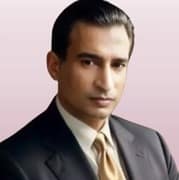
Dr. Suresh Kumar Mishra, widely known in the world of satire by his pen name ‘Uratipt’, expresses his emotions and thoughts with profound honesty and depth. His multifaceted talent is evident in his contributions across various literary genres. He is not only a renowned satirist but also a poet and a children’s author.
His satirical writings have earned him a special place in the literary world. His satire, ‘Shikshak Ki Mout’, went massively viral on the Sahitya Aajtak channel, garnering over a million views and reads—a monumental achievement in the history of Hindi satire. His collection of satires, ‘Ek Tinka Ikyavan Aankhen’ (A Straw and Fifty-One Eyes), is also highly acclaimed and includes his timeless work, ‘Kitabon Ki Antim Yatra’ (The Last Journey of Books). Other celebrated collections include ‘Mayaan Ek, Talwar Anek’ (One Sheath, Many Swords), ‘Gapodi Adda’ (The Gossiper’s Den), and ‘Sab Rang Mein Mere Rang’ (My Colors in Every Hue). His satirical novel, ‘Idhar-Udhar Ke Beech Mein’ (In Between Here and There), is a unique and groundbreaking work focused on the third world.
His significant contributions to literature have been widely recognized. He was honored with the Best Young Creator Award, 2021 by the Telangana Hindi Academy and the Government of Telangana, an award presented by Chief Minister K. Chandrasekhar Rao. The Rajasthan Children’s Literature Academy also honored him for his children’s book, ‘Nanhon Ka Srijan Aasmaan’ (The Creative Sky of Little Ones). Additionally, he has received the Vyanga Yatra Ravindranath Tyagi Sopaan Samman and the Sahitya Srijan Samman from Prime Minister Narendra Modi.
Dr. Uratript has also played a pivotal role in writing, editing, and coordinating a total of 55 books for the Government of Telangana for primary school, college, and university levels. His work is included in university textbooks in Bihar, Chhattisgarh, and Telangana, where his satirical creations are part of the curriculum. This recognition underscores that young readers can identify and appreciate quality and impactful writing.
Key Accolades and Works
- Viral Satire: ‘Teacher’s Death’ (over 1 million views)
- Satire Collections: ‘Ek Tinka Ikyavan Aankhen’, ‘Mayaan Ek, Talwar Anek’, ‘Gapodi Adda’
- Unique Satirical Novel: ‘Idhar-Udar Ke Beech Mein’
- Awards: Shreshtha Navyuva Samman (Telangana), Sahitya Srijan Samman (PM Modi), and more.
- Educational Contribution: Authored and edited 55 books for the Telangana government.
Some precious moments of life

- Honoured with ‘Shrestha Navayuvva Rachnakar Samman’ by former Chief Minister of Telangana Government, Shri K. Chandrasekhar Rao.
- Honoured with Oscar, Grammy, Jnanpith, Sahitya Akademi, Dadasaheb Phalke, Padma Bhushan and many other awards by the most revered Gulzar sahab (Sampurn Singh Kalra), the lighthouse of the world of literature and cinema, during the Sahitya Suman Samman held in Mumbai.
- Meeting the famous litterateur Shri Vinod Kumar Shukla Ji, honoured with Jnanpith Award.
- Got the privilege of meeting Mr. Perfectionist of Bollywood, actor Aamir Khan.
- Meeting the powerful actor Vicky Kaushal on the occasion of being honoured by Vishva Katha Rangmanch.
Today we present his satire The Old Stethoscope Hanging in the Hospital Corridor.
☆ Witful Warmth# 122 ☆
☆ Satire ☆ The Old Stethoscope Hanging in the Hospital Corridor… ☆ Dr. Suresh Kumar Mishra ‘Uratript’ ☆
On the damp wall of the main OPD corridor in the town’s oldest government cardiology institute, an old brass-framed stethoscope had been hanging from an iron peg for the past twenty years. Its rubber tubing, hardened by sun and air, was cracked in several places. A thick layer of time’s dust coated the circular chest piece that once revealed the truth of racing or slowing heartbeats. Every morning, right as the clock struck seven, Vaidya Dinanath Kaka would walk up, leaning on his old rosewood staff, and sit on the cracked cement ledge right beneath that wall. Clad in a torn white khadi kurta with a soiled towel slung over his shoulder, Dinanath Kaka spent the entire day staring with petrified eyes at the stethoscope with its stiffened tube.
Since morning, glossy cars belonging to corporate doctors and officials from major private city hospitals had been arriving across the hospital grounds to showcase modern cardiac ambulances, artificial valves, and expensive pacemaker machines. Grand speeches about saving heartbeats boomed over loudspeakers from the dais. Those modern cardiologists and suited officials had nothing to do with that scrap-like relic hanging in the corner of the wall. Whenever Lakhan, the old ward boy, passed that way carrying bundles of ECG paper rolls, he would shudder at the sight of the old man’s still, silent figure. In a trembling, feeble voice, Kaka would ask him, “Lakhan, did any order come during this World Heart Day fair to listen to a poor man’s heartbeat using this old stethoscope, or are only speech-bound heartbeats being sold from the stage today as well?” Lakhan would merely lower his gaze, heave a deep, cold sigh, and walk away in silence.
Dr. Animesh Agnihotri, who had recently arrived from the capital’s Directorate of Medical Promotion as the new Chief Medical Superintendent, was known to be a strict officer, an expert in modern interventional cardiology, and an uncompromising disciplinarian. Whenever Animesh stepped out of his gleaming official car to inspect the new cath lab, his eyes first fell upon Dinanath Kaka seated on that ledge, eyes perpetually fixed on the old stethoscope hanging on the wall. In an era of grand government spectacles for World Heart Day and digital cardiac monitors, Animesh viewed an impoverished elder coming daily to fold hands before a piece of scrap as obsolete superstition and an affront to hospital discipline.
When the main session concluded in the afternoon and the VIP guests headed to the lounge for lunch, Animesh left his security detail behind and walked straight up to Dinanath Kaka. In an authoritative voice with a sharp edge, Animesh demanded, “Kaka, why do you sit in the main passage every day at this age? If you need free heart medication or a government pension slip, go inside to the OPD counter. Sitting outside like this and staring at an old, useless stethoscope hanging on the wall is not going to cure this country’s heart diseases.”
Dinanath Kaka folded his trembling hands with utter grace and replied in a quavering voice, “Superintendent Sir, I am not sitting here begging for a cure to any illness of mine. I am merely awaiting the day when the lost heartbeat returns to this stethoscope—the one stolen from me at this very threshold long ago.”
Animesh found Kaka’s reply to be a philosophical riddle and asked in bewilderment, “Kaka, what lost heartbeat are you talking about? The government allocates budgets worth crores every year on World Heart Day to run free stent programs for the poor. What secret does this stiff old tube hold?”
Pandit Someshwar, an elderly retired ECG technician standing nearby who had witnessed every patient and every pulse at the center for forty years, stepped forward at once. “Superintendent Sir, do not dismiss Kaka’s words as madness,” he said. “Twenty years ago, when poor laborers in this entire region writhed in agony and died of heart attacks, Kaka’s only son, Manas, stood in this very veranda and lit the greatest torch for safeguarding the poor man’s heart.”
Curious, Animesh asked, “What did Manas do that keeps him tied to this old stethoscope to this day?”
Pandit Someshwar took a deep breath and began, “Sir, Manas was the most brilliant and proud young cardiologist in the entire state back then. When large private hospitals extorted thousands just to lay a hand on a poor man’s chest, Manas rode his bicycle with this very stethoscope from village to village at all hours of the night to examine destitute patients suffering from chest pain for free. He hung this instrument on that peg and swore an oath: until the last impoverished patient in this town could access heart treatment without money, he would never bow to any foreign medical lobby.”
Taking up Someshwar’s tale, Dinanath Kaka touched the stethoscope’s chest piece with trembling fingers and spoke in an agonizing tone, “Yes, Sir. That day, standing on this ledge, my Manas told me: ‘Bapu, this stethoscope is not just a tube to put in your ears; it is the true guardian of the poor man’s pulse.’ He promised that the day he returned from Delhi with the largest free rural cardiac care project under the National Heart Health Mission, he would personally listen to the beat in my chest with this stethoscope and make me the chief guest on the nation’s biggest stage.”
A deep curiosity stirred within Animesh. He immediately went to the archives to dig up that twenty-year-old cardiac project file. As Animesh read through the final pages of that confidential dossier, the ground slipped beneath his feet. The records explicitly stated that when Manas launched his crusade to treat the poor twenty years ago, a syndicate of foreign stent manufacturers and corporate hospitals moved to crush the movement by buying him off—offering him the role of chief cardiac surgeon at their flagship super-specialty hospital chain alongside a covert twenty-five percent partnership. Cast aside were all his ideals and the sacred vow of that stethoscope; Manas signed the agreements. Riding on that very wealth, he transformed into the nation’s most notorious billionaire heart-surgeon mafia boss—now the biggest merchant of greed, forcing unnecessary, exorbitant fake stents into the chests of impoverished patients.
When Animesh walked out on unsteady legs and revealed with a choked voice that Manas had himself become the greatest butcher of human heartbeats, Kaka wept and said, “Sir, I knew all along that my son had sold out. I come here every day only to see whether this deaf society—when people sit on stages pretending to save lives on World Heart Day while mortgaging their own roots and their own father’s heartbeat inside the cath lab of profit—can sense the stench rising from such traded empathy.”
Animesh stood frozen, staring at the dust-covered stethoscope, as the entire cardiology institute sank into a disgraced hush, drowned in the silence of a helpless father’s tears.
****
© Dr. Suresh Kumar Mishra ‘Uratript’
Contact : Mo. +91 73 8657 8657, Email : drskm786@gmail.com
≈ Blog Editor – Shri Hemant Bawankar/Editor (English) – Captain Pravin Raghuvanshi, NM ≈


