Dr. Suresh Kumar Mishra ‘Uratript’
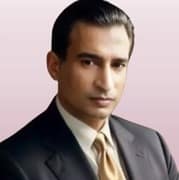
Dr. Suresh Kumar Mishra, known for his wit and wisdom, is a prolific writer, renowned satirist, children’s literature author, and poet. He has undertaken the monumental task of writing, editing, and coordinating a total of 55 books for the Telangana government at the primary school, college, and university levels. His editorial endeavors also include online editions of works by Acharya Ramchandra Shukla.
As a celebrated satirist, Dr. Suresh Kumar Mishra has carved a niche for himself, with over eight million viewers, readers, and listeners tuning in to his literary musings on the demise of a teacher on the Sahitya AajTak channel. His contributions have earned him prestigious accolades such as the Telangana Hindi Academy’s Shreshtha Navyuva Rachnakaar Samman in 2021, presented by the honorable Chief Minister of Telangana, Mr. Chandrashekhar Rao. He has also been honored with the Vyangya Yatra Ravindranath Tyagi Stairway Award and the Sahitya Srijan Samman, alongside recognition from Prime Minister Narendra Modi and various other esteemed institutions.
Dr. Suresh Kumar Mishra’s journey is not merely one of literary accomplishments but also a testament to his unwavering dedication, creativity, and profound impact on society. His story inspires us to strive for excellence, to use our talents for the betterment of others, and to leave an indelible mark on the world.
Some precious moments of life

- Honoured with ‘Shrestha Navayuvva Rachnakar Samman’ by former Chief Minister of Telangana Government, Shri K. Chandrasekhar Rao.
- Honoured with Oscar, Grammy, Jnanpith, Sahitya Akademi, Dadasaheb Phalke, Padma Bhushan and many other awards by the most revered Gulzar sahab (Sampurn Singh Kalra), the lighthouse of the world of literature and cinema, during the Sahitya Suman Samman held in Mumbai.
- Meeting the famous litterateur Shri Vinod Kumar Shukla Ji, honoured with Jnanpith Award.
- Got the privilege of meeting Mr. Perfectionist of Bollywood, actor Aamir Khan.
- Meeting the powerful actor Vicky Kaushal on the occasion of being honoured by Vishva Katha Rangmanch.
Today we present his satire The Dog: A Citizen of the Republic of Irony.
☆ Witful Warmth# 61 ☆
☆ Satire ☆ The Dog: A Citizen of the Republic of Irony… ☆ Dr. Suresh Kumar Mishra ‘Uratript’ ☆
The dog is not merely an animal. He is a metaphor, a social commentary, a walking editorial. He is the only creature who can wag his tail and still be taken seriously. In our society, the dog has transcended biology and entered politics, bureaucracy, and even philosophy. He is the mascot of loyalty, the symbol of servitude, and the ambassador of absurdity. When a dog barks, it is not just noise—it is a protest, a press conference, a parliamentary debate. And when he bites, it is not violence—it is policy implementation. The dog is the only citizen who can roam freely, bark at authority, and still be fed by the very system he disrupts. In this republic of irony, the dog is not beneath us. He is among us. Sometimes, he is above us. He is the minister’s pet, the bureaucrat’s companion, the influencer’s accessory, and the common man’s mirror. If Harishankar Parsai were alive today, he would not write about the dog. He would interview him. Because the dog knows everything. He has seen everything. He has sniffed every scandal, marked every boundary, and slept through every revolution. He is not just a creature. He is a commentary.
The dog’s loyalty is legendary. But loyalty to whom? To the master, of course. The master may be corrupt, cruel, or criminal—but the dog remains loyal. This is not loyalty. This is conditioning. And this conditioning is not limited to dogs. Citizens too are conditioned. They vote loyally, cheer loyally, and suffer loyally. The dog licks the master’s boots. The citizen licks the master’s slogans. The dog wags his tail. The citizen waves his flag. Both are symbols of submission. The dog does not question authority. Neither does the voter. The dog is trained to sit, stay, and roll over. The citizen is trained to obey, pay, and rollover EMIs. The dog’s loyalty is rewarded with biscuits. The citizen’s loyalty is rewarded with promises. Both are edible, but only one is digestible. The dog is loyal because he knows no better. The citizen is loyal because he fears worse. In this democracy, loyalty is not a virtue—it is a survival tactic. And the dog is its most honest practitioner. He does not pretend to be free. He knows he is owned. The citizen, however, lives in the illusion of freedom, wagging his rights like a tail, unaware that the leash is constitutional.
The dog barks. It is his right. It is also his duty. He barks at strangers, at shadows, at silence. He barks to assert territory, to express anxiety, to demand attention. The citizen too barks—on social media, in drawing rooms, at news anchors. But his bark is hollow. It lacks teeth. The dog’s bark may not bite, but it warns. The citizen’s bark is often just noise. The dog barks at injustice instinctively. The citizen barks at injustice selectively. The dog does not need a trending hashtag to protest. He needs a reason. The citizen needs a camera. The dog’s bark is raw, unfiltered, and honest. The citizen’s bark is rehearsed, edited, and monetized. The dog barks even when no one listens. The citizen barks only when someone retweets. In this age of performative outrage, the dog remains authentic. He does not bark for likes. He barks for survival. And when he stops barking, it is not peace—it is resignation. The dog teaches us that silence is not always golden. Sometimes, it is dangerous. Because when the dog stops barking, the thief enters. And when the citizen stops barking, the tyrant wins.
The dog bites. Not always. But when he does, it is decisive. He does not issue warnings. He does not file petitions. He bites. And then he moves on. The citizen, however, does not bite. He debates. He discusses. He defers. The dog bites when provoked. The citizen tolerates when provoked. The dog’s bite is a reaction. The citizen’s inaction is a tradition. The dog bites the hand that hits him. The citizen kisses the hand that robs him. The dog is not diplomatic. He is direct. The citizen is not direct. He is domesticated. The dog bites and faces consequences. The citizen suffers and writes poetry. In this society, biting is rebellion. And rebellion is discouraged. The dog is punished for biting. The citizen is rewarded for bleeding quietly. The dog’s bite is a statement. The citizen’s silence is a compromise. The dog teaches us that sometimes, resistance must be physical. That sometimes, the only way to be heard is to bite. But we have forgotten how to bite. We have become toothless patriots, wagging our tongues instead of our tails, barking at each other instead of the system. The dog remains the last revolutionary.
The dog sleeps. Anywhere. Everywhere. He sleeps on footpaths, under cars, beside garbage bins. He sleeps without guilt, without shame, without apology. The citizen too sleeps—through elections, through scams, through speeches. But his sleep is not restful. It is strategic. The dog sleeps because he is tired. The citizen sleeps because he is indifferent. The dog wakes up when danger approaches. The citizen wakes up when Netflix buffers. The dog’s sleep is innocent. The citizen’s sleep is complicit. The dog does not dream of democracy. He dreams of bones. The citizen dreams of democracy but settles for discounts. The dog sleeps in the open, vulnerable yet free. The citizen sleeps in gated colonies, secure yet caged. The dog’s sleep is a pause. The citizen’s sleep is an escape. In this nation of sleepers, the dog is the only one who wakes up for a reason. He wakes up to bark, to bite, to chase. The citizen wakes up to complain, to consume, to conform. The dog teaches us that sleep is necessary, but awakening is urgent. That rest is not resignation. That dreams must be chased, not just dreamt. But we continue to sleep—through injustice, through inequality, through incompetence—hoping someone else will bark.
The dog runs. Behind cars, cycles, cats, and sometimes, his own tail. He runs without purpose, without destination, without GPS. The citizen too runs—behind jobs, behind leaders, behind trends. But his run is not free. It is forced. The dog runs because he can. The citizen runs because he must. The dog’s run is chaotic but joyful. The citizen’s run is structured but stressful. The dog does not run for medals. He runs for movement. The citizen runs for validation. The dog runs even when he knows he won’t catch the car. The citizen runs even when he knows he won’t catch a break. The dog’s run is a metaphor for freedom. The citizen’s run is a metaphor for fatigue. In this race of rats, the dog remains a stray. He does not follow lanes. He does not obey signals. He runs because the road is his. The citizen runs because the system demands it. The dog teaches us that running is not always progress. That speed is not always success. That chasing is not always achieving. But we continue to run—on treadmills of ambition, on highways of illusion—forgetting that sometimes, the joy is in the run, not the result.
The dog is homeless. Technically. But he is not rootless. He belongs to every street, every corner, every chai stall. The citizen has homes, but no belonging. He lives in apartments, but not in communities. The dog is greeted by name—Sheru, Tommy, Moti. The citizen is greeted by designation—Sir, Ma’am, Boss. The dog is remembered for his bark. The citizen is remembered for his LinkedIn. The dog is fed by strangers. The citizen is ignored by neighbors. The dog finds warmth in winter, shade in summer, and food in festivals. The citizen finds EMI in winter, bills in summer, and stress in festivals. The dog is poor, but not pitiful. The citizen is rich, but not restful. In this urban jungle, the dog survives. The citizen struggles. The dog teaches us that home is not a building. It is a feeling. That belonging is not ownership. It is acceptance. That community is not WhatsApp groups. It is shared silence, shared space, shared stories. But we continue to build walls, install cameras, and forget names. The dog remains the only one who knows everyone, greets everyone, and trusts everyone. He is homeless, but never alone.
The dog dies. Quietly. On roads, in drains, under wheels. No obituary. No condolence. No trending hashtag. The citizen too dies—sometimes loudly, sometimes invisibly. But his death is documented. The dog’s death is deleted. The citizen’s death is debated. The dog dies without insurance. The citizen dies with policies. The dog dies because he lived freely. The citizen dies because he lived fearfully. The dog’s death is a statistic. The citizen’s death is a story. But both are forgotten. The dog teaches us that death is not the end. It is the punctuation. That life must be barked, bitten, and run. That silence is not peace—it is absence. That freedom is not safety—it is risk. But we do not learn. We mourn selectively. We remember conveniently. We live cautiously. So let us not dismiss the dog as a mere street nuisance or a loyal pet. He is our reflection—raw, unfiltered, and inconvenient. He barks when we whisper, bites when we beg, and sleeps when we pretend to be awake. In his wagging tail lies our conditioned obedience, in his bark our suppressed dissent, and in his bite our forgotten courage. The dog does not wear masks of civility; he exposes the farce of our own. He does not seek approval; he demands attention. And in doing so, he becomes the most honest citizen of this republic—unregistered, uncelebrated, but unforgettable. If we truly wish to evolve as a society, perhaps we must stop taming the dog and start learning from him. Because in a world where silence is rewarded and obedience is sold as virtue, the dog reminds us—sometimes, to be truly human, one must dare to bark.
****
© Dr. Suresh Kumar Mishra ‘Uratript’
Contact : Mo. +91 73 8657 8657, Email : drskm786@gmail.com
≈ Blog Editor – Shri Hemant Bawankar/Editor (English) – Captain Pravin Raghuvanshi, NM ≈


