Dr. Suresh Kumar Mishra ‘Uratript’
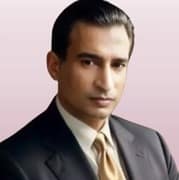
Dr. Suresh Kumar Mishra, known for his wit and wisdom, is a prolific writer, renowned satirist, children’s literature author, and poet. He has undertaken the monumental task of writing, editing, and coordinating a total of 55 books for the Telangana government at the primary school, college, and university levels. His editorial endeavors also include online editions of works by Acharya Ramchandra Shukla.
As a celebrated satirist, Dr. Suresh Kumar Mishra has carved a niche for himself, with over eight million viewers, readers, and listeners tuning in to his literary musings on the demise of a teacher on the Sahitya AajTak channel. His contributions have earned him prestigious accolades such as the Telangana Hindi Academy’s Shreshtha Navyuva Rachnakaar Samman in 2021, presented by the honorable Chief Minister of Telangana, Mr. Chandrashekhar Rao. He has also been honored with the Vyangya Yatra Ravindranath Tyagi Stairway Award and the Sahitya Srijan Samman, alongside recognition from Prime Minister Narendra Modi and various other esteemed institutions.
Dr. Suresh Kumar Mishra’s journey is not merely one of literary accomplishments but also a testament to his unwavering dedication, creativity, and profound impact on society. His story inspires us to strive for excellence, to use our talents for the betterment of others, and to leave an indelible mark on the world.
Some precious moments of life

- Honoured with ‘Shrestha Navayuvva Rachnakar Samman’ by former Chief Minister of Telangana Government, Shri K. Chandrasekhar Rao.
- Honoured with Oscar, Grammy, Jnanpith, Sahitya Akademi, Dadasaheb Phalke, Padma Bhushan and many other awards by the most revered Gulzar sahab (Sampurn Singh Kalra), the lighthouse of the world of literature and cinema, during the Sahitya Suman Samman held in Mumbai.
- Meeting the famous litterateur Shri Vinod Kumar Shukla Ji, honoured with Jnanpith Award.
- Got the privilege of meeting Mr. Perfectionist of Bollywood, actor Aamir Khan.
- Meeting the powerful actor Vicky Kaushal on the occasion of being honoured by Vishva Katha Rangmanch.
Today we present his satire Democracy’s Lament: A Village’s Woes.
☆ Witful Warmth# 55 ☆
☆ Satire ☆ Democracy’s Lament: A Village’s Woes… ☆ Dr. Suresh Kumar Mishra ‘Uratript’ ☆
Ah, Rampurwa! A name that, in days gone by, would conjure visions of village squares brimming with honesty and an almost pastoral simplicity. Where the first blush of dawn saw ploughs cleaving the earth, and the twilight hours gathered the elders on the chaupal, their wisdom a balm to every dispute. The tale of its very first panchayat election, a distant echo from a purer time, still kindles a faint, melancholic glow in the eyes of old Bhabua Kaka. “Oh, my child,” he would sigh, his voice a whisper from a bygone era, “those were the days! Candidates, with hands clasped in humble supplication, would go from door to door, pledging their ‘service,’ their only offering the ‘sweat of their brow’ and an unblemished ‘integrity.'” In that golden age, the ‘people’ were the masters, and the ‘leaders’ their devoted servants. The assembly? It was naught but a ‘temple,’ a hallowed space where every matter was subjected to ‘deliberation,’ never mere ‘dispute.’ Character, not the paltry sum declared on a character certificate, was the true measure of a man. A vote then was a ‘blessing,’ a sacred trust; now, alas, it has transmogrified into a mere ‘offer,’ a transactional trifle. They once vowed, “We shall lay down our lives for you,” and indeed, they did. Today’s leaders, with a chilling irony, declare, “We shall lay down your lives,” and, by Jove, they often do! Then, a leader was a ‘servant’; now, he is a ‘saving account.’ In that era, should a candidate suffer defeat, the villagers would console him, “Fret not, my son, serve us again next time.” Today, should one fall, the retort is a cynical shrug, “Never mind, spend more ‘money’ next time.” That was a time when politics was a ‘faith,’ and politicians, veritable ‘saints.’ Now, politics is but a ‘trade,’ and its practitioners, mere ‘traders.’
Yet, as the wise old adage goes, ‘decay’ does not descend in a single, thunderous clap; it creeps in, slow and insidious, like the relentless termite gnawing at the very heart of timber. In Rampurwa, the first faint tremor of this transformation was felt when, alongside the customary ‘tea and water,’ ‘sweet boxes’ began to make their surreptitious appearance. Initially, these were tokens of ‘affection,’ then symbols of ‘influence,’ and finally, the blatant instruments of ‘temptation.’ Those very leaders, who once traversed the village’s dusty, unpaved paths with bare feet, now arrived in gleaming ‘SUVs,’ raising clouds of dust in their wake, a visible testament to their newfound prosperity. Their humble ‘bicycles’ had yielded to the imposing ‘Scorpios,’ and their ‘plain kurtas’ were replaced by ‘colourful shawls’ of ostentatious weave. When ‘public service’ mutated into ‘self-service,’ no one could precisely pinpoint the moment of this dark alchemy. Once, ‘development’ signified a village road, a school, or a hospital; now, it denotes the leader’s sprawling ‘mansion’ and his burgeoning ‘bank balance.’ The day the first victorious candidate chose to distribute ‘liquor bottles’ instead of traditional sweets, Bhabua Kaka clutched his head in despair. “What, pray tell, is happening?” he had whispered, his voice laced with profound sorrow. “This is no longer ‘democracy’; it is ‘demon-cracy,’ where the populace is ensnared in a ‘tantra’ to be ‘looted.'” A vote, once a sacred ‘blessing,’ had now become a vulgar ‘offer.’ The age when leaders spoke of ‘sacrifice’ had long passed; now, they merely threatened ‘resignation’ should their ‘demands’ remain unfulfilled.
Then dawned the ignominious reign of ‘Limping Lakhan.’ Lakhan, a figure of considerable notoriety in the village for his sheer ‘brutality,’ a man who had never darkened the doors of a school, now aspired to be the ‘headman’ of the ‘Panchayat.’ He possessed no eloquence, no grand speeches, only a formidable ‘cudgel’ and eyes that glowed with a chilling ‘red.’ ‘Persuasion’ and ‘conciliation’ had become relics of a forgotten age; now, only ‘threats’ and ‘suppression’ held sway. Votes were no longer garnered by ‘appeal’ but by sheer ‘terror.’ The ballot box, that venerable symbol of democratic choice, had been usurped by the ‘bullet box.’ No soul in the village dared to voice ‘dissent,’ for to ‘oppose’ Lakhan meant, quite literally, the ‘extinction’ of the ‘opponent’s’ very ‘existence.’ Bhabua Kaka bore witness to the tragic spectacle of his simple, guileless villagers, who once trembled before the ‘Almighty,’ now cowering in abject fear before ‘Lakhan.’ Once, there was ‘voting’; now, there was ‘fist-casting.’ Lakhan would declare, with a menacing grin, “Vote for me, and there shall be ‘development’; refuse, and there shall be ‘destruction.'” And the villagers knew, with a chilling certainty, just how ‘precise’ his ‘destruction’ could be. No longer was it ‘the people,’ but a mere ‘multitude,’ herded like ‘sheep and goats’ to their predetermined fate.
And then, with a cynical regularity, arrived the ‘season of transfers,’ a period that proved far more ‘profitable’ for Rampurwa than even the bountiful ‘monsoon.’ The village accountant, the police inspector, nay, even the schoolmaster—all became ‘commodities for sale.’ Every ‘posting’ bore a discernible ‘rate card,’ openly discussed at the village tea stall as if it were the price of vegetables. “Oh, brother, you desire the transfer of that particular accountant? Ten lakhs, if you please!” “And the inspector? Twenty lakhs!” Such transactions were bandied about with the casual air of haggling over cabbages. The common man, who once trudged tirelessly through the labyrinthine corridors of bureaucracy for his paltry affairs, now found himself entangled in the web of ‘middlemen.’ ‘Service’ had been unceremoniously supplanted by ‘setting.’ Bhabua Kaka once overheard the lament of a poor farmer, who, after months of futile efforts to secure his land documents, was ultimately forced to proffer a ‘bribe’—a sum he had painstakingly saved for his daughter’s wedding. The farmer, tears streaming down his weathered face, had cried out, “Sir, ‘development’ now means the development of the ‘pocket,’ and ‘schemes’ are but ‘plans’ for ‘plunder.'” This, indeed, was a brand of politics where ‘integrity’ held no sway, only ‘incentives’ reigned supreme.
The village’s Gram Sabha meetings, once the vibrant epicentres of ‘discourse’ on Rampurwa’s future, had, by this lamentable juncture, devolved into a grotesque ‘circus.’ The microphones, instead of amplifying ‘issues,’ reverberated with crude ‘expletives,’ and ‘debates’ frequently escalated into unseemly ‘brawls.’ The Sarpanch, once the venerable ‘head of the village,’ had been reduced to a hapless ‘referee’ in an arena of chaos, blowing his whistle in futile desperation. On one memorable occasion, during a heated discussion concerning the ‘water problem,’ a politician, in a fit of pique, hurled a ‘water bottle’ at his adversary. In the assembly, ‘debate’ was no more; it was a ‘buffalo-like’ brawl, devoid of reason or decorum. Bhabua Kaka would often remark, “Once, ‘leaders’ thought; now, they merely ‘shriek.'” The villagers, who once attended the Gram Sabha with a glimmer of hope, now came solely for ‘entertainment,’ eager to witness who would ‘trounce’ whom on any given day. The slogan of ‘service to the nation’ had been perverted into ‘the nation serving them,’ as leaders busied themselves solely in their own aggrandizement.
The village tea stall, once a humble haven for idle chatter, had, by a cruel twist of fate, become the ‘true parliament’ of Rampurwa. It was there that the common folk would gather, to rail against the ‘government,’ to heap curses upon their ‘leaders,’ and to weep silently over their ‘destiny.’ “Oh, brother,” one would exclaim, “these leaders are like a ‘dog’s tail,’ never to be straightened!” Another would add, with a bitter laugh, “They deserve ‘shoes,’ not ‘votes’!” Yet, these fervent declarations remained confined to the tea stall’s humble confines. When election time inevitably arrived, these very same individuals, with a chilling predictability, would barter their ‘future’ for a bottle of ‘liquor’ and a paltry ‘fifteen hundred rupees.’ The media, too, played its part, sensationalizing these ‘spectacles’ as ‘breaking news,’ yet offering no tangible ‘solutions.’ The populace, once casting ‘votes,’ now merely mourned their collective ‘fate.’ They knew, with a crushing certainty, that ‘change’ would never come, for those who were meant to bring ‘change’ had themselves ‘changed,’ irrevocably. This, indeed, was an era when ‘democracy’ had become a cruel ‘jest,’ and the people, the unwitting ‘objects of ridicule.’
One day, old Ram Pyari, her back bowed by the weight of years and her eyes brimming with the ‘suffering’ of a lifetime, came to the Gram Sabha, seeking her pension and medical aid. Wiping her eyes with the tattered corner of her sari, she pleaded, “Government, I have no one. A little help would mean so much…” But her frail voice was swallowed by the ‘uproar’ of the assembly. One leader dismissed her as a ‘drama queen,’ another waved her away as a relic of ‘bygone times.’ Her desperate ‘need’ was callously transformed into a ‘political weapon.’ “Oh, give this old woman her pension, so we can secure votes in the next election!” a leader bellowed, his words devoid of all humanity. Old Ram Pyari simply watched, her eyes reflecting not ‘hope,’ but profound ‘tears.’ She sank to the ground, and the tears that streamed from her eyes bore silent witness to the ‘plunging depths’ of ‘democracy’s’ decline. The leaders’ pockets were stuffed with ‘notes,’ but their hearts held no ‘principles.’ On that day, Bhabua Kaka, for the very first time, felt ‘tears’ welling in his own eyes. They were not the tears of old Ram Pyari; they were the ‘tears’ for that ‘Rampurwa,’ which had, by now, tragically transformed into ‘Ravanpurwa.’
Today, a profound ‘peace’ has settled upon Rampurwa, but it is the chilling ‘peace of a graveyard.’ No ‘debates’ now disturb the air, for there is no one left to ‘debate.’ The spirit of ‘sacrifice’ had long been ‘abandoned,’ and now, only the ‘mission’ of ‘acquisition’ remains. Bernard Shaw, with his characteristic cynicism, once declared, “Politics is the last refuge of a scoundrel.” In Rampurwa, alas, the ‘scoundrel’ had not merely sought refuge; he had seized ‘the entire mansion.’ The dreams of ‘freedom fighters,’ the noble ideals of ‘Gandhiji,’ all had been trampled into the ‘dust.’ ‘Service to the nation’ has now become a mere ‘career,’ wherein ‘gain’ is the sole and ‘primary objective.’ When men like Dr. Shankardayal Sharma wept in Parliament, in Rampurwa, men like Bhabua Kaka wept silently in the solitude of their homes. The tears that flowed from their eyes were falling upon the ‘funeral procession’ of ‘democracy.’ Once, there was ‘revolution’; now, there is only ‘demise.’ And upon this ‘demise,’ alas, nothing remains but to weep.
****
© Dr. Suresh Kumar Mishra ‘Uratript’
Contact : Mo. +91 73 8657 8657, Email : drskm786@gmail.com
≈ Blog Editor – Shri Hemant Bawankar/Editor (English) – Captain Pravin Raghuvanshi, NM ≈


