Dr. Suresh Kumar Mishra ‘Uratript’
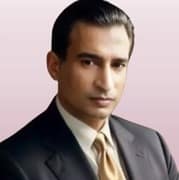
Dr. Suresh Kumar Mishra, known for his wit and wisdom, is a prolific writer, renowned satirist, children’s literature author, and poet. He has undertaken the monumental task of writing, editing, and coordinating a total of 55 books for the Telangana government at the primary school, college, and university levels. His editorial endeavors also include online editions of works by Acharya Ramchandra Shukla.
As a celebrated satirist, Dr. Suresh Kumar Mishra has carved a niche for himself, with over eight million viewers, readers, and listeners tuning in to his literary musings on the demise of a teacher on the Sahitya AajTak channel. His contributions have earned him prestigious accolades such as the Telangana Hindi Academy’s Shreshtha Navyuva Rachnakaar Samman in 2021, presented by the honorable Chief Minister of Telangana, Mr. Chandrashekhar Rao. He has also been honored with the Vyangya Yatra Ravindranath Tyagi Stairway Award and the Sahitya Srijan Samman, alongside recognition from Prime Minister Narendra Modi and various other esteemed institutions.
Dr. Suresh Kumar Mishra’s journey is not merely one of literary accomplishments but also a testament to his unwavering dedication, creativity, and profound impact on society. His story inspires us to strive for excellence, to use our talents for the betterment of others, and to leave an indelible mark on the world.
Some precious moments of life

- Honoured with ‘Shrestha Navayuvva Rachnakar Samman’ by former Chief Minister of Telangana Government, Shri K. Chandrasekhar Rao.
- Honoured with Oscar, Grammy, Jnanpith, Sahitya Akademi, Dadasaheb Phalke, Padma Bhushan and many other awards by the most revered Gulzar sahab (Sampurn Singh Kalra), the lighthouse of the world of literature and cinema, during the Sahitya Suman Samman held in Mumbai.
- Meeting the famous litterateur Shri Vinod Kumar Shukla Ji, honoured with Jnanpith Award.
- Got the privilege of meeting Mr. Perfectionist of Bollywood, actor Aamir Khan.
- Meeting the powerful actor Vicky Kaushal on the occasion of being honoured by Vishva Katha Rangmanch.
Today we present his satire The Felicitation Ceremony of Sixty-Year-Old Mischief.
☆ Witful Warmth# 63 ☆
☆ Satire ☆ The Felicitation Ceremony of Sixty-Year-Old Mischief… ☆ Dr. Suresh Kumar Mishra ‘Uratript’ ☆
From dusty villages to the capital itself, there was a buzz: the Sahitya Akademi was about to host a “historic” program. The declared theme—“The Transitional Phase of Hindi Satire.” But the real spice lay elsewhere: the welcome speech was to be delivered by none other than the Secretary himself, whose mischief had turned a glorious sixty this year. Now you may ask—how can mischief ever grow old? Dear sir, in this land everything is cause for celebration. Some pour ghee in temples, some blow out candles on birthdays, and some—having made people’s lives hell for a good sixty years—get their mischief felicitated. The Akademi was all set to print invitations saying—“Diamond Jubilee of the Secretary’s Mischief.” But then they feared a cart of rotten tomatoes might decorate the hall’s entrance, so they softened it to the safer title of “Transitional Phase.”
On the day of the grand function, the hall looked like a theatre of absurdity. Outside, giant hoardings screamed—“Welcome the Transitional Phase!” Inside, a velvet-red table gleamed with flowers arranged into the number “60.” The Secretary waddled in, belly leading the way, and collapsed into the chair like a crowned king of Mischief on the day of coronation. On the wall, Parsai’s portrait hung, his eyes seemingly whispering, “Look at this—the offspring of my satire adorning with garlands the very man throttling its neck!” The litterateurs seated in the audience muffled their laughter, but not because the joke was funny—because they feared shoes might really start flying. The anchor on the mic boomed, “Today, present among us is a personality of great experience, our venerable Secretary!” I bit my tongue. Oh, to shout aloud—“Experience in what? Theft? Hypocrisy? Or simply decades of mischief?”
When the Secretary rose to speak, even the tube-lights on stage flickered nervously. Behind those thick glasses, his eyes glistened with the polished shamelessness of a thief declaring, “I’m here to dispense justice.” He began, “Friends, satire is going through a difficult transitional phase. We must preserve it.” The hall burst into applause. Just imagine: the man whose antics stick to every street corner like unpaid electricity bills, now sermonizing about saving satire! This is the real infection—when scoundrels start preaching piety. Each word from his mouth felt tugged by some invisible hand of falsehood, and the audience swallowed it whole as if it were divine truth.
The real comedy, however, was the row of writers nodding on stage. One bobbed his head mechanically—as though agreeing was a childhood habit. Another bowed so incessantly it felt like he was attending a villain’s wedding, willy-nilly playing the role of a dancing guest. One writer whispered over his teacup, “Friend, sharing the stage is mere compulsion.” Another muttered, “We’re here for literature, not the man.” It sounded as though they’d equated man with a sewer and literature with the Ganges, and happily stirred both into the same pot. This “transition” was not illness of language—it was a cold in the very soul. Satire, strong as steel in Parsai’s hands, was now wrapped and suffocated in the coffin of silence, while the Secretary sat beaming—his sixty years of mischief officially academic.
The richest satire, though, festered outside in the crowd. People came armed with baskets of rotten eggs, dead tomatoes, and ancient slippers. “This is the true way to welcome him,” someone chuckled. Another whispered, “Wait and watch—the speech will soon be decorated with red eggs.” But the guards were vigilant, standing stiff as if they were democracy’s gatekeepers, confiscating shoes like contraband and tossing them into a lockup. Inside, the Secretary smoothed out the creases in his pristine white kurta, while outside, democracy’s voice was stripped barefoot. Such is the state of satire today: when shoes on your feet are blessed for temple darshan, but the moment the same shoes arc majestically toward a rogue’s forehead, the hall calls it an outrage. The air inside smelled like rotten potatoes hidden under roses.
The Secretary’s speech dragged on and on. Louder even than his words was his laughter—that laughter bought with contractors’ cash, that laughter that salts the wounds of the wronged, that laughter awarded for six decades of perfected deceit. The writers sat listening as though the laughter itself were a bitter medicine they were compelled to swallow. Behind their frozen faces lurked fear. They knew too well—oppose him, and the foreword to their next book will be penned by someone else entirely. Better keep the pen locked in the pocket. Satire was no longer literature; it had withered into the stench of this hall. Each of his sentences crackled like an electric shock—writers clapped, not out of agreement, but as living insulators protecting themselves from electrocution.
If one calls this a “transition,” then this it is: the court silent, the stage dumb, the victim abandoned. Her cries clung mute to the peeling walls like forgotten posters. Each clap in the hall dropped another tear from her eyes. In those tears drowned pages of literature, while floating upon them was the mocking silhouette of his laughter. Shoes waited outside for justice, but inside, satire was lynched. This was no academic ceremony—it was satire’s funeral procession. Only difference—here the mourners showered not flowers but empty words, and the corpse was the pen itself, once sharpened by Parsai, now rusted into a party spoon tucked in the Secretary’s pocket.
When the event concluded, the writers eagerly posed for photographs. The Secretary smiled, flowers rained, and shoes languished in their lock-up prison, denied their rightful protest. Off to the side stood a woman, silent. Swollen eyes, cracked lips, broken heart—she was the one branded guilty. Her tears alone scripted the real text of this ceremony. On stage claps thundered, but within her chest roared endless screams. It was in that scream that satire’s final word was etched: “The Secretary’s mischief may have completed sixty years, but justice remains an orphan.” And as we exited the hall, it seemed Parsai himself whispered from the walls—“Satire is dead, my friends. Not even shoes were granted to perform its last rites.” The echo of that slap still lingered in the air
****
© Dr. Suresh Kumar Mishra ‘Uratript’
Contact : Mo. +91 73 8657 8657, Email : drskm786@gmail.com
≈ Blog Editor – Shri Hemant Bawankar/Editor (English) – Captain Pravin Raghuvanshi, NM ≈


