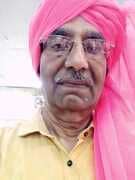
Authored six books on happiness: Cultivating Happiness, Nirvana – The Highest Happiness, Meditate Like the Buddha, Mission Happiness, A Flourishing Life, and The Little Book of Happiness. He served in a bank for thirty-five years and has been propagating happiness and well-being among people for the past twenty years. He is on a mission – Mission Happiness!
🌌 The Compass of Wisdom: Right View on the Noble Path 🌌
When the Buddha laid down the Noble Eightfold Path as the road to freedom from suffering, he began with something profoundly vital—Right View. It is the forerunner, the compass, the guiding star of the entire spiritual journey.
Why so? Because how we see things—our view of life, the world, ourselves, and others—shapes everything we think, say, and do. The Buddha put it sharply and simply:
“I see no other single factor so responsible for the arising of unwholesome states of mind as wrong view,
and no other single factor so potent in promoting wholesome states as right view.”
In short, wrong view is the root of suffering, and right view is the doorway to liberation.
Let us gently walk through the main features of Right View as the Buddha taught, and explore how we may cultivate it in daily life.
🍀🍀🌺🍀🍀
Two Wings of Wisdom:
Right View and Right Intention
The Eightfold Path is often grouped into three parts: morality (sīla), concentration (samādhi), and wisdom (paññā).
The wisdom group begins with Right View (Sammā Diṭṭhi) and is closely followed by Right Intention. Right View is like the eye that sees; Right Intention is the will that acts on what is seen.
Right View lays the foundation for the entire journey. Without it, even the most well-meant actions may go astray.
But Right View is not just one thing. It has two distinct but connected aspects:
🌿🌿
Mundane Right View – Understanding the Law of Kamma:
This is the beginning step. The Buddha called it the “right view of the ownership of action.”
In simple words, we are the heirs of our actions.
Whatever we do—good or bad—leaves an imprint. Actions are not forgotten by nature. They bear fruit.
The Buddha put it beautifully:
“Beings are the owners of their actions, the heirs of their actions;
they spring from their actions, are bound to their actions, and are supported by their actions.”
This understanding—that good actions bring peace and joy, and bad actions bring suffering—is not just a moral teaching. It’s a law of nature, like gravity, operating at the level of mind and intention.
🌿🌿
The Ten Courses of Kamma:
The Buddha classified actions into wholesome and unwholesome, depending on whether they lead to suffering or to freedom.
🌿🌿
Unwholesome Actions:
By body:
Taking life
Taking what is not given
Sexual misconduct
By speech:
False speech
Slander
Harsh speech
Idle gossip
By mind:
Covetousness (wanting what others have)
Ill will
Wrong view
The opposite of these—refraining from harmful acts, cultivating goodwill, contentment, and clarity—make up the ten wholesome courses of action.
Living by Right View at this level means watching our actions, knowing their consequences, and gently choosing what leads to peace for ourselves and others.
But this is only the beginning.
🌿🌿
Supramundane Right View – Understanding the Four Noble Truths:
This is the deeper, noble level of Right View. It goes beyond good and bad deeds, beyond social harmony, and into the very roots of our inner bondage.
This is where the Buddha begins the true Eightfold Path—with the understanding of the Four Noble Truths:
Dukkha – Life contains suffering, stress, dissatisfaction.
Samudaya – This suffering has a cause: craving, clinging, ignorance.
Nirodha – There is a way to end this suffering.
Magga – That way is the Noble Eightfold Path itself.
To truly see these truths is not just to believe them, but to experience them. It’s like seeing fire and knowing it burns, not because someone told you, but because you touched it.
This deeper Right View gives us a new lens on life. It shifts our focus from blaming the world to understanding the inner patterns that bind us. We begin to see not just what happens, but why it happens.
🌿🌿
From View to Vision:
The Path of Practice
The Buddha never stopped at theory. He urged his followers to walk the path.
Right View is not a dry belief system. It is the beginning of a threefold training:
Sīla – Moral discipline
Samādhi – Concentration through meditation
Paññā – Wisdom, born of deep inner seeing
As our meditation deepens, so does our understanding. The truths we once took on faith become real, living truths.
This is the flowering of Right View—when wisdom opens the mind like a lotus, untouched by the mud of ignorance.
🌿🌿
In Closing:
Right View is not merely “thinking rightly.” It is seeing clearly. It is seeing the law of kamma in daily life, seeing the Four Noble Truths in the heart, and seeing that suffering has a cause—and so, an end.
It is both a map and a mirror.
It is what keeps our steps steady on the Noble Eightfold Path, and what ultimately reveals that freedom is not a distant land, but our very nature, once the fog lifts.
As the Buddha said:
“Just as the dawn is the forerunner of the rising sun,
so is Right View the forerunner of all wholesome states.”
Let us begin, then, with clear eyes, and walk with gentle steps.
A Pathway to Authentic Happiness, Well-Being & A Fulfilling Life! We teach skills to lead a healthy, happy and meaningful life.
The Science of Happiness (Positive Psychology), Meditation, Yoga, Spirituality and Laughter Yoga. We conduct talks, seminars, workshops, retreats and training.
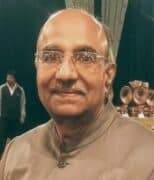
Dr. Suresh Kumar Mishra, known for his wit and wisdom, is a prolific writer, renowned satirist, children’s literature author, and poet. He has undertaken the monumental task of writing, editing, and coordinating a total of 55 books for the Telangana government at the primary school, college, and university levels. His editorial endeavors also include online editions of works by Acharya Ramchandra Shukla.
As a celebrated satirist, Dr. Suresh Kumar Mishra has carved a niche for himself, with over eight million viewers, readers, and listeners tuning in to his literary musings on the demise of a teacher on the Sahitya AajTak channel. His contributions have earned him prestigious accolades such as the Telangana Hindi Academy’s Shreshtha Navyuva Rachnakaar Samman in 2021, presented by the honorable Chief Minister of Telangana, Mr. Chandrashekhar Rao. He has also been honored with the Vyangya Yatra Ravindranath Tyagi Stairway Award and the Sahitya Srijan Samman, alongside recognition from Prime Minister Narendra Modi and various other esteemed institutions.
Dr. Suresh Kumar Mishra’s journey is not merely one of literary accomplishments but also a testament to his unwavering dedication, creativity, and profound impact on society. His story inspires us to strive for excellence, to use our talents for the betterment of others, and to leave an indelible mark on the world.
Some precious moments of life
Honoured with ‘Shrestha Navayuvva Rachnakar Samman’ by former Chief Minister of Telangana Government, Shri K. Chandrasekhar Rao.
Honoured with Oscar, Grammy, Jnanpith, Sahitya Akademi, Dadasaheb Phalke, Padma Bhushan and many other awards by the most revered Gulzar sahab (Sampurn Singh Kalra), the lighthouse of the world of literature and cinema, during the Sahitya Suman Samman held in Mumbai.
Meeting the famous litterateur Shri Vinod Kumar Shukla Ji, honoured with Jnanpith Award.
Got the privilege of meeting Mr. Perfectionist of Bollywood, actor Aamir Khan.
Meeting the powerful actor Vicky Kaushal on the occasion of being honoured by Vishva Katha Rangmanch.
Today we present his satire Kismatchand and the Bureaucratic Beast.
☆ Witful Warmth# 56 ☆
☆ Satire ☆ Kismatchand and the Bureaucratic Beast… ☆ Dr. Suresh Kumar Mishra ‘Uratript’ ☆
In days of yore, when kings held sway and slaves were but their chattels, so too existed in this modern age of liberty, souls truly enslaved by the ‘System,’ their lives no less burdened than those in chains. Among these ‘System-afflicted’ stood our very own Mr. Kismatchand. His existence, alas, was no different from that of a ‘circus lion,’ condemned to dance daily within the confines of its cage, at the mere flick of a trainer’s whip. Rise with the sun, trudge to the office, lose oneself in a labyrinth of papers, and return home, weary and spent, as dusk descended. This was his daily ‘act.’ His ‘freedom,’ such as it was, extended only to choosing which queue to join for bill payments, or before which petty clerk to grovel. The ‘tyranny’ he endured was not trifling. One day, an exorbitant electricity bill would arrive; the next, the water meter would spin with unprecedented zeal; and then, in the hallowed halls of government offices, demands for ‘pure ghee’ would arise under the guise of ‘tea and refreshments.’ Kismatchand’s very being was tormented by this ‘System.’ One day, however, the cup of his endurance overflowed. The public tap in his neighbourhood ceased its flow, and when he ventured forth to complain, the clerk regarded him as if he sought not water, but the moon and stars themselves. It was then, in that very moment, that Kismatchand resolved, “Enough of this deference! I shall seek refuge in the ‘jungle’!” His ‘jungle’ was that desolate patch of land beyond the city’s sprawl, where no government office stood, no clerk held court, naught but dust and silence reigned. He imagined, at the very least, no ‘System’ would exist there, no ‘mechanism’ to measure his every breath. He fled, yes, truly fled, like a ‘liberated bird’ from its cage, little knowing that even ‘jungles’ had, by then, become ‘governmental property.’
Upon reaching that ‘wilderness,’ which he, in his innocence, deemed a ‘jungle,’ Kismatchand discovered a ‘lion’ already in residence. This was no ordinary beast, but a ‘Bureaucratic Beast’ – a colossal, decrepit, and dust-laden ‘government department’ office, its roof perpetually leaking, its walls stained with the indelible marks of ‘bribes.’ This ‘Beast’ lay gasping its last, for ‘files’ were ensnared in its claws, and the ‘red tape’ had tightened its grip around its very throat. The ‘Bureaucratic Beast’ repeatedly lifted its ‘paw,’ as if pleading, “Would someone, for pity’s sake, advance my ‘file’!” Kismatchand, at first, was seized by fear. “Good heavens!” he thought, “A ‘Bureaucratic Beast’ even here?” But then, a ‘peculiar compassion’ stirred within him. “Well,” he mused, “at least this ‘Beast’ isn’t hungry; its ‘stomach’ is merely bloated with ‘papers.'” He cautiously approached the ‘Beast.’ In the Beast’s ‘paw’ was not a ‘thorn,’ but a ‘thick file of scandal,’ which no one dared to touch. Kismatchand pondered, “Perhaps, if I assist it, it might not devour me, but rather bestow upon me a ‘government post’!” He summoned his courage and attempted to extricate that ‘scandalous file.’ The file was so ancient that a cloud of dust erupted upon contact. He dusted it, wiped it, and somehow undertook the daunting task of conveying it to the ‘correct desk.’ This was no trifling endeavour, for upon every desk, ‘serpents of red tape’ lay coiled, ready to strike.
Kismatchand commenced the arduous task of tending to this ‘Bureaucratic Beast.’ This ‘tending’ entailed conveying that ‘scandalous file’ from one desk to another, offering ‘tea and refreshments’ to every clerk, and bowing in ‘servile deference’ before every ‘officer.’ For many days, he strove to keep that ‘file’ alive, much like a ‘physician’ attending to a ‘dying patient.’ At times, he would ‘deposit’ the ‘file’ in the ‘registry,’ and at others, he would ‘resuscitate’ it in the ‘dispatch section.’ Through this ‘care,’ the ‘Bureaucratic Beast’ found a measure of ‘respite.’ That ‘file,’ which had languished for years, advanced by a mere ‘inch’! This, for the ‘Bureaucratic Beast,’ was nothing short of a ‘miracle.’ In ‘gratitude,’ the ‘Bureaucratic Beast’ began to ‘lick Kismatchand’s hand.’ This ‘hand-licking’ signified that Kismatchand had received a ‘small receipt,’ upon which was inscribed, “Your complaint shall be considered.” This receipt, to him, was worth more than a ‘Nobel Prize.’ Then, the ‘Bureaucratic Beast’ quietly retreated into its ‘lair,’ meaning that the ‘file’ once again vanished into some ‘dark corner,’ but Kismatchand, at least, possessed a ‘receipt’! He thought, “Hark! At long last, I have accomplished a ‘government task,’ however trivial!” His chest swelled with pride, as if he had conquered some formidable ‘Everest.’
Meanwhile, the ‘soldiers’ of ‘His Excellency, the Honourable ‘Development Man” – that is to say, the ‘clerks’ of the ‘Vigilance Department’ and the ‘vultures of the media’ – were in hot pursuit of Kismatchand. For Kismatchand had dared to ‘rectify’ the ‘Bureaucratic Beast’s’ ‘file’ through ‘improper means,’ and this, for the ‘System,’ was an ‘unpardonable offence.’ To attempt to ‘correct’ the ‘System’ was, in itself, a violation of the ‘System’s’ very rules! At last, one day, Kismatchand was apprehended. He was brought before ‘His Excellency, the Honourable ‘Development Man’.’ The ‘Development Man’ was exceedingly displeased. Lines of ‘fury,’ rather than ‘development,’ furrowed his brow. He thundered, “Cast this ‘System-breaker’ before the ‘hungry lion’!” This ‘hungry lion’ was none other than the ‘court of public opinion,’ where ‘media trials’ were conducted and ‘memes’ were spawned on ‘social media.’ This ‘lion’ was hungry because it craved a ‘new prey’ each day, a ‘new issue’ upon which to sink its ‘fangs.’ Kismatchand thought, “Alas! I merely advanced a ‘file,’ and now my own ‘file’ is to be closed!” He began to regret his ‘compassion.’ He lamented, “Would that I had left that ‘Bureaucratic Beast’ to its own devices; then, I would not face this grim day!”
On the day Kismatchand was to be cast before the ‘hungry lion,’ the entire ‘populace’ of ‘Rome’ – meaning the city’s ‘largest auditorium’ – had gathered. This ‘populace’ comprised ‘media persons,’ ‘social media influencers,’ and sundry ‘idle folk’ who sought a ‘free spectacle.’ Before all, Kismatchand was thrown into the ‘cage’ of the ‘hungry lion.’ The ‘cage’ was none other than the encirclement of ‘media cameras,’ and the ‘hungry lion’ was the ‘public’s wrath,’ which the ‘media’ had assiduously fanned. Kismatchand trembled with fear. He saw not ‘death,’ but ‘disgrace’ staring him in the face. He thought, “Alas, my ‘reputation’ is about to be ‘cremated’!” He began to invoke ‘God,’ and simultaneously, all those ‘clerks’ and ‘officers’ who had ‘stalled’ his ‘file.’ The ‘lion’ – that is to say, the ‘media’ – advanced towards Kismatchand. ‘Cameras’ zoomed in on him, ‘microphones’ were thrust before his mouth, and ‘reporters’ posed questions as if he were some ‘international criminal.’ Kismatchand was drenched in perspiration. In his terror, he squeezed his eyes shut. But what was this? Instead of ‘devouring’ Kismatchand, the ‘lion’ – that is to say, the ‘media’ – began to ‘lick his hand.’ This ‘hand-licking’ signified that an ‘old reporter,’ who once hailed from Kismatchand’s ‘neighbourhood,’ had recognized him and, removing his ‘microphone,’ whispered, “Kismatchand! Is that truly you? You were the one who advanced that ‘government department’s’ ‘file,’ which had stalled my ‘pension’!” The Emperor was astonished, the entire populace was astonished, and Kismatchand himself was equally so.
At length, Kismatchand comprehended that, surely, this was none other than the very ‘Bureaucratic Beast’ whose ‘ailing state’ he had ‘tended.’ That ‘old reporter’ from the ‘media’ was, in fact, a ‘representative’ of that very ‘government department’ whose ‘file’ Kismatchand had advanced. He had recognized Kismatchand because the advancement of that ‘single file’ had led to the approval of the reporter’s ‘pension.’ He, too, began to ‘caress’ Kismatchand and ‘pat his back,’ meaning he began to ‘praise’ Kismatchand on ‘live telecast.’ He declared, “This is the man who endeavoured to ‘correct’ the ‘System,’ while the ‘System’ itself seeks to brand him ‘wrong’!” Witnessing this, ‘His Excellency, the Honourable ‘Development Man” commanded his ‘soldiers’ to remove Kismatchand from the ‘cage.’ The ‘Development Man’ mused, “Ah! This is ‘positive publicity’! Let us capitalize on it!” He inquired of Kismatchand, “What did you do that the ‘lion’ – that is to say, the ‘media’ – instead of ‘devouring’ you, began to ‘lick your hand’?” The ‘Development Man’s’ face now bore a ‘smile’ instead of ‘fury,’ for elections loomed, and a ‘positive image’ was paramount. Kismatchand recounted the ‘jungle incident’ and pleaded, “Your Excellency, when the ‘Bureaucratic Beast’ – that is to say, that ‘department’ – was ‘ailing,’ I tended to it for but a few days. Because of this ‘benevolence,’ it did not ‘devour’ me, but rather ‘praised’ me. Yet, I have served your ‘System’ for years, paid my ‘taxes,’ abided by your ‘rules,’ and despite all this, you sought to take my ‘life’!”
‘His Excellency, the Honourable ‘Development Man”s ‘heart softened.’ His ‘heart,’ being made of paper, had become somewhat pliable in the downpour of ‘publicity.’ He ‘freed’ Kismatchand and also ‘released’ the ‘Bureaucratic Beast’ – that is to say, that ‘department’ – into the ‘jungle.’ This ‘freedom’ meant that Kismatchand did not regain his ‘old job,’ but was instead appointed an ‘honorary member’ of the ‘System Reform Committee.’ ‘Honorary’ meant ‘without remuneration,’ implying that he would now ‘reform the System’ for ‘free’! And ‘releasing the Bureaucratic Beast into the jungle’ meant that the ‘department’ was ‘closed down,’ for it had been operating at a ‘loss.’ Kismatchand thought, “Hark! The very ‘Beast’ I ‘cured’ has been ‘closed down’! What became of my efforts?” Tears welled in his eyes. He had gained ‘freedom,’ but that ‘freedom’ was akin to an ’empty cage.’ He lamented, “Would that I had remained a slave; at least then, I would have had ‘bread’!” The ‘Development Man’ patted him on the back and declared, “Go forth, Kismatchand, from this day, you are ‘free’! And remember, continue to ‘contribute’ to ‘System reform’!” Kismatchand observed that the ‘Bureaucratic Beast’s’ ‘office’ had now transformed into a ‘ruin.’ His ‘efforts’ had turned to dust.
Kismatchand was now ‘free,’ yet his ‘freedom’ was akin to that of an ‘orphan child,’ burdened with ‘responsibility’ but devoid of ‘support.’ He attended meetings of the ‘System Reform Committee,’ where, besides ‘tea and biscuits,’ nothing of substance was ever gained. His ‘positive publicity,’ too, soon became ‘old news.’ No longer was he hailed as a ‘hero,’ but rather dismissed as a ‘useless social worker.’ He gazed upon the ‘ruins’ of that ‘Bureaucratic Beast,’ where once he had advanced a ‘file.’ He recalled how that ‘Beast’ had, in ‘gratitude,’ ‘licked his hand.’ Today, that ‘hand’ was empty, and in his ‘heart’ lay a ‘deep wound.’ He lamented, “I performed a ‘good deed,’ and in ‘return,’ I received ‘unemployment’! I hoped for ‘gratitude,’ and in ‘return,’ I received ‘mockery’!” Tears streamed from his eyes, but these were not tears of ‘sorrow,’ but of ‘satire.’ He regretted why he had committed the ‘sin’ of ‘reforming’ the ‘System.’ The ‘System’ had ‘freed’ him, but the price of ‘freedom’ was so ‘exorbitant’ that he could not ‘pay’ it. A ‘sigh’ escaped him, “Would that I had remained in that ‘jungle,’ where at least the ‘lion’ was ‘real,’ not ‘bureaucratic’!” This ‘tale’ teaches us that ‘compassion’ is a noble quality, but in the ‘governmental system,’ the ‘fruits’ of ‘compassion’ are often ‘bitter.’ And ‘gratitude’? Alas, it languishes, gathering ‘dust’ in ‘government files,’ until some ‘new scandal’ deigns to ‘unearth’ it. Kismatchand was now ‘free,’ but ‘freedom’ had left him more ‘alone’ than any ‘cage.’ His ‘story’ still echoes through the ‘corridors’ of the ‘System’ today, a ‘poignant satire.’
Authored six books on happiness: Cultivating Happiness, Nirvana – The Highest Happiness, Meditate Like the Buddha, Mission Happiness, A Flourishing Life, and The Little Book of Happiness. He served in a bank for thirty-five years and has been propagating happiness and well-being among people for the past twenty years. He is on a mission – Mission Happiness!
🌌 The Buddha, a Bodhi Tree, and the Blabbermouths 🌌
Let it never be said that the Buddha didn’t try.
Long before Twitter, WhatsApp forwards, and news anchors who mistake volume for truth, the Enlightened One sat calmly under his Bodhi tree and declared, with unnerving serenity: “Right Speech is the way, my friends.” It sounded innocent enough at the time. But had he lived today, I suspect even Siddhartha might have sighed, updated his privacy settings, and taken a sabbatical from humanity.
According to the Buddha (who, unlike us, actually thought before he spoke), Right Speech is divided into four noble parcels of verbal hygiene:
Don’t lie.
Don’t slander.
Don’t insult.
Don’t babble.
Yes, yes, I know—this immediately disqualifies most political campaigns, all panel discussions on television, and nearly every family WhatsApp group in the subcontinent. If everyone followed Right Speech, politicians would be mute, newsrooms would fall silent, and our beloved babas and gurus might have to resort to interpretive dance to make their point.
Imagine the tragedy.
The Buddha warned us, gently but firmly, that a lie—even told in jest, or whispered behind someone’s back during tea break—has the spiritual effect of turning your inner compass upside down. And a half-truth, mind you, fares no better. If a full lie is a crime, a half-truth is a cleverly disguised felony. “A Bodhisatta,” he said, “can break all vows but not the truth.” One suspects this is why Bodhisattas are so rare and Instagram influencers so plentiful.
Now, let us imagine—purely for educational purposes—what would happen if the Buddha delivered his sermon on Right Speech to Mr Donald Trump. There would be a long pause. A cough. Then perhaps an aide would whisper, “Mr President, Your Holiness says ‘no falsehoods’.” And the poor man, deprived of all conversational material, would have to resort to weather updates and cookie recipes.
Of course, he wouldn’t be alone. World leaders across the board would find themselves tongue-tied. Half the world’s spiritual discourses would dissolve into silence. Parliament sessions might last three minutes at most, with everyone just nodding and sipping tea, unsure what can be said without triggering a karmic catastrophe.
Because here’s the thing: Words are like arrows dipped in honey or poison, depending on how we use them. Speech, said the Buddha, can break lives, cause wars, and turn best friends into legal opponents. But it can also heal hearts, dissolve boundaries, and, on rare occasions, bring peace—assuming it isn’t immediately followed by a “but…”
The modern age, alas, has not helped our cause. Where once idle gossip was confined to village wells and park benches, we now have entire ecosystems dedicated to it. Social media is essentially a 24-hour buffet of slander, sarcasm, and spectacular nonsense—our collective conscience drowned in a sea of emojis and misinformation.
And still, we speak.
We forward messages we haven’t read, quote sources we haven’t checked, and argue passionately over topics we only understood ten minutes ago. The Buddha might have envisioned Nirvana, but I doubt even he imagined Facebook comment sections.
The tragedy is not just that we speak carelessly—it’s that we can. The capacity for speech was meant to distinguish us from beasts. Instead, it often distinguishes us from wisdom. And here’s the ultimate irony: The Buddha taught silence not to suppress, but to refine our speech—to make it meaningful, melodious, and merciful. “Let your words,” he said, “be like a cool breeze in the summer—soothing, lovely, and uplifting.” In today’s terms, think less breaking news, more late-night FM radio hosted by a monk.
So next time you’re tempted to toss out a sarcastic jibe, or forward that oh-so-delicious bit of gossip, pause. Take a breath. And ask yourself: Is it true? Is it kind? Is it necessary? If not, maybe just sip your tea and smile.
The Buddha would approve.
Though Oscar Wilde might still wink and say, “Truth is rarely pure and never simple.”
And Mark Twain would add, “It’s better to keep your mouth shut and appear stupid than to open it and remove all doubt.”
And I, dear reader, shall quietly log off—before I say something unwholesome.
A Pathway to Authentic Happiness, Well-Being & A Fulfilling Life! We teach skills to lead a healthy, happy and meaningful life.
The Science of Happiness (Positive Psychology), Meditation, Yoga, Spirituality and Laughter Yoga. We conduct talks, seminars, workshops, retreats and training.
Authored six books on happiness: Cultivating Happiness, Nirvana – The Highest Happiness, Meditate Like the Buddha, Mission Happiness, A Flourishing Life, and The Little Book of Happiness. He served in a bank for thirty-five years and has been propagating happiness and well-being among people for the past twenty years. He is on a mission – Mission Happiness!
🍀Meditate, He Said: The Heart of the Buddha’s Path 🌺
Of all the teachings the Buddha offered, the one he pressed closest to his heart—again and again, like a mother reminding her child of the way home—was this: 🍀Meditate!🌺
Not once. Not twice. But with the steady urgency of a compassionate friend, he told his disciples, “Do not waste your precious life in idle chatter or the pursuit of empty theories. Meditate!”
For the Buddha, meditation was not a spiritual hobby or an exotic practice for mountain monks. It was the lifeblood of inner awakening. It was the very path to peace, the art of knowing oneself, and the road to liberation from all suffering.
🍀Why Meditate?🌺
Because the human mind, left untended, becomes a tangled jungle. Thoughts jump like monkeys, emotions swirl like storms, and we’re swept away by every mood, memory, or desire. The Buddha saw this clearly and gave us tools to tame the mind, not with force but with awareness and gentle effort.
He famously said, “Mindfulness of in-and-out breathing, when developed and pursued, is of great fruit, of great benefit.” Simple words. But behind them lies a practice that opens the door to serenity, clarity, and profound wisdom.
🍀The Two Wings of Meditation🌺
The Buddha’s system of meditation unfolds like a bird with two wings—serenity (samatha) and insight (vipassanā). Both are essential. One calms the mind, the other enlightens it.
Serenity Meditation (Samatha)🍀
This is the art of stilling the restless waters of the mind. It trains the attention to stay steady—like a candle flame undisturbed by wind.
The goal is samādhi, or deep concentration. This state brings peace, joy, and a sense of wholeness. Practitioners can experience the four jhānas, exquisite absorptions of stillness and clarity, which were known even before the Buddha’s time. But the Buddha gave them a deeper purpose: to use them as a springboard to insight.
A favourite method to develop serenity is mindfulness of breathing. The breath is always with us—free, quiet, and subtle. By simply observing each inhalation and exhalation, the mind becomes anchored, like a boat moored against the tide.
Another beautiful pathway to serenity is through the brahmavihāras, the four divine abodes:
🌿Loving-kindness (mettā) – the wish for all beings to be happy,
🌿Compassion (karuṇā) – the response to suffering,
🌿Altruistic joy (muditā) – rejoicing in others’ happiness,
🌿Equanimity (upekkhā) – the calm acceptance of life’s ups and downs.
These are not mere ideals but powerful meditations that soften the heart and refine the mind.
Insight Meditation (Vipassanā)🍀
Once the mind is calm, it becomes a mirror—clear enough to see the truth.
Insight meditation is not about zoning out or chasing visions. It’s about seeing things as they really are. Through gentle, mindful observation, one watches the arising and passing of thoughts, feelings, bodily sensations, and mental states.
This flux of experience reveals a profound truth: everything is changing, unsatisfactory, and not truly ours. This realisation—felt, not just thought—is the beginning of wisdom (paññā).
🍀The Buddha’s Greatest Teaching on Meditation🌺
The crown jewel of the Buddha’s meditation teachings is found in the Satipaṭṭhāna Sutta, the Discourse on the Foundations of Mindfulness. This is not a text to be read and shelved. It is a map to be walked.
In it, the Buddha outlines four great fields of mindfulness:
Mindfulness of the body – breath, posture, movements, and the body’s nature. 🌿
Mindfulness of feelings – pleasant, unpleasant, and neutral sensations. 🌿
Mindfulness of the mind – whether it is greedy, angry, deluded, concentrated, distracted. 🌿
Mindfulness of mental objects – teachings, principles, and inner phenomena. 🌿
Practised with sincerity, this teaching leads the meditator beyond confusion to clarity, beyond sorrow to freedom.
🍀In Closing: A Gentle Call to Sit🌺
The Buddha never asked for blind faith. He simply said: Try it for yourself. Sit quietly. Breathe. Observe. Be present.
The world outside will keep spinning. But the world inside, once glimpsed through meditation, reveals a stillness more beautiful than words can express.
He didn’t say: Argue. Analyse. Accumulate beliefs.
A Pathway to Authentic Happiness, Well-Being & A Fulfilling Life! We teach skills to lead a healthy, happy and meaningful life.
The Science of Happiness (Positive Psychology), Meditation, Yoga, Spirituality and Laughter Yoga. We conduct talks, seminars, workshops, retreats and training.
(Captain Pravin Raghuvanshi—an ex Naval Officer, possesses a multifaceted personality. He served as a Senior Advisor in prestigious Supercomputer organisation C-DAC, Pune. He was involved in various Artificial Intelligence and High-Performance Computing projects of national and international repute. He has got a long experience in the field of ‘Natural Language Processing’, especially, in the domain of Machine Translation. He has taken the mantle of translating the timeless beauties of Indian literature upon himself so that it reaches across the globe. He has also undertaken translation work for Shri Narendra Modi, the Hon’ble Prime Minister of India, which was highly appreciated by him. He is also a member of ‘Bombay Film Writer Association’.
We present Capt. Pravin Raghuvanshi ji’s article “~ Awakening of Divine Within…~”. We extend our heartiest thanks to the learned author Captain Pravin Raghuvanshi Ji (who is very well conversant with Hindi, Sanskrit, English and Urdu languages) and his artwork.)
~ Awakening of Divine Within… ~
☆
The mystery of the universe lies in its pervading divinity, yet it often goes unrecognized. Ignorance stems from not acknowledging the inherent divinity within. The root cause lies in being overly influenced by the senses, perpetually following the path of Pravritti, or the outward journey. This external focus neglects the internal path of Nivritti, or the inward journey.
Every action, thought, and perception is dominated by external stimuli, leaving the inner realm unexplored. To truly understand the value of human existence, it’s essential to look beyond the external. The truth is, divinity is not separate from humanity; in fact, they are intertwined. The distinction lies only in perception.
The world is often seen through a worldly lens, obscuring the divinity that permeates it. To awaken to this reality, one must shift their gaze inward. By doing so, the secrets of the spiritual world unfold, revealing the true meaning of existence. The divine resides within, and looking inward is the key to discovering it.
In this state of awareness, humanity and divinity become one, and the universe is seen in a new light. The journey inward unlocks the mysteries of existence, and the divine that pervades the universe becomes apparent.
Authored six books on happiness: Cultivating Happiness, Nirvana – The Highest Happiness, Meditate Like the Buddha, Mission Happiness, A Flourishing Life, and The Little Book of Happiness. He served in a bank for thirty-five years and has been propagating happiness and well-being among people for the past twenty years. He is on a mission – Mission Happiness!
🍀Walking Gently in the World: The Buddha’s Teaching on Right Action in Modern Life 🌺
Two thousand five hundred years ago, under the cool shade of a tree and the warmth of boundless compassion, the Buddha spoke of a path that could lead humanity from suffering to peace — the Noble Eightfold Path. One of its luminous limbs is Right Action, a gentle but firm call to live with purity, integrity and care.
🍀What is Right Action?🍁
Right Action, as the Buddha taught, refers to those deeds that spring from the body — the things we physically do — and he urged us to refrain from actions that bring harm or suffering to others. Specifically, he highlighted three areas of restraint:
Abstaining from taking life – not just human life, but any sentient being.
Abstaining from taking what is not given – in other words, not stealing.
Abstaining from sexual misconduct – refraining from harmful or illicit sexual relations.
But these are not mere prohibitions. They are deeply rooted in compassion, truthfulness, and self-respect. Each of them has a positive counterpart, a virtue we are encouraged to nurture.
☘️Kindness Instead of Harm🍁
To refrain from taking life means not to harm, not even in anger, irritation, or revenge. But more than that, it is a call to love life — to develop a deep kindness and compassion for all beings, whether they crawl, fly, swim, or walk on two legs like us. In today’s world, this could mean caring for animals, protecting nature, and choosing non-violence in word and deed — even when provoked.
🍀Honesty Instead of Theft🍁
To refrain from taking what is not given is not only about avoiding theft or robbery. It is a celebration of honesty and trust. In today’s context, this extends to not cheating in business, not committing fraud, not misusing public funds, or manipulating others for gain. It is respecting what belongs to others — whether it’s a physical object, an idea, a boundary, or a dream.
☘️Fidelity Instead of Misconduct🍁
Sexual misconduct causes deep sorrow and unrest in families and society. The Buddha’s simple advice was to avoid entering into relationships that cause harm — to be faithful, respectful, and mindful of others’ emotions and dignity. In our time, this extends to rejecting all forms of coercion, harassment, and exploitation. Love must be founded on respect and mutual willingness, not power or deceit.
🌻The Message for Our Times🌻
When we reflect upon these teachings in the light of today’s world, their relevance shines brighter than ever. Right Action in our times means:
No killing, no violence, no war — even if wrapped in patriotic words.
No terrorism, no hatred that divides communities.
No stealing, no scams, no fraud — whether small or systemic.
No abuse of power, no sexual violence, no betrayal of trust.
No stirring up of conflict for personal or political gain.
Instead, we are called to become guardians of trust, harmony, and human dignity. We are urged to build a world where peace is the norm, not the exception; where people live not in fear of harm, but in the warmth of mutual care.
🍀A Path of Healing🍀
The world today stands wounded. War, injustice, unrest, and exploitation have left deep scars. But the Buddha’s path remains timeless — a balm to the spirit and a guide to the heart. Right Action is not about rigid rules; it is about living gently, wisely, and with great care — as if every being we meet is a friend whose happiness matters.
Let us not walk through this world with clenched fists, but with open hands and hearts. Let our actions be the kind that plant seeds of peace, trust, and joy.
For in the end, Right Action is not only about what we must avoid, but about the world we choose to create.
A Pathway to Authentic Happiness, Well-Being & A Fulfilling Life! We teach skills to lead a healthy, happy and meaningful life.
The Science of Happiness (Positive Psychology), Meditation, Yoga, Spirituality and Laughter Yoga. We conduct talks, seminars, workshops, retreats and training.
Authored six books on happiness: Cultivating Happiness, Nirvana – The Highest Happiness, Meditate Like the Buddha, Mission Happiness, A Flourishing Life, and The Little Book of Happiness. He served in a bank for thirty-five years and has been propagating happiness and well-being among people for the past twenty years. He is on a mission – Mission Happiness!
🌌 After ‘Manifest’, Here’s My Manifesto for the Next Binge-Worthy Indian Fantasy Saga 🌌
I did something that would make even the most devout couch potato raise an eyebrow. I just finished watching Manifest on Netflix. Not an episode, not a season, but all four seasons, sixty-two episodes, back to back—like a determined yogi on a tapasya, except my tapasya involved popcorn, tea, and an extraordinary level of commitment to my sofa. I think I’ve not only broken all my previous records of screen-watching but have likely secured a spot in the Guinness Book of Personal Excesses.
Now, Manifest, for the uninitiated, is a heady concoction of mystery, suspense, thrill, romance, supernatural twists, and generous sprinkles of high-voltage drama. It tells the story of Flight 828, which disappears mid-air and reappears five and a half years later, leaving its passengers miraculously unaged and understandably confused. What follows is an intense rollercoaster of callings, divine signals, ancient prophecies, biblical references, government conspiracies, and enough emotional upheaval to require a seatbelt even on your couch.
You remain hooked, booked, and spooked, all at once. Right till the final episode. And after that? The mystery still lingers, much like the memory of a strange dream or the taste of that mysterious achar your nani used to make.
But Let’s Talk About the Overdose
Here’s where I must play the fair critic. While Manifest does keep you engaged like a child listening to ghost stories under a blanket, it sometimes overdoes the biblical mythology. Noah’s Ark. Apocalypse. Day of Judgement. Repetitive murmurs of redemption and salvation. After a point, I began to wonder if the writers had a private WhatsApp group titled “Heavenly Plotlines Only.”
Which got me thinking—why hasn’t anyone made something like this based on our own Hindu mythology?
Picture This: An Indian Manifest
Imagine a mysterious flight crash—not unlike the tragic Air India crash in Mumbai—except the passengers mysteriously survive and reappear twenty years later at the very same spot, unaged and unaware of where time went.
Only this time, instead of an angelic voice whispering divine instructions, a modern-day Hanuman enters the scene. Or perhaps Ashwatthama, still cursed and wandering, appears at the crash site muttering cryptic Sanskrit that Google Translate can’t handle.
The plot could elegantly unravel across the four Yugas, stretching back to Satyuga and flashing forward to Kaliyuga with equal ease. Characters could be avatars in disguise—office-goers by day, Vishnu’s messengers by night. Some could have supernatural memory, like Trikaldrishti, able to see past, present and future in a jiffy (a handy skill for solving cliffhangers). A humble tea-seller might turn out to be Narada, orchestrating cosmic drama with a grin.
You could have rakshasas in three-piece suits, capable of morphing into anyone from your HR manager to your favourite cousin. Entire episodes could unfold in the metaphysical corridors of Mount Meru or the digitised archives of Akashic Records, now available in cloud storage.
Add to this the diversity of our terrain—snowy peaks, desert forts, temple towns, monsoon-soaked ghats—and the infinite emotional bandwidth of Indian families, and you have a mythic thriller-meets-family-drama that can run for ten seasons and still leave audiences asking, “Phir kya hua?”
The Canvas is Limitless
Where else in the world mythology will you find a bridge built by monkeys, a charioteer offering a cosmic lecture mid-battle, and gods who come in ten versions, each with unique personality quirks?
A series like this could dive into karma, illusion, reincarnation, leela, and that ever-elusive concept of moksha, all wrapped in a plot that makes viewers think deeply and binge happily.
Let the best creative minds, writers with a dash of madness and vision, take up this challenge. Let the production houses with grand budgets and grander imagination step up. And please, someone cast Naseeruddin Shah as a time-travelling rishi—because, frankly, who else can pull it off?
Final Boarding Call
As I slowly emerge from the rabbit hole that was Manifest, my heart (and remote) longs for the next epic binge. I’ve had my fill of apocalyptic plagues and biblical visions—now I want cosmic snakes, flying chariots, shape-shifting warriors, and dialogues that begin with “In the age of Treta Yuga…”
So, dear OTT platforms and myth-loving creatives, consider this your calling (pun intended). It’s time for a homegrown mystery saga that draws from our timeless myths but wears a modern trench coat.
Till then, I’ll be here, sipping chai and imagining what Hanuman would make of in-flight turbulence.
A Pathway to Authentic Happiness, Well-Being & A Fulfilling Life! We teach skills to lead a healthy, happy and meaningful life.
The Science of Happiness (Positive Psychology), Meditation, Yoga, Spirituality and Laughter Yoga. We conduct talks, seminars, workshops, retreats and training.
Dr. Suresh Kumar Mishra, known for his wit and wisdom, is a prolific writer, renowned satirist, children’s literature author, and poet. He has undertaken the monumental task of writing, editing, and coordinating a total of 55 books for the Telangana government at the primary school, college, and university levels. His editorial endeavors also include online editions of works by Acharya Ramchandra Shukla.
As a celebrated satirist, Dr. Suresh Kumar Mishra has carved a niche for himself, with over eight million viewers, readers, and listeners tuning in to his literary musings on the demise of a teacher on the Sahitya AajTak channel. His contributions have earned him prestigious accolades such as the Telangana Hindi Academy’s Shreshtha Navyuva Rachnakaar Samman in 2021, presented by the honorable Chief Minister of Telangana, Mr. Chandrashekhar Rao. He has also been honored with the Vyangya Yatra Ravindranath Tyagi Stairway Award and the Sahitya Srijan Samman, alongside recognition from Prime Minister Narendra Modi and various other esteemed institutions.
Dr. Suresh Kumar Mishra’s journey is not merely one of literary accomplishments but also a testament to his unwavering dedication, creativity, and profound impact on society. His story inspires us to strive for excellence, to use our talents for the betterment of others, and to leave an indelible mark on the world.
Some precious moments of life
Honoured with ‘Shrestha Navayuvva Rachnakar Samman’ by former Chief Minister of Telangana Government, Shri K. Chandrasekhar Rao.
Honoured with Oscar, Grammy, Jnanpith, Sahitya Akademi, Dadasaheb Phalke, Padma Bhushan and many other awards by the most revered Gulzar sahab (Sampurn Singh Kalra), the lighthouse of the world of literature and cinema, during the Sahitya Suman Samman held in Mumbai.
Meeting the famous litterateur Shri Vinod Kumar Shukla Ji, honoured with Jnanpith Award.
Got the privilege of meeting Mr. Perfectionist of Bollywood, actor Aamir Khan.
Meeting the powerful actor Vicky Kaushal on the occasion of being honoured by Vishva Katha Rangmanch.
Today we present his satire Democracy’s Lament: A Village’s Woes.
☆ Witful Warmth# 55 ☆
☆ Satire ☆ Democracy’s Lament: A Village’s Woes… ☆ Dr. Suresh Kumar Mishra ‘Uratript’ ☆
Ah, Rampurwa! A name that, in days gone by, would conjure visions of village squares brimming with honesty and an almost pastoral simplicity. Where the first blush of dawn saw ploughs cleaving the earth, and the twilight hours gathered the elders on the chaupal, their wisdom a balm to every dispute. The tale of its very first panchayat election, a distant echo from a purer time, still kindles a faint, melancholic glow in the eyes of old Bhabua Kaka. “Oh, my child,” he would sigh, his voice a whisper from a bygone era, “those were the days! Candidates, with hands clasped in humble supplication, would go from door to door, pledging their ‘service,’ their only offering the ‘sweat of their brow’ and an unblemished ‘integrity.'” In that golden age, the ‘people’ were the masters, and the ‘leaders’ their devoted servants. The assembly? It was naught but a ‘temple,’ a hallowed space where every matter was subjected to ‘deliberation,’ never mere ‘dispute.’ Character, not the paltry sum declared on a character certificate, was the true measure of a man. A vote then was a ‘blessing,’ a sacred trust; now, alas, it has transmogrified into a mere ‘offer,’ a transactional trifle. They once vowed, “We shall lay down our lives for you,” and indeed, they did. Today’s leaders, with a chilling irony, declare, “We shall lay down your lives,” and, by Jove, they often do! Then, a leader was a ‘servant’; now, he is a ‘saving account.’ In that era, should a candidate suffer defeat, the villagers would console him, “Fret not, my son, serve us again next time.” Today, should one fall, the retort is a cynical shrug, “Never mind, spend more ‘money’ next time.” That was a time when politics was a ‘faith,’ and politicians, veritable ‘saints.’ Now, politics is but a ‘trade,’ and its practitioners, mere ‘traders.’
Yet, as the wise old adage goes, ‘decay’ does not descend in a single, thunderous clap; it creeps in, slow and insidious, like the relentless termite gnawing at the very heart of timber. In Rampurwa, the first faint tremor of this transformation was felt when, alongside the customary ‘tea and water,’ ‘sweet boxes’ began to make their surreptitious appearance. Initially, these were tokens of ‘affection,’ then symbols of ‘influence,’ and finally, the blatant instruments of ‘temptation.’ Those very leaders, who once traversed the village’s dusty, unpaved paths with bare feet, now arrived in gleaming ‘SUVs,’ raising clouds of dust in their wake, a visible testament to their newfound prosperity. Their humble ‘bicycles’ had yielded to the imposing ‘Scorpios,’ and their ‘plain kurtas’ were replaced by ‘colourful shawls’ of ostentatious weave. When ‘public service’ mutated into ‘self-service,’ no one could precisely pinpoint the moment of this dark alchemy. Once, ‘development’ signified a village road, a school, or a hospital; now, it denotes the leader’s sprawling ‘mansion’ and his burgeoning ‘bank balance.’ The day the first victorious candidate chose to distribute ‘liquor bottles’ instead of traditional sweets, Bhabua Kaka clutched his head in despair. “What, pray tell, is happening?” he had whispered, his voice laced with profound sorrow. “This is no longer ‘democracy’; it is ‘demon-cracy,’ where the populace is ensnared in a ‘tantra’ to be ‘looted.'” A vote, once a sacred ‘blessing,’ had now become a vulgar ‘offer.’ The age when leaders spoke of ‘sacrifice’ had long passed; now, they merely threatened ‘resignation’ should their ‘demands’ remain unfulfilled.
Then dawned the ignominious reign of ‘Limping Lakhan.’ Lakhan, a figure of considerable notoriety in the village for his sheer ‘brutality,’ a man who had never darkened the doors of a school, now aspired to be the ‘headman’ of the ‘Panchayat.’ He possessed no eloquence, no grand speeches, only a formidable ‘cudgel’ and eyes that glowed with a chilling ‘red.’ ‘Persuasion’ and ‘conciliation’ had become relics of a forgotten age; now, only ‘threats’ and ‘suppression’ held sway. Votes were no longer garnered by ‘appeal’ but by sheer ‘terror.’ The ballot box, that venerable symbol of democratic choice, had been usurped by the ‘bullet box.’ No soul in the village dared to voice ‘dissent,’ for to ‘oppose’ Lakhan meant, quite literally, the ‘extinction’ of the ‘opponent’s’ very ‘existence.’ Bhabua Kaka bore witness to the tragic spectacle of his simple, guileless villagers, who once trembled before the ‘Almighty,’ now cowering in abject fear before ‘Lakhan.’ Once, there was ‘voting’; now, there was ‘fist-casting.’ Lakhan would declare, with a menacing grin, “Vote for me, and there shall be ‘development’; refuse, and there shall be ‘destruction.'” And the villagers knew, with a chilling certainty, just how ‘precise’ his ‘destruction’ could be. No longer was it ‘the people,’ but a mere ‘multitude,’ herded like ‘sheep and goats’ to their predetermined fate.
And then, with a cynical regularity, arrived the ‘season of transfers,’ a period that proved far more ‘profitable’ for Rampurwa than even the bountiful ‘monsoon.’ The village accountant, the police inspector, nay, even the schoolmaster—all became ‘commodities for sale.’ Every ‘posting’ bore a discernible ‘rate card,’ openly discussed at the village tea stall as if it were the price of vegetables. “Oh, brother, you desire the transfer of that particular accountant? Ten lakhs, if you please!” “And the inspector? Twenty lakhs!” Such transactions were bandied about with the casual air of haggling over cabbages. The common man, who once trudged tirelessly through the labyrinthine corridors of bureaucracy for his paltry affairs, now found himself entangled in the web of ‘middlemen.’ ‘Service’ had been unceremoniously supplanted by ‘setting.’ Bhabua Kaka once overheard the lament of a poor farmer, who, after months of futile efforts to secure his land documents, was ultimately forced to proffer a ‘bribe’—a sum he had painstakingly saved for his daughter’s wedding. The farmer, tears streaming down his weathered face, had cried out, “Sir, ‘development’ now means the development of the ‘pocket,’ and ‘schemes’ are but ‘plans’ for ‘plunder.'” This, indeed, was a brand of politics where ‘integrity’ held no sway, only ‘incentives’ reigned supreme.
The village’s Gram Sabha meetings, once the vibrant epicentres of ‘discourse’ on Rampurwa’s future, had, by this lamentable juncture, devolved into a grotesque ‘circus.’ The microphones, instead of amplifying ‘issues,’ reverberated with crude ‘expletives,’ and ‘debates’ frequently escalated into unseemly ‘brawls.’ The Sarpanch, once the venerable ‘head of the village,’ had been reduced to a hapless ‘referee’ in an arena of chaos, blowing his whistle in futile desperation. On one memorable occasion, during a heated discussion concerning the ‘water problem,’ a politician, in a fit of pique, hurled a ‘water bottle’ at his adversary. In the assembly, ‘debate’ was no more; it was a ‘buffalo-like’ brawl, devoid of reason or decorum. Bhabua Kaka would often remark, “Once, ‘leaders’ thought; now, they merely ‘shriek.'” The villagers, who once attended the Gram Sabha with a glimmer of hope, now came solely for ‘entertainment,’ eager to witness who would ‘trounce’ whom on any given day. The slogan of ‘service to the nation’ had been perverted into ‘the nation serving them,’ as leaders busied themselves solely in their own aggrandizement.
The village tea stall, once a humble haven for idle chatter, had, by a cruel twist of fate, become the ‘true parliament’ of Rampurwa. It was there that the common folk would gather, to rail against the ‘government,’ to heap curses upon their ‘leaders,’ and to weep silently over their ‘destiny.’ “Oh, brother,” one would exclaim, “these leaders are like a ‘dog’s tail,’ never to be straightened!” Another would add, with a bitter laugh, “They deserve ‘shoes,’ not ‘votes’!” Yet, these fervent declarations remained confined to the tea stall’s humble confines. When election time inevitably arrived, these very same individuals, with a chilling predictability, would barter their ‘future’ for a bottle of ‘liquor’ and a paltry ‘fifteen hundred rupees.’ The media, too, played its part, sensationalizing these ‘spectacles’ as ‘breaking news,’ yet offering no tangible ‘solutions.’ The populace, once casting ‘votes,’ now merely mourned their collective ‘fate.’ They knew, with a crushing certainty, that ‘change’ would never come, for those who were meant to bring ‘change’ had themselves ‘changed,’ irrevocably. This, indeed, was an era when ‘democracy’ had become a cruel ‘jest,’ and the people, the unwitting ‘objects of ridicule.’
One day, old Ram Pyari, her back bowed by the weight of years and her eyes brimming with the ‘suffering’ of a lifetime, came to the Gram Sabha, seeking her pension and medical aid. Wiping her eyes with the tattered corner of her sari, she pleaded, “Government, I have no one. A little help would mean so much…” But her frail voice was swallowed by the ‘uproar’ of the assembly. One leader dismissed her as a ‘drama queen,’ another waved her away as a relic of ‘bygone times.’ Her desperate ‘need’ was callously transformed into a ‘political weapon.’ “Oh, give this old woman her pension, so we can secure votes in the next election!” a leader bellowed, his words devoid of all humanity. Old Ram Pyari simply watched, her eyes reflecting not ‘hope,’ but profound ‘tears.’ She sank to the ground, and the tears that streamed from her eyes bore silent witness to the ‘plunging depths’ of ‘democracy’s’ decline. The leaders’ pockets were stuffed with ‘notes,’ but their hearts held no ‘principles.’ On that day, Bhabua Kaka, for the very first time, felt ‘tears’ welling in his own eyes. They were not the tears of old Ram Pyari; they were the ‘tears’ for that ‘Rampurwa,’ which had, by now, tragically transformed into ‘Ravanpurwa.’
Today, a profound ‘peace’ has settled upon Rampurwa, but it is the chilling ‘peace of a graveyard.’ No ‘debates’ now disturb the air, for there is no one left to ‘debate.’ The spirit of ‘sacrifice’ had long been ‘abandoned,’ and now, only the ‘mission’ of ‘acquisition’ remains. Bernard Shaw, with his characteristic cynicism, once declared, “Politics is the last refuge of a scoundrel.” In Rampurwa, alas, the ‘scoundrel’ had not merely sought refuge; he had seized ‘the entire mansion.’ The dreams of ‘freedom fighters,’ the noble ideals of ‘Gandhiji,’ all had been trampled into the ‘dust.’ ‘Service to the nation’ has now become a mere ‘career,’ wherein ‘gain’ is the sole and ‘primary objective.’ When men like Dr. Shankardayal Sharma wept in Parliament, in Rampurwa, men like Bhabua Kaka wept silently in the solitude of their homes. The tears that flowed from their eyes were falling upon the ‘funeral procession’ of ‘democracy.’ Once, there was ‘revolution’; now, there is only ‘demise.’ And upon this ‘demise,’ alas, nothing remains but to weep.
Authored six books on happiness: Cultivating Happiness, Nirvana – The Highest Happiness, Meditate Like the Buddha, Mission Happiness, A Flourishing Life, and The Little Book of Happiness. He served in a bank for thirty-five years and has been propagating happiness and well-being among people for the past twenty years. He is on a mission – Mission Happiness!
🌻Buddham Saranam Gachhami: My Slightly Wobbly, Wildly Wonderful Walk to the Dhamma🌻
You know, when people talk about a “spiritual awakening,” they often speak in the tone one uses while describing a Himalayan sunrise—golden light, misty mountains, soul-stirring violins in the background. Not me. My spiritual journey didn’t begin with a flash of inner illumination. It began, quite unromantically, with a thud—on the hard bedrock of disappointment, loneliness, confusion, and a sincere inability to make sense of a world where phone batteries die faster than friendships.
There I was, wobbling through life like a three-legged table, hoping to find something—anything—that might fix the wonky legs. The quest began with a certain desperation, a deep-seated sense that there must be more to life than emails, EMIs, and existential dread.
Once I recognised that I needed a spiritual path, I entered the curious spiritual supermarket. Shelves lined with teachings, masters, promises of bliss, chants, beads, bells, retreats, and recipes for “instant peace” (just add silence and stir). It was dazzling—and utterly disorienting.
So, like any confused consumer with a shopping basket of hopes, I chose the most popular route: the eclectic combo-platter.
A little of this, a little of that.
Buddhist mindfulness in the morning (with green tea).
Hindu mantra recitations in the afternoon (with incense).
Christian prayer in the evening (with a whiff of grace).
Sufi whirling on Sundays (with mild dizziness).
Kabbalistic meditations and Tibetan visualisations on alternate days.
It was a potpourri of paths, a spiritual salad.
Delightful? Yes.
Deep? Not quite.
It felt like I was hopping across stepping stones, never resting long enough to absorb the wisdom underfoot. A fine halfway house, yes—but a house doesn’t become a home until you stop wandering.
And then, on a quiet afternoon (perhaps the incense was working overtime), I stumbled upon a verse from the Dhammapada. Just four plain lines—no special effects, no thunderclaps. But something clicked.
“Abstain from all unwholesome deeds,
Perform wholesome ones,
Purify your mind—
This is the teaching of the Buddhas.”
No frills. No philosophies tangled in metaphors. Just the distilled clarity of a mind that had seen through everything.
It struck me—not with fireworks, but with the calm finality of truth. This was not another item on the buffet. This was the recipe. Three ingredients:
Don’t be a nuisance.
Try to be kind.
Clean up the mental mess.
Simple. Terrifyingly so. No rituals, no robes, no rituals wrapped in robes. Just direct instructions, like a cosmic Post-it note stuck to your forehead.
And something in me responded. The noise settled. The inner traffic jam eased. And from somewhere deep inside, a soft voice rose:
“Buddham saranam gachhami…”
I go to the Buddha for refuge.
Not as a tourist. Not as a dilettante. But as someone who’s finally stopped looking for shortcuts.
The Buddha didn’t promise a quick fix. He offered something better: a clear path, trodden by the wise, free of gimmicks and glitter, where joy lies not in the arrival but in the journey itself—when walked with mindfulness, compassion, and the courage to look inward.
And so here I am. Not floating in bliss. Not enlightened (yet). But walking—with fewer detours, a lighter backpack, and a heart that hums a little more gently with each step.
Dhamma, it turns out, isn’t just a philosophy. It’s a way to live, a way to smile, and—on most days—a way to stay sane in an increasingly insane world.
A Pathway to Authentic Happiness, Well-Being & A Fulfilling Life! We teach skills to lead a healthy, happy and meaningful life.
The Science of Happiness (Positive Psychology), Meditation, Yoga, Spirituality and Laughter Yoga. We conduct talks, seminars, workshops, retreats and training.
Authored six books on happiness: Cultivating Happiness, Nirvana – The Highest Happiness, Meditate Like the Buddha, Mission Happiness, A Flourishing Life, and The Little Book of Happiness. He served in a bank for thirty-five years and has been propagating happiness and well-being among people for the past twenty years. He is on a mission – Mission Happiness!
🌌 Wandering the Thirty-One Worlds 🌌
Some people dream of visiting Paris, sipping espresso on a cobblestoned street. Others yearn for space tourism—bouncing weightless in a tin can, peering down at Earth. Me? I find myself daydreaming about the Thirty-one Planes of Existence described in Buddhist cosmology.
Yes, thirty-one! A rather crowded universe, isn’t it?
Now, I’ve never been to the upper heavens or the lower hells (that I recall, at least). But I’m quite delighted to be here—right in the Human World, comfortably placed at number five from the bottom. Not very glamorous, I know. But make no mistake, this is the sweet spot of the cosmos.
Down below us are some truly unfortunate neighbourhoods—the four states of woe—populated by suffering beings: hell-dwellers, hungry ghosts, jealous titans, and the animal realm. Above us lie the pleasure gardens of six sensuous heavens, overflowing with divine delights and carefree abandon.
Sounds tempting? Perhaps. But here’s the paradox of cosmic real estate: suffering makes you strive, and too much pleasure makes you… well, lazy. And striving, in the spiritual sense, is the only way out of this grand, glittering trap called samsāra—the endless merry-go-round of birth, death, and rebirth.
We humans, blessed with just enough pain to awaken us, and just enough joy to keep us from despairing, occupy a rare and precious junction. It’s the Goldilocks zone of the Buddhist cosmos—not too miserable, not too blissful—just right for the uphill climb to liberation.
Above us stretch the heavens of form and formlessness—realms of sublime meditative absorption, breathtaking in their refinement. But alas, they too are temporary. No matter how high you rise in samsāra, gravity pulls you back. The only true escape? Nibbāna—the supramundane, the unconditioned, the other shore. A place that is not a place, a silence beyond sound, a peace beyond understanding.
I sometimes catch myself fantasising—not about retirement in Goa or a cottage in the Himalayas—but about travelling across these thirty-one abodes. No visa required. No rocket ships. Just meditative calm and inner stillness. For in meditation, I find that the borders between realms begin to blur. I can wander, wonder, soar or sink—all within this tender, mysterious human form.
It is said that all these worlds are in eternal flux—rising, collapsing, reforming like soap bubbles on the sea of time. But right now, this bubble of human life is floating, and I’m marvelling at its shimmer.
Some seek heaven, some fear hell, but I, dear reader, am deeply content here and now, sipping the subtle tea of mindfulness, dreaming big, breathing gently—and whispering to myself with a smile,
A Pathway to Authentic Happiness, Well-Being & A Fulfilling Life! We teach skills to lead a healthy, happy and meaningful life.
The Science of Happiness (Positive Psychology), Meditation, Yoga, Spirituality and Laughter Yoga. We conduct talks, seminars, workshops, retreats and training.