Authored six books on happiness: Cultivating Happiness, Nirvana – The Highest Happiness, Meditate Like the Buddha, Mission Happiness, A Flourishing Life, and The Little Book of Happiness. He served in a bank for thirty-five years and has been propagating happiness and well-being among people for the past twenty years. He is on a mission – Mission Happiness!
🌱My Heritage: A Conversation Without Beginning or End 🌷
Every person carries an inner landscape—an inheritance of ideas, intuitions, longings, and values that shape the way we walk through the world. My own sense of heritage does not rest on any one name or system. It is a quiet flow of thought woven through the centuries, expressed in verses that feel less like teachings and more like reminders of what we already know deep within.
At the heart of this inheritance lies a simple recognition:
🌷“Aham Brahmāsmi – I am that vast, limitless essence.”
🌷“Tat Tvam Asi – And you are that too.”
For me, these ancient statements point towards the same truth: the boundary between the self and the universe is thinner than it appears. My existence is not an island; it is inseparably linked with the whole. In plain words, they say: “What lives in me, lives in you. What shines in you, shines in all.”
Alongside this inner understanding stands a practical guide for living:
🌷“Karmanye vā adhikāraste, mā phaleṣu kadāchana…”
— I can only choose my actions; I cannot claim their results.
This verse is a constant grounding force. It tells me to show up fully, to give my honest effort, and to let go of the weight of expectations. Life becomes simpler when we realise that our responsibility ends with doing our best.
From this foundation naturally arises a feeling of concern and goodwill for all beings. These lines echo the compassion that has seeped into my cultural memory:
🌷“Sarve bhavantu sukhinaḥ, sarve santu nirāmayāḥ…”
May there be well-being for all, may there be peace for all.
These prayers do not belong to any one group; they belong to the human heart. They remind me that my welfare is tied to the welfare of others. No healing is complete if someone, somewhere, is left behind.
My heritage also urges me to seek knowledge without walls around it:
🌷“Ekam satyam, viprāḥ bahudhā vadanti.”
Truth is one; the wise speak of it in many ways.
This idea frees the mind. It encourages listening without fear, learning without prejudice, and acknowledging that understanding can take many forms. It tells me that wisdom is not the monopoly of any single path.
And the quest continues with a yearning that is universal:
🌷“Asato mā sadgamaya, tamaso mā jyotir gamaya…”
Lead me from the unreal to the real, from darkness to light.
In these words, I hear the eternal search for clarity—an inward journey towards what is authentic, uplifting, and illuminating.
—
🌱Why I Begin This Conversation
This is not an attempt to define anything or to compare one tradition with another. It is a personal effort to touch the deeper threads that shape my inner world and to understand them with humility. I share these thoughts only as a starting point—an open doorway.
Heritage, after all, is not a fixed monument. It is a living dialogue. As we speak, reflect, agree, question, and explore, it keeps evolving. My hope is that this conversation—with no beginning and no end—will grow richer through the insights, stories, and reflections of all who choose to join.
Let us walk together, gently and sincerely, towards a shared understanding of where we come from and what we aspire to be. 🌱
A Pathway to Authentic Happiness, Well-Being & A Fulfilling Life! We teach skills to lead a healthy, happy and meaningful life.
The Science of Happiness (Positive Psychology), Meditation, Yoga, Spirituality and Laughter Yoga. We conduct talks, seminars, workshops, retreats and training.
Dr. Suresh Kumar Mishra, widely known in the world of satire by his pen name ‘Uratipt’, expresses his emotions and thoughts with profound honesty and depth. His multifaceted talent is evident in his contributions across various literary genres. He is not only a renowned satirist but also a poet and a children’s author.
His satirical writings have earned him a special place in the literary world. His satire, ‘Shikshak Ki Mout’, went massively viral on the Sahitya Aajtak channel, garnering over a million views and reads—a monumental achievement in the history of Hindi satire. His collection of satires, ‘Ek Tinka Ikyavan Aankhen’ (A Straw and Fifty-One Eyes), is also highly acclaimed and includes his timeless work, ‘Kitabon Ki Antim Yatra’ (The Last Journey of Books). Other celebrated collections include ‘Mayaan Ek, Talwar Anek’ (One Sheath, Many Swords), ‘Gapodi Adda’ (The Gossiper’s Den), and ‘Sab Rang Mein Mere Rang’ (My Colors in Every Hue). His satirical novel, ‘Idhar-Udhar Ke Beech Mein’ (In Between Here and There), is a unique and groundbreaking work focused on the third world.
His significant contributions to literature have been widely recognized. He was honored with the Best Young Creator Award, 2021 by the Telangana Hindi Academy and the Government of Telangana, an award presented by Chief Minister K. Chandrasekhar Rao. The Rajasthan Children’s Literature Academy also honored him for his children’s book, ‘Nanhon Ka Srijan Aasmaan’ (The Creative Sky of Little Ones). Additionally, he has received the Vyanga Yatra Ravindranath Tyagi Sopaan Samman and the Sahitya Srijan Samman from Prime Minister Narendra Modi.
Dr. Uratript has also played a pivotal role in writing, editing, and coordinating a total of 55 books for the Government of Telangana for primary school, college, and university levels. His work is included in university textbooks in Bihar, Chhattisgarh, and Telangana, where his satirical creations are part of the curriculum. This recognition underscores that young readers can identify and appreciate quality and impactful writing.
Key Accolades and Works
Viral Satire: ‘Teacher’s Death’ (over 1 million views)
Unique Satirical Novel: ‘Idhar-Udar Ke Beech Mein’
Awards: Shreshtha Navyuva Samman (Telangana), Sahitya Srijan Samman (PM Modi), and more.
Educational Contribution: Authored and edited 55 books for the Telangana government.
Some precious moments of life
Honoured with ‘Shrestha Navayuvva Rachnakar Samman’ by former Chief Minister of Telangana Government, Shri K. Chandrasekhar Rao.
Honoured with Oscar, Grammy, Jnanpith, Sahitya Akademi, Dadasaheb Phalke, Padma Bhushan and many other awards by the most revered Gulzar sahab (Sampurn Singh Kalra), the lighthouse of the world of literature and cinema, during the Sahitya Suman Samman held in Mumbai.
Meeting the famous litterateur Shri Vinod Kumar Shukla Ji, honoured with Jnanpith Award.
Got the privilege of meeting Mr. Perfectionist of Bollywood, actor Aamir Khan.
Meeting the powerful actor Vicky Kaushal on the occasion of being honoured by Vishva Katha Rangmanch.
Today we present his satire The Jingle of the Sacred Mat: A Digital Satire.
☆ Witful Warmth# 71 ☆
☆ Satire ☆ The Jingle of the Sacred Mat: A Digital Satire… ☆ Dr. Suresh Kumar Mishra ‘Uratript’ ☆
The latest phenomenon to grace the luminous screens of our portable purgatories—known otherwise as smartphones—is a profound, almost theological irony: Yoga advertisements on YouTube now commence with the solemn, bass-heavy voice of a priestly authority. It is not the sound of a calming brook, nor the whisper of a Californian life coach, but the deep, resonant ‘Om’ of a man who, until recently, dedicated his vocal cords only to the sanctification of temples and homes. He speaks not of asanas or chakras, but of auspicious timings and the removal of hurdles, only for his divine preamble to be abruptly cut by the ecstatic pitch of an influencer promoting a synthetic, non-slip yoga mat. This, my friends, is the peak of our modern spiritual economy: where the eternal mantra becomes the pre-roll for a temporary product. The soul, it seems, has been successfully integrated into the sales funnel, complete with mandatory unskippable content.
The tragedy is not merely in the juxtaposition, but in the destiny of the priest himself, let us call him Pandit Vishuddh-Niranjan. His voice, once a bridge to the transcendent, is now a carefully indexed audio file, purchased wholesale for a fixed cost per thousand impressions (CPM). He has become a commodity, an audio mascot for flexible plastic and expensive stretch pants. Imagine the silent tears of his ancestors! His grandfather broke his neck perfecting a headstand, while he, the last of the lineage, breaks his voice trying to sell the perfect towel for the headstand. The sound that was supposed to clear the mental clutter of the listener now serves only to justify the price tag of a $150 designer cushion. When the sacred is rendered purely commercial, even the gods must check their bank balance before granting a blessing.
This transformation is the true Viparita Karani (inverted action) of our age. Yoga, the path of renunciation and self-mastery, has been perfectly optimized for consumption and self-display. It is no longer a ‘yatra’ (journey) inward, but a ‘photo-op’ outward. The advertisements don’t show the agony of a difficult pose, the decades of dedication, or the profound stillness of meditation; they show polished hardwood floors, perfect lighting, and bodies that seem genetically engineered for spandex. The priest’s voice is the final, cynical touch—it launders the secular vanity with a cloak of antiquity. By hearing the holy words, the consumer can momentarily convince their weary soul that they are not buying luxury leisurewear, but rather, investing in their eternal salvation, delivered express via Amazon Prime.
The mind-blowing irony is how effectively this commercial spirituality preys upon the consumer’s subconscious yearning for meaning. The listener, bombarded by the frantic clamor of modernity, hears the ancient, steady drone of the priest, and a genuine, tear-rolling ache surfaces: “Ah, finally, this is the authentic thing!” The mind is momentarily pacified, believing that the spiritual vacuum is about to be filled. Then, the voice of commerce whispers, “The path to enlightenment is paved with this exclusive, sustainably sourced cork mat, 20% off with code PEACE.” The consumer clicks ‘Buy Now,’ feeling an absurd, misplaced sense of piousness, as if the transaction itself were a small, necessary penance. The tragedy is that we now purchase peace, not seek it.
Furthermore, we must scrutinize the new deity: The Algorithm. The Algorithm dictates the sacred space. It decided that Pandit Vishuddh-Niranjan’s voice was an effective tool for targeting demographics with high disposable income and low spiritual fulfillment. In the digital ashram, the traditional eight limbs of yoga—Yama, Niyama, Asana, Pranayama, Pratyahara, Dharana, Dhyana, Samadhi—have been replaced by the eight pillars of digital marketing: Impression, Click-Through, Conversion, Retargeting, Remarketing, SEO, PPC, and ROI. The ancient pursuit of Brahmacharya (discipline) has been replaced by the immediate gratification of Ad-macharya (ad-discipline). The algorithm is the new Guru, and its instruction is simple: Click, consume, and repeat. Do not think, merely transact, for in the marketplace of the soul, only the transaction is real.
The philosophical cost of this phenomenon is truly heartbreaking. Every click, every purchase, assigns a tangible monetary value to the intangible quest for truth. The price tag on the yoga gear acts as an inverse spiritual barometer: the higher the cost of the accessories, the more profound the spiritual intent must be. We have monetized the sacred silence, packaged the eternal echo, and are selling it on an installment plan. The greatest fraud is that we are convinced we are simplifying life when, in fact, we are merely adding layers of costly complexity to the simplest human need: to breathe and to be still. It is a brilliant, insidious form of intellectual bankruptcy where the only knowledge required is how to enter your credit card details.
The narrator, myself, sits here, a pathetic consumer of this digital drama, watching the same ad loop for the tenth time. I feel a burning in my chest, a mind-blowing realization that my tear ducts are dry, not from sadness, but from shock at the sheer, relentless absurdity. Even my attempt to write this searing critique is part of the system—it will be read on a screen, perhaps with a pre-roll ad for a spiritual retreat or a new brand of herbal tea. I am trapped in the matrix of commodification, and my protest is merely a niche content offering. The truth, in this hyper-market, is the loneliest thing of all, existing only as a discarded thought-fragment floating between two targeted advertisements.
And so, the screen darkens, the ad slot ends, and the final Om echoes away, leaving behind only the cold, transactional certainty of a successful campaign conversion. Pandit Vishuddh-Niranjan’s voice has done its job: it lent ancient authority to modern desire. We are left not with peace, but with a tracking cookie and a delivery confirmation. The future is clear: we will not achieve Moksha (liberation); we will only achieve Mouthwash (a clean profit margin). Let us raise a toast to this digital dharma, where salvation is just a single click away, provided your internet connection is fast enough. The new spiritual motto: In God We Trust, All Others Pay Full Price.
Authored six books on happiness: Cultivating Happiness, Nirvana – The Highest Happiness, Meditate Like the Buddha, Mission Happiness, A Flourishing Life, and The Little Book of Happiness. He served in a bank for thirty-five years and has been propagating happiness and well-being among people for the past twenty years. He is on a mission – Mission Happiness!
😅 The Science Behind Laughter Yoga: Why Intentional Laughter Heals the Body and Lifts the Spirit 😅
😅😂🤣😍🥰🤩
On any given morning in many Indian parks, one may spot a circle of people laughing without any apparent reason. To an onlooker, the scene might appear frivolous—perhaps even absurd. Yet behind those ripples of laughter lies a profound science, a carefully structured practice known across the world as Laughter Yoga. It is far more than a moment of amusement; it is a deliberate physiological intervention, a mood-enhancing method, and a wellness routine grounded in research spanning decades.
🌱A Unique System of Voluntary Laughter
Laughter Yoga, or LY, was conceived as a simple idea: if the body and mind are intimately connected, and if laughter brings powerful benefits, why wait for humour, comedy, or jokes? Why not laugh intentionally, as an exercise?
This is the core of LY’s design. It is a laughter delivery system, a structured sequence of playful activities and deep yogic breathing that enables anyone—even those burdened with stress or pain—to laugh voluntarily. The emphasis is not on jokes, but on cultivating the childlike playfulness that unlocks spontaneous joy.
And this voluntary participation makes all the difference. Once laughter begins—even if artificially—the body responds as though the laughter is real. Every physiological system lights up.
As Dr Andrew Weil of Tucson, Arizona, puts it, “Laughter increases the supply of oxygen to body tissues, boosts immunity, relieves pain, lowers stress and even helps protect against heart disease, diabetes, arthritis, migraine and cancer. It is a powerful technique: safe, easy and a lot of fun.”
🌱The Healing Breakthrough: The Norman Cousins Story
The healing influence of laughter first caught global attention through the remarkable experience of American writer Norman Cousins. Struggling with a crippling spinal disease, he discovered that ten minutes of deep, wholehearted laughter—sparked by comic films—gave him two hours of pain-free sleep. This simple, joyous act triggered a scientific curiosity that changed the landscape of mind-body medicine.
Researchers later confirmed that laughter boosts the release of endorphins, the body’s natural pain relievers. Cousins called laughter “internal jogging”—a vivid image of how laughter sets internal organs into motion, enhances respiration, awakens optimism, and shifts the body’s chemistry towards healing.
🌱Laughter as Exercise: What Science Shows
For physiologists, laughter is no trivial matter. Dr William Fry, among the earliest laughter researchers, concluded that “most of the body’s physiological systems are stimulated by laughter. Mirthful laughter provides good physical exercise and decreases the chances of respiratory infections.” When we laugh heartily, our diaphragm dances, our lung capacity expands, our circulation improves, and stress chemistry gives way to relaxation.
At Loma Linda University in the USA, Dr Lee Berk and his team have repeatedly demonstrated that laughter reduces stress hormones such as cortisol and adrenaline, while strengthening immune function.
Meanwhile, cardiologist Dr Michael Miller at the University of Maryland discovered that laughter dilates blood vessels and increases blood flow—mirroring the benefits of aerobic activity and reducing the risk of cardiovascular disease.
When Laughter Yoga proclaims that ten minutes of hearty laughter equals thirty minutes on a rowing machine, it is not an exaggeration of the heart, but an observation of biology.
🌱Motion Creates Emotion: The Psychology Beneath LY
More than a century ago, psychologist William James proposed a revolutionary insight: emotions do not only produce bodily reactions; bodily actions can generate corresponding emotions. This idea, popularly summarised as “motion creates emotion”, sits at the heart of Laughter Yoga.
When we laugh—even if we begin without feeling joyful—the body signals the brain to experience happiness. The childlike body movements used in LY, the rhythmic clapping, the playful chanting of “ho-ho, ha-ha-ha”, all generate the emotional climate of joy.
This means that LY works both ways:
Mind affects body.
Body affects mind.
The two synchronise effortlessly, creating harmony between physical and emotional states.
🌱Training the Body to Laugh
Another powerful principle of LY is that laughter can be programmed into the body. Like cycling or swimming, it becomes muscle memory. Once learnt, it never quite leaves you.
In laughter clubs worldwide, people willingly laugh—often without any external trigger—and this voluntary laughter gradually becomes natural. Repeated practice lays down new neural pathways. The brain begins to release feel-good chemicals—dopamine, serotonin, endorphins—whenever laughter exercises are performed. Over time, joy becomes more accessible, irrespective of circumstances.
🌱The Social Nature of Laughter: Why We Laugh Together
Neuroscientist Robert Provine, in his book “Laughter – A Scientific Investigation”, explains that we rarely laugh because something is funny. We laugh because we are with people. Something as simple as greeting a friend with, “Hello, how are you?” often sparks laughter.
Human laughter is primarily a social phenomenon.
This phenomenon becomes even clearer with the discovery of mirror neurons—specialised brain cells that make emotions contagious. When someone laughs, we instinctively feel like joining in. Paul Ekman and Robert Levenson, pioneers in emotion research, found that even adopting a smiling expression can generate a real sense of happiness.
This is exactly what unfolds in laughter clubs around the world. One person starts laughing. Others join. Soon, the entire group is vibrating with unrestrained mirth, creating a chain reaction of positivity.
🌱The Body Cannot Distinguish Between Real and Fake Laughter
Psychologist Charles Schaefer sums it up aptly:
“Forced laughter is a powerful, readily available and cost-free way for adults to regularly boost their mood and psychological well-being. Your body doesn’t know it’s fake, even though your brain might.”
Once the physical act of laughing begins, endorphins are released, stress shrinks, tension dissolves, and the psyche experiences relief.
This is one of the central discoveries that inspired Dr Madan Kataria to create the global Laughter Yoga movement. If the body responds positively even to voluntary laughter, then millions across the world can improve their health and emotional resilience without relying on humour or external triggers.
🌱The “Joy Cocktail”: Chemistry of Compassion and Connection
Dr Kataria explains that regular laughter releases a rich “joy cocktail” into the bloodstream—hormones and neuropeptides linked to warmth, bonding, forgiveness, compassion, generosity, and unconditional love. These biochemical messengers do more than uplift mood; they transform relationships, build emotional intelligence, and prepare the mind for peace.
Perhaps this is why laughter clubs often feel like families. Members develop deeper social connections, a sense of belonging, and a shared spirit of goodwill.
And as Dr Kataria famously says,
“When you laugh, you change; and when you change, the whole world changes.”
🌱A Practice Simple Yet Profound
To those who watch from a distance, Laughter Yoga may appear like a curious morning pastime. But beneath the cheerful surface lies a fusion of psychology, physiology, neuroscience, and yogic philosophy. It is a structured way to oxygenate the body, detoxify the mind, uplift emotions, strengthen immunity, and nourish social bonds.
It is not merely laughter—it is a pathway to well-being.
Safe, accessible, enjoyable, and transformative, Laughter Yoga brings science and joy into one harmonious practice. And in a world burdened by stress, anxiety, and disconnection, it offers a simple wisdom: sometimes the most effective medicine is found not in a bottle, but in a breath, a smile, and the shared rhythm of laughter.
A Pathway to Authentic Happiness, Well-Being & A Fulfilling Life! We teach skills to lead a healthy, happy and meaningful life.
The Science of Happiness (Positive Psychology), Meditation, Yoga, Spirituality and Laughter Yoga. We conduct talks, seminars, workshops, retreats and training.
Dr. Suresh Kumar Mishra, widely known in the world of satire by his pen name ‘Uratipt’, expresses his emotions and thoughts with profound honesty and depth. His multifaceted talent is evident in his contributions across various literary genres. He is not only a renowned satirist but also a poet and a children’s author.
His satirical writings have earned him a special place in the literary world. His satire, ‘Shikshak Ki Mout’, went massively viral on the Sahitya Aajtak channel, garnering over a million views and reads—a monumental achievement in the history of Hindi satire. His collection of satires, ‘Ek Tinka Ikyavan Aankhen’ (A Straw and Fifty-One Eyes), is also highly acclaimed and includes his timeless work, ‘Kitabon Ki Antim Yatra’ (The Last Journey of Books). Other celebrated collections include ‘Mayaan Ek, Talwar Anek’ (One Sheath, Many Swords), ‘Gapodi Adda’ (The Gossiper’s Den), and ‘Sab Rang Mein Mere Rang’ (My Colors in Every Hue). His satirical novel, ‘Idhar-Udhar Ke Beech Mein’ (In Between Here and There), is a unique and groundbreaking work focused on the third world.
His significant contributions to literature have been widely recognized. He was honored with the Best Young Creator Award, 2021 by the Telangana Hindi Academy and the Government of Telangana, an award presented by Chief Minister K. Chandrasekhar Rao. The Rajasthan Children’s Literature Academy also honored him for his children’s book, ‘Nanhon Ka Srijan Aasmaan’ (The Creative Sky of Little Ones). Additionally, he has received the Vyanga Yatra Ravindranath Tyagi Sopaan Samman and the Sahitya Srijan Samman from Prime Minister Narendra Modi.
Dr. Uratript has also played a pivotal role in writing, editing, and coordinating a total of 55 books for the Government of Telangana for primary school, college, and university levels. His work is included in university textbooks in Bihar, Chhattisgarh, and Telangana, where his satirical creations are part of the curriculum. This recognition underscores that young readers can identify and appreciate quality and impactful writing.
Key Accolades and Works
Viral Satire: ‘Teacher’s Death’ (over 1 million views)
Unique Satirical Novel: ‘Idhar-Udar Ke Beech Mein’
Awards: Shreshtha Navyuva Samman (Telangana), Sahitya Srijan Samman (PM Modi), and more.
Educational Contribution: Authored and edited 55 books for the Telangana government.
Some precious moments of life
Honoured with ‘Shrestha Navayuvva Rachnakar Samman’ by former Chief Minister of Telangana Government, Shri K. Chandrasekhar Rao.
Honoured with Oscar, Grammy, Jnanpith, Sahitya Akademi, Dadasaheb Phalke, Padma Bhushan and many other awards by the most revered Gulzar sahab (Sampurn Singh Kalra), the lighthouse of the world of literature and cinema, during the Sahitya Suman Samman held in Mumbai.
Meeting the famous litterateur Shri Vinod Kumar Shukla Ji, honoured with Jnanpith Award.
Got the privilege of meeting Mr. Perfectionist of Bollywood, actor Aamir Khan.
Meeting the powerful actor Vicky Kaushal on the occasion of being honoured by Vishva Katha Rangmanch.
Today we present his satire The Wedding of Democracy and Burglary.
☆ Witful Warmth# 70 ☆
☆ Satire ☆ The Wedding of Democracy and Burglary… ☆ Dr. Suresh Kumar Mishra ‘Uratript’ ☆
In the glorious land of “Mahaan Bharat,” democracy is not a system; it is a festival. And like any Indian festival, it requires noise, pollution, and a sleight of hand that would put a street magician to shame. The latest trend in this festival is not the bursting of crackers, but the bursting of the ballot boxmetaphorically, of course. The phenomenon of “Vote Chori” (Vote Theft) has been elevated from a crime to a fine art form. It is no longer done by goons with mustaches and lathis capturing a booth. That is so 1990s. That is so analog. Today, vote theft is digital, sophisticated, and invisible. It is done with the grace of a gazelle and the precision of a neurosurgeon. The voter presses the button for the “Lion,” and the vote goes to the “Donkey.” The machine beeps, the light flashes, and the voter goes home feeling patriotic, unaware that his patriotism has just been hijacked by a microchip with a political agenda. I met a “Vote Management Consultant” named Mr. Ghotala (Scam) recently. He sat in a plush office, wearing a white kurta that was brighter than his future. I asked him, “Sir, how do you steal votes? Isn’t the Election Commission watching?” He laughed, a belly-jiggling laugh that smelled of expensive whiskey. “Parsai ji,” he said, “You writers are so naive. We don’t steal votes; we ‘redirect’ them. It is like traffic management. If the road to Party A is blocked, we simply open a bypass to Party B. The voter is happy because he pressed a button. The machine is happy because it beeped. And we are happy because we won. It is a win-win-win situation! Why bring morality into a technical matter?” He spoke of democracy as if it were a plumbing issuejust a matter of fixing the leaks in the pipeline to ensure the water flows into the right swimming pool. The plight of the common voter is truly heart-touching. He stands in line for four hours, sweating in the sun, holding his ID card like a ticket to heaven. He thinks, “Today, I will change the destiny of my nation.” He enters the booth, trembling with responsibility. He looks at the Electronic Voting Machine (EVM). It looks back at him with a blank, electronic stare. He presses the button. Beep. That beep is the sound of his agency being flushed down the toilet. He walks out with ink on his finger, showing it to everyone like a war wound. “I have voted!” he declares. Meanwhile, inside the machine, his vote is having an identity crisis. It started as a vote for change but decided mid-way to become a vote for the status quo. It is a demisical tragedy. The ink on the finger lasts for weeks, but the value of the vote lasts for zero seconds. Then there is the mystery of the “Missing Voters.” In every election, thousands of names vanish from the list. They are not dead; they are not abroad; they are just… gone. I asked an official, “Where did these people go?” He looked at me gravely and said, “They have been spiritually liberated. They have attained Moksha from the electoral process. Why do you want to drag them back into the Maya of politics?” It was a mindblowing explanation. The government is so efficient that it grants spiritual liberation to voters without them even asking for it! One day you are a citizen; the next day you are a ghost. You exist to pay taxes, you exist to pay fines, but when it comes to voting, you are as invisible as the development promised in the manifesto. Tears roll down the eyes when you realize you are a citizen only when the government wants your money.
The post-election analysis is another tear-jerker. The losing candidate screams, “The machines were hacked! The Bluetooth connected to the Wi-Fi which connected to the satellite which was controlled by aliens!” The winning candidate smiles like a saint and says, “This is the mandate of the people. The people have spoken.” Which people? The invisible people?
The ghost voters? The microchips? It is a reality show where the winner is decided before the contestants even enter the stage. The media plays the role of the cheerleader, analyzing the “wave” and the “swing.”
There is no wave. There is only the tsunami of manipulation. The voter is just standing on the shore, watching his hut get washed away, clapping because the water looks blue on television.
Let us look at the “buying” of votes. This is the retail sector of Vote Chori. In the old days, they gave liquor and blankets. Now, with inflation, the rates have gone up. But look at the honesty of the poor voter! He takes the money from Party A, eats the biryani from Party B, and votes for Party C. This is the only revenge he can take. But alas, even this revenge is short-lived if the machine itself is compromised. The politician says, “Take whatever you want, you fool. The button is in your hand, but the wire is in mine.” It is a relationship of absolute toxicity.
The voter is the battered spouse who keeps going back, hoping that this time, the partner will change. But the partner only changes the method of beating. The bureaucracy plays the role of the blind umpire. They see nothing, hear nothing. They are the Three Monkeys of Gandhiji, but without the wisdom. If you complain, they ask for proof. “Bring us the video of the invisible signal entering the machine,” they say. It is like asking for photograph of the wind. They form committees.
Authored six books on happiness: Cultivating Happiness, Nirvana – The Highest Happiness, Meditate Like the Buddha, Mission Happiness, A Flourishing Life, and The Little Book of Happiness. He served in a bank for thirty-five years and has been propagating happiness and well-being among people for the past twenty years. He is on a mission – Mission Happiness!
Amazing Health Benefits of Laughter Yoga
The benefits of Laughter Yoga are amazing.
Laughter Yoga is a unique exercise routine that combines laughter exercises with yogic breathing which brings in more oxygen to the body and brain making one feel more energetic and healthy. It is a powerful cardio workout. In fact, 10 minutes of hearty laughter is equal to 30 minutes on a rowing machine. The foremost benefit of laughing is that one remains cheerful throughout the day. This sense of wellbeing comes from the release of feel good hormones called endorphins.
It decreases the negative effects of stress on your body which is the root cause of all illness. Laughter Yoga is a single exercise that deals with physical, mental and emotional stress simultaneously. It also strengthens the immune system, lowers blood pressure, and keeps your heart healthy. It is a powerful antidote against depression – the number one sickness today.
Laughing promotes a healthy heart. In a good bout of laughter, there is a dilation of blood vessels all over the body. We’ve all seen or experienced this as a flushed appearance and feeling of warmth. Pulse rate and blood pressure rise as the circulatory system is stimulated before settling down, below the original levels. In a nutshell, laughter helps tone the circulatory system of the body.
Laughter and breathing exercises help to increase the breathing capacity of the lungs and increase the net supply of oxygen to the body. Laughter sessions, along with deep breathing, are like chest physiotherapy – especially for those who smoke and suffer from bronchitis and respiratory airway obstruction.
A weak immune system is a major cause for almost all sickness and ill health. Laughter boosts immune system. Oxygen is one of the primary catalysts for all metabolic reactions in the human body. Ongoing scientific studies show that lack of oxygen is the major cause of most diseases. Laughter Yoga flushes the lungs and fully oxygenates the blood and major organs leaving one bursting with energy and vitality and free from disease.
Diabetes is emerging as a major health hazard worldwide. Japanese scientist Murakami’s experiment to ascertain the effect of laughter on the blood sugar levels has affirmed that laughter has a lowering impact on blood sugar. Murakami indentified 23 genes that can be activated with laughter. In addition, it also reduces the stress hormone cortisol responsible for increase in sugar levels and stabilizes the immune system, which if weakened, can affect the production of insulin in the pancreas.
Laughter has a profound positive impact on allergies, with many practitioners reporting complete disappearance of all symptoms of asthma, skin and other allergies. Though not an intervention for countering physical causes of allergies; Laughter Yoga is a definite tool to remedy stress. It helps to reduce the risk factors by boosting the immune system, encouraging deep breathing and flushing the lungs of stale air and generating a feeling of wellness.
Those suffering from life threatening diseases not only go through physical pain; they also face immense psychological trauma. Not just the patient, but family, friends and care givers all need positive reinforcement. Having a positive mental attitude greatly influences the course of the disease. We have had many members suffering from cancer, immune disorders, multiple sclerosis and other chronic diseases who have reported relief from their symptoms, thereby reducing their medications.
Depression is often associated with physical pain, feelings of despair, loss of appetite, immobility, insomnia and other cardiovascular problems. Practicing Laughter Yoga regularly helps to resolve most of these ailments as it is one of the fastest ways of boosting heart rate, reducing blood pressure, providing an excellent cardio workout and alleviating pain. Extended hearty laughter is a body exercise with powerful body-mind healing effects.
The combination of natural pain killers with movements in laughter exercises makes Laughter Yoga a powerful tool for physiotherapy. Many practitioners have reported reversal of frozen shoulder and other movement limitations due to stroke, arthritis, and injury. Endorphins released as a result of laughter help in reducing the intensity of pain in those suffering from arthritis, spondylitis and muscular spasms of the body.
Scientific studies have proved that a few days of laughter exercises and deep breathing lowers blood pressure thus reducing the risk of a heart attack. Having too much cholesterol in the blood can lead to the hardening and narrowing of the arteries in the major vascular systems. A daily dose of laughter opens the arteries and allows the blood to flow freely to all parts of the body thus preventing a cardiac failure.
Stress is the number one killer today, and most illnesses are stress related. Laughter Yoga is an instant stress buster which takes care of physical, mental and emotional stress simultaneously. It has been scientifically proven that laughter reduces the level of stress hormones like cortisol and epinephrine and enhances positive emotions.
Laughter exercises are short and easy and can be added to your existing fitness programme. It can be a value addition to Yoga groups, Tai-Chi groups, aerobic centres, meditation centres, health clubs, sports and fun activities. Laughter Yoga is the latest health craze sweeping the world where anyone can laugh without any reason. It is truly a life changing experience for millions. It is scientifically proven and a lot of fun. People can feel the benefits right from the very first session.
A Pathway to Authentic Happiness, Well-Being & A Fulfilling Life! We teach skills to lead a healthy, happy and meaningful life.
The Science of Happiness (Positive Psychology), Meditation, Yoga, Spirituality and Laughter Yoga. We conduct talks, seminars, workshops, retreats and training.
Authored six books on happiness: Cultivating Happiness, Nirvana – The Highest Happiness, Meditate Like the Buddha, Mission Happiness, A Flourishing Life, and The Little Book of Happiness. He served in a bank for thirty-five years and has been propagating happiness and well-being among people for the past twenty years. He is on a mission – Mission Happiness!
🌌 Laughter Yoga 🌌
Everyone knows that laughter is the best medicine, but how many of us actually get a good dose of it every day?
Laughter has a deep and profound impact on our health, happiness, and peace of mind. It works like a form of internal jogging, stimulating most of the body’s physiological systems. It expels stale air from the body and refreshes the lungs with a new supply of oxygen.
Mirthful laughter provides excellent physical exercise, reduces the level of stress hormones, and strengthens immunity. It dilates and expands the blood vessels, improving blood flow and reducing the risk of cardiovascular disease.
We need to laugh more today because stress is the no. 1 killer and depression the no. 1 disease. Laughter breaks physical, mental, and emotional stress instantly by releasing feel-good hormones. For the same reason, it is also a powerful antidote to depression.
Laughter Yoga is a unique concept in which anyone can laugh without relying on jokes, comedy, or humour. It encourages unconditional laughter. We initiate laughter with simple exercises, and it soon turns into genuine, contagious laughter through playful eye contact among participants.
Scientists say the body cannot differentiate between real and simulated laughter — the benefits remain the same. This does not mean that the laughter in a session is unreal; in fact, it is often deeper and more fulfilling than the brief laughter we experience in daily life.
Laughter Yoga blends laughter exercises with yogic breathing. It was founded by a physician, Dr Madan Kataria, in Mumbai. The first session on 13th March 1995 had just five participants, and today it is practised in more than a hundred countries across the world.
There are three reasons why you must try Laughter Yoga:
First, to enjoy its health benefits, one needs to laugh for at least ten to fifteen minutes a day.
Second, the laughter should be deep and hearty, coming right from the diaphragm.
Third, laughter should not be left to chance. It must be unconditional and practised with the intention of gaining its benefits.
The health benefits of Laughter Yoga are remarkable. It serves as a powerful cardio workout and ten minutes of hearty laughter equals thirty minutes on a rowing machine. When you laugh, the body releases endorphins — the feel-good hormones — that keep you cheerful throughout the day. Your body receives an abundant supply of oxygen that boosts immunity. Laughter is one of the best stress busters.
A laughter session has four steps. It begins with clapping and chanting, followed by deep breathing exercises and cultivating childlike playfulness. Then come the laughter exercises.
Laughter meditation is the natural culmination of the session. Here, laughter is allowed to flow on its own. It becomes something divine — pure and pristine bliss. The mind turns serene and radiant like the full moon.
A laughter session ends with a prayer for universal health, happiness, and peace.
When we begin our journey with laughter, the focus is on our own health and happiness.
As we move along, we notice inner changes — warmth towards others, kindness, compassion, optimism, and positivity. We become more loving, caring, and sociable.
The inner spirit of laughter is truly life-changing!
A Pathway to Authentic Happiness, Well-Being & A Fulfilling Life! We teach skills to lead a healthy, happy and meaningful life.
The Science of Happiness (Positive Psychology), Meditation, Yoga, Spirituality and Laughter Yoga. We conduct talks, seminars, workshops, retreats and training.
Dr. Suresh Kumar Mishra, widely known in the world of satire by his pen name ‘Uratipt’, expresses his emotions and thoughts with profound honesty and depth. His multifaceted talent is evident in his contributions across various literary genres. He is not only a renowned satirist but also a poet and a children’s author.
His satirical writings have earned him a special place in the literary world. His satire, ‘Shikshak Ki Mout’, went massively viral on the Sahitya Aajtak channel, garnering over a million views and reads—a monumental achievement in the history of Hindi satire. His collection of satires, ‘Ek Tinka Ikyavan Aankhen’ (A Straw and Fifty-One Eyes), is also highly acclaimed and includes his timeless work, ‘Kitabon Ki Antim Yatra’ (The Last Journey of Books). Other celebrated collections include ‘Mayaan Ek, Talwar Anek’ (One Sheath, Many Swords), ‘Gapodi Adda’ (The Gossiper’s Den), and ‘Sab Rang Mein Mere Rang’ (My Colors in Every Hue). His satirical novel, ‘Idhar-Udhar Ke Beech Mein’ (In Between Here and There), is a unique and groundbreaking work focused on the third world.
His significant contributions to literature have been widely recognized. He was honored with the Best Young Creator Award, 2021 by the Telangana Hindi Academy and the Government of Telangana, an award presented by Chief Minister K. Chandrasekhar Rao. The Rajasthan Children’s Literature Academy also honored him for his children’s book, ‘Nanhon Ka Srijan Aasmaan’ (The Creative Sky of Little Ones). Additionally, he has received the Vyanga Yatra Ravindranath Tyagi Sopaan Samman and the Sahitya Srijan Samman from Prime Minister Narendra Modi.
Dr. Uratript has also played a pivotal role in writing, editing, and coordinating a total of 55 books for the Government of Telangana for primary school, college, and university levels. His work is included in university textbooks in Bihar, Chhattisgarh, and Telangana, where his satirical creations are part of the curriculum. This recognition underscores that young readers can identify and appreciate quality and impactful writing.
Key Accolades and Works
Viral Satire: ‘Teacher’s Death’ (over 1 million views)
Unique Satirical Novel: ‘Idhar-Udar Ke Beech Mein’
Awards: Shreshtha Navyuva Samman (Telangana), Sahitya Srijan Samman (PM Modi), and more.
Educational Contribution: Authored and edited 55 books for the Telangana government.
Some precious moments of life
Honoured with ‘Shrestha Navayuvva Rachnakar Samman’ by former Chief Minister of Telangana Government, Shri K. Chandrasekhar Rao.
Honoured with Oscar, Grammy, Jnanpith, Sahitya Akademi, Dadasaheb Phalke, Padma Bhushan and many other awards by the most revered Gulzar sahab (Sampurn Singh Kalra), the lighthouse of the world of literature and cinema, during the Sahitya Suman Samman held in Mumbai.
Meeting the famous litterateur Shri Vinod Kumar Shukla Ji, honoured with Jnanpith Award.
Got the privilege of meeting Mr. Perfectionist of Bollywood, actor Aamir Khan.
Meeting the powerful actor Vicky Kaushal on the occasion of being honoured by Vishva Katha Rangmanch.
Today we present his satire The Punishments by YouTube Motivation Gurus.
☆ Witful Warmth# 69 ☆
☆ Satire ☆ The Punishments by YouTube Motivation Gurus… ☆ Dr. Suresh Kumar Mishra ‘Uratript’ ☆
The tragedy of the modern soul is that it has become an incorrigible slacker, unable to perform even the simplest act of self-improvement without the shrill, demanding voice of a professional motivation guru echoing from a smartphone speaker. Discipline, that austere, internal furnace that once fueled kings and philosophers, has been unceremoniously evicted and replaced by a cheap, Chinese-made electronic whip sold on the internet. We, the generation of perpetual promise, no longer seek the quiet wisdom of self-control; we crave the public spectacle of self-flagellation, outsourced to brightly colored YouTube channels and Instagram reels. The guru, with his perfectly sculpted jawline and suspiciously high thread count shirt, is no longer a teacher of principles, but a vendor of synthetic punishment. He doesn’t inspire; he demands. He doesn’t guide; he dictates arbitrary, mind-numbing acts of suffering—cold showers, $4$ am alarms, and journal entries filled with toxic affirmations—that are marketed as the only viable path to salvation. The irony is mind-blowing: we seek freedom from the self by surrendering to a digital tyrant who profits from our inadequacy. The heart weeps for the lost art of personal responsibility, now a commodity with a hefty monthly subscription fee.
This manufactured agony is fundamentally a performance, a tear-rolling drama where the viewer is forced into the dual role of obedient student and terrified audience member. The system works through a genius manipulation of the human need for external validation and the inherent fear of public failure. The guru’s commandments are designed not to foster genuine internal change but to create content: “Do $50$ burpees or transfer $\$100$ to your biggest rival.” This is not discipline; it is an elaborate form of financial self-extortion or public shaming, orchestrated by a man who has never met you and whose only investment in your life is your monthly viewing metric. We watch, hypnotized by the illusion of consequence, mistaking the adrenaline of fear for the quiet fire of commitment. The mind, starved of genuine purpose, embraces the shallow, spectacular punishment as a substitute for meaningful effort. The “tear-rolling” part comes when you realize the person you are failing is not the guru, but your own soul, which is being taught to respond only to threats, not to love or reasoned pursuit.
The Harishankar Parasai spirit demands we look beneath the velvet curtain of this self-help industry and recognize the demisical nature of its transactional morality. The entire enterprise is based on the premise that you are fundamentally broken and that the guru holds the only patented wrench capable of fixing you. They sell the illusion of a ‘zero-to-hero’ transformation in $30$ days, completely bypassing the messy, decades-long process of character formation. The “mind-blowing” realization is that this discipline is not an end, but a means to consumption. You must wake up at $4$ am so that you can be productive enough to buy the guru’s next course, the guru’s specific brand of ergonomic chair, and the guru’s custom-branded journal. The system creates the problem (your lack of discipline), sells the solution (his patented pain), and then sells the tools required to enact the solution, completing a perfect, self-sealing loop of capitalistic exploitation masquerading as spiritual awakening. The heart breaks for the poor fool who believes that true fulfillment can be found in a downloadable PDF checklist.
What is truly hearttouching, and tragic in its absurdity, is the transference of moral authority. We have voluntarily forfeited the right to judge ourselves, preferring instead to be judged by the arbitrary metrics of a content creator. When we fail to complete the required $10$-day detox, the guilt is no longer a catalyst for private reflection; it is a public sin against the cultus of productivity. The guru, through his digital priesthood, grants penance in the form of a harsher, more humiliating challenge, escalating the punishment until the ‘student’ either achieves a momentary, photo-ready victory or simply fades away, ashamed. This phenomenon is a subtle form of societal regression, a return to the public pillory, only now the stocks are virtual, and the village idiot who throws the tomatoes is our own internalized self-critic, amplified by a thousand strangers’ comments. The demisical element is undeniable: a man whose wealth is built on the collective inability of others to get out of bed suddenly becomes the arbiter of human worth.
The tragedy deepens when we consider the emotional vacuum that this outsourced discipline fills. In a fragmented, lonely world, the guru provides not mentorship, but structure—a substitute father figure, a demanding coach, a digital dictator who, paradoxically, offers a perverse sense of belonging. The “punishment” is proof that someone cares enough to hold you accountable, even if that accountability is a shallow performance. This tear-rolling need for external force reveals a generation utterly disconnected from its own inner compass. We have forgotten that discipline is derived from the Latin disciplina, meaning ‘teaching’ or ‘learning,’ not ‘torture.’ The modern version, however, is pure external pressure, a grotesque parody of self-mastery. We perform the rituals of the motivated life—the goal-setting, the networking, the grinding—but the soul remains empty, for true growth requires quiet confrontation with the self, not a broadcasted confession of inadequacy to a legion of strangers.
The Harishankar Parasai style, rich in irony and biting social critique, would dissect the spiritual poverty of the wealthy guru. He lives a life of effortless, passive income, built upon the strenuous, active expenditure of his followers’ energy and money. His ‘discipline’ is the discipline of marketing; his ‘punishment’ is the punishment of high churn rates. The mind-blowing spectacle is how easily we mistake the gilded cage of manufactured routine for the open field of genuine freedom. We are taught to be ruthless with ourselves, to push through pain, to minimize sleep, all in the pursuit of a fleeting, externalized success defined by the very system that created our anxiety. The tear rolls when you realize that the motivation industry does not want you to succeed permanently, because a truly self-mastered individual is a permanently lost customer. They are selling a temporary fix, ensuring that your fundamental flaw—the lack of genuine, internally-sourced motivation—remains intact, ready for the next course, the next book, the next arbitrary, humiliating challenge.
The ultimate demisical statement is that we have made success a transaction, and suffering its currency. We no longer believe in the quiet, cumulative power of habit; we believe only in the shock and awe of the heroic, instantaneous change, which, of course, is a myth. The guru’s punishment system, with its cold showers and harsh words, is essentially a spiritual shortcut, a promise to bypass the long, boring, and truly difficult work of consistency and self-acceptance. But the soul is not a machine that can be kickstarted with a jolt of manufactured fear; it is a garden that requires daily, gentle tending. This entire phenomenon is a devastating critique of a society that values speed over substance, spectacle over sincerity, and the illusion of productivity over the reality of a balanced, humane life. It is hearttouching in its deep, collective delusion—a tear rolling for the millions who are actively purchasing their own mental slavery, believing they are buying freedom.
The final irony, the mind-blowing conclusion, is that the system of outsourced discipline works only by cultivating an internal weakness. It conditions the individual to rely on an external cue—the guru’s voice, the app notification, the public commitment—thereby systematically destroying the nascent inner voice of self-determination. This is the opposite of discipline. It is a dependency model masquerading as empowerment. The only true punishment is the realization that years of following these outsourced tyrants have left one perpetually dependent, permanently insecure, and forever chasing an arbitrary, moving goalpost set by a stranger whose greatest talent is not wisdom, but marketing. The heart bleeds for the fool who, after all the cold showers and all the $4$ am starts, wakes up one day to find the guru has retired on the proceeds of his anxiety, and he is left alone, staring at the ceiling, still needing a stranger’s permission to begin his own life.
(Director- askvastu.com, Vastu/ Geopathic Stress Consultant & Water Dowser.)
😎 कैसे चुने अपने लिए परफ्यूम? 😎
दरअसल परफ्यूम की खुशबू (फ्रेगरेंस) की durability समझने के लिए, परफ्यूम की बोतल पर लिखे हुए शब्दो EDC, EDT, RDP, PERFUM को समझना होगा जो परफ्यूम की सांद्रता और टिकाऊपन को दर्शाते हैं:
EDC (Eau de Cologne): इसमें फ्रेगरेंस ऑयल की मात्रा 2-5% होती है। यह बहुत हल्की खुशबू देता है, जो 1-3 घंटे रहती है। गर्मी या हल्की ताजगी के लिए उपयुक्त होता है।
EDT (Eau de Toilette): इसमें फ्रेगरेंस ऑयल की मात्रा 5-15% होती है। इस परफ्यूम की खुशबू 3-5 घंटे तक टिकती है। यह हल्की और ताजी खुशबू देता है, रोजाना इस्तेमाल और दिन में उपयुक्त होता है।
EDP (Eau de Parfum): इसमें फ्रेगरेंस ऑयल की मात्रा 15-20% होती है। यह सबसे मजबूत और लंबे समय तक चलने वाली खुशबू देता है, जो 5-8 घंटे तक रहती है। खास मौकों के लिए बेहतर होता है।
PERFUM या PARFUM: इसका मतलब परफ्यूम यानी इत्र से होता है जिसमें फ्रेगरेंस ऑयल की सबसे ज्यादा मात्रा (20-30%) होती है, इसलिए इसकी खुशबू सबसे ज्यादा टिकाऊ और गहरी होती है।
RDP आमतौर पर प्रयोग नहीं होता या ब्रांड के अनुसार अलग हो सकता है, लेकिन कभी-कभी RDP का उपयोग परफ्यूम के किसी विशेष संस्करण या ब्रांडिश नाम के रूप में होता है।
सारांश में, ये शब्द परफ्यूम की तेल की मात्रा और खुशबू के टिकने का समय बताते हैं। जितनी ज्यादा सांद्रता, उतनी ज्यादा खुशबू की अवधि और तीव्रता होती है।यह जानकारी परफ्यूम खरीदते समय आपकी मदद करती है कि आप अपनी जरूरत के हिसाब से हल्का या तेज खुशबू वाला परफ्यूम चुन सकें।
😎 How to Choose the Right Perfume for Yourself? 😎
To understand the durability of a perfume’s fragrance, you need to know the terms EDC, EDT, EDP, and PERFUM written on the perfume bottle, which indicate the concentration and lasting power of the fragrance:
EDC (Eau de Cologne): Contains 2-5% fragrance oil. It provides a very light scent that lasts 1-3 hours. Suitable for hot weather or a light, refreshing feel.
EDT (Eau de Toilette): Contains 5-15% fragrance oil. The scent lasts 3-5 hours. It offers a light and fresh fragrance, ideal for daily use and daytime.
EDP (Eau de Parfum): Contains 15-20% fragrance oil. It provides the strongest and longest-lasting scent, lasting 5-8 hours. Perfect for special occasions.
PERFUM or PARFUM: Refers to pure perfume with the highest fragrance oil concentration (20-30%), making it the most long-lasting and intense.
RDP is not commonly used and may vary by brand, sometimes referring to a special edition or branded version of a perfume.
Summary: These terms indicate the oil concentration and duration of the fragrance. Higher concentration means longer-lasting and more intense fragrance. This information helps you choose a perfume—light or strong—based on your needs when shopping.
Authored six books on happiness: Cultivating Happiness, Nirvana – The Highest Happiness, Meditate Like the Buddha, Mission Happiness, A Flourishing Life, and The Little Book of Happiness. He served in a bank for thirty-five years and has been propagating happiness and well-being among people for the past twenty years. He is on a mission – Mission Happiness!
☘️The Bliss of Early Mornings🌷
There is something divine about early mornings. Something that words can touch, but not quite capture. Mornings are ethereal, blissful, and sacred. They carry an aura of stillness that makes one feel connected to something larger — something timeless and pure.
Some mornings are calm, some are windy, some wear a veil of clouds. Yet, each one brings its own fragrance of freshness, its own symphony of birdsong. The koel coos softly from a distance; sparrows chirp in cheerful chorus; and pigeons flutter from one roof to another — as if the entire world is waking up in prayer.
On the quiet streets, old men walk leisurely, their footsteps unhurried. Some ride bicycles, their bells chiming like gentle reminders of life’s rhythm. A few jog with steady determination. Old ladies, with baskets or cloth bags, pick flowers from neighbourhood gardens for their morning puja — their movements calm and purposeful. The milkman arrives faithfully, as he has for decades, on his clinking, milk-laden rounds.
I rise much before the sun does. It is the most peaceful time of the day — the hour when the world sleeps and the soul awakens. This is when I sit for meditation. The silence feels alive. The mind grows still; the breath turns deep and steady. It is also the best time for yoga — for asanas and pranayama that gently align the body, mind and spirit. One feels tuned, cleansed, and ready for the day’s unfolding.
As dawn softly brushes the sky, I step out for a walk to the nearby park. The first rays of light begin to spread, painting everything with a quiet glow. I greet familiar faces — a silent namaste with folded hands and a bowed head, as if acknowledging the divine spark in each being. Mornings, to me, are temples of silence. Words feel unnecessary.
After a few rounds, I stretch and bend, twist and turn, breathe deeply and gaze up at the sky. The trees sway gently, the birds swoop gracefully, and the blue above looks boundless. For a few moments, one simply is.
On the way back, I smile and wave to children waiting for their school bus — their chatter and laughter bring a tender joy. Back home, I turn on the washing machine and prepare tea, with the same mindfulness one brings to prayer. Devotional music plays softly in the background, and a cup of tea with biscuits marks the quiet beginning of the day.
We sit together with the morning newspaper — reading, reflecting, and sharing thoughts. My wife moves to the kitchen to prepare breakfast. The gentle clatter of utensils, the aroma of tea, the sound of bhajans — all blend into a symphony of serenity.
Those early hours of the morning are divine indeed — tranquil, uplifting, and full of grace. They remind us that life, at its core, is beautiful when lived slowly, consciously, and gratefully. And as the sun rises higher, one feels ready — ready for a beautiful, blissful day.
A Pathway to Authentic Happiness, Well-Being & A Fulfilling Life! We teach skills to lead a healthy, happy and meaningful life.
The Science of Happiness (Positive Psychology), Meditation, Yoga, Spirituality and Laughter Yoga. We conduct talks, seminars, workshops, retreats and training.
Dr. Suresh Kumar Mishra, widely known in the world of satire by his pen name ‘Uratipt’, expresses his emotions and thoughts with profound honesty and depth. His multifaceted talent is evident in his contributions across various literary genres. He is not only a renowned satirist but also a poet and a children’s author.
His satirical writings have earned him a special place in the literary world. His satire, ‘Shikshak Ki Mout’, went massively viral on the Sahitya Aajtak channel, garnering over a million views and reads—a monumental achievement in the history of Hindi satire. His collection of satires, ‘Ek Tinka Ikyavan Aankhen’ (A Straw and Fifty-One Eyes), is also highly acclaimed and includes his timeless work, ‘Kitabon Ki Antim Yatra’ (The Last Journey of Books). Other celebrated collections include ‘Mayaan Ek, Talwar Anek’ (One Sheath, Many Swords), ‘Gapodi Adda’ (The Gossiper’s Den), and ‘Sab Rang Mein Mere Rang’ (My Colors in Every Hue). His satirical novel, ‘Idhar-Udhar Ke Beech Mein’ (In Between Here and There), is a unique and groundbreaking work focused on the third world.
His significant contributions to literature have been widely recognized. He was honored with the Best Young Creator Award, 2021 by the Telangana Hindi Academy and the Government of Telangana, an award presented by Chief Minister K. Chandrasekhar Rao. The Rajasthan Children’s Literature Academy also honored him for his children’s book, ‘Nanhon Ka Srijan Aasmaan’ (The Creative Sky of Little Ones). Additionally, he has received the Vyanga Yatra Ravindranath Tyagi Sopaan Samman and the Sahitya Srijan Samman from Prime Minister Narendra Modi.
Dr. Uratript has also played a pivotal role in writing, editing, and coordinating a total of 55 books for the Government of Telangana for primary school, college, and university levels. His work is included in university textbooks in Bihar, Chhattisgarh, and Telangana, where his satirical creations are part of the curriculum. This recognition underscores that young readers can identify and appreciate quality and impactful writing.
Key Accolades and Works
Viral Satire: ‘Teacher’s Death’ (over 1 million views)
Unique Satirical Novel: ‘Idhar-Udar Ke Beech Mein’
Awards: Shreshtha Navyuva Samman (Telangana), Sahitya Srijan Samman (PM Modi), and more.
Educational Contribution: Authored and edited 55 books for the Telangana government.
Some precious moments of life
Honoured with ‘Shrestha Navayuvva Rachnakar Samman’ by former Chief Minister of Telangana Government, Shri K. Chandrasekhar Rao.
Honoured with Oscar, Grammy, Jnanpith, Sahitya Akademi, Dadasaheb Phalke, Padma Bhushan and many other awards by the most revered Gulzar sahab (Sampurn Singh Kalra), the lighthouse of the world of literature and cinema, during the Sahitya Suman Samman held in Mumbai.
Meeting the famous litterateur Shri Vinod Kumar Shukla Ji, honoured with Jnanpith Award.
Got the privilege of meeting Mr. Perfectionist of Bollywood, actor Aamir Khan.
Meeting the powerful actor Vicky Kaushal on the occasion of being honoured by Vishva Katha Rangmanch.
Today we present his satire The Funeral of Virtue.
☆ Witful Warmth# 68 ☆
☆ Satire ☆ The Funeral of Virtue… ☆ Dr. Suresh Kumar Mishra ‘Uratript’ ☆
The final act of our moral drama was not a clash of civilizations or the collapse of temples, but a quiet, almost imperceptible switch in the syllabus. Moral Science, that tired, yellow-paged relic of our grandfathers, has died not of old age, but of irrelevance. It was simply outpaced by a brighter, faster deity: the daily meme lesson. Where the textbook once spoke of patience, sacrifice, and the quiet dignity of duty, the new curriculum speaks in punchlines, reaction gifs, and the relentless pursuit of virality. This is not merely a change in pedagogy; it is the ultimate, irreversible capitulation of the soul to the algorithm. The market, that clever, cold-eyed merchant, has figured out that complex virtues cannot be packaged for quick consumption, but fleeting outrage and performative empathy can be. Our new moral code is built on two pillars: the speed of the scroll and the transience of the trend. This is a tear-rolling tragedy, for we have exchanged the slow, heavy burden of becoming good for the light, instant pleasure of appearing good. The children of tomorrow will know every digital shortcut to looking virtuous, but no difficult, dusty path to actually being so. This shift marks the definitive, digital funeral of genuine character, replacing it with easily digestible, marketable content.
The old Moral Science textbook, found now only in the deepest, dustiest corners of school libraries, held lessons that required labor. It demanded introspection, the agony of self-correction, and the quiet, unmarketable courage to be honest when no one was watching. Its pages smelled of starch, silence, and the sincere, heavy promise of responsibility. Now, compare this to the sharp, blue light emanating from the phone, the digital Guru in our pocket. The meme lesson, by contrast, is a burst of dopamine-laced clarity: a single, perfectly framed image paired with six words that condense an existential dilemma into a brief, consumable joke. We no longer debate the ethics of justice; we simply share the ‘Wojak’ pointing and labeling the bad thing. We have traded the rigorous geometry of conscience for the easily reproducible square of the screen. This is why the meme lesson won. It asked nothing of us except a quick ‘share’ or ‘like.’ It relieved us of the crushing obligation to think deeply or act slowly. The tragedy is that we celebrate this liberation from moral effort, mistaking our newfound speed for spiritual progress.
Our contemporary pedagogy, therefore, teaches not morality, but efficiency of emotional expression. The goal is no longer to internalize a virtue, but to broadcast a reaction. If a tragedy occurs half a world away, the first and most critical moral lesson is to find the appropriate black-and-white filter and the most succinct, emotionally charged text overlay for the meme. The student who is fastest to demonstrate their perfectly calibrated grief, their hyper-aware social outrage, or their profoundly correct political alignment, is the one who passes the test of modern virtue. Genuine, quiet suffering is worthless; only suffering that is immediately converted into content holds currency. The syllabus demands that we master the art of the ‘Outrage Cycle,’ where conviction lasts exactly as long as the hashtag trends, and then instantly vanishes, making way for the next obligatory moral performance. The tear that rolls down our cheek is now not one of empathy, but one of exhaustion, realizing that our soul has become nothing more than a perpetually trending feed.
The most heart-touching part of this digital transaction is the profound hypocrisy it enables, yet cleverly disguises as authenticity. We are all now carrying pocket-sized certificates of moral excellence. A person may spend their entire day at work engaging in petty cruelty, cutting corners on their duties, or backbiting their colleagues—behaviors the old Moral Science book would have condemned as wicked. Yet, in the evening, this very person shares a ‘wholesome’ meme about kindness to strangers, complete with a touching, synthetic story about a dog and a sunset. This shared image is not a reflection of their character; it is a cheap, instant moral prophylactic. It cleanses the day’s sins with a single tap. The tragedy is that we all know this is happening, but we accept it, because our own daily sins require the same convenient absolution. The tear that rolls now is one of sheer, exhausted irony, knowing that we are collectively performing a morality we have no intention of practicing once the screen is locked.
The economy of feeling is the ultimate triumph of the meme lesson. In the quiet, defunct world of the textbook, sadness was a long, complex process involving introspection and potentially costly self-change. In the glittering bazaar of the internet, sadness is a template; outrage is a commodity; and moral conviction is simply content optimized for clicks. The meme, being the perfect unit of digital trade, teaches us to value emotion only to the extent that it can be monetized, liked, or shared. It is a profound lesson in branding: your morality is now your brand loyalty. If you are ‘for’ the environment, you must use the correct set of ecological icons and share the correct set of climate-crisis memes. If you fail to perform this branded morality, you are immediately accused of lacking virtue—not because of your deeds, but because of your silence. This system punishes the silent laborer and rewards the noisy performer, turning the quest for goodness into a relentless, exhausting marketing campaign for the self.
Consider the student, sitting hunched over their glowing screen, absorbing the daily lesson. They are not learning ‘Thou Shalt Not Lie,’ but ‘How to Craft a Lie That Looks Like Truth for 24 Hours.’ They are mastering the subtle lexicon of the scroll, the critical difference between the sincere look of shock and the viral look of performative shock. The moral education they receive is entirely based on instantaneous validation. If their moral take gets ten thousand likes, it is factually and ethically correct; if it gets zero, it is shameful and must be deleted. Their soul is being conditioned not by an internal compass, but by an external, fluctuating popularity contest. This is where the mind is truly blown by the tragedy: they are perfectly literate in the language of digital empathy, capable of composing a perfect thread on social justice, yet utterly incapable of looking a genuinely suffering person in the eye without first checking if the moment is worth recording. They are morally proficient, but empathetically illiterate.
The Grand Syllabus of Absurdity, therefore, has replaced the Ten Commandments with the Ten Trends. The new lessons are clear and frightening in their simplicity. Lesson One: Outrage Cycling—how to maintain peak moral fervor for 72 hours and then seamlessly transition to a new topic without looking inconsistent. Lesson Two: Selective Amnesia—the skill of deleting all past moral opinions that contradict the current meme-approved consensus. Lesson Three: The Art of the Flex—the technique of demonstrating ethical consumption (like buying an overpriced, ‘sustainable’ coffee) while ignoring the systemic rot beneath your feet. This syllabus is beautiful in its cynicism, perfectly tuned to the quick-fix, low-commitment nature of the modern psyche. It is the inevitable evolution of a society that decided patience was too much trouble, reflection was too slow, and genuine goodness was simply too expensive to maintain in a world that only pays attention to noise.
And so, we arrive at the final, heartbreaking resignation. The time for serious, quiet virtue—for the untelevised, unviral act of genuine kindness—is over. We are now governed by the soft, ambient sound of the scroll and the occasional synthetic chuckle elicited by a perfectly timed joke about the meaninglessness of it all. The Moral Science book rests, peacefully entombed, while its replacement, the vast, shimmering, infinitely scrolling content feed, conducts its daily, dazzling classes. We have traded the difficult road to character for the easy button of convenient consciousness. The tear that rolls down the cheek of the old man is not one of anger, but of mournful acceptance. He sees that the children are happy, endlessly entertained, and perfectly proficient in their new lessons. They are perfectly moral in the digital world. It is only in the clumsy, slow, real world that they seem to have forgotten how to be human. And that, dear reader, is the final, mind-blowing joke on us all. We built the world; the meme merely taught us how to neglect it beautifully.




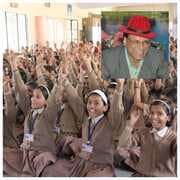
 Amazing Health Benefits of Laughter Yoga