Dr. Suresh Kumar Mishra ‘Uratript’
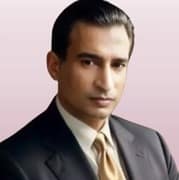
Dr. Suresh Kumar Mishra, known for his wit and wisdom, is a prolific writer, renowned satirist, children’s literature author, and poet. He has undertaken the monumental task of writing, editing, and coordinating a total of 55 books for the Telangana government at the primary school, college, and university levels. His editorial endeavors also include online editions of works by Acharya Ramchandra Shukla.
As a celebrated satirist, Dr. Suresh Kumar Mishra has carved a niche for himself, with over eight million viewers, readers, and listeners tuning in to his literary musings on the demise of a teacher on the Sahitya AajTak channel. His contributions have earned him prestigious accolades such as the Telangana Hindi Academy’s Shreshtha Navyuva Rachnakaar Samman in 2021, presented by the honorable Chief Minister of Telangana, Mr. Chandrashekhar Rao. He has also been honored with the Vyangya Yatra Ravindranath Tyagi Stairway Award and the Sahitya Srijan Samman, alongside recognition from Prime Minister Narendra Modi and various other esteemed institutions.
Dr. Suresh Kumar Mishra’s journey is not merely one of literary accomplishments but also a testament to his unwavering dedication, creativity, and profound impact on society. His story inspires us to strive for excellence, to use our talents for the betterment of others, and to leave an indelible mark on the world.
Some precious moments of life

- Honoured with ‘Shrestha Navayuvva Rachnakar Samman’ by former Chief Minister of Telangana Government, Shri K. Chandrasekhar Rao.
- Honoured with Oscar, Grammy, Jnanpith, Sahitya Akademi, Dadasaheb Phalke, Padma Bhushan and many other awards by the most revered Gulzar sahab (Sampurn Singh Kalra), the lighthouse of the world of literature and cinema, during the Sahitya Suman Samman held in Mumbai.
- Meeting the famous litterateur Shri Vinod Kumar Shukla Ji, honoured with Jnanpith Award.
- Got the privilege of meeting Mr. Perfectionist of Bollywood, actor Aamir Khan.
- Meeting the powerful actor Vicky Kaushal on the occasion of being honoured by Vishva Katha Rangmanch.
Today we present his Satire – The Desi or the Jersey One.
☆ Witful Warmth# 57 ☆
☆ Satire ☆ The Desi or the Jersey One… ☆ Dr. Suresh Kumar Mishra ‘Uratript’ ☆
There are mornings when the sun rises not to illuminate the world, but to file a complaint against it. Such was the morning in Budhanpur when the sun came up with an unusual fury—as though even the heavens had accepted a bribe from the village clerk.
Once, the village square was a place where hookahs puffed out camaraderie, and brotherhood was churned like sweet lassi. Now, the air smelt of a newer, sharper fertilizer—politics. The flies hovering over cow dung seemed to pause midway, sniff the air, and ask the nearest politician: “Before we sit, sir, whose symbol are we supporting?” For in Budhanpur, religion no longer resided in temples or cowsheds—it had acquired an address printed neatly on a voter ID.
The villagers, ever resourceful in cultivating divisions, had dug caste deeper than the wells that fed their fields. Temples now required one’s lineage more than one’s faith, and the cow—once a creature of devotion—had become the subject of bureaucratic classification. Even the poor Jersey cows, imported long ago in the name of productivity, were now looked upon as if they were spies sent by a foreign intelligence agency disguised as milkmaids.
The village headman, a man whose devotion was inversely proportional to his sobriety, would drink adulterated liquor at night and declare purity by morning. “Brothers,” he said in his most pious voice, “this Jersey breed is a mistake of democracy—it’s like a samosa without chili! To rear one is to clip the roots of our sacred faith.”
But scandal, that tireless midwife of hypocrisy, arrived sooner than expected. The village’s most “pious” Desi cow was caught—oh, the horror—sharing a bucket of fodder with a Jersey!
When the local politician arrived, glowing in white linen so bright it could shame holy cows and holy lies alike, he roared from his podium: “My brothers! From this day, motherhood shall be judged not by udders, but by ideology! The foreign is poisonous!” The crowd clapped with such passion that one could almost believe salvation subsidies would be delivered directly into cow accounts before dawn.
Old Hukmi, the herdsman, leaned on his stick and spoke with trembling simplicity that silenced the taverns of deceit: “Sahib,” he said, “my Jersey Queen gives milk only after I light her a lamp—if that isn’t devotion, then what is? Tell me, does a mother’s heart need a passport too?”
The silence that followed was thick enough to butter a sermon. The politician cleared his throat and replied, “My good man, what matters is not the cow, but the sentiment. Sentiment must be desi, not foreign.”
“Then, sahib,” said Hukmi, unblinking, “must I sing the national anthem while milking her? Should I hoist a flag over the bucket? And tell me, sahib, your imported car that runs on foreign petrol—what sentiment does that run on? Holy water?”
That did it. Reason was exiled before the next hookah puff. Hukmi was declared mad—a social leper. Excommunication was swift; even the stray dogs avoided him, as if morality were contagious.
That night, the winds carried an unease, a tremor—as though they too hid a secret. At midnight, Hukmi’s Jersey Queen snapped her rope and ran toward the canal. The Desi cow, the village’s emblem of purity, followed her. Witnesses swore that their voices merged into a single cry—like two mothers mourning humanity’s death.
By dawn, neither cow was seen again. Their carcasses were found the next day near the canal, lying together, peaceful as twin souls who’d decided to elope from politics. The police arrived, filled out their report with bureaucratic elegance: “Deceased: unidentified mixed breed.” Even in death, the paperwork demanded a caste certificate.
The village elder declared, “This union was unnatural—the Earth could not bear the sin.”
But as old Parsai would have said: it is not the Earth that breaks under sin, but the human conscience that cracks under its own deceit.
At the village school, a boy asked, “Teacher, should we write in our essay that a cow is our mother, or a political issue?”
The teacher sighed, “Son, write ‘mother’ and you’ll start a riot. Write ‘issue,’ and you’ll win a scholarship.”
Then came Ritu, Hukmi’s daughter—from the city, full of education, defiance, and a few inconvenient questions. She looked at her father’s defeated face and asked, “Papa, is motherhood now a category too? Does love also need nationality?”
Hukmi smiled, half-ashamed, half-wise: “It does, beti. Now even grass gets segregated before feeding, and hatred’s mixed right into the fodder.”
Ritu laughed—a laughter sharp enough to slice hypocrisy in half: “Then next election, Papa, get the leader’s DNA tested first. We might find his ancestors imported too!”
Election drums rolled again; hypocrisy marched proudly. Hukmi stood once more in the crowd, his voice now quiet but dangerous: “Sahib, those cows buried together—did the soil ask their breed before accepting them?”
The politician smiled thinly: “That was an accident. Let’s not reopen old wounds.”
“No, sahib,” Hukmi thundered, “when you build walls of breed in your minds, every season breeds its own tragedy!”
Stones flew—some thrown by guards, others by neighbours who had once shared his bread. Hukmi fell, blood mixing with the same soil that had buried his cows.
The next morning brought a miracle—or perhaps a reminder. A calf was born behind the village mansion. Crowds gathered to classify it. Its skin bore patches of both breeds.
The priest shuffled through his almanac.
The chief pondered reserved categories.
Ritu stepped forward, lifted the calf, and declared, “Name it Human. For that’s the only breed that seems lost today.”
Her tears fell on the calf’s red skin. “Look, Papa,” she whispered, “its blood is as red as yours. I see no politics in it.”
The crowd went silent. The sky too seemed embarrassed. Even the flies had nothing to vote for.
That night, Ritu tore pages from her diary and let them fly into the wind. On the last page, she had written:
“Man no longer makes butter. He makes venomous speeches. Tears no longer fall from eyes—they are fried in the ghee of politics and served as propaganda.”
And somewhere by the canal, two faint shadows appeared again—the Desi and the Jersey—grazing freely, unbothered by fences or flags.
Their silent companionship whispered to the night: ‘Man spent all his wisdom dividing us, and forgot that once we return to the same soil, the differences dissolve, and only spirit remains.’
Budhanpur went back to pretending it was modern. But every time the new calf opened its eyes, it seemed to ask a question no one dared answer—
the same old question Dickens might have asked himself:
who, in this world, truly deserves to be called human?
****
© Dr. Suresh Kumar Mishra ‘Uratript’
Contact : Mo. +91 73 8657 8657, Email : drskm786@gmail.com
≈ Blog Editor – Shri Hemant Bawankar/Editor (English) – Captain Pravin Raghuvanshi, NM ≈


