Dr. Suresh Kumar Mishra ‘Uratript’
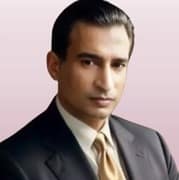
Dr. Suresh Kumar Mishra, known for his wit and wisdom, is a prolific writer, renowned satirist, children’s literature author, and poet. He has undertaken the monumental task of writing, editing, and coordinating a total of 55 books for the Telangana government at the primary school, college, and university levels. His editorial endeavors also include online editions of works by Acharya Ramchandra Shukla.
As a celebrated satirist, Dr. Suresh Kumar Mishra has carved a niche for himself, with over eight million viewers, readers, and listeners tuning in to his literary musings on the demise of a teacher on the Sahitya AajTak channel. His contributions have earned him prestigious accolades such as the Telangana Hindi Academy’s Shreshtha Navyuva Rachnakaar Samman in 2021, presented by the honorable Chief Minister of Telangana, Mr. Chandrashekhar Rao. He has also been honored with the Vyangya Yatra Ravindranath Tyagi Stairway Award and the Sahitya Srijan Samman, alongside recognition from Prime Minister Narendra Modi and various other esteemed institutions.
Dr. Suresh Kumar Mishra’s journey is not merely one of literary accomplishments but also a testament to his unwavering dedication, creativity, and profound impact on society. His story inspires us to strive for excellence, to use our talents for the betterment of others, and to leave an indelible mark on the world.
Some precious moments of life

- Honoured with ‘Shrestha Navayuvva Rachnakar Samman’ by former Chief Minister of Telangana Government, Shri K. Chandrasekhar Rao.
- Honoured with Oscar, Grammy, Jnanpith, Sahitya Akademi, Dadasaheb Phalke, Padma Bhushan and many other awards by the most revered Gulzar sahab (Sampurn Singh Kalra), the lighthouse of the world of literature and cinema, during the Sahitya Suman Samman held in Mumbai.
- Meeting the famous litterateur Shri Vinod Kumar Shukla Ji, honoured with Jnanpith Award.
- Got the privilege of meeting Mr. Perfectionist of Bollywood, actor Aamir Khan.
- Meeting the powerful actor Vicky Kaushal on the occasion of being honoured by Vishva Katha Rangmanch.
Today we present his Satire – Two-One-za-Two, Two-Two-za-Four.
☆ Witful Warmth# 59 ☆
☆ Satire ☆ Two-One-za-Two, Two-Two-za-Four… ☆ Dr. Suresh Kumar Mishra ‘Uratript’ ☆
The story begins with a mysterious object, smaller in size than a secret document of an organization, but with an impact greater than the Hiroshima blast. It wasn’t a bomb, yet the mere sight of it ruined the digestion of seventy percent of children. It was a booklet of ‘Tables’ for which no ‘guide’ was ever written, because there is no manual for death. As soon as an innocent child reached the immigration counter of the second grade with a visa to the world of digits, that invisible witch was secretly slipped into their bag. It weighed barely ten pages, but its stature made Social Science and bulky Science books look like midgets—much like a small ‘death warrant’ presented to a powerhouse. The question was: who created this? Who mixed children’s tears into that ink?
When the house buzzed with the excitement of new books, parents bought everything, but in the name of that ‘Great Scripture,’ you were handed the same old, corner-bent, saliva-stained, decaying corpse of a book belonging to your elder brother. The logic given was that the laws of mathematics are eternal; they don’t change like fashion. They would say— “Hey boy, why are you crying looking at this old book? Have you lost your mind? It was your father’s, then your brother’s, and now it’s yours! Knowledge never grows old, and math stays the same as it was in my time!” With this, that ten-paisa catastrophe was entrusted to you, laying the foundation of the suspense: would you see the sun of the third grade, or would you be martyred in this cycle of ‘two-two-za-four’? The smell of that torn book still lingers in the nostrils like the memory of an old crime.
The real terror of that book began when the ‘Table of One’ (which everyone knew like free advice) breathed its last at the threshold of the ‘Table of Two.’ The Master Saheb would begin in a specific melody that belonged neither to Hindustani classical nor Carnatic music. It wasn’t a recital of ‘Tables’; it was a dirge. The rhythm of “Do-ekkam-do, do-duni-chaar…” was such that if you sang it in a musical assembly, the singer might commit self-immolation. The wonder was: what magic lay in this melody that it established itself alongside Indian classical ragas? If you changed the tune, the table would immediately go into a coma. Perhaps that’s why it was called ‘committing to the throat’ (Kanthasth), because ‘climbing’ this heavy mountain of math (perhaps that’s why it’s called Pahada—resembling Pahad or mountain) was as difficult as making a donkey conquer Everest.
When Master Saheb picked up the cane and struck that chord, even great ‘Vedantists’ would break into a sweat. Wise men would say— “Brother, you can either sing that melody or remember the table; you can’t do both together! If you miss a single note, the Master’s stick will play the tabla on your back! Sing quietly, or I’ll beat you out of shape!” Amidst this melodic torture, the biggest challenge was: why did everyone’s voice shift from ‘base’ to ‘treble’ by the time they reached the table of nine? That melody completely destroyed your childhood ‘vibe,’ turning you into a machine that just screamed without thinking. That screaming wasn’t a table; it was the cry of an innocent soul wanting to be free from that ten-page prison.
Every class was given a ‘mass warning’ no less than a war ultimatum— “Until you have the tables up to twenty (twenty-twenty-za-hundred) memorized by heart, you won’t see the face of the next class!” This was a task so Herculean that no one to date has solved why the limit of human capacity dies at twenty. Did the brain explode upon reading the twenty-first table? As grades progressed, the target expanded—from ten-tens to twelve-twelves, then sixteen, and finally reaching that terrifying twenty.
Standing before Master Saheb to vomit out the tables made one’s heart rate beat the background score of a horror film. Children who could perfectly say ‘six-six-za-thirty-six’ would look at the Master’s terrifying face and choose their fate by saying ‘six-six-za-forty-two.’ Then the Master would roar— “Hey boy, since when did six-six-za become forty-two? Has your brain gone for grazing? Go, stand back in line and die again! Only God can save you today!” At that time, reciting the table of twenty was like hoisting a flag on K-2 without oxygen. The anxiety was: would this war have to be fought again next year, or would the table of twenty-seven suddenly enter the syllabus? That figure of twenty was a wall that every child of that era aimed to scale, but alas, more than half remained buried under it.
But the real thrill lay in Master Saheb’s psychological warfare, where even if you were right, you were made to feel like a criminal. Suppose you said “Eight-seven-za-fifty-six” with perfect rhythm. Master Saheb would narrow his eyes, look over his glasses, and roar— “What? Fifty-six??” That one moment of doubt would trigger a tsunami in that tiny brain. Self-confidence would vanish like public trust after a big scam. Terrified, the child would murder their own correct answer and say— “No sir, sixty-four!” And there, the tragedy was complete. Two strokes of the cane, red hands, and the humiliation of going to the back of the line—this was the ‘trending’ pain of that time, though there were no cameras to record it.
The girls, upon reaching ‘nine-eights,’ would stare at the sky with a vacant gaze as if God Himself would descend to whisper ‘seventy-two’ in their ears. “Hey you wooden-head, you spoke the truth, then why did you flip? Now take the beating and stand in the corner! Your brains have melted away!” God, too, resided only in Master Saheb’s cane, raining down as ‘blessings’ for every wrong answer. The funny thing was: what pleasure did the Master get in saying ‘What?’ to a correct answer? It was a ‘toxic relationship’ where even when you were right, you were always proven wrong.
In every batch, there were one or two creatures whom we might call ‘Main Characters’ today and ‘sycophants’ in the old days. No one knew when or how they drank that poison, but they would vomit tables at rocket speed in front of the Master. When they finished their performance and looked at the rest of us like conquerors of the world, one felt like applying ‘cancel culture’ to them. But such was our helplessness that we could only smolder with jealousy. The question kept arising: what did these creatures eat? Did calculators run in their blood? The disgusting pity on their faces and the helpless tears in our eyes—this was deeper than any modern emotional drama. “Look at this boy, he’s reciting the table of seventeen like he’s singing at a wedding! And you don’t even know the table of one! Have some shame, go drown yourself!”—this jealousy burned in the chest of every average child. These ‘courtiers’ were the Master’s favorites, and we wondered if they would become NASA scientists or just bank cashiers cursing this legacy of tables. Their success was a ‘trauma’ for us that took years to forget, because our beatings doubled in intensity because of them.
Once you memorized the tables forward, Master Saheb would change the ‘rules’ like a villain changing his move at the last moment. He would say— “Now recite it backward!” Starting from two hundred and ending at twenty. This was like telling someone used to walking straight to reach the station by running backward. If some warrior conquered even this, then ‘random firing’ began— “Tell me, what is thirteen-eights?” Now, the melody went to hell. Because the brain had to sing the entire song from the beginning to reach that figure. By the time you reached ‘thirteen-eights’ starting from ‘thirteen-one-za-thirteen,’ Master Saheb’s cane would have changed the geography of your hips. “You fool, why is your mouth hanging open? Will your father tell you thirteen-eight-za? Speak up or I’ll skin you alive! Your intellect is completely dead!” This fear of which number might be fired at you never let the children out of its clutches. This was the peak level of ‘anxiety’ that modern psychologists call a ‘panic attack,’ but then, it was just called ‘the Math hour.’ How many innocents’ self-respect was martyred in that random firing? No data exists in any government file.
Even at home, there was no peace. Any guest who visited didn’t bring samosas; they brought ‘mental harassment.’ As soon as they sipped their tea, their first question— “Son, which class are you in? What is fourteen-seven-za?” As if the world’s economy rested on that child’s table of fourteen. The ‘mathematical terrorism’ of relatives was so great that children would hide in fields or toilets upon seeing them. Had these guests ever been able to recite the table of twenty themselves? “Hey boy, recite a table for me too, or has your brain gone grazing? My son knows up to twenty-five! You have no heart for this!”—amidst such taunts, childhood fluttered like a severed kite. Every relative was a walking ‘villain,’ and the child was a prisoner with no lawyer. If the guest asked the table of fifteen and you recited it, would he take ten rupees out of his pocket or just say ‘well done’ and gobble up the samosas? Usually, he just ate the samosas, and we were left swallowing our ‘defeat.’ That insult still stings like an old wound.
Today, when we look back, that ten-page book didn’t just contain tables. It was a ‘micro-epic’ that taught us how to lose and how to get back up after falling. Beneath every page was hidden a moral, an idiom, or a deep couplet that told us life is much harder than mathematics. The final pages contained names of days, seasons, constellations, and even Hindi and English months. That book told us for the first time that numbers in this country have their own music, which becomes even more melodious after a beating. Today’s generation of calculators and iPads has thrown that book of tables into the trash. Along with it died that melody, that discipline, and that cultural heritage that kept us grounded. The suspense of whether we would ever reach twenty is lost in the world of ‘Google Search.’ “Look child, today’s kids are lost in phones; they’ve forgotten the tables! My time was better; at least the beating brought some sense! Now everything is left to God!” If you really want to save your slowing intelligence, go buy that ‘horror book’ from the market and memorize it backward. Otherwise, while watching these Gen-Z reels, your brain will one day stop at the table of ‘zero,’ and the challenge will remain: will you ever be able to return to that simple world of ‘two-twos-are-four’ where there was love even in the beating?
****
© Dr. Suresh Kumar Mishra ‘Uratript’
Contact : Mo. +91 73 8657 8657, Email : drskm786@gmail.com
≈ Blog Editor – Shri Hemant Bawankar/Editor (English) – Captain Pravin Raghuvanshi, NM ≈


