Dr. Suresh Kumar Mishra ‘Uratript’
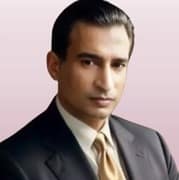
Dr. Suresh Kumar Mishra, known for his wit and wisdom, is a prolific writer, renowned satirist, children’s literature author, and poet. He has undertaken the monumental task of writing, editing, and coordinating a total of 55 books for the Telangana government at the primary school, college, and university levels. His editorial endeavors also include online editions of works by Acharya Ramchandra Shukla.
As a celebrated satirist, Dr. Suresh Kumar Mishra has carved a niche for himself, with over eight million viewers, readers, and listeners tuning in to his literary musings on the demise of a teacher on the Sahitya AajTak channel. His contributions have earned him prestigious accolades such as the Telangana Hindi Academy’s Shreshtha Navyuva Rachnakaar Samman in 2021, presented by the honorable Chief Minister of Telangana, Mr. Chandrashekhar Rao. He has also been honored with the Vyangya Yatra Ravindranath Tyagi Stairway Award and the Sahitya Srijan Samman, alongside recognition from Prime Minister Narendra Modi and various other esteemed institutions.
Dr. Suresh Kumar Mishra’s journey is not merely one of literary accomplishments but also a testament to his unwavering dedication, creativity, and profound impact on society. His story inspires us to strive for excellence, to use our talents for the betterment of others, and to leave an indelible mark on the world.
Some precious moments of life

- Honoured with ‘Shrestha Navayuvva Rachnakar Samman’ by former Chief Minister of Telangana Government, Shri K. Chandrasekhar Rao.
- Honoured with Oscar, Grammy, Jnanpith, Sahitya Akademi, Dadasaheb Phalke, Padma Bhushan and many other awards by the most revered Gulzar sahab (Sampurn Singh Kalra), the lighthouse of the world of literature and cinema, during the Sahitya Suman Samman held in Mumbai.
- Meeting the famous litterateur Shri Vinod Kumar Shukla Ji, honoured with Jnanpith Award.
- Got the privilege of meeting Mr. Perfectionist of Bollywood, actor Aamir Khan.
- Meeting the powerful actor Vicky Kaushal on the occasion of being honoured by Vishva Katha Rangmanch.
Today we present his satire Leadership By Loudspeaker: Akarmpur’s Path To Parched Prosperity.
☆ Witful Warmth# 52 ☆
☆ Satire ☆ Leadership By Loudspeaker: Akarmpur’s Path To Parched Prosperity… ☆ Dr. Suresh Kumar Mishra ‘Uratript’ ☆
I still vividly recall those golden mornings in Akarmpur, a village where every problem found its solution not through diligent effort, but through a new ‘totka’ – a ritual, a gimmick, a quick fix. Akarmpur was not merely a village; it was a philosophy, a living embodiment of the maxim: ‘Do less, show more.’ Here, hard work was perpetually sidelined, relegated to the margins, while ostentation, pretense, and immediate ‘ritualistic compliance’ were elevated to the status of ‘supreme duty.’ The people of Akarmpur, as if liberated from a centuries-old curse of labor, now sought only the path of ease and comfort. If the specter of drought loomed over the village, instead of tilling the fields, a team of priests would be summoned. They would gaze intently at the sky, attempting to ‘mesmerize’ the clouds with their chants. When crops failed, there was no deliberation on the quality of seeds or the lack of irrigation; instead, easy remedies like ‘Shani’s donation’ or ‘Rahu’s wrath’ were sought.
Our village headman, Shri ‘Banaavati Lal’ – whose oratorical prowess was astounding but whose capacity for action was nil – would always declare, “Look, brothers, it’s all about ideas; action is merely a formality. When thoughts are pure, results will manifest on their own!” And the people of Akarmpur, so immersed in this cry of ‘thought revolution,’ remained oblivious to their crumbling huts, parched fields, and empty platters. Every evening, meetings were held at the Chaupal (village square) where grand theories of ‘nation-building’ were discussed. Afterwards, everyone would return to their homes, satisfied that they had offered their oblations in the ‘sacrifice of knowledge’ for the day. If someone asked, “Why is there no water?” the answer would come, “Oh, we are performing a ‘water-yagya’ for the water problem! We just need a little more ghee.” A problem was never a problem; it was merely an ‘opportunity for a ritual.’ And in the midst of these endless rituals, Akarmpur slowly, smilingly, dug its own grave. Every face was content, not because any real work had been done, but because the showmanship was so spectacular that it defied questioning! This had become the inherent nature of Akarmpur, where ‘inaction’ was the greatest ‘action.’
One day, as the sun began to scorch Akarmpur’s earth and the water in the wells receded into the netherworld, a desperate cry echoed through the village. Children whimpered from thirst, women stood helpless with empty pitchers, and men cursed the heavens. But lo and behold, our सरपंच Banaavati Lal, who saw a ‘new opportunity’ in every calamity, immediately announced an ‘unprecedented Water Crisis Aversion Grand Ritual’ (Adbhoot Jal-Sankat Nivaaran Maha-Yagya). A massive sacrificial pit was constructed in the village’s largest field. A team of twenty priests was summoned, their fees paid by the villagers who cut into their meager meals. During the ritual, white powder dissolved from a plastic container was offered instead of milk, as real milk had vanished along with the water. Fragrant oblations of ‘vegetable oil’ replaced ghee, which, while driving away flies, failed to summon any clouds. The priests chanted mantras as if reciting dialogues from a Bollywood film – loud voices, dramatic gestures, and silence as soon as ‘cut’ was called! One priest even started snoring in the middle of a mantra, but no one paid attention, for ‘devotion’ was at its peak.
The village headman proclaimed over the microphone, “Friends! This is not just a ritual; it is the ‘Grand Confluence of our Water Consciousness’! Today, we have appeased the souls of our ancestors; now water will come on its own, just like voters on election day!” And the very next day after the ritual, the pond dried up further. Yet, the village headman attributed this to the ‘immediate effect of the ritual’ – “The impurities are drying up; pure water is coming from below!” The people were hungry and thirsty, but a sense of ‘satisfaction’ was etched on their faces, for ‘something had been done.’ And when nothing works, the pretense of ‘doing something grand’ becomes the greatest solace.
The Rally of Empty Slogans: ‘Save Water, Save Nation, Print My Name in Newspaper’
When even the grand ritual failed to bring water, and the villagers, waiting for ‘holy water,’ began to wither further, the youth brigade took charge. The leader of the youth brigade, Shri ‘Hawaabaazi’ (Mr. Empty Talk), announced, “Friends! Rituals are old traditions; now is the time for ‘modern consciousness’! We will organize the ‘Save Water, Save Nation, and Get My Name Printed in the Newspaper’ rally!” A plan for the rally was drawn up. Posters were printed, featuring one or two drops of water, with the rest of the space dominated by Shri Hawaabaazi’s smiling face. Tempos were rented, blaring patriotic songs from loudspeakers, and at every intersection, slogans like ‘Water is Life!’ and ‘How will the nation survive if you die of thirst!’ were shouted. Some people in the crowd had only come for the ‘free snacks,’ and others didn’t even know what the water problem was; they were just enjoying ‘being part of the rally.’
Hawaabaazi delivered an impassioned speech, “Communalism doesn’t bring water, casteism doesn’t make water drip! We must unite for national unity, for water!” Then, two empty buckets were symbolically burned, an act termed ‘the burning of the effigy of corruption.’ People applauded heartily, because watching burning buckets was more entertaining than looking at dry wells. The rally ended. Everyone was exhausted, but with the inner satisfaction that ‘today we have done something significant!’ The next day, large pictures were splashed across newspapers, showing Hawaabaazi and his cronies with slogans, but water was still nowhere to be found. The village children were now chanting ‘national unity’ slogans, but their thirst had only intensified.
The water problem had now taken a severe turn. People were fleeing the village, and those who remained cursed their fate. Then, a renowned intellectual from the city, Professor ‘Gyanchand’ (Mr. Knowledge Moon), who had a penchant for organizing ‘seminars’ on every problem, arranged a grand seminar in the village on ‘Water Crisis: A National Discourse.’ The seminar hall was splendid, air conditioners hummed, and mineral water bottles (which the villagers could not afford) were placed on the tables. Three scholars expressed their deep concern: “The water crisis is a ‘crisis of our morality’! It is a result of ‘global climate change’! We must ‘rethink water management’!”
Professor Gyanchand delivered an hour-long, verbose speech on the ‘economic dimensions,’ ‘social implications,’ and ‘philosophical nature’ of water. Most of the audience was either sleeping or playing games on their mobile phones. At the end of the seminar, a ‘resolution’ was passed that more ‘discussions’ on ‘water conservation’ would be held in the future. The next day, large pictures of Professor Gyanchand appeared in newspapers, showing him expressing concern over ‘the nation’s plight.’ One headline read: “Scholars Hold Deep Discussions on Water Crisis in Akarmpur, Another Step Taken Towards Solution!” Outside the village, an old woman, with thirsty eyes, looked at that newspaper, under which was written – “Professor Gyanchand said at the seminar, ‘Water is a fundamental right!'” And then she collapsed, not from knowledge, but from lack of water.
After the seminar, when the water bottles were empty and the echoes of speeches faded into the air, the situation worsened. Now, the ‘Pledge of Apathy’ loomed over the village. Our सरपंच Banaavati Lal, whose unwavering faith in ‘problem-solving’ still persisted, announced yet another ‘grand strategy’: “We must form a ‘Water Solution Committee’! This committee will prepare an ‘in-depth report’ on the ‘water crisis,’ which will pave the way for the future!” And the very next day, a ‘committee’ was formed, comprising the laziest but on paper the most ‘learned’ people in the village. The chairman of this committee was a retired Babu (clerk), Shri ‘Kaagazilaal’ (Mr. Paper Man), who was an expert at counting files but had an allergy to fieldwork.
Committee meetings began. Each meeting involved rounds of tea and samosas, followed by members ‘discussing’ the ‘report.’ Kaagazilaal would ask ‘extremely serious’ questions to each member, such as “Have we correctly defined the water crisis as a ‘problem’?” or “Do we have sufficient ‘positive outlook’?” Three months later, the committee presented a ‘voluminous report’ of 300 pages, detailing the ’causes,’ ‘effects,’ and ‘potential solutions’ to the water crisis. The report contained weighty terms like ‘river interlinking projects,’ ‘rainwater harvesting,’ and ‘public participation,’ but not a single drop of water appeared on the ground. The report was filed in a government office among piles of ‘extremely important’ documents, where it gathered dust. The villagers were happy to see the report, because ‘government work’ had been completed, but their homes still held dry pitchers. One day, a child, crying from hunger and thirst, asked his mother, “Mom, can we squeeze water from this report?” Tears welled up in his mother’s eyes, but no words escaped her parched throat.
The committee’s report, the rally’s slogans, and the ritual’s ashes, all combined to transform Akarmpur into a dry desert. The problem had now become so dire that it was difficult to ignore, yet Akarmpur’s nature remained unchanged. Now, the era of ‘scientific totkas’ began. The village’s greatest ‘scientific baba,’ Dr. ‘Ajeeblal’ (Dr. Strange Red), claimed he had a ‘mantra’ to bring ‘artificial rain.’ He constructed a large ‘apparatus’ with wires and bulbs, which he kept shining day and night, claiming that ‘this will create vibrations in the sky and bring clouds!’ Children would gather around the apparatus, thinking that perhaps candies would emerge from it. The apparatus ran for a week, the electricity bill skyrocketed, but no clouds appeared.
Then, a new ‘reformist movement’ began. Some young people raised slogans for ‘dowry-free marriages’ and ‘inter-caste marriages.’ One day, two lovers, from different castes and without dowry, ran away from the city and came to Akarmpur to get married. The so-called ‘progressive’ people of the village welcomed them like ‘heroes and heroines.’ Their pictures were published in newspapers, proclaiming, ‘Akarmpur brings revolution to society!’ But a few days later, the girl’s family arrived and took them back under threat. The ‘progressive’ people quietly slipped away, knowing that true social change comes not from ‘limelight’ but from ‘grinding effort.’ The village youth were now even more disheartened. They saw that their village’s problems, which were initially small, were only growing larger due to grand events and useless speeches. Their hearts wept, but even their tears had dried up.
In this very Akarmpur, there lived an ordinary young man named ‘Karmaveer’ (Hero of Action). He found all this showmanship distasteful. When the water crisis struck the village, he did not participate in rallies, rituals, or seminars. He quietly, along with some of his fellow youths, went to the village’s oldest well. The well had been dry for decades, filled with garbage. Karmaveer and his companions picked up shovels and began to dig. People laughed at them, “Oh, you fools, the सरपंच performed a ritual, Hawaabaazi led a rally, Professor Gyanchand held a seminar, and Kaagazilaal prepared a report! What will you achieve by digging dirt? Will you change history?” Karmaveer paid no heed to their mocking words.
Day and night, he and his companions toiled, sweating profusely. Their hands were chafed, their bodies ached, but their minds held only one resolve – water. For weeks, they dug, removed earth, and broke stones. Slowly, some other villagers, who had become disillusioned with these ‘totkas,’ began to join them. They dug small pits, cleaned the silt from ponds, and built small dams to conserve rainwater. This work proceeded slowly; there was no ‘media coverage,’ no ‘awards,’ and no ‘speeches.’ It was simply ‘relentless hard work.’ And one day, as they were digging the final layer of the well, a faint gurgling sound was heard – ‘kal-kal, kal-kal.’ And then, clear, cold water gushed forth from the well. A wave of joy swept through the village. People ran to Karmaveer and his companions, embracing them. But this joy was fleeting.
Karmaveer and his companions drew water from the well, quenching the village’s thirst, but this was only the beginning. The real challenge now lay ahead: changing the village’s mindset. When Karmaveer said, “We must now cultivate the habit of saving water in every home; these useless totkas will achieve nothing,” the very people who had just honored him now began to resent him. “What are you talking about, Karmaveer? Now that water has come, why should anyone work hard? Now we will worship the ‘water deity’ again!”
Sarpanch Banaavati Lal became active once more. He organized a ‘Water Gratitude Rally’ in which he declared himself the ‘Water Man,’ and Karmaveer’s name was nowhere to be heard. Professor Gyanchand organized another seminar, its subject being ‘The Availability of Water and Its Impact on Social Psychology,’ in which he described Karmaveer’s work as ‘unscientific’ and ‘unorganized.’ Kaagazilaal prepared a ‘supplementary report,’ claiming that the water in the well was a result of ‘his original report.’ Karmaveer saw that the people who had been with him moments ago had now returned to the ‘easy path.’ He tried to explain, “Look, this is just one well; the whole village needs water, and we must cultivate the habit of saving water!” But people ignored him. They dismissed him as ‘negative-minded’ and ‘unable to tolerate happiness,’ ostracizing him. Karmaveer found himself alone. His hard work, his sacrifice, his wisdom – all seemed in vain, because the ‘easy remedies’ had so enchanted Akarmpur that they were celebrating their own ruin as a ‘festival.’
Ultimately, Akarmpur’s ‘inherent nature’ once again dominated. When Karmaveer saw that his hard work was merely considered another ‘totka,’ and people had reverted to their old habits, his heart broke. The well he had nourished with his sweat slowly began to dry up again, because people, instead of conserving water, started wasting it, confident that ‘when thirst strikes, a new totka will work.’ The village सरपंच, Hawaabaazi, Professor Gyanchand, and Kaagazilaal had all moved to a new city, where they organized another ‘national seminar’ on ‘Lessons from Akarmpur’s Water Crisis.’ They had now become ‘global experts’ on ‘water management.’
Left behind was Akarmpur – a dry, desolate, and ruined wasteland. People began to die of hunger and thirst. The children who once chanted ‘Water is Life’ were now reduced to whispers of ‘If only… if only we had listened to that Karmaveer.’ An old mother, taking her last breath with a parched throat, looked at her child’s withered face, and a sigh escaped her lips – ‘Alas, this totka! Where has it left us!’ Karmaveer, who was among the survivors, stood on the highest mound of the village, watching his beloved Akarmpur burn, now merely a ‘heap of ashes.’ He tried to shed tears, but his eyes too had dried up. He saw that even there, some people were caressing the dry ground, searching for a new ‘tantric totka’ – perhaps a mantra to ‘transform the desert into a lush green land’! It was surely better to be a human than an angel, but becoming human required so much effort that we chose the easy path of becoming angels, and perished.
****
© Dr. Suresh Kumar Mishra ‘Uratript’
Contact : Mo. +91 73 8657 8657, Email : drskm786@gmail.com
≈ Blog Editor – Shri Hemant Bawankar/Editor (English) – Captain Pravin Raghuvanshi, NM ≈


