English Literature – Articles ☆ Meditate Like The Buddha # 15: MINDFULNESS OF BREATHING ☆ Mr. Jagat Singh Bisht ☆

Shri Jagat Singh Bisht

(Master Teacher: Happiness & Well-Being, Laughter Yoga Master Trainer, Author, Blogger, Educator, and Speaker.)
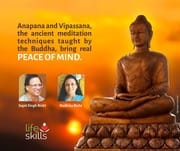
Meditate Like The Buddha # 15: MINDFULNESS OF BREATHING

“Bhikkhus, when mindfulness of breathing is developed and cultivated, it is of great fruit and great benefit. When mindfulness of breathing is developed and cultivated, it fulfils the four foundations of mindfulness. When the four foundations of mindfulness are developed and cultivated, they fulfil the seven factors of enlightenment. When the seven factors of enlightenment are developed and cultivated, they fulfil true knowledge and deliverance.” — Buddha

The Significance of Mindfulness of Breathing

The meditation on in-and-out breathing was expounded by the Buddha as the gateway to enlightenment and Nibbana. When the Blessed One sat beneath the Bodhi Tree, he took up mindfulness of breathing as his meditation subject and attained the limitless wisdom of a Fully Enlightened Buddha.

The Buddha emphasized this practice, considering it a noble and divine dwelling:

“If anyone, bhikkhus, speaking rightly could say of anything, ‘It is a noble dwelling, a divine dwelling, the Tathagata’s dwelling,’ it is of concentration by mindfulness of breathing that one could rightly say this.”

One of the Buddha’s most valuable contributions to humanity is his structured instructions for meditation, offering a clear and systematic approach to practice.

The Steps of Mindfulness of Breathing

“A bhikkhu, gone to the forest or to the root of a tree or to an empty hut, sits down, having folded his legs crosswise, set his body erect, and established mindfulness in front of him. Ever mindful, he breathes in; mindful, he breathes out.”

The Buddha elaborated on the steps of mindfulness of breathing, explaining its role in fulfilling the four foundations of mindfulness, the seven factors of enlightenment, and ultimately, true knowledge and deliverance.

Fulfilment of the Four Foundations of Mindfulness

Mindfulness of breathing, when developed and cultivated, fulfils the four foundations of mindfulness:

  1. Contemplation of the Body: Observing the breath in its natural rhythm, understanding its length, experiencing the whole body, and relaxing the body.
  2. Contemplation of Feelings: Recognizing feelings—rapture, pleasure, mental formations, and tranquillity.
  3. Contemplation of the Mind: Experiencing the mind, gladdening it, concentrating it, and liberating it.
  4. Contemplation of Mind-Objects: Reflecting on impermanence, fading away, cessation, and relinquishment.

On each occasion, one remains fully aware, ardent, and mindful, having put away covetousness and grief for the world.

Fulfilment of the Seven Factors of Enlightenment

The development of the four foundations of mindfulness leads to the arising and fulfilment of the seven enlightenment factors:

  1. Mindfulness – Maintaining constant awareness of the present moment.
  2. Investigation of States – Examining mental and physical phenomena with wisdom.
  3. Energy – Cultivating tireless effort and enthusiasm.
  4. Rapture – Developing deep joy in meditation.
  5. Tranquillity – Achieving inner peace and stillness.
  6. Concentration – Attaining deep, unwavering focus.
  7. Equanimity – Cultivating impartiality and balance of mind.

By practicing mindfulness of breathing, one develops each enlightenment factor, leading to spiritual progress and fulfilment.

Fulfilment of True Knowledge and Deliverance

When developed and cultivated, the seven factors of enlightenment lead to true knowledge and deliverance:

  • Supported by seclusion, dispassion, and cessation, mindfulness of breathing leads to relinquishment.
  • The systematic development of investigation, energy, rapture, tranquillity, concentration, and equanimity brings about complete liberation.

“Bhikkhus, this concentration by mindfulness of breathing, when developed and cultivated, is peaceful and sublime, an ambrosial pleasant dwelling, and it disperses and quells on the spot evil unwholesome states whenever they arise.”

Conclusion

Mindfulness of breathing is a complete and profound practice leading to insight, serenity, and ultimate freedom. Through diligent practice, one follows in the footsteps of the Buddha, progressing steadily toward enlightenment.

♥ ♥ ♥ ♥

Please click on the following links to read previously published posts Meditate Like The Buddha: A Step-By-Step Guide” 👉

English Literature – Articles ☆ Meditate Like The Buddha # 8: Midway Recap ☆ Mr. Jagat Singh Bisht ☆

English Literature – Articles ☆ Meditate Like The Buddha # 9: Experience Your Mind ☆ Mr. Jagat Singh Bisht ☆

English Literature – Articles ☆ Meditate Like The Buddha # 10: Liberate the Mind ☆ Mr. Jagat Singh Bisht ☆

English Literature – Articles ☆ Meditate Like The Buddha # 12: The End of suffering ☆ Mr. Jagat Singh Bisht ☆

English Literature – Articles ☆ Meditate Like The Buddha # 13: A Summary of the Steps ☆ Mr. Jagat Singh Bisht ☆

English Literature – Articles ☆ Meditate Like The Buddha # 14: A Lifetime’s Work ☆ Mr. Jagat Singh Bisht ☆

© Jagat Singh Bisht

Laughter Yoga Master Trainer

FounderLifeSkills

A Pathway to Authentic Happiness, Well-Being & A Fulfilling Life! We teach skills to lead a healthy, happy and meaningful life.

The Science of Happiness (Positive Psychology), Meditation, Yoga, Spirituality and Laughter Yoga. We conduct talks, seminars, workshops, retreats and training.

≈ Editor – Shri Hemant Bawankar/Editor (English) – Captain Pravin Raghuvanshi, NM

Please share your Post !

Shares

English Literature – Articles ☆ Meditate Like The Buddha # 14: A Lifetime’s Work ☆ Mr. Jagat Singh Bisht ☆

Shri Jagat Singh Bisht

(Master Teacher: Happiness & Well-Being, Laughter Yoga Master Trainer, Author, Blogger, Educator, and Speaker.)

Meditate Like The Buddha # 14: A Lifetime’s Work

Meditation is a lifelong journey. It is simple, yet not easy. It requires discipline, patience, and perseverance.

The Path So Far

Your journey of a thousand miles is well begun. You have learned and practised the foundational steps of mindfulness of breathing meditation, also known as Anapana meditation. This was the very practice through which the Buddha attained enlightenment.

Meditation consists of four main sections:

  • Contemplations of the body
  • Contemplations of feelings
  • Contemplations of the mind
  • Contemplations of wisdom

Each section contains four contemplations, making sixteen contemplations in total. Learning these basics is just the beginning. To truly benefit, you must go deeper.

Refining Your Practice

  • Observe your breath more closely, with increased awareness and ardency.
  • Develop one-pointed concentration by minutely observing your breath at the nostrils.
  • Achieving deep concentration may take hours, days, or even longer—patience is key.

Similarly, experiencing and relaxing the body requires mindful attention:

  • Begin by observing major parts of the body and gradually refine your awareness to even the smallest sensations.
  • Each day’s practice will be unique—some days, the breath may feel shallow, other days, smooth. Accept this variability with equanimity.

Exploring Feelings and Sensations

  • Feelings arise as pleasant, unpleasant, or neutral.
  • They may be joyful, sorrowful, sensuous, or spiritual.
  • Observe bodily sensations—both gross and subtle—with full mindfulness.

When negative emotions like anger arise, observe the corresponding bodily sensations. Emotions—positive, negative, or neutral—manifest physically. Ardently observe and let them pass.

Understanding the Mind

Meditation is far from dull—it cultivates joy and inner happiness.

  • Exploring the mind is a profound journey. Do not get stuck; keep moving.
  • Observe your thoughts without attachment. Be a spectator.
  • Free your mind from craving, aversion, and ignorance.

Deepening Wisdom

The contemplation of wisdom is a lifetime’s work.

  • Begin by contemplating suffering, its origin, and the path to its cessation.
  • Reflect on impermanence, suffering, and non-self.
  • Contemplate fading away, cessation, and relinquishment.

Wisdom arises not from blind belief but from direct experience. Continue refining your understanding through consistent practice.

Fruits of Deep Meditation

Deep meditation leads to deep insights:

  • Concentration and serenity are the initial experiences.
  • With deep concentration, wisdom naturally follows.
  • Progressively, defilements are removed and wholesome qualities cultivated.

Cultivate virtues like loving kindness, compassion, altruism, and equanimity. Day by day, drop by drop, let these qualities fill your heart.

Commitment to Daily Practice

  • Meditate joyfully and with inner happiness.
  • Establish a consistent routine—one hour in the morning, half an hour in the evening is sufficient.

As the Buddha said:

“When mindfulness of breathing is developed and cultivated, it is of great fruit and great benefit.”

May the wisdom of the Buddha guide your meditative path.

“Over there are the roots of trees; over there, empty dwellings. Practice jhana (meditation), monks. Don’t be heedless. Don’t later fall into regret. This is our message to you.” – Buddha

♥ ♥ ♥ ♥

Please click on the following links to read previously published posts Meditate Like The Buddha: A Step-By-Step Guide” 👉

English Literature – Articles ☆ Meditate Like The Buddha # 8: Midway Recap ☆ Mr. Jagat Singh Bisht ☆

English Literature – Articles ☆ Meditate Like The Buddha # 9: Experience Your Mind ☆ Mr. Jagat Singh Bisht ☆

English Literature – Articles ☆ Meditate Like The Buddha # 10: Liberate the Mind ☆ Mr. Jagat Singh Bisht ☆

English Literature – Articles ☆ Meditate Like The Buddha # 12: The End of suffering ☆ Mr. Jagat Singh Bisht ☆

English Literature – Articles ☆ Meditate Like The Buddha # 13: A Summary of the Steps ☆ Mr. Jagat Singh Bisht ☆

© Jagat Singh Bisht

Laughter Yoga Master Trainer

FounderLifeSkills

A Pathway to Authentic Happiness, Well-Being & A Fulfilling Life! We teach skills to lead a healthy, happy and meaningful life.

The Science of Happiness (Positive Psychology), Meditation, Yoga, Spirituality and Laughter Yoga. We conduct talks, seminars, workshops, retreats and training.

≈ Editor – Shri Hemant Bawankar/Editor (English) – Captain Pravin Raghuvanshi, NM

Please share your Post !

Shares

English Literature – Articles ☆ Meditate Like The Buddha # 13: A Summary of the Steps ☆ Mr. Jagat Singh Bisht ☆

Shri Jagat Singh Bisht

(Master Teacher: Happiness & Well-Being, Laughter Yoga Master Trainer, Author, Blogger, Educator, and Speaker.)

Meditate Like The Buddha # 13: A Summary of the Steps

Here is a concise summary of the meditation steps for easy reference:

General Preparation

  • Sit with your legs folded crosswise, back straight, and eyes closed.
  • Always mindful, breathe in; mindful, breathe out.

First Tetrad: Body Group

  1. Be aware of your breath around your nostrils as you breathe in and out.
    • Breathing in long, understand: I am breathing in long. Breathing out long, understand: I am breathing out long.
    • Breathing in short, understand: I am breathing in short. Breathing out short, understand: I am breathing out short.
  2. Observe your natural breath without trying to regulate it.
  3. Be aware of your whole body as you breathe in and out.
    • Breathe in experiencing the whole body. Breathe out experiencing the whole body.
    • Breathe in relaxing the whole body. Breathe out relaxing the whole body.
  4. If your mind wanders, gently bring it back to observing your breath.
  5. Ever mindful, breathe in; mindful, breathe out.

Second Tetrad: Feelings Group

  1. Be aware of your feelings as you breathe in and out.
    • Breathe in experiencing your feelings. Breathe out experiencing your feelings.
  2. Experience specific sensations:
    • Breathe in experiencing rapture. Breathe out experiencing rapture.
    • Breathe in experiencing pleasure. Breathe out experiencing pleasure.
  3. Observe your mental processes:
    • Breathe in experiencing mental formations. Breathe out experiencing mental formations.
    • Breathe in tranquilizing mental formations. Breathe out tranquilizing mental formations.
  4. Ever mindful, breathe in; mindful, breathe out.

Third Tetrad: Mind Group

  1. Be aware of your mind as you breathe in and out.
    • Breathe in experiencing the mind. Breathe out experiencing the mind.
  2. Cultivate positive states:
    • Breathe in gladdening the mind. Breathe out gladdening the mind.
    • Breathe in concentrating the mind. Breathe out concentrating the mind.
    • Breathe in liberating the mind. Breathe out liberating the mind.
  3. Ever mindful, breathe in; mindful, breathe out.

Fourth Tetrad: Wisdom Group

  1. Contemplate the impermanence of physical and mental events:
    • Breathe in focusing on impermanence. Breathe out focusing on impermanence.
  2. Reflect on the fading away of formations:
    • Breathe in focusing on fading away. Breathe out focusing on fading away.
  3. Contemplate the cessation of suffering:
    • Breathe in focusing on cessation. Breathe out focusing on cessation.
  4. Let go of defilements:
    • Breathe in focusing on relinquishment. Breathe out focusing on relinquishment.
  5. Ever mindful, breathe in; mindful, breathe out.

Closing the Practice

  • With a pure heart, dedicate your practice to all beings:
    • May all beings be happy, be peaceful, be liberated.
  • Gently open your eyes and come out of meditation.

Suggested Routine

  • Meditate for an hour in the morning and about half an hour in the evening to deepen your practice.

♥ ♥ ♥ ♥

Please click on the following links to read previously published posts Meditate Like The Buddha: A Step-By-Step Guide” 👉

English Literature – Articles ☆ Meditate Like The Buddha # 8: Midway Recap ☆ Mr. Jagat Singh Bisht ☆

English Literature – Articles ☆ Meditate Like The Buddha # 9: Experience Your Mind ☆ Mr. Jagat Singh Bisht ☆

English Literature – Articles ☆ Meditate Like The Buddha # 10: Liberate the Mind ☆ Mr. Jagat Singh Bisht ☆

English Literature – Articles ☆ Meditate Like The Buddha # 12: The End of suffering ☆ Mr. Jagat Singh Bisht ☆


© Jagat Singh Bisht

Laughter Yoga Master Trainer

FounderLifeSkills

A Pathway to Authentic Happiness, Well-Being & A Fulfilling Life! We teach skills to lead a healthy, happy and meaningful life.

The Science of Happiness (Positive Psychology), Meditation, Yoga, Spirituality and Laughter Yoga. We conduct talks, seminars, workshops, retreats and training.

≈ Editor – Shri Hemant Bawankar/Editor (English) – Captain Pravin Raghuvanshi, NM

Please share your Post !

Shares

English Literature – Articles ☆ Meditate Like The Buddha # 12: The End of suffering ☆ Mr. Jagat Singh Bisht ☆

Shri Jagat Singh Bisht

(Master Teacher: Happiness & Well-Being, Laughter Yoga Master Trainer, Author, Blogger, Educator, and Speaker.)

Meditate Like The Buddha # 12: The End of suffering

Lesson 10

The Buddha taught the reality of suffering, its cause, and the path to its cessation:

  1. There is suffering.
  2. The cause of suffering is craving.
  3. There is a way to the end of suffering.
  4. The way to the end of suffering is the Noble Eightfold Path:
    • Right View
    • Right Intention
    • Right Speech
    • Right Action
    • Right Livelihood
    • Right Effort
    • Right Mindfulness
    • Right Concentration

Understanding Suffering

  • Suffering must be understood.
  • The source and origin of suffering must be understood.
  • The cessation of suffering must be understood.
  • The way leading to the cessation of suffering must be understood.

Suffering encompasses:

  • Birth, old age, illness, and death.
  • Sorrow, lamentation, pain, dejection, and anguish.
  • Not obtaining what one desires.
  • The five aggregates subject to clinging.

Craving is the source of suffering. When craving ceases, suffering also ceases. The Noble Eightfold Path leads to this liberation.

Contemplating the Cessation of Suffering

Let us continue meditating with the contemplations of wisdom. After reflecting on impermanence and fading away, focus on the cessation of suffering:

  • Breathe in, focusing on cessation. Breathe out, focusing on cessation.
  • Always mindful, breathe in; mindful, breathe out.

Contemplating the Removal of Taints

Progressing further in meditation, turn your focus to the removal of taints.

  • The taints must be understood.
  • The source and origin of taints must be understood.
  • The cessation of taints must be understood.
  • The way leading to the cessation of taints must be understood.

The three taints are:

  1. The taint of sensuality.
  2. The taint of existence.
  3. The taint of ignorance.

Ignorance is the root cause of these taints. When ignorance ceases, the taints also cease. The Noble Eightfold Path provides the means to achieve this.

Relinquishing Defilements

As you breathe, contemplate the relinquishment of defilements:

  • Breathe in, focusing on relinquishment. Breathe out, focusing on relinquishment.
  • Ever mindful, breathe in; mindful, breathe out.

Closing the Practice

With a pure and peaceful mind, dedicate your practice to the welfare of all sentient beings:

  • May all beings be happy, be peaceful, be liberated.

When ready, gently open your eyes and emerge from meditation, carrying forward the wisdom and compassion cultivated during your practice.

♥ ♥ ♥ ♥

Please click on the following links to read previously published posts Meditate Like The Buddha: A Step-By-Step Guide” 👉

English Literature – Articles ☆ Meditate Like The Buddha # 8: Midway Recap ☆ Mr. Jagat Singh Bisht ☆

English Literature – Articles ☆ Meditate Like The Buddha # 9: Experience Your Mind ☆ Mr. Jagat Singh Bisht ☆

English Literature – Articles ☆ Meditate Like The Buddha # 10: Liberate the Mind ☆ Mr. Jagat Singh Bisht ☆

English Literature – Articles ☆ Meditate Like The Buddha # 11: Developing Wisdom ☆ Mr. Jagat Singh Bisht ☆


© Jagat Singh Bisht

Laughter Yoga Master Trainer

FounderLifeSkills

A Pathway to Authentic Happiness, Well-Being & A Fulfilling Life! We teach skills to lead a healthy, happy and meaningful life.

The Science of Happiness (Positive Psychology), Meditation, Yoga, Spirituality and Laughter Yoga. We conduct talks, seminars, workshops, retreats and training.

≈ Editor – Shri Hemant Bawankar/Editor (English) – Captain Pravin Raghuvanshi, NM
Please share your Post !

Shares

English Literature – Articles ☆ Meditate Like The Buddha # 11: Developing Wisdom ☆ Mr. Jagat Singh Bisht ☆

Shri Jagat Singh Bisht

(Master Teacher: Happiness & Well-Being, Laughter Yoga Master Trainer, Author, Blogger, Educator, and Speaker.)

Meditate Like The Buddha # 11: Developing Wisdom ☆

Lesson 9

The purpose of meditation extends beyond concentration. Its ultimate aim is to:

  • See things as they truly are.
  • Develop wisdom.
  • Let go of defilements.
  • End suffering.
  • Embrace renunciation.

Meditation cultivates wisdom, and wisdom diminishes without consistent practice. Therefore, heedfulness is essential. One must meditate regularly to sustain this inner growth.

Contemplations of Wisdom

By now, you are well-practised in observing your breath, feelings, and mind. Begin your session by meditating for 20 to 30 minutes, focusing on these elements. Then, transition to contemplations of wisdom.

Observing Impermanence

As you breathe in and out, reflect on the impermanence of physical and mental phenomena:

  • Breathe in, focusing on impermanence. Breathe out, focusing on impermanence.
  • Ever mindful, breathe in; mindful, breathe out.

The five aggregates of clinging are:

  • Form
  • Feeling
  • Perception
  • Volitional activities
  • Consciousness

Understand that each of these is impermanent. What is impermanent is inherently tied to suffering. Therefore, do not cling to these phenomena.

Realising the Nature of Existence

  • All conditioned phenomena are impermanent.
  • All conditioned phenomena are suffering.
  • All conditioned phenomena are non-self.
  • Nothing is worth clinging to.
  • Directly know all things as they are.

Fading Away of Formations

As you breathe, contemplate the fading away of mental and physical formations:

  • Breathe in, focusing on fading away. Breathe out, focusing on fading away.
  • Ever mindful, breathe in; mindful, breathe out.

Specifically, reflect on the fading away of the following:

  • Craving: Breathing in, focus on its fading; breathing out, let it fade away.
  • Aversion: Breathing in, focus on its fading; breathing out, let it fade away.
  • Ignorance: Breathing in, focus on its fading; breathing out, let it fade away.
  • Ever mindful, breathe in; mindful, breathe out. Fully aware, ardent, and mindful.

Concluding the Session

With a relaxed body and mind, conclude your meditation by cultivating loving kindness:

  • May all beings be happy, be peaceful, be liberated.

When you are ready, gently open your eyes and emerge from meditation, carrying the insights and peace of your practice into your daily life.

♥ ♥ ♥ ♥

Please click on the following links to read previously published posts Meditate Like The Buddha: A Step-By-Step Guide” 👉

☆ Meditate Like The Buddha #1: A Step-By-Step Guide ☆ Mr. Jagat Singh Bisht ☆

☆ Meditate Like The Buddha #2: The First Step ☆ Mr. Jagat Singh Bisht ☆

☆ Meditate Like The Buddha #3: Watch Your Breath ☆ Mr. Jagat Singh Bisht ☆

☆ Meditate Like The Buddha #4: Relax Your Body ☆ Mr. Jagat Singh Bisht ☆

☆ Meditate Like The Buddha #5: Cultivate Loving kindness ☆ Mr. Jagat Singh Bisht ☆

☆ Meditate Like The Buddha # 6: Experience your feelings ☆ Mr. Jagat Singh Bisht ☆

☆ Meditate Like The Buddha # 7: Tranquilize Mental Formations☆ Mr. Jagat Singh Bisht ☆

English Literature – Articles ☆ Meditate Like The Buddha # 8: Midway Recap ☆ Mr. Jagat Singh Bisht ☆

English Literature – Articles ☆ Meditate Like The Buddha # 9: Experience Your Mind ☆ Mr. Jagat Singh Bisht ☆

English Literature – Articles ☆ Meditate Like The Buddha # 10: Liberate the Mind ☆ Mr. Jagat Singh Bisht ☆


© Jagat Singh Bisht

Laughter Yoga Master Trainer

FounderLifeSkills

A Pathway to Authentic Happiness, Well-Being & A Fulfilling Life! We teach skills to lead a healthy, happy and meaningful life.

The Science of Happiness (Positive Psychology), Meditation, Yoga, Spirituality and Laughter Yoga. We conduct talks, seminars, workshops, retreats and training.

≈ Editor – Shri Hemant Bawankar/Editor (English) – Captain Pravin Raghuvanshi, NM

Please share your Post !

Shares

English Literature – Articles ☆ Meditate Like The Buddha # 10: Liberate the Mind ☆ Mr. Jagat Singh Bisht ☆

Shri Jagat Singh Bisht

(Master Teacher: Happiness & Well-Being, Laughter Yoga Master Trainer, Author, Blogger, Educator, and Speaker.)

Meditate Like The Buddha # 10: Liberate the Mind ☆

Lesson 8

As per your practice so far, you began by watching your breath, progressed to experiencing your feelings, and then moved on to experiencing your mind. Now, it is time to advance further and liberate the mind.

Concentrating the Mind

  • Breathe in, concentrating the mind. Breathe out, concentrating the mind.

By now, you have cultivated the practice of concentration by observing your breath at the nostrils. You are ready to deepen your concentration further.

  • Focus your mind with stability, avoiding all movements.
  • Develop single-pointed concentration on the breath.
  • Allow your concentration to become sharp and intense, with the mind fully aware of the breath, here and now.

Remain in this state for a while:

  • Breathe in, concentrating the mind. Breathe out, concentrating the mind.
  • Ever mindful, breathe in; mindful, breathe out.

Liberating the Mind

  • Breathe in, liberating the mind. Breathe out, liberating the mind.

Free your mind from fear, anxiety, and stress. Let go of clinging and judgement. Release attachments to joy or sorrow, and allow the mind to experience equanimity.

  • Fully aware, breathe in; fully aware, breathe out.

Cultivating Liberation Through Noble Qualities

You can cultivate and develop the mind for liberation by practising:

  • Equanimity
  • Loving Kindness
  • Compassion
  • Altruistic Joy

Let your mind dwell in these sublime states as you breathe:

  • Breathe in, experiencing equanimity; breathe out, experiencing equanimity.
  • Breathe in, feeling loving kindness for all; breathe out, feeling loving kindness for all.
  • Breathe in, feeling compassion; breathe out, feeling compassion.
  • Breathe in, full of altruistic joy; breathe out, full of altruistic joy.

Completing the Practice

As you reach the culmination of this step:

  • Breathe in, liberating the mind; breathe out, liberating the mind.
  • Ever mindful, breathe in; mindful, breathe out.

Conclude your meditation by extending loving wishes to the universe:

  • May all be happy, be peaceful, be liberated.

When ready, gently open your eyes and emerge from meditation, carrying the serenity and freedom of your practice into your daily life.

♥ ♥ ♥ ♥

Please click on the following links to read previously published posts Meditate Like The Buddha: A Step-By-Step Guide” 👉

☆ Meditate Like The Buddha #1: A Step-By-Step Guide ☆ Mr. Jagat Singh Bisht ☆

☆ Meditate Like The Buddha #2: The First Step ☆ Mr. Jagat Singh Bisht ☆

☆ Meditate Like The Buddha #3: Watch Your Breath ☆ Mr. Jagat Singh Bisht ☆

☆ Meditate Like The Buddha #4: Relax Your Body ☆ Mr. Jagat Singh Bisht ☆

☆ Meditate Like The Buddha #5: Cultivate Loving kindness ☆ Mr. Jagat Singh Bisht ☆

☆ Meditate Like The Buddha # 6: Experience Your Feelings ☆ Mr. Jagat Singh Bisht ☆

☆ Meditate Like The Buddha # 7: Tranquilize Mental Formations☆ Mr. Jagat Singh Bisht ☆   


© Jagat Singh Bisht

Laughter Yoga Master Trainer

FounderLifeSkills

A Pathway to Authentic Happiness, Well-Being & A Fulfilling Life! We teach skills to lead a healthy, happy and meaningful life.

The Science of Happiness (Positive Psychology), Meditation, Yoga, Spirituality and Laughter Yoga. We conduct talks, seminars, workshops, retreats and training.

≈ Editor – Shri Hemant Bawankar/Editor (English) – Captain Pravin Raghuvanshi, NM
Please share your Post !

Shares

English Literature – Articles ☆ Meditate Like The Buddha # 9: Experience Your Mind ☆ Mr. Jagat Singh Bisht ☆

Shri Jagat Singh Bisht

(Master Teacher: Happiness & Well-Being, Laughter Yoga Master Trainer, Author, Blogger, Educator, and Speaker.)

Meditate Like The Buddha # 9 : Experience Your Mind 

Lesson 7

After contemplating the body and feelings, the next step in your journey is the contemplation of the mind. This practice should be attempted after spending 20 to 30 minutes watching your breath and experiencing your feelings.

Observing the Mind

  • Be aware of your mind as you breathe in and out.
  • Breathe in, experiencing the mind. Breathe out, experiencing the mind.
  • Always mindful, breathe in; mindful, breathe out.

The mind precedes all things. Everything you say or do first arises as a thought in the mind. A well-trained mind is a treasure, unlocking a profound source of inner happiness through meditation. By cultivating and purifying the mind, you can discover a deep reservoir of joy within.

  • Breathe in, experiencing the mind. Breathe out, experiencing the mind.

Watching Thoughts

The mind is naturally filled with thoughts. These thoughts may be:

  • Wholesome,
  • Unwholesome, or
  • Neither wholesome nor unwholesome.

Simply observe your thoughts dispassionately, as a spectator. Let them come and go without clinging to or labelling them. Watch them as you would clouds passing through the sky. Let them drift away naturally, like clouds in the rainy season.

  • As you inhale, experience your mind. As you exhale, experience your mind.

Experiencing the Mind’s State

Your mind may be agitated, calm, or neutral. Whatever its state, observe it as you breathe in and out.

Practising noble silence for a couple of hours daily can greatly enhance your ability to concentrate. Regular meditation, performed step-by-step—watching your breath, experiencing your body, feelings, and mind—leads to a deeply focused mind.

  • Always mindful, breathe in; mindful, breathe out.

Keep away from distractions and focus your awareness around your nostrils, observing your breath with full attention and mindfulness.

Gladdening the Mind

As your practice progresses, your body becomes relaxed, feelings subside, and your mind attains peace.

  • Breathe in, gladdening the mind. Breathe out, gladdening the mind.

Cultivate loving kindness, compassion, altruism, and equanimity to gladden the mind. This helps nurture a gentle happiness that arises naturally from a calm body and serene mind.

  • As you inhale, experience the gentle happiness of the mind.
  • As you exhale, experience the gentle happiness of the mind.

Concluding the Practice

With tranquillity in your heart, conclude your session by praying for the welfare of all:

  • May all be happy, be peaceful, be liberated.

When you are ready, gently open your eyes and emerge from meditation, carrying forward the joy and serenity of your practice into your daily life.

♥ ♥ ♥ ♥

Please click on the following links to read previously published posts Meditate Like The Buddha: A Step-By-Step Guide” 👉

☆ Meditate Like The Buddha #1: A Step-By-Step Guide ☆ Mr. Jagat Singh Bisht ☆

☆ Meditate Like The Buddha #2: The First Step ☆ Mr. Jagat Singh Bisht ☆

☆ Meditate Like The Buddha #3: Watch Your Breath ☆ Mr. Jagat Singh Bisht ☆

☆ Meditate Like The Buddha #4: Relax Your Body ☆ Mr. Jagat Singh Bisht ☆

☆ Meditate Like The Buddha #5: Cultivate Loving kindness ☆ Mr. Jagat Singh Bisht ☆

☆ Meditate Like The Buddha # 6: ☆ Mr. Jagat Singh Bisht ☆

☆ Meditate Like The Buddha # 7: Tranquilize Mental Formations☆ Mr. Jagat Singh Bisht ☆   


© Jagat Singh Bisht

Laughter Yoga Master Trainer

FounderLifeSkills

A Pathway to Authentic Happiness, Well-Being & A Fulfilling Life! We teach skills to lead a healthy, happy and meaningful life.

The Science of Happiness (Positive Psychology), Meditation, Yoga, Spirituality and Laughter Yoga. We conduct talks, seminars, workshops, retreats and training.

≈ Editor – Shri Hemant Bawankar/Editor (English) – Captain Pravin Raghuvanshi, NM

Please share your Post !

Shares

English Literature – Articles ☆ Meditate Like The Buddha # 7: Tranquilize Mental Formations ☆ Mr. Jagat Singh Bisht ☆

Shri Jagat Singh Bisht

(Master Teacher: Happiness & Well-Being, Laughter Yoga Master Trainer, Author, Blogger, Educator, and Speaker.)

Meditate Like The Buddha # 7: Tranquilize Mental Formations ☆ Mr. Jagat Singh Bisht ☆

Lesson 6

Over the past few days, you have practised experiencing your feelings during meditation. Feelings tied to the past, present, or future often give rise to mental processes. These may include feelings of hatred, ill will, or fear, as well as love, goodwill, or hope. From these feelings, perceptions develop and influence our mental state.

Observing Mental Processes

Be mindful of your mental processes as you breathe in and out.

  • Breathe in, experiencing mental formations. Breathe out, experiencing mental formations.

You may notice wholesome mental formations such as tranquillity, equanimity, or concentration. Alternatively, you might experience unwholesome formations like craving, hatred, or confusion. Simply observe these mental formations and let them pass without becoming involved or analysing them.

  • Ever mindful, breathe in. Mindful, breathe out.

Recognising Mental Formations

You may encounter emotions like anger, resentment, or jealousy. At other times, feelings of restlessness, laziness, or distraction may arise. Fear, anxiety, or despair could also surface. Allow yourself to experience these formations without reacting to them.

  • Experience the mental formations for a while, then let them go.
  • Let the formations cool down naturally.
  • Breathing in, experience the mental formations. Breathing out, experience the mental formations.

With time, these mental formations will start to diminish. They are transient and will wane as you continue to observe them without attachment.

Tranquilizing Mental Formations

  • Breathe in, tranquilizing mental formations. Breathe out, tranquilizing mental formations.

Calm the mental formations as you breathe in and out. Allow them to settle and dissolve, bringing your mind to a state of peace.

  • Ever mindful, breathe in. Mindful, breathe out.

Integrating the Practice

Just as you practised observing your breath and feelings over time, dedicate several days to experiencing your mental formations. With practice, you will develop the ability to relax not only your body but also your feelings and thoughts.

As this ability deepens, your stress levels will diminish, and you will experience a growing sense of calm and serenity.

Concluding the Session

With a relaxed body and tranquil mind, extend loving wishes to the universe:

  • May all be happy, be peaceful, be liberated.

When you are ready, gently open your eyes and emerge from meditation, carrying the serenity of your practice into your daily life.

Please click on the following links to read previously published posts Meditate Like The Buddha: A Step-By-Step Guide” 👉

☆ Meditate Like The Buddha #1: A Step-By-Step Guide ☆ Mr. Jagat Singh Bisht ☆

☆ Meditate Like The Buddha #2: The First Step ☆ Mr. Jagat Singh Bisht ☆

☆ Meditate Like The Buddha #3: Watch Your Breath ☆ Mr. Jagat Singh Bisht ☆

☆ Meditate Like The Buddha #4: Relax Your Body ☆ Mr. Jagat Singh Bisht ☆

☆ Meditate Like The Buddha #5: Cultivate Loving kindness ☆ Mr. Jagat Singh Bisht ☆

☆ Meditate Like The Buddha # 6: ☆ Mr. Jagat Singh Bisht ☆

© Jagat Singh Bisht

(Master Teacher: Happiness & Well-Being, Laughter Yoga Master Trainer, Author, Blogger, Educator, and Speaker.)

Founder:  LifeSkills

A Pathway to Authentic Happiness, Well-Being & A Fulfilling Life! We teach skills to lead a healthy, happy and meaningful life.

The Science of Happiness (Positive Psychology), Meditation, Yoga, Spirituality and Laughter Yoga. We conduct talks, seminars, workshops, retreats and training.

≈ Editor – Shri Hemant Bawankar/Editor (English) – Captain Pravin Raghuvanshi, NM ≈

Please share your Post !

Shares

English Literature – Articles ☆ Meditate Like The Buddha # 6: Experience Your Feelings ☆ Mr. Jagat Singh Bisht ☆

Shri Jagat Singh Bisht

(Master Teacher: Happiness & Well-Being, Laughter Yoga Master Trainer, Author, Blogger, Educator, and Speaker.)

Meditate Like The Buddha # 6: Experience Your Feelings ☆ Mr. Jagat Singh Bisht ☆

Lesson 5

Through regular practice, you have learned to settle into a comfortable meditative posture and observe your breath within minutes. You can now experience and relax your entire body as you breathe in and out with ease.

Progress through these steps steadily. As your practice deepens, you will find that the initial steps take less time, allowing you to focus more on the new techniques you integrate. Remember, when learning a new step, dedicate extra time to fully understand and incorporate it into your practice.

Observing Your Feelings

Be mindful of your feelings as you breathe in and out.

  • Breathe in, experiencing your feelings. Breathe out, experiencing your feelings.
  • Ever mindful, breathe in. Mindful, breathe out.

The feelings you experience may be pleasant, unpleasant, or neutral. Each meditation session will bring different emotions. Accept this variability without judgment.

  • Observe your feelings as a spectator.
  • Avoid becoming involved or analysing them.
  • Simply experience the feelings as they arise and pass.

Non-Reaction to Feelings

As you breathe, experience your feelings without reacting to them. Understand that feelings are transient; they come and go. When your body relaxes and your mind stills, the intensity of your feelings often subsides naturally.

  • Breathe in, experiencing your feelings. Breathe out, experiencing your feelings.

Discovering Inner Joy

When the body is fully relaxed and the mind is quiet, a pleasant feeling of joy may arise from within. This marks the beginning of a blissful experience.

  • Breathe in, experiencing rapture. Breathe out, experiencing rapture.
  • Breathe in, experiencing pleasure. Breathe out, experiencing pleasure.

Rapture and pleasure emerge after achieving deep concentration through close observation of your breath. Relaxation and mindfulness pave the way for these uplifting emotions.

If you find it difficult to experience rapture or pleasure, gently recall a recent moment of shared happiness or joy. Relive that feeling as you breathe in and out, allowing it to infuse your meditation.

  • Experience bliss as you breathe in and as you breathe out.

Embracing Bliss

  • Always mindful, breathe in. Mindful, breathe out.
  • Relax and let go of stiffness.
  • Feel happiness and enjoy your meditation.

Closing the Practice

Conclude your session by cultivating loving kindness and compassion for all beings:

  • May all be happy, be peaceful, be free.

Gently open your eyes and emerge from meditation, carrying the warmth of your practice into your daily life.

© Jagat Singh Bisht

(Master Teacher: Happiness & Well-Being, Laughter Yoga Master Trainer, Author, Blogger, Educator, and Speaker.)

Founder:  LifeSkills

A Pathway to Authentic Happiness, Well-Being & A Fulfilling Life! We teach skills to lead a healthy, happy and meaningful life.

The Science of Happiness (Positive Psychology), Meditation, Yoga, Spirituality and Laughter Yoga. We conduct talks, seminars, workshops, retreats and training.

≈ Editor – Shri Hemant Bawankar/Editor (English) – Captain Pravin Raghuvanshi, NM ≈

Please share your Post !

Shares

English Literature – Articles ☆ Laughter Therapy for cancer patients: A Journey of Healing and Joy ☆ Mr. Jagat Singh Bisht ☆

Shri Jagat Singh Bisht

(Master Teacher: Happiness & Well-Being, Laughter Yoga Master Trainer, Author, Blogger, Educator, and Speaker.)

☆ Laughter Therapy for cancer patients: A Journey of Healing and Joy ☆ Mr. Jagat Singh Bisht ☆

1st February 2025 was a day of deep fulfilment and profound connection. My wife, Radhika Bisht, and I, Jagat Singh Bisht, both Laughter Yoga Master Trainers, had the privilege of conducting a Laughter Therapy session for cancer patients at the renowned Choithram Hospital & Research Centre auditorium in Indore, Madhya Pradesh, India.

The room was filled with patients and survivors, accompanied by their caregivers, all seeking solace and hope. They looked to their doctors, nutritionists, physiotherapists, and nursing staff for guidance and strength. Yet, behind their silent expectations, we could sense the weight of their struggles.

At the outset, setting the tone for the session was a challenge. The room bore a sombre atmosphere, heavy with uncertainty. However, we knew that where words might falter, laughter could heal.

We introduced them to laughter therapy, explaining its incredible health benefits, particularly for cancer patients. To inspire hope, we shared stories of resilience—Norman Cousins’ revolutionary insights in Anatomy of an Illness, Patch Adams’ Clown Therapy, and Otto Warburg’s groundbreaking research on oxygen supply to human cells. We recounted the remarkable journey of Desmond Nicholas from Melbourne, who battled colon cancer relapse with laughter therapy, having met Dr Madan Kataria, the founder of Laughter Yoga, in Bengaluru and us in Indore in 2011.

What began with hesitation soon transformed into enthusiasm as we guided them through the structured steps of Laughter Yoga—clapping and chanting, deep breathing, childlike playfulness, and laughter exercises. With every passing moment, their smiles grew wider, their laughter more uninhibited.

The response was overwhelming. Witnessing their spirit rise, we immersed them in a wide range of laughter exercises: Greeting Laughter, Milkshake Laughter, Mobile Laughter, Lion Laughter, Bird Laughter, Calcutta Laughter, Age Laughter, Laughter Point, Hearty Laughter, Tak Jhoom Laughter, Argument Laughter, Time to Laugh, Laughter Cream, Silent Laughter, and Gradient Laughter. As laughter filled the hall, so did a palpable sense of release—of burdens momentarily set aside, of suffering lightened by shared joy.

Towards the end, we led them into a soothing laughter meditation and deep humming, culminating in the closing ritual—our laughter yoga prayer for health, happiness, and world peace, extending to all corners of the world.

The energy was contagious. Even those outside the immediate session—the photographers, reporters, volunteers, and technical staff—found themselves drawn in, unable to resist the infectious joy of the moment.

The ultimate litmus test of the session came not just in the laughter but in the standing ovation that followed. Tears welled up in the eyes of many as they expressed their gratitude, their hearts lighter than before. We were overwhelmed by the depth of their response.

A meaningful life is a life of service. When we give beyond ourselves, we create something deeply purposeful. This session reaffirmed that happiness multiplies when shared, and healing becomes possible when approached with love and kindness.

This was our first complete session after the disruptions of Covid-19, conducted at the invitation of Dr Suruchi Singh, Radiation Oncologist, and Dr Rajesh Patidar and Dr Vikas Asati, Doctors of Medicine in Oncology. The session was deeply appreciated by Dr Sunil Chandiwal, Director, and Sumit Nandedkar, CEO, who recognised the significance of laughter in holistic healing.

Anil Kumar Lakhwani, Deputy Director of Health Services, and Mukesh Sharma, Public Relations Officer, pledged to begin their days with at least a couple of laughter exercises—a testament to the impact of the session.

The hall was packed with cancer patients, survivors, caregivers, doctors, physiotherapists, dieticians, nursing staff, and medical students, all united in this joyful experience. We are immensely grateful to the Oncology Department of Choithram Hospital & Research Centre for this invitation. The memory of this day will remain etched in our hearts for a long time.

Giving our best, witnessing the gratitude in their eyes, and feeling the profound fulfilment of service—this is why we do what we do.

As we approach World Cancer Day on 4th February 2025, may we all be reminded that laughter is not just an expression of joy, but a powerful medicine for the soul. 

🌹🌸💐🙏😄 🤣

© Jagat Singh Bisht

(Master Teacher: Happiness & Well-Being, Laughter Yoga Master Trainer, Author, Blogger, Educator, and Speaker.)

Founder:  LifeSkills

A Pathway to Authentic Happiness, Well-Being & A Fulfilling Life! We teach skills to lead a healthy, happy and meaningful life.

The Science of Happiness (Positive Psychology), Meditation, Yoga, Spirituality and Laughter Yoga. We conduct talks, seminars, workshops, retreats and training.

≈ Editor – Shri Hemant Bawankar/Editor (English) – Captain Pravin Raghuvanshi, NM ≈

Please share your Post !

Shares