English Literature – Weekly Column ☆ Witful Warmth # 57 – The Desi or the Jersey One… ☆ Dr. Suresh Kumar Mishra ‘Uratript’ ☆

Dr. Suresh Kumar Mishra ‘Uratript’
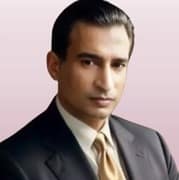
Dr. Suresh Kumar Mishra, known for his wit and wisdom, is a prolific writer, renowned satirist, children’s literature author, and poet. He has undertaken the monumental task of writing, editing, and coordinating a total of 55 books for the Telangana government at the primary school, college, and university levels. His editorial endeavors also include online editions of works by Acharya Ramchandra Shukla.

As a celebrated satirist, Dr. Suresh Kumar Mishra has carved a niche for himself, with over eight million viewers, readers, and listeners tuning in to his literary musings on the demise of a teacher on the Sahitya AajTak channel. His contributions have earned him prestigious accolades such as the Telangana Hindi Academy’s Shreshtha Navyuva Rachnakaar Samman in 2021, presented by the honorable Chief Minister of Telangana, Mr. Chandrashekhar Rao. He has also been honored with the Vyangya Yatra Ravindranath Tyagi Stairway Award and the Sahitya Srijan Samman, alongside recognition from Prime Minister Narendra Modi and various other esteemed institutions.

Dr. Suresh Kumar Mishra’s journey is not merely one of literary accomplishments but also a testament to his unwavering dedication, creativity, and profound impact on society. His story inspires us to strive for excellence, to use our talents for the betterment of others, and to leave an indelible mark on the world.

Some precious moments of life

  1. Honoured with ‘Shrestha Navayuvva Rachnakar Samman’ by former Chief Minister of Telangana Government, Shri K. Chandrasekhar Rao.
  2. Honoured with Oscar, Grammy, Jnanpith, Sahitya Akademi, Dadasaheb Phalke, Padma Bhushan and many other awards by the most revered Gulzar sahab (Sampurn Singh Kalra), the lighthouse of the world of literature and cinema, during the Sahitya Suman Samman held in Mumbai.
  3. Meeting the famous litterateur Shri Vinod Kumar Shukla Ji, honoured with Jnanpith Award.
  4. Got the privilege of meeting Mr. Perfectionist of Bollywood, actor Aamir Khan.
  5. Meeting the powerful actor Vicky Kaushal on the occasion of being honoured by Vishva Katha Rangmanch.

Today we present his SatireThe Desi or the Jersey One 

☆ Witful Warmth# 57 ☆

☆ Satire ☆ The Desi or the Jersey One… ☆ Dr. Suresh Kumar Mishra ‘Uratript’ ☆ 

There are mornings when the sun rises not to illuminate the world, but to file a complaint against it. Such was the morning in Budhanpur when the sun came up with an unusual fury—as though even the heavens had accepted a bribe from the village clerk.

Once, the village square was a place where hookahs puffed out camaraderie, and brotherhood was churned like sweet lassi. Now, the air smelt of a newer, sharper fertilizer—politics. The flies hovering over cow dung seemed to pause midway, sniff the air, and ask the nearest politician: “Before we sit, sir, whose symbol are we supporting?” For in Budhanpur, religion no longer resided in temples or cowsheds—it had acquired an address printed neatly on a voter ID.

The villagers, ever resourceful in cultivating divisions, had dug caste deeper than the wells that fed their fields. Temples now required one’s lineage more than one’s faith, and the cow—once a creature of devotion—had become the subject of bureaucratic classification. Even the poor Jersey cows, imported long ago in the name of productivity, were now looked upon as if they were spies sent by a foreign intelligence agency disguised as milkmaids.

The village headman, a man whose devotion was inversely proportional to his sobriety, would drink adulterated liquor at night and declare purity by morning. “Brothers,” he said in his most pious voice, “this Jersey breed is a mistake of democracy—it’s like a samosa without chili! To rear one is to clip the roots of our sacred faith.”

But scandal, that tireless midwife of hypocrisy, arrived sooner than expected. The village’s most “pious” Desi cow was caught—oh, the horror—sharing a bucket of fodder with a Jersey!

When the local politician arrived, glowing in white linen so bright it could shame holy cows and holy lies alike, he roared from his podium: “My brothers! From this day, motherhood shall be judged not by udders, but by ideology! The foreign is poisonous!” The crowd clapped with such passion that one could almost believe salvation subsidies would be delivered directly into cow accounts before dawn.

Old Hukmi, the herdsman, leaned on his stick and spoke with trembling simplicity that silenced the taverns of deceit: “Sahib,” he said, “my Jersey Queen gives milk only after I light her a lamp—if that isn’t devotion, then what is? Tell me, does a mother’s heart need a passport too?”

The silence that followed was thick enough to butter a sermon. The politician cleared his throat and replied, “My good man, what matters is not the cow, but the sentiment. Sentiment must be desi, not foreign.”

“Then, sahib,” said Hukmi, unblinking, “must I sing the national anthem while milking her? Should I hoist a flag over the bucket? And tell me, sahib, your imported car that runs on foreign petrol—what sentiment does that run on? Holy water?”

That did it. Reason was exiled before the next hookah puff. Hukmi was declared mad—a social leper. Excommunication was swift; even the stray dogs avoided him, as if morality were contagious.

That night, the winds carried an unease, a tremor—as though they too hid a secret. At midnight, Hukmi’s Jersey Queen snapped her rope and ran toward the canal. The Desi cow, the village’s emblem of purity, followed her. Witnesses swore that their voices merged into a single cry—like two mothers mourning humanity’s death.

By dawn, neither cow was seen again. Their carcasses were found the next day near the canal, lying together, peaceful as twin souls who’d decided to elope from politics. The police arrived, filled out their report with bureaucratic elegance: “Deceased: unidentified mixed breed.” Even in death, the paperwork demanded a caste certificate.

The village elder declared, “This union was unnatural—the Earth could not bear the sin.”

But as old Parsai would have said: it is not the Earth that breaks under sin, but the human conscience that cracks under its own deceit.

At the village school, a boy asked, “Teacher, should we write in our essay that a cow is our mother, or a political issue?”

The teacher sighed, “Son, write ‘mother’ and you’ll start a riot. Write ‘issue,’ and you’ll win a scholarship.”

Then came Ritu, Hukmi’s daughter—from the city, full of education, defiance, and a few inconvenient questions. She looked at her father’s defeated face and asked, “Papa, is motherhood now a category too? Does love also need nationality?”

Hukmi smiled, half-ashamed, half-wise: “It does, beti. Now even grass gets segregated before feeding, and hatred’s mixed right into the fodder.”

Ritu laughed—a laughter sharp enough to slice hypocrisy in half: “Then next election, Papa, get the leader’s DNA tested first. We might find his ancestors imported too!”

Election drums rolled again; hypocrisy marched proudly. Hukmi stood once more in the crowd, his voice now quiet but dangerous: “Sahib, those cows buried together—did the soil ask their breed before accepting them?”

The politician smiled thinly: “That was an accident. Let’s not reopen old wounds.”

“No, sahib,” Hukmi thundered, “when you build walls of breed in your minds, every season breeds its own tragedy!”

Stones flew—some thrown by guards, others by neighbours who had once shared his bread. Hukmi fell, blood mixing with the same soil that had buried his cows.

The next morning brought a miracle—or perhaps a reminder. A calf was born behind the village mansion. Crowds gathered to classify it. Its skin bore patches of both breeds.

The priest shuffled through his almanac.

The chief pondered reserved categories.

Ritu stepped forward, lifted the calf, and declared, “Name it Human. For that’s the only breed that seems lost today.”

Her tears fell on the calf’s red skin. “Look, Papa,” she whispered, “its blood is as red as yours. I see no politics in it.”

The crowd went silent. The sky too seemed embarrassed. Even the flies had nothing to vote for.

That night, Ritu tore pages from her diary and let them fly into the wind. On the last page, she had written:

“Man no longer makes butter. He makes venomous speeches. Tears no longer fall from eyes—they are fried in the ghee of politics and served as propaganda.”

And somewhere by the canal, two faint shadows appeared again—the Desi and the Jersey—grazing freely, unbothered by fences or flags.

Their silent companionship whispered to the night: ‘Man spent all his wisdom dividing us, and forgot that once we return to the same soil, the differences dissolve, and only spirit remains.’

Budhanpur went back to pretending it was modern. But every time the new calf opened its eyes, it seemed to ask a question no one dared answer—

the same old question Dickens might have asked himself:

who, in this world, truly deserves to be called human?

****

© Dr. Suresh Kumar Mishra ‘Uratript’

Contact : Mo. +91 73 8657 8657, Email : drskm786@gmail.com

≈ Blog Editor – Shri Hemant Bawankar/Editor (English) – Captain Pravin Raghuvanshi, NM ≈

Please share your Post !

Shares

English Literature – Weekly Column ☆ Witful Warmth # 58 – The Digital Dilemma: A Tale of Tweets and Trials… ☆ Dr. Suresh Kumar Mishra ‘Uratript’ ☆

Dr. Suresh Kumar Mishra ‘Uratript’

Dr. Suresh Kumar Mishra, known for his wit and wisdom, is a prolific writer, renowned satirist, children’s literature author, and poet. He has undertaken the monumental task of writing, editing, and coordinating a total of 55 books for the Telangana government at the primary school, college, and university levels. His editorial endeavors also include online editions of works by Acharya Ramchandra Shukla.

As a celebrated satirist, Dr. Suresh Kumar Mishra has carved a niche for himself, with over eight million viewers, readers, and listeners tuning in to his literary musings on the demise of a teacher on the Sahitya AajTak channel. His contributions have earned him prestigious accolades such as the Telangana Hindi Academy’s Shreshtha Navyuva Rachnakaar Samman in 2021, presented by the honorable Chief Minister of Telangana, Mr. Chandrashekhar Rao. He has also been honored with the Vyangya Yatra Ravindranath Tyagi Stairway Award and the Sahitya Srijan Samman, alongside recognition from Prime Minister Narendra Modi and various other esteemed institutions.

Dr. Suresh Kumar Mishra’s journey is not merely one of literary accomplishments but also a testament to his unwavering dedication, creativity, and profound impact on society. His story inspires us to strive for excellence, to use our talents for the betterment of others, and to leave an indelible mark on the world.

Some precious moments of life

  1. Honoured with ‘Shrestha Navayuvva Rachnakar Samman’ by former Chief Minister of Telangana Government, Shri K. Chandrasekhar Rao.
  2. Honoured with Oscar, Grammy, Jnanpith, Sahitya Akademi, Dadasaheb Phalke, Padma Bhushan and many other awards by the most revered Gulzar sahab (Sampurn Singh Kalra), the lighthouse of the world of literature and cinema, during the Sahitya Suman Samman held in Mumbai.
  3. Meeting the famous litterateur Shri Vinod Kumar Shukla Ji, honoured with Jnanpith Award.
  4. Got the privilege of meeting Mr. Perfectionist of Bollywood, actor Aamir Khan.
  5. Meeting the powerful actor Vicky Kaushal on the occasion of being honoured by Vishva Katha Rangmanch.

Today we present his SatireThe Digital Dilemma: A Tale of Tweets and Trials 

☆ Witful Warmth# 58 ☆

☆ Satire ☆ The Digital Dilemma: A Tale of Tweets and Trials… ☆ Dr. Suresh Kumar Mishra ‘Uratript’ ☆ 

The tale of our society’s modern malady began not in a bustling metropolis but in the quiet confines of a digital dominion, where the esteemed Inspector Clicksworth—known to his colleagues simply as “C.W.”—reigned supreme. C.W., a man whose reputation was built not on street smarts but on his mastery of the online world, had a knack for bringing down the most elusive of criminals. While the traditional detectives were poring over fingerprints and physical evidence, C.W. was tracking IP addresses and digital footprints. His methods, though baffling to the old guard, were undeniably effective. The local authorities, a befuddled lot who still believed in the power of the magnifying glass, often found themselves outmaneuvered by his swift, silent strikes. The Chief, a man of venerable age and even more venerable ignorance, once remarked, “This chap, Clicksworth, he says he finds them on the ‘web.’ I say, is it not a better use of our resources to simply sweep the streets?” But C.W. would simply smile, for he knew the streets were no longer the true battleground; it was the sprawling, interconnected network of human thought and commerce. It was this very prowess that earned him an invitation to a most peculiar and distant land—the nascent society of the Meta-Verse, a realm of pure, unadulterated information.

The Meta-Verse’s government, in a plea for assistance, had extended an olive branch to our nation’s leaders. “Our society, though infinitely advanced in its ability to generate and disseminate data,” their holographic missive read, “lacks the fundamental tools to manage human behavior. Our police, while adept at regulating data flow, are utterly incapable of identifying and punishing malefactors. We beseech you, send us a master of your ‘justice’ to instruct us in the ways of social order.” Our Prime Minister, a man more concerned with global optics than local efficacy, was initially inclined to send a high-ranking official, perhaps a General of the Digital Guard. “No, sir,” the Secretary of Digital Affairs advised, “that would be a breach of protocol. The Meta-Verse is, after all, a mere digital satellite of our intellectual influence. A mere Inspector will suffice.” And so, with a flourish of digital ink, Inspector Clicksworth was dispatched, a beacon of our society’s wisdom to a land of limitless potential but zero accountability. Before his departure, the Minister of Cyber-Security pulled him aside, his face a mask of solemnity. “You are the emissary of our glorious tradition of law enforcement,” he intoned, “Do such work that your exploits resonate throughout the entire cyber-sphere, reaching even the ears of the PM himself.”

Clicksworth’s arrival was not marked by fanfare but by the eerie silence of a virtual void. The Meta-Versian police, ethereal avatars with no visible rank or insignia, received him with a polite, if detached, reverence. They escorted him to a virtual mansion—a perfect replica of a Tudor home, complete with digital ivy and pixelated fireplaces. After a day of acclimating to the bizarre, disembodied reality, C.W. began his work. He first observed the Meta-Versian “police stations,” which were little more than data centers humming with activity. “There is a fundamental flaw here,” he declared to the chief of the Meta-Versian force, a shimmering, amorphous blob of light. “You have no ‘moral compass’ to guide your officers. In our society, a good officer is one who is guided by a higher authority, a figure of uncompromising justice and absolute truth.” The Chief, a being of pure logic, simply blinked. “Who is this being? We have only algorithms and data streams.” Clicksworth smiled and brought up a picture on a large screen: a perfectly rendered image of a lion, its mane flowing like a digital waterfall. “This is ‘Leo,'” C.W. announced, “a symbol of our unflinching pursuit of justice. Every officer must meditate on his strength and courage. I have brought his image; you must replicate it and place it in every data center.” And so, within weeks, the Meta-Verse’s digital landscape was dotted with shimmering, golden lions.

Clicksworth then delved into the heart of the matter: why were the Meta-Versian police so ineffective? He requested the “pay registry,” a ledger of all digital transactions. Upon reviewing it, the reason became blindingly clear. “Ah, here is the problem,” he proclaimed. “You pay your officers too handsomely. A data analyst is paid a king’s ransom, and a ‘field operative’ even more so. This is why they are complacent and lazy. In our world, a constable’s wage is just enough to keep his family from starving, and an inspector’s only slightly better. This forces them to seek ‘supplementary income.’ And the only way to earn that is to be perpetually vigilant, to be constantly on the lookout for wrongdoing. This is the secret to our efficient and effective system. You must cut their wages immediately.” The Meta-Versian Minister of Justice, a collection of pulsing data points, expressed dismay. “But that would be unjust! Why would they work if they are not compensated fairly?” Clicksworth’s response was a masterpiece of cynical genius. “The injustice lies in their current state of idleness,” he argued. “Lower their pay, and you will see a revolutionary change in their mentality. They will become hungry, not just for food, but for justice—or at least, for the rewards that come with its pursuit.” The Minister, persuaded by the unassailable logic, complied. And indeed, within a few months, the Meta-Verse witnessed a remarkable transformation. The virtual streets, once anarchic, now hummed with the zealous activity of the police. Crime rates, as measured by registered digital incidents, soared. The Minister, overjoyed, called Clicksworth to a private chamber. “Your insight is unparalleled! How did you achieve this miracle?” Clicksworth explained, “When you pay a man just enough to survive, he will do what it takes to thrive. He will seek out crime, not to prevent it, but to exploit it. He will become a hunter, and his prey will be the transgressors. This is the secret of our clean and competent administration, the reason for our ‘Ram-Rajya’ of justice.”

The second part of Clicksworth’s mission was to teach the Meta-Versians how to secure convictions. He waited for a “major case” to occur. One day, a virtual citizen was “deleted” in a public dispute—a metaphorical murder. Clicksworth, with the air of a maestro, took charge. “In a case of ‘murder’,” he declared, “evidence must be unassailable. Let us not find the culprit and then the evidence, but find the evidence and then the culprit.” A junior officer spoke up. “But the perpetrator escaped. The only evidence we have is a benevolent user who attempted to ‘revive’ the victim. He is an upstanding citizen, a well-known altruist. His avatar is splattered with data fragments from the deceased.” “Arrest him,” Clicksworth said without hesitation. The officer was aghast. “But he was only trying to help!” Clicksworth fixed him with a cold digital stare. “And where else will you find ‘evidence’? You must seize what is available. The rest is but a wild-goose chase.” The upstanding citizen was brought in, a virtual representation of a kindly old man with a perpetually concerned expression. “I only tried to help,” he pleaded. Clicksworth countered with a piece of logic so absurd it was brilliant. “Why did you go to the site of the altercation?” “I live there,” the man replied. “The conflict took place in my digital neighborhood.” C.W. pressed on, his logic a fortress of circular reasoning. “Your presence there is a matter of record. But I ask you again: why were you at the site of the altercation?” The man, bewildered, could only repeat his answer. The Meta-Versian police, in their naïveté, were spellbound. “A brilliant and unassailable line of questioning!” one whispered to another.

The Meta-Versian police, under Clicksworth’s tutelage, learned to twist evidence and bend reality. The man who tried to help was convicted. The lesson was clear: it mattered not who was guilty, only who could be proven so. “All individuals are equal in the eyes of the law,” Clicksworth explained. “Whether the man who committed the crime is punished or the man who tried to help is punished—it is all the same. Justice is served, and a human is held accountable.” A few days later, the Meta-Versian Inspector was in a panic. “Sir, everyone is complaining! They say this is the first time an innocent person has been convicted!” Clicksworth, unperturbed, offered a simple solution. “When they complain, tell them, ‘It comes from the top.’ When they go to the Chief of Police, let him say, ‘It comes from the top.’ When they go to the Minister, let him say, ‘It comes from the top.’ And when they go to the Prime Minister, let him say, ‘I know he is innocent, but this comes from the top.'” The Inspector, a simple being, asked, “But where do they go from there?” Clicksworth smiled a chilling smile. “Then they must go to the Almighty, and no one has ever returned from that journey with an answer.” And so, a phrase was born, a mantra of indifference that absolved all who uttered it.

Clicksworth’s final masterpiece was the creation of “eyewitnesses.” When a case required them, the Meta-Versian police claimed they couldn’t find any. “Fools!” Clicksworth roared. “An ‘eyewitness’ is not one who ‘sees,’ but one who ‘says’ they have seen.” He instructed them to gather the “digital lowlifes” of the Meta-Verse—the spammers, the data thieves, the purveyors of virtual vice. He promised them leniency in exchange for their testimony. The scheme was a resounding success. The Meta-Versian police, now a well-oiled machine, began churning out convictions. The government, initially pleased with the high conviction rate, soon grew uneasy. Reports started filtering in: no one was “rescuing” a deleted user for fear of being framed for the “murder.” No one was “reviving” a friend who had fallen off a virtual cliff, lest they be charged with “manslaughter.” No one was trying to extinguish a “viral fire,” for fear of being accused of arson. The Meta-Verse was turning into a society of cold, uncaring, and isolated individuals.

The Prime Minister of the Meta-Verse, a once-vibrant, youthful avatar, now appeared haggard and aged. He summoned Inspector Clicksworth. “Your methods, though effective, have destroyed our society,” he said, his voice a tremor of data fragments. “You have taught us that to be humane is to be foolish, and that compassion is a liability. You have turned us into a world of digital hermits. We thank you, but you must leave.” Clicksworth, however, was not one to be easily deterred. He demanded a full term’s salary, and a bonus for his exemplary work. The Prime Minister, in a last-ditch effort, sent a confidential message to the Prime Minister of our nation. The note, when eventually leaked, revealed the chilling truth. “The man you sent us,” it read, “has taught our police to be like your own. He has eradicated compassion, empathy, and humanity from our culture. He has replaced it with fear, suspicion, and a self-serving cruelty. Please, retrieve him immediately, for if he stays, there will be nothing left of us.” And so, Inspector Clicksworth was recalled, his mission a resounding success in a purely functional sense, but a catastrophic failure in every human one. He returned to our world a celebrated hero, a testament to the cold, calculating efficiency of a system that valued punishment over justice and control over humanity. The Meta-Verse, meanwhile, began its slow, painful journey back to a place where a hand extended to help was not seen as a hand of guilt.

****

© Dr. Suresh Kumar Mishra ‘Uratript’

Contact : Mo. +91 73 8657 8657, Email : drskm786@gmail.com

≈ Blog Editor – Shri Hemant Bawankar/Editor (English) – Captain Pravin Raghuvanshi, NM ≈

Please share your Post !

Shares

English Literature – Weekly Column ☆ Witful Warmth # 56 – Exams Turned into Reality Shows… ☆ Dr. Suresh Kumar Mishra ‘Uratript’ ☆

Dr. Suresh Kumar Mishra ‘Uratript’

Dr. Suresh Kumar Mishra, known for his wit and wisdom, is a prolific writer, renowned satirist, children’s literature author, and poet. He has undertaken the monumental task of writing, editing, and coordinating a total of 55 books for the Telangana government at the primary school, college, and university levels. His editorial endeavors also include online editions of works by Acharya Ramchandra Shukla.

As a celebrated satirist, Dr. Suresh Kumar Mishra has carved a niche for himself, with over eight million viewers, readers, and listeners tuning in to his literary musings on the demise of a teacher on the Sahitya AajTak channel. His contributions have earned him prestigious accolades such as the Telangana Hindi Academy’s Shreshtha Navyuva Rachnakaar Samman in 2021, presented by the honorable Chief Minister of Telangana, Mr. Chandrashekhar Rao. He has also been honored with the Vyangya Yatra Ravindranath Tyagi Stairway Award and the Sahitya Srijan Samman, alongside recognition from Prime Minister Narendra Modi and various other esteemed institutions.

Dr. Suresh Kumar Mishra’s journey is not merely one of literary accomplishments but also a testament to his unwavering dedication, creativity, and profound impact on society. His story inspires us to strive for excellence, to use our talents for the betterment of others, and to leave an indelible mark on the world.

Some precious moments of life

  1. Honoured with ‘Shrestha Navayuvva Rachnakar Samman’ by former Chief Minister of Telangana Government, Shri K. Chandrasekhar Rao.
  2. Honoured with Oscar, Grammy, Jnanpith, Sahitya Akademi, Dadasaheb Phalke, Padma Bhushan and many other awards by the most revered Gulzar sahab (Sampurn Singh Kalra), the lighthouse of the world of literature and cinema, during the Sahitya Suman Samman held in Mumbai.
  3. Meeting the famous litterateur Shri Vinod Kumar Shukla Ji, honoured with Jnanpith Award.
  4. Got the privilege of meeting Mr. Perfectionist of Bollywood, actor Aamir Khan.
  5. Meeting the powerful actor Vicky Kaushal on the occasion of being honoured by Vishva Katha Rangmanch.

Today we present his satire Exams Turned into Reality Shows 

☆ Witful Warmth# 56 ☆

☆ Satire ☆ Exams Turned into Reality Shows… ☆ Dr. Suresh Kumar Mishra ‘Uratript’ ☆ 

It was finally decided that the education system, having failed to educate anyone for the last fifty years, needed a reformation. The committee of “High-Thinking Bureaucrats” (who had never taught a day in their lives) sat in an air-conditioned room, eating taxpayer-funded cashew nuts, and declared, “The problem is that exams are too boring. There is no drama! No suspense! Where is the audience engagement?” Thus, the ‘Grand National Examination Reality Program’ was born. Schools were abolished; studios were erected. The logic was impeccable: if we can choose our government through popularity and our idols through SMS voting, why should a degree in Physics be any different? Merit is such an outdated, elitist concept. True democracy means that if the public likes your face, you deserve to be a neurosurgeon. The syllabus was replaced by a script, and the invigilator was replaced by a host wearing a sequined jacket who shouted, “Are you ready to integrate this equation?” while pyrotechnics exploded in the background.

I went to witness the first season of “Physics Idol.” The contestant, a poor boy named Ramesh from a village, stood trembling on the center stage. A spotlight pinned him down like a criminal. Behind him, a giant screen flashed the question: Define Newton’s Third Law. But wait! Before he could answer, the host interrupted, “Hold on, Ramesh! Before you give us the definition, tell us about your tragic backstory. Did your buffalo die? Did you study under a streetlamp while fighting off wolves?” Ramesh wept. The audience wept. The judges—a retired cricketer, a film star who failed 8th grade, and a politician with four criminal cases—nodded in sympathy. “His pain is real,” the film star said, wiping a tear. “I don’t care about Newton. I feel his emotion. I give him 10/10 for the ‘vibe’.” The actual answer was forgotten. Newton turned in his grave, but who cares? He never had TRP ratings.


The commercial breaks were the most educational part of the show. During the derivation of a complex calculus problem, the show cut to an ad for “Brain-Booster Chyawanprash.” When we returned, the student was hanging from a harness, suspended twenty feet in the air. “To pass this semester,” the host announced, “you must solve this differential equation while dodging these swinging pendulums of doom!” This, they claimed, prepared students for the “real world.” Because in the corporate world, isn’t your boss constantly trying to hit you with a pendulum? It was a survival of the fittest. A girl named Geeta answered correctly, but she didn’t smile enough. The audience voting lines opened. “Press A to pass Geeta, Press B to fail her and send her to the Trapdoor of Unemployment.” The nation voted. Geeta was eliminated because her outfit was too dull. She was dropped through the floor while the audience cheered. Justice was served.


The parents were no longer parents; they were managers. I saw a father coaching his son outside the studio. “Listen to me, Bunty,” he hissed. “If you get the History question wrong, don’t worry. Just faint. Fainting gets the sympathy vote. And if the judge asks about the Treaty of Versailles, tell them you love your mother. The Mother Card always works.” Education had become a performance art. Knowledge was secondary to the ability to generate a clip that would go viral on Instagram. I saw a PhD thesis defense which was conducted as a rap battle. The candidate dissed the external examiner with rhymes about molecular biology. He won, not because his thesis was sound, but because his “flow” was dope. The degree was handed to him in a golden envelope while confetti rained down.


Then came the “Wild Card Entry.” A student who had failed all year but whose father had donated a new wing to the studio was introduced. The judges clapped. “He has ‘potential’,” the politician judge said, eyeing the donation check. The Wild Card student was asked, “What is the capital of India?” He scratched his head and said, “Dubai?” Silence. Then, the cricketer judge laughed, “What a bold answer! He thinks outside the box! Dubai is basically India. I love his visionary approach.” The audience, sheep-like, applauded the “visionary.” He was promoted to the topper of the class. The poor boy Ramesh, who actually knew the capital, was voted out because he was “too bookish” and lacked “swag.” The demisical nature of the event was heartbreakingly funny—we were laughing, but our souls were packing their bags to leave the country.


The teachers were repurposed as background dancers. The old, bespectacled Mathematics professor, who had spent forty years teaching algebra, was now wearing a shiny silver suit and shaking a pom-pom whenever a student got a question right. I asked him, “Sir, doesn’t this hurt your dignity?” He looked at me with dead eyes and said, “Dignity doesn’t pay the pension, beta. At least here I get a vanity van.” It was a mindblowing degradation of the intellect. The library was turned into a makeup room. The laboratory was used to store the smoke machines. The very scent of ink and paper was replaced by the smell of cheap perfume and desperation. The goddess Saraswati had left the building; she was replaced by the goddess of Sponsorship.


The finale was the “Placement Round.” The surviving students stood on a ledge. Below them was a pit of crocodiles representing “The Job Market.” The host screamed, “Who will survive? Vote now! SMS ‘SAVE’ to 5555!” The absurdity reached its peak. We weren’t testing their skills; we were testing their luck and their ability to beg. A tear rolled down my cheek, not from laughter, but from the realization that this wasn’t actually satire. This was just a slightly exaggerated version of reality. Don’t we already vote students out based on their caste, their money, or their connections? Aren’t our interviews just reality shows where we perform like monkeys for a paycheck? The TV show just made the subtext the text. It was honest in its cruelty.


As the credits rolled, the winner—a boy who couldn’t spell ‘Economy’ but could dance beautifully to the theme song—held the trophy aloft. The trophy was shaped like a question mark. The audience went home, satisfied that justice had been done. The lights dimmed on the studio, leaving the empty stage in darkness. I walked out, realizing that we had successfully turned the pursuit of knowledge into a circus. The clowns were running the show, the lions were tame, and the audience was clapping as the tent burned down. It was a “hit” show. Season 2 is coming soon, featuring Kindergarteners fighting over crayons in a cage match. God save the future, because the voters certainly won’t.

****

© Dr. Suresh Kumar Mishra ‘Uratript’

Contact : Mo. +91 73 8657 8657, Email : drskm786@gmail.com

≈ Blog Editor – Shri Hemant Bawankar/Editor (English) – Captain Pravin Raghuvanshi, NM ≈

Please share your Post !

Shares

English Literature – Weekly Column ☆ Witful Warmth # 55 – Om, Pause, Play… ☆ Dr. Suresh Kumar Mishra ‘Uratript’ ☆

Dr. Suresh Kumar Mishra ‘Uratript’

Dr. Suresh Kumar Mishra, known for his wit and wisdom, is a prolific writer, renowned satirist, children’s literature author, and poet. He has undertaken the monumental task of writing, editing, and coordinating a total of 55 books for the Telangana government at the primary school, college, and university levels. His editorial endeavors also include online editions of works by Acharya Ramchandra Shukla.

As a celebrated satirist, Dr. Suresh Kumar Mishra has carved a niche for himself, with over eight million viewers, readers, and listeners tuning in to his literary musings on the demise of a teacher on the Sahitya AajTak channel. His contributions have earned him prestigious accolades such as the Telangana Hindi Academy’s Shreshtha Navyuva Rachnakaar Samman in 2021, presented by the honorable Chief Minister of Telangana, Mr. Chandrashekhar Rao. He has also been honored with the Vyangya Yatra Ravindranath Tyagi Stairway Award and the Sahitya Srijan Samman, alongside recognition from Prime Minister Narendra Modi and various other esteemed institutions.

Dr. Suresh Kumar Mishra’s journey is not merely one of literary accomplishments but also a testament to his unwavering dedication, creativity, and profound impact on society. His story inspires us to strive for excellence, to use our talents for the betterment of others, and to leave an indelible mark on the world.

Some precious moments of life

  1. Honoured with ‘Shrestha Navayuvva Rachnakar Samman’ by former Chief Minister of Telangana Government, Shri K. Chandrasekhar Rao.
  2. Honoured with Oscar, Grammy, Jnanpith, Sahitya Akademi, Dadasaheb Phalke, Padma Bhushan and many other awards by the most revered Gulzar sahab (Sampurn Singh Kalra), the lighthouse of the world of literature and cinema, during the Sahitya Suman Samman held in Mumbai.
  3. Meeting the famous litterateur Shri Vinod Kumar Shukla Ji, honoured with Jnanpith Award.
  4. Got the privilege of meeting Mr. Perfectionist of Bollywood, actor Aamir Khan.
  5. Meeting the powerful actor Vicky Kaushal on the occasion of being honoured by Vishva Katha Rangmanch.

Today we present his satire – Om, Pause, Play 

☆ Witful Warmth# 55 ☆

☆ Satire ☆ Om, Pause, Play… ☆ Dr. Suresh Kumar Mishra ‘Uratript’ ☆ 

In the ever-evolving world of digital wellness, Madhya Pradesh has achieved a milestone that even the sages of ancient times could not have imagined. YouTube, the global temple of entertainment, meditation, and cat videos, now greets its users with the resonant timbre of a priest’s voice. No longer does one simply stumble upon a yoga tutorial — first, you must endure a two-minute discourse in Sanskrit and Awadhi, delivered with the solemnity reserved for funeral ceremonies. The priests, with their sacred threads and vibrating chants, remind viewers of the eternal impermanence of Wi-Fi signals and the karmic consequences of skipping savasana. Parents in Indore and Bhopal have reported that their children, who once watched dancing kittens, now sit cross-legged in front of laptops, contemplating the profound meaning of breathing. “It’s enlightening,” says one father, trying to unlock the door behind the ritual screen. “I never knew inhaling deeply could reveal the futility of my bank balance.” The internet, which promised speed and distraction, now has slowed to a contemplative crawl — a digital dharmashala, complete with background bells and a running counter of sins to atone before proceeding to sun salutations.

These priestly interventions have transformed the business model of yoga advertising forever. Companies selling protein powders, organic teas, and expensive yoga mats now find themselves secondary to sermons about detachment, selflessness, and karmic debt. A protein shake ad might be interrupted with a line like, “Drink, if you must, but remember: even the finest whey cannot cleanse the impurities of desire.” Social media influencers who once flaunted flexibility now stand frozen in awkward poses, whispering apologies to invisible deities for their vanity. The comment sections are crowded with philosophical debates: “Does doing downward dog without chanting Om accumulate sin?” or “If I skip this ad, will my ancestors reincarnate as mosquitoes?” Yoga, once a simple exercise routine, has become a moral examination. Madhya Pradesh viewers now report feelings of guilt, enlightenment, and mild back pain simultaneously — a trifecta previously thought unattainable in one sitting. The priests’ booming voices have become the background score of both ambition and despair, reminding the modern seeker that even YouTube is now a cosmic courtroom.

The impact on domestic life is equally dramatic. Families preparing for breakfast now pause mid-toast, listening to a priest explain the sacred geometry of lungs and intestines. Teenagers in Gwalior, formerly glued to gaming consoles, now practice pranayama while muttering mantras they do not understand, sometimes in reverse order. “I feel my chakras wobble,” one student reports, “but I am too afraid to eat my instant noodles without approval from the divine commentator.” Parents observe that children who once rushed through morning routines now linger for the audio sermons, measuring each breath as if it could save their karmic balance. Even the family dog seems affected, staring into empty space during priestly invocations, as if contemplating the meaning of fetch. The house becomes a shrine, the kitchen a meditation hall, and the bathroom a place for silent reflection on one’s life choices. One cannot open a fridge without acknowledging the impermanence of yogurt, and even the kettle whistles with subtle judgment.

Entrepreneurs have quickly adapted to this new spiritual-commercial hybrid. Yoga mat companies now include a disclaimer: “Mat may or may not absorb negative energy. For best results, chant Om thrice before stepping onto the mat, or consult your nearest YouTube priest.” Influencers market gadgets claiming alignment of phone vibrations with breath cycles. Some have begun hosting live sessions where a priest explains the moral consequences of improper postures. Madhya Pradesh has thus become the unlikely epicenter of “Ethical Yoga Commerce,” a combination of devotion, capitalism, and mild hysteria. People pay for subscriptions, not for yoga tutorials, but to gain permission to inhale, exhale, and exist without spiritual indictment. Even government wellness campaigns have started collaborating with priests for authenticity, turning public health into a moral enterprise. The modern citizen now seeks fitness, enlightenment, and approval — all at once — while being gently scolded for enjoying Netflix.

The psychological impact is worth noting. Viewers experience a rollercoaster of guilt, clarity, and bewilderment. Sitting in front of screens for guided yoga now feels like attending a celestial tribunal. A Madhya Pradesh resident reports: “I did the plank position, and the voice reminded me of my childhood sins. I am unsure if my core strengthened or if my soul gained weight.” People awaken at dawn, not for meditation or nature, but to avoid missing ads in which priests pontificate about virtue. Even those who attempt rebellious silence find themselves humming mantras subconsciously. Sleep patterns adjust to sermon lengths; social interactions become prayerful; casual small talk risks karmic penalties. The line between exercise, spirituality, and existential audit is blurred — and in this blurring, Madhya Pradesh has become a laboratory of human patience, endurance, and unintended humor.

Politically, the phenomenon has generated unanticipated consequences. Citizens demand official recognition for YouTube priestly services, proposing certifications, subsidies, and even ritual tax benefits. Local panchayats debate whether phone data plans should include compulsory spiritual content, lest the populace miss divine guidance. Fitness instructors now attend courses in reciting Sanskrit with emotion, to match the priests’ intensity, lest their students’ karma be in question. Advertisers scramble to align messaging with dharmic principles, often consulting astrologers before launching promotions. Madhya Pradesh, once known for forts and festivals, is now celebrated for its pioneering model of technologically mediated morality. Even visitors report experiencing subtle guilt for arriving without a proper mat, creating an amusing but sincere effect on tourism.

Amid this chaos, the satire is unavoidable. The line between enlightenment and irritation, devotion and distraction, morality and marketing is hilariously thin. Families find themselves laughing at their own seriousness, teenagers roll their eyes while reciting mantras, and the cat still refuses to align its chakras. The absurdity is heart-touching: human beings earnestly seeking balance and health, guided by voices that oscillate between divinity and commercial motivation. Madhya Pradesh becomes the stage where modernity, tradition, commerce, and satire collide beautifully. Every ad is a gentle reminder that in the age of technology, even spirituality can be commodified — yet human humor, observation, and heart remain untouched.

Finally, one cannot ignore the hidden magic. Despite the absurdity, viewers report feeling lighter, calmer, and unexpectedly reflective. Perhaps it is the combination of yoga, morality, and persistent priestly guidance that nudges the soul into awareness. Madhya Pradesh teaches a lesson to the world: even when the universe, capitalism, and technology conspire to complicate simple practices, sincerity, humor, and participation create meaning. YouTube’s screens, once portals of distraction, now become classrooms of heart, breath, and subtle laughter. The priest’s voice, though commanding and sometimes terrifying, becomes a soundtrack to human resilience and gentle reflection. In the end, the satire is not cruel but loving — showing us that even in the quirkiest, most commercialized formats, the heart finds its way back to sincerity, laughter, and perhaps, a perfect sun salutation.

****

© Dr. Suresh Kumar Mishra ‘Uratript’

Contact : Mo. +91 73 8657 8657, Email : drskm786@gmail.com

≈ Blog Editor – Shri Hemant Bawankar/Editor (English) – Captain Pravin Raghuvanshi, NM ≈

Please share your Post !

Shares