Dr. Suresh Kumar Mishra ‘Uratript’
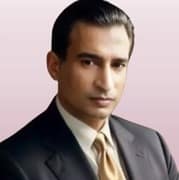
Dr. Suresh Kumar Mishra, widely known in the world of satire by his pen name ‘Uratipt’, expresses his emotions and thoughts with profound honesty and depth. His multifaceted talent is evident in his contributions across various literary genres. He is not only a renowned satirist but also a poet and a children’s author.
His satirical writings have earned him a special place in the literary world. His satire, ‘Shikshak Ki Mout’, went massively viral on the Sahitya Aajtak channel, garnering over a million views and reads—a monumental achievement in the history of Hindi satire. His collection of satires, ‘Ek Tinka Ikyavan Aankhen’ (A Straw and Fifty-One Eyes), is also highly acclaimed and includes his timeless work, ‘Kitabon Ki Antim Yatra’ (The Last Journey of Books). Other celebrated collections include ‘Mayaan Ek, Talwar Anek’ (One Sheath, Many Swords), ‘Gapodi Adda’ (The Gossiper’s Den), and ‘Sab Rang Mein Mere Rang’ (My Colors in Every Hue). His satirical novel, ‘Idhar-Udhar Ke Beech Mein’ (In Between Here and There), is a unique and groundbreaking work focused on the third world.
His significant contributions to literature have been widely recognized. He was honored with the Best Young Creator Award, 2021 by the Telangana Hindi Academy and the Government of Telangana, an award presented by Chief Minister K. Chandrasekhar Rao. The Rajasthan Children’s Literature Academy also honored him for his children’s book, ‘Nanhon Ka Srijan Aasmaan’ (The Creative Sky of Little Ones). Additionally, he has received the Vyanga Yatra Ravindranath Tyagi Sopaan Samman and the Sahitya Srijan Samman from Prime Minister Narendra Modi.
Dr. Uratript has also played a pivotal role in writing, editing, and coordinating a total of 55 books for the Government of Telangana for primary school, college, and university levels. His work is included in university textbooks in Bihar, Chhattisgarh, and Telangana, where his satirical creations are part of the curriculum. This recognition underscores that young readers can identify and appreciate quality and impactful writing.
Key Accolades and Works
- Viral Satire: ‘Teacher’s Death’ (over 1 million views)
- Satire Collections: ‘Ek Tinka Ikyavan Aankhen’, ‘Mayaan Ek, Talwar Anek’, ‘Gapodi Adda’
- Unique Satirical Novel: ‘Idhar-Udar Ke Beech Mein’
- Awards: Shreshtha Navyuva Samman (Telangana), Sahitya Srijan Samman (PM Modi), and more.
- Educational Contribution: Authored and edited 55 books for the Telangana government.
Some precious moments of life

- Honoured with ‘Shrestha Navayuvva Rachnakar Samman’ by former Chief Minister of Telangana Government, Shri K. Chandrasekhar Rao.
- Honoured with Oscar, Grammy, Jnanpith, Sahitya Akademi, Dadasaheb Phalke, Padma Bhushan and many other awards by the most revered Gulzar sahab (Sampurn Singh Kalra), the lighthouse of the world of literature and cinema, during the Sahitya Suman Samman held in Mumbai.
- Meeting the famous litterateur Shri Vinod Kumar Shukla Ji, honoured with Jnanpith Award.
- Got the privilege of meeting Mr. Perfectionist of Bollywood, actor Aamir Khan.
- Meeting the powerful actor Vicky Kaushal on the occasion of being honoured by Vishva Katha Rangmanch.
Today we present his satire The Senior Citizen.
☆ Witful Warmth# 117 ☆
☆ Satire ☆ The Senior Citizen… ☆ Dr. Suresh Kumar Mishra ‘Uratript’ ☆
At the stroke of ten precisely of a morning, there was wont to appear at the portal of the air-conditioned auditorium—that brisk, refrigerated sanctuary where municipal virtues are preserved against the foul heat of public scrutiny—one Mr. Vishwambhar Dayal, an antique gentleman of some seventy-eight summers, leaning heavily upon a knotty stick. In his trembling hands, as tenderly clasped as though it were the Last Will and Testament of a Christian soul, he bore a threadbare yellow shawl trimmed with tarnished brocade, and a small, bruised velvet case enclosing a rose—withered, desiccated, and altogether dead. Upon these relics his fingers passed incessantly with a ghostly sort of fondling.
Whenever the newest porter of the establishment—a stout lad whose sense of personal dignity seemed to increase in direct proportion to his total lack of employment—beheld him posted like an ill-favoured statue by the gates, he was pleased to dash his terracotta cup upon the board and roar with bureaucratic merriment: “Hark ye, father! When the Great Man himself, the District Magistrate, is coming this twenty-first of August—being Senior Citizens’ Day in the calendar of official benevolence—to dispense brand-new woollens and gilded felicitations, what madness possesses you to exhibit this tattered rag before our eyes, clutching it to your bosom like a pauper at the beadle’s parlour?”
Whereupon old Vishwambhar Dayal, wiping the clouded lenses of his spectacles with the hem of his plain cotton garment, would bestow upon the fellow a smile of infinite and mournful mildness: “Alas, my son, this frayed piece of drapery is no mere scrap of silk; it is the grand imperial mantle of an unseeing world’s hypocrisy, brought out from the wardrobe of conscience but once in a revolving year, to be hung about the neck of decrepitude amidst flourishes of trumpets and parliamentary claptrap.”
The assorted clerks, young gentlemen of high collars and small brains, who bustled about with red tape and inkhorns, made it their business to laugh him to scorn, declaring that the dotard’s intellect had evidently taken ship for parts unknown, leaving him to pelt stones of obstinacy against the noble edifice of Civic Piety. Yet the old man, untroubled by their barbed tongues, did but gather the crumbling petals of his dead flower between shaking fingers, and kept his patient vigil for the dust and rumble of the official carriages.
In process of time, the menials and underlings became so thoroughly acquainted with this silent apparition that they classified him comfortably as a harmless lunatic, and dismissed him from their thoughts with that neat dispatch characteristic of all public offices.
Whenever the Worthy Secretary of the Committee—a gentleman puffed up with an enormous cargo of bouquets, mementos, and importance—advanced majestically towards the rostrum, Mr. Dayal would hitch himself up by the aid of his knotty crutch, fold his venerable hands, and say, in the plaintive tone of a debtor at Chancery: “Kind sir, has the Magistrate set his illustrious hand and seal unto that petition touching a poor father’s pension and the Maintenance of Parents Act?”
At which the Secretary, twitching his spectacles in a frenzy of official irritation, would bark: “Bless my soul, old fellow! Until the digital portal has made up its electronic mind, and until the Revenue Office has vomited forth its supplemental report, not an inch shall the paper budge; and so you may go on perambulating this porch with your mouldy rag till the crack of doom!”
The old gentleman offered no retort; he merely crept back to his flagstone and fell to opening and shutting the velvet case with the vacant persistency of a child playing with a broken box. The populace whispered that he was doubtless an unchristian parent seeking to wrest some patrimony from an undutiful son by sheer force of public nuisance; but not a solitary soul in the parish possessed the wit to comprehend the dark and monstrous riddle that bound that dead rose to the majestic pageantry of Senior Citizens’ Day.
High noon arrived, and with it, the thunderous descent of the District Magistrate and his attending satellite, the Officer of Social Welfare, coming to blow the grand trumpet of Senior Citizens’ Day and unveil the day’s philanthropic festivities.
At the screeching of the official siren, the entire precinct was thrown into that delightful paroxysm of terror and obedience which only high rank can inspire: crimson carpeting was unfurled across the gravel with frantic haste, lest an ankle of the governing classes should encounter a pebble of the governed. The solemn lamps were ignited; hymns to filial piety and the veneration of silver hairs were recited from the platform; and when at length the Great Man emerged, hemmed in by an obsequious herd of journalists with ready quills, his discerning eye was arrested by the figure of Vishwambhar Dayal, sitting like a bundle of neglected bones in the shade of the archway, the yellow shawl upon his knees and the dry rose upon the shawl.
Perceiving here an admirable occasion to exhibit that tender, paternal sympathy which looks so charming in the morning gazettes, the Magistrate, accompanied by his scribes, bore down upon the old man with an air of majestic condescension: “Venerable father,” said he, with that honeyed benevolence which costs nothing and yields great harvest, “upon this auspicious anniversary we bow before the wisdom of your years. Disclose your grievance without fear, that the hand of Authority may strike off your afflictions. Has the bounty of the State’s Old-Age Honour failed to reach your hearth?”
Vishwambhar Dayal raised his dim and watery eyes to that august visage. With trembling hands, he took up the faded shawl and the desiccated bloom, and laid them straight into the well-manicured palm of the Magistrate: “Your Honour,” whispered he, with a quietude more terrible than thunder, “if Justice be indeed the business of your high office, look closely, I pray you, upon the corner of this silk, and know this poor dry corpse of a blossom.”
The Magistrate cast his eyes upon the hem, where, worked in tarnished gold, were the date of the preceding year’s festival and—staring out from the fabric like a ghost unbidden—his very own official signature!
The colour fled from the magistrate’s cheek as water from a leaky sieve; his hand shook so violently that the withered flower trembled upon his palm.
Two great, scalding tears broke from the old man’s rheumy eyes and splashed upon the dead petals.
“Sir,” said Vishwambhar Dayal, his voice cracking like dry timber under the burden of grief, “on this selfsame day, precisely twelve months ago, you stood upon that very stage and crowned me the most venerable citizen of this district, draping this golden thread about my shoulders and pressing this rose into my hand. But on the very morrow, when my son—a decorated officer of this government—thrust me out into the street without bread or roof, I dragged my decrepit limbs to your tribunal with an application under your celebrated laws of maintenance. For three hundred and sixty-four weary days your clerks demanded gold to move the files, while I lay starving upon the curbstone, beneath the cold stars, and not one servant of your righteous system came to inquire whether the old man lived or rotted. I have returned today, sir, merely to fling your State-bestowed velvet and your dried-up rubbish back into your lap. I come to declare unto your polished, civilized world, that to leave a father to starve as an outcast for three hundred and sixty-four days, only to set him upon a gilded pedestal for an hour on the three hundred and sixty-fifth, is the foulest, most abominable mockery that ever made angels weep!”
The Magistrate’s head drooped upon his breast, stricken with an overpowering shame; and across the vast hall there fell a hush so awful, so profound and penetrating, that the sleeping conscience of every man present awoke, shuddered, and was afraid.
****
© Dr. Suresh Kumar Mishra ‘Uratript’
Contact : Mo. +91 73 8657 8657, Email : drskm786@gmail.com
≈ Blog Editor – Shri Hemant Bawankar/Editor (English) – Captain Pravin Raghuvanshi, NM ≈


