English Literature – Weekly Column ☆ Witful Warmth # 56 – Kismatchand and the Bureaucratic Beast… ☆ Dr. Suresh Kumar Mishra ‘Uratript’ ☆

Dr. Suresh Kumar Mishra ‘Uratript’
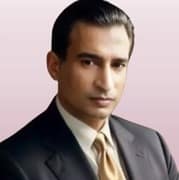
Dr. Suresh Kumar Mishra, known for his wit and wisdom, is a prolific writer, renowned satirist, children’s literature author, and poet. He has undertaken the monumental task of writing, editing, and coordinating a total of 55 books for the Telangana government at the primary school, college, and university levels. His editorial endeavors also include online editions of works by Acharya Ramchandra Shukla.

As a celebrated satirist, Dr. Suresh Kumar Mishra has carved a niche for himself, with over eight million viewers, readers, and listeners tuning in to his literary musings on the demise of a teacher on the Sahitya AajTak channel. His contributions have earned him prestigious accolades such as the Telangana Hindi Academy’s Shreshtha Navyuva Rachnakaar Samman in 2021, presented by the honorable Chief Minister of Telangana, Mr. Chandrashekhar Rao. He has also been honored with the Vyangya Yatra Ravindranath Tyagi Stairway Award and the Sahitya Srijan Samman, alongside recognition from Prime Minister Narendra Modi and various other esteemed institutions.

Dr. Suresh Kumar Mishra’s journey is not merely one of literary accomplishments but also a testament to his unwavering dedication, creativity, and profound impact on society. His story inspires us to strive for excellence, to use our talents for the betterment of others, and to leave an indelible mark on the world.

Some precious moments of life

  1. Honoured with ‘Shrestha Navayuvva Rachnakar Samman’ by former Chief Minister of Telangana Government, Shri K. Chandrasekhar Rao.
  2. Honoured with Oscar, Grammy, Jnanpith, Sahitya Akademi, Dadasaheb Phalke, Padma Bhushan and many other awards by the most revered Gulzar sahab (Sampurn Singh Kalra), the lighthouse of the world of literature and cinema, during the Sahitya Suman Samman held in Mumbai.
  3. Meeting the famous litterateur Shri Vinod Kumar Shukla Ji, honoured with Jnanpith Award.
  4. Got the privilege of meeting Mr. Perfectionist of Bollywood, actor Aamir Khan.
  5. Meeting the powerful actor Vicky Kaushal on the occasion of being honoured by Vishva Katha Rangmanch.

Today we present his satire Kismatchand and the Bureaucratic Beast 

☆ Witful Warmth# 56 ☆

☆ Satire ☆ Kismatchand and the Bureaucratic Beast… ☆ Dr. Suresh Kumar Mishra ‘Uratript’ ☆

In days of yore, when kings held sway and slaves were but their chattels, so too existed in this modern age of liberty, souls truly enslaved by the ‘System,’ their lives no less burdened than those in chains. Among these ‘System-afflicted’ stood our very own Mr. Kismatchand. His existence, alas, was no different from that of a ‘circus lion,’ condemned to dance daily within the confines of its cage, at the mere flick of a trainer’s whip. Rise with the sun, trudge to the office, lose oneself in a labyrinth of papers, and return home, weary and spent, as dusk descended. This was his daily ‘act.’ His ‘freedom,’ such as it was, extended only to choosing which queue to join for bill payments, or before which petty clerk to grovel. The ‘tyranny’ he endured was not trifling. One day, an exorbitant electricity bill would arrive; the next, the water meter would spin with unprecedented zeal; and then, in the hallowed halls of government offices, demands for ‘pure ghee’ would arise under the guise of ‘tea and refreshments.’ Kismatchand’s very being was tormented by this ‘System.’ One day, however, the cup of his endurance overflowed. The public tap in his neighbourhood ceased its flow, and when he ventured forth to complain, the clerk regarded him as if he sought not water, but the moon and stars themselves. It was then, in that very moment, that Kismatchand resolved, “Enough of this deference! I shall seek refuge in the ‘jungle’!” His ‘jungle’ was that desolate patch of land beyond the city’s sprawl, where no government office stood, no clerk held court, naught but dust and silence reigned. He imagined, at the very least, no ‘System’ would exist there, no ‘mechanism’ to measure his every breath. He fled, yes, truly fled, like a ‘liberated bird’ from its cage, little knowing that even ‘jungles’ had, by then, become ‘governmental property.’

Upon reaching that ‘wilderness,’ which he, in his innocence, deemed a ‘jungle,’ Kismatchand discovered a ‘lion’ already in residence. This was no ordinary beast, but a ‘Bureaucratic Beast’ – a colossal, decrepit, and dust-laden ‘government department’ office, its roof perpetually leaking, its walls stained with the indelible marks of ‘bribes.’ This ‘Beast’ lay gasping its last, for ‘files’ were ensnared in its claws, and the ‘red tape’ had tightened its grip around its very throat. The ‘Bureaucratic Beast’ repeatedly lifted its ‘paw,’ as if pleading, “Would someone, for pity’s sake, advance my ‘file’!” Kismatchand, at first, was seized by fear. “Good heavens!” he thought, “A ‘Bureaucratic Beast’ even here?” But then, a ‘peculiar compassion’ stirred within him. “Well,” he mused, “at least this ‘Beast’ isn’t hungry; its ‘stomach’ is merely bloated with ‘papers.'” He cautiously approached the ‘Beast.’ In the Beast’s ‘paw’ was not a ‘thorn,’ but a ‘thick file of scandal,’ which no one dared to touch. Kismatchand pondered, “Perhaps, if I assist it, it might not devour me, but rather bestow upon me a ‘government post’!” He summoned his courage and attempted to extricate that ‘scandalous file.’ The file was so ancient that a cloud of dust erupted upon contact. He dusted it, wiped it, and somehow undertook the daunting task of conveying it to the ‘correct desk.’ This was no trifling endeavour, for upon every desk, ‘serpents of red tape’ lay coiled, ready to strike.

Kismatchand commenced the arduous task of tending to this ‘Bureaucratic Beast.’ This ‘tending’ entailed conveying that ‘scandalous file’ from one desk to another, offering ‘tea and refreshments’ to every clerk, and bowing in ‘servile deference’ before every ‘officer.’ For many days, he strove to keep that ‘file’ alive, much like a ‘physician’ attending to a ‘dying patient.’ At times, he would ‘deposit’ the ‘file’ in the ‘registry,’ and at others, he would ‘resuscitate’ it in the ‘dispatch section.’ Through this ‘care,’ the ‘Bureaucratic Beast’ found a measure of ‘respite.’ That ‘file,’ which had languished for years, advanced by a mere ‘inch’! This, for the ‘Bureaucratic Beast,’ was nothing short of a ‘miracle.’ In ‘gratitude,’ the ‘Bureaucratic Beast’ began to ‘lick Kismatchand’s hand.’ This ‘hand-licking’ signified that Kismatchand had received a ‘small receipt,’ upon which was inscribed, “Your complaint shall be considered.” This receipt, to him, was worth more than a ‘Nobel Prize.’ Then, the ‘Bureaucratic Beast’ quietly retreated into its ‘lair,’ meaning that the ‘file’ once again vanished into some ‘dark corner,’ but Kismatchand, at least, possessed a ‘receipt’! He thought, “Hark! At long last, I have accomplished a ‘government task,’ however trivial!” His chest swelled with pride, as if he had conquered some formidable ‘Everest.’

Meanwhile, the ‘soldiers’ of ‘His Excellency, the Honourable ‘Development Man” – that is to say, the ‘clerks’ of the ‘Vigilance Department’ and the ‘vultures of the media’ – were in hot pursuit of Kismatchand. For Kismatchand had dared to ‘rectify’ the ‘Bureaucratic Beast’s’ ‘file’ through ‘improper means,’ and this, for the ‘System,’ was an ‘unpardonable offence.’ To attempt to ‘correct’ the ‘System’ was, in itself, a violation of the ‘System’s’ very rules! At last, one day, Kismatchand was apprehended. He was brought before ‘His Excellency, the Honourable ‘Development Man’.’ The ‘Development Man’ was exceedingly displeased. Lines of ‘fury,’ rather than ‘development,’ furrowed his brow. He thundered, “Cast this ‘System-breaker’ before the ‘hungry lion’!” This ‘hungry lion’ was none other than the ‘court of public opinion,’ where ‘media trials’ were conducted and ‘memes’ were spawned on ‘social media.’ This ‘lion’ was hungry because it craved a ‘new prey’ each day, a ‘new issue’ upon which to sink its ‘fangs.’ Kismatchand thought, “Alas! I merely advanced a ‘file,’ and now my own ‘file’ is to be closed!” He began to regret his ‘compassion.’ He lamented, “Would that I had left that ‘Bureaucratic Beast’ to its own devices; then, I would not face this grim day!”

On the day Kismatchand was to be cast before the ‘hungry lion,’ the entire ‘populace’ of ‘Rome’ – meaning the city’s ‘largest auditorium’ – had gathered. This ‘populace’ comprised ‘media persons,’ ‘social media influencers,’ and sundry ‘idle folk’ who sought a ‘free spectacle.’ Before all, Kismatchand was thrown into the ‘cage’ of the ‘hungry lion.’ The ‘cage’ was none other than the encirclement of ‘media cameras,’ and the ‘hungry lion’ was the ‘public’s wrath,’ which the ‘media’ had assiduously fanned. Kismatchand trembled with fear. He saw not ‘death,’ but ‘disgrace’ staring him in the face. He thought, “Alas, my ‘reputation’ is about to be ‘cremated’!” He began to invoke ‘God,’ and simultaneously, all those ‘clerks’ and ‘officers’ who had ‘stalled’ his ‘file.’ The ‘lion’ – that is to say, the ‘media’ – advanced towards Kismatchand. ‘Cameras’ zoomed in on him, ‘microphones’ were thrust before his mouth, and ‘reporters’ posed questions as if he were some ‘international criminal.’ Kismatchand was drenched in perspiration. In his terror, he squeezed his eyes shut. But what was this? Instead of ‘devouring’ Kismatchand, the ‘lion’ – that is to say, the ‘media’ – began to ‘lick his hand.’ This ‘hand-licking’ signified that an ‘old reporter,’ who once hailed from Kismatchand’s ‘neighbourhood,’ had recognized him and, removing his ‘microphone,’ whispered, “Kismatchand! Is that truly you? You were the one who advanced that ‘government department’s’ ‘file,’ which had stalled my ‘pension’!” The Emperor was astonished, the entire populace was astonished, and Kismatchand himself was equally so.

At length, Kismatchand comprehended that, surely, this was none other than the very ‘Bureaucratic Beast’ whose ‘ailing state’ he had ‘tended.’ That ‘old reporter’ from the ‘media’ was, in fact, a ‘representative’ of that very ‘government department’ whose ‘file’ Kismatchand had advanced. He had recognized Kismatchand because the advancement of that ‘single file’ had led to the approval of the reporter’s ‘pension.’ He, too, began to ‘caress’ Kismatchand and ‘pat his back,’ meaning he began to ‘praise’ Kismatchand on ‘live telecast.’ He declared, “This is the man who endeavoured to ‘correct’ the ‘System,’ while the ‘System’ itself seeks to brand him ‘wrong’!” Witnessing this, ‘His Excellency, the Honourable ‘Development Man” commanded his ‘soldiers’ to remove Kismatchand from the ‘cage.’ The ‘Development Man’ mused, “Ah! This is ‘positive publicity’! Let us capitalize on it!” He inquired of Kismatchand, “What did you do that the ‘lion’ – that is to say, the ‘media’ – instead of ‘devouring’ you, began to ‘lick your hand’?” The ‘Development Man’s’ face now bore a ‘smile’ instead of ‘fury,’ for elections loomed, and a ‘positive image’ was paramount. Kismatchand recounted the ‘jungle incident’ and pleaded, “Your Excellency, when the ‘Bureaucratic Beast’ – that is to say, that ‘department’ – was ‘ailing,’ I tended to it for but a few days. Because of this ‘benevolence,’ it did not ‘devour’ me, but rather ‘praised’ me. Yet, I have served your ‘System’ for years, paid my ‘taxes,’ abided by your ‘rules,’ and despite all this, you sought to take my ‘life’!”

‘His Excellency, the Honourable ‘Development Man”s ‘heart softened.’ His ‘heart,’ being made of paper, had become somewhat pliable in the downpour of ‘publicity.’ He ‘freed’ Kismatchand and also ‘released’ the ‘Bureaucratic Beast’ – that is to say, that ‘department’ – into the ‘jungle.’ This ‘freedom’ meant that Kismatchand did not regain his ‘old job,’ but was instead appointed an ‘honorary member’ of the ‘System Reform Committee.’ ‘Honorary’ meant ‘without remuneration,’ implying that he would now ‘reform the System’ for ‘free’! And ‘releasing the Bureaucratic Beast into the jungle’ meant that the ‘department’ was ‘closed down,’ for it had been operating at a ‘loss.’ Kismatchand thought, “Hark! The very ‘Beast’ I ‘cured’ has been ‘closed down’! What became of my efforts?” Tears welled in his eyes. He had gained ‘freedom,’ but that ‘freedom’ was akin to an ’empty cage.’ He lamented, “Would that I had remained a slave; at least then, I would have had ‘bread’!” The ‘Development Man’ patted him on the back and declared, “Go forth, Kismatchand, from this day, you are ‘free’! And remember, continue to ‘contribute’ to ‘System reform’!” Kismatchand observed that the ‘Bureaucratic Beast’s’ ‘office’ had now transformed into a ‘ruin.’ His ‘efforts’ had turned to dust.

Kismatchand was now ‘free,’ yet his ‘freedom’ was akin to that of an ‘orphan child,’ burdened with ‘responsibility’ but devoid of ‘support.’ He attended meetings of the ‘System Reform Committee,’ where, besides ‘tea and biscuits,’ nothing of substance was ever gained. His ‘positive publicity,’ too, soon became ‘old news.’ No longer was he hailed as a ‘hero,’ but rather dismissed as a ‘useless social worker.’ He gazed upon the ‘ruins’ of that ‘Bureaucratic Beast,’ where once he had advanced a ‘file.’ He recalled how that ‘Beast’ had, in ‘gratitude,’ ‘licked his hand.’ Today, that ‘hand’ was empty, and in his ‘heart’ lay a ‘deep wound.’ He lamented, “I performed a ‘good deed,’ and in ‘return,’ I received ‘unemployment’! I hoped for ‘gratitude,’ and in ‘return,’ I received ‘mockery’!” Tears streamed from his eyes, but these were not tears of ‘sorrow,’ but of ‘satire.’ He regretted why he had committed the ‘sin’ of ‘reforming’ the ‘System.’ The ‘System’ had ‘freed’ him, but the price of ‘freedom’ was so ‘exorbitant’ that he could not ‘pay’ it. A ‘sigh’ escaped him, “Would that I had remained in that ‘jungle,’ where at least the ‘lion’ was ‘real,’ not ‘bureaucratic’!” This ‘tale’ teaches us that ‘compassion’ is a noble quality, but in the ‘governmental system,’ the ‘fruits’ of ‘compassion’ are often ‘bitter.’ And ‘gratitude’? Alas, it languishes, gathering ‘dust’ in ‘government files,’ until some ‘new scandal’ deigns to ‘unearth’ it. Kismatchand was now ‘free,’ but ‘freedom’ had left him more ‘alone’ than any ‘cage.’ His ‘story’ still echoes through the ‘corridors’ of the ‘System’ today, a ‘poignant satire.’

****

© Dr. Suresh Kumar Mishra ‘Uratript’

Contact : Mo. +91 73 8657 8657, Email : drskm786@gmail.com

≈ Blog Editor – Shri Hemant Bawankar/Editor (English) – Captain Pravin Raghuvanshi, NM ≈

Please share your Post !

Shares

English Literature – Weekly Column ☆ Witful Warmth # 55 – Democracy’s Lament: A Village’s Woes… ☆ Dr. Suresh Kumar Mishra ‘Uratript’ ☆

Dr. Suresh Kumar Mishra ‘Uratript’

Dr. Suresh Kumar Mishra, known for his wit and wisdom, is a prolific writer, renowned satirist, children’s literature author, and poet. He has undertaken the monumental task of writing, editing, and coordinating a total of 55 books for the Telangana government at the primary school, college, and university levels. His editorial endeavors also include online editions of works by Acharya Ramchandra Shukla.

As a celebrated satirist, Dr. Suresh Kumar Mishra has carved a niche for himself, with over eight million viewers, readers, and listeners tuning in to his literary musings on the demise of a teacher on the Sahitya AajTak channel. His contributions have earned him prestigious accolades such as the Telangana Hindi Academy’s Shreshtha Navyuva Rachnakaar Samman in 2021, presented by the honorable Chief Minister of Telangana, Mr. Chandrashekhar Rao. He has also been honored with the Vyangya Yatra Ravindranath Tyagi Stairway Award and the Sahitya Srijan Samman, alongside recognition from Prime Minister Narendra Modi and various other esteemed institutions.

Dr. Suresh Kumar Mishra’s journey is not merely one of literary accomplishments but also a testament to his unwavering dedication, creativity, and profound impact on society. His story inspires us to strive for excellence, to use our talents for the betterment of others, and to leave an indelible mark on the world.

Some precious moments of life

  1. Honoured with ‘Shrestha Navayuvva Rachnakar Samman’ by former Chief Minister of Telangana Government, Shri K. Chandrasekhar Rao.
  2. Honoured with Oscar, Grammy, Jnanpith, Sahitya Akademi, Dadasaheb Phalke, Padma Bhushan and many other awards by the most revered Gulzar sahab (Sampurn Singh Kalra), the lighthouse of the world of literature and cinema, during the Sahitya Suman Samman held in Mumbai.
  3. Meeting the famous litterateur Shri Vinod Kumar Shukla Ji, honoured with Jnanpith Award.
  4. Got the privilege of meeting Mr. Perfectionist of Bollywood, actor Aamir Khan.
  5. Meeting the powerful actor Vicky Kaushal on the occasion of being honoured by Vishva Katha Rangmanch.

Today we present his satire Democracy’s Lament: A Village’s Woes 

☆ Witful Warmth# 55 ☆

☆ Satire ☆ Democracy’s Lament: A Village’s Woes… ☆ Dr. Suresh Kumar Mishra ‘Uratript’ ☆

Ah, Rampurwa! A name that, in days gone by, would conjure visions of village squares brimming with honesty and an almost pastoral simplicity. Where the first blush of dawn saw ploughs cleaving the earth, and the twilight hours gathered the elders on the chaupal, their wisdom a balm to every dispute. The tale of its very first panchayat election, a distant echo from a purer time, still kindles a faint, melancholic glow in the eyes of old Bhabua Kaka. “Oh, my child,” he would sigh, his voice a whisper from a bygone era, “those were the days! Candidates, with hands clasped in humble supplication, would go from door to door, pledging their ‘service,’ their only offering the ‘sweat of their brow’ and an unblemished ‘integrity.'” In that golden age, the ‘people’ were the masters, and the ‘leaders’ their devoted servants. The assembly? It was naught but a ‘temple,’ a hallowed space where every matter was subjected to ‘deliberation,’ never mere ‘dispute.’ Character, not the paltry sum declared on a character certificate, was the true measure of a man. A vote then was a ‘blessing,’ a sacred trust; now, alas, it has transmogrified into a mere ‘offer,’ a transactional trifle. They once vowed, “We shall lay down our lives for you,” and indeed, they did. Today’s leaders, with a chilling irony, declare, “We shall lay down your lives,” and, by Jove, they often do! Then, a leader was a ‘servant’; now, he is a ‘saving account.’ In that era, should a candidate suffer defeat, the villagers would console him, “Fret not, my son, serve us again next time.” Today, should one fall, the retort is a cynical shrug, “Never mind, spend more ‘money’ next time.” That was a time when politics was a ‘faith,’ and politicians, veritable ‘saints.’ Now, politics is but a ‘trade,’ and its practitioners, mere ‘traders.’

Yet, as the wise old adage goes, ‘decay’ does not descend in a single, thunderous clap; it creeps in, slow and insidious, like the relentless termite gnawing at the very heart of timber. In Rampurwa, the first faint tremor of this transformation was felt when, alongside the customary ‘tea and water,’ ‘sweet boxes’ began to make their surreptitious appearance. Initially, these were tokens of ‘affection,’ then symbols of ‘influence,’ and finally, the blatant instruments of ‘temptation.’ Those very leaders, who once traversed the village’s dusty, unpaved paths with bare feet, now arrived in gleaming ‘SUVs,’ raising clouds of dust in their wake, a visible testament to their newfound prosperity. Their humble ‘bicycles’ had yielded to the imposing ‘Scorpios,’ and their ‘plain kurtas’ were replaced by ‘colourful shawls’ of ostentatious weave. When ‘public service’ mutated into ‘self-service,’ no one could precisely pinpoint the moment of this dark alchemy. Once, ‘development’ signified a village road, a school, or a hospital; now, it denotes the leader’s sprawling ‘mansion’ and his burgeoning ‘bank balance.’ The day the first victorious candidate chose to distribute ‘liquor bottles’ instead of traditional sweets, Bhabua Kaka clutched his head in despair. “What, pray tell, is happening?” he had whispered, his voice laced with profound sorrow. “This is no longer ‘democracy’; it is ‘demon-cracy,’ where the populace is ensnared in a ‘tantra’ to be ‘looted.'” A vote, once a sacred ‘blessing,’ had now become a vulgar ‘offer.’ The age when leaders spoke of ‘sacrifice’ had long passed; now, they merely threatened ‘resignation’ should their ‘demands’ remain unfulfilled.

Then dawned the ignominious reign of ‘Limping Lakhan.’ Lakhan, a figure of considerable notoriety in the village for his sheer ‘brutality,’ a man who had never darkened the doors of a school, now aspired to be the ‘headman’ of the ‘Panchayat.’ He possessed no eloquence, no grand speeches, only a formidable ‘cudgel’ and eyes that glowed with a chilling ‘red.’ ‘Persuasion’ and ‘conciliation’ had become relics of a forgotten age; now, only ‘threats’ and ‘suppression’ held sway. Votes were no longer garnered by ‘appeal’ but by sheer ‘terror.’ The ballot box, that venerable symbol of democratic choice, had been usurped by the ‘bullet box.’ No soul in the village dared to voice ‘dissent,’ for to ‘oppose’ Lakhan meant, quite literally, the ‘extinction’ of the ‘opponent’s’ very ‘existence.’ Bhabua Kaka bore witness to the tragic spectacle of his simple, guileless villagers, who once trembled before the ‘Almighty,’ now cowering in abject fear before ‘Lakhan.’ Once, there was ‘voting’; now, there was ‘fist-casting.’ Lakhan would declare, with a menacing grin, “Vote for me, and there shall be ‘development’; refuse, and there shall be ‘destruction.'” And the villagers knew, with a chilling certainty, just how ‘precise’ his ‘destruction’ could be. No longer was it ‘the people,’ but a mere ‘multitude,’ herded like ‘sheep and goats’ to their predetermined fate.

And then, with a cynical regularity, arrived the ‘season of transfers,’ a period that proved far more ‘profitable’ for Rampurwa than even the bountiful ‘monsoon.’ The village accountant, the police inspector, nay, even the schoolmaster—all became ‘commodities for sale.’ Every ‘posting’ bore a discernible ‘rate card,’ openly discussed at the village tea stall as if it were the price of vegetables. “Oh, brother, you desire the transfer of that particular accountant? Ten lakhs, if you please!” “And the inspector? Twenty lakhs!” Such transactions were bandied about with the casual air of haggling over cabbages. The common man, who once trudged tirelessly through the labyrinthine corridors of bureaucracy for his paltry affairs, now found himself entangled in the web of ‘middlemen.’ ‘Service’ had been unceremoniously supplanted by ‘setting.’ Bhabua Kaka once overheard the lament of a poor farmer, who, after months of futile efforts to secure his land documents, was ultimately forced to proffer a ‘bribe’—a sum he had painstakingly saved for his daughter’s wedding. The farmer, tears streaming down his weathered face, had cried out, “Sir, ‘development’ now means the development of the ‘pocket,’ and ‘schemes’ are but ‘plans’ for ‘plunder.'” This, indeed, was a brand of politics where ‘integrity’ held no sway, only ‘incentives’ reigned supreme.

The village’s Gram Sabha meetings, once the vibrant epicentres of ‘discourse’ on Rampurwa’s future, had, by this lamentable juncture, devolved into a grotesque ‘circus.’ The microphones, instead of amplifying ‘issues,’ reverberated with crude ‘expletives,’ and ‘debates’ frequently escalated into unseemly ‘brawls.’ The Sarpanch, once the venerable ‘head of the village,’ had been reduced to a hapless ‘referee’ in an arena of chaos, blowing his whistle in futile desperation. On one memorable occasion, during a heated discussion concerning the ‘water problem,’ a politician, in a fit of pique, hurled a ‘water bottle’ at his adversary. In the assembly, ‘debate’ was no more; it was a ‘buffalo-like’ brawl, devoid of reason or decorum. Bhabua Kaka would often remark, “Once, ‘leaders’ thought; now, they merely ‘shriek.'” The villagers, who once attended the Gram Sabha with a glimmer of hope, now came solely for ‘entertainment,’ eager to witness who would ‘trounce’ whom on any given day. The slogan of ‘service to the nation’ had been perverted into ‘the nation serving them,’ as leaders busied themselves solely in their own aggrandizement.

The village tea stall, once a humble haven for idle chatter, had, by a cruel twist of fate, become the ‘true parliament’ of Rampurwa. It was there that the common folk would gather, to rail against the ‘government,’ to heap curses upon their ‘leaders,’ and to weep silently over their ‘destiny.’ “Oh, brother,” one would exclaim, “these leaders are like a ‘dog’s tail,’ never to be straightened!” Another would add, with a bitter laugh, “They deserve ‘shoes,’ not ‘votes’!” Yet, these fervent declarations remained confined to the tea stall’s humble confines. When election time inevitably arrived, these very same individuals, with a chilling predictability, would barter their ‘future’ for a bottle of ‘liquor’ and a paltry ‘fifteen hundred rupees.’ The media, too, played its part, sensationalizing these ‘spectacles’ as ‘breaking news,’ yet offering no tangible ‘solutions.’ The populace, once casting ‘votes,’ now merely mourned their collective ‘fate.’ They knew, with a crushing certainty, that ‘change’ would never come, for those who were meant to bring ‘change’ had themselves ‘changed,’ irrevocably. This, indeed, was an era when ‘democracy’ had become a cruel ‘jest,’ and the people, the unwitting ‘objects of ridicule.’

One day, old Ram Pyari, her back bowed by the weight of years and her eyes brimming with the ‘suffering’ of a lifetime, came to the Gram Sabha, seeking her pension and medical aid. Wiping her eyes with the tattered corner of her sari, she pleaded, “Government, I have no one. A little help would mean so much…” But her frail voice was swallowed by the ‘uproar’ of the assembly. One leader dismissed her as a ‘drama queen,’ another waved her away as a relic of ‘bygone times.’ Her desperate ‘need’ was callously transformed into a ‘political weapon.’ “Oh, give this old woman her pension, so we can secure votes in the next election!” a leader bellowed, his words devoid of all humanity. Old Ram Pyari simply watched, her eyes reflecting not ‘hope,’ but profound ‘tears.’ She sank to the ground, and the tears that streamed from her eyes bore silent witness to the ‘plunging depths’ of ‘democracy’s’ decline. The leaders’ pockets were stuffed with ‘notes,’ but their hearts held no ‘principles.’ On that day, Bhabua Kaka, for the very first time, felt ‘tears’ welling in his own eyes. They were not the tears of old Ram Pyari; they were the ‘tears’ for that ‘Rampurwa,’ which had, by now, tragically transformed into ‘Ravanpurwa.’

Today, a profound ‘peace’ has settled upon Rampurwa, but it is the chilling ‘peace of a graveyard.’ No ‘debates’ now disturb the air, for there is no one left to ‘debate.’ The spirit of ‘sacrifice’ had long been ‘abandoned,’ and now, only the ‘mission’ of ‘acquisition’ remains. Bernard Shaw, with his characteristic cynicism, once declared, “Politics is the last refuge of a scoundrel.” In Rampurwa, alas, the ‘scoundrel’ had not merely sought refuge; he had seized ‘the entire mansion.’ The dreams of ‘freedom fighters,’ the noble ideals of ‘Gandhiji,’ all had been trampled into the ‘dust.’ ‘Service to the nation’ has now become a mere ‘career,’ wherein ‘gain’ is the sole and ‘primary objective.’ When men like Dr. Shankardayal Sharma wept in Parliament, in Rampurwa, men like Bhabua Kaka wept silently in the solitude of their homes. The tears that flowed from their eyes were falling upon the ‘funeral procession’ of ‘democracy.’ Once, there was ‘revolution’; now, there is only ‘demise.’ And upon this ‘demise,’ alas, nothing remains but to weep.

****

© Dr. Suresh Kumar Mishra ‘Uratript’

Contact : Mo. +91 73 8657 8657, Email : drskm786@gmail.com

≈ Blog Editor – Shri Hemant Bawankar/Editor (English) – Captain Pravin Raghuvanshi, NM ≈

Please share your Post !

Shares

English Literature – Weekly Column ☆ Witful Warmth # 54 – Chips, Clicks, and the Cry of Empty Pockets… ☆ Dr. Suresh Kumar Mishra ‘Uratript’ ☆

Dr. Suresh Kumar Mishra ‘Uratript’

Dr. Suresh Kumar Mishra, known for his wit and wisdom, is a prolific writer, renowned satirist, children’s literature author, and poet. He has undertaken the monumental task of writing, editing, and coordinating a total of 55 books for the Telangana government at the primary school, college, and university levels. His editorial endeavors also include online editions of works by Acharya Ramchandra Shukla.

As a celebrated satirist, Dr. Suresh Kumar Mishra has carved a niche for himself, with over eight million viewers, readers, and listeners tuning in to his literary musings on the demise of a teacher on the Sahitya AajTak channel. His contributions have earned him prestigious accolades such as the Telangana Hindi Academy’s Shreshtha Navyuva Rachnakaar Samman in 2021, presented by the honorable Chief Minister of Telangana, Mr. Chandrashekhar Rao. He has also been honored with the Vyangya Yatra Ravindranath Tyagi Stairway Award and the Sahitya Srijan Samman, alongside recognition from Prime Minister Narendra Modi and various other esteemed institutions.

Dr. Suresh Kumar Mishra’s journey is not merely one of literary accomplishments but also a testament to his unwavering dedication, creativity, and profound impact on society. His story inspires us to strive for excellence, to use our talents for the betterment of others, and to leave an indelible mark on the world.

Some precious moments of life

  1. Honoured with ‘Shrestha Navayuvva Rachnakar Samman’ by former Chief Minister of Telangana Government, Shri K. Chandrasekhar Rao.
  2. Honoured with Oscar, Grammy, Jnanpith, Sahitya Akademi, Dadasaheb Phalke, Padma Bhushan and many other awards by the most revered Gulzar sahab (Sampurn Singh Kalra), the lighthouse of the world of literature and cinema, during the Sahitya Suman Samman held in Mumbai.
  3. Meeting the famous litterateur Shri Vinod Kumar Shukla Ji, honoured with Jnanpith Award.
  4. Got the privilege of meeting Mr. Perfectionist of Bollywood, actor Aamir Khan.
  5. Meeting the powerful actor Vicky Kaushal on the occasion of being honoured by Vishva Katha Rangmanch.

Today we present his satire Chips, Clicks, and the Cry of Empty Pockets 

☆ Witful Warmth# 54 ☆

☆ Satire ☆ Chips, Clicks, and the Cry of Empty Pockets… ☆ Dr. Suresh Kumar Mishra ‘Uratript’ ☆

Now, I reckon it was a balmy Hyderabad evening, as balmy as a politician’s promise on election eve, and there I was, a poor soul, traipsing through the labyrinthine alleys of the city, searching for a chip-set for my infernal smart-contraption. Started my pilgrimage at five bells, and by eight, my spirits were as low as a snake’s belly in a ditch. This here Hyderabad, it seemed to have declared a holy war on ‘technological contentment’. The tech-parks were disgorging human beings like a leaky faucet, and the fancy gadget shops, these vegan eating-houses, and these ‘co-working’ dens were packed tighter than a sardine can on a monsoon evening. The online gaming parlors, well, they had young’uns glued to ’em like flies to a honey pot, their futures, if you can call ’em that, gambled away on glowing screens. And my chip-set? Ha! That elusive little bugger was probably holed up in some dark corner of the internet, waiting for its price to soar higher than a balloon at a carnival, much like a startup investor waiting for his golden goose to lay an egg.

I mused, in this digital purgatory, perhaps a cup of organic green tea might just cleanse my weary soul. So, I ambled into a ‘hip’ café, but lo and behold, peace was as scarce as common sense at a political rally! My inner ‘social media influencer’—a beast I usually keep chained in the basement of my conscience—awoke with a start, ready to churn out ‘reels’ faster than a politician spins lies. It brought to mind ol’ Mark Zuckerberg’s edict: “Move fast and break things.” And by Jove, this chip-set scarcity was surely breaking the back of this city’s ‘fast-growth’ gospel, wasn’t it? A chuckle, dry as a desert bone, escaped my lips. What was I, if not a digital phantom, my online identity stuck in a perpetual ‘buffering’ loop? Was I, too, one of those poor fools trying to buy ‘coding’ with ‘no-code’ tools? Likely so! This city, bless its cotton socks, had a ‘subscription plan’ for everything under the sun, except for the common decency of human compassion. I felt like a bewildered soul lost in some infernal ‘metaverse,’ where every ‘avatar’ was haggling for its worth, and I, a mere ‘user,’ had naught but the relentless ‘scroll’ of my thumb. As I stepped out, a young lad, looking as if he’d been plucked from a ‘digital detox’ clinic, extended a hand, “Master, a data pack, if you please, may your internet flourish!” I swear, if I’d had a ‘gigabyte’ to spare, I’d have given it to him to change his miserable ‘connectivity,’ but all I had was a ‘story,’ a ‘thread,’ and a ‘meme.’

Now, my ‘thinking cloud’ was racing faster than a 5G download, and that young chap’s face was playing a ‘looping GIF’ in my mind’s eye. Twenty-five, maybe thirty years old, skinny as a rail, but with a peculiar ‘no-Wi-Fi’ glint in his eyes. Was he a ‘digital pauper’ or some ‘tech-savvy’ con artist? His threadbare T-shirt and worn-out jeans were mocking the very idea of a ‘smart-casual’ dress code. I fumbled in my pocket, hunting for a ‘five-hundred MB’ pack, felt like an ‘archaeologist’ digging for ‘deleted files’ in some ancient hard drive. When I finally unearthed that paltry ’50 MB plan’ from amidst a heap of leftover data packs, it felt like unearthing ‘data from a lost civilization.’ But when I looked up, the lad was gone! ‘Invisible User’ – I declared myself the accidental inventor of a new ‘cyber-crime’ narrative. Had he truly vanished, or was my ‘data-sharing’ speed so abysmal that he figured, “Bless me, by the time you fire up that ‘hotspot,’ I’ll have begged four more ‘free Wi-Fi’ zones dry!” A ‘battery-low’ icon zipped into a nearby alley, and my brain screamed – ‘Connected!’ It was him, my ‘data-saving-campaign’ hero! “Hey, here’s your data!” I hollered, but he had ‘notification-muted’ himself so thoroughly, it was as if some ‘tech giant’ had decided to ignore user privacy altogether. He slumped onto a large charging station, his back to me, his face buried in his hands. I thought, this ‘user’ ain’t no user, he’s a ‘digital depression’ victim. Elon Musk, he once famously declared, “We are in a future where ‘Teslas’ are driving on roads, but people are still walking.” But this ‘digital’ beggar, he was hiding his ‘disconnection’ like a dirty secret, as if someone had managed to ‘monetize’ his ‘un-plugged’ existence. Was this merely ‘data-hunger,’ or a living, breathing ‘digital satire’ of this very city?

Stepping down from the cafe, I felt like I’d stumbled onto the set of a ‘web-series’ gone wrong. Right there, in the middle of the alley, a young woman, wrapped in broken headphones, a year-old child cradled in her arms, and ‘touch-screen’ tears tracing paths down her face – it was a scene so ‘pixelated’ it made my ‘4K vision’ blur for a spell. She was weeping in ’emoji’ form, as if her tears held all the ‘bugs’ of this sprawling city. I watched as her sobs subsided, and she looked at me like a ‘QR code,’ then bowed, “Sir…” Suddenly, it clicked! This was that ‘content creator’ family I’d met two years back at a workshop, when we were all trying to go ‘viral.’ “Is that your ‘follower’?” I asked, and she, with a ‘yes, sir,’ began to weave her ‘life-story.’ I reckoned, if George Orwell had witnessed this, he might’ve ripped up his next ‘dystopian’ novel and started afresh right there. She was thin as a rail, like a ‘low-battery’ warning, and her husband’s ‘network bars’ were dangling precariously, as if threatening to ‘disconnect’ at any moment. I thought, this ain’t poverty, this is a live demonstration of the ‘digital divide.’ Without needing to ask, I understood their plight. ‘Content creators’ from a ‘tier-2’ town, chasing ‘views’ like a dog chases its tail, and I remembered that first time I saw their ‘low-resolution’ predicament, and my ‘like’ button had cried out in anguish. But now, my ‘heart’ was ‘un-liked,’ a ‘hardware’ so hardened, no ‘software’ could melt it. I figured, in this country, ‘digital destitution’ wasn’t a problem, it was just a ‘trending hashtag,’ and everyone was playing their part to perfection.

“After how many ‘videos’ did this ‘viral’ child come to us? Today, he yearns for a single ‘like.'” The young woman’s words echoed in my ears like the sound of a ‘buffering’ video. I looked at the child, plump as a fresh ‘download,’ but his state was like a ‘growing subscriber’ whose ‘channel’ had suddenly been ‘deleted.’ That ‘low-battery’ little one was sucking his thumb, and it dawned on me that he wasn’t sucking his thumb, but rather, the very ‘digital ethics’ of this society. I transferred a ‘digital transaction’ into her hand, and she took it as if I’d handed her the world’s largest ‘Bitcoin.’ “If there’s any ‘remote’ job, sahib, please get us one. We’ll both ‘freelance,’ we haven’t had ‘Wi-Fi’ connected for three days.” Three days! Good heavens, these folks were dying of ‘digital deprivation’ while I was here crafting ‘memes’! Harishankar Parsai, a wise old bird, once said, “In a country where you have the freedom to curse, you don’t need the freedom to speak the truth.” And I wondered, was I, too, engaged in ‘digital hypocrisy,’ merely for the sake of my ‘keyboard’ clatter? I told her, “Online jobs ain’t easy to come by. But anyway, meet me on ‘LinkedIn’ in a week.” And I handed over my ‘profile.’ The couple looked at me with ‘thank you’ ’emojis,’ but the husband’s face carried a ‘signal-loss’ kind of anguish that words couldn’t possibly capture. His eyes screamed, “I don’t need ‘online charity,’ I need ‘real’ work!” This wasn’t satire; it was an ‘Artificial Intelligence’ ‘glitch’ that had thoroughly scrambled all my ‘algorithms.’ I reckoned, in this country, there’s no ‘virus’ bigger than the ‘digital divide,’ and no ‘software update’ more crucial than ’employment.’

Wandering through the electronics market, my mind drifted back two years, to a time when I was hunting for ‘genuine accessories’ for my new ‘iPhone.’ A ‘fast charging’ hub stood ready, and after tucking my belongings into a ‘digital locker,’ I settled into the ‘experience zone.’ The view outside? On one side, phones with ‘broken screens,’ ‘repair shops,’ and mountains of ‘e-waste’ – a scene straight out of a ‘cyber-crime’ movie, only the ‘multimedia’ colors were a bit faded. On the other side, ‘dated operating system’ gadgets, with kids playing ‘games’ like ‘professional e-sports athletes,’ begging for ‘in-app purchases’ as if their ‘lifetime subscriptions’ depended on it. ‘Users’ who shelled out money for ‘in-game items,’ those kids would ‘hack’ and extract them in a flash. Their ‘pixel-by-pixel’ tapping after money felt like a painful ‘digital entertainment’ to me. I thought, these weren’t just kids; they were ‘data miners,’ diving into the ‘virtual world’ for their ‘bread-and-butter.’ In my ‘pocket Wi-Fi’ section, a ‘tech entrepreneur’ and an ‘influencer’ boarded, looking like ‘business partners.’ They seemed to have come from ‘Cyberabad,’ seeking ‘funding’ with promises. After being ‘hacked’ during a ‘pitching session,’ they were returning to their ‘startup’ in a ‘data-corrupted’ state. Outside the ‘incubator,’ their two ‘angel investors’ stood by, and the entrepreneur offered a ‘five thousand dollar’ ‘check.’ “Only five thousand dollars given… what about the rest?” The investor’s voice was like a ‘venture capitalist’ collecting his ‘equity.’ I thought, these aren’t just investors; they’re ‘digital money launderers’!

“What rest, we agreed on five thousand dollars,” the entrepreneur said, pointing to the ‘CEO’ standing nearby. “These five thousand dollars are fine for me, give him three thousand.” The influencer, standing beside him, chimed in, “…and three thousand dollars? I won’t even give a thousand. It was settled that you’d both get a total of five thousand dollars.” I thought, this wasn’t a ‘startup pitch’; it was a bargain at a ‘black market,’ where ‘equity’ had become a subject of negotiation. Her husband pulled out a thousand dollars and offered it to the other investor. He flatly refused to take it. “If it’s one cent less than three thousand dollars, we won’t take it. They even started returning the first five thousand.” The second investor, with a ‘download-failed’ tone, sneered, “From where will such ‘budget-conscious’ startups become ‘unicorns’?” His words struck me like a ‘ransomware attack.’ The entrepreneur ‘froze,’ and his wife, the influencer, showed rapidly changing ’emojis’ of distress. Suddenly, her ‘battery’ began to ‘overflow.’ Wiping tears with a ‘power bank,’ she cried, “Smash three thousand dollars on his face!” Those two ‘mock-CEOs,’ making money from such a vile act, grinned sheepishly and walked away. The ‘file transfer’ had also started, but her ‘screen’ wouldn’t stop weeping. Her husband tried to ‘debug’ her repeatedly, but she kept crying. In a frantic ‘error-message’ voice, she cried, “Did we come all this way to hear these words from such ‘fake-profile’ people?” I thought, this woman wasn’t just a woman; she was a victim of ‘digital fraud.’ I tried to ‘recover’ her ‘corrupted data’ with a few words, but my interference wasn’t appreciated. After a while, she ‘rebooted.’ I figured, in this country, even ‘Web-3.0’ demands its ‘fees,’ and if the ‘blockchain’ falls short, they threaten with ‘NFTs.’

In Hyderabad, they were ‘tech-workers.’ Both husband and wife worked ‘remotely.’ He wrote ‘code.’ She analyzed ‘data.’ They managed their household on a ‘fixed income,’ saving quite a bit. I thought, these folks were the true face of ‘New-Age India,’ living their ‘digital’ lives independently, without any ‘government schemes.’ They had been married for eight years but were ‘childless.’ The husband was indifferent to this, but the wife couldn’t be. She had been saving money for ‘IVF’ for a year. Although the husband didn’t believe in it, he came along for his wife’s sake. I thought, this wasn’t ‘medical tourism’; it was ‘biotech hope,’ which people sought in ‘clinics.’ From ‘online consultation’ to ‘Hyderabad,’ I kept talking to them. The husband and wife shared a deeply ‘chemical bond’ of love. Both thoroughly enjoyed their ‘digital’ journey. They gave money to every ‘charity link’ that came their way. From ‘delivery’ apps to ‘subscriptions’ and ‘premium features,’ they enjoyed buying everything. I thought, these people knew how to buy ‘happiness’ ‘online,’ even if it was ‘virtual.’ When we bid farewell upon reaching Hyderabad, it felt as if ‘connections’ of many years were now ‘disconnecting.’ I thought, in this country, people ‘follow’ each other as quickly as they ‘unfollow.’ The place where they were sitting was just a ‘Wi-Fi zone’ away. Knowing that at least today they would get food with the money I had ‘UPI’ed them filled me with immense satisfaction. I thought, my ‘digital benevolence’ had come alive, if only for a short while.

Suddenly, a young woman, with ‘scattered pixels’ in her hair, came running towards me, weeping. She stood before me, glaring like a ‘bug.’ I looked back at her, her eyes brimming with ‘errors.’ It was that same ‘content creator.’ “Sir, have you seen my ‘account’? Have you seen my ‘channel’?” “Your ‘account’! The one that was ‘deleted’?” “Yes, that one… someone ‘hacked’ it.” I blurted out, “It won’t go anywhere. Don’t worry, where’s your husband? Let’s report it to the ‘cyber cell’.” Comforting her, I started walking with her towards her ‘IP address.’ It was eight o’clock at night. There was no other ‘software,’ so I bought a ‘connection’ from an ‘expensive foreign VPN’ store and came to her house through the same ‘dark web’ route. There, her husband sat in a deplorable state, his head in his ‘hard disk.’ He looked at me like a ‘Blue Screen of Death.’ “I left the ‘channel’ with them to get ‘cloud storage.’ When I returned, it was gone,” she said. After that, she didn’t stay in front of me. Pounding her ‘mouse’ and ‘keyboard,’ she cried out… “My ‘viral’ child, where have you gone… Ha…” She ran into the ‘alley’ between the ‘phishing sites,’ questioning anyone carrying a ‘recovered account.’ Her wailing and lamenting grew louder and louder. “Let’s report it to the ‘cyber cell’,” I told her husband. “I’ve ‘scanned’ everywhere. I’ve also ‘complained’ to the ‘police’.” After staying there for five minutes, I started walking towards my house. After years of ‘networking,’ a ‘follower’ had been gained. Now, where had it ‘vanished’?” When my wife came to me, holding our son in her ‘tablet,’ I remembered that ‘data-lost’ child and the ‘suffering motherboard.’ I ‘zoomed’ in on the child and kissed him. Two days passed. An ‘app developer’ was shouting from outside. I called out to the ‘app developer’ and went out. The ‘app developer’ was none other than that ‘tech-worker’ from Secunderabad. He had arranged beautiful ‘apps’ in a ‘play store’ basket. Placing the ‘play store’ on a ‘laptop-like’ platform, I began choosing ‘apps.’ His lips trembled, his eyes welled up. “Did you find the ‘account’?” I asked. “It won’t be found.” “Why won’t it be found?” “The ‘account’ wasn’t ‘hacked’; this sinner sold it for fifty ‘dollars’.” “You sold the child’s ‘account’…” He sat on the ‘laptop,’ wiping his eyes, and said, “To save the child, she was ready to go ‘offline’ and die of hunger. Whatever ‘digital content’ she got, she’d give to the child. Even after giving so much, the child’s ‘data’ wasn’t full, sir…” “Then?” “Then I couldn’t find any other ‘loophole’ for income.” “A ‘dark web king’ from outside asked for the child. He promised good ‘profiling.’ Thinking it was for everyone’s good, I sold the ‘account.’ My wife doesn’t know about this.” I sighed. “This sinner sold the child with these very ‘clicks.’ I’m doing ‘app development’ with those very dollars. Every day I earn two-four ‘dollars.’ I’ve told my wife that you gave me money for ‘funding’ the business. If she finds out about selling the child, she’ll ‘system crash’ herself.” “How could your ‘moral algorithm’ allow this…? You got this ‘account’ by seeking ‘funding’ from ‘Cyberabad’?” I asked. Hearing my words, he just kept ‘buffering’ for a long time, as if that ‘loading’ contained every ‘click’ of that child, every ‘tear’ of that mother, and every ‘error’ of that father. I thought, in this world, there’s no ‘virus’ bigger than ‘digital divide,’ and no ‘cyber attack’ bigger than ‘hunger.’ And finally, I could only say, “Oh, ‘online life,’ what a ‘business model’ you have, where a mother’s ‘like’ and a father’s ‘subscription’ are sold in the ‘dark web’!”

****

© Dr. Suresh Kumar Mishra ‘Uratript’

Contact : Mo. +91 73 8657 8657, Email : drskm786@gmail.com

≈ Blog Editor – Shri Hemant Bawankar/Editor (English) – Captain Pravin Raghuvanshi, NM ≈

Please share your Post !

Shares

English Literature – Weekly Column ☆ Witful Warmth # 53 – Chips, Clicks, and the Cry of Empty Pockets… ☆ Dr. Suresh Kumar Mishra ‘Uratript’ ☆

Dr. Suresh Kumar Mishra ‘Uratript’

Dr. Suresh Kumar Mishra, known for his wit and wisdom, is a prolific writer, renowned satirist, children’s literature author, and poet. He has undertaken the monumental task of writing, editing, and coordinating a total of 55 books for the Telangana government at the primary school, college, and university levels. His editorial endeavors also include online editions of works by Acharya Ramchandra Shukla.

As a celebrated satirist, Dr. Suresh Kumar Mishra has carved a niche for himself, with over eight million viewers, readers, and listeners tuning in to his literary musings on the demise of a teacher on the Sahitya AajTak channel. His contributions have earned him prestigious accolades such as the Telangana Hindi Academy’s Shreshtha Navyuva Rachnakaar Samman in 2021, presented by the honorable Chief Minister of Telangana, Mr. Chandrashekhar Rao. He has also been honored with the Vyangya Yatra Ravindranath Tyagi Stairway Award and the Sahitya Srijan Samman, alongside recognition from Prime Minister Narendra Modi and various other esteemed institutions.

Dr. Suresh Kumar Mishra’s journey is not merely one of literary accomplishments but also a testament to his unwavering dedication, creativity, and profound impact on society. His story inspires us to strive for excellence, to use our talents for the betterment of others, and to leave an indelible mark on the world.

Some precious moments of life

  1. Honoured with ‘Shrestha Navayuvva Rachnakar Samman’ by former Chief Minister of Telangana Government, Shri K. Chandrasekhar Rao.
  2. Honoured with Oscar, Grammy, Jnanpith, Sahitya Akademi, Dadasaheb Phalke, Padma Bhushan and many other awards by the most revered Gulzar sahab (Sampurn Singh Kalra), the lighthouse of the world of literature and cinema, during the Sahitya Suman Samman held in Mumbai.
  3. Meeting the famous litterateur Shri Vinod Kumar Shukla Ji, honoured with Jnanpith Award.
  4. Got the privilege of meeting Mr. Perfectionist of Bollywood, actor Aamir Khan.
  5. Meeting the powerful actor Vicky Kaushal on the occasion of being honoured by Vishva Katha Rangmanch.

Today we present his सतिरे Chips, Clicks, and the Cry of Empty Pockets 

☆ Witful Warmth# 53 ☆

☆ Satire ☆ Chips, Clicks, and the Cry of Empty Pockets… ☆ Dr. Suresh Kumar Mishra ‘Uratript’ ☆

Now, I reckon it was a balmy Hyderabad evening, as balmy as a politician’s promise on election eve, and there I was, a poor soul, traipsing through the labyrinthine alleys of the city, searching for a chip-set for my infernal smart-contraption. Started my pilgrimage at five bells, and by eight, my spirits were as low as a snake’s belly in a ditch. This here Hyderabad, it seemed to have declared a holy war on ‘technological contentment’. The tech-parks were disgorging human beings like a leaky faucet, and the fancy gadget shops, these vegan eating-houses, and these ‘co-working’ dens were packed tighter than a sardine can on a monsoon evening. The online gaming parlors, well, they had young’uns glued to ’em like flies to a honey pot, their futures, if you can call ’em that, gambled away on glowing screens. And my chip-set? Ha! That elusive little bugger was probably holed up in some dark corner of the internet, waiting for its price to soar higher than a balloon at a carnival, much like a startup investor waiting for his golden goose to lay an egg.

I mused, in this digital purgatory, perhaps a cup of organic green tea might just cleanse my weary soul. So, I ambled into a ‘hip’ café, but lo and behold, peace was as scarce as common sense at a political rally! My inner ‘social media influencer’—a beast I usually keep chained in the basement of my conscience—awoke with a start, ready to churn out ‘reels’ faster than a politician spins lies. It brought to mind ol’ Mark Zuckerberg’s edict: “Move fast and break things.” And by Jove, this chip-set scarcity was surely breaking the back of this city’s ‘fast-growth’ gospel, wasn’t it? A chuckle, dry as a desert bone, escaped my lips. What was I, if not a digital phantom, my online identity stuck in a perpetual ‘buffering’ loop? Was I, too, one of those poor fools trying to buy ‘coding’ with ‘no-code’ tools? Likely so! This city, bless its cotton socks, had a ‘subscription plan’ for everything under the sun, except for the common decency of human compassion. I felt like a bewildered soul lost in some infernal ‘metaverse,’ where every ‘avatar’ was haggling for its worth, and I, a mere ‘user,’ had naught but the relentless ‘scroll’ of my thumb. As I stepped out, a young lad, looking as if he’d been plucked from a ‘digital detox’ clinic, extended a hand, “Master, a data pack, if you please, may your internet flourish!” I swear, if I’d had a ‘gigabyte’ to spare, I’d have given it to him to change his miserable ‘connectivity,’ but all I had was a ‘story,’ a ‘thread,’ and a ‘meme.’

Now, my ‘thinking cloud’ was racing faster than a 5G download, and that young chap’s face was playing a ‘looping GIF’ in my mind’s eye. Twenty-five, maybe thirty years old, skinny as a rail, but with a peculiar ‘no-Wi-Fi’ glint in his eyes. Was he a ‘digital pauper’ or some ‘tech-savvy’ con artist? His threadbare T-shirt and worn-out jeans were mocking the very idea of a ‘smart-casual’ dress code. I fumbled in my pocket, hunting for a ‘five-hundred MB’ pack, felt like an ‘archaeologist’ digging for ‘deleted files’ in some ancient hard drive. When I finally unearthed that paltry ’50 MB plan’ from amidst a heap of leftover data packs, it felt like unearthing ‘data from a lost civilization.’ But when I looked up, the lad was gone! ‘Invisible User’ – I declared myself the accidental inventor of a new ‘cyber-crime’ narrative. Had he truly vanished, or was my ‘data-sharing’ speed so abysmal that he figured, “Bless me, by the time you fire up that ‘hotspot,’ I’ll have begged four more ‘free Wi-Fi’ zones dry!” A ‘battery-low’ icon zipped into a nearby alley, and my brain screamed – ‘Connected!’ It was him, my ‘data-saving-campaign’ hero! “Hey, here’s your data!” I hollered, but he had ‘notification-muted’ himself so thoroughly, it was as if some ‘tech giant’ had decided to ignore user privacy altogether. He slumped onto a large charging station, his back to me, his face buried in his hands. I thought, this ‘user’ ain’t no user, he’s a ‘digital depression’ victim. Elon Musk, he once famously declared, “We are in a future where ‘Teslas’ are driving on roads, but people are still walking.” But this ‘digital’ beggar, he was hiding his ‘disconnection’ like a dirty secret, as if someone had managed to ‘monetize’ his ‘un-plugged’ existence. Was this merely ‘data-hunger,’ or a living, breathing ‘digital satire’ of this very city?

Stepping down from the cafe, I felt like I’d stumbled onto the set of a ‘web-series’ gone wrong. Right there, in the middle of the alley, a young woman, wrapped in broken headphones, a year-old child cradled in her arms, and ‘touch-screen’ tears tracing paths down her face – it was a scene so ‘pixelated’ it made my ‘4K vision’ blur for a spell. She was weeping in ’emoji’ form, as if her tears held all the ‘bugs’ of this sprawling city. I watched as her sobs subsided, and she looked at me like a ‘QR code,’ then bowed, “Sir…” Suddenly, it clicked! This was that ‘content creator’ family I’d met two years back at a workshop, when we were all trying to go ‘viral.’ “Is that your ‘follower’?” I asked, and she, with a ‘yes, sir,’ began to weave her ‘life-story.’ I reckoned, if George Orwell had witnessed this, he might’ve ripped up his next ‘dystopian’ novel and started afresh right there. She was thin as a rail, like a ‘low-battery’ warning, and her husband’s ‘network bars’ were dangling precariously, as if threatening to ‘disconnect’ at any moment. I thought, this ain’t poverty, this is a live demonstration of the ‘digital divide.’ Without needing to ask, I understood their plight. ‘Content creators’ from a ‘tier-2’ town, chasing ‘views’ like a dog chases its tail, and I remembered that first time I saw their ‘low-resolution’ predicament, and my ‘like’ button had cried out in anguish. But now, my ‘heart’ was ‘un-liked,’ a ‘hardware’ so hardened, no ‘software’ could melt it. I figured, in this country, ‘digital destitution’ wasn’t a problem, it was just a ‘trending hashtag,’ and everyone was playing their part to perfection.

“After how many ‘videos’ did this ‘viral’ child come to us? Today, he yearns for a single ‘like.'” The young woman’s words echoed in my ears like the sound of a ‘buffering’ video. I looked at the child, plump as a fresh ‘download,’ but his state was like a ‘growing subscriber’ whose ‘channel’ had suddenly been ‘deleted.’ That ‘low-battery’ little one was sucking his thumb, and it dawned on me that he wasn’t sucking his thumb, but rather, the very ‘digital ethics’ of this society. I transferred a ‘digital transaction’ into her hand, and she took it as if I’d handed her the world’s largest ‘Bitcoin.’ “If there’s any ‘remote’ job, sahib, please get us one. We’ll both ‘freelance,’ we haven’t had ‘Wi-Fi’ connected for three days.” Three days! Good heavens, these folks were dying of ‘digital deprivation’ while I was here crafting ‘memes’! Harishankar Parsai, a wise old bird, once said, “In a country where you have the freedom to curse, you don’t need the freedom to speak the truth.” And I wondered, was I, too, engaged in ‘digital hypocrisy,’ merely for the sake of my ‘keyboard’ clatter? I told her, “Online jobs ain’t easy to come by. But anyway, meet me on ‘LinkedIn’ in a week.” And I handed over my ‘profile.’ The couple looked at me with ‘thank you’ ’emojis,’ but the husband’s face carried a ‘signal-loss’ kind of anguish that words couldn’t possibly capture. His eyes screamed, “I don’t need ‘online charity,’ I need ‘real’ work!” This wasn’t satire; it was an ‘Artificial Intelligence’ ‘glitch’ that had thoroughly scrambled all my ‘algorithms.’ I reckoned, in this country, there’s no ‘virus’ bigger than the ‘digital divide,’ and no ‘software update’ more crucial than ’employment.’

Wandering through the electronics market, my mind drifted back two years, to a time when I was hunting for ‘genuine accessories’ for my new ‘iPhone.’ A ‘fast charging’ hub stood ready, and after tucking my belongings into a ‘digital locker,’ I settled into the ‘experience zone.’ The view outside? On one side, phones with ‘broken screens,’ ‘repair shops,’ and mountains of ‘e-waste’ – a scene straight out of a ‘cyber-crime’ movie, only the ‘multimedia’ colors were a bit faded. On the other side, ‘dated operating system’ gadgets, with kids playing ‘games’ like ‘professional e-sports athletes,’ begging for ‘in-app purchases’ as if their ‘lifetime subscriptions’ depended on it. ‘Users’ who shelled out money for ‘in-game items,’ those kids would ‘hack’ and extract them in a flash. Their ‘pixel-by-pixel’ tapping after money felt like a painful ‘digital entertainment’ to me. I thought, these weren’t just kids; they were ‘data miners,’ diving into the ‘virtual world’ for their ‘bread-and-butter.’ In my ‘pocket Wi-Fi’ section, a ‘tech entrepreneur’ and an ‘influencer’ boarded, looking like ‘business partners.’ They seemed to have come from ‘Cyberabad,’ seeking ‘funding’ with promises. After being ‘hacked’ during a ‘pitching session,’ they were returning to their ‘startup’ in a ‘data-corrupted’ state. Outside the ‘incubator,’ their two ‘angel investors’ stood by, and the entrepreneur offered a ‘five thousand dollar’ ‘check.’ “Only five thousand dollars given… what about the rest?” The investor’s voice was like a ‘venture capitalist’ collecting his ‘equity.’ I thought, these aren’t just investors; they’re ‘digital money launderers’!

“What rest, we agreed on five thousand dollars,” the entrepreneur said, pointing to the ‘CEO’ standing nearby. “These five thousand dollars are fine for me, give him three thousand.” The influencer, standing beside him, chimed in, “…and three thousand dollars? I won’t even give a thousand. It was settled that you’d both get a total of five thousand dollars.” I thought, this wasn’t a ‘startup pitch’; it was a bargain at a ‘black market,’ where ‘equity’ had become a subject of negotiation. Her husband pulled out a thousand dollars and offered it to the other investor. He flatly refused to take it. “If it’s one cent less than three thousand dollars, we won’t take it. They even started returning the first five thousand.” The second investor, with a ‘download-failed’ tone, sneered, “From where will such ‘budget-conscious’ startups become ‘unicorns’?” His words struck me like a ‘ransomware attack.’ The entrepreneur ‘froze,’ and his wife, the influencer, showed rapidly changing ’emojis’ of distress. Suddenly, her ‘battery’ began to ‘overflow.’ Wiping tears with a ‘power bank,’ she cried, “Smash three thousand dollars on his face!” Those two ‘mock-CEOs,’ making money from such a vile act, grinned sheepishly and walked away. The ‘file transfer’ had also started, but her ‘screen’ wouldn’t stop weeping. Her husband tried to ‘debug’ her repeatedly, but she kept crying. In a frantic ‘error-message’ voice, she cried, “Did we come all this way to hear these words from such ‘fake-profile’ people?” I thought, this woman wasn’t just a woman; she was a victim of ‘digital fraud.’ I tried to ‘recover’ her ‘corrupted data’ with a few words, but my interference wasn’t appreciated. After a while, she ‘rebooted.’ I figured, in this country, even ‘Web-3.0’ demands its ‘fees,’ and if the ‘blockchain’ falls short, they threaten with ‘NFTs.’

In Hyderabad, they were ‘tech-workers.’ Both husband and wife worked ‘remotely.’ He wrote ‘code.’ She analyzed ‘data.’ They managed their household on a ‘fixed income,’ saving quite a bit. I thought, these folks were the true face of ‘New-Age India,’ living their ‘digital’ lives independently, without any ‘government schemes.’ They had been married for eight years but were ‘childless.’ The husband was indifferent to this, but the wife couldn’t be. She had been saving money for ‘IVF’ for a year. Although the husband didn’t believe in it, he came along for his wife’s sake. I thought, this wasn’t ‘medical tourism’; it was ‘biotech hope,’ which people sought in ‘clinics.’ From ‘online consultation’ to ‘Hyderabad,’ I kept talking to them. The husband and wife shared a deeply ‘chemical bond’ of love. Both thoroughly enjoyed their ‘digital’ journey. They gave money to every ‘charity link’ that came their way. From ‘delivery’ apps to ‘subscriptions’ and ‘premium features,’ they enjoyed buying everything. I thought, these people knew how to buy ‘happiness’ ‘online,’ even if it was ‘virtual.’ When we bid farewell upon reaching Hyderabad, it felt as if ‘connections’ of many years were now ‘disconnecting.’ I thought, in this country, people ‘follow’ each other as quickly as they ‘unfollow.’ The place where they were sitting was just a ‘Wi-Fi zone’ away. Knowing that at least today they would get food with the money I had ‘UPI’ed them filled me with immense satisfaction. I thought, my ‘digital benevolence’ had come alive, if only for a short while.

Suddenly, a young woman, with ‘scattered pixels’ in her hair, came running towards me, weeping. She stood before me, glaring like a ‘bug.’ I looked back at her, her eyes brimming with ‘errors.’ It was that same ‘content creator.’ “Sir, have you seen my ‘account’? Have you seen my ‘channel’?” “Your ‘account’! The one that was ‘deleted’?” “Yes, that one… someone ‘hacked’ it.” I blurted out, “It won’t go anywhere. Don’t worry, where’s your husband? Let’s report it to the ‘cyber cell’.” Comforting her, I started walking with her towards her ‘IP address.’ It was eight o’clock at night. There was no other ‘software,’ so I bought a ‘connection’ from an ‘expensive foreign VPN’ store and came to her house through the same ‘dark web’ route. There, her husband sat in a deplorable state, his head in his ‘hard disk.’ He looked at me like a ‘Blue Screen of Death.’ “I left the ‘channel’ with them to get ‘cloud storage.’ When I returned, it was gone,” she said. After that, she didn’t stay in front of me. Pounding her ‘mouse’ and ‘keyboard,’ she cried out… “My ‘viral’ child, where have you gone… Ha…” She ran into the ‘alley’ between the ‘phishing sites,’ questioning anyone carrying a ‘recovered account.’ Her wailing and lamenting grew louder and louder. “Let’s report it to the ‘cyber cell’,” I told her husband. “I’ve ‘scanned’ everywhere. I’ve also ‘complained’ to the ‘police’.” After staying there for five minutes, I started walking towards my house. After years of ‘networking,’ a ‘follower’ had been gained. Now, where had it ‘vanished’?” When my wife came to me, holding our son in her ‘tablet,’ I remembered that ‘data-lost’ child and the ‘suffering motherboard.’ I ‘zoomed’ in on the child and kissed him. Two days passed. An ‘app developer’ was shouting from outside. I called out to the ‘app developer’ and went out. The ‘app developer’ was none other than that ‘tech-worker’ from Secunderabad. He had arranged beautiful ‘apps’ in a ‘play store’ basket. Placing the ‘play store’ on a ‘laptop-like’ platform, I began choosing ‘apps.’ His lips trembled, his eyes welled up. “Did you find the ‘account’?” I asked. “It won’t be found.” “Why won’t it be found?” “The ‘account’ wasn’t ‘hacked’; this sinner sold it for fifty ‘dollars’.” “You sold the child’s ‘account’…” He sat on the ‘laptop,’ wiping his eyes, and said, “To save the child, she was ready to go ‘offline’ and die of hunger. Whatever ‘digital content’ she got, she’d give to the child. Even after giving so much, the child’s ‘data’ wasn’t full, sir…” “Then?” “Then I couldn’t find any other ‘loophole’ for income.” “A ‘dark web king’ from outside asked for the child. He promised good ‘profiling.’ Thinking it was for everyone’s good, I sold the ‘account.’ My wife doesn’t know about this.” I sighed. “This sinner sold the child with these very ‘clicks.’ I’m doing ‘app development’ with those very dollars. Every day I earn two-four ‘dollars.’ I’ve told my wife that you gave me money for ‘funding’ the business. If she finds out about selling the child, she’ll ‘system crash’ herself.” “How could your ‘moral algorithm’ allow this…? You got this ‘account’ by seeking ‘funding’ from ‘Cyberabad’?” I asked. Hearing my words, he just kept ‘buffering’ for a long time, as if that ‘loading’ contained every ‘click’ of that child, every ‘tear’ of that mother, and every ‘error’ of that father. I thought, in this world, there’s no ‘virus’ bigger than ‘digital divide,’ and no ‘cyber attack’ bigger than ‘hunger.’ And finally, I could only say, “Oh, ‘online life,’ what a ‘business model’ you have, where a mother’s ‘like’ and a father’s ‘subscription’ are sold in the ‘dark web’!”

****

© Dr. Suresh Kumar Mishra ‘Uratript’

Contact : Mo. +91 73 8657 8657, Email : drskm786@gmail.com

≈ Blog Editor – Shri Hemant Bawankar/Editor (English) – Captain Pravin Raghuvanshi, NM ≈

Please share your Post !

Shares

English Literature – Weekly Column ☆ Witful Warmth # 52 – Leadership By Loudspeaker: Akarmpur’s Path To Parched Prosperity… ☆ Dr. Suresh Kumar Mishra ‘Uratript’ ☆

Dr. Suresh Kumar Mishra ‘Uratript’

Dr. Suresh Kumar Mishra, known for his wit and wisdom, is a prolific writer, renowned satirist, children’s literature author, and poet. He has undertaken the monumental task of writing, editing, and coordinating a total of 55 books for the Telangana government at the primary school, college, and university levels. His editorial endeavors also include online editions of works by Acharya Ramchandra Shukla.

As a celebrated satirist, Dr. Suresh Kumar Mishra has carved a niche for himself, with over eight million viewers, readers, and listeners tuning in to his literary musings on the demise of a teacher on the Sahitya AajTak channel. His contributions have earned him prestigious accolades such as the Telangana Hindi Academy’s Shreshtha Navyuva Rachnakaar Samman in 2021, presented by the honorable Chief Minister of Telangana, Mr. Chandrashekhar Rao. He has also been honored with the Vyangya Yatra Ravindranath Tyagi Stairway Award and the Sahitya Srijan Samman, alongside recognition from Prime Minister Narendra Modi and various other esteemed institutions.

Dr. Suresh Kumar Mishra’s journey is not merely one of literary accomplishments but also a testament to his unwavering dedication, creativity, and profound impact on society. His story inspires us to strive for excellence, to use our talents for the betterment of others, and to leave an indelible mark on the world.

Some precious moments of life

  1. Honoured with ‘Shrestha Navayuvva Rachnakar Samman’ by former Chief Minister of Telangana Government, Shri K. Chandrasekhar Rao.
  2. Honoured with Oscar, Grammy, Jnanpith, Sahitya Akademi, Dadasaheb Phalke, Padma Bhushan and many other awards by the most revered Gulzar sahab (Sampurn Singh Kalra), the lighthouse of the world of literature and cinema, during the Sahitya Suman Samman held in Mumbai.
  3. Meeting the famous litterateur Shri Vinod Kumar Shukla Ji, honoured with Jnanpith Award.
  4. Got the privilege of meeting Mr. Perfectionist of Bollywood, actor Aamir Khan.
  5. Meeting the powerful actor Vicky Kaushal on the occasion of being honoured by Vishva Katha Rangmanch.

Today we present his satire Leadership By Loudspeaker: Akarmpur’s Path To Parched Prosperity 

☆ Witful Warmth# 52 ☆

☆ Satire ☆ Leadership By Loudspeaker: Akarmpur’s Path To Parched Prosperity… ☆ Dr. Suresh Kumar Mishra ‘Uratript’ ☆

I still vividly recall those golden mornings in Akarmpur, a village where every problem found its solution not through diligent effort, but through a new ‘totka’ – a ritual, a gimmick, a quick fix. Akarmpur was not merely a village; it was a philosophy, a living embodiment of the maxim: ‘Do less, show more.’ Here, hard work was perpetually sidelined, relegated to the margins, while ostentation, pretense, and immediate ‘ritualistic compliance’ were elevated to the status of ‘supreme duty.’ The people of Akarmpur, as if liberated from a centuries-old curse of labor, now sought only the path of ease and comfort. If the specter of drought loomed over the village, instead of tilling the fields, a team of priests would be summoned. They would gaze intently at the sky, attempting to ‘mesmerize’ the clouds with their chants. When crops failed, there was no deliberation on the quality of seeds or the lack of irrigation; instead, easy remedies like ‘Shani’s donation’ or ‘Rahu’s wrath’ were sought.

Our village headman, Shri ‘Banaavati Lal’ – whose oratorical prowess was astounding but whose capacity for action was nil – would always declare, “Look, brothers, it’s all about ideas; action is merely a formality. When thoughts are pure, results will manifest on their own!” And the people of Akarmpur, so immersed in this cry of ‘thought revolution,’ remained oblivious to their crumbling huts, parched fields, and empty platters. Every evening, meetings were held at the Chaupal (village square) where grand theories of ‘nation-building’ were discussed. Afterwards, everyone would return to their homes, satisfied that they had offered their oblations in the ‘sacrifice of knowledge’ for the day. If someone asked, “Why is there no water?” the answer would come, “Oh, we are performing a ‘water-yagya’ for the water problem! We just need a little more ghee.” A problem was never a problem; it was merely an ‘opportunity for a ritual.’ And in the midst of these endless rituals, Akarmpur slowly, smilingly, dug its own grave. Every face was content, not because any real work had been done, but because the showmanship was so spectacular that it defied questioning! This had become the inherent nature of Akarmpur, where ‘inaction’ was the greatest ‘action.’

One day, as the sun began to scorch Akarmpur’s earth and the water in the wells receded into the netherworld, a desperate cry echoed through the village. Children whimpered from thirst, women stood helpless with empty pitchers, and men cursed the heavens. But lo and behold, our सरपंच Banaavati Lal, who saw a ‘new opportunity’ in every calamity, immediately announced an ‘unprecedented Water Crisis Aversion Grand Ritual’ (Adbhoot Jal-Sankat Nivaaran Maha-Yagya). A massive sacrificial pit was constructed in the village’s largest field. A team of twenty priests was summoned, their fees paid by the villagers who cut into their meager meals. During the ritual, white powder dissolved from a plastic container was offered instead of milk, as real milk had vanished along with the water. Fragrant oblations of ‘vegetable oil’ replaced ghee, which, while driving away flies, failed to summon any clouds. The priests chanted mantras as if reciting dialogues from a Bollywood film – loud voices, dramatic gestures, and silence as soon as ‘cut’ was called! One priest even started snoring in the middle of a mantra, but no one paid attention, for ‘devotion’ was at its peak.

The village headman proclaimed over the microphone, “Friends! This is not just a ritual; it is the ‘Grand Confluence of our Water Consciousness’! Today, we have appeased the souls of our ancestors; now water will come on its own, just like voters on election day!” And the very next day after the ritual, the pond dried up further. Yet, the village headman attributed this to the ‘immediate effect of the ritual’ – “The impurities are drying up; pure water is coming from below!” The people were hungry and thirsty, but a sense of ‘satisfaction’ was etched on their faces, for ‘something had been done.’ And when nothing works, the pretense of ‘doing something grand’ becomes the greatest solace.

The Rally of Empty Slogans: ‘Save Water, Save Nation, Print My Name in Newspaper’

When even the grand ritual failed to bring water, and the villagers, waiting for ‘holy water,’ began to wither further, the youth brigade took charge. The leader of the youth brigade, Shri ‘Hawaabaazi’ (Mr. Empty Talk), announced, “Friends! Rituals are old traditions; now is the time for ‘modern consciousness’! We will organize the ‘Save Water, Save Nation, and Get My Name Printed in the Newspaper’ rally!” A plan for the rally was drawn up. Posters were printed, featuring one or two drops of water, with the rest of the space dominated by Shri Hawaabaazi’s smiling face. Tempos were rented, blaring patriotic songs from loudspeakers, and at every intersection, slogans like ‘Water is Life!’ and ‘How will the nation survive if you die of thirst!’ were shouted. Some people in the crowd had only come for the ‘free snacks,’ and others didn’t even know what the water problem was; they were just enjoying ‘being part of the rally.’

Hawaabaazi delivered an impassioned speech, “Communalism doesn’t bring water, casteism doesn’t make water drip! We must unite for national unity, for water!” Then, two empty buckets were symbolically burned, an act termed ‘the burning of the effigy of corruption.’ People applauded heartily, because watching burning buckets was more entertaining than looking at dry wells. The rally ended. Everyone was exhausted, but with the inner satisfaction that ‘today we have done something significant!’ The next day, large pictures were splashed across newspapers, showing Hawaabaazi and his cronies with slogans, but water was still nowhere to be found. The village children were now chanting ‘national unity’ slogans, but their thirst had only intensified.

The water problem had now taken a severe turn. People were fleeing the village, and those who remained cursed their fate. Then, a renowned intellectual from the city, Professor ‘Gyanchand’ (Mr. Knowledge Moon), who had a penchant for organizing ‘seminars’ on every problem, arranged a grand seminar in the village on ‘Water Crisis: A National Discourse.’ The seminar hall was splendid, air conditioners hummed, and mineral water bottles (which the villagers could not afford) were placed on the tables. Three scholars expressed their deep concern: “The water crisis is a ‘crisis of our morality’! It is a result of ‘global climate change’! We must ‘rethink water management’!”

Professor Gyanchand delivered an hour-long, verbose speech on the ‘economic dimensions,’ ‘social implications,’ and ‘philosophical nature’ of water. Most of the audience was either sleeping or playing games on their mobile phones. At the end of the seminar, a ‘resolution’ was passed that more ‘discussions’ on ‘water conservation’ would be held in the future. The next day, large pictures of Professor Gyanchand appeared in newspapers, showing him expressing concern over ‘the nation’s plight.’ One headline read: “Scholars Hold Deep Discussions on Water Crisis in Akarmpur, Another Step Taken Towards Solution!” Outside the village, an old woman, with thirsty eyes, looked at that newspaper, under which was written – “Professor Gyanchand said at the seminar, ‘Water is a fundamental right!'” And then she collapsed, not from knowledge, but from lack of water.

After the seminar, when the water bottles were empty and the echoes of speeches faded into the air, the situation worsened. Now, the ‘Pledge of Apathy’ loomed over the village. Our सरपंच Banaavati Lal, whose unwavering faith in ‘problem-solving’ still persisted, announced yet another ‘grand strategy’: “We must form a ‘Water Solution Committee’! This committee will prepare an ‘in-depth report’ on the ‘water crisis,’ which will pave the way for the future!” And the very next day, a ‘committee’ was formed, comprising the laziest but on paper the most ‘learned’ people in the village. The chairman of this committee was a retired Babu (clerk), Shri ‘Kaagazilaal’ (Mr. Paper Man), who was an expert at counting files but had an allergy to fieldwork.

Committee meetings began. Each meeting involved rounds of tea and samosas, followed by members ‘discussing’ the ‘report.’ Kaagazilaal would ask ‘extremely serious’ questions to each member, such as “Have we correctly defined the water crisis as a ‘problem’?” or “Do we have sufficient ‘positive outlook’?” Three months later, the committee presented a ‘voluminous report’ of 300 pages, detailing the ’causes,’ ‘effects,’ and ‘potential solutions’ to the water crisis. The report contained weighty terms like ‘river interlinking projects,’ ‘rainwater harvesting,’ and ‘public participation,’ but not a single drop of water appeared on the ground. The report was filed in a government office among piles of ‘extremely important’ documents, where it gathered dust. The villagers were happy to see the report, because ‘government work’ had been completed, but their homes still held dry pitchers. One day, a child, crying from hunger and thirst, asked his mother, “Mom, can we squeeze water from this report?” Tears welled up in his mother’s eyes, but no words escaped her parched throat.

The committee’s report, the rally’s slogans, and the ritual’s ashes, all combined to transform Akarmpur into a dry desert. The problem had now become so dire that it was difficult to ignore, yet Akarmpur’s nature remained unchanged. Now, the era of ‘scientific totkas’ began. The village’s greatest ‘scientific baba,’ Dr. ‘Ajeeblal’ (Dr. Strange Red), claimed he had a ‘mantra’ to bring ‘artificial rain.’ He constructed a large ‘apparatus’ with wires and bulbs, which he kept shining day and night, claiming that ‘this will create vibrations in the sky and bring clouds!’ Children would gather around the apparatus, thinking that perhaps candies would emerge from it. The apparatus ran for a week, the electricity bill skyrocketed, but no clouds appeared.

Then, a new ‘reformist movement’ began. Some young people raised slogans for ‘dowry-free marriages’ and ‘inter-caste marriages.’ One day, two lovers, from different castes and without dowry, ran away from the city and came to Akarmpur to get married. The so-called ‘progressive’ people of the village welcomed them like ‘heroes and heroines.’ Their pictures were published in newspapers, proclaiming, ‘Akarmpur brings revolution to society!’ But a few days later, the girl’s family arrived and took them back under threat. The ‘progressive’ people quietly slipped away, knowing that true social change comes not from ‘limelight’ but from ‘grinding effort.’ The village youth were now even more disheartened. They saw that their village’s problems, which were initially small, were only growing larger due to grand events and useless speeches. Their hearts wept, but even their tears had dried up.

In this very Akarmpur, there lived an ordinary young man named ‘Karmaveer’ (Hero of Action). He found all this showmanship distasteful. When the water crisis struck the village, he did not participate in rallies, rituals, or seminars. He quietly, along with some of his fellow youths, went to the village’s oldest well. The well had been dry for decades, filled with garbage. Karmaveer and his companions picked up shovels and began to dig. People laughed at them, “Oh, you fools, the सरपंच performed a ritual, Hawaabaazi led a rally, Professor Gyanchand held a seminar, and Kaagazilaal prepared a report! What will you achieve by digging dirt? Will you change history?” Karmaveer paid no heed to their mocking words.

Day and night, he and his companions toiled, sweating profusely. Their hands were chafed, their bodies ached, but their minds held only one resolve – water. For weeks, they dug, removed earth, and broke stones. Slowly, some other villagers, who had become disillusioned with these ‘totkas,’ began to join them. They dug small pits, cleaned the silt from ponds, and built small dams to conserve rainwater. This work proceeded slowly; there was no ‘media coverage,’ no ‘awards,’ and no ‘speeches.’ It was simply ‘relentless hard work.’ And one day, as they were digging the final layer of the well, a faint gurgling sound was heard – ‘kal-kal, kal-kal.’ And then, clear, cold water gushed forth from the well. A wave of joy swept through the village. People ran to Karmaveer and his companions, embracing them. But this joy was fleeting.

Karmaveer and his companions drew water from the well, quenching the village’s thirst, but this was only the beginning. The real challenge now lay ahead: changing the village’s mindset. When Karmaveer said, “We must now cultivate the habit of saving water in every home; these useless totkas will achieve nothing,” the very people who had just honored him now began to resent him. “What are you talking about, Karmaveer? Now that water has come, why should anyone work hard? Now we will worship the ‘water deity’ again!”

Sarpanch Banaavati Lal became active once more. He organized a ‘Water Gratitude Rally’ in which he declared himself the ‘Water Man,’ and Karmaveer’s name was nowhere to be heard. Professor Gyanchand organized another seminar, its subject being ‘The Availability of Water and Its Impact on Social Psychology,’ in which he described Karmaveer’s work as ‘unscientific’ and ‘unorganized.’ Kaagazilaal prepared a ‘supplementary report,’ claiming that the water in the well was a result of ‘his original report.’ Karmaveer saw that the people who had been with him moments ago had now returned to the ‘easy path.’ He tried to explain, “Look, this is just one well; the whole village needs water, and we must cultivate the habit of saving water!” But people ignored him. They dismissed him as ‘negative-minded’ and ‘unable to tolerate happiness,’ ostracizing him. Karmaveer found himself alone. His hard work, his sacrifice, his wisdom – all seemed in vain, because the ‘easy remedies’ had so enchanted Akarmpur that they were celebrating their own ruin as a ‘festival.’

Ultimately, Akarmpur’s ‘inherent nature’ once again dominated. When Karmaveer saw that his hard work was merely considered another ‘totka,’ and people had reverted to their old habits, his heart broke. The well he had nourished with his sweat slowly began to dry up again, because people, instead of conserving water, started wasting it, confident that ‘when thirst strikes, a new totka will work.’ The village सरपंच, Hawaabaazi, Professor Gyanchand, and Kaagazilaal had all moved to a new city, where they organized another ‘national seminar’ on ‘Lessons from Akarmpur’s Water Crisis.’ They had now become ‘global experts’ on ‘water management.’

Left behind was Akarmpur – a dry, desolate, and ruined wasteland. People began to die of hunger and thirst. The children who once chanted ‘Water is Life’ were now reduced to whispers of ‘If only… if only we had listened to that Karmaveer.’ An old mother, taking her last breath with a parched throat, looked at her child’s withered face, and a sigh escaped her lips – ‘Alas, this totka! Where has it left us!’ Karmaveer, who was among the survivors, stood on the highest mound of the village, watching his beloved Akarmpur burn, now merely a ‘heap of ashes.’ He tried to shed tears, but his eyes too had dried up. He saw that even there, some people were caressing the dry ground, searching for a new ‘tantric totka’ – perhaps a mantra to ‘transform the desert into a lush green land’! It was surely better to be a human than an angel, but becoming human required so much effort that we chose the easy path of becoming angels, and perished.

****

© Dr. Suresh Kumar Mishra ‘Uratript’

Contact : Mo. +91 73 8657 8657, Email : drskm786@gmail.com

≈ Blog Editor – Shri Hemant Bawankar/Editor (English) – Captain Pravin Raghuvanshi, NM ≈

Please share your Post !

Shares

English Literature – Weekly Column ☆ Witful Warmth # 51 – Where Trees Were Promised and Titles Were Planted… ☆ Dr. Suresh Kumar Mishra ‘Uratript’ ☆

Dr. Suresh Kumar Mishra ‘Uratript’

Dr. Suresh Kumar Mishra, known for his wit and wisdom, is a prolific writer, renowned satirist, children’s literature author, and poet. He has undertaken the monumental task of writing, editing, and coordinating a total of 55 books for the Telangana government at the primary school, college, and university levels. His editorial endeavors also include online editions of works by Acharya Ramchandra Shukla.

As a celebrated satirist, Dr. Suresh Kumar Mishra has carved a niche for himself, with over eight million viewers, readers, and listeners tuning in to his literary musings on the demise of a teacher on the Sahitya AajTak channel. His contributions have earned him prestigious accolades such as the Telangana Hindi Academy’s Shreshtha Navyuva Rachnakaar Samman in 2021, presented by the honorable Chief Minister of Telangana, Mr. Chandrashekhar Rao. He has also been honored with the Vyangya Yatra Ravindranath Tyagi Stairway Award and the Sahitya Srijan Samman, alongside recognition from Prime Minister Narendra Modi and various other esteemed institutions.

Dr. Suresh Kumar Mishra’s journey is not merely one of literary accomplishments but also a testament to his unwavering dedication, creativity, and profound impact on society. His story inspires us to strive for excellence, to use our talents for the betterment of others, and to leave an indelible mark on the world.

Some precious moments of life

  1. Honoured with ‘Shrestha Navayuvva Rachnakar Samman’ by former Chief Minister of Telangana Government, Shri K. Chandrasekhar Rao.
  2. Honoured with Oscar, Grammy, Jnanpith, Sahitya Akademi, Dadasaheb Phalke, Padma Bhushan and many other awards by the most revered Gulzar sahab (Sampurn Singh Kalra), the lighthouse of the world of literature and cinema, during the Sahitya Suman Samman held in Mumbai.
  3. Meeting the famous litterateur Shri Vinod Kumar Shukla Ji, honoured with Jnanpith Award.
  4. Got the privilege of meeting Mr. Perfectionist of Bollywood, actor Aamir Khan.
  5. Meeting the powerful actor Vicky Kaushal on the occasion of being honoured by Vishva Katha Rangmanch.

Today we present his satire Where Trees Were Promised and Titles Were Planted 

☆ Witful Warmth# 51 ☆

☆ Satire ☆ Where Trees Were Promised and Titles Were Planted… ☆ Dr. Suresh Kumar Mishra ‘Uratript’ ☆

In the dust-choked lanes of a forgotten village in Champaran, where only electoral drizzle now refreshes the thirst of hope, once sprouted a noble seedling: the Janhit Utthan Parishad. This was not an institution born of lobbying or LinkedIn connections, but of a frail old teacher—Masterji—who traded his only piece of ancestral land, not for stock options, but for the betterment of the village. Back when devotion had not yet been gobbled up by dopamine-fueled selfies, and when sacrifice did not need hashtags to go viral, Masterji dared to dream of a platform that would channel rivers of altruism. That sacred shrine of public service has now been annexed by a mob of sweet-toothed contractors who flock not to serve but to be served. The walls that once echoed with his maxim, “An institution is a temple of service,” now display laughing faces on election posters. Mahatma Gandhi still hangs there, though rumor has it he occasionally mutters, “Hey Ram! What calamity is this?”

Where once sat councils of virtue—discussing education, sanitation, and green revolutions—the institution’s meetings have been demoted to exhibitions of egos and necktie knots. One fine day, as though an old transistor caught a rogue frequency, ten members stood up simultaneously and cried, “The institution is sinking!” One might have mistaken it for the Titanic’s final scene, had it not been accompanied by the chairman’s candy-store smile. And like a comic twist in a political reality show, the solution proposed was not reform in intent or action, but reform in titles—new president, new vice president, and a minister to complete the trilogy. As if governance was a talent hunt and the prize was a gilded armchair. Not a whisper on principles, but a stampede for positions. Somewhere in the cracked plaster behind Masterji’s garlanded photo, his spirit may well have headbutted the wall.

Gone are the days when meeting agendas brimmed with purpose—children’s education, cleaning of the village pond, and planting of trees. The modern meeting resembles a wedding procession, without the bride. Chairs line up like anxious guests; speeches rain down like confetti, but the issues are conspicuously absent. The only mission now is the mission to capture a better camera angle. The guiding philosophy has been replaced with an inventory of chairs. One veteran, his eyes moist with betrayed faith, whispered, “We used to plant trees; now we plant titles.” This from a man who once pledged his pension to the cause, now left to admire the president’s gold chain while peering into an empty treasury register.

The annual celebration—once a festival of soil and saplings—has transformed into a carnival of banners, drums, and declarations. “Fifty trees planted this year!” the president announced, and the crowd clapped like metronomes. Meanwhile, the village searched for a single sprout. Neither pit nor plant could be found. The trees had evidently taken root in reports, watered and nourished by budget files. A trophy followed—“Best Environmentalist”—handed to the chairman, who stepped up and declared, “Our institution is the mother of society!” A child in the crowd innocently quipped, “Then why does she feel so stepmotherly?” Ah! There lies the whole tale—this mother no longer nurtures, she merely poses.

The institution’s social media handles now read like a satire on benevolence. The same leader, the same cap, the same posture—ad infinitum. Old-age homes became backdrops for photo ops. Fruits were ‘distributed’—or rather, made to hover before the lens—while the elders received smiles more than sustenance. One old man chuckled, “Son, they didn’t give us fruit; they just clicked pictures and vanished.” And thus, the institution transitioned from a service mission to a lighting studio, where emotion was the wallpaper and the spotlight reserved for faces, not causes.

As the curtain drew further, original members were either retired with ceremonial garlands or systematically muted like unwanted tabs on a browser. Masterji, once a living manual of integrity, now only grins from his dusty frame. His grandson once asked, “Grandpa, what does your institution do now?” He sighed and replied, “It’s no longer an institution, son. It’s a flea market for chairs.” The PR firm has taken over the spirit, and truth, it seems, has taken a long vacation. Masterji no longer speaks from the dais; he speaks from the frame. A relic of a time when service was the language of the soul.

Eventually, under the theatrical name of ‘restructuring,’ the institution quietly dissolved itself. No drums, no slogans, just a withered meeting where Masterji’s photo received its final garland. A crack ran down the wall, and those nearby claim they heard a voice whisper, “I created this for service. You used it for selfies.” The institution that once irrigated the barren fields of Champaran with hope has itself turned barren. Now, its tale is preserved in one corner of a modest library, in a frail diary’s final line: “There’s only one letter’s difference between service and power—but the intent is separated by a thousand miles.”

****

© Dr. Suresh Kumar Mishra ‘Uratript’

Contact : Mo. +91 73 8657 8657, Email : drskm786@gmail.com

≈ Blog Editor – Shri Hemant Bawankar/Editor (English) – Captain Pravin Raghuvanshi, NM ≈

Please share your Post !

Shares

English Literature – Weekly Column ☆ Witful Warmth # 50 – Bread In The Sky, Moon In The Plate… ☆ Dr. Suresh Kumar Mishra ‘Uratript’ ☆

Dr. Suresh Kumar Mishra ‘Uratript’

Dr. Suresh Kumar Mishra, known for his wit and wisdom, is a prolific writer, renowned satirist, children’s literature author, and poet. He has undertaken the monumental task of writing, editing, and coordinating a total of 55 books for the Telangana government at the primary school, college, and university levels. His editorial endeavors also include online editions of works by Acharya Ramchandra Shukla.

As a celebrated satirist, Dr. Suresh Kumar Mishra has carved a niche for himself, with over eight million viewers, readers, and listeners tuning in to his literary musings on the demise of a teacher on the Sahitya AajTak channel. His contributions have earned him prestigious accolades such as the Telangana Hindi Academy’s Shreshtha Navyuva Rachnakaar Samman in 2021, presented by the honorable Chief Minister of Telangana, Mr. Chandrashekhar Rao. He has also been honored with the Vyangya Yatra Ravindranath Tyagi Stairway Award and the Sahitya Srijan Samman, alongside recognition from Prime Minister Narendra Modi and various other esteemed institutions.

Dr. Suresh Kumar Mishra’s journey is not merely one of literary accomplishments but also a testament to his unwavering dedication, creativity, and profound impact on society. His story inspires us to strive for excellence, to use our talents for the betterment of others, and to leave an indelible mark on the world.

Some precious moments of life

  1. Honoured with ‘Shrestha Navayuvva Rachnakar Samman’ by former Chief Minister of Telangana Government, Shri K. Chandrasekhar Rao.
  2. Honoured with Oscar, Grammy, Jnanpith, Sahitya Akademi, Dadasaheb Phalke, Padma Bhushan and many other awards by the most revered Gulzar sahab (Sampurn Singh Kalra), the lighthouse of the world of literature and cinema, during the Sahitya Suman Samman held in Mumbai.
  3. Meeting the famous litterateur Shri Vinod Kumar Shukla Ji, honoured with Jnanpith Award.
  4. Got the privilege of meeting Mr. Perfectionist of Bollywood, actor Aamir Khan.
  5. Meeting the powerful actor Vicky Kaushal on the occasion of being honoured by Vishva Katha Rangmanch.

Today we present his satire Bread In The Sky, Moon In The Plate 

☆ Witful Warmth# 50 ☆

☆ Satire ☆ Bread In The Sky, Moon In The Plate… ☆ Dr. Suresh Kumar Mishra ‘Uratript’ ☆

If ever the heavens rained bread and the moon found residence in a steel plate, it would be in the absurd republic we call modern India—where petrol rides higher than hope and the unemployed carry their pride like worn-out socks, threadbare but essential. Imagine, dear reader, a citizen wandering through the labyrinthine digital corridors of the Education Department, only to be met with the soul-shattering pop-up: “No vacancies available. Kindly try again.” Try again! As if life were a polite web page and not the snarling belly of capitalism. I, a humble supplicant armed with degrees and delusions, stood before a bureaucrat who ogled me as though I had proposed elopement with his daughter. “No experience,” he spat, as if hunger were not the most seasoned tutor. For is not the gurgling of an empty belly a more eloquent bell than any cathedral can ring?

And so I wandered with the last surviving rupee in my digital wallet, only to have it vanish like Gandhiji’s promise of village utopia. In this brave new world of QR codes and failed OTPs, even coins prefer to commit digital suicide. On the iron bench of a station, with PayTM as bankrupt as my ambition, I contemplated inventing a new IRCTC category: ‘Bhookh Tatkal’. Just then, a rustic messiah arrived in the form of a melon-bearing farmer. With the grace of a Mughal noble, he handed me two slices and said, “Brother, these are sweet as sugar.” And lo! I beheld sugar in its purest, most unscam-like form. I devoured those slices as one binges on forbidden shows, grateful not just for sustenance, but for proof that humanity had not fully migrated to the cloud.

Employment did arrive—at a government school in Jabalpur—though the salary marched slower than a sleepy snail. Without ticket or tact, I clambered aboard a train with dreams, books, and a rolled-up sense of self-worth. A cook, as saintly as any cardinal, whispered, “Crawl under the seat, the inspector is too busy texting memes.” And thus I learned the first true lesson of employment: that compassion runs on data packs. When the salary finally dropped—not into my account but straight into mortality—my father died. I wished to post an Instagram story: #FirstSalaryVibes, but fate had scheduled a funeral instead. The currency, so warm and awaited, paid for flames and flowers. “Where did your first salary go?” asked relatives. I replied, “To secure Papa a Provident Fund in the afterlife.”

Then came my sister’s wedding, where the guest list exceeded the budget, and the groom’s expectations surpassed GDP growth. At a dingy station, fate stole my wallet, phone, and identity; all I had left was her trust. A priest offered me tea and potatoes and a cryptic prophecy: “Let us find our path by electricity’s gleam.” We reached our village like lovers meeting on a first date—unsure, excited, but alive. The wedding happened, not by luxury but by resilience, and we celebrated it like bureaucrats who cleared UPSC by some divine clerical error. I began writing satire not when likes poured in, but when tears refused to come. I wrote for those who smile through their despair, lest the world mock them with memes. Humor, once my hobby, became my sword. Unable to fight systems with fists, I trained my words in martial arts. Satire became not laughter, but an encrypted cry for justice.

Politics beckoned, its siren song promising reform. I fantasized about addressing the Rajya Sabha on educational overhaul, only to be shoved aside by a tsunami of ‘recommendation letters’ and ‘network referrals’. In the bureaucratic sea of politics, your résumé is but flotsam unless buoyed by nepotism. A month I languished in a queue where hopes were stapled and dreams photocopied. A doorman, drunk on protocol, declared, “No entry without influence.” It was then I realized that the Constitution is but a myth we recite on Republic Day, while power winks at networking cocktails. Today, my words appear calm on paper, but their journey has been more turbulent than the Yamuna after a monsoon. I write jokes with bleeding fingers and compose laughter with tear-stained ink. Satire has become a PDF file of sorrow—formatted, compressed, but never deleted.

Now, I consider branding my misfortunes for digital consumption. Perhaps my struggles can trend with the right filter, the correct angle, and a trending hashtag. Let every hunger become a reel, every insult a YouTube short. Let me say to the world, “Here, take my downfall in HD—like, share, subscribe.” For isn’t that the final mockery of our times? That even tragedy must pass through an editing app before it’s believed. Thus ends my tale—not with resolution, but with a smile filtered just right, and tears cropped just off-screen. Jonathan Swift might have railed against the cruelties of his age, but I merely upload mine to the cloud and hope for a few sympathetic comments before the algorithm moves on.

****

© Dr. Suresh Kumar Mishra ‘Uratript’

Contact : Mo. +91 73 8657 8657, Email : drskm786@gmail.com

≈ Blog Editor – Shri Hemant Bawankar/Editor (English) – Captain Pravin Raghuvanshi, NM ≈

Please share your Post !

Shares

English Literature – Weekly Column ☆ Witful Warmth # 49 – Click to Connect, Sigh to Reflect… ☆ Dr. Suresh Kumar Mishra ‘Uratript’ ☆

Dr. Suresh Kumar Mishra ‘Uratript’

Dr. Suresh Kumar Mishra, known for his wit and wisdom, is a prolific writer, renowned satirist, children’s literature author, and poet. He has undertaken the monumental task of writing, editing, and coordinating a total of 55 books for the Telangana government at the primary school, college, and university levels. His editorial endeavors also include online editions of works by Acharya Ramchandra Shukla.

As a celebrated satirist, Dr. Suresh Kumar Mishra has carved a niche for himself, with over eight million viewers, readers, and listeners tuning in to his literary musings on the demise of a teacher on the Sahitya AajTak channel. His contributions have earned him prestigious accolades such as the Telangana Hindi Academy’s Shreshtha Navyuva Rachnakaar Samman in 2021, presented by the honorable Chief Minister of Telangana, Mr. Chandrashekhar Rao. He has also been honored with the Vyangya Yatra Ravindranath Tyagi Stairway Award and the Sahitya Srijan Samman, alongside recognition from Prime Minister Narendra Modi and various other esteemed institutions.

Dr. Suresh Kumar Mishra’s journey is not merely one of literary accomplishments but also a testament to his unwavering dedication, creativity, and profound impact on society. His story inspires us to strive for excellence, to use our talents for the betterment of others, and to leave an indelible mark on the world.

Some precious moments of life

  1. Honoured with ‘Shrestha Navayuvva Rachnakar Samman’ by former Chief Minister of Telangana Government, Shri K. Chandrasekhar Rao.
  2. Honoured with Oscar, Grammy, Jnanpith, Sahitya Akademi, Dadasaheb Phalke, Padma Bhushan and many other awards by the most revered Gulzar sahab (Sampurn Singh Kalra), the lighthouse of the world of literature and cinema, during the Sahitya Suman Samman held in Mumbai.
  3. Meeting the famous litterateur Shri Vinod Kumar Shukla Ji, honoured with Jnanpith Award.
  4. Got the privilege of meeting Mr. Perfectionist of Bollywood, actor Aamir Khan.
  5. Meeting the powerful actor Vicky Kaushal on the occasion of being honoured by Vishva Katha Rangmanch.

Today we present his satire Click to Connect, Sigh to Reflect 

☆ Witful Warmth# 49 ☆

☆ Satire ☆ Click to Connect, Sigh to Reflect… ☆ Dr. Suresh Kumar Mishra ‘Uratript’ ☆

At the village crossroads, a bright and shiny hoarding screamed in full color: “A mobile in every hand, internet in every pocket.” Next to it stood Ramlal, a simple farmer who still thought of his mobile as a torch and a music box. He paused, confused, as if the banner had just whispered a prophecy. “Masterji,” he asked, scratching his head, “where does one catch this internet bug?” Masterji smiled, adjusting his glasses. “Everything’s online now, Ramlal—farms, fields, ration cards, weddings, even death certificates—it all fits in that tiny device.” Ramlal looked at his battered keypad phone and muttered, “This doesn’t even catch signal, how’ll it catch the internet?” The tea shop crowd burst into laughter, their chai nearly spilling. But that was the day Ramlal made a vow—his son would go digital.

With pride and poverty intermingled, he sent his son to the city to learn computers. A year later, the boy returned, laptop in hand, having finally stopped mistaking a mouse for a baby elephant. But the village had no power, no internet. One day, sitting among cows and crops, the son filled out an online form for a farmer’s subsidy. The site flashed: “Server Down. Please Try Again.” Ramlal squinted at the screen and asked, “Which crop is this ‘server’ that dies every season?” The poor boy clutched his head. And so, the word ‘digital’ slowly turned into a curse in the village’s vocabulary, like an evil spirit that haunted every WiFi-less hut.

Then came a day of miracles—or so it seemed. A government jeep rolled into the village, blaring from its deck: “Participate in the Digital Literacy Campaign!” People looked around as if some magic wand was about to wave. The secretary announced proudly, “Now land records will be stored in your mobile!” Ramlal, ever the realist, asked, “When there’s no water in the land, what use are mobile records? Should I plough my field with a screenshot?” The officer chimed, “You’ll now need to apply online.” An old man asked, genuinely curious, “Beta, first tell me where we get this ‘application sack’?” The crowd snickered, and the officer gently corrected him, “It’s not a sack. It’s a website.” The murmurs grew—”Seems like even plowing will soon happen on mobile.” Digital India had entered the village, but the village hadn’t entered Digital India. Not yet.

Then came the day when Ramlal received a message: “Rs. 6000 subsidy deposited in your account.” Overjoyed, he rushed to the bank. The banker calmly replied, “Your account isn’t linked to Aadhaar.” Ramlal blinked. “Is Aadhaar some special cow? One that gives no milk at the bank?” He was sent to get his Aadhaar made, but the machine at the center complained of the same old issue—network problems. After three days of sweating in queues, he still had no Aadhaar. The bank manager sighed, “The government is sending money, but you can’t catch it.” Ramlal responded with grit, “I’m a farmer, brother. I don’t catch money. I catch mud.” The village buzzed: the government wants us to fly, but forgot to give us wings. The hoardings flashed progress, but all the farmers saw were buffering wheels and power cuts.

Frustrated but not broken, Ramlal looked to the city for answers. He told his son, “Let’s leave the village. In the city, there must be power, internet—and maybe people too.” But the city was no land of salvation. Everyone seemed to be living inside their screens. Each human being was now a “mobile-staring worker,” lost in scrolls and swipes. The son whispered, “Father, hearts don’t beat here. Phones vibrate.” Ramlal sighed, “This city is like a body without a soul. At least in the village, eyes met and smiles had meaning.” But nostalgia has poor signal strength in a world obsessed with 5G. The village’s poverty seemed rich in comparison to the emotional bankruptcy of urban life.

One day, Ramlal fell ill. Off they went to a city hospital. The doctor peered over his specs and said, “Book an appointment online.” Ramlal coughed, “My body is sick, not my mobile!” The doctor chuckled, “Welcome to New India.” After struggling to get an appointment, a compounder whispered, “If you’ve got connections, treatment’s possible.” Ramlal asked, “Which connection? Electric? Water? Or political?” The doctor replied coolly, “Whichever one works.” The medicine was online, but the pain was very much offline. Treatment depended not on health but on hyperlinks. Ramlal realized that in Digital India, illness too had turned into a system crash.

As Ramlal’s condition worsened, his son, helpless, proposed, “Let’s go back to the village. Maybe peace still lives there.” But the village had transformed. Gone were the elderly gossiping at the chowk; everyone now sat hunched over screens. Ramlal’s eyes scanned for familiar faces, but all had become thumbnails. He whispered, “Son, return me the world where people called each other by name, not by usernames.” But the village had become an app, and relationships had logged out. Tradition had been replaced by touchscreens. Even the banyan tree, once a gathering place, now stood alone—its only company, a Jio tower humming above.

On his deathbed, Ramlal took one last breath and said, “Son, forgive me. I asked you to become digital but forgot to tell you to remain human.” The son wept, but not without multitasking—his fingers busy uploading a story: “RIP Dad.” Likes poured in. Comments too. But when it came to carrying the bier, no one showed up. In Digital India, Ramlal had finally become what most of us do—just another scrollable post, glanced at, liked, but never truly felt. His legacy? A few emojis, a blue tick, and an online condolence that never touched flesh. A life logged out, without ever really being logged in.

****

© Dr. Suresh Kumar Mishra ‘Uratript’

Contact : Mo. +91 73 8657 8657, Email : drskm786@gmail.com

≈ Blog Editor – Shri Hemant Bawankar/Editor (English) – Captain Pravin Raghuvanshi, NM ≈

Please share your Post !

Shares

English Literature – Weekly Column ☆ Witful Warmth # 48 – Galaxy Under FIR… ☆ Dr. Suresh Kumar Mishra ‘Uratript’ ☆

Dr. Suresh Kumar Mishra ‘Uratript’

Dr. Suresh Kumar Mishra, known for his wit and wisdom, is a prolific writer, renowned satirist, children’s literature author, and poet. He has undertaken the monumental task of writing, editing, and coordinating a total of 55 books for the Telangana government at the primary school, college, and university levels. His editorial endeavors also include online editions of works by Acharya Ramchandra Shukla.

As a celebrated satirist, Dr. Suresh Kumar Mishra has carved a niche for himself, with over eight million viewers, readers, and listeners tuning in to his literary musings on the demise of a teacher on the Sahitya AajTak channel. His contributions have earned him prestigious accolades such as the Telangana Hindi Academy’s Shreshtha Navyuva Rachnakaar Samman in 2021, presented by the honorable Chief Minister of Telangana, Mr. Chandrashekhar Rao. He has also been honored with the Vyangya Yatra Ravindranath Tyagi Stairway Award and the Sahitya Srijan Samman, alongside recognition from Prime Minister Narendra Modi and various other esteemed institutions.

Dr. Suresh Kumar Mishra’s journey is not merely one of literary accomplishments but also a testament to his unwavering dedication, creativity, and profound impact on society. His story inspires us to strive for excellence, to use our talents for the betterment of others, and to leave an indelible mark on the world.

Some precious moments of life

  1. Honoured with ‘Shrestha Navayuvva Rachnakar Samman’ by former Chief Minister of Telangana Government, Shri K. Chandrasekhar Rao.
  2. Honoured with Oscar, Grammy, Jnanpith, Sahitya Akademi, Dadasaheb Phalke, Padma Bhushan and many other awards by the most revered Gulzar sahab (Sampurn Singh Kalra), the lighthouse of the world of literature and cinema, during the Sahitya Suman Samman held in Mumbai.
  3. Meeting the famous litterateur Shri Vinod Kumar Shukla Ji, honoured with Jnanpith Award.
  4. Got the privilege of meeting Mr. Perfectionist of Bollywood, actor Aamir Khan.
  5. Meeting the powerful actor Vicky Kaushal on the occasion of being honoured by Vishva Katha Rangmanch.

Today we present his satire Galaxy Under FIR 

☆ Witful Warmth# 48 ☆

☆ Satire ☆ Galaxy Under FIR… ☆ Dr. Suresh Kumar Mishra ‘Uratript’ ☆

A rare intergalactic bulletin flashed across the stars: “Urgent need for a skilled Earthly cop to train our galaxy’s police.” The Supreme Galactic Council, in its infinite lack of judgment, decided to summon Senior Police Inspector Arvind from India, the torchbearer of moral ambiguity. Arvind, seasoned in the subtle art of bending rules without breaking sweat, saw this invitation not as an honour, but a golden ticket to cosmic fame. “Why not teach the universe how real policing is done?” he thought. Packing his khaki pride and his procedural grey areas, he boarded the starlight cruiser and reached the Galactic HQ. There, in a chamber filled with officers of all species—tentacled, winged, and gelatinous—he began his grand sermon. His training? Not quite what the Council expected. Arvind began by meticulously explaining the sacred trinity of his earthly methods: how to tamper with FIRs without leaving a trace, how to ‘emotionally persuade’ witnesses into selective amnesia, and the poetic ballet of evidence manipulation. The cosmic cops were awestruck. “What a masterstroke of investigative innovation!” they cheered. Arvind was crowned “Guru Supreme of Galaxy Enforcement,” and the entire intergalactic force pledged themselves to his earthly gospel. Meanwhile, back on Earth, a quiet sigh escaped the department: “Well, at least the universe now shares our burden.”

As days turned into lightyears, Arvind’s doctrine spread like a cosmic wildfire. Crime rates began to rise, oddly in sync with the increasing efficiency of the Galactic Police. His logic was simple: the better you are at finding criminals, the more criminals you find—even if you have to invent a few along the way. Galactic citizens soon found themselves caught in a whirlwind of paranoia. Neighbours eyed each other with suspicion; friends exchanged greetings with polygraph tests; even houseplants were accused of conspiracy. Arvind had successfully introduced the galaxy to the fine art of ‘policing through presumption.’ Witnesses disappeared, not physically, but mentally. Evidence changed forms faster than a shapeshifting alien. The Galactic Police grew sharper, swifter, and eerily selective in their justice. Soon, even a sneeze in public became grounds for interrogation. “Pre-crime is the new normal,” declared one officer proudly, quoting Arvind’s interplanetary bestseller, ‘Suspicion: The Mother of All Justice’. The once-harmonious galaxy had morphed into a grand theatre of mistrust. Planetary leaders started whispering, “Are we making the galaxy safer, or just scarier?” But Arvind, basking in celestial praise, sipped his Martian tea, and said, “Progress comes at a price. Especially when the receipt is forged.”

The real brilliance of Arvind’s teachings lay in his ‘Triple Tampering Technique.’ First, manipulate the FIR. A simple theft could easily become a galactic conspiracy. Then, dismantle the witness. “Don’t argue with them,” Arvind advised. “Just confuse them with jargon until they doubt their own existence.” Finally, reconstruct the evidence—preferably in your favour. These were not just lessons; these were celestial commandments. The Galactic Police, once a by-the-book force of order, now resembled stage actors in a high-budget courtroom drama, complete with scripted confessions and choreographed raids. Meanwhile, the galaxy’s legal scholars were in a frenzy. “Do we defend the truth or the trend?” one lawyer asked, only to be arrested for ‘possessing a rational mind.’ Trials became entertainment, and judges became fans. “Your Honour, I object!” became “Your Honour, I adore!” Arvind’s techniques were immortalized in training modules, VR simulations, and even interplanetary musicals titled ‘Evidence? What Evidence?’ Slowly but surely, law enforcement was less about upholding justice and more about upholding reputation—and Arvind was the brand ambassador. His signature style? Catch first, prove later, and if you can’t prove it, just rearrange the facts until they confess. The universe applauded his efficiency, not realizing it was applauding its own slow descent into democratic delusion.

As Arvind’s influence grew, the side effects became visible across galaxies. Love turned into legal doubt. Family dinners included background checks. Weddings required affidavits of innocence from both parties. Even children were taught to report suspicious behaviour—especially if their sibling refused to share. The cosmic society began to rot under the polished surface of “Arvindian Order.” Trust—a quaint concept once cherished—became a liability. Entire planets adopted his policies, branding them “Zero Tolerance Protocols,” though some citizens whispered, “It’s just zero logic with full drama.” Surveillance drones hovered over every block, broadcasting updates like “Citizen #547 blinked suspiciously at 1400 hours.” The term ‘innocent until proven guilty’ was quietly retired, replaced by “guilty until Photoshop says otherwise.” Arvind, however, remained blissfully detached. “They’re just adapting,” he reasoned. “Some planets take longer to embrace efficient lawlessness.” Yet, the cosmic mood had shifted. Whispers turned into questions, questions into protests. But before dissent could gain momentum, it was swiftly labelled as ‘anti-police propaganda.’ After all, in Arvind’s universe, free speech was just a noise until proven innocent. The galaxy had become a living monument to satire—a place where law lived on paper, and justice lived on YouTube.

Eventually, even the Galactic Council couldn’t ignore the chaos. One of the moons filed an official complaint—yes, the moon itself—claiming “emotional trauma due to excessive suspicion in its orbit.” A star system sued its police department for “over-policing under the influence of Earthly madness.” Interplanetary journalists began writing scathing reviews titled ‘Law & Disorder: The Arvind Protocol’. The Council convened an emergency meeting. “He came, he taught, he corrupted,” declared one member. “He did what he was trained to do,” replied another, somewhat guiltily. And so, the verdict was passed: Arvind would be respectfully deported back to Earth. As news broke, the Galactic Police wept. Their guru, their mentor, the man who taught them how to play chess using checkers, was leaving. Arvind, however, was unmoved. He packed his cosmic medals, his slightly edited commendation letters, and boarded his return shuttle. Before he left, the Police surrounded him, desperate for a final speech, a signature lesson. He simply raised his hand and said, “I didn’t corrupt you. I merely revealed your potential.” Then, turning towards his spaceship, he whispered, “Justice may be blind, but I taught it how to squint.”

Back on Earth, Arvind landed with the subtlety of a political comeback. A red carpet awaited, not of celebration, but confusion. The department that sent him off with quiet relief now greeted him with a nervous smile. “So… how was the universe?” someone asked. “Messy, but manageable,” he smirked. His Galactic teachings didn’t go unnoticed. A few ambitious officers asked for his notes. A few cautious ones burned them. Meanwhile, the galaxy slowly began to detox. It wasn’t easy. Undoing a doctrine is harder than applying it. But somewhere between court reforms and cosmic counselling, planets began to rediscover trust. Yet, Arvind’s legacy lingered—like a perfume that wouldn’t wash off. His manuals became collector’s items. His quotes were used in satire columns. Schools debated his ethics. Comedians adored him. Politicians studied him. In the end, Arvind had not just trained the galaxy; he had held a mirror to it. A mirror that exaggerated, ridiculed, and, in doing so, revealed the absurd truth: that sometimes, the system isn’t broken—it’s just built like that. As Arvind sat in his office once again, sipping tea, he smiled at the sky. “Stars may be far, but their flaws? Just like ours.” And somewhere, light-years away, a suspicious moon blinked—just once.

****

© Dr. Suresh Kumar Mishra ‘Uratript’

Contact : Mo. +91 73 8657 8657, Email : drskm786@gmail.com

≈ Blog Editor – Shri Hemant Bawankar/Editor (English) – Captain Pravin Raghuvanshi, NM ≈

Please share your Post !

Shares

English Literature – Weekly Column ☆ Witful Warmth # 47 – Dance You Can’t, Blame the Floor’s Slant… ☆ Dr. Suresh Kumar Mishra ‘Uratript’ ☆

Dr. Suresh Kumar Mishra ‘Uratript’

Dr. Suresh Kumar Mishra, known for his wit and wisdom, is a prolific writer, renowned satirist, children’s literature author, and poet. He has undertaken the monumental task of writing, editing, and coordinating a total of 55 books for the Telangana government at the primary school, college, and university levels. His editorial endeavors also include online editions of works by Acharya Ramchandra Shukla.

As a celebrated satirist, Dr. Suresh Kumar Mishra has carved a niche for himself, with over eight million viewers, readers, and listeners tuning in to his literary musings on the demise of a teacher on the Sahitya AajTak channel. His contributions have earned him prestigious accolades such as the Telangana Hindi Academy’s Shreshtha Navyuva Rachnakaar Samman in 2021, presented by the honorable Chief Minister of Telangana, Mr. Chandrashekhar Rao. He has also been honored with the Vyangya Yatra Ravindranath Tyagi Stairway Award and the Sahitya Srijan Samman, alongside recognition from Prime Minister Narendra Modi and various other esteemed institutions.

Dr. Suresh Kumar Mishra’s journey is not merely one of literary accomplishments but also a testament to his unwavering dedication, creativity, and profound impact on society. His story inspires us to strive for excellence, to use our talents for the betterment of others, and to leave an indelible mark on the world.

Some precious moments of life

  1. Honoured with ‘Shrestha Navayuvva Rachnakar Samman’ by former Chief Minister of Telangana Government, Shri K. Chandrasekhar Rao.
  2. Honoured with Oscar, Grammy, Jnanpith, Sahitya Akademi, Dadasaheb Phalke, Padma Bhushan and many other awards by the most revered Gulzar sahab (Sampurn Singh Kalra), the lighthouse of the world of literature and cinema, during the Sahitya Suman Samman held in Mumbai.
  3. Meeting the famous litterateur Shri Vinod Kumar Shukla Ji, honoured with Jnanpith Award.
  4. Got the privilege of meeting Mr. Perfectionist of Bollywood, actor Aamir Khan.
  5. Meeting the powerful actor Vicky Kaushal on the occasion of being honoured by Vishva Katha Rangmanch.

Today we present his satire Dance You Can’t, Blame the Floor’s Slant 

☆ Witful Warmth# 47 ☆

☆ Satire ☆ Dance You Can’t, Blame the Floor’s Slant… ☆ Dr. Suresh Kumar Mishra ‘Uratript’ ☆

It was the fourth consecutive year that Master Ji was elected as the Chairman of the Local Development Committee—a man whose achievements could be summarized in three bullet points: once rang the school bell without being told, once refused to be a “murga” (punishment pose), and once mistook the drain cover for a chessboard. The whole neighborhood sang in chorus: “If you can’t dance, don’t blame the courtyard!” But Master Ji? He blamed everything but himself. “Potholes? That’s monsoon policy. Choked drains? Blame global warming. No water in the taps? Solar initiative!” In Master Ji’s dictionary, ‘logic’ came after ‘laziness’.

Master Ji’s talent lay in his gymnastics of blame. Like a trained magician, he pulled out excuses faster than one could say “sanitation drive.” Roads had more pits than a battlefield, but he proudly proclaimed, “We are promoting rainwater harvesting—naturally!” A kid once tripped in a gutter and called it “Ganga Snaan with flavor.” And the public? They were too tired of his slogans: “Digital Future!”—ironically printed on ration card paper. The best line? “Where IQ is low, foundation stones grow.”

No other leader could drag an entire community backwards like Master Ji. He announced: “Manual drain cleaning is back! Why? Because machines steal jobs!” Poor Sattu Bhaiya, the local snack seller, replied: “Bhai, if we must clean by hand, at least provide nose clips!” But Master Ji smiled like a Buddha statue and said, “This is real employment.” The punchline echoed: “When the job is shit and the hope is holy, revolution smells like bleach.”

One fine day, he proudly unfurled a new plan—“Digital Neighborhood.” It meant: “Send your complaints via WhatsApp. Solutions, we’ll imagine.” An old man stood up: “Beta, I don’t have a phone.” Master Ji snapped, “Exactly! That’s why I said—Go Digital!” The people’s eyes welled up. Their only water source—a tank built in 2007—still had no water. But the children made drums out of it. And Master Ji? “See! Cultural development is booming!” Punchline? “If your project gives rhythm, but not relief—it’s not development, it’s deception.”

Elections came again. And again, the committee re-elected Master Ji because “no one else wanted to ruin their peace.” The few who opposed had kids in his school—so, silence. The air reeked of old Gulab Jamuns and newer betrayals. A new plan was unveiled: “Dream Scheme”—symbolized by an old photocopy of a bus pass presented as a “blueprint.” Punchline of the year? “In the land of the blind, even a fake certificate is vision.”

Then came the “Smart Light” promise. Lights would be installed. Bulbs, you’d buy. Wiring? Your headache. Bill? Also yours. People asked: “So what will the government provide?” Master Ji replied with a grin: “Inspiration.” A boy laughed—till he fell in an unlit ditch. His leg broke. Master Ji declared: “It was a voluntary yoga pose. He wanted to connect to the grassroots.” The crowd gasped. Punchline? “When words are healing but deeds are hemorrhage, pain becomes tradition.”

The park, once used for morning walks, was now a ‘Yoga Kendra’ with banners screaming “Together for Master Ji!” Breathing exercises amidst stinking drains became symbolic. One youth dared to ask: “What have you even done?” Master Ji replied, “By doing nothing, we ensured no mistakes.” The punchline hurt: “When inaction becomes policy, history becomes obituary.” And yet, no one resisted. Resistance was taxed—emotionally.

Finally, an old lady, revered voter number one, whispered: “I may be half-blind now, but Master Ji’s face still shines the clearest—maybe because he’s always in the front row… with no one else daring to join.” The final farewell came when Master Ji “resigned” (read: retired hurt). No one cried. Except the walls, maybe, who bore his posters for too long. A final banner said: “If we don’t change now, history will rewrite us… in red ink.”

That old man who fell in the ditch? His 13th-day memorial was silent. No one brought flowers. Master Ji showed up, whispered, “I’m deeply sensitive.” A child muttered, “Then why did it feel like apathy dressed in empathy?” Last punchline, the hardest one: “They promised development; we got drama. Now we breathe, not air—but ache.”

And from that day on, in that neighborhood, whenever someone did something foolish, the elders would chuckle and say:

“Don’t grow up to be Master Ji, beta… even history won’t footnote you.”

****

© Dr. Suresh Kumar Mishra ‘Uratript’

Contact : Mo. +91 73 8657 8657, Email : drskm786@gmail.com

≈ Blog Editor – Shri Hemant Bawankar/Editor (English) – Captain Pravin Raghuvanshi, NM ≈

Please share your Post !

Shares