Captain Pravin Raghuvanshi, NM
(Captain Pravin Raghuvanshi —an ex Naval Officer, possesses a multifaceted personality. He served as a Senior Advisor in prestigious Supercomputer organisation C-DAC, Pune. He was involved in various Artificial Intelligence and High-Performance Computing projects of national and international repute. He has got a long experience in the field of ‘Natural Language Processing’, especially, in the domain of Machine Translation. He has taken the mantle of translating the timeless beauties of Indian literature upon himself so that it reaches across the globe. He has also undertaken translation work for Shri Narendra Modi, the Hon’ble Prime Minister of India, which was highly appreciated by him. He is also a member of ‘Bombay Film Writer Association’.
 ~ The Finger Inside the Mushroom… ~
☆
There was a time in the Navy when ships were not merely maintained—they were loved immensely.
The young officers of today, raised on modern deck coatings, power tools, and sophisticated maintenance systems, may find it difficult to believe that we once spent hours on our knees, holystoning decks until they gleamed like polished marble.
For the uninitiated, a holystone was a block of soft sandstone used to scrub wooden decks. The task required sailors and young officers alike to kneel and push the stone back and forth along the grain of the deck. By the end of the exercise, backs ached, knees protested, and uniforms were soaked, but the deck shone with a pride that no machine could replicate.
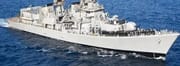
As Cadets onboard INS Mysore, we did it all.
We holystoned the quarterdeck.
We chipped the decks and removed the rust.
We painted ship’s sides while suspended precariously over the water on planks and bosun’s chairs.
We cleaned compartments that no visitor would ever see.
We even cleaned the insides of mushroom ventilators on deck.
At that age, many of us wondered why.
After all, weren’t officers supposed to command?
Years later, the wisdom became apparent.
The Navy was not teaching us how to scrub a deck.
It was teaching us how to inspect one.
It was teaching us that no officer can effectively supervise a task he has never performed himself.
Once you have chipped rust with your own hands, nobody can convince you that rust hidden beneath paint is acceptable.
Once you have cleaned a mushroom ventilator, nobody can claim it has been cleaned when it hasn’t.
And that lesson remained with us throughout our careers.
One incident remains etched in my memory.
Our ship was preparing for the Annual Inspection by the Commander-in-Chief.
As always, preparations were meticulous.
Every compartment was shining.
Every deck was scrubbed.
Every corner was checked.
The ship looked immaculate.
The Commander-in-Chief arrived and began his rounds.
He inspected quietly and methodically.
Then he stopped beside a mushroom ventilator.
Perhaps he had seen enough ships in his career to know where dust liked to hide.
Perhaps he expected to discover what generations of inspecting officers had discovered before him.
Unexpectedly, without a word, he inserted a finger deep inside the mushroom.
For a brief moment, the collective pulse rate of many officers undoubtedly increased as their hearts started pumping faster.
Then he withdrew his finger. Lo and behold! It was:
Clean.
Spotlessly clean.
No dust.
No grime.
Nothing.
The Commander-in-Chief looked at his finger.
Then at the ship.
Then at us.
What he had hoped to find was absent.
What he found instead was evidence of something far more important.
Attention to detail.
Professional pride.
Ownership.
He later complimented the ship, but what remained etched in our memory was the naval equivalent of a standing ovation.
What followed from the Commander-in-Chief was a “Bravo Zulu”—the proverbial “Well Done”.
For those unfamiliar with naval parlance, Bravo Zulu is more than a signal. It is recognition from one seaman to another that the job has been done properly, thoroughly and professionally.
To us, it was not merely praise for a clean mushroom ventilator.
It was recognition of countless hours spent holystoning decks, chipping rust, painting ship’s sides, cleaning hidden corners and learning that excellence lies in the details nobody notices.
The mushroom ventilator was never the point.
The culture was.
And on that day, the culture earned a Bravo Zulu.
And, thereafter, we had:
Fair Winds and Following Seas!
~~xx~~
© Captain (IN) Pravin Raghuvanshi, NM Retd
A Veteran
≈ Founder Editor – Shri Hemant Bawankar/Editor (English) – Captain Pravin Raghuvanshi, NM ≈


