Dr. Suresh Kumar Mishra ‘Uratript’
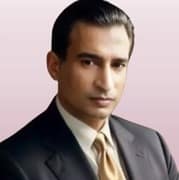
Dr. Suresh Kumar Mishra, widely known in the world of satire by his pen name ‘Uratipt’, expresses his emotions and thoughts with profound honesty and depth. His multifaceted talent is evident in his contributions across various literary genres. He is not only a renowned satirist but also a poet and a children’s author.
His satirical writings have earned him a special place in the literary world. His satire, ‘Shikshak Ki Mout’, went massively viral on the Sahitya Aajtak channel, garnering over a million views and reads—a monumental achievement in the history of Hindi satire. His collection of satires, ‘Ek Tinka Ikyavan Aankhen’ (A Straw and Fifty-One Eyes), is also highly acclaimed and includes his timeless work, ‘Kitabon Ki Antim Yatra’ (The Last Journey of Books). Other celebrated collections include ‘Mayaan Ek, Talwar Anek’ (One Sheath, Many Swords), ‘Gapodi Adda’ (The Gossiper’s Den), and ‘Sab Rang Mein Mere Rang’ (My Colors in Every Hue). His satirical novel, ‘Idhar-Udhar Ke Beech Mein’ (In Between Here and There), is a unique and groundbreaking work focused on the third world.
His significant contributions to literature have been widely recognized. He was honored with the Best Young Creator Award, 2021 by the Telangana Hindi Academy and the Government of Telangana, an award presented by Chief Minister K. Chandrasekhar Rao. The Rajasthan Children’s Literature Academy also honored him for his children’s book, ‘Nanhon Ka Srijan Aasmaan’ (The Creative Sky of Little Ones). Additionally, he has received the Vyanga Yatra Ravindranath Tyagi Sopaan Samman and the Sahitya Srijan Samman from Prime Minister Narendra Modi.
Dr. Uratript has also played a pivotal role in writing, editing, and coordinating a total of 55 books for the Government of Telangana for primary school, college, and university levels. His work is included in university textbooks in Bihar, Chhattisgarh, and Telangana, where his satirical creations are part of the curriculum. This recognition underscores that young readers can identify and appreciate quality and impactful writing.
Key Accolades and Works
- Viral Satire: ‘Teacher’s Death’ (over 1 million views)
- Satire Collections: ‘Ek Tinka Ikyavan Aankhen’, ‘Mayaan Ek, Talwar Anek’, ‘Gapodi Adda’
- Unique Satirical Novel: ‘Idhar-Udar Ke Beech Mein’
- Awards: Shreshtha Navyuva Samman (Telangana), Sahitya Srijan Samman (PM Modi), and more.
- Educational Contribution: Authored and edited 55 books for the Telangana government.
Some precious moments of life

- Honoured with ‘Shrestha Navayuvva Rachnakar Samman’ by former Chief Minister of Telangana Government, Shri K. Chandrasekhar Rao.
- Honoured with Oscar, Grammy, Jnanpith, Sahitya Akademi, Dadasaheb Phalke, Padma Bhushan and many other awards by the most revered Gulzar sahab (Sampurn Singh Kalra), the lighthouse of the world of literature and cinema, during the Sahitya Suman Samman held in Mumbai.
- Meeting the famous litterateur Shri Vinod Kumar Shukla Ji, honoured with Jnanpith Award.
- Got the privilege of meeting Mr. Perfectionist of Bollywood, actor Aamir Khan.
- Meeting the powerful actor Vicky Kaushal on the occasion of being honoured by Vishva Katha Rangmanch.
Today we present his satire The Parched Duster.
☆ Witful Warmth# 125 ☆
☆ Satire ☆ The Parched Duster… ☆ Dr. Suresh Kumar Mishra ‘Uratript’ ☆
Near the doorway of the main lecture hall in the town’s oldest Government Teacher Training College, a hefty, battered wooden duster had occupied a dusty alcove for twenty straight years. Time, alternating sunlight, and rising damp had petrified the thick encrustation of chalk dust on its felt pad into something resembling solid limestone. Imbued in its aged grain was the silent perfume of reverence and devotion that once shaped young minds—now thoroughly interred under layers of grime.
Every morning at seven sharp, Shivshankar Guruji would arrive, plant his weathered rosewood walking stick against the crumbling brick platform just below the veranda, and sit. Draped in a torn white khadi kurta with a stained cloth towel slung over his shoulder, the old teacher spent entire days gazing at the chalk-choked relic with petrified, unblinking eyes.
Across the campus grounds, a glittering procession of air-conditioned sedans rolled in, disgorging high-flying coaching cartel barons, sleek ed-tech company pitchmen, and top-tier educational bureaucrats. The loudspeakers rattled with sacred chants celebrating the teacher as God Incarnate, though naturally, none of the suited consultants and crisp administrators spared a glance for a dusty block of scrap timber tucked in a forgotten alcove.
Whenever Ramdeen, the aging orderly, hurried past clutching his tin tea kettle, he would shudder at the statue-like figure on the bricks. Guruji would invariably ask in a faint, trembling croak, “Tell me, Ramdeen, on this grand circus of World Teachers’ Day, has any government circular arrived commanding someone to wipe the ink clean off a child’s slate with that duster? Or are we sticking to wrapping dignitaries in ceremonial shawls and empty rhetoric from the podium today?”
Ramdeen would only drop his gaze, exhale a heavy sigh, and shuffle quietly into the administrative fog.
The college had recently welcomed its new Regional Director from the State Council of Educational Research and Training: Dr. Animesh Agnihotri, a notoriously stern martinet, an evangelist of smart-classroom pedagogy, and a champion of bureaucratic polish. Whenever Director Agnihotri stepped out of his gleaming official car to inspect the new digital broadcast studio, his glare inevitably snagged on the ragged master parked on the plinth, staring devoutly at a discarded eraser.
To Agnihotri’s modern sensibilities, a tattered relic of an old man folding his hands before a lump of antique junk amidst digital whiteboards, AI tutors, and a state-sponsored festival looked less like devotion and more like deliberate aesthetic sabotage.
Once the morning’s keynotes concluded and the luminaries retreated to the air-conditioned VIP lounge to devour salted cashews and exchange performative pleasantries, Agnihotri dismissed his security detail and marched straight up to Guruji.
“Master ji,” he snapped with institutional frost, “why must you choke the main corridor at your age? If you have pending pension claims or want a free prescription form, go see the clerk inside. Staring at an obsolete piece of rotten timber isn’t going to launch a pedagogical revolution in this country.”
Shivshankar Guruji pressed his palms together with quiet dignity. “Director Sahib, I am not begging for allowances or administrative crumbs. I am simply awaiting the day when the dignity stripped from this doorway returns to that block of wood.”
Agnihotri scoffed at the poetic melodrama. “What dignity? The ministry burns through millions every World Teachers’ Day distributing tablets and dispatching bureaucrats on foreign training junkets. What grand mystery does this junkyard duster supposedly hold?”
Pandit Someshwar, a retired lecturer who had witnessed forty years of blackboards and curriculum shifts, stepped forward. “Do not dismiss him so quickly, Director. Twenty years ago, when the state began shuttering public classrooms to clear the ground for coaching shops, Guruji’s only son, Manas, stood in this very veranda and ignited an uncompromised crusade for free learning.”
Agnihotri raised an eyebrow. “And what did this prodigy do that supposedly ties him to an unwashed blackboard eraser?”
“He was the finest, most principled young educator in the province,” Someshwar replied, exhaling heavily. “While private institutes fleeced impoverished families for exorbitant tuition, Manas spent nights beneath kerosene lamps teaching hundreds of destitute children for nothing, furiously wiping the blackboard clean with that very duster. He placed it upon that shelf and took a solemn oath: until the poorest child in this town received an education free of extortion, he would never bow to the private education cartels.”
Guruji gently reached out, his trembling fingertips brushing the chalk-hardened felt. “Yes, Sahib,” he murmured. “My Manas stood on this very plinth and proclaimed, ‘Father, this is no mere block of wood; it is an educator’s self-respect, destined to wipe away ignorance.’ He swore that when he returned from Delhi bearing the National Commission’s order protecting rural education, he would dust it off himself and crown me guest of honor on the nation’s grandest stage.”
Pricked by administrative curiosity, Agnihotri strode into the dusty archives to unearth the twenty-year-old case file. Flipping through the yellowed confidential sheets, his professional swagger evaporated.
The final pages spelled out a modern corporate acquisition: twenty years ago, when Manas’s grassroots movement posed an existential threat to the tuition cartels, an international ed-tech conglomerate simply neutralized the threat with standard corporate leverage. They handed the fiery young reformer a covert twenty-five percent equity stake and installed him as Chief Executive Officer.
Manas tossed his chalk, his father’s duster, and his revolutionary vows straight out the window to become the country’s most celebrated digital education tycoon—a titan whose current empire thrived on trapping desperate rural parents into mortgaging ancestral farmlands to purchase predatory online subscription courses.
Agnihotri walked back out with hollow eyes and unsteady steps. “Guruji…” he stammered, his bureaucratic cadence breaking, “your crusade-leading son didn’t save the classrooms. He became their top auctioneer.”
Tears carved paths down the old man’s lined face, though his expression remained unmoved.
“I have known he was bought for a long time, Sahib,” Guruji wept softly. “I only come here every day to witness a spectacle: when the grandees take the stage on World Teachers’ Day to perform their theatrical piety, hawking the soul of education to the highest bidder while snatching the duster from their own teaching fathers—does this deaf, self-congratulating society catch even a fleeting whiff of the stench rising from the shroud of commodified knowledge, or are the cashews in the VIP lounge simply too sweet?”
Agnihotri stood immobilized, staring at the calcified duster, as the entire state-of-the-art training institute sank into the suffocating silence of an old master’s quiet humiliation.
****
© Dr. Suresh Kumar Mishra ‘Uratript’
Contact : Mo. +91 73 8657 8657, Email : drskm786@gmail.com
≈ Blog Editor – Shri Hemant Bawankar/Editor (English) – Captain Pravin Raghuvanshi, NM ≈


