Dr. Suresh Kumar Mishra ‘Uratript’
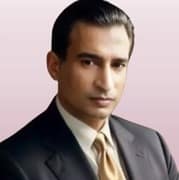
Dr. Suresh Kumar Mishra, known for his wit and wisdom, is a prolific writer, renowned satirist, children’s literature author, and poet. He has undertaken the monumental task of writing, editing, and coordinating a total of 55 books for the Telangana government at the primary school, college, and university levels. His editorial endeavors also include online editions of works by Acharya Ramchandra Shukla.
As a celebrated satirist, Dr. Suresh Kumar Mishra has carved a niche for himself, with over eight million viewers, readers, and listeners tuning in to his literary musings on the demise of a teacher on the Sahitya AajTak channel. His contributions have earned him prestigious accolades such as the Telangana Hindi Academy’s Shreshtha Navyuva Rachnakaar Samman in 2021, presented by the honorable Chief Minister of Telangana, Mr. Chandrashekhar Rao. He has also been honored with the Vyangya Yatra Ravindranath Tyagi Stairway Award and the Sahitya Srijan Samman, alongside recognition from Prime Minister Narendra Modi and various other esteemed institutions.
Dr. Suresh Kumar Mishra’s journey is not merely one of literary accomplishments but also a testament to his unwavering dedication, creativity, and profound impact on society. His story inspires us to strive for excellence, to use our talents for the betterment of others, and to leave an indelible mark on the world.
Some precious moments of life

- Honoured with ‘Shrestha Navayuvva Rachnakar Samman’ by former Chief Minister of Telangana Government, Shri K. Chandrasekhar Rao.
- Honoured with Oscar, Grammy, Jnanpith, Sahitya Akademi, Dadasaheb Phalke, Padma Bhushan and many other awards by the most revered Gulzar sahab (Sampurn Singh Kalra), the lighthouse of the world of literature and cinema, during the Sahitya Suman Samman held in Mumbai.
- Meeting the famous litterateur Shri Vinod Kumar Shukla Ji, honoured with Jnanpith Award.
- Got the privilege of meeting Mr. Perfectionist of Bollywood, actor Aamir Khan.
- Meeting the powerful actor Vicky Kaushal on the occasion of being honoured by Vishva Katha Rangmanch.
Today we present his Satire – Seat No. 71, And That Too RAC, Oh No, Never!.
☆ Witful Warmth# 83 ☆
☆ Satire ☆ Seat No. 71, And That Too RAC, Oh No, Never! ☆ Dr. Suresh Kumar Mishra ‘Uratript’ ☆
There were still fifteen minutes left before the train started, and I was walking up and down the platform like a goat being walked one last time before a big festival feast. I pulled the ticket out of my pocket and looked at it for the third time. The number was the same, the coach was the same, and that notorious corner was also the same—a place where a person begins to doubt the past deeds of their ancestors. The railway department must have invented Seat No. 71, the Side Lower berth, just to collect the monthly loan payments (EMIs) for all the remaining sins of the universe.
When I reached there, it felt like someone had made a seat not for human beings, but for sacks of old junk. A Rajasthani brother was already sitting firmly on half the space with his legs crossed. His mustaches were as stiff as two mongooses ready to fight each other. Seeing me, he spoke in a traditional style, “Come, sir, sit down. Humans do not sit here; only human hope sits here.” While I was still thinking about this heavy philosophy, a young man from Tamil Nadu also arrived there. First he looked at the seat, then he looked at us, then he looked straight up at God, and with a sad face, he said, “Oh dear, where will we sit?”
Just then, the magical back door opened.
One gust of wind came.
Then a second one came.
Then a third one came.
All three gusts of wind joined together and started a live telecast of all the old memories of my life, just like an old television show. I remembered my strict school teacher from the first grade. I remembered the muddy pond of my village. I remembered the spinning top lost in the drain during my childhood. Even great saints doing hard prayers would not have felt such a sharp and terrible experience. The Rajasthani brother immediately took a handkerchief out of his pocket, tied it over his nose like a protective mask, and said, “In our hometown, even a camel’s stable does not have this much closeness and strong smell, sir!” The Tamil youth said in pain, “There is a fish market in our village, brother, but even there, the air stays within its limits.”
The train started moving, and the complete destruction of our remaining self-respect began. The first passenger came, looked at our miserable condition, gave a wicked smile, and moved ahead. A second passenger came, shook his head looking at us as if he was inspecting a terrible accident spot. A third one came, pulled out a bottle of deodorant from his pocket, then looked at our faces, thought of something, and quietly put it back in his pocket. Perhaps he felt that television advertisements are all fake, because here, the wind of death elf was blowing.
In a short time, our seat turned into a public meeting square and an abandoned bus stand. Someone was standing with their elbow resting on our shoulder, and someone was scrolling through video reels while resting their heavy stomach right over our heads. Someone else considered our knees as the unclaimed property of the railway ministry and rested their feet on them to take a rest.
Just then, a child said to his mother, “Mom, why are these three uncles not sleeping?”
The mother said in a very serious tone, “Son, they are not sleeping; they are gathering a bitter experience of life.”
For the first time in my life, I realized that sometimes sadness also becomes a tourist spot where people come, look at you suffering, thank their own good luck, and walk away.
As the night grew deeper, our corner became like an international border checkpost. Whoever went toward the toilet went with brave facial expressions. And whoever returned from there smiled like a victorious army commander returning after winning a lost war. Every time the door opened, a new smelly chapter of air started. Our eyes were burning, our knees were crying in pain, and our waist was ready to call a village meeting to complain.
By ten o’clock at night, our seat looked less like a railway compartment and more like a live presentation of our country’s democracy. Any random person who felt like it would come to us, claim their right, and leave. An unknown uncle came and, without saying a simple hello, spread his smelly cloth on our seat. He returned after five minutes and said with authority, “Keep an eye on this, brother, this is my pillow.” I kept looking at him with wide-open eyes. The man had met me for the first time, and before leaving, he had appointed me as the permanent security guard of his personal property.
On the other side, another strange young man arrived. He put his mobile phone on charging. The plug was very far away, but the mobile phone was near us. As a result, the thin wire of the charger was passing right above the necks of all three of us like a rope used for drying clothes. The three of us sat with our necks bent down, looking like helpless flies caught in a fresh web woven by a spider, knowing that if we moved, we would be in big trouble immediately.
The Rajasthani brother said in irritation, “The scarecrow standing in my field gets more respect than this, sir.”
The Tamil youth cried out, “This is not a seat; this is the total result of the sins of our last seven births.”
Just then, another elderly man appeared like a special character. He spread an old newspaper right between our feet and sat on it like a king. Then he pulled a packet of puffed rice out of his pocket and started eating by taking careful aim. Every third puffed rice was falling into my shirt pocket, every fourth was falling into the lap of the Tamil brother, and the fifth was barely reaching his own mouth. The whole distribution system was completely broken.
By midnight, our condition became such that no part of our body was under the control of its original owner. My left knee had gone into the territory of the Rajasthani brother. His elbow had entered the borders of the Tamil youth. The heavy bag of the Tamil youth was sitting on my stomach, using its absolute power over me. All three of us together had become a helpless joint family.
In the middle of this, that same dangerous door opened again, and a new tsunami wave of bad smell arrived.
The Rajasthani brother immediately tied his handkerchief even tighter.
The Tamil youth closed his eyes in frustration.
And I left my hands and feet loose and started thinking deeply about the true meaning of life.
Just then, a gentleman came walking with a speed faster than an express train. The balance of the train shook a little, and that gentleman fell directly into my lap. Standing up and brushing his clothes, he said, “Forgive me, brother, sudden brakes were applied.”
I said in irritation, “Brother, the train is moving straight at a speed of sixty!”
He said in a very shameless manner, “Oh really? Then perhaps my luck must have slipped.”
That night, our luck slipped so many times that we forgot the count. someone’s broken slipper got stuck under us, and someone’s half-open water bottle rolled into our feet, making everything wet. Someone’s unclaimed toothbrush, goodness knows how, landed directly inside the open bag of the Tamil youth.
The two men on the berths right in front of us were staring at us again and again. Then, pulling up their bedsheets, they started snoring loudly. The deeper their sleep grew, the higher our curiosity reached. Why were they smiling again and again even while sleeping? Why was there such a strange confidence on their faces, looking like a robber who had looted a bank vault all alone and the police could do nothing to him?
Morning came. When the Ticket Examiner (TTE) came and checked our tickets, he told us the real truth. Swear to God, our condition became just like that of a poor farmer who suddenly finds out that the land he was crying over all night, thinking it was useless and barren, actually had a whole gold mine hidden beneath it!
Those clever young men in front of us, who had slept all night like kings and emperors on a fully comfortable berth, that berth actually belonged to us.
Yes, the seats of the three of us had been confirmed!
As soon as this was heard, a complete silence fell over the whole coach for the first two seconds, and then such a loud laugh echoed that a passenger sleeping on the upper berth woke up startled, fearing an earthquake.
The Rajasthani brother immediately folded his hands in front of those young men and said, “Great kings, may this deep sleep of yours live forever.”
The Tamil brother clapped his hands and said, “Brother, the comfort you people have enjoyed should be written as a separate chapter in history.”
Those young men first turned red with shame, and then they themselves started laughing shamelessly. Seeing them, the whole coach started laughing like crazy. I was brushing off the puffed rice from my shirt while looking out of the window, thinking that the most expensive thing in a train journey in this country is not the price of the ticket, boss—the most expensive thing is having the correct ‘information’. The night we did not have that information, in that single night, we completed a full ‘PhD’ course from the Indian Railways with top ranks, without paying a single rupee as a fee.
****
© Dr. Suresh Kumar Mishra ‘Uratript’
Contact : Mo. +91 73 8657 8657, Email : drskm786@gmail.com
≈ Blog Editor – Shri Hemant Bawankar/Editor (English) – Captain Pravin Raghuvanshi, NM ≈


