English Literature – Articles ☆ Positive Education # 05: Positive Engagement ☆ Shri Jagat Singh Bisht ☆

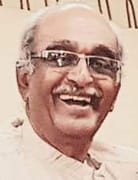
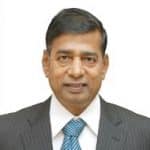
Shri Jagat Singh Bisht

(Master Teacher: Happiness & Well-Being, Laughter Yoga Master Trainer, Author, Blogger, Educator, and Speaker.)

Authored six books on happiness: Cultivating Happiness, Nirvana – The Highest Happiness, Meditate Like the Buddha, Mission Happiness, A Flourishing Life, and The Little Book of Happiness. He served in a bank for thirty-five years and has been propagating happiness and well-being among people for the past twenty years. He is on a mission – Mission Happiness!

☆ Positive Education # 05: Positive Engagement ☆

Total absorption in an activity

“A good life is one that is characterized by complete absorption in what one does.”

Jeanne Nakamura and Mihaly Csikszentmihalyi

One thing that brings happiness, for sure, is flow. It is deep engagement in an activity – may it be hobby, work, or play. You lose sense of time, feel completely immersed in the act, and become oblivious of the surroundings.

You must have observed great players perform with highest concentration, despite challenges from the opposition team and distraction from thousands of cheering fans.

Happiness is like a flowing river, not a stagnant pool. It consists in activity – go for a long walk, exercise, do yoga, meditate, sing, dance, paint, play football, swim, travel, or learn a new skill.

Whatever you do, engage fully. Go deep into it, immerse yourself fully – like a musician who becomes one with the musical instrument and the music.

Engage deeply – be it play, work, love, or parenting – and you will experience flow. When you are in flow – deep into music, play, work, reading, or smiling with your child – oblivious of time and self, you are in paradise.

Flow

Flow is total absorption in an activity – you lose sense of time and self. What more could you ask for when you are fully present, immersed in something worthwhile, and there is an exhilarating feeling of transcendence!

Csikszentmihalyi developed a theory of optimal experience based on the concept of flow – the state in which people are so involved in an activity that nothing else seems to matter; the experience itself is so enjoyable that people will do it even at great cost, for the sheer sake of doing it.

Flow is what we feel when we are fully alive, involved with what we do, and in harmony with the environment around us. It is something that happens most easily when we sing, dance, or do sports – but it can happen when we work, read a good book, or have a good conversation.

Flow is the psychology of optimal experience. During flow, people experience deep enjoyment, creativity, and a total involvement with life. The experience of flow makes our life richer, more complex, and intense.

To experience flow, find an activity that you find interesting, that you love to do, that gives you a sense of satisfaction and fulfilment. Do it with full concentration and absorption. Go deeper and deeper into it.

Engage fully to meet the challenges that the task offers by upscaling your skills by continuous learning. Find ways and means to repeat the activity again and again.

Some activities are more conducive for flow experience and seem to have been designed for optimal experience – like singing, making music, rock climbing, games, sailing, and chess.

Yoga and the martial arts are activities that ingrain in us the control of body and its experience. They could be considered as the ultimate exercises leading to optimal experience and flow.

Csikszentmihalyi observes, “The similarities between yoga and flow are extremely strong; in fact, it makes sense to think of yoga as a very thoroughly planned flow activity. Both try to achieve a joyous, self-forgetful involvement through concentration, which in turn is made possible by a discipline of the body.”

You may have an optimal experience with deep involvement in intellectual and scientific pursuits, including reading, writing and poetry, and work.

If one finds flow in work, one is well on the way toward improving the quality of life. People who learn to enjoy their work, who do not waste their free time, end up feeling that their lives have become much more worthwhile.

Plateau Experience

Abraham Maslow coined and defined the term “plateau experience” as a sort of continuing peak experience that is more voluntary and one that requires a lifetime of long and arduous effort.

According to him, “Such people who appear to be in harmony with their lives often have moments of an extraordinary occurrence called ‘peak experiences’.

“These are profound moments of intense rapture and well-being, along with possibly the awareness of ultimate truth and the unity of all things. Accompanying them is a heightened sense of control over the body and emotions and a wider sense of awareness.”

“The best moments in our lives are not passive, receptive, relaxing times. The best moments usually occur when a person’s body or mind is stretched to its limits in a voluntary effort to accomplish something difficult and worthwhile. Optimal experience is thus something that we make happen.”

Mihaly Csikszentmihalyi

♥ ♥ ♥ ♥

Master Teacher: Happiness & Well-Being, Laughter Yoga Master Trainer, Author, Blogger, Educator, and Speaker

FounderLifeSkills

A Pathway to Authentic Happiness, Well-Being & A Fulfilling Life! We teach skills to lead a healthy, happy and meaningful life.

The Science of Happiness (Positive Psychology), Meditation, Yoga, Spirituality and Laughter Yoga. We conduct talks, seminars, workshops, retreats and training.

≈ Editor – Shri Hemant Bawankar/Editor (English) – Captain Pravin Raghuvanshi, NM
Please share your Post !

Shares

English Literature – Articles ☆ Positive Education # 03: Happiness and Well-being ☆ Shri Jagat Singh Bisht ☆

Shri Jagat Singh Bisht

(Master Teacher: Happiness & Well-Being, Laughter Yoga Master Trainer, Author, Blogger, Educator, and Speaker.)

Authored six books on happiness: Cultivating Happiness, Nirvana – The Highest Happiness, Meditate Like the Buddha, Mission Happiness, A Flourishing Life, and The Little Book of Happiness. He served in a bank for thirty-five years and has been propagating happiness and well-being among people for the past twenty years. He is on a mission – Mission Happiness!

☆ Positive Education # 03: Happiness and Well-being ☆

Positive Emotion, engagement, relationships, meaning and accomplishment

“Happiness is the meaning and purpose of life, the whole aim and end of human existence.”

Aristotle

Happiness means different things to different persons. For some, it is a feeling of cheerfulness and merriment. For others, it may be calm and inner peace. Some gain happiness by buying a new mobile phone or car, others derive happiness in giving and compassion. One feels happy racing a bike at high speed and another by sitting still in a tranquil forest.

What actually is happiness and what it is not?

Happiness is the experience of joy. One may jump and shout to express joy, but it could also be a quiet feeling of contentment and inner peace.

Thich Nhat Hanh is absolutely right when he says, “Sometimes your joy is the source of your smile, but sometimes your smile can be the source of your joy.”

You feel happy when you are deeply involved in your hobby, when you have been kind to someone, or when you have achieved something worthwhile.

Making someone happy, makes you happy too. Dalai Lama says, “If you want others to be happy, practice compassion. If you want to be happy, practice compassion.’

No one else can make us happy or unhappy. We are responsible for the happiness or unhappiness we experience. We can all make ourselves happier.

Anthony Seldon has some good advice for us, “The still and the harmonious mind is happy and joyful; the unhappy, disturbed, or violent mind is never still. Mindfulness, contemplation, meditation, and prayer are pathways to greater stillness.”

Kindness and goodness make us happier: selfishness and unkindness make us unhappy now or in the longer term.

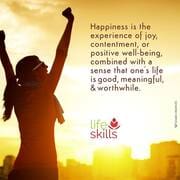
Happiness is the experience of joy, contentment, or positive well-being, combined with a sense that one’s life is good, meaningful, and worthwhile.

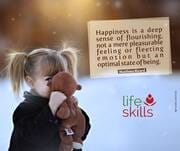
According to Matthieu Ricard, “Happiness is a deep sense of flourishing, not a mere pleasurable feeling or fleeting emotion but an optimal state of being.”

What happiness is not

One must also understand what happiness is not.

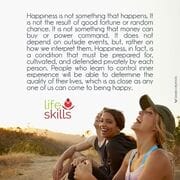
According to Mihaly Csikszentmihalyi, “Happiness is not something that happens. It is not the result of good fortune or random chance.

“It is not something that money can buy or power command. It does not depend on outside events, but rather on how we interpret them.

“Happiness, in fact, is a condition that must be prepared for, cultivated, and defended privately by each person.

“People who learn to control inner experience will be able to determine the quality of their lives, which is as close as any one of us can come to being happy.”

“Happiness does not come automatically. It is not a gift that good fortune bestows upon us and a reversal of fortunes takes back. It depends on us alone.

“One does not become happy overnight, but with patient labour, day after day. Happiness is constructed, and that requires effort and time. In order to become happy, we have to learn how to change ourselves.”

Luca & Francesco Cavalli-Sforza

Well-Being

Martin Seligman, known as the father of positive psychology, developed the ‘PERMA’ model, which identifies the five things necessary for wellbeing – positive emotion (P), engagement (E), relationships (R), meaning (M) and achievement (A).

Well-being is a construct, and happiness is a thing. Just as weather is a construct of temperature, humidity, wind speed, barometric pressure, and some other factors; well-being is a construct of five factors, as under.

The five elements of well-being are:

  • positive emotion,
  • engagement,
  • relationships,
  • meaning,
  • and accomplishment.

Positive Emotion includes the feelings of joy, excitement, contentment, hope, and warmth. There may be positive emotions relating to the past, present or future.

Engagement denotes deep involvement in a task or activity. One does not experience the passing of time. One experiences flow in sports, music, and singing but one may also experience it in work, reading a book, or in a good conversation.

We feel happy when we are among family and friends. The quality and depth of relationships in one’s life make it rich.

Meaning is connecting to something larger than life. 

One strives for achievements in life. They are a source of happiness for us.

Each of these elements contributes to well-being. The good news is that each one of the above may be cultivated and developed to enhance the level of well-being.

“If you observe a really happy man, you will find him building a boat, writing a symphony, educating his son, growing double dahlias in his garden, or looking for dinosaur eggs in the Gobi Desert.”

Walter Beran Wolfe

♥ ♥ ♥ ♥

© Jagat Singh Bisht

Master Teacher: Happiness & Well-Being, Laughter Yoga Master Trainer, Author, Blogger, Educator, and Speaker

FounderLifeSkills

A Pathway to Authentic Happiness, Well-Being & A Fulfilling Life! We teach skills to lead a healthy, happy and meaningful life.

The Science of Happiness (Positive Psychology), Meditation, Yoga, Spirituality and Laughter Yoga. We conduct talks, seminars, workshops, retreats and training.

≈ Editor – Shri Hemant Bawankar/Editor (English) – Captain Pravin Raghuvanshi, NM
Please share your Post !

Shares

English Literature – Weekly Column ☆ Witful Warmth # 38 – The Grand Gala of Honors and the Spectacle of Jugaad ☆ Dr. Suresh Kumar Mishra ‘Uratript’ ☆

Dr. Suresh Kumar Mishra ‘Uratript’

Dr. Suresh Kumar Mishra, known for his wit and wisdom, is a prolific writer, renowned satirist, children’s literature author, and poet. He has undertaken the monumental task of writing, editing, and coordinating a total of 55 books for the Telangana government at the primary school, college, and university levels. His editorial endeavors also include online editions of works by Acharya Ramchandra Shukla.

As a celebrated satirist, Dr. Suresh Kumar Mishra has carved a niche for himself, with over eight million viewers, readers, and listeners tuning in to his literary musings on the demise of a teacher on the Sahitya AajTak channel. His contributions have earned him prestigious accolades such as the Telangana Hindi Academy’s Shreshtha Navyuva Rachnakaar Samman in 2021, presented by the honorable Chief Minister of Telangana, Mr. Chandrashekhar Rao. He has also been honored with the Vyangya Yatra Ravindranath Tyagi Stairway Award and the Sahitya Srijan Samman, alongside recognition from Prime Minister Narendra Modi and various other esteemed institutions.

Dr. Suresh Kumar Mishra’s journey is not merely one of literary accomplishments but also a testament to his unwavering dedication, creativity, and profound impact on society. His story inspires us to strive for excellence, to use our talents for the betterment of others, and to leave an indelible mark on the world. Today we present his satire The Trials of Truth: A Modern-Day Journalism.  

☆ Witful Warmth# 37 ☆

☆ Satire ☆ The Grand Gala of Honors and the Spectacle of Jugaad… ☆ Dr. Suresh Kumar Mishra ‘Uratript’ ☆

The scene was nothing short of a grand theatrical performance from an old, overplayed movie. A lavish stage adorned with garlands, a microphone crackling with exaggerated enthusiasm, and the host—oh, the host! —spitting words with the practiced precision of a broken-down radio announcer.

“And now, ladies and gentlemen, I call upon the legendary author, Mr. So-and-So, who has devoted a lifetime to the service of literature!” The phrase was repeated so often that one felt as though an old gramophone needle had gotten stuck in the grooves.

On either side of the stage, glittering trophies wrapped in satin sheets awaited their recipients like dormant artifacts in a museum. The organizers, standing smugly behind them, looked like landlords watching their peasants toiling in the fields for free, basking in the pleasure of borrowed grandeur.

Now, let us cast our eyes upon the esteemed guests. These were authors whose books were so rare that if you walked into a bookstore and asked for them, the shopkeeper would likely ask, “Sir, did you print this yourself?” Yet, their faces frequently graced newspapers—usually in snapshots from literature festivals where tea and samosas flowed more freely than literary discussions.

The moment they received their trophies, their faces lit up as if they had just won an Olympic gold medal. And yet, if you strolled through their neighborhood and inquired, “Do you know Mr. So-and-So, the famous writer?” the local grocer would likely scratch his head and reply, “Oh, you mean the fellow who still owes me money for last month’s lentils?”

But the real charm of these grand literary gatherings was not literature—it was a sophisticated excuse to meet long-lost acquaintances from Delhi or Mumbai. “I am attending a literary conference,” they would announce at home, while secretly rejoicing at the prospect of an all-expenses-paid trip, a fancy hotel stay, and, most importantly, a new invitation to another event where even more free food awaited. The system was simple: buy your own bus ticket, and the rest would be taken care of by the generous organizers. A perfect example of “You scratch my back, and I’ll scratch yours.”

The elderly writers in attendance adhered to a sacred ritual: reciting the same weary proclamation at every event. “Literature is in grave danger. The younger generation does not read anymore. We must act!” This speech had become the unofficial national anthem of literary symposiums. But the moment they spotted a tray of hot samosas and sweet jalebis, their grave concerns for literature were promptly replaced by concerns about securing a second helping before the plates ran empty.

It was a beautiful contradiction—on one hand, solemn discussions on the decline of literary taste, and on the other, a desperate scramble for the last piece of gulab jamun.

The whole spectacle often reminded one of a vegetable market. The writers stood in neat rows, much like potatoes, cabbages, and pumpkins, waiting to be picked, packed, and honored. Some authors found themselves peeled like bananas on stage, while others floated like water chestnuts, drifting from one event to another. A select few played the role of ever-present tomatoes, appearing in every literary salad, garnishing every discussion.

Trophies were awarded, photographs clicked, social media flooded with posts, and before the last echoes of applause faded, plans for the next grand event were already in motion.

And yet, curiously enough, amidst all this grandeur, literature itself remained nowhere to be found. Those who truly wrote masterpieces rarely attended these farcical gatherings. And those who did attend—well, for them, literature was merely the bait, while the real game was the great, never-ending trade of honors.

It was an enterprise where the product held no value, but the packaging was so dazzling that the customers never stopped applauding.

****

© Dr. Suresh Kumar Mishra ‘Uratript’

Contact : Mo. +91 73 8657 8657, Email : drskm786@gmail.com

≈ Blog Editor – Shri Hemant Bawankar/Editor (English) – Captain Pravin Raghuvanshi, NM ≈

Please share your Post !

Shares

English Literature – Articles ☆ Positive Education # 02:  The Science of happiness and well-being ☆ Shri Jagat Singh Bisht ☆

Shri Jagat Singh Bisht

(Master Teacher: Happiness & Well-Being, Laughter Yoga Master Trainer, Author, Blogger, Educator, and Speaker.)

Authored six books on happiness: Cultivating Happiness, Nirvana – The Highest Happiness, Meditate Like the Buddha, Mission Happiness, A Flourishing Life, and The Little Book of Happiness. He served in a bank for thirty-five years and has been propagating happiness and well-being among people for the past twenty years. He is on a mission – Mission Happiness!

☆ Positive Education # 02: The Science of happiness and well-being ☆

Positive Psychology and Positive Education

The Science of happiness and well-being

“Psychological wealth includes life satisfaction, the feeling that life is full of meaning, a sense of engagement in interesting activities, the pursuit of important goals, the experience of positive emotional feelings, and a sense of spirituality that connects people to things larger than themselves.”

Edward Deiner

Schools teach history, geography, science, maths, and grammar. Parents desire their children to do well in life and flourish. Children want to play freely and explore their dreams. Where do all these lines meet?

Positive Psychology, the science of happiness, and Positive Education, the combination of traditional education with the study of well-being, provide us an answer to this question.

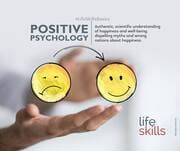
Positive Psychology is the modern science of happiness and well-being. It provides a new understanding of happiness and well-being and how to achieve them.

It dispels myths and wrong notions about happiness and suggests evidence-based happiness-enhancing strategies from which one may choose activities suitable for oneself.

The science of positive psychology seeks to understand positive emotion, build strength and virtue, and provide guideposts for finding what Aristotle called the “good life.”

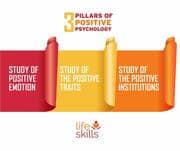
Positive psychology has three pillars:

  • First is the study of positive emotions like gratitude, joy, and hope. 
  • Second is the study of the positive traits, foremost among them the strengths and virtues, but also the ‘abilities’ such as intelligence and athleticism.
  • Third is the study of positive institutions, such as democracy, strong families, and free enquiry, that support the virtues, which in turn support the positive emotions.

Positive Education

“All young people need to learn workplace skills, which has been the subject matter of the education system in place for two hundred years. In addition, we can now teach the skills of well-being – of how to have more positive emotion, more meaning, better relationships, and more positive accomplishment.”

Martin Seligman

Positive Education is the combination of traditional education with the study of happiness and well-being.

It is an approach to education that blends academic learning with character and well-being.

It is preparing students with life skills, such as, grit, optimism, resilience, growth mindset, engagement, and mindfulness, amongst others.

Positive education pairs traditional schooling with positive psychology interventions to improve well-being.

Positive Education focuses on specific skills that assist students to strengthen their relationships, build positive emotions, enhance personal resilience, promote mindfulness and encourage a healthy lifestyle.

It brings together the science of Positive Psychology with best practice teaching to encourage and support individuals, schools and communities to flourish.

We refer to flourishing as a combination of ‘feeling good and doing good’.

Institute of Positive Education

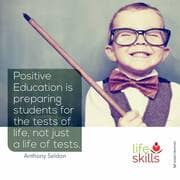
According to Anthony Seldon, “Positive Education is preparing students for the tests of life, not just a life of tests. Well-being should be at the heart of education – not the periphery.”

The concept has support from a range of prominent psychologists and practising teachers. The idea is the wellbeing of students enhances learning and develops them as good citizens.

Intelligence and Character

  • Angela Duckworth says, “Intelligence plus character – that is the goal of true education. Character education is made up of three things:
  • strengths of heart (give to, and receive, from others),
  • strengths of mind (think, imagine, create),
  • and strengths of will (self-control, choice, grit).”

“Successful painters, dancers, poets, novelists, physicists, biologists, and psychologists seem to have crafted lives for themselves around a consuming passion. These are admirable lives, desirable lives, the sort that many young people dream of having when they look to these people as role models.”

Jonathan Haidt

♥ ♥ ♥ ♥

Please click on the following links to read previously published posts “Positive Education” 👉

English Literature – Articles ☆ Positive Education # 01: Fundamentals of happiness and well-being for children and their parents ☆ Shri Jagat Singh Bisht ☆

© Jagat Singh Bisht

Master Teacher: Happiness & Well-Being, Laughter Yoga Master Trainer, Author, Blogger, Educator, and Speaker

FounderLifeSkills

A Pathway to Authentic Happiness, Well-Being & A Fulfilling Life! We teach skills to lead a healthy, happy and meaningful life.

The Science of Happiness (Positive Psychology), Meditation, Yoga, Spirituality and Laughter Yoga. We conduct talks, seminars, workshops, retreats and training.

≈ Editor – Shri Hemant Bawankar/Editor (English) – Captain Pravin Raghuvanshi, NM
Please share your Post !

Shares

English Literature – Articles ☆ Positive Education # 01: Fundamentals of happiness and well-being for children and their parents ☆ Shri Jagat Singh Bisht ☆

Shri Jagat Singh Bisht

(Master Teacher: Happiness & Well-Being, Laughter Yoga Master Trainer, Author, Blogger, Educator, and Speaker.)

Authored six books on happiness: Cultivating Happiness, Nirvana – The Highest Happiness, Meditate Like the Buddha, Mission Happiness, A Flourishing Life, and The Little Book of Happiness. He served in a bank for thirty-five years and has been propagating happiness and well-being among people for the past twenty years. He is on a mission – Mission Happiness!

☆ Positive Education # 01: Fundamentals of happiness and well-being for children and their parents ☆

Description

Do you wish to prepare your child with life skills, such as, grit, optimism, resilience, growth mindset, engagement, and mindfulness? A combination of traditional education with the study of happiness and well-being can be of great help in this regard.

Children and parents can flourish in life with the help of happiness activities that may be easily practised. The concepts are derived from Positive Psychology, the modern science of happiness and well-being, and Positive Education, an approach to education that blends academic learning with character and well-being.

Positive Education focuses on specific skills that assist students to strengthen their relationships, build positive emotions, enhance personal resilience, promote mindfulness, and encourage a healthy lifestyle. The concept has support from a range of prominent psychologists and practising teachers.

There are books for children and there are books for the grown-ups. This one is for both of them – the children and their parents. The book may also be used for implementing positive education in schools.

Fundamentals of happiness and well-being for children and their parents

“There is no end to education. It is not that you read a book, pass an examination, and finish with education. The whole of life, from the moment you are born to the moment you die, is a process of learning.”

J Krishnamurti

This is a book describing the fundamentals of happiness and well-being for children and their parents. It is to be read individually as well as collectively by them so as to have a true understanding of happiness and how to flourish in life.

Usually, there are books for children, and there are books for the grown-ups. This book is different. It is for both of them – the children and their parents. Each one reads and understands from his/her own perspective and then there is friendly sharing of learning amongst them for better understanding. It creates joy and bonding. The effects on long-term happiness and well-being of the family are deep rooted and robust.

The concepts are derived from Positive Psychology – the modern science of happiness and well-being – and Positive Education – an approach to education that blends academic learning with character and well-being.

All parents want the best for their children, they want their child to be happy and flourish. However, finding the right education for their child can be a challenge.

The Geelong Grammar School in Victoria, Australia, in consultation with world experts in positive psychology, developed a model for positive education to complement traditional learning.

It is essentially an applied framework comprising six domains:

  • positive emotions,
  • positive engagement,
  • positive relationships,
  • positive purpose,
  • positive accomplishment,
  • and positive health.

Each of these six domains are explained and elaborated in the book. The emphasis is on how to cultivate each one of these practically and enhance happiness and well-being.

A good school doesn’t just aim for its students to achieve their academic potential. It also aims to develop them as caring, responsible, and ultimately productive members of society.

Positive education curriculum has been implemented with good results in schools in Australia, USA and Germany. Widespread support is necessary for the success of the positive education movement.

This book may also be used as a well-being primer by teachers and educators for implementing positive education in their schools. It will enable the students to develop an understanding of authentic happiness and flourish in life.

“God gave us the gift of life; it is up to us to give ourselves the gift of living well.”

Voltaire

♥ ♥ ♥ ♥

© Jagat Singh Bisht

Master Teacher: Happiness & Well-Being, Laughter Yoga Master Trainer, Author, Blogger, Educator, and Speaker

FounderLifeSkills

A Pathway to Authentic Happiness, Well-Being & A Fulfilling Life! We teach skills to lead a healthy, happy and meaningful life.

The Science of Happiness (Positive Psychology), Meditation, Yoga, Spirituality and Laughter Yoga. We conduct talks, seminars, workshops, retreats and training.

≈ Editor – Shri Hemant Bawankar/Editor (English) – Captain Pravin Raghuvanshi, NM
Please share your Post !

Shares

English Literature – Articles ☆ Meditate Like The Buddha # 22: Consolidating Meditation ☆ Mr. Jagat Singh Bisht ☆

Shri Jagat Singh Bisht

(Master Teacher: Happiness & Well-Being, Laughter Yoga Master Trainer, Author, Blogger, Educator, and Speaker.)

☆ Meditate Like The Buddha # 22: Consolidating Meditation ☆

A Lifetime’s Practice

You have successfully completed a structured journey for beginning, establishing, strengthening, and consolidating your meditative practice. This guide has provided a step-by-step approach, ensuring clarity and depth at every stage.

Meditation is not merely something to be learned and set aside—it is a lifetime’s practice. The instructions in this series have been compiled based on years of self-practice and experience in guiding individuals and groups. If followed diligently, they will provide a strong foundation for lifelong mindfulness and inner peace.

How to Progress Through the Series

This series has been carefully designed with small, structured steps to help you build your meditative practice progressively. To ensure maximum benefit, follow these guidelines:

  1. Step-by-Step Mastery
  • Begin with The First Step, focusing on a stable and comfortable sitting posture.
  • Spend 10 to 15 minutes daily in this posture until you feel completely at ease.
  • Some may take a few days, others longer—there is no rush.
  1. Watching the Breath
  • Move to the next step, Watch Your Breath, only when fully confident in your posture.
  • Simply observe your breath:
    • Ever mindful, breathe in. Mindful, breathe out.
  • This is the most fundamental step—take your time with it. Only when fully comfortable should you proceed further.
  1. Advancing Through the Stages
  • Follow the lessons in sequence, ensuring each step is well-practised before moving ahead.
  • Some steps may need to be repeated for several days—this is normal.
  • Do not rush; progress only when you feel ready and confident.
  1. Cumulative Practice
  • As you move forward, always begin with the first steps before introducing new ones.
  • Over time, earlier steps will require less attention, allowing more focus on new techniques.
  1. Developing a Daily Routine
  • Start with 10 to 15 minutes of practice and gradually increase the duration.
  • Aim for at least an hour of daily meditation once all steps have been completed.
  • Meditation is not a one-time learning experience but an ongoing journey of self-discovery.

Deepening Your Practice

  • Once you reach A Summary of the Steps, consider revisiting earlier lessons for further refinement.
  • Repeating the series slowly and steadily will deepen your understanding and experience.
  • Over time, what may have seemed monotonous at first will transform into a joyful and enriching experience.

Meditation, when practiced regularly, becomes an integral part of life—bringing peace, clarity, and happiness.

Go ahead and enjoy your voyage into the realm of calm!

♥ ♥ ♥ ♥

Please click on the following links to read previously published posts “Meditate Like The Buddha: A Step-By-Step Guide” 👉

English Literature – Articles ☆ Meditate Like The Buddha # 8: Midway Recap ☆ Mr. Jagat Singh Bisht ☆

English Literature – Articles ☆ Meditate Like The Buddha # 9: Experience Your Mind ☆ Mr. Jagat Singh Bisht ☆

English Literature – Articles ☆ Meditate Like The Buddha # 10: Liberate the Mind ☆ Mr. Jagat Singh Bisht ☆

English Literature – Articles ☆ Meditate Like The Buddha # 12: The End of suffering ☆ Mr. Jagat Singh Bisht ☆

English Literature – Articles ☆ Meditate Like The Buddha # 13: A Summary of the Steps ☆ Mr. Jagat Singh Bisht ☆

English Literature – Articles ☆ Meditate Like The Buddha # 14: A Lifetime’s Work ☆ Mr. Jagat Singh Bisht ☆

English Literature – Articles ☆ Meditate Like The Buddha # 18: THE FOUR NOBLE TRUTHS ☆ Mr. Jagat Singh Bisht ☆

English Literature – Articles ☆ Meditate Like The Buddha # 19: THE NOBLE EIGHTFOLD PATH ☆ Mr. Jagat Singh Bisht ☆

English Literature – Articles ☆ Meditate Like The Buddha # 20: The Four Jhanas ☆ Mr. Jagat Singh Bisht ☆

English Literature – Articles ☆ Meditate Like The Buddha # 21: Pearls of Wisdom ☆ Mr. Jagat Singh Bisht ☆

© Jagat Singh Bisht

Laughter Yoga Master Trainer

FounderLifeSkills

A Pathway to Authentic Happiness, Well-Being & A Fulfilling Life! We teach skills to lead a healthy, happy and meaningful life.

The Science of Happiness (Positive Psychology), Meditation, Yoga, Spirituality and Laughter Yoga. We conduct talks, seminars, workshops, retreats and training.

≈ Editor – Shri Hemant Bawankar/Editor (English) – Captain Pravin Raghuvanshi, NM
Please share your Post !

Shares

English Literature – Articles ☆ Meditate Like The Buddha # 20: The Four Jhanas ☆ Mr. Jagat Singh Bisht ☆

Shri Jagat Singh Bisht

(Master Teacher: Happiness & Well-Being, Laughter Yoga Master Trainer, Author, Blogger, Educator, and Speaker.)

☆ Meditate Like The Buddha # 20: The Four Jhanas ☆

“Quite secluded from sense desires, secluded from unwholesome states of mind, one enters upon and dwells in the first jhana, which is accompanied by applied thought and sustained thought with happiness and bliss born of seclusion.”

The Role of Jhanas in Meditation

The Buddha attained enlightenment meditating beneath the Bodhi tree. He expounded two interrelated systems of meditation:

  • Serenity meditation (Samatha Bhavana): Develops a calm, concentrated, and unified mind.
  • Insight meditation (Vipassana Bhavana): Leads to a direct understanding of the true nature of phenomena.

A set of meditative attainments known as jhanas plays a crucial role in both systems. These heightened mental states provide a pleasant abiding in the present moment and deepen meditative absorption.

To attain the jhanas, a meditator must eliminate the five hindrances:

  • Sensual desire
  • Ill will
  • Sloth and torpor
  • Restlessness and worry
  • Doubt

The mind’s absorption in its object arises through five opposing jhana factors:

  • Applied thought
  • Sustained thought
  • Rapture
  • Happiness
  • One-pointedness

The Four Jhanas

  1. The First Jhana

“Quite secluded from sense desires, secluded from unwholesome states of mind, one enters upon and dwells in the first jhana, which is accompanied by applied thought and sustained thought with happiness and bliss born of seclusion.”

  • The initial stage of meditative absorption.
  • Marked by applied and sustained thought, leading to happiness and bliss.
  1. The Second Jhana

“With the stilling of applied and sustained thought, one enters upon and dwells in the second jhana, which has internal confidence and singleness of mind without applied thought, without sustained thought, with happiness and bliss born of concentration.”

  • A deeper state where thought subsides.
  • Inner confidence arises, and bliss is sustained by concentration.
  1. The Third Jhana

“With the fading away of happiness as well, one dwells in equanimity, and mindful and fully aware, feels bliss with the body; he enters upon and dwells in the third jhana.”

  • Happiness transitions into equanimity and deep mindfulness.
  • Bliss is experienced physically with heightened awareness.
  1. The Fourth Jhana

“With the abandoning of pleasure and pain and with the previous disappearance of joy and grief, he enters upon and dwells in the fourth jhana, which has neither-pain-nor-pleasure and has purity of mindfulness due to equanimity.”

  • A state of profound balance where pleasure and pain, joy and grief fade away.
  • Equanimity and purity of mindfulness become fully established.

Conclusion

The jhanas offer a structured path toward deeper concentration and inner peace. Progressing through these states refines the mind, leading to wisdom and ultimately, liberation from suffering.

♥ ♥ ♥ ♥

Please click on the following links to read previously published posts “Meditate Like The Buddha: A Step-By-Step Guide” 👉

English Literature – Articles ☆ Meditate Like The Buddha # 8: Midway Recap ☆ Mr. Jagat Singh Bisht ☆

English Literature – Articles ☆ Meditate Like The Buddha # 9: Experience Your Mind ☆ Mr. Jagat Singh Bisht ☆

English Literature – Articles ☆ Meditate Like The Buddha # 10: Liberate the Mind ☆ Mr. Jagat Singh Bisht ☆

English Literature – Articles ☆ Meditate Like The Buddha # 12: The End of suffering ☆ Mr. Jagat Singh Bisht ☆

English Literature – Articles ☆ Meditate Like The Buddha # 13: A Summary of the Steps ☆ Mr. Jagat Singh Bisht ☆

English Literature – Articles ☆ Meditate Like The Buddha # 14: A Lifetime’s Work ☆ Mr. Jagat Singh Bisht ☆

English Literature – Articles ☆ Meditate Like The Buddha # 18: THE FOUR NOBLE TRUTHS ☆ Mr. Jagat Singh Bisht ☆

English Literature – Articles ☆ Meditate Like The Buddha # 19: THE NOBLE EIGHTFOLD PATH ☆ Mr. Jagat Singh Bisht ☆

© Jagat Singh Bisht

Laughter Yoga Master Trainer

FounderLifeSkills

A Pathway to Authentic Happiness, Well-Being & A Fulfilling Life! We teach skills to lead a healthy, happy and meaningful life.

The Science of Happiness (Positive Psychology), Meditation, Yoga, Spirituality and Laughter Yoga. We conduct talks, seminars, workshops, retreats and training.

≈ Editor – Shri Hemant Bawankar/Editor (English) – Captain Pravin Raghuvanshi, NM≈

Please share your Post !

Shares

English Literature – Articles ☆ Meditate Like The Buddha # 19: THE NOBLE EIGHTFOLD PATH ☆ Mr. Jagat Singh Bisht ☆

Shri Jagat Singh Bisht

(Master Teacher: Happiness & Well-Being, Laughter Yoga Master Trainer, Author, Blogger, Educator, and Speaker.)

☆ Meditate Like The Buddha # 19: THE NOBLE EIGHTFOLD PATH ☆

“Now this, bhikkhus, is the noble truth of the way leading to the cessation of suffering: it is the Noble Eightfold Path; that is right view, right intention, right speech, right action, right livelihood, right effort, right mindfulness, and right concentration.” — Buddha

The Path to Liberation

The Buddha discovered both the Four Noble Truths and the Noble Eightfold Path. While the Four Noble Truths diagnose suffering and its cause, the Noble Eightfold Path provides the discipline to be practiced in order to overcome suffering and attain Nibbana.

The Middle Way, as taught by the Buddha, avoids the extremes of sensual indulgence and self-mortification. It gives rise to vision, knowledge, peace, direct insight, enlightenment, and liberation.

The Eightfold Path Explained

The Noble Eightfold Path consists of eight interconnected factors, grouped into three main categories:

  1. Wisdom (Paññā)
    • Right View
    • Right Intention
  2. Moral Discipline (Sīla)
    • Right Speech
    • Right Action
    • Right Livelihood
  3. Concentration (Samādhi)
    • Right Effort
    • Right Mindfulness
    • Right Concentration
  4. Right View
  • Understanding suffering, its origin, cessation, and the path leading to its cessation.
  • Holding wrong views leads to wrong actions and suffering, while right view steers one towards right action and freedom from suffering.
  • A person of right view acts in ways that lead to happiness and liberation.
  1. Right Intention
  • Intention of renunciation (letting go of craving).
  • Intention of non-ill will (cultivating goodwill and loving-kindness).
  • Intention of harmlessness (developing compassion and non-violence).

Whenever thoughts of desire, ill will, or harmfulness arise, they should be replaced with renunciation, goodwill, and harmlessness.

  1. Right Speech
  • Abstaining from false speech, malicious speech, harsh speech, and idle chatter.
  • Speaking in ways that bring peace, harmony, and safety.
  • Truthful, kind, and meaningful speech fosters spiritual development.
  1. Right Action
  • Abstaining from killing, stealing, and sexual misconduct.
  • Cultivating kindness, honesty, and responsibility.
  • One’s actions should not cause harm to oneself or others.
  1. Right Livelihood
  • Earning a living through righteous means.
  • Avoiding trades that cause harm, such as dealing in weapons, intoxicants, or human exploitation.
  • A livelihood that upholds ethical values supports spiritual growth.
  1. Right Effort
  • Preventing unwholesome mental states from arising.
  • Overcoming unwholesome states that have already arisen.
  • Developing and maintaining wholesome states such as serenity and insight.
  • Right effort ensures progress in meditation and ethical conduct.
  1. Right Mindfulness
  • Contemplation of the body, feelings, mind, and mental objects.
  • Developing a continuous presence of mind.
  • Practicing the Four Foundations of Mindfulness.
  • Mindfulness fosters clarity, awareness, and insight.
  1. Right Concentration
  • Cultivating deep meditative absorption (jhana).
  • Developing one-pointed focus of the mind.
  • Achieving inner tranquility and profound insight.
  • Concentration leads to deep wisdom and liberation.

Conclusion

By developing and practicing the Noble Eightfold Path, one progresses toward liberation from suffering and attains true peace and enlightenment.

♥ ♥ ♥ ♥

Please click on the following links to read previously published posts “Meditate Like The Buddha: A Step-By-Step Guide” 👉

English Literature – Articles ☆ Meditate Like The Buddha # 8: Midway Recap ☆ Mr. Jagat Singh Bisht ☆

English Literature – Articles ☆ Meditate Like The Buddha # 9: Experience Your Mind ☆ Mr. Jagat Singh Bisht ☆

English Literature – Articles ☆ Meditate Like The Buddha # 10: Liberate the Mind ☆ Mr. Jagat Singh Bisht ☆

English Literature – Articles ☆ Meditate Like The Buddha # 12: The End of suffering ☆ Mr. Jagat Singh Bisht ☆

English Literature – Articles ☆ Meditate Like The Buddha # 13: A Summary of the Steps ☆ Mr. Jagat Singh Bisht ☆

English Literature – Articles ☆ Meditate Like The Buddha # 14: A Lifetime’s Work ☆ Mr. Jagat Singh Bisht ☆

English Literature – Articles ☆ Meditate Like The Buddha # 17: The Middle Way ☆ Mr. Jagat Singh Bisht ☆

English Literature – Articles ☆ Meditate Like The Buddha # 18: THE FOUR NOBLE TRUTHS ☆ Mr. Jagat Singh Bisht ☆


© Jagat Singh Bisht

Laughter Yoga Master Trainer

FounderLifeSkills

A Pathway to Authentic Happiness, Well-Being & A Fulfilling Life! We teach skills to lead a healthy, happy and meaningful life.

The Science of Happiness (Positive Psychology), Meditation, Yoga, Spirituality and Laughter Yoga. We conduct talks, seminars, workshops, retreats and training.

≈ Editor – Shri Hemant Bawankar/Editor (English) – Captain Pravin Raghuvanshi, NM
Please share your Post !

Shares

English Literature – Articles ☆ Meditate Like The Buddha # 18: THE FOUR NOBLE TRUTHS ☆ Mr. Jagat Singh Bisht ☆

Shri Jagat Singh Bisht

(Master Teacher: Happiness & Well-Being, Laughter Yoga Master Trainer, Author, Blogger, Educator, and Speaker.)

☆ Meditate Like The Buddha # 18: THE FOUR NOBLE TRUTHS ☆

 “Birth is suffering, aging is suffering, sickness is suffering, death is suffering. Sorrow, lamentation, pain, grief, and despair are suffering. Association with the loathed is suffering, dissociation from the loved is suffering, not getting what one wants is suffering; in brief, the five aggregates subject to clinging are suffering.”

Understanding the Four Noble Truths

The Four Noble Truths constitute the fundamental doctrine of the Buddha’s teachings:

  1. The Noble Truth of Suffering (Dukkha):
    • Suffering exists in various forms: birth, aging, sickness, and death.
    • Sorrow, lamentation, pain, grief, and despair also constitute suffering.
    • The five aggregates subject to clinging are ultimately a source of suffering.
  2. The Noble Truth of the Origin of Suffering (Samudaya):
    • The root of suffering is craving (tanha) for sensual pleasures, existence, and extermination.
    • This craving leads to renewed existence, attachment, and the cycle of suffering.
  3. The Noble Truth of the Cessation of Suffering (Nirodha):
    • The cessation of suffering is achieved by relinquishing and abandoning craving.
    • It is the complete fading away and cessation of desire, leading to non-attachment and liberation.
  4. The Noble Truth of the Path Leading to the Cessation of Suffering (Magga):
    • The path to liberation is the Noble Eightfold Path:
      • Right View
      • Right Intention
      • Right Speech
      • Right Action
      • Right Livelihood
      • Right Effort
      • Right Mindfulness
      • Right Concentration

The Five Aggregates Subject to Clinging

The First Noble Truth identifies the five aggregates as fundamental to suffering:

  • Form (Rupa) – The physical body and material aspects.
  • Feeling (Vedana) – Sensations of pleasure, pain, or neutrality.
  • Perception (Sanna) – Recognition and mental labeling of experiences.
  • Mental Formations (Sankhara) – Volitional activities, thoughts, and habits.
  • Consciousness (Vinnana) – Awareness of sensory and mental experiences.

These aggregates are impermanent, non-self, and subject to change. Understanding this leads to dispassion and liberation from attachment.

Cultivating Insight

To fully comprehend the Four Noble Truths:

  • The truth of suffering must be fully understood.
  • The origin of suffering must be abandoned.
  • The cessation of suffering must be realized.
  • The path leading to the cessation of suffering must be developed.

By walking the Noble Eightfold Path, one progresses toward the cessation of suffering, ultimately attaining Nibbana—the highest liberation.

♥ ♥ ♥ ♥

Please click on the following links to read previously published posts “Meditate Like The Buddha: A Step-By-Step Guide” 👉

English Literature – Articles ☆ Meditate Like The Buddha # 8: Midway Recap ☆ Mr. Jagat Singh Bisht ☆

English Literature – Articles ☆ Meditate Like The Buddha # 9: Experience Your Mind ☆ Mr. Jagat Singh Bisht ☆

English Literature – Articles ☆ Meditate Like The Buddha # 10: Liberate the Mind ☆ Mr. Jagat Singh Bisht ☆

English Literature – Articles ☆ Meditate Like The Buddha # 12: The End of suffering ☆ Mr. Jagat Singh Bisht ☆

English Literature – Articles ☆ Meditate Like The Buddha # 13: A Summary of the Steps ☆ Mr. Jagat Singh Bisht ☆

English Literature – Articles ☆ Meditate Like The Buddha # 14: A Lifetime’s Work ☆ Mr. Jagat Singh Bisht ☆

English Literature – Articles ☆ Meditate Like The Buddha # 17: The Middle Way ☆ Mr. Jagat Singh Bisht ☆

© Jagat Singh Bisht

Laughter Yoga Master Trainer

FounderLifeSkills

A Pathway to Authentic Happiness, Well-Being & A Fulfilling Life! We teach skills to lead a healthy, happy and meaningful life.

The Science of Happiness (Positive Psychology), Meditation, Yoga, Spirituality and Laughter Yoga. We conduct talks, seminars, workshops, retreats and training.

≈ Editor – Shri Hemant Bawankar/Editor (English) – Captain Pravin Raghuvanshi, NM
Please share your Post !

Shares

English Literature – Article ☆ – Meet the man with 27,500 daughters ☆ Compiled by – Mr Sunil Deshpande ☆

Mr Sunil Deshpande 

☆ Article ☆ Meet the man with 27,500 daughters ☆ Mr Sunil Deshpande ☆

Mr. KP Ramaswamy

(Meet the man with 27,500 daughters. That’s what they call him – Appa)

His real name? KP Ramaswamy. Owner of KPR Mills, Coimbatore. A textile baron by profession. A father figure by choice.

While corporate honchos talk about employee retention, cost-cutting, and bottom lines, this man is busy transforming lives.

How? By turning mill workers into graduates. By making education their steppingstone to a better life.

It all started with a simple request. A young girl at his mill once told him –

“Appa, I want to study. My parents pulled me out of school because of poverty, but I want to study further.”

That one sentence changed everything.

Instead of giving his workers just a paycheck, he decided to give them a future.

He set up a full-fledged education system – right inside the mill.

📌 Four-hour classes after an eight-hour shift.

📌 Classrooms, teachers, a principal, even a yoga course.

📌 All fully funded. No strings attached.

 And the result?

🚀 24,536 women have earned their 10th, 12th, UG, and PG degrees.

🚀 Many are now nurses, teachers, police officers.

🚀 20 gold medallists from Tamil Nadu Open University this year alone.

Now, you’d expect a businessman to worry about attrition. What if these women leave? What about workforce stability?

Here’s what KP Ramaswamy says –

“I don’t want to keep them in the mill and waste their potential. They are here because of poverty, not by choice. My job is to give them a future, not a cage.”

And that’s exactly what he does….

They leave. They build careers. And then? They send more girls from their villages to the mill. The cycle continues.

This isn’t just a CSR initiative. This is Human Resource Development in its truest sense.

 At a recent convocation, 350 women received their degrees. And KP Ramaswamy made an unusual request –

“If you or your friends can hire them, it will give other girls the hope to study further.”

Think about it. A man running a multi-crore empire isn’t asking for business. He’s asking for jobs – for his workers.

How often do we see this?

This story isn’t just about KPR Mills. It’s a lesson in leadership, in corporate ethics, in nation-building.

B-Schools should teach this.

HR professionals should study this.

And the world needs to know this.

A story worth spreading.

****

Compiled by –  Mr Sunil Deshpande 

Nasik Mo – 9657709640 Email : sunil68deshpande@outlook.com

≈ Blog Editor – Shri Hemant Bawankar/Editor (English) – Captain Pravin Raghuvanshi, NM ≈

Please share your Post !

Shares