Dr. Suresh Kumar Mishra ‘Uratript’
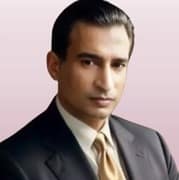
Dr. Suresh Kumar Mishra, known for his wit and wisdom, is a prolific writer, renowned satirist, children’s literature author, and poet. He has undertaken the monumental task of writing, editing, and coordinating a total of 55 books for the Telangana government at the primary school, college, and university levels. His editorial endeavors also include online editions of works by Acharya Ramchandra Shukla.
As a celebrated satirist, Dr. Suresh Kumar Mishra has carved a niche for himself, with over eight million viewers, readers, and listeners tuning in to his literary musings on the demise of a teacher on the Sahitya AajTak channel. His contributions have earned him prestigious accolades such as the Telangana Hindi Academy’s Shreshtha Navyuva Rachnakaar Samman in 2021, presented by the honorable Chief Minister of Telangana, Mr. Chandrashekhar Rao. He has also been honored with the Vyangya Yatra Ravindranath Tyagi Stairway Award and the Sahitya Srijan Samman, alongside recognition from Prime Minister Narendra Modi and various other esteemed institutions.
Dr. Suresh Kumar Mishra’s journey is not merely one of literary accomplishments but also a testament to his unwavering dedication, creativity, and profound impact on society. His story inspires us to strive for excellence, to use our talents for the betterment of others, and to leave an indelible mark on the world.
Some precious moments of life

- Honoured with ‘Shrestha Navayuvva Rachnakar Samman’ by former Chief Minister of Telangana Government, Shri K. Chandrasekhar Rao.
- Honoured with Oscar, Grammy, Jnanpith, Sahitya Akademi, Dadasaheb Phalke, Padma Bhushan and many other awards by the most revered Gulzar sahab (Sampurn Singh Kalra), the lighthouse of the world of literature and cinema, during the Sahitya Suman Samman held in Mumbai.
- Meeting the famous litterateur Shri Vinod Kumar Shukla Ji, honoured with Jnanpith Award.
- Got the privilege of meeting Mr. Perfectionist of Bollywood, actor Aamir Khan.
- Meeting the powerful actor Vicky Kaushal on the occasion of being honoured by Vishva Katha Rangmanch.
Today we present his Satire – Chips, Clicks, and the Cry of Empty Pockets.
☆ Witful Warmth# 81 ☆
☆ Satire ☆ Surefire Ways to Become a Chief Guest… ☆ Dr. Suresh Kumar Mishra ‘Uratript’ ☆
The biggest and most bitter truth about literary events is that the Chief Guest is never chosen based on their deep knowledge. Instead, they are chosen because the organizers want to satisfy their own selfish greed. Behind inviting that so-called great leader onto the stage lies a complete business calculation. For example, if the person has strong connections in government offices, the organizing team flatters them in the hope that their stuck government contracts, land papers, and illegal building works will get cleared smoothly like butter in the future. If the Chief Guest sits on the selection committee of a large cash prize for literature, the organizers serve them refreshments while secretly planning in their minds how to grab that big, profitable award and its huge prize money. If the Chief Guest happens to be a big editor of a famous newspaper or magazine, they are worshiped on the stage simply out of the greed that next Sunday, the organizers’ poor, low-quality writings will be beautifully published right on the front page. And if the person has absolutely no knowledge but is a wealthy businessman overflowing with money, they are placed on the stage only so that the expenses of the event’s tents, chairs, samosas, and even the Chief Guest’s own welcome bouquet can be happily snatched from their pocket as a sponsor. This evening too was about dipping into a similar river of selfishness, where a grand poetry event was organized in the memory of Suryakant Tripathi ‘Nirala’, a legendary giant of the Hindi literary world. Here, the Chief Guest cared much less about Nirala’s poetic rhythms and much more about his own status and the organizers’ business. The long and short of it is that a Chief Guest is selected only by looking at the heavy weight of their power and position. The body posture of the Chief Guest sitting right in the center of the stage looked no less than that of a medieval king. He had crossed one leg over the other in such a way as if the geography of the whole world was crushed beneath his single knee. Looking at the serious, mysterious smile spread across his face, the audience sitting below was completely confused about whether he was understanding the depth of the poetry or secretly calculating the menu for dinner tonight. Again and again, he would roll up the sleeves of his kurta, look sideways at the cameraman standing in front, and strike such a picture-perfect pose that even good actors would look ordinary in front of him. A look of complete self-satisfaction floated in his eyes, which can only appear on the face of a person who has never in their life taken the trouble of flipping through even two pages of a book continuously. Whenever a speaker on the stage analyzed Nirala’s poems, the Chief Guest would nod his head in such a way as if Nirala used to come to his house every morning to read out the first draft of his poetry, sending it to be printed only after getting a green light from him. The reality was that he knew as much about Nirala as an ordinary cat knows about the principles of space science, but he was hiding his complete ignorance behind his royal facial expressions in such a way that the entire hall seemed to bow down before his silent pretense of great knowledge.
When the Chief Guest was invited to give his speech, he first took off his glasses and started cleaning them very slowly with a silk handkerchief pulled from his pocket, because starting to speak immediately after coming to the stage is considered the sign of a beginner. He rested both his hands on the podium and looked at the entire hall the way a lion looks at a herd of deer in its hunting ground. He cleared his throat two or three times and spoke in a serious, heavy voice, “Friends, as you know, Nirala Ji was a poet. Not just a poet, but a very big poet. As my previous speakers have also said, he used to write very good poems, and that is why his poems are taught in school and college courses.” Hearing this historic opening sentence, a few flatterers sitting in the very front row clapped in such a way as if they had discovered some ultimate truth of the universe. The Chief Guest carried his point forward and addressed the listeners, “Now, the poems that are taught in schools and colleges are bound to be good. And when the poems are good, how would the person who wrote them be? All of you tell me together!” At this, the entire crowd gathered their remaining senses and shouted back in one voice, “Good!” The Chief Guest picked up the glass of water on the stage, took a sip, and looked around as if he had won a massive war, presenting this simple and obvious fact as the greatest research paper on Nirala’s literature.
After this, the Chief Guest started pulling out arrows from the quiver of his speech, using which he had roamed around as the savior of every big stage his entire life without ever reading a single page. He applied the first foolproof rule of ruling a stage without any knowledge, which in the language of literature is called the art of changing the topic. He said, “Friends, a true poet is not one who only talks about palaces. A true poet is one who is connected to the soil, and Nirala Ji was so grounded that he even wrote poems on mushrooms (kukurmutta). He loved mushrooms very much. Wherever he saw a mushroom, he would sit right down there to write poems!” Hearing this wonderful and heavenly revelation, an elderly writer sitting at the very back end of the hall dropped his diary from his hand, but the Chief Guest kept flowing in his own speed. He demonstrated that timeless rule of roaring on a stage without knowledge, under which a speaker turns their complete ignorance into a dignified exit by making an excuse of running out of time. He looked at his wristwatch in a highly dramatic way, drew deep lines of worry on his face, and said, “Friends, I would have spoken much more on Nirala, but it is already very late and all of you must be getting bored too. Therefore, that is all for today. If you give me a chance again in the future, I will tell you such things about him that even Nirala Ji himself would never have known. Jai Hind, Jai Bharat!”
This speech of the Chief Guest was actually a living collection of all those academic tricks that are used to completely control any gathering without any preparation. When a speaker does not have even the slightest clue about the topic, his first foolproof formula is to prepare a long list of the names of the previous speakers and start blindly supporting everything they said. The second rule says that when you have nothing to say, you should start asking direct questions to the public, which makes the listeners feel that they are not listening to a lecture but are part of a group discussion, and they start clapping in excitement. The third trick is to catch hold of any single strange word related to the topic and make it the central point of the whole speech, just like this gentleman did with the word ‘mushroom’, which turns a serious discussion into something highly popular and entertaining in a single second. According to the fourth rule, the speaker must keep his body language so aggressive and full of confidence that the listener starts doubting their own knowledge, wondering if they themselves read Nirala incorrectly. The fifth and most important rule is to leave a mysterious suspense at the end of the speech, so that a curiosity remains alive within the people that this person possesses some secret treasure of knowledge which could not come out today only because of the shortage of time. In this way, an ignorant person also leaves the stage pretending to be a supreme scholar.
During this whole drama, the condition of the public sitting right below the stage was worth watching, as they were constantly blinking their eyes in an attempt to digest this wonderful intellectual nonsense. The Head of the Department sitting in the front row was nodding his neck in such a way as if he had drowned into the depth of every single empty sentence of the Chief Guest and reached straight to the underworld. Some young students, who had come to grace this gathering only for the greed of free samosas and tea, were sitting with handkerchiefs pressed to their mouths to stop their laughter after hearing this grand story about mushrooms. The confidence of the Chief Guest had reached such a level that after every foolish line he spoke, he looked toward the public as if he was expecting a national award from them for his unique ideological discovery. During his speech, he waved both his hands in the air in such a way as if he was catching all the rhythms of Nirala’s poems right from the air and throwing them straight into the lap of the public. The roaring sound of clapping in the whole assembly was not a proof that people liked his speech. Instead, it was a collective celebration of the fact that this mega-speech had finally ended, and it was now time to get freedom from the stage.
Another surefire method to establish your dominance on literary stages is that, without touching the actual core of the topic, you start making such a complicated web of words around it that the listener himself loses his way. The Chief Guest had gained mastery in this art as well, because without speaking a single word on Nirala’s philosophy or his progressive thoughts, he built his entire castle of words based only on Nirala’s presence in school textbooks. While he was speaking, his eyes would sometimes stare at the ceiling beams and sometimes suddenly lock onto some innocent listener sitting in front, because of which that poor person would sit up with a straight spine out of fear that the Chief Guest might ask the next question directly to him. This type of speech is actually like a blessing for those people who want to maintain their leadership in every field of society without any study, and who roam around wearing their ignorance like an ornament. The other special guests sitting on the stage were also well-acquainted with this art, which is why they too were closing their eyes and smiling at every ridiculous remark of the Chief Guest as if they were enjoying the sermon of a great holy saint.
After the conclusion of this historic speech, when the Chief Guest came back and sat on his sofa-like chair, there was such a glow on his face which can only appear on the face of a king after winning a huge empire. He immediately pulled out his shiny mobile phone from his pocket and signaled the photographer standing in front to take some pictures of his victorious pose from different angles so that he could instantly share them on his social media accounts. He emptied the entire glass of water kept on the stage in a single breath, as if this historic speech on mushrooms had completely dried up all the springs of knowledge inside him. The listeners sitting below were still trying to recover from the shock of what they had just heard and understood about Nirala, but the Chief Guest did not care at all because his job was to steal the show on the stage, which he had successfully done with great politeness and cunningness. The entire atmosphere at this time was hanging between a strange silence and a suppressed laughter, a situation which perhaps Nirala himself would never have imagined even while writing his most complex poems.
Right after the program, a special refreshment was arranged for the Chief Guest in the VIP lounge. As soon as he reached there, an over-enthusiastic journalist of the city surrounded the Chief Guest with a microphone in his hand and asked very innocently, “Sir, your lecture today was going to set a new direction for Nirala’s literature, but will you tell our viewers which specific mushroom Nirala Ji was most influenced by, and is that mushroom relevant even in today’s times?” The Chief Guest jerked his kurta, twirled his mustache, and spoke with supreme confidence, resting his hand on the journalist’s shoulder, “Look brother, Nirala Ji was originally a very big doctor of botany, and the mushroom he discovered is what modern people call ‘mushroom’ in English. That is why I drink mushroom soup every morning so that a poetic energy like Nirala’s remains alive within me. And as far as relevance is concerned, today mushrooms are selling at two hundred rupees a kilo in the market. What bigger relevance can there be than this!” Hearing this, the waiter standing nearby gathered the plate of samosas, sat right down on the floor in shock, and the journalist left his microphone, went to the corner of the lounge, and started banging his head against the wall. Meanwhile, the Chief Guest, while happily chewing a piece of cashew sweet (kaju katli), had become busy searching for the name of Kabir Das’s father on the internet to speak at some upcoming seminar.
****
© Dr. Suresh Kumar Mishra ‘Uratript’
Contact : Mo. +91 73 8657 8657, Email : drskm786@gmail.com
≈ Blog Editor – Shri Hemant Bawankar/Editor (English) – Captain Pravin Raghuvanshi, NM ≈


