English Literature – योग-साधना/Yoga ☆ YOGA FOR GIRLS ☆ Radhika Bisht ☆

(An experienced yoga teacher in the tradition of Swami Satyananda Saraswati, founder of Bihar School of Yoga. Successfully completed 200 Hours Yoga Teacher Training Course from the Parmath School of Yoga, Rishikesh, accredited by the International Yoga Alliance and Indian Yoga Association. Trained at and certified by the Himalayan Iyengar Yoga Centre, Dharamkot, Dharamshala.)

🌌 YOGA FOR GIRLS 🌌 Radhika Bisht 🌌

Why do girls need to practise yoga? What benefits does it bring?

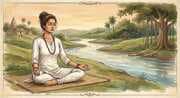
Yoga is highly beneficial for girls. It improves the strength, flexibility and resilience of the body. This enhances stamina, balance and coordination, which can be especially helpful for practitioners of classical dance. It also helps students focus and concentrate more deeply in their studies.

Yoga supports healthy hormonal development by stimulating and balancing the endocrine glands. This has a positive impact on mental and emotional well-being.

It improves blood circulation and promotes a smooth flow of energy throughout the body. The mind becomes calmer, purer and more peaceful. Girls who practise yoga regularly are less likely to experience stress, anxiety and depression.

Yoga encourages holistic growth and all-round personality development. The harmony of mind, body and spirit enhances self-confidence and self-esteem, empowering girls to face life’s challenges with courage and composure.

Yoga also cultivates self-discipline and restraint. It deepens awareness and mindfulness, opening the door to a meaningful, balanced and fulfilling life.

♥ ♥ ♥ ♥

© Radhika Bisht

radhikajagat@gmail.com

LAUGHTER YOGA MASTER TRAINER: An internationally recognised Laughter Yoga Master Trainer trained by Dr Madan Kataria, founder of Laughter Yoga. Conducted sessions for Nestle, Airports Authority of India, Abercrombie & Kent, State Bank of India, Cancer Survivors, Specially Abled Children, etc.

CO-FOUNDER LIFESKILLS: Co-founder, LifeSkills – a pathway to authentic happiness, well-being and a fulfilling life!

≈ Founder Editor – Shri Hemant Bawankar/Editor (English) – Captain Pravin Raghuvanshi, NM

Please share your Post !

Shares

English Literature – योग-साधना/Yoga ☆ The Curious Case of “Free Yoga” 🤔 ☆ Shri Jagat Singh Bisht ☆


Shri Jagat Singh Bisht

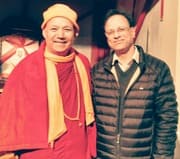
(Master Teacher: Happiness & Well-Being, Laughter Yoga Master Trainer, Author, Blogger, Educator, and Speaker.)

Authored six books on happiness: Cultivating Happiness, Nirvana – The Highest Happiness, Meditate Like the Buddha, Mission Happiness, A Flourishing Life, and The Little Book of HappinessHe served in a bank for thirty-five years and has been propagating happiness and well-being among people for the past twenty years. He is on a mission – Mission Happiness!

🌌 The Curious Case of “Free Yoga” 🤔 🌌

My better half has been teaching yoga for over two decades—not because it is a profession, but because it is her calling. She sincerely believes that if yoga has enriched her life, it should quietly enrich the lives of other women too.

Recently, she opened a small yoga studio. The fee is modest, not because yoga has a price tag, but because smaller groups allow her to know every student, notice every posture, and care for every journey.

She has almost no publicity plan. She has unwavering faith in the oldest social media platform ever invented—one happy human telling another.

As a reasonably obedient husband, I have taken it upon myself to become her unofficial ambassador. Morning and evening walks in the park now have an added purpose. Besides discussing the weather, grandchildren, blood pressure, neighbourhood gossip and the price of tomatoes, I gently mention the yoga classes.

The conversations are invariably delightful.

“Oh, I would have loved to join… but the timings don’t suit.”

Or, with equal sincerity, “Yoga should really be free.”

That always makes me smile.

We willingly pay for dinners that disappear in an hour, subscriptions we hardly use, and countless little indulgences that bring fleeting pleasure. Yet when it comes to investing a little time and a modest sum in the body that serves us every single day, we suddenly become philosophers.

Perhaps yoga is expected to arrive like fresh air—priceless, effortless and waiting at our doorstep.

The gentle irony is that yoga has never demanded much. It asks only for a little space, a little time, a willing mind and a patient heart. The rest it quietly returns—with interest.

Time spent on yoga today has a curious habit of reducing the time spent in waiting rooms tomorrow.

And perhaps that is the real fee.

Everything else is merely the receipt. 🌱

♥ ♥ ♥ ♥

© Jagat Singh Bisht

Master Teacher: Happiness & Well-Being, Laughter Yoga Master Trainer, Author, Blogger, Educator, and Speaker

FounderLifeSkills

A Pathway to Authentic Happiness, Well-Being & A Fulfilling Life! We teach skills to lead a healthy, happy and meaningful life.

The Science of Happiness (Positive Psychology), Meditation, Yoga, Spirituality and Laughter Yoga. We conduct talks, seminars, workshops, retreats and training.

≈ Editor – Shri Hemant Bawankar/Editor (English) – Captain Pravin Raghuvanshi, NM

Please share your Post !

Shares

English Literature – योग-साधना/Yoga ☆ Yoga: The Inner Science of Life ☆ Radhika Bisht ☆

(Radhika Bisht is a yoga teacher in the tradition of Swami Satyananda Saraswati. Trained at the Parmarth School of Yoga, Rishikesh and Himalayan Iyengar Yoga Centre, Dharamshala. She has an experience of 20 years in conducting yoga sessions.)

🌌 Yoga: The Inner Science of Life 🌌 Radhika Bisht 🌌

From Vedic Wisdom to Patanjali’s Path of Self-Realisation

Yoga is often reduced to postures and breathing techniques in popular understanding, but its true scope is far wider, deeper and infinitely more transformative. It is not merely an exercise system; it is a philosophy of life, a science of consciousness, and a timeless path leading human beings from restlessness to stillness, from fragmentation to wholeness.

To understand yoga is to enter a vast stream of wisdom flowing through the Vedas, the Upanishads, the philosophical systems of India, and the teachings of realised sages.

Let us journey through some of its essential foundations.

What Does Yoga Truly Mean?

Yoga is one of those rare words whose meaning expands the more deeply one lives it. To me, yoga is not simply a practice; it is a way of life.

It can be understood in many ways:

– Yoga is the path of selfless action (Karma Yoga), where work becomes worship.

– Yoga is the path of devotion (Bhakti Yoga), where love becomes the bridge to the Divine.

– Yoga is the path of knowledge (Jnana Yoga), where enquiry burns ignorance.

– Yoga is the science of right living, harmonising body, mind and spirit.

– Yoga is the art of self-mastery—controlling the body, senses, mind and intellect.

– Yoga is union: the coming together of the individual self with the universal Self.

The classical definition given by Patanjali remains one of the most profound:

“Yogascittavrttinirodhah”

Yoga is the cessation of the fluctuations of the mind.

This simple yet powerful sutra reminds us that the mind, when stilled, becomes a mirror reflecting truth.


The Vedic Roots of Yogic Wisdom

The roots of yoga lie deep in the sacred Vedic tradition. The four Vedas form the foundation of Indian spiritual knowledge:

– Rig Veda

– Sama Veda

– Yajur Veda

– Atharva Veda

Vedic knowledge is further divided into four sections:

Samhitas — collections of hymns

Brahmanas — ritualistic explanations

Aranyakas — contemplative forest teachings

Upanishads — philosophical revelations

The Upanishads, in particular, are the soul of Indian spirituality. They take us beyond ritual into direct enquiry: Who am I? What is the nature of reality?

Aum and the Three States of Consciousness

Among all sacred sounds, Aum (Om) is considered the primordial vibration of existence. It contains within itself the entire spectrum of consciousness.

Its three matras—A, U, and M—symbolise:

– Jagrata (waking state)

– Svapna (dream state)

– Sushupti (deep sleep state)

Beyond these three lies the silent fourth—Turiya, the transcendental state—pure awareness beyond all mental activity.

Thus, Aum is not merely a sound; it is a map of consciousness.

The Mahavakyas: Great Truths of the Upanishads

The Upanishads distil their highest wisdom into four great declarations known as the Mahavakyas:

– Prajnanam Brahma — Consciousness is Brahman

– Ayam Atma Brahma — This Self is Brahman

– Aham Brahmasmi — I am Brahman

– Tat Tvam Asi — Thou art That

These are not intellectual statements but invitations to awaken to one’s true nature.


The Six Classical Philosophical Systems

Indian philosophy developed through six major orthodox systems (Shad Darshanas):

Nyaya — Nyaya Sutra by Gautama

Vaisheshika — Vaisheshika Sutra by Kanada

Samkhya — founded by Kapila; systematised in Samkhya Karika by Ishvarakrishna

Yoga — Yoga Sutras by Patanjali

Purva Mimamsa — Mimamsa Sutras by Jaimini

Vedanta — Brahma Sutras by Badarayana

Together, they offer a complete framework for understanding reality.

Alongside these arose non-Vedic systems like Buddhism, Jainism and Charvaka, each contributing its own vision of truth.

Samkhya: Understanding Creation

Samkhya philosophy forms the metaphysical backbone of yoga. It begins with three fundamental principles:

Purusha — pure consciousness

Prakriti — primordial nature

Buddhi (Mahat) — cosmic intelligence

The entire manifest universe evolves from the interplay of Purusha and Prakriti. Yoga helps us disentangle consciousness from matter and return to our essential freedom.

The Five Koshas: Layers of Human Existence

The human being is not merely a physical body. According to Vedanta, we exist through five sheaths (Koshas):

Annamaya Kosha — the physical body

Pranamaya Kosha — the energy body

Manomaya Kosha — the mental body

Vijnanamaya Kosha — the wisdom body

Anandamaya Kosha — the bliss body

Yoga gradually purifies these layers, leading us inward from gross to subtle.


The Vedantic Path of Sadhana

Vedanta emphasises Jnana Yoga, the path of wisdom. This unfolds in three stages:

Shravana — listening to the truth

Manana — reflecting upon it

Nididhyasana — deep meditation on it

This progression transforms borrowed knowledge into lived realisation.

Hatha Yoga: Preparing the Body for Higher Consciousness

Before the mind can become still, the body and prana must be balanced. This is the domain of Hatha Yoga.

Its three foundational texts are:

– Hatha Yoga Pradipika by Svatmarama

– Gheranda Samhita

– Shiva Samhita

These texts offer practical methods to purify the body and awaken latent energy.


Vrittis: The Waves of the Mind

In Patanjali’s psychology, vrittis are the modifications of the mind. They are five:

– Pramana (right knowledge)

– Viparyaya (wrong knowledge)

– Vikalpa (imagination)

– Nidra (sleep)

– Smriti (memory)

These vrittis constantly shape our experience of reality. Yoga seeks not to suppress them violently, but to understand and transcend them.

Chitta Bhoomi: The Five Mental States

The mind moves through five stages:

Kshipta — restless

Mudha — dull

Vikshipta — distracted

Ekagra — one-pointed

Nirodha — fully restrained

Most human suffering belongs to the first three states. Yoga leads us toward Ekagra and ultimately Nirodha, where true meditation becomes possible.

The Eightfold Path of Patanjali

The practical roadmap of yoga is the Ashtanga Yoga:

  1. Yama (ethical restraints)
  2. Niyama (personal observances)
  3. Asana (posture)
  4. Pranayama (breath regulation)
  5. Pratyahara (withdrawal of senses)
  6. Dharana (concentration)
  7. Dhyana (meditation)
  8. Samadhi (absorption)

This is not merely a sequence of practices but a progressive refinement of human consciousness.

The Two Dimensions of Samadhi

The culmination of yoga is Samadhi, the state of complete absorption.

There are two broad types:

Savikalpa Samadhi — where awareness of the object of meditation remains. There is still a subtle duality.

Nirvikalpa Samadhi — where all distinctions disappear. There is no observer and no observed; only pure, indivisible awareness remains.

This is the summit of yogic experience—the homecoming of consciousness to itself.

Yoga: A Journey Inward

At its heart, yoga is a return—a return to silence, to clarity, to our original nature. The ancient sages did not create yoga as a system of escape from life, but as a way to live it more deeply, consciously and truthfully.

In a world of constant distraction, yoga remains a timeless invitation: to know oneself, to master the mind, and to discover the still centre within.

For when the mind becomes quiet, the soul begins to speak.

♥ ♥ ♥ ♥

© Radhika Bisht

Yoga Teacher

≈ Editor – Shri Hemant Bawankar/Editor (English) – Captain Pravin Raghuvanshi, NM

Please share your Post !

Shares

हिंदी साहित्य – योग-साधना/Yoga ☆ बालिकाओं के लिए योग ☆ सुश्री राधिका  बिष्ट ☆

सुश्री राधिका  बिष्ट

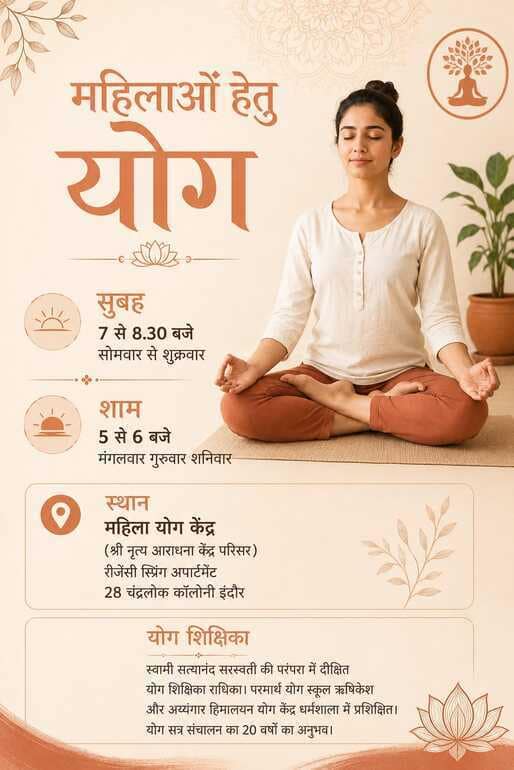
(स्वामी सत्यानंद सरस्वती की परंपरा में दीक्षित योग शिक्षिका। परमार्थ योग स्कूल ऋषिकेश और अय्यंगार हिमालयन योग केंद्र धर्मशाला में प्रशिक्षित। योग सत्र संचालन का 20 वर्षों का अनुभव।)

☆ बालिकाओं के लिए योग ☆ सुश्री राधिका  बिष्ट ☆

बालिकाओं के लिए योग क्यों आवश्यक है? इससे उन्हें क्या लाभ मिलते हैं?

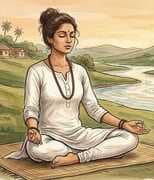
बालिकाओं के लिए योग बहुत लाभदायक है। यह शरीर को लचीला, मजबूत और सहनशील बनाता है। इससे ‘स्टैमिना’ और ‘बैलेंस’ में सुधार होता है जो कि शास्त्रीय नृत्य जैसी विधाओं के लिए सहायक हैं। योग से ‘फोकस’ और एकाग्रता बढ़ती है जिससे पढ़ाई में अधिक मन लगता है।

बालिकाओं की ‘हार्मोनल ग्रोथ’ को यह सुगम बनाता है क्योंकि योग से ग्रंथियां क्रियाशील होती हैं। इससे उनके मानसिक और ‘इमोशनल’ स्वास्थ्य पर सकारात्मक प्रभाव पड़ता है।

योग से धमनियों में ऊर्जा का संचार होता है। अंतर्मन शुद्ध, शांत और आनंदमय होता है। जो बालिकाएं नियमित योग करती हैं, उन्हें तनाव और ‘डिप्रैशन’ होने की संभावना नगण्य हो जाती है।

बालिकाओं के सर्वांगीण विकास में योग अत्यंत सहायक है। तन-मन के संतुलन से आत्मविश्वास और आत्मिक बल बढ़ता है। इससे विषम परिस्थितियों से जूझने की क्षमता विकसित होती है।

योग से आत्म-संयम और आत्म-अनुशासन गहरा होता है। इससे सजगता या ‘माइंडफुलनेस’ का उदय होता है जो कि बालिकाओं के संपूर्ण और समग्र भविष्य की आधारशिला तैयार करते हैं।

© सुश्री राधिका बिष्ट

योग शिक्षिका

संस्थापक संपादक – श्री हेमन्त बावनकर/सम्पादक (हिन्दी) – श्री विवेक रंजन श्रीवास्तव ‘विनम्र’≈
Please share your Post !

Shares

English Literature – Articles ☆ Meditate Like The Buddha # 22: Consolidating Meditation ☆ Mr. Jagat Singh Bisht ☆

Shri Jagat Singh Bisht

(Master Teacher: Happiness & Well-Being, Laughter Yoga Master Trainer, Author, Blogger, Educator, and Speaker.)

Meditate Like The Buddha # 22: Consolidating Meditation

A Lifetime’s Practice

You have successfully completed a structured journey for beginning, establishing, strengthening, and consolidating your meditative practice. This guide has provided a step-by-step approach, ensuring clarity and depth at every stage.

Meditation is not merely something to be learned and set aside—it is a lifetime’s practice. The instructions in this series have been compiled based on years of self-practice and experience in guiding individuals and groups. If followed diligently, they will provide a strong foundation for lifelong mindfulness and inner peace.

How to Progress Through the Series

This series has been carefully designed with small, structured steps to help you build your meditative practice progressively. To ensure maximum benefit, follow these guidelines:

  1. Step-by-Step Mastery
  • Begin with The First Step, focusing on a stable and comfortable sitting posture.
  • Spend 10 to 15 minutes daily in this posture until you feel completely at ease.
  • Some may take a few days, others longer—there is no rush.
  1. Watching the Breath
  • Move to the next step, Watch Your Breath, only when fully confident in your posture.
  • Simply observe your breath:
    • Ever mindful, breathe in. Mindful, breathe out.
  • This is the most fundamental step—take your time with it. Only when fully comfortable should you proceed further.
  1. Advancing Through the Stages
  • Follow the lessons in sequence, ensuring each step is well-practised before moving ahead.
  • Some steps may need to be repeated for several days—this is normal.
  • Do not rush; progress only when you feel ready and confident.
  1. Cumulative Practice
  • As you move forward, always begin with the first steps before introducing new ones.
  • Over time, earlier steps will require less attention, allowing more focus on new techniques.
  1. Developing a Daily Routine
  • Start with 10 to 15 minutes of practice and gradually increase the duration.
  • Aim for at least an hour of daily meditation once all steps have been completed.
  • Meditation is not a one-time learning experience but an ongoing journey of self-discovery.

Deepening Your Practice

  • Once you reach A Summary of the Steps, consider revisiting earlier lessons for further refinement.
  • Repeating the series slowly and steadily will deepen your understanding and experience.
  • Over time, what may have seemed monotonous at first will transform into a joyful and enriching experience.

Meditation, when practiced regularly, becomes an integral part of life—bringing peace, clarity, and happiness.

Go ahead and enjoy your voyage into the realm of calm!

♥ ♥ ♥ ♥

Please click on the following links to read previously published posts Meditate Like The Buddha: A Step-By-Step Guide” 👉

English Literature – Articles ☆ Meditate Like The Buddha # 8: Midway Recap ☆ Mr. Jagat Singh Bisht ☆

English Literature – Articles ☆ Meditate Like The Buddha # 9: Experience Your Mind ☆ Mr. Jagat Singh Bisht ☆

English Literature – Articles ☆ Meditate Like The Buddha # 10: Liberate the Mind ☆ Mr. Jagat Singh Bisht ☆

English Literature – Articles ☆ Meditate Like The Buddha # 12: The End of suffering ☆ Mr. Jagat Singh Bisht ☆

English Literature – Articles ☆ Meditate Like The Buddha # 13: A Summary of the Steps ☆ Mr. Jagat Singh Bisht ☆

English Literature – Articles ☆ Meditate Like The Buddha # 14: A Lifetime’s Work ☆ Mr. Jagat Singh Bisht ☆

English Literature – Articles ☆ Meditate Like The Buddha # 18: THE FOUR NOBLE TRUTHS ☆ Mr. Jagat Singh Bisht ☆

English Literature – Articles ☆ Meditate Like The Buddha # 19: THE NOBLE EIGHTFOLD PATH ☆ Mr. Jagat Singh Bisht ☆

English Literature – Articles ☆ Meditate Like The Buddha # 20: The Four Jhanas ☆ Mr. Jagat Singh Bisht ☆

English Literature – Articles ☆ Meditate Like The Buddha # 21: Pearls of Wisdom ☆ Mr. Jagat Singh Bisht ☆

© Jagat Singh Bisht

Laughter Yoga Master Trainer

FounderLifeSkills

A Pathway to Authentic Happiness, Well-Being & A Fulfilling Life! We teach skills to lead a healthy, happy and meaningful life.

The Science of Happiness (Positive Psychology), Meditation, Yoga, Spirituality and Laughter Yoga. We conduct talks, seminars, workshops, retreats and training.

≈ Editor – Shri Hemant Bawankar/Editor (English) – Captain Pravin Raghuvanshi, NM

Please share your Post !

Shares

English Literature – Articles ☆ Meditate Like The Buddha # 21: Pearls of Wisdom ☆ Mr. Jagat Singh Bisht ☆

Shri Jagat Singh Bisht

(Master Teacher: Happiness & Well-Being, Laughter Yoga Master Trainer, Author, Blogger, Educator, and Speaker.)

Meditate Like The Buddha # 21: Pearls of Wisdom 

 As we progress on the path of meditation, we develop valuable insights. We share below some gems shared by experienced meditators:

“Meditation is a practice that makes it possible to cultivate and develop certain basic positive human qualities in the same way as other forms of training make it possible to play a musical instrument or acquire any other skill.”

-Matthieu Ricard

“Meditation has the effect of creating biological calm and reducing stress. Research shows that long-term meditators have a lessened cortisol response (a key stress hormone) under stress.”

-Daniel Goleman

“Breath is the bridge which connects life to consciousness, which unites your body to your thoughts. Whenever your mind becomes scattered, use your breath as the means to take hold of your mind again.”

“Mindfulness is a kind of energy that helps us to be fully present in the here and the now, aware of what is going on in our body, in our feelings, mind, and in the world, so that we can get in touch with the wonders of life that nourish and heal us.”

“With mindfulness, concentration, and insight, you can generate a feeling of joy and happiness, whenever you want. With the energy of mindfulness, you can also handle a painful feeling or emotion.”

“Your breath should be light, even, and flowing, like a thin stream of water running through the sand. Your breath should be quiet, so quiet that a person sitting next to you cannot hear it. Your breathing should flow gracefully, like a river, like a water snake crossing the water, and not like a chain of rugged mountains or the gallop of a horse.”

“If each one can meditate an hour each day that is good, but it’s nowhere near enough. You have got to practice meditation when you walk, stand, lie down, sit, and work, while washing your hands, washing the dishes, sweeping the floor, drinking tea, talking to friends, or whatever you are doing.”

“When you are washing the dishes, washing the dishes must be the most important thing in your life. Just as when you are drinking tea, drinking tea must be the most important thing in your life. When you’re using the toilet, let that be the most important thing in your life.”

“Chopping wood is meditation. Carrying water is meditation. Be mindful 24 hours a day, not just during the one hour you may allot for formal meditation or reading scripture or reciting prayers.”

“Each act must be carried out in mindfulness. Each act is a rite, a ceremony. Raising your cup of tea to your mouth is a rite, a ceremony. Do it mindfully.”

“Do not drink your tea like someone who gulps down a cup of coffee during a work break. Drink your tea slowly and reverently, as if it is the axis on which the whole earth revolves – slowly, evenly, without rushing toward the future.”

“Live the actual moment. Only this actual moment is life.”

-Thich Nhat Hanh

“Beyond the pleasant states meditation can produce, the real payoffs are the lasting traits that can result.”

Daniel Goleman & Richard J Davidson

 “By the practice of meditation, you will find that you are carrying within your heart a portable paradise.”

Paramahansa Yogananda

“All walking can be walking meditation. You can focus on your footsteps, on bodily awareness, or on breathing itself, anything that brings you into the present.”

“I love to walk for exercise, and I find my walks around the city to be wonderful occasions for mindfulness practice.”

-Larry Rosenberg

“The fruition of meditation could be described as an optimal way of being, or again, as genuine happiness. This true and lasting happiness is a profound sense of having realized to the utmost the potential we have within us for wisdom and accomplishment. Working towards this kind of fulfilment is an adventure worth embarking upon.”

“If we consider that the possible benefit of meditation is to have a new experience of the world each moment in our lives, then it does not seem excessive to spend at least twenty minutes a day getting to know our mind better and training it towards this kind of purpose.”

“Mindfulness is a kind of energy that helps us to be fully present in the here and the now, aware of what is going on in our body, in our feelings, mind, and in the world, so that we can get in touch with the wonders of life that nourish and heal us.”

“Experienced meditators have demonstrated qualities of focused attention that are not found among beginners. For example, they are able to maintain more or less perfect concentration on a particular task for forty-five minutes, whereas most people cannot go beyond five or ten minutes before they begin making an increasing number of mistakes.”

“Meditation reduces anxiety, the tendency towards anger and the risk of relapse for people who have previously undergone depression.”

“Eight weeks of meditation for thirty minutes a day significantly strengthens the immune system, reinforces positive emotions, and reduces arterial pressure in those suffering from high blood pressure.”

-Matthieu Ricard

“First, let the mind follow the movement of the breath, in and out, until it becomes calm and tranquil. Then increasingly rest the mind on the breath until one’s whole being seems to be identified with it.”

“When performing the meditation practice, one should develop the feeling of opening oneself completely to the whole universe with absolute simplicity and nakedness of mind, ridding oneself of all protecting barriers.”

“Meditation is always perfect, so there is no need to correct anything. Since everything that arises is simply the play of the mind, there are no “bad” meditation sessions and no need to judge thoughts as good or evil.”

“Simply plunge straight into meditation at this very moment with your whole mind, and be free from hesitation, boredom, or excitement.”

“When meditating it is traditional and best, if possible, to sit cross-legged with the back erect but not rigid. However, it is most important to feel comfortable, so it is better to sit in a chair if sitting cross-legged is painful.”

-Dilgo Khyentse Rinpoche

“Sit comfortably. Keep your back straight. Follow your breath. Let go of everything. If you can, maintain a half-smile. As the half smile appears, all the facial muscles begin to relax. The longer the half smile is maintained, the better. It is the same smile you see on the face of the Buddha.”

“Half-smile when you first wake up in the morning. Use these first seconds before you get out of bed to take hold of your breath. Inhale and exhale three breaths gently while maintaining the half smile. Follow your breaths.”

“Half-smile during your free moments – anywhere you find yourself sitting or standing. Look at a child, a leaf, a painting on the wall, anything which is relatively still, and smile. Inhale and exhale quietly three times. Maintain the half smile and consider the spot of your attention as your true nature.”

“Half-smile while listening to music. Pay attention to the words, music, rhythm, and sentiments. Smile while watching your inhalations and exhalations.”

“When you realize you’re irritated, half-smile at once. Inhale and exhale quietly, maintain the half smile for three breaths.”

“Those who are without compassion cannot see what is seen with the eyes of compassion.”

-Thich Nhat Hanh

♥ ♥ ♥ ♥

Please click on the following links to read previously published posts Meditate Like The Buddha: A Step-By-Step Guide” 👉

English Literature – Articles ☆ Meditate Like The Buddha # 8: Midway Recap ☆ Mr. Jagat Singh Bisht ☆

English Literature – Articles ☆ Meditate Like The Buddha # 9: Experience Your Mind ☆ Mr. Jagat Singh Bisht ☆

English Literature – Articles ☆ Meditate Like The Buddha # 10: Liberate the Mind ☆ Mr. Jagat Singh Bisht ☆

English Literature – Articles ☆ Meditate Like The Buddha # 12: The End of suffering ☆ Mr. Jagat Singh Bisht ☆

English Literature – Articles ☆ Meditate Like The Buddha # 13: A Summary of the Steps ☆ Mr. Jagat Singh Bisht ☆

English Literature – Articles ☆ Meditate Like The Buddha # 14: A Lifetime’s Work ☆ Mr. Jagat Singh Bisht ☆

English Literature – Articles ☆ Meditate Like The Buddha # 18: THE FOUR NOBLE TRUTHS ☆ Mr. Jagat Singh Bisht ☆

English Literature – Articles ☆ Meditate Like The Buddha # 19: THE NOBLE EIGHTFOLD PATH ☆ Mr. Jagat Singh Bisht ☆

English Literature – Articles ☆ Meditate Like The Buddha # 20: The Four Jhanas ☆ Mr. Jagat Singh Bisht ☆

© Jagat Singh Bisht

Laughter Yoga Master Trainer

FounderLifeSkills

A Pathway to Authentic Happiness, Well-Being & A Fulfilling Life! We teach skills to lead a healthy, happy and meaningful life.

The Science of Happiness (Positive Psychology), Meditation, Yoga, Spirituality and Laughter Yoga. We conduct talks, seminars, workshops, retreats and training.

≈ Editor – Shri Hemant Bawankar/Editor (English) – Captain Pravin Raghuvanshi, NM

Please share your Post !

Shares

English Literature – Articles ☆ Meditate Like The Buddha # 20: The Four Jhanas ☆ Mr. Jagat Singh Bisht ☆

Shri Jagat Singh Bisht

(Master Teacher: Happiness & Well-Being, Laughter Yoga Master Trainer, Author, Blogger, Educator, and Speaker.)

Meditate Like The Buddha # 20: The Four Jhanas

“Quite secluded from sense desires, secluded from unwholesome states of mind, one enters upon and dwells in the first jhana, which is accompanied by applied thought and sustained thought with happiness and bliss born of seclusion.”

The Role of Jhanas in Meditation

The Buddha attained enlightenment meditating beneath the Bodhi tree. He expounded two interrelated systems of meditation:

  • Serenity meditation (Samatha Bhavana): Develops a calm, concentrated, and unified mind.
  • Insight meditation (Vipassana Bhavana): Leads to a direct understanding of the true nature of phenomena.

A set of meditative attainments known as jhanas plays a crucial role in both systems. These heightened mental states provide a pleasant abiding in the present moment and deepen meditative absorption.

To attain the jhanas, a meditator must eliminate the five hindrances:

  • Sensual desire
  • Ill will
  • Sloth and torpor
  • Restlessness and worry
  • Doubt

The mind’s absorption in its object arises through five opposing jhana factors:

  • Applied thought
  • Sustained thought
  • Rapture
  • Happiness
  • One-pointedness

The Four Jhanas

  1. The First Jhana

“Quite secluded from sense desires, secluded from unwholesome states of mind, one enters upon and dwells in the first jhana, which is accompanied by applied thought and sustained thought with happiness and bliss born of seclusion.”

  • The initial stage of meditative absorption.
  • Marked by applied and sustained thought, leading to happiness and bliss.
  1. The Second Jhana

“With the stilling of applied and sustained thought, one enters upon and dwells in the second jhana, which has internal confidence and singleness of mind without applied thought, without sustained thought, with happiness and bliss born of concentration.”

  • A deeper state where thought subsides.
  • Inner confidence arises, and bliss is sustained by concentration.
  1. The Third Jhana

“With the fading away of happiness as well, one dwells in equanimity, and mindful and fully aware, feels bliss with the body; he enters upon and dwells in the third jhana.”

  • Happiness transitions into equanimity and deep mindfulness.
  • Bliss is experienced physically with heightened awareness.
  1. The Fourth Jhana

“With the abandoning of pleasure and pain and with the previous disappearance of joy and grief, he enters upon and dwells in the fourth jhana, which has neither-pain-nor-pleasure and has purity of mindfulness due to equanimity.”

  • A state of profound balance where pleasure and pain, joy and grief fade away.
  • Equanimity and purity of mindfulness become fully established.

Conclusion

The jhanas offer a structured path toward deeper concentration and inner peace. Progressing through these states refines the mind, leading to wisdom and ultimately, liberation from suffering.

♥ ♥ ♥ ♥

Please click on the following links to read previously published posts Meditate Like The Buddha: A Step-By-Step Guide” 👉

English Literature – Articles ☆ Meditate Like The Buddha # 8: Midway Recap ☆ Mr. Jagat Singh Bisht ☆

English Literature – Articles ☆ Meditate Like The Buddha # 9: Experience Your Mind ☆ Mr. Jagat Singh Bisht ☆

English Literature – Articles ☆ Meditate Like The Buddha # 10: Liberate the Mind ☆ Mr. Jagat Singh Bisht ☆

English Literature – Articles ☆ Meditate Like The Buddha # 12: The End of suffering ☆ Mr. Jagat Singh Bisht ☆

English Literature – Articles ☆ Meditate Like The Buddha # 13: A Summary of the Steps ☆ Mr. Jagat Singh Bisht ☆

English Literature – Articles ☆ Meditate Like The Buddha # 14: A Lifetime’s Work ☆ Mr. Jagat Singh Bisht ☆

English Literature – Articles ☆ Meditate Like The Buddha # 18: THE FOUR NOBLE TRUTHS ☆ Mr. Jagat Singh Bisht ☆

English Literature – Articles ☆ Meditate Like The Buddha # 19: THE NOBLE EIGHTFOLD PATH ☆ Mr. Jagat Singh Bisht ☆

© Jagat Singh Bisht

Laughter Yoga Master Trainer

FounderLifeSkills

A Pathway to Authentic Happiness, Well-Being & A Fulfilling Life! We teach skills to lead a healthy, happy and meaningful life.

The Science of Happiness (Positive Psychology), Meditation, Yoga, Spirituality and Laughter Yoga. We conduct talks, seminars, workshops, retreats and training.

≈ Editor – Shri Hemant Bawankar/Editor (English) – Captain Pravin Raghuvanshi, NM≈

Please share your Post !

Shares

English Literature – Articles ☆ Meditate Like The Buddha # 18: THE FOUR NOBLE TRUTHS ☆ Mr. Jagat Singh Bisht ☆

Shri Jagat Singh Bisht

(Master Teacher: Happiness & Well-Being, Laughter Yoga Master Trainer, Author, Blogger, Educator, and Speaker.)

Meditate Like The Buddha # 18: THE FOUR NOBLE TRUTHS

 “Birth is suffering, aging is suffering, sickness is suffering, death is suffering. Sorrow, lamentation, pain, grief, and despair are suffering. Association with the loathed is suffering, dissociation from the loved is suffering, not getting what one wants is suffering; in brief, the five aggregates subject to clinging are suffering.”

Understanding the Four Noble Truths

The Four Noble Truths constitute the fundamental doctrine of the Buddha’s teachings:

  1. The Noble Truth of Suffering (Dukkha):
    • Suffering exists in various forms: birth, aging, sickness, and death.
    • Sorrow, lamentation, pain, grief, and despair also constitute suffering.
    • The five aggregates subject to clinging are ultimately a source of suffering.
  2. The Noble Truth of the Origin of Suffering (Samudaya):
    • The root of suffering is craving (tanha) for sensual pleasures, existence, and extermination.
    • This craving leads to renewed existence, attachment, and the cycle of suffering.
  3. The Noble Truth of the Cessation of Suffering (Nirodha):
    • The cessation of suffering is achieved by relinquishing and abandoning craving.
    • It is the complete fading away and cessation of desire, leading to non-attachment and liberation.
  4. The Noble Truth of the Path Leading to the Cessation of Suffering (Magga):
    • The path to liberation is the Noble Eightfold Path:
      • Right View
      • Right Intention
      • Right Speech
      • Right Action
      • Right Livelihood
      • Right Effort
      • Right Mindfulness
      • Right Concentration

The Five Aggregates Subject to Clinging

The First Noble Truth identifies the five aggregates as fundamental to suffering:

  • Form (Rupa) – The physical body and material aspects.
  • Feeling (Vedana) – Sensations of pleasure, pain, or neutrality.
  • Perception (Sanna) – Recognition and mental labeling of experiences.
  • Mental Formations (Sankhara) – Volitional activities, thoughts, and habits.
  • Consciousness (Vinnana) – Awareness of sensory and mental experiences.

These aggregates are impermanent, non-self, and subject to change. Understanding this leads to dispassion and liberation from attachment.

Cultivating Insight

To fully comprehend the Four Noble Truths:

  • The truth of suffering must be fully understood.
  • The origin of suffering must be abandoned.
  • The cessation of suffering must be realized.
  • The path leading to the cessation of suffering must be developed.

By walking the Noble Eightfold Path, one progresses toward the cessation of suffering, ultimately attaining Nibbana—the highest liberation.

♥ ♥ ♥ ♥

Please click on the following links to read previously published posts Meditate Like The Buddha: A Step-By-Step Guide” 👉

English Literature – Articles ☆ Meditate Like The Buddha # 8: Midway Recap ☆ Mr. Jagat Singh Bisht ☆

English Literature – Articles ☆ Meditate Like The Buddha # 9: Experience Your Mind ☆ Mr. Jagat Singh Bisht ☆

English Literature – Articles ☆ Meditate Like The Buddha # 10: Liberate the Mind ☆ Mr. Jagat Singh Bisht ☆

English Literature – Articles ☆ Meditate Like The Buddha # 12: The End of suffering ☆ Mr. Jagat Singh Bisht ☆

English Literature – Articles ☆ Meditate Like The Buddha # 13: A Summary of the Steps ☆ Mr. Jagat Singh Bisht ☆

English Literature – Articles ☆ Meditate Like The Buddha # 14: A Lifetime’s Work ☆ Mr. Jagat Singh Bisht ☆

English Literature – Articles ☆ Meditate Like The Buddha # 17: The Middle Way ☆ Mr. Jagat Singh Bisht ☆

© Jagat Singh Bisht

Laughter Yoga Master Trainer

FounderLifeSkills

A Pathway to Authentic Happiness, Well-Being & A Fulfilling Life! We teach skills to lead a healthy, happy and meaningful life.

The Science of Happiness (Positive Psychology), Meditation, Yoga, Spirituality and Laughter Yoga. We conduct talks, seminars, workshops, retreats and training.

≈ Editor – Shri Hemant Bawankar/Editor (English) – Captain Pravin Raghuvanshi, NM

Please share your Post !

Shares

English Literature – Articles ☆ Meditate Like The Buddha # 17: The Middle Way ☆ Mr. Jagat Singh Bisht ☆

Shri Jagat Singh Bisht

(Master Teacher: Happiness & Well-Being, Laughter Yoga Master Trainer, Author, Blogger, Educator, and Speaker.)

Meditate Like The Buddha # 17: The Middle Way

The Middle Way discovered by the Perfect One gives vision, brings knowledge, and leads to peace, direct insight, enlightenment, and Nibbana.

The Buddha’s First Teaching

In his first sermon, the Buddha expounded the Four Noble Truths and introduced the Middle Path as the way to liberation.

He said:

“Avoid the two extremes—devotion to the pursuit of sensual pleasures and devotion to self-mortification.

The Middle Way discovered by the Perfect One gives vision, brings knowledge, and leads to peace, direct insight, enlightenment, and Nibbana.

The Middle Way is the Noble Eightfold Path:

  • Right View
  • Right Intention
  • Right Speech
  • Right Action
  • Right Livelihood
  • Right Effort
  • Right Mindfulness
  • Right Concentration”

By following the Middle Way, one avoids indulgence and asceticism, cultivating balance and wisdom.

♥ ♥ ♥ ♥

Please click on the following links to read previously published posts Meditate Like The Buddha: A Step-By-Step Guide” 👉

English Literature – Articles ☆ Meditate Like The Buddha # 8: Midway Recap ☆ Mr. Jagat Singh Bisht ☆

English Literature – Articles ☆ Meditate Like The Buddha # 9: Experience Your Mind ☆ Mr. Jagat Singh Bisht ☆

English Literature – Articles ☆ Meditate Like The Buddha # 10: Liberate the Mind ☆ Mr. Jagat Singh Bisht ☆

English Literature – Articles ☆ Meditate Like The Buddha # 12: The End of suffering ☆ Mr. Jagat Singh Bisht ☆

English Literature – Articles ☆ Meditate Like The Buddha # 13: A Summary of the Steps ☆ Mr. Jagat Singh Bisht ☆

English Literature – Articles ☆ Meditate Like The Buddha # 14: A Lifetime’s Work ☆ Mr. Jagat Singh Bisht ☆

English Literature – Articles ☆ Meditate Like The Buddha # 15: MINDFULNESS OF BREATHING ☆ Mr. Jagat Singh Bisht ☆

English Literature – Articles ☆ Meditate Like The Buddha # 16: THE FOUNDATIONS OF MINDFULNESS ☆ Mr. Jagat Singh Bisht ☆


© Jagat Singh Bisht

Laughter Yoga Master Trainer

FounderLifeSkills

A Pathway to Authentic Happiness, Well-Being & A Fulfilling Life! We teach skills to lead a healthy, happy and meaningful life.

The Science of Happiness (Positive Psychology), Meditation, Yoga, Spirituality and Laughter Yoga. We conduct talks, seminars, workshops, retreats and training.

≈ Editor – Shri Hemant Bawankar/Editor (English) – Captain Pravin Raghuvanshi, NM

Please share your Post !

Shares

English Literature – Articles ☆ Meditate Like The Buddha # 16: THE FOUNDATIONS OF MINDFULNESS ☆ Mr. Jagat Singh Bisht ☆

Shri Jagat Singh Bisht

(Master Teacher: Happiness & Well-Being, Laughter Yoga Master Trainer, Author, Blogger, Educator, and Speaker.)

Meditate Like The Buddha # 16: THE FOUNDATIONS OF MINDFULNESS ☆

“There is, monks, this one way to the purification of beings, for the overcoming of sorrow and distress, for the disappearance of pain and sadness, for the gaining of the right path, for the realization of Nibbana—that is to say, the four foundations of mindfulness.” — Buddha

The Path of Insight

Vipassana, meaning to see things as they truly are, is a structured and logical approach to meditation, leading to deep inner peace and liberation from suffering. The Buddha taught this method after his enlightenment, guiding thousands to freedom from misery through self-awareness and mindfulness.

Meditation is at the heart of the Buddha’s teaching. It is the direct path to Nibbana, achieved by observing the body, feelings, mind, and phenomena with full awareness and insight. By diligently practicing the four foundations of mindfulness, one transcends suffering and attains profound wisdom.

“Bhikkhus, these four establishments of mindfulness, when developed and cultivated, lead to going beyond from the near shore to the far shore.”

One must dwell observing reality with clarity, free from craving and aversion, and with full comprehension of impermanence.

Observing the Body

  • Find a quiet place, sit cross-legged with a straight back, and close your eyes.
  • Observe the breath, noticing whether it is deep or shallow.
  • Be fully aware of bodily actions—walking, sitting, lying down, moving, eating, drinking.
  • Maintain mindfulness in every action and posture.

This is how one dwells observing the body in the body.

Observing Sensations

  • Be aware of sensations as they arise: pleasant, unpleasant, or neutral.
  • Observe whether these sensations are met with attachment or detachment.
  • Recognize them without reacting.

This is how one dwells observing feelings in feelings.

Observing the Mind

  • Recognize the nature of the mind:
    • A mind with craving or without craving.
    • A mind with aversion or without aversion.
    • A mind with delusion or free from delusion.
    • A concentrated mind or scattered mind.
    • A liberated mind or unliberated mind.

This is how one dwells observing the mind in the mind.

Observing Phenomena

  • Observe mental formations, such as:
    • The five hindrances (desire, aversion, dullness, restlessness, doubt).
    • The five aggregates of clinging (form, feeling, perception, mental formations, consciousness).
    • The six sense bases (eye and forms, ear and sounds, etc.), understanding how fetters arise and are abandoned.
    • The seven factors of enlightenment (mindfulness, investigation, effort, rapture, tranquillity, concentration, equanimity).
    • The Four Noble Truths—suffering, its cause, its cessation, and the path leading to its cessation.

This is how one dwells observing mental contents in mental contents.

The Power of Mindfulness

By developing the four foundations of mindfulness, one may expect either:

  • Final knowledge (liberation) here and now, or
  • If residual clinging remains, the state of non-returning.

“Bhikkhus, just as the river Ganges slants, slopes, and inclines towards the east, so too a bhikkhu who develops and cultivates the four jhanas slants, slopes, and inclines towards Nibbana.”

Thus, the four foundations of mindfulness serve as the direct path to purification, wisdom, and liberation from suffering.

♥ ♥ ♥ ♥

Please click on the following links to read previously published posts Meditate Like The Buddha: A Step-By-Step Guide” 👉

English Literature – Articles ☆ Meditate Like The Buddha # 8: Midway Recap ☆ Mr. Jagat Singh Bisht ☆

English Literature – Articles ☆ Meditate Like The Buddha # 9: Experience Your Mind ☆ Mr. Jagat Singh Bisht ☆

English Literature – Articles ☆ Meditate Like The Buddha # 10: Liberate the Mind ☆ Mr. Jagat Singh Bisht ☆

English Literature – Articles ☆ Meditate Like The Buddha # 12: The End of suffering ☆ Mr. Jagat Singh Bisht ☆

English Literature – Articles ☆ Meditate Like The Buddha # 13: A Summary of the Steps ☆ Mr. Jagat Singh Bisht ☆

English Literature – Articles ☆ Meditate Like The Buddha # 14: A Lifetime’s Work ☆ Mr. Jagat Singh Bisht ☆

English Literature – Articles ☆ Meditate Like The Buddha # 15: MINDFULNESS OF BREATHING ☆ Mr. Jagat Singh Bisht ☆

© Jagat Singh Bisht

Laughter Yoga Master Trainer

FounderLifeSkills

A Pathway to Authentic Happiness, Well-Being & A Fulfilling Life! We teach skills to lead a healthy, happy and meaningful life.

The Science of Happiness (Positive Psychology), Meditation, Yoga, Spirituality and Laughter Yoga. We conduct talks, seminars, workshops, retreats and training.

≈ Editor – Shri Hemant Bawankar/Editor (English) – Captain Pravin Raghuvanshi, NM

Please share your Post !

Shares