English Literature – Articles ☆ Meditate Like The Buddha #4: Relax Your Body ☆ Mr. Jagat Singh Bisht ☆

Shri Jagat Singh Bisht

(Master Teacher: Happiness & Well-Being, Laughter Yoga Master Trainer, Author, Blogger, Educator, and Speaker.)

☆ Meditate Like The Buddha #4 : Relax Your Body ☆ Mr. Jagat Singh Bisht ☆

Lesson 3

You have been practising watching your breath for some time now. Throughout the course of meditation, the practice of mindfulness on the incoming and outgoing breath remains essential.

  • Ever mindful, breathe in. Mindful, breathe out.

Building on Previous Steps

Meditation is a systematic practice, learned step by step. These steps are not isolated; each builds upon the foundation laid by the previous ones.

Always begin by sitting with your legs folded crosswise, maintaining a stable posture, and watching your breath. Gradually, we will integrate new layers into this practice.

Becoming Aware of Your Body

As you breathe in and out, bring awareness to your entire body.

  • Breathe in, experiencing the whole body. Breathe out, experiencing the whole body.

Keeping your eyes closed, scan your body inwardly, moving your awareness from the top of your head to the tips of your toes, and back again.

  • As you breathe in, observe the body parts from top to bottom, and then from bottom to top.
  • As you breathe out, repeat the process.

Do not linger or concentrate on any specific part. Simply let your awareness move slowly and steadily. Throughout this process, maintain mindfulness of your breath—both incoming and outgoing.

Relaxing the Body

As your awareness moves through the body:

  • Breathe in, relaxing the whole body. Breathe out, relaxing the whole body.

When transitioning from one body part to another, consciously relax the area. Let go of any tension.

  • Relaxing your body, breathe in. Relaxing your body, breathe out.

Integration

By now, you should be able to observe your entire body inwardly, with your eyes closed, while simultaneously watching your breath. As you breathe in and out, cultivate the ability to relax your body completely.

Practice this exercise for 10 to 15 minutes.

  • Ever mindful, breathe in. Mindful, breathe out.

Exiting the Practice

When you are ready, gently open your eyes and emerge from meditation.

Structuring Your Practice

As you advance in your practice, you may divide your meditation session as follows:

  1. Sitting in a stable position with eyes closed: 5 minutes
  2. Watching your breath: 10 minutes
  3. Becoming aware of your whole body: 5 minutes
  4. Relaxing your whole body: 10 minutes

Total time: 30 minutes

This is a suggested framework for beginners. Feel free to adjust it to suit your comfort and progress. Flexibility is key.

© Jagat Singh Bisht

(Master Teacher: Happiness & Well-Being, Laughter Yoga Master Trainer, Author, Blogger, Educator, and Speaker.)

Founder:  LifeSkills

A Pathway to Authentic Happiness, Well-Being & A Fulfilling Life! We teach skills to lead a healthy, happy and meaningful life.

The Science of Happiness (Positive Psychology), Meditation, Yoga, Spirituality and Laughter Yoga. We conduct talks, seminars, workshops, retreats and training.

≈ Editor – Shri Hemant Bawankar/Editor (English) – Captain Pravin Raghuvanshi, NM ≈

Please share your Post !

Shares

English Literature – Memoirs ☆ दस्तावेज़ # 17 – Time’s Gentle Brew: Coffee and the Heart’s Musings ☆ Mrs. Saswati Sengupta ☆ 

Mrs. Saswati Sengupta


e-abhivyakti.com welcomes Mrs. Saswati Sengupta. She lives in Kolkata and pens beautiful memoirs and travelogues. She is an avid traveller and an outstanding photographer.

Her brief intro is as under:

– Having spent my formative years in Poona (Pune) and Jabalpur before relocating to Kolkata, I, Saswati Sengupta, am an avid reader and equally passionate about music, sports, photography, painting, watching movies and travelling.

The various permutation and combination of words with their everlasting effect have always fascinated me, leading to the inevitable penning of my thoughts and memoirs of bygone days as well as whatever catches my fancy!

(This is an effort to preserve old invaluable and historical memories through e-abhivyakti’s “दस्तावेज़” series. In the words of Shri Jagat Singh Bisht Ji – “The present is being recorded on the Internet in some form or the other. But some earlier memories related to parents, grandparents, their lifetime achievements are slowly fading and getting forgotten. It is our responsibility to document them in time. Our generation can do this else nobody will know the history and everything will be forgotten.”

In the next part of this series, we present Mrs. Saswati Sengupta‘s musings on international coffee day “Time’s Gentle Brew: Coffee and the Heart’s Musings.“)

☆ दस्तावेज़ # 17 – Time’s Gentle Brew: Coffee and the Heart’s Musings ☆ Mrs. Saswati Sengupta ☆ 

International Coffee Day !

Espresso,

Latte, 

Mocha, 

Cappuchino, 

Iced,

or

‘Kattang-kaapi’?

That means black coffee..the real strong one!

Coffee is almost synonymous with South India.


How do you identify an ethnic South Indian household?

Elementary my dear whatever…!!

Its the fragrance of hot, steaming idlis,

sizzling dosas on a hot griddle,

that teasingly tangy sambar or rasam boiling in the pot,

and,

of course…

the heavenly aroma of freshly filtered coffee!

My love affair with coffee……or rather, its fragrance, began in Kirkee, Pune where my father was posted.

Tultul (a rare name for a Tamilian) and I were of the same age, a royal three plus some years old, and our barrack style quarters shared the same open verandah in front.

Most of our waking hours were spent either with me following Tultul at her house…or at my place, Tultul in tow.

We were yet to begin school and life then was all fun for us.

We ran about in the garden, dug the flower beds for earthworms, smelt the roses and mogras, chased squirrels, shared stories we heard, drew pictures and coloured them in our drawing copies, practised the alphabets and did everything three-year-old pre-schoolers usually do.

I enjoyed being at Tultul’s house.

The spicy fragrances wafting from the kitchen tingled my senses!

As my mother was kept busy with my new-born younger sis., Tultul’s mother took me under her wings, and her two elder sisters became my guardians too.

They dressed Tutul and me in matching ‘pawadas’ (a long ankle length skirt paired with a short blouse), plaited our hair or whatever strands we had, and also tied them with the same coloured ribbons.

I relished the lunch menu of sambar or rasam rice, curd rice, lemon rice et al but what I enjoyed most was the crunchy, paper thin ‘poppadams’.

This early initiation into a South Indian household influenced and affected me in many ways.

I learnt to speak in Tamil (sadly out of touch now) and started appreciating their culinary and cultural background too.


Till date I am enamoured by their classical dances, Carnatic music, kanjeevarams, kollams and of course….’ kattang-kapi ‘!!

‘ Kapi ‘, or coffee, is not meant to be sipped from any ordinary cup or mug.

For any self- respecting South Indian, that would be scandalous!!

It has to be served in a small conical tumbler with a flat edge, and the tumbler has to be placed in a cylindrical bowl with a flattened edge too.

You raise your hand holding the tumbler..and pour the ‘ kapi’ from a height into the bowl..and again from the bowl into the tumbler..so on and so forth quite a few times, to cool the steaming hot beverage.

This process is called ‘stretching the coffee!’

It is an acquired art.

Experts are known to raise their coffee tumblers to a height of 3-4 feet and serve it foaming!

(Tried it once with disastrous results.

 Never tried again.

 Sheer wastage of good coffee!)

 Entertaining guests with a mug of hot steaming coffee and ‘ murukkus ‘ (chakli) is soul satisfying, in my opinion!

Still remember my dear friend Suguna, calling out…’Kaapi kurchitta poitarey! ‘

(Meaning… ‘Please have some coffee before leaving!‘) to some visitors, who had come to meet her at the hostel, and were short on time.

Nothing heightens my senses than a freshly brewed mug…. sorry, tumbler of coffee!

On, the 5th of October 2024, the International Coffee Day, the gift pack of this tumbler set along with my favourite brew is a treasured gift from my loving beta, Udayan, and bahu, Srijita!

Like to share a tumbler of hot ‘ kapi ‘ folks?

♥♥♥♥

© Mrs. Saswati Sengupta

Kolkata

≈ Editor – Shri Hemant Bawankar/Editor (English) – Captain Pravin Raghuvanshi, NM ≈

Please share your Post !

Shares

English Literature – Articles ☆ Meditate Like The Buddha #2: The First Step ☆ Mr. Jagat Singh Bisht ☆

Shri Jagat Singh Bisht

(Master Teacher: Happiness & Well-Being, Laughter Yoga Master Trainer, Author, Blogger, Educator, and Speaker.)

☆ Meditate Like The Buddha #2: The First step ☆ Mr. Jagat Singh Bisht ☆

Lesson 1 – The First Step

A journey of a thousand miles begins with a single step. The first step requires overcoming inertia; once taken, the other steps follow naturally.

Meditation is a lifetime’s endeavour. It is simple, yet not easy. Discipline, patience, and perseverance are essential companions on this journey.

Taming the monkey mind is no small feat. The body, unaccustomed to stillness, resists. The ceaseless inner noise makes silence and composure challenging to achieve. We are habituated to constant motion, glancing here and there. Sitting quietly with closed eyes feels unnatural at first.

And yet, our determination to meditate like the Buddha propels us forward.

 Preparing for Meditation

  1. Choose Your Space:
    • Find a quiet location, neither too bright nor too dim.
    • Ensure it is well-ventilated, but avoid excessive wind.
  2. Timing:
    • Early morning is ideal for meditation.
  3. Attire:
    • Wear comfortable, breathable clothing. Use woollens or a shawl in colder weather.
  4. Setup:
    • Spread a mat or carpet on the floor and place a small cushion to sit on.
    • Sit comfortably with legs folded crosswise.
    • Keep your back and head straight but relaxed.
    • Close your eyes and let yourself unwind.

 Settling into Stillness

  • Begin by simply sitting. There is no urgency, no tasks to perform.
  • With your eyes closed, listen to the ambient sounds around you. Passively observe without focusing.
  • Turn your attention inward. Observe yourself without judgement.
  • Allow everything to settle naturally. You are not required to ‘do’ anything. Simply be.

If discomfort arises:

  • Adjust your posture as needed. If you feel like scratching or moving slightly, go ahead.
  • Small irritations may surface—acknowledge them and let them pass.

After this initial phase of adjustment:

  • Aim for calmness and stillness.
  • Strive to remain as motionless as possible.

The first goal is to become accustomed to sitting in this posture. This foundation is essential for deeper practice.

Closing the Session

  • When ready, gently open your eyes and rise from your seat.

This may feel like a humble beginning, but the foundation for a robust meditative practice lies in mastering the sitting posture. Your spine should be erect, your head aligned, and your eyes closed as you cultivate awareness.

Initially, aim for ten to fifteen minutes of sitting practice. Do not worry about achieving anything else at this stage. Once you feel confident and comfortable, we will proceed to the next step.

In the words of the Buddha:

“Sit down with legs folded crosswise, back straight and eyes closed.”

Remember, this is a step-by-step guide to meditation. Let us advance slowly and steadily, one breath at a time.

© Jagat Singh Bisht

(Master Teacher: Happiness & Well-Being, Laughter Yoga Master Trainer, Author, Blogger, Educator, and Speaker.)

Founder:  LifeSkills

A Pathway to Authentic Happiness, Well-Being & A Fulfilling Life! We teach skills to lead a healthy, happy and meaningful life.

The Science of Happiness (Positive Psychology), Meditation, Yoga, Spirituality and Laughter Yoga. We conduct talks, seminars, workshops, retreats and training.

≈ Editor – Shri Hemant Bawankar/Editor (English) – Captain Pravin Raghuvanshi, NM ≈

Please share your Post !

Shares

English Literature – Memoirs ☆ दस्तावेज़ # 15 – My English Teacher: Brother John Bosco ☆ Shri Jagat Singh Bisht ☆ 

Shri Jagat Singh Bisht

(Master Teacher: Happiness & Well-Being, Laughter Yoga Master Trainer, Author, Blogger, Educator, and Speaker.)
(This is an effort to preserve old invaluable and historical memories through e-abhivyakti’s “दस्तावेज़” series. In the words of Shri Jagat Singh Bisht Ji – “The present is being recorded on the Internet in some form or the other. But some earlier memories related to parents, grandparents, their lifetime achievements are slowly fading and getting forgotten. It is our responsibility to document them in time. Our generation can do this else nobody will know the history and everything will be forgotten.”

In the next part of this series, we present a memoir by Shri Jagat Singh Bisht Ji “My English Teacher: Brother John Bosco.“)

☆ दस्तावेज़ # 15 – My English Teacher: Brother John Bosco ☆ Shri Jagat Singh Bisht ☆ 

The echoes of school bells may have long since faded, and the youthful exuberance of those formative years may have mellowed with the passage of time. Yet, certain memories remain indelibly etched in the corridors of our minds, like cherished photographs preserved in a time capsule. Among these cherished recollections, the figure of Brother John Bosco stands out, a beacon of erudition and inspiration.

More than half a century has elapsed since we first graced the hallowed halls of St. Gabriel’s School, Ranjhi, yet the profound impact of Brother John Bosco’s tutelage endures. He was not merely an English teacher; he was a mentor, a guide, a friend. His tall stature, handsome visage, and the quiet dignity that emanated from him commanded respect, while his amiable nature and jovial spirit endeared him to us all. His prowess on the football field, a testament to his athleticism, further cemented his image in our youthful minds.

Beyond his athleticism, however, lay a true scholar, a master of the English language. His classes were not mere lectures; they were engaging dialogues, where the nuances of grammar were dissected with meticulous care, and the beauty of literature was unveiled with poetic eloquence. He instilled in us a deep appreciation for the power of words, emphasizing the importance of idioms and phrases, proverbs and sayings, and the intricate workings of English grammar.

He nurtured our creative spirits, encouraging us to delve into the realm of fiction. He presented us with intriguing plotlines, igniting our imaginations and urging us to weave captivating narratives. I, for one, vividly recall the thrill of crafting short stories under his guidance, my youthful mind brimming with newfound confidence.

Brother John Bosco possessed a remarkable ability to discern the unique talents of each student. He recognized my ardent desire to learn and showered me with his encouragement and affection. He recommended I acquire an Advanced Learner’s Dictionary of English, a valuable tool that continues to serve me well even today. He also introduced me to the literary giants – Dickens, Austen, Cervantes – urging me to explore their masterpieces, a literary journey that has enriched my life immeasurably.

The honour of being selected as Student Editor for the Annual School Magazine on two occasions remains a cherished memory. It was a testament to his faith in my abilities, a recognition that spurred me to strive for excellence.

And finally, his testimonial, a treasured possession, stands as a testament to his unwavering support and his belief in my potential.

Today, as we reflect upon the indelible mark he has left on our lives, we extend our heartfelt gratitude to Brother John Bosco. We cherish the profound impact of his teachings, the inspiration he provided, and the enduring affection he bestowed upon us.

We wish him a life brimming with joy, health, and contentment, a life as fulfilling as the one he dedicated to nurturing young minds.

Brother John Bosco, we, your students, remember you with the utmost fondness and affection. May you forever be blessed!

Text of Brother John Bosco’s testimonial for me:

Telephone No. 767

(School Logo)

St. Gabriel’s H.S. School

Ranjhi, Jabalpur (M.P.)

Date: 28-3-1973

This is to certify that Master Jagat Singh Bisht was my student in classes X and XI and he been found highly proficient in English all along the courses. It is of special gratification to know that he has been contributing to newspapers such as the Indian Express.

As a student he satisfactorily served in the Editorial Board of the School Annual on two occasions. His articles and short stories found wide acceptance and appreciation.

Sd/-

Bro John Bosco

English Teacher

Seal:

St. Gabriel’s Higher Secondary School,

Ranjhi, Jabalpur (M.P.)

♥♥♥♥

© Jagat Singh Bisht 

Laughter Yoga Master Trainer

LifeSkills

A Pathway to Authentic Happiness, Well-Being & A Fulfilling Life! We teach skills to lead a healthy, happy and meaningful life.

The Science of Happiness (Positive Psychology), Meditation, Yoga, Spirituality and Laughter Yoga. We conduct talks, seminars, workshops, retreats and training.

≈ Editor – Shri Hemant Bawankar/Editor (English) – Captain Pravin Raghuvanshi, NM ≈

Please share your Post !

Shares

English Literature – Articles ☆ The First Step to Being Spiritual ☆ Mr. Jagat Singh Bisht ☆

Shri Jagat Singh Bisht

(Master Teacher: Happiness & Well-Being, Laughter Yoga Master Trainer, Author, Blogger, Educator, and Speaker.)

We are grateful to Shri Jagat Singh Bisht Ji for sharing his spiritual and meditation-related literature from time to time with the enlightened readers of e-abhivyakti.com. He mentions that 

Spirituality begins with recognising the difference between what harms and what heals.

Meditation calms the mind, dissolves anger, hatred, and ignorance, and fosters love, compassion, and wisdom.

We are starting his new series on meditation, “Meditate Like The Buddha,” tomorrow.

Today, we present his very interesting article on spirituality, “The First Step to Being Spiritual.” 

☆ The First Step to Being Spiritual ☆ Mr. Jagat Singh Bisht ☆

Have you ever paused amidst the busyness of life and wondered, Is there more to my existence than this? If you have, you are not alone. At some point, life nudges us to explore the deeper meaning of our journey. This nudge is often the first whisper of spirituality. But how does one take that first step?

The Buddha, one of the greatest spiritual teachers the world has known, offers a simple yet profound guide in the Dhammapada. His teachings invite us to begin with clarity and purpose, by understanding and refining our actions, speech, and thoughts.

He said:

“Abstain from all unwholesome deeds,

Perform wholesome ones,

Purify your mind.

This is the teaching of the Enlightened Ones.”

These words hold the essence of a spiritual life—one rooted in mindfulness, kindness, and self-awareness.

What Does This Mean for You?

Unwholesome vs. Wholesome Actions:

Spirituality begins with recognising the difference between what harms and what heals. Unwholesome actions are those that disturb the peace and harmony of others and, in doing so, trouble our own minds. Wholesome actions, on the other hand, uplift, nurture, and bring joy.

The Buddha’s teachings categorise these actions into three spheres: words, body, and mind.


Words That Heal:

Words are powerful—they can build bridges or burn them. Have you ever felt the sting of harsh speech or the warmth of kind words?


To walk the spiritual path, the Buddha encourages us to avoid:

False speech: Speak only the truth. Let your words be reliable and worthy of trust.

Slander: Avoid gossip or words that sow discord. Instead, choose speech that fosters harmony.

Harsh speech: Replace criticism with kindness. Speak with gentleness and love.

Idle chatter: Value meaningful conversation. Speak at the right time, with purpose and thoughtfulness.


Actions That Nurture:

Our deeds, no matter how small, ripple through the lives of others.

Refrain from taking life: Show compassion to all living beings, cherishing life in all its forms.

Avoid taking what is not given: Respect others’ belongings and their hard-earned efforts.

Stay away from misconduct: Let your relationships be guided by respect, loyalty, and integrity.


Thoughts That Elevate:

Your thoughts shape your reality. Negative thoughts create inner turmoil, while positive ones foster peace.

Let go of covetousness: Be content with what you have and rejoice in others’ happiness.

Release ill-will: Replace anger with goodwill and forgiveness.

Embrace the right view: See the world as it truly is, free from distortion and negativity.


The Way Forward:

Taking the first step is about small, intentional changes. When you watch your words, align your actions with kindness, and cultivate a calm mind, you are already walking the spiritual path.

But the journey doesn’t end there. The next step is to “purify your mind.” How? Through meditation and wisdom. By sitting quietly with yourself each day, you begin to observe your thoughts, understand your mind’s tendencies, and gently guide it towards peace.


As the Buddha beautifully summarised:

“Watching his speech,

Well restrained in mind,

Let a man never commit any wrong with his body.

Let a man but keep these three roads of action clear,

And he will achieve the way.”


An Invitation to Begin:

You don’t need a perfect plan to start your spiritual journey. All you need is willingness—the willingness to take one small step today. Speak a kind word, perform a generous act, or sit in quiet reflection for a few moments.

Remember, the path to spiritual awakening is not a leap; it’s a series of small, mindful steps. Each step you take will bring you closer to peace, clarity, and a deeper connection with the world around you.

Let today be the day you take that first step. The journey is yours to embrace, and the destination, as the enlightened ones remind us, is worth every effort.

© Jagat Singh Bisht

(Master Teacher: Happiness & Well-Being, Laughter Yoga Master Trainer, Author, Blogger, Educator, and Speaker.)

Founder:  LifeSkills

A Pathway to Authentic Happiness, Well-Being & A Fulfilling Life! We teach skills to lead a healthy, happy and meaningful life.

The Science of Happiness (Positive Psychology), Meditation, Yoga, Spirituality and Laughter Yoga. We conduct talks, seminars, workshops, retreats and training.

≈ Editor – Shri Hemant Bawankar/Editor (English) – Captain Pravin Raghuvanshi, NM ≈
Please share your Post !

Shares

English Literature – Articles ☆ – A Pathway to Authentic Happiness, Well-Being, and a Meaningful Life -☆ Mr. Jagat Singh Bisht ☆

Shri Jagat Singh Bisht

(Master Teacher: Happiness & Well-Being, Laughter Yoga Master Trainer, Author, Blogger, Educator, and Speaker.)

☆ – A Pathway to Authentic Happiness, Well-Being, and a Meaningful Life – ☆ Mr. Jagat Singh Bisht ☆

“Happiness is not something that happens. It is not the result of good fortune or random chance. It is not something that money can buy or power command. It does not depend on outside events, but rather on how we interpret them. Happiness, in fact, is a condition that must be prepared for, cultivated, and defended privately by each person. People who learn to control inner experience will be able to determine the quality of their lives, which is as close as any one of us can come to being happy.”

-Mihaly Csikszentmihalyi

What is Happiness?

Happiness is the experience of joy, contentment, or positive well-being, combined with a sense that life is good, meaningful, and worthwhile. But what is the essence of happiness? Does it reside within us or in the outside world? Is it something we can truly cultivate, or is it a fleeting emotion dictated by circumstances?

Perspectives on Happiness:

Positive psychologists tell us that people flourish when they experience a balance of positive emotions, engagement with the world, meaningful relationships, a sense of purpose, and the accomplishment of valued goals. Jonathan Haidt offers an intriguing perspective, stating that happiness comes not merely from within or from external factors, but from “between.”

The Ancient Pursuit of Happiness:

Aristotle, twenty-four hundred years ago, proclaimed that happiness is the ultimate purpose of human existence, the end toward which all our actions aim. This raises another question: how can we identify a pathway to authentic happiness, one that fosters well-being and a fulfilling life?

The Holistic Approach to Happiness:

The answer lies in nurturing the body, mind, and spirit. Like a tripod, all three must be strong and balanced to support a life of harmony. Through years of exploration, I have found that a holistic approach blending positive psychology, meditation, yoga, laughter yoga, and spirituality offers a powerful pathway to authentic happiness.

  1. Positive Psychology: The Science of Happiness

Positive psychology provides evidence-based strategies for enhancing well-being. By adopting practices rooted in this field, we can discover activities and mindsets that resonate with our unique personalities and circumstances.

  1. Meditation: Cultivating Inner Peace

Meditation helps us center ourselves, dispel distractions, and cultivate wisdom. Matthieu Ricard describes meditation as a skill that fosters the positive qualities essential for a fulfilling life.

  1. Yoga: Harmony of Body and Mind

Yoga harmonizes the body and mind, offering a path to physical and mental well-being. Even a simple practice like Surya Namaskara, requiring just five to fifteen minutes daily, can yield remarkable benefits.

  1. Laughter Yoga: The Joyful Remedy

Laughter yoga combines laughter exercises with yogic breathing techniques. It oxygenates the body, boosts the immune system, and relieves stress. Just ten minutes of laughter in the morning can transform your day.

  1. Spirituality: Finding Deeper Meaning

Spirituality offers a deeper perspective on life. It helps us understand the value of right speech, right action, and right livelihood, steering us toward a meaningful existence.

The Transformative Power of Integration:

When these elements—positive psychology, meditation, yoga, laughter yoga, and spirituality—are integrated, they bring about a profound transformation in how we experience life. The benefits extend beyond personal well-being to enrich workplaces, communities, and future generations.

A Journey Worth Taking:

The journey toward authentic happiness is not a destination but an evolving process. By nurturing the body, mind, and spirit, you can create a life imbued with joy, peace, and purpose.

♥♥♥♥

© Jagat Singh Bisht

(Master Teacher: Happiness & Well-Being, Laughter Yoga Master Trainer, Author, Blogger, Educator, and Speaker.)

Founder:  LifeSkills

A Pathway to Authentic Happiness, Well-Being & A Fulfilling Life! We teach skills to lead a healthy, happy and meaningful life.

The Science of Happiness (Positive Psychology), Meditation, Yoga, Spirituality and Laughter Yoga. We conduct talks, seminars, workshops, retreats and training.

≈ Editor – Shri Hemant Bawankar/Editor (English) – Captain Pravin Raghuvanshi, NM ≈

Please share your Post !

Shares

English Literature – Articles ☆ – Recipe for Authentic Happiness and Well-Being -☆ Mr. Jagat Singh Bisht ☆

Shri Jagat Singh Bisht

(Master Teacher: Happiness & Well-Being, Laughter Yoga Master Trainer, Author, Blogger, Educator, and Speaker.)

☆ – Recipe for Authentic Happiness and Well-Being – ☆ Mr. Jagat Singh Bisht ☆

Can we experience continuous happiness? Is there a way to reclaim the child-like joy in our body, mind, and spirit? Can we shield ourselves from the stress of daily life and cultivate a tranquil mind?

More importantly, is it possible to develop a simple routine that keeps us energized throughout the day?

These are questions I have pondered for over two decades. I have not only reflected on them but also researched, experimented, and learned. Today, I feel fortunate and fulfilled to share the fruits of that journey—a recipe for authentic happiness that is practical, enriching, and transformative.

The Journey Begins:

My journey began as a behavioral science trainer, helping people discover their authentic selves. Spending long hours with them was deeply satisfying, but I struggled to share these meaningful experiences with my wife. That disconnect felt like a loss.

In response, we decided to embark on an activity we could share. That decision turned out to be life-changing. We discovered laughter yoga, an activity that brought joy and connection into our lives. Over time, we started conducting sessions to spread smiles and uplift others. What began as a shared interest became a profound purpose, drawing participants from across the world.

Laughter yoga is one of the most uplifting activities imaginable. It generates positivity, promotes health, and sparks instant joy. Unconditional laughter often leads to a meditative state, melting away stress and worry. There’s something profoundly spiritual about making others laugh, especially those who feel weighed down by life’s burdens.

Despite its immense benefits, we realized that laughter yoga had its limitations. It felt like a delightful dessert, but what people needed was a wholesome meal.

A Deeper Exploration:

This realization led us to explore yoga nidra, a systematic method for achieving deep physical, mental, and emotional relaxation. As we delved deeper, we unearthed hidden treasures. This path eventually led us to ancient meditation practices, including Buddha’s mindfulness and insight meditations.

Simultaneously, I immersed myself in the field of positive psychology. According to its founder, Martin Seligman, the five elements of well-being are positive emotions, engagement, relationships, meaning, and accomplishment. Similarly, Sonja Lyubomirsky’s research highlights the most effective happiness practices, such as embracing spirituality, engaging in physical activity, meditating, and simply acting happy.

Psychologist Mihaly Csikszentmihalyi draws parallels between yoga and the state of flow – a joyous, self-forgetful involvement achieved through focused concentration. He describes yoga as a “thoroughly planned flow activity,” made possible through disciplined practice.

Influential figures like Stephen Covey, Daniel Goleman, Matthieu Ricard, and Richard Gere also attest to the transformative power of meditation. Their lives exemplify how regular practice contributes to enduring happiness.

Experiments in Happiness:

Building on these insights, we designed and implemented programs to promote happiness and well-being:

The Wheel of Happiness and Well-Being:

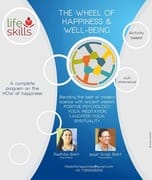
Designed for workplaces and educational institutions, this program integrates positive psychology, meditation, yoga, laughter yoga, and spirituality. Participants found it highly valuable, appreciating its comprehensive approach.

Meditate Like the Buddha:

A weekly, early-morning meditation session focused purely on mindfulness and inner stillness. Participants loved its simplicity and requested daily sessions.

Happiness Boot Camp:

Held on weekends in parks, this family-friendly program combined yoga, meditation, laughter yoga, and fun activities. The response was overwhelmingly positive.

East Meets West Retreat:

A week-long retreat blending modern science with ancient wisdom. Participants learned to create a meaningful and joyful life while training to become versatile Happiness and Well-Being Facilitators. The retreat featured practices such as yoga nidra, surya namaskara, the five Tibetans, anapana meditation, sufi meditation, and happiness activities.

The Recipe for Happiness:

After years of practice, experimentation, and interaction with thousands of participants, we believe we have discovered a genuine recipe for happiness and well-being. It is a blend of modern insights and ancient wisdom, woven together with the threads of mindfulness, physical vitality, and emotional connection.

Ultimately, the greatest fulfillment comes from touching lives -helping others discover their own paths to happiness and well-being.

© Jagat Singh Bisht

(Master Teacher: Happiness & Well-Being, Laughter Yoga Master Trainer, Author, Blogger, Educator, and Speaker.)

Founder:  LifeSkills

A Pathway to Authentic Happiness, Well-Being & A Fulfilling Life! We teach skills to lead a healthy, happy and meaningful life.

The Science of Happiness (Positive Psychology), Meditation, Yoga, Spirituality and Laughter Yoga. We conduct talks, seminars, workshops, retreats and training.

≈ Editor – Shri Hemant Bawankar/Editor (English) – Captain Pravin Raghuvanshi, NM ≈
Please share your Post !

Shares

English Literature – Articles ☆ – ‘The Elusive Pursuit of Eternal Bliss…’ – ☆ Captain Pravin Raghuvanshi, NM ☆

Captain Pravin Raghuvanshi, NM

(Captain Pravin Raghuvanshi—an ex Naval Officer, possesses a multifaceted personality. He served as Senior Advisor in prestigious Supercomputer organisation C-DAC, Pune. An alumnus of IIM Ahmedabad was involved in various Artificial Intelligence and High-Performance Computing projects of national and international repute. He has got a long experience in the field of ‘Natural Language Processing’, especially, in the domain of Machine Translation. He has taken the mantle of translating the timeless beauties of Indian literature upon himself so that it reaches across the globe. He has also undertaken translation work for Shri Narendra Modi, the Hon’ble Prime Minister of India, which was highly appreciated by him. He is also a member of ‘Bombay Film Writer Association’.)

We present his thought for the day ~ ‘The Elusive Pursuit of Eternal Bliss...’ ~We extend our heartiest thanks to the learned author Captain Pravin Raghuvanshi Ji, who is very well conversant with Hindi, Sanskrit, English and Urdu languages for sharing this classic poem.  

☆ ~ ‘The Elusive Pursuit of Eternal Bliss…’ ~? ☆

☆

In the relentless quest for happiness, we often find ourselves lost in a labyrinth of fleeting pleasures. We mistake momentary highs for lasting bliss, and in doing so, we sacrifice our very essence on the altar of transience.

The truth is, eternal bliss is not a destination; it’s a state of being. It’s the culmination of a journey that begins with self-awareness, self-reflection, and self-transformation.

We must recognize that the happiness we derive from worldly pleasures is but a pale imitation of true bliss. It’s a temporary reprieve from the existential despair that gnaws at our very soul.

To experience eternal bliss, we must transcend the mundane and tap into the divine. We must silence the cacophony of our ego and listen to the whispers of our conscience.

It’s a journey that requires courage, conviction, and perseverance. But the reward is worth the effort. For when we finally attain eternal bliss, we realize that it’s not something we’ve acquired; it’s something we’ve always been.

So let us embark on this journey of self-discovery, and may we find the eternal bliss that lies within us.

☆

~ Pravin Raghuvanshi

© Captain Pravin Raghuvanshi, NM

Pune

≈ Blog Editor – Shri Hemant Bawankar/Editor (English) – Captain Pravin Raghuvanshi, NM ≈
Please share your Post !

Shares

English Literature – Articles ☆ The Foundations of Happiness and Well-being: A Positive Psychology Perspective – ☆ Mr. Jagat Singh Bisht ☆

Shri Jagat Singh Bisht

(Master Teacher: Happiness & Well-Being, Laughter Yoga Master Trainer, Author, Blogger, Educator, and Speaker.)

☆ – The Foundations of Happiness and Well-being: A Positive Psychology Perspective – ☆ Mr. Jagat Singh Bisht ☆

Happiness is more than fleeting joy; it encompasses a sense of contentment, purpose, and the belief that one’s life is meaningful and worthwhile. Positive psychology offers insights into how we can cultivate this deeper sense of well-being by focusing on key elements and practical strategies.

The Five Pillars of Well-being:

Positive psychology identifies five essential components of well-being:

  1. Positive Emotion: Experiencing joy, hope, warmth, and contentment. These emotions can relate to the past (e.g., satisfaction, pride), the present (e.g., calm, pleasure, flow), or the future (e.g., hope, optimism).
  2. Engagement: Deep involvement in activities that capture our interest and challenge us. This state, known as “flow,” occurs when we lose track of time and are fully absorbed in what we are doing.
  3. Relationships: Strong connections with family, friends, and colleagues bring richness to life. Relationships flourish through mutual support, regular interactions, and meaningful communication.
  4. Meaning: Finding purpose by connecting to something larger than ourselves, whether through work, spirituality, or contributing to society.
  5. Accomplishment: Achieving goals and recognising our successes provides motivation and fulfilment.

Each of these pillars can be cultivated to enhance overall well-being.

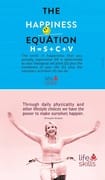
Understanding the Happiness Formula:

Happiness, according to positive psychology, is influenced by three factors:

H = S + C + V

  H: Enduring level of happiness.

  S: Set range of happiness, influenced by genetics (approximately 50%).

  C: Circumstances of life (around 10%).

  V: Voluntary activities (about 40%), which we can control.

While our genetic predisposition and life circumstances play a role, a significant portion of our happiness comes from intentional actions.

Common Barriers to Happiness:

  1. The Happiness Thermostat: Our happiness tends to revert to a baseline level regardless of life’s highs or lows.
  2. The Hedonic Treadmill: We quickly adapt to positive changes, leading to rising expectations and diminishing satisfaction.

 Strategies to Boost Happiness:

  1. Practise Gratitude: Reflect daily on three things you are grateful for. This “What-Went-Well” exercise shifts focus to the positives.
  2. Engage Fully: Immerse yourself in activities that bring you joy or challenge you. Pursue hobbies, sports, or creative endeavours.
  3. Foster Relationships: Build strong social ties by showing interest, offering support, and creating rituals, such as shared meals or regular outings.
  4. Find Meaning: Contribute to a cause larger than yourself. Volunteer, mentor, or participate in activities that resonate with your values.
  5. Savour Life’s Pleasures: Take time to enjoy small joys, like a beautiful sunset or a heartfelt conversation.
  6. Simplify: Declutter your schedule and focus on what truly matters. Say no to unnecessary commitments.

Cultivating Virtues and Strengths:

Happiness also stems from living virtuously. Positive psychology highlights six universal virtues:

Wisdom: Gained through curiosity and learning.

Courage: Shown through perseverance and integrity.

Humanity: Expressed in kindness and generosity.

Justice: Fostered by fairness and leadership.

Temperance: Practised through self-control and humility.

Transcendence: Found in gratitude, spirituality, and a sense of purpose.

Discovering and using your personal strengths daily can create lasting fulfilment.

The Three Lives of Happiness:

Positive psychology outlines three types of fulfilling lives:

  1. The Pleasant Life: Enjoying positive emotions and simple pleasures.
  2. The Good Life: Using personal strengths to find gratification in work, relationships, and play.
  3. The Meaningful Life: Connecting your strengths and virtues to a higher purpose.

Practical Exercises for Happiness:

The Gratitude Visit: Write a heartfelt letter to someone who has positively influenced your life, and deliver it in person.

Acts of Kindness: Perform three kind acts weekly, whether for friends, strangers, or family.

Mindful Living: Practise meditation, yoga, or mindful breathing to reduce stress and cultivate peace.

Forgiveness Exercise: Write a letter forgiving someone who hurt you, even if you don’t send it.

Embracing a Happier Life:

Happiness isn’t a destination but a journey. Engage deeply in meaningful activities, nurture your relationships, and practise gratitude. By aligning your actions with your values and strengths, you can build a life rich in joy, purpose, and connection.

© Jagat Singh Bisht

(Master Teacher: Happiness & Well-Being, Laughter Yoga Master Trainer, Author, Blogger, Educator, and Speaker.)

Founder:  LifeSkills

A Pathway to Authentic Happiness, Well-Being & A Fulfilling Life! We teach skills to lead a healthy, happy and meaningful life.

The Science of Happiness (Positive Psychology), Meditation, Yoga, Spirituality and Laughter Yoga. We conduct talks, seminars, workshops, retreats and training.

Please feel free to call/WhatsApp us at +917389938255 or email lifeskills.happiness@gmail.com if you wish to attend our program or would like to arrange one at your end.

≈ Editor – Shri Hemant Bawankar/Editor (English) – Captain Pravin Raghuvanshi, NM ≈

Please share your Post !

Shares

English Literature – Articles ☆ World Meditation Day: A Gateway to Inner Bliss ☆ Mr. Jagat Singh Bisht ☆

Shri Jagat Singh Bisht

(Master Teacher: Happiness & Well-Being, Laughter Yoga Master Trainer, Author, Blogger, Educator, and Speaker.)

☆ – World Meditation Day: A Gateway to Inner Bliss – ☆ Mr. Jagat Singh Bisht ☆

In a world filled with chaos, conflict, and ceaseless activity, humanity finds itself yearning for an oasis of peace. As we stand on the threshold of the first-ever World Meditation Day on December 21, 2024, a unique opportunity arises for us to reflect on the timeless wisdom of meditation, a practice that has nurtured countless souls across millennia. Today, let us embark on a journey inward, seeking solace and serenity in the art of meditation—a journey that could transform our lives forever.

The Path to Freedom:

Amidst life’s turbulence, the ancient question persists: Is there a way to end suffering? Over 2,500 years ago, the Buddha illuminated this path. Through meditation, he discovered liberation from pain and sorrow, attaining enlightenment beneath the Bodhi tree. His teachings, rooted in mindfulness and deep observation, offer a practical guide for cultivating inner peace.

Meditation is more than a practice—it is a profound healing process. As Matthieu Ricard aptly puts it, “Meditation is a practice that makes it possible to cultivate and develop certain basic positive human qualities in the same way as other forms of training make it possible to play a musical instrument or acquire any other skill.”

When we meditate, we calm the storm within. The mind finds clarity, anger dissipates, and the heart fills with love, compassion, and wisdom. With regular practice, meditation transforms us, leading to Nibbana—a state of supreme bliss where suffering ceases.

The Science of Stillness:

Meditation not only elevates the spirit but also nourishes the body and mind. Research reveals that long-term meditators experience a reduced cortisol response under stress, promoting biological calm and overall well-being. As Daniel Goleman emphasizes, “Meditation has the effect of creating biological calm and reducing stress.”

The simplicity of meditation is its beauty. In essence, it is “simply sitting, simply breathing, simply being.” The practice allows us to reconnect with our breath, described by Thich Nhat Hanh as “the bridge which connects life to consciousness.” This bridge anchors us in the present moment, helping us to let go of distractions and reclaim inner peace.

Insights from the Buddha:

The Buddha’s teachings on meditation offer a twofold approach: serenity meditation (samatha bhavana) and insight meditation (vipassana bhavana). Serenity meditation cultivates a calm and concentrated mind, while insight meditation reveals the true nature of reality. Central to these practices is the mindfulness of breathing, a meditation the Buddha practiced to achieve enlightenment.

His instructions are straightforward yet profound: observe the body, feelings, mind, and phenomena with unwavering mindfulness. These are the foundations of liberation. As the Buddha declared, “These four establishments of mindfulness, when developed and cultivated, lead to going beyond from the near shore to the far shore.”

A Call to Meditate:

Meditation is not merely an exercise; it is an exploration of life’s deepest truths. It empowers us to see things as they are, untangling the web of ignorance and attachment. Paramahansa Yogananda beautifully described it as “a portable paradise.”

For those seeking guidance, Meditate Like the Buddha: A Step-by-Step Guide by Jagat Singh Bisht offers practical insights. This book demystifies the art of meditation, presenting it as a universal practice that has enriched lives for centuries.

An Invitation to Stillness:

As we celebrate the inaugural World Meditation Day, let us resolve to embrace this timeless practice. Sit in stillness, breathe deeply, and embark on the journey within. The peace we cultivate today can ripple outward, touching the lives of those around us and creating a harmonious world.

In the words of the Buddha, “There is this one way to the purification of beings, for the overcoming of sorrow and distress, for the disappearance of pain and sadness…that is to say, the four foundations of mindfulness.”

Let us make this day a turning point—a moment to awaken to our true potential and weave meditation into the fabric of our lives. For in the quietude of meditation lies the answer to life’s most profound questions. Will you take the first step today?

© Jagat Singh Bisht

(Master Teacher: Happiness & Well-Being, Laughter Yoga Master Trainer, Author, Blogger, Educator, and Speaker.)

Founder:  LifeSkills

A Pathway to Authentic Happiness, Well-Being & A Fulfilling Life! We teach skills to lead a healthy, happy and meaningful life.

The Science of Happiness (Positive Psychology), Meditation, Yoga, Spirituality and Laughter Yoga. We conduct talks, seminars, workshops, retreats and training.

Please feel free to call/WhatsApp us at +917389938255 or email lifeskills.happiness@gmail.com if you wish to attend our program or would like to arrange one at your end.

≈ Editor – Shri Hemant Bawankar/Editor (English) – Captain Pravin Raghuvanshi, NM ≈

Please share your Post !

Shares