(ई-अभिव्यक्ति में मॉरीशस के सुप्रसिद्ध वरिष्ठ साहित्यकार श्री रामदेव धुरंधर जी का हार्दिक स्वागत। आपकी रचनाओं में गिरमिटया बन कर गए भारतीय श्रमिकों की बदलती पीढ़ी और उनकी पीड़ा का जीवंत चित्रण होता हैं। आपकी कुछ चर्चित रचनाएँ – उपन्यास – चेहरों का आदमी, छोटी मछली बड़ी मछली, पूछो इस माटी से, बनते बिगड़ते रिश्ते, पथरीला सोना। कहानी संग्रह – विष-मंथन, जन्म की एक भूल, व्यंग्य संग्रह – कलजुगी धरम, चेहरों के झमेले, पापी स्वर्ग, बंदे आगे भी देख, लघुकथा संग्रह – चेहरे मेरे तुम्हारे, यात्रा साथ-साथ, एक धरती एक आकाश, आते-जाते लोग। आपको हिंदी सेवा के लिए सातवें विश्व हिंदी सम्मेलन सूरीनाम (2003) में सम्मानित किया गया। इसके अलावा आपको विश्व भाषा हिंदी सम्मान (विश्व हिंदी सचिवालय, 2013), साहित्य शिरोमणि सम्मान (मॉरिशस भारत अंतरराष्ट्रीय संगोष्ठी 2015), हिंदी विदेश प्रसार सम्मान (उ.प. हिंदी संस्थान लखनऊ, 2015), श्रीलाल शुक्ल इफको साहित्य सम्मान (जनवरी 2017) सहित कई सम्मान व पुरस्कार मिले हैं। हम श्री रामदेव जी के चुनिन्दा साहित्य को ई अभिव्यक्ति के प्रबुद्ध पाठकों से समय समय पर साझा करने का प्रयास करेंगे।
आज प्रस्तुत है आपकी एक विचारणीय लघुकथा “– खून का रिश्ता…” ।)
~ मॉरिशस से ~
☆ कथा कहानी ☆ लघुकथा # १०० — खून का रिश्ता —☆ श्री रामदेव धुरंधर ☆
(विशेष — कुछ शब्दों में एक महत्वपूर्ण कहानी)
विश्व प्रसिद्ध भूगोल वेत्ता अपने काम से अमरीका गया। एक अमरीकी ने उससे कहा, आपके हस्ताक्षर से एक जिज्ञासा हो रही है। आपके देश में इसी हस्ताक्षर के एक लेखक हैं। क्या वे आप के रिश्तेदार हैं? यह सुनने पर वह चौंक गया। वह लेखक तो उसका पिता था। पर उसने कहा, उन्हें जानता तो हूँ, लेकिन वे मेरे रिश्तेदार नहीं हैं। इस पलायन का उसका अपना कारण था। उससे उसके पिता की कृतियों के बारे में पूछ लिया जाता तो उसकी कोई कृति न पढ़ने के कारण वह उत्तर न कर पाता। पर उसका यह पलायन अंतिम नहीं था। वह घर लौटने पर अपने पिता के गले लग कर कहता, “मेरे पिता, मैंने विदेश में तुम्हारी चर्चा तो खूब सुनी।”
Authored six books on happiness: Cultivating Happiness, Nirvana – The Highest Happiness, Meditate Like the Buddha, Mission Happiness, A Flourishing Life, and The Little Book of Happiness. He served in a bank for thirty-five years and has been propagating happiness and well-being among people for the past twenty years. He is on a mission – Mission Happiness!
🌻Buddham Saranam Gachhami: My Slightly Wobbly, Wildly Wonderful Walk to the Dhamma🌻
You know, when people talk about a “spiritual awakening,” they often speak in the tone one uses while describing a Himalayan sunrise—golden light, misty mountains, soul-stirring violins in the background. Not me. My spiritual journey didn’t begin with a flash of inner illumination. It began, quite unromantically, with a thud—on the hard bedrock of disappointment, loneliness, confusion, and a sincere inability to make sense of a world where phone batteries die faster than friendships.
There I was, wobbling through life like a three-legged table, hoping to find something—anything—that might fix the wonky legs. The quest began with a certain desperation, a deep-seated sense that there must be more to life than emails, EMIs, and existential dread.
Once I recognised that I needed a spiritual path, I entered the curious spiritual supermarket. Shelves lined with teachings, masters, promises of bliss, chants, beads, bells, retreats, and recipes for “instant peace” (just add silence and stir). It was dazzling—and utterly disorienting.
So, like any confused consumer with a shopping basket of hopes, I chose the most popular route: the eclectic combo-platter.
A little of this, a little of that.
Buddhist mindfulness in the morning (with green tea).
Hindu mantra recitations in the afternoon (with incense).
Christian prayer in the evening (with a whiff of grace).
Sufi whirling on Sundays (with mild dizziness).
Kabbalistic meditations and Tibetan visualisations on alternate days.
It was a potpourri of paths, a spiritual salad.
Delightful? Yes.
Deep? Not quite.
It felt like I was hopping across stepping stones, never resting long enough to absorb the wisdom underfoot. A fine halfway house, yes—but a house doesn’t become a home until you stop wandering.
And then, on a quiet afternoon (perhaps the incense was working overtime), I stumbled upon a verse from the Dhammapada. Just four plain lines—no special effects, no thunderclaps. But something clicked.
“Abstain from all unwholesome deeds,
Perform wholesome ones,
Purify your mind—
This is the teaching of the Buddhas.”
No frills. No philosophies tangled in metaphors. Just the distilled clarity of a mind that had seen through everything.
It struck me—not with fireworks, but with the calm finality of truth. This was not another item on the buffet. This was the recipe. Three ingredients:
Don’t be a nuisance.
Try to be kind.
Clean up the mental mess.
Simple. Terrifyingly so. No rituals, no robes, no rituals wrapped in robes. Just direct instructions, like a cosmic Post-it note stuck to your forehead.
And something in me responded. The noise settled. The inner traffic jam eased. And from somewhere deep inside, a soft voice rose:
“Buddham saranam gachhami…”
I go to the Buddha for refuge.
Not as a tourist. Not as a dilettante. But as someone who’s finally stopped looking for shortcuts.
The Buddha didn’t promise a quick fix. He offered something better: a clear path, trodden by the wise, free of gimmicks and glitter, where joy lies not in the arrival but in the journey itself—when walked with mindfulness, compassion, and the courage to look inward.
And so here I am. Not floating in bliss. Not enlightened (yet). But walking—with fewer detours, a lighter backpack, and a heart that hums a little more gently with each step.
Dhamma, it turns out, isn’t just a philosophy. It’s a way to live, a way to smile, and—on most days—a way to stay sane in an increasingly insane world.
A Pathway to Authentic Happiness, Well-Being & A Fulfilling Life! We teach skills to lead a healthy, happy and meaningful life.
The Science of Happiness (Positive Psychology), Meditation, Yoga, Spirituality and Laughter Yoga. We conduct talks, seminars, workshops, retreats and training.
Authored six books on happiness: Cultivating Happiness, Nirvana – The Highest Happiness, Meditate Like the Buddha, Mission Happiness, A Flourishing Life, and The Little Book of Happiness. He served in a bank for thirty-five years and has been propagating happiness and well-being among people for the past twenty years. He is on a mission – Mission Happiness!
☆ # 05: Effortless practices for Happiness and Stress Management ☆
BE A FREE SOUL
“I think, one must finally take one’s life in one’s arms.”
Arthur Miller
We are all born free. We have the potential to be winners. We have a right to be self-determining. An authentic person experiences self-reality by knowing, being, and becoming a credible, responsive person.
We all have within us a child, an adult, and a parent. This becomes apparent when we respond differently to different situations – exhibiting fear, playfulness, balance, self-control, hatred, love, and compassion.
Sometimes we are childlike – full of feelings and emotions – laughing, crying, jumping, shouting, and screaming. At times we behave like an adult – fully aware and organized – oriented to the current reality. On other occasions, we tend to be like parents – critical and prejudicial – and often nurturing too!
Every state of mind is equally important and there is a time for it. There is a time to work and a time to play, a time to laugh and a time to cry, and a time to speak and a time to be silent.
We are all born free. We have the potential to be winners. We have a right to be self-determining. An authentic person experiences self-reality by knowing, being, and becoming a credible, responsive person.
Autonomy is a human birthright. Being autonomous means being self-governing and determining one’s own destiny. A slave can never be happy. A slave can never flourish.
According to Stephen Covey, “Every human has four endowments – self-awareness, conscience, independent will and creative freedom. These give us the ultimate human freedom… These give us the power to choose, to respond, and to change.”
We must begin by taking responsibility for our own actions and feelings. We must also learn to throw off patterns that are irrelevant and inappropriate to living in the here and now.
The litmus test of a truly autonomous person lies hidden in three fundamental capacities – awareness, spontaneity, and intimacy.
AWARENESS
Awareness is knowing what is happening now. An autonomous person is aware. His body and mind are in unison in the here and now. It is not that the body is physically present somewhere and the mind is wandering elsewhere.
One must not only be fully present but also fully aware of the situation, surroundings, and feelings of self and others. The decisions taken must depend upon the facts of the situation and not on some pre-conceived notions. Prejudices from the past must not impact actions in the present.
An autonomous person looks objectively at the situation in the present, listens attentively, seeks clarifications to arrive at a deeper understanding of the situation, and arrives at a balanced decision without being influenced by opinions.
One must be in touch with one’s feelings and sensations in the body. If you are tense, your breath is shallow. You can relax by taking a few deep breaths and exhaling in a relaxed manner. That will help you clear your mind and make a better decision.
Always listen to the other person with empathy, do not interrupt, and ask questions that help you understand the person in the right perspective. Do not form opinions about the person based on what you have been told earlier. Keep your mind open, make your own observations, and arrive at your conclusions based on the facts before you.
You must be fully present there. Fully mindful. Do not let your attention wander hither and thither. Let past prejudices and opinions not influence you. Be your own witness. Decide on your own based on the merits of the case. Take full responsibility of the decision taken by you. Be honest and upright.
Sometimes our parental influences crop up to affect our decisions or the playful child contaminates our thinking. One must be vigilant and must be in the right frame of mind, always fully aware, to make the right decisions in the here and now.
SPONTANEITY
You must have the spontaneity to choose from a whole range of behaviour that the child, adult, and parent residing within you prompt you to adopt. Your decisions must not always along the pre-decided patterns that you have been accustomed to witnessing for ages.
Spontaneity denotes choosing the right actions from a wide range of possibilities. You must choose the option that you find appropriate, as per your inner voice, and accept full responsibility for the decision. Let not your inner child or parent influence you, do not be victim of confusing voices from the past. Be analytical, choose what you find appropriate, and feel relaxed.
If you arrive at free and independent decisions, without being swayed by feelings and prejudices, you will not experience stress. You will be happy. Spontaneity helps you to be autonomous and take control of your destiny.
An autonomous person is spontaneous and flexible – not rigid and impulsive. The person is free despite basic instincts or drives, free despite inherited characteristics and environmental influences. An autonomous person can be realistic and choose from the entire spectrum of behaviour appropriate to the situation.
INTIMACY
Intimacy is expressing feelings of warmth, tenderness, and closeness toward others. One must shed masks and old programming, if any, and be warm toward people. One should not be sarcastic or play games with people. One should learn to let go and develop a capacity for intimacy.
People moving toward autonomy expands their personal capacities for awareness, spontaneity, and intimacy. Once you are open and have no conflicting voices within, you are in full control. There is no tension. You feel happy.
EXERCISE
Look inward to know yourself deeper.
Spare a few moments for yourself in a quiet place.
Just ponder:
How often do you behave like a child? Do you sulk or get angry often? Do you still laugh and play like a child?
What parental influences have you inherited? Do you have too many rigidities and prejudices? Are you nurturing and kind toward people?
How often do you analyse situations impartially? Are you aware of the circumstances and feelings of others? Do you make decisions in the here and now?
Are you still carrying burdens from the past that you would like to shed off?
How stressed do you feel?
Do you feel happy, content, and peaceful?
Are you doing your best under the situations?
What changes would you like to make in your life?
Where do you see yourself five years from now, ten years from now?
Take your own time. No hurry.
Get back to the questions that you feel are important and give a second thought.
Keep exploring. Try to be better and better every day.
You will feel liberated and on control of your destiny.
THE PARABLE OF THE EAGLE
Have you heard of the parable of the eagle? The parable is paraphrased beautifully in ‘Born to win’:
“Once upon a time, while walking through the forest, a certain man found a young eagle. He took it home and put it in his barnyard where it soon learned to eat chicken feed and to behave as chickens behave.
“One day, a naturalist who was passing by inquired of the owner why it was that an eagle, the king of all birds, should be confined to live in the barnyard with the chickens.
“Since I have given it chicken feed and trained it to be a chicken, it has never learned to fly,” replied the owner. “It behaves as chickens behave, so it is no longer an eagle.”
“Still,” insisted the naturalist, “it has the heart of an eagle and can surely be taught to fly.”
“After talking it over, the two men agreed to find out whether this was possible. Gently the naturalist took the eagle in his arms and said, “You belong to the sky, and not to the earth. Stretch forth your wings and fly.”
“The eagle, however, was confused; he did not know who he was, and, seeing the chickens eating their food, he jumped down to be with them again.
“Undismayed, the naturalist took the eagle on the following day, up on the roof of the house, and urged him again, saying, “You are an eagle. Stretch forth your wings and fly.” But the eagle was afraid of his unknown self and world and jumped down once more for the chicken food.
“On the third day the naturalist rose early and took the eagle out of the barnyard to a high mountain. There, he held the king of birds high above him and encouraged again, saying, ”You are an eagle. You belong to the sky as well as to the earth. Stretch forth your wings now, and fly.”
“The eagle looked around, back towards the barnyard and up to the sky. Still, he did not fly. Then the naturalist lifted him straight towards the sun and it happened that the eagle began to tremble, slowly he stretched his wings. At last, with a triumphant cry, he soared into the heavens.
“It may be that the eagle still remembers the chickens with nostalgia; it may be that he occasionally revisits the barnyard. But as far as anyone knows, he has never returned to lead the life of a chicken, He was an eagle though he had been kept and tamed as a chicken.”
Be a winner. Go, kiss the world!
“It takes courage to be a real winner – not a winner in the sense of beating out someone else by always insisting on coming out on top – but a winner at responding to life. It takes courage to experience the freedom that comes with autonomy, courage to accept intimacy and directly encounter other persons, courage to take a stand in an unpopular cause, courage to choose authenticity over approval and to choose it again and again, courage to accept the responsibility for your own choices, and, indeed, courage to be the very unique person you really are.”
A Pathway to Authentic Happiness, Well-Being & A Fulfilling Life! We teach skills to lead a healthy, happy and meaningful life.
The Science of Happiness (Positive Psychology), Meditation, Yoga, Spirituality and Laughter Yoga. We conduct talks, seminars, workshops, retreats and training.
A Pathway to Authentic Happiness, Well-Being & A Fulfilling Life! We teach skills to lead a healthy, happy and meaningful life.
The Science of Happiness (Positive Psychology), Meditation, Yoga, Spirituality and Laughter Yoga. We conduct talks, seminars, workshops, retreats and training.
We are grateful to Shri Jagat Singh Bisht Ji for sharing his spiritual and meditation-related literature from time to time with the enlightened readers of e-abhivyakti.com. He mentions that
Spirituality begins with recognising the difference between what harms and what heals.
Meditation calms the mind, dissolves anger, hatred, and ignorance, and fosters love, compassion, and wisdom.
We are starting his new series on meditation, “Meditate Like The Buddha,” tomorrow.
Today, we present his very interesting article on spirituality, “The First Step to Being Spiritual.”
☆ The First Step to Being Spiritual☆ Mr. Jagat Singh Bisht ☆
Have you ever paused amidst the busyness of life and wondered, Is there more to my existence than this? If you have, you are not alone. At some point, life nudges us to explore the deeper meaning of our journey. This nudge is often the first whisper of spirituality. But how does one take that first step?
The Buddha, one of the greatest spiritual teachers the world has known, offers a simple yet profound guide in the Dhammapada. His teachings invite us to begin with clarity and purpose, by understanding and refining our actions, speech, and thoughts.
He said:
“Abstain from all unwholesome deeds,
Perform wholesome ones,
Purify your mind.
This is the teaching of the Enlightened Ones.”
These words hold the essence of a spiritual life—one rooted in mindfulness, kindness, and self-awareness.
What Does This Mean for You?
Unwholesome vs. Wholesome Actions:
Spirituality begins with recognising the difference between what harms and what heals. Unwholesome actions are those that disturb the peace and harmony of others and, in doing so, trouble our own minds. Wholesome actions, on the other hand, uplift, nurture, and bring joy.
The Buddha’s teachings categorise these actions into three spheres: words, body, and mind.
Words That Heal:
Words are powerful—they can build bridges or burn them. Have you ever felt the sting of harsh speech or the warmth of kind words?
To walk the spiritual path, the Buddha encourages us to avoid:
False speech: Speak only the truth. Let your words be reliable and worthy of trust.
Slander: Avoid gossip or words that sow discord. Instead, choose speech that fosters harmony.
Harsh speech: Replace criticism with kindness. Speak with gentleness and love.
Idle chatter: Value meaningful conversation. Speak at the right time, with purpose and thoughtfulness.
Actions That Nurture:
Our deeds, no matter how small, ripple through the lives of others.
Refrain from taking life: Show compassion to all living beings, cherishing life in all its forms.
Avoid taking what is not given: Respect others’ belongings and their hard-earned efforts.
Stay away from misconduct: Let your relationships be guided by respect, loyalty, and integrity.
Thoughts That Elevate:
Your thoughts shape your reality. Negative thoughts create inner turmoil, while positive ones foster peace.
Let go of covetousness: Be content with what you have and rejoice in others’ happiness.
Release ill-will: Replace anger with goodwill and forgiveness.
Embrace the right view: See the world as it truly is, free from distortion and negativity.
The Way Forward:
Taking the first step is about small, intentional changes. When you watch your words, align your actions with kindness, and cultivate a calm mind, you are already walking the spiritual path.
But the journey doesn’t end there. The next step is to “purify your mind.” How? Through meditation and wisdom. By sitting quietly with yourself each day, you begin to observe your thoughts, understand your mind’s tendencies, and gently guide it towards peace.
As the Buddha beautifully summarised:
“Watching his speech,
Well restrained in mind,
Let a man never commit any wrong with his body.
Let a man but keep these three roads of action clear,
And he will achieve the way.”
An Invitation to Begin:
You don’t need a perfect plan to start your spiritual journey. All you need is willingness—the willingness to take one small step today. Speak a kind word, perform a generous act, or sit in quiet reflection for a few moments.
Remember, the path to spiritual awakening is not a leap; it’s a series of small, mindful steps. Each step you take will bring you closer to peace, clarity, and a deeper connection with the world around you.
Let today be the day you take that first step. The journey is yours to embrace, and the destination, as the enlightened ones remind us, is worth every effort.
A Pathway to Authentic Happiness, Well-Being & A Fulfilling Life! We teach skills to lead a healthy, happy and meaningful life.
The Science of Happiness (Positive Psychology), Meditation, Yoga, Spirituality and Laughter Yoga. We conduct talks, seminars, workshops, retreats and training.
(Captain Pravin Raghuvanshi—an ex Naval Officer, possesses a multifaceted personality. Presently, he is serving as Senior Advisor in prestigious Supercomputer organisation C-DAC, Pune. An alumnus of IIM Ahmedabad is involved in various Artificial Intelligence and High-Performance Computing projects of national and international repute. He has got a long experience in the field of ‘Natural Language Processing’, especially, in the domain of Machine Translation. He has taken the mantle of translating the timeless beauties of Indian literature upon himself so that it reaches across the globe. He has also undertaken translation work for Shri Narendra Modi, the Hon’ble Prime Minister of India, which was highly appreciated by him. He is also a member of ‘Bombay Film Writer Association’.)
We present an English Version of Shri Sanjay Bhardwaj’s Hindi Poem “एकाकार”. We extend our heartiest thanks to the learned author Captain Pravin Raghuvanshi Ji (who is very well conversant with Hindi, Sanskrit, English and Urdu languages) for this beautiful translation and his artwork.)
(श्री संजय भारद्वाज जी – एक गंभीर व्यक्तित्व । जितना गहन अध्ययन उतना ही गंभीर लेखन। शब्दशिल्प इतना अद्भुत कि उनका पठन ही शब्दों – वाक्यों का आत्मसात हो जाना है।साहित्य उतना ही गंभीर है जितना उनका चिंतन और उतना ही उनका स्वभाव। संभवतः ये सभी शब्द आपस में संयोग रखते हैं और जीवन के अनुभव हमारे व्यक्तित्व पर अमिट छाप छोड़ जाते हैं। हम आपको प्रति रविवार उनके साप्ताहिक स्तम्भ – संजय उवाच शीर्षक के अंतर्गत उनकी चुनिन्दा रचनाएँ आप तक पहुँचा रहे हैं। सप्ताह के अन्य दिवसों पर आप उनके मनन चिंतन को संजय दृष्टि के अंतर्गत पढ़ सकते हैं। )
☆ संजय दृष्टि ☆ भूकंप ☆
पहले धरती में कंपन अनुभव हुआ। फिर तने जड़ के विरुद्ध बिगुल फूँकने लगे। इमारत हिलती-सी प्रतीत हुई। जो कुछ चलायमान था, सब डगमगाने लगा। आशंका का कर्णभेदी स्वर वातावरण में गूँजने लगा, हाहाकार का धुआँ अस्तित्व को निगलने हर ओर छाने लगा।
उसने मन को अंगद के पाँव-सा स्थिर रखा। धीरे-धीरे सब कुछ सामान्य होने लगा। अब बाहर और भीतर पूरी तरह से शांति है।
☆ अध्यक्ष– हिंदी आंदोलन परिवार ☆सदस्य– हिंदी अध्ययन मंडल, पुणे विश्वविद्यालय ☆संपादक– हम लोग ☆पूर्व सदस्य– महाराष्ट्र राज्य हिंदी साहित्य अकादमी ☆ ट्रस्टी- जाणीव, ए होम फॉर सीनियर सिटिजन्स ☆
संजयउवाच@डाटामेल.भारत
writersanjay@gmail.com
मोबाइल– 9890122603
≈ ब्लॉग संपादक – श्री हेमन्त बावनकर/सम्पादक मंडल (हिन्दी) – श्री विवेक रंजन श्रीवास्तव ‘विनम्र’/श्री जय प्रकाश पाण्डेय ≈
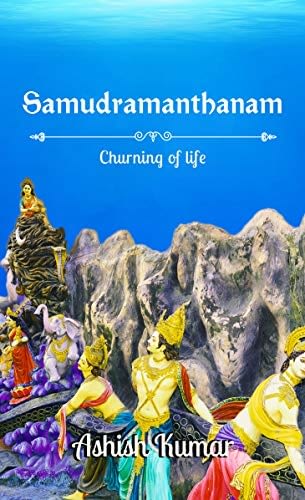
(It is difficult to comment about young author Mr Ashish Kumar and his mythological/spiritual writing. He has well researched Hindu Philosophy, Science and quest of success beyond the material realms. I am really mesmerized. I am sure you will be also amazed. We are pleased to begin a series on excerpts from his well acclaimed book “Samudramanthanam” . According to Mr Ashish “Samudramanthanam is less explained and explored till date. I have tried to give broad way of this one of the most important chapter of Hindu mythology. I have read many scriptures and take references from many temples and folk stories, to present the all possible aspects of portrait of Samudramanthanam.” Now our distinguished readers will be able to read this series on every Saturday.)
Now green color lotus emerges from ocean over which another form of Goddess was sitting. She was Santana Lakshmi (“Progeny Lakshmi “) is the goddess of bestowing offspring.
She emerges with eight arms from which one arm has holding a baby, who by itself holds a lotus in its hands. Two of her arms has a shield and a sword, with two more holding a water pitcher decorated with mango leaves and topped with a coconut. One hand is in the Abhaya Mudra which signifies the dispelling of darkness and conferring the boon of a child. She is seated on a green color lotus attired in red and yellow garments, wearing a garland of flowers and draped in gold jewelry.
She takes east position in sky to witness churning.
All these incarnations of Goddess Lakshmi were emerging on the Kartik month Amavasya or Diwali.
Next yellow color lotus starts appearing over which Veera Lakshmi (“Valorous Lakshmi “) or Dhairya Lakshmi (“Courage Lakshmi “) the goddess who bestows valor during battles and courage plus strength for overcoming difficulties in life was sitting.
Veera Lakshmi appears with eight arms, dressed in red clothing and draped in gold ornaments and flowers. She was seated on a yellow lotus and wields several weapons in her hands like a disc, bow, arrow and a trident or sword. She also holds a conch and several palm leaf scriptures. Two hands were portrayed in the Abhaya Mudra and Varadh Mudra postures that dispels fear, while signifying safety, reassurance and generosity. Her charming and peaceful countenance evokes a feeling of love and compassion, which instills fortitude and determination in the hearts of her devotees.
She takes south position in the sky to welcome her Goddess Maha Lakshmi.
Once again churning started. It is noon time and soon a light pink lotus appear over which Vijaya Lakshmi was sitting. Vijaya Lakshmi or Jaya Lakshmi (“Victorious Lakshmi “) is the goddess and the giver of victory, not only in battles. but also, for conquering hurdles in order to achieve success. She came as eight-armed, in red garments, carrying the chakra, shankh, sword, shield, lotus, pasha, other two hands in Abhaya mudra and Varada mudra.
She takes north east position in the sky.
Again, churning started. Next comes blue lotus over which sitting Vidya Lakshmi (“Knowledge Lakshmi “) the goddess and the bestowed of knowledge of arts and sciences. She is dressed in a white saree and has a resemblance to the goddess Saraswati. She holds a book of Vedas, a peacock feather as a pen, Varad mudra and Abhay mudra.
She takes north west position in the sky.
So, seven forms of Goddess Lakshmi till now appeared who were waiting to welcome Goddess MahaLakshmi the wife and other half of Lord Vishnu.
Then different types of smell started coming and a special white lotus appears over which four goddesses were seating. These four were also minor incarnation of Goddess Lakshmi apart from seven form of Goddess Lakshmi who appeared before.
These four are:
Aishwarya Lakshmi (“Prosperity Lakshmi “) the Goddess of riches only form of Lakshmi Goddess who mounts horse.
Saubhagya Lakshmi (“Giver of good Fortune”) she Gives prosperity in general.
Rajya Lakshmi (“Royal Lakshmi “) She who blesses rulers (with power) and
Vara Lakshmi (“Boon Lakshmi “) The goddess who bestows boons.
All these minor forms of Goddess Lakshmi take position of middle in sky.
Then Lord Vishnu appears and said, “This is the most auspicious time of year the kuhu kala moon of Amavasya of Kartik month. Night of Diwali and this is the time to emerge Goddess ‘Maha Lakshmi’.
Soon Lord Shiv with Goddess Parvati also appear. Then all three Lord Vishnu, Lord Shiva and Goddess Parvati take position before Lord Brahma.
After sometimes Goddess Saraswati also comes to welcome Goddess ‘Laskhmi’ in real form.
All remaining goddess and god have secured their position to witness most beautiful moment of the universe ever saw.
Then come Goddess Alakshmi, the elder sister of Goddess Lakshmi on her Mount ‘Owl’.
Lord Vishnu said, “all possible incarnation of mine. Which already incarnated and also whose about to incarnation wants to see this beautiful moment. So, from my inside all my ten Avtars will appears”
Then Lord Vishnu form start growing all around and ten faces, five at one side and five other side emerge from Lord Vishnu body. Yes, ten Avtars Matsya; Kurma; Varaha; Narasimha; Vamana; Parashurama; Rama; Krishna; Buddha Krishna; and Kalki. Faces were visible all-around Lord Vishnu.
Gandharvas came from heaven and started to play their divine instruments of music and apsaras started dancing all around.
All great sage doing chanting of holy mantras of Vedas.
Then at the most auspicious moment of universe on the night of Diwali, Goddess Lakshmi appears as a calm and loving lady with golden complexion dressed in bright colors red and adorned with precious jewels.
She has Four arms which represents the four ends of human life, Dharma (righteousness), Artha (wealth), Kama (desires) and Moksha (liberation).
She wears bright clothes and Ornaments: represent prosperity.
She holds lotus bud in two of her hands, which stands for beauty, purity, spirituality and fertility.
She sits on a fully blossomed dark pink lotus which signifies the seat of divine truth. It also indicates rising above worldly impurities. The four elephants which showering over her four kind of divine liquids symbolize the royal power.
A cascades of gold coins are seen flowing from her hands, this represents her as goddess of wealth. the one who blesses everyone with wealth.
An aura of divine happiness, mental and spiritual satisfaction, and prosperity always exists around Maha Lakshmi.
An owl emerges from the body of her elder sister Alakshmi and sits near Maha Lakshmi as a vehicle for Maha Lakshmi. Owl sleeps through the day and keeps awake during night. This denotes that if you want to attain success, you must remain awake when others are sleeping.
As Goddess Maha Lakshmi’s first view appears all the suffering of world vanished. Then Lord Shiva said, “Goddess of abundant Lord Vishnu is lifeless without you. You are one for which this churning of ocean is happening. Now you are here again to guide people, I think this churning must be stopped and I declare and request Saprtrishi to do a marriage of you with Lord Vishnu”
Lord Vishnu looks towards Lord Shiva and said with smile, “Mahdeva, your gentility is beyond world. Yes, Vishnu is incomplete without his power Goddess Maha Lakshmi. Now we will marriage and will take blessings of yours and Spatrishis and of Lord Brahma. As you said for common people this churning is end because Goddess of prosperity is here in absent of which life is not worth of living for people of earth but there is one more important aspect is there to do this churning and that is to get liquid of immortality ‘Amrita’. As blessings of Goddess Lakshmi are necessary for people of earth. The amrita is required for Sura of heaven and Asura of underworld. So, I request you to allow your permission to start this churning again.”
Lord Shiva said, “As you please Lord”
Then marriage of Lord Vishnu and Goddess Lakshmi happened and after enjoyment and festival celebration churning of ocean started again.
Goddess MahaLakshmi starts living with God Vishnu.
Dhana Lakshmi with people who use money wisely to run house of poor people.
Dhanya Lakshmi with farmers.
Gaja Lakshmi with people who understand and give equal right to animals.
Santana Lakshmi bless children to whom who never do partiality between children.
Veera/Dhairya Lakshmi starts live with people who show bravery to help who required help.
Jaya/Vijaya Lakshmi bless people victory who can justify that.
Vidya Lakshmi with people who do regular study of nature.
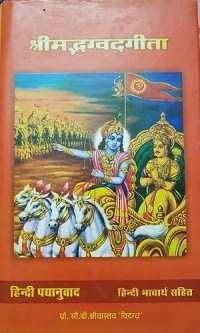
हिंदी पद्यानुवाद – प्रो चित्र भूषण श्रीवास्तव ‘विदग्ध’
पुरूषोत्तम योग
(संसार वृक्ष का कथन और भगवत्प्राप्ति का उपाय)
(क्षर, अक्षर, पुरुषोत्तम का विषय)
इति गुह्यतमं शास्त्रमिदमुक्तं मयानघ ।
एतद्बुद्ध्वा बुद्धिमान्स्यात्कृतकृत्यश्च भारत ।।20।।
इस प्रकार यह शास्त्र गुण मुझे बताया पार्थ
जिसे जान सब विज्ञजन लेते अमित कृतार्थ।।20।।
भावार्थ : हे निष्पाप अर्जुन! इस प्रकार यह अति रहस्ययुक्त गोपनीय शास्त्र मेरे द्वारा कहा गया, इसको तत्त्व से जानकर मनुष्य ज्ञानवान और कृतार्थ हो जाता है।।20।।
Thus, this most secret science has been taught by Me, O sinless one! On knowing this, a man becomes wise, and all his duties are accomplished, O Arjuna!।।20।।
हिंदी पद्यानुवाद – प्रो चित्र भूषण श्रीवास्तव ‘विदग्ध’
पुरूषोत्तम योग
(संसार वृक्ष का कथन और भगवत्प्राप्ति का उपाय)
न तद्भासयते सूर्यो न शशाङ्को न पावकः ।
यद्गत्वा न निवर्तन्ते तद्धाम परमं मम ।।6।।
सूर्य, शषी, पावक की भी आभारहित मुकाम
जिसे प्राप्त कर लौटते नहीं वो सेवा धाम ।।6।।
भावार्थ : जिस परम पद को प्राप्त होकर मनुष्य लौटकर संसार में नहीं आते उस स्वयं प्रकाश परम पद को न सूर्य प्रकाशित कर सकता है, न चन्द्रमा और न अग्नि ही, वही मेरा परम धाम (‘परम धाम’ का अर्थ गीता अध्याय 8 श्लोक 21 में देखना चाहिए।) है।।6।।
Neither doth the sun illumine there, nor the moon, nor the fire; having gone thither they return not; that is My supreme abode.।।6।।
प्रो चित्र भूषण श्रीवास्तव ‘विदग्ध’
ए १, शिला कुंज, विद्युत मण्डल कालोनी, रामपुर, नयागांव,जबलपुर ४८२००८