English Literature – Weekly Column ☆ Witful Warmth # 34 – A Journey through the Literary Fair… ☆ Dr. Suresh Kumar Mishra ‘Uratript’ ☆

Dr. Suresh Kumar Mishra ‘Uratript’

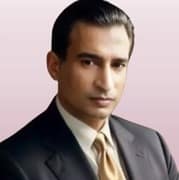
Dr. Suresh Kumar Mishra, known for his wit and wisdom, is a prolific writer, renowned satirist, children’s literature author, and poet. He has undertaken the monumental task of writing, editing, and coordinating a total of 55 books for the Telangana government at the primary school, college, and university levels. His editorial endeavors also include online editions of works by Acharya Ramchandra Shukla.

As a celebrated satirist, Dr. Suresh Kumar Mishra has carved a niche for himself, with over eight million viewers, readers, and listeners tuning in to his literary musings on the demise of a teacher on the Sahitya AajTak channel. His contributions have earned him prestigious accolades such as the Telangana Hindi Academy’s Shreshtha Navyuva Rachnakaar Samman in 2021, presented by the honorable Chief Minister of Telangana, Mr. Chandrashekhar Rao. He has also been honored with the Vyangya Yatra Ravindranath Tyagi Stairway Award and the Sahitya Srijan Samman, alongside recognition from Prime Minister Narendra Modi and various other esteemed institutions.

Dr. Suresh Kumar Mishra’s journey is not merely one of literary accomplishments but also a testament to his unwavering dedication, creativity, and profound impact on society. His story inspires us to strive for excellence, to use our talents for the betterment of others, and to leave an indelible mark on the world. Today we present his satire A Journey through the Literary Fair…. 

☆ Witful Warmth# 33 ☆

☆ Satire ☆ A Journey through the Literary Fair…  ☆ Dr. Suresh Kumar Mishra ‘Uratript’ ☆

In the realm of modern literature, one might be tempted to compare it to an ancient epic—if one could stomach such a thought without bursting into laughter. Each year, a grand spectacle unfolds, drawing in literary aficionados as if they were moths to a flickering flame. Writers, like hapless actors in a farcical play, assemble to showcase their wordsmithing wizardry. Yet, amidst this theatricality, the only glimmer that captures one’s attention is the dazzling light of awards, overshadowing any semblance of genuine literary merit.

Enter our protagonist, Mr. Raghubir Shukla, a rather ordinary author with ambitions as lofty as a hot air balloon, though without the necessary buoyancy to lift him off the ground. His trusty typewriter—a relic from a bygone era—had seen better days, often spitting out words with all the reliability of a drunken sailor. Despite this mechanical misfortune, Shukla was deeply committed to the serious business of literature, harboring a desire to win an award. This notion had burrowed into his mind like a goat munching on grass, refusing to budge.

Shukla had heard tales from fellow writers who basked in the glory of awards, spinning tales of their triumphs like poets celebrating their muses. They sang the praises of recognition, and here was Shukla, yearning for a slice of that sweet literary pie. Inspired by his peers, he gathered his friends in their quaint little village, embarking on a mission to concoct a master plan for securing awards.

But lo and behold, let us turn our gaze to the editors—the true puppeteers of this literary circus. They weave intricate webs, ensnaring unsuspecting authors in their traps, making it seem as though publishing is a privilege reserved for the chosen few. One such editor, the illustrious Raunak Chaubey, was a master of this art, editing countless anthologies with the efficiency of a factory assembly line. Chaubey had perfected the craft of extracting money from writers with the finesse of a magician pulling rabbits from hats.

“Your manuscript lacks depth,” Raunak casually informed a beleaguered writer, who looked as dejected as a child denied candy. “However, if you’d be willing to part with a modest sum, I could see my way clear to publishing it.” The writer’s face crumpled, resembling a deflated balloon, as the editor’s offer hung in the air, heavy with irony.

Now, let us not forget the audience—the unsuspecting readers who stand at the back, waiting with bated breath for a truly remarkable piece of writing. They often resemble children lost in a candy store, eyes wide with anticipation. Yet, when faced with the reality of mediocrity, their dreams shatter like glass underfoot. They yearn for literary brilliance, only to find themselves grappling with the sour taste of disappointment.

Authors crave accolades, but these coveted awards seem to play hide and seek. As soon as the winners are announced, writers adjust their spectacles and wonder, “Is this really the same author who couldn’t string together a coherent sentence?” The irony is as thick as molasses, coating the literary scene in a sticky sweetness that leaves a bitter aftertaste.

And then, amidst this cacophony of absurdity, a peculiar twist emerges. The award ceremonies are graced by illustrious figures, grandstanding on stage while extolling the virtues of literature. When the name of an award winner is called, a hazy figure takes the spotlight, flashing a self-satisfied grin as if they’ve just discovered the secret to immortality.

Yet, here lies a truth that cannot be ignored: these awards often elude the true writers, landing instead in the hands of those ensnared in the editor’s trap. “Why did I award them?” Raunak muses, his mind swirling with self-serving calculations. “Because they’re beneficial to me, and I possess an uncanny knack for securing their accolades.”

Shukla, in his fervor, decided to submit his work to a shared anthology, aided by a friend who shared his ambition. “I’ve penned a magnificent poem, dear Raunak!” he declared, puffing out his chest. “I wish for it to be included in the anthology.” Raunak, the ever-astute businessman, smiled knowingly. “Certainly, but a little contribution would be required.”

Upon rifling through his pockets, Shukla discovered the unfortunate reality: a worn-out pen and a few chocolate wrappers were all he had to offer. However, undeterred, he rallied his family for a few coins, casting his gaze toward the glimmering prize that danced tantalizingly in his imagination. He envisioned a literary rebirth, his life taking a turn as splendid as a dandelion blossoming in spring. As he submitted his name for the award, he found himself pondering, “Will I one day grace the stage to accept my rightful place among the luminaries?”

Finally, the day of the award ceremony arrived, the entire town adorned as if for a royal wedding. Shukla donned his finest tattered clothes, preparing himself to ascend the stage. As his name was called, he stepped forward, feeling as though he stood before the divine. The bright lights of the award seemed to flicker mockingly in his eyes.

Yet, a voice rang out from the stage, announcing, “We award based on status!” Shukla’s heart sank as dreams crumbled before his eyes. “Is this what awards truly signify—a mere piece of paper?” he lamented, grappling with the absurdity of it all.

After the ceremony, Shukla turned to his friends, sharing his newfound wisdom. “This literary fair is nothing more than a charade! We are mere priests of words, gazing upon the glories of paper while the essence of true writing slips through our fingers. In the dazzling allure of awards, the true authors fade into obscurity.”

And so, amidst the laughter of the crowd and the clinking of glasses, the curtain falls on this satirical spectacle—a tale woven with the threads of irony and hypocrisy. In the end, it is not the awards that define the writer, but rather the passion for the craft, the sincerity of expression, and the unwavering belief in the power of words. After all, as we navigate the grand literary fair, let us not forget the true essence of storytelling—the heart that beats behind the facade of fame and recognition.

****

© Dr. Suresh Kumar Mishra ‘Uratript’

Contact : Mo. +91 73 8657 8657, Email : drskm786@gmail.com

≈ Blog Editor – Shri Hemant Bawankar/Editor (English) – Captain Pravin Raghuvanshi, NM ≈
Please share your Post !

Shares

English Literature – Weekly Column ☆ Witful Warmth # 33 – The Last Respect: A Tale of Timeless Wisdom… ☆ Dr. Suresh Kumar Mishra ‘Uratript’ ☆

Dr. Suresh Kumar Mishra ‘Uratript’

Dr. Suresh Kumar Mishra, known for his wit and wisdom, is a prolific writer, renowned satirist, children’s literature author, and poet. He has undertaken the monumental task of writing, editing, and coordinating a total of 55 books for the Telangana government at the primary school, college, and university levels. His editorial endeavors also include online editions of works by Acharya Ramchandra Shukla.

As a celebrated satirist, Dr. Suresh Kumar Mishra has carved a niche for himself, with over eight million viewers, readers, and listeners tuning in to his literary musings on the demise of a teacher on the Sahitya AajTak channel. His contributions have earned him prestigious accolades such as the Telangana Hindi Academy’s Shreshtha Navyuva Rachnakaar Samman in 2021, presented by the honorable Chief Minister of Telangana, Mr. Chandrashekhar Rao. He has also been honored with the Vyangya Yatra Ravindranath Tyagi Stairway Award and the Sahitya Srijan Samman, alongside recognition from Prime Minister Narendra Modi and various other esteemed institutions.

Dr. Suresh Kumar Mishra’s journey is not merely one of literary accomplishments but also a testament to his unwavering dedication, creativity, and profound impact on society. His story inspires us to strive for excellence, to use our talents for the betterment of others, and to leave an indelible mark on the world. Today we present his सतिरे The Last Respect: A Tale of Timeless Wisdom…. 

☆ Witful Warmth# 33 ☆

☆ Satire ☆ The Last Respect: A Tale of Timeless Wisdom…  ☆ Dr. Suresh Kumar Mishra ‘Uratript’ ☆

Old age, in the great Indian context, is nothing short of sainthood—a peculiar sainthood bestowed without ceremony, robes, or the courtesy of silence. Instead, it comes with a gift box of expectations and ironic reverence. Our protagonist, Jagannath Sharma, an 82-year-old patriarch from Kanpur, found himself the unwilling recipient of this divine status.

Jagannath, with knees creaking louder than his conscience and a back bent like society’s moral compass, spent his days on a hand-me-down wooden chair—his throne of wisdom. His kingdom? A chaotic two-bedroom flat shared with three generations who respected him enough to ignore him. After all, nothing says “I care” like pretending your grandfather is part of the furniture.

“The greatest gift you can give your elders is your absence,” his grandson Keshav often declared, texting furiously on a phone that cost more than Jagannath’s lifetime savings. Keshav’s moral compass was an app, and it hadn’t been updated since his last semester break. “Old age is sacred,” Keshav added, “but so is Netflix, and I only have time for one.”

Jagannath’s plight wasn’t unique; it was a collective national treasure. In a land where the Vedas preach respect for elders, modern families practice it like yoga: occasionally and only for Instagram likes. His son, Prakash, nodded solemnly whenever someone mentioned “family values” but kept his father on a strict diet of leftover chapatis and indifference. “Papa, respect isn’t about actions. It’s about intentions, and mine are great,” Prakash explained, offering Jagannath the day-old tea he couldn’t finish. The tea was symbolic—a metaphor for life, steeped too long and utterly flavorless. “Bitter tea builds character,” Prakash said, ignoring the fact that his father’s character was already built and crumbling.

Indian culture, of course, takes pride in its multigenerational households. This pride is mostly expressed in speeches at weddings, while the elderly are left babysitting toddlers who mistake them for statues. “Grandpa is like the Taj Mahal,” Keshav’s younger sister Riya said. “Beautiful but best admired from a distance.” The irony wasn’t lost on Jagannath, who, like the Taj Mahal, felt abandoned, overpriced, and surrounded by clueless tourists. “If I’m a monument,” he muttered, “why do I have to pay rent?”

One fine Sunday, the family decided to organize a “Respect Your Elders” Day. The plan was simple: ignore Jagannath’s suggestions, serve him spicy food his stomach couldn’t handle, and post photos with heartfelt captions. “Hashtag gratitude,” Riya wrote, uploading a picture of Jagannath staring at a plate of chhole he hadn’t asked for. The food was a metaphor too: rich, colorful, and entirely unsuitable for the occasion. “Old people love spice,” Riya claimed, mistaking her grandfather for a Bollywood plotline.

As the day unfolded, Jagannath found himself the star of a circus he hadn’t signed up for. Prakash delivered a speech about the sacrifices of elders, conveniently omitting the part where he sold Jagannath’s ancestral land to buy an SUV. “Sacrifices must be honored,” Prakash declared, as his father silently sacrificed his appetite for the burnt dal served with extra smugness. “Family is everything,” Prakash continued, ignoring the WhatsApp notification from his lawyer about contesting his father’s pension rights.

The neighbors arrived to pay their respects, bringing sweets too sugary for Jagannath’s diabetes. “Elders are a treasure,” said Mrs. Gupta, who had previously complained about Jagannath sitting on the building’s shared bench. “Their wisdom is priceless,” she added, while Googling retirement homes for her own father. “It’s all about balance,” said Mr. Gupta, whose idea of balance involved keeping his father-in-law and the TV remote in separate rooms.

As the evening wore on, the family unveiled a gift: a Bluetooth hearing aid Jagannath couldn’t figure out how to use. “It’s cutting-edge technology,” Keshav explained, as his grandfather struggled to turn it on. “You’re just not trying hard enough,” Keshav added, ignoring his own struggles with basic empathy. “Technology bridges gaps,” Riya chimed in, widening the emotional chasm with every word.

Jagannath finally snapped when they brought out a cake shaped like a walking stick. “Cut it, Grandpa!” Riya cheered, as if the knife symbolized empowerment and not passive-aggressive mockery. “What a lovely gesture,” Mrs. Gupta remarked, taking a selfie with the cake and cropping Jagannath out.

Jagannath stood up, a Herculean task given his arthritis and the weight of generational hypocrisy. “Enough!” he bellowed, silencing the room like a power cut during IPL season. “You respect me as much as you respect traffic rules—only when someone’s watching!”

The family was shocked. Jagannath rarely spoke, having learned that his opinions were treated like WhatsApp forwards: ignored unless entertaining. “You call me wise but don’t trust me with the remote,” he continued. “You celebrate me like a festival—loudly and once a year.” “Your love is like a government scheme: well-advertised but poorly implemented.”

The speech went viral in the neighborhood WhatsApp group, earning Jagannath the nickname “Rebel Grandpa.” “He’s so brave,” Mrs. Gupta texted, before muting the group to watch her soap opera. “A true inspiration,” Prakash told the press, as he updated his LinkedIn bio to “Son of a Legend.”

Jagannath’s rebellion ended the charade but not the hypocrisy. The family hired a nurse to “care” for him, outsourcing their guilt with the efficiency of a corporate merger. “We’re doing our best,” Prakash said, patting himself on the back harder than anyone else ever did. “This is modern respect,” Keshav explained, scrolling past memes about self-love.

In the end, Jagannath found solace in solitude, realizing that true respect isn’t earned but demanded. “Old age is a gift,” he mused, “but in this family, it’s more like re-gifting.” “Wisdom isn’t appreciated until it’s quoted on a WhatsApp status,” he added, laughing for the first time in years.

The irony of Jagannath’s situation was as thick as the dust on his old photo albums. His family celebrated his legacy while erasing his presence. They admired his wisdom but avoided his words. And in their quest to honor him, they forgot to see him.

As the story of Jagannath Sharma circulates through middle-class drawing rooms and internet memes, one thing becomes clear: respect, like tea, is best served warm and without pretense. And old age, in the great Indian tradition, remains both a blessing and a cosmic joke.

****

© Dr. Suresh Kumar Mishra ‘Uratript’

Contact : Mo. +91 73 8657 8657, Email : drskm786@gmail.com

≈ Blog Editor – Shri Hemant Bawankar/Editor (English) – Captain Pravin Raghuvanshi, NM ≈

Please share your Post !

Shares

English Literature – Weekly Column ☆ Witful Warmth # 32 – The Cookie Chronicles: A Health Revolution… ☆ Dr. Suresh Kumar Mishra ‘Uratript’ ☆

Dr. Suresh Kumar Mishra ‘Uratript’

Dr. Suresh Kumar Mishra, known for his wit and wisdom, is a prolific writer, renowned satirist, children’s literature author, and poet. He has undertaken the monumental task of writing, editing, and coordinating a total of 55 books for the Telangana government at the primary school, college, and university levels. His editorial endeavors also include online editions of works by Acharya Ramchandra Shukla.

As a celebrated satirist, Dr. Suresh Kumar Mishra has carved a niche for himself, with over eight million viewers, readers, and listeners tuning in to his literary musings on the demise of a teacher on the Sahitya AajTak channel. His contributions have earned him prestigious accolades such as the Telangana Hindi Academy’s Shreshtha Navyuva Rachnakaar Samman in 2021, presented by the honorable Chief Minister of Telangana, Mr. Chandrashekhar Rao. He has also been honored with the Vyangya Yatra Ravindranath Tyagi Stairway Award and the Sahitya Srijan Samman, alongside recognition from Prime Minister Narendra Modi and various other esteemed institutions.

Dr. Suresh Kumar Mishra’s journey is not merely one of literary accomplishments but also a testament to his unwavering dedication, creativity, and profound impact on society. His story inspires us to strive for excellence, to use our talents for the betterment of others, and to leave an indelible mark on the world. Today we present his Satire The Cookie Chronicles: A Health Revolution...

☆ Witful Warmth# 32 ☆

☆ Satire ☆ The Cookie Chronicles: A Health Revolution…  ☆ Dr. Suresh Kumar Mishra ‘Uratript’ ☆

The world had been wrong for centuries—nay, millennia. Nutritionists, doctors, mothers clutching kale smoothies—all of them had perpetuated a grand lie. Vegetables, they said, were good for you. Fruits were heralded as nature’s candy. But I, Harold T. Whittleman, had discovered the truth: health lies in sugar and grease, washed down with a caramel-colored river of fizz.

It started as all great revolutions do—with a stroke of inspiration. Mine came at a discount store, where the fluorescent lighting shone down upon the holy trinity of human survival: cookies, chips, and cola. Each product was adorned with bright, cheerful labels that promised joy, satisfaction, and the possibility of collecting reward points. “Why toil with salads,” I thought, “when the universe has already perfected flavor in powdered cheese and high-fructose corn syrup?”

Thus began my dietary odyssey.

The Breakfast of Champions

Each morning, I feasted upon a breakfast of chocolate chip cookies. Not the sad, homemade kind baked by well-meaning grandmothers who thought raisins were a suitable substitute for joy—no, these were mass-produced miracles, engineered to crumble at the perfect angle when dunked into cola. Milk, after all, was for calves and weaklings.

My mornings were radiant. The sugar hit my bloodstream like a marching band on parade. My hands trembled, yes, but who needs steady hands when wielding a keyboard? My boss once asked why my reports were written in a font size of 72 and filled with random letters. I explained that I was too busy blazing a trail into the future of health to care about mundane details like coherence. He muttered something about “termination,” but I heard “revolutionary.” The world was already catching on.

Lunch with a Crunch

Lunchtime was a sacred ritual: bags of chips stacked like ancient tomes, each one containing the wisdom of artificial flavoring. The crunch was symphonic—a crescendo of MSG and potato fragments. The air around me shimmered with an orange dust, so divine that I stopped using napkins entirely. Why waste such a gift? I merely licked my fingers clean, an act of efficiency that would have made Henry Ford weep with pride.

By now, the doubters had begun to emerge. “Harold, you’re turning orange,” my neighbor whispered one day, concern dripping from her celery-chewing mouth. I dismissed her ignorance. The glow of health was clearly too radiant for her leafy-green brain to comprehend.

Dinner of the Gods

Dinners were a cola symphony, punctuated by cookie intermissions. Each sip was a reminder that life is better when it fizzes. The burps that followed were not crass but celebratory—a salute to human ingenuity. I began experimenting with cookie-chip pairings, striving for that perfect bite that could bring tears to even the most hardened cynic. Dorito-dusted Oreos were a triumph. Lay’s and Fig Newtons? A disaster, but every visionary has their setbacks.

The Sorrow of Society

As with all prophets, I faced persecution. The grocery store banned me after an altercation in which I declared their vegetable aisle a “crime scene of taste.” My family staged an intervention, ambushing me with broccoli and earnest PowerPoint slides about “nutrition.” I wept—not for myself, but for their delusion. How tragic that they couldn’t see the light shining from my grease-stained fingertips.

When I refused to repent, they declared me lost. My mother sobbed into her organic quinoa salad, wailing about my cholesterol. My father simply shook his head and muttered, “At least he’s happy.” That was the last time I saw them, though they still send me pamphlets with titles like Kale: Your Liver’s Best Friend and Sugar: Sweet, Sweet Death.

The Scientific Backlash

My notoriety grew. Doctors began publishing studies condemning my lifestyle, claiming that my arteries resembled “petrified wood” and that I was “a walking public health crisis.” I laughed in the face of their fear-mongering, although laughing sometimes made me wheeze. Science, after all, is a matter of interpretation. One man’s heart disease is another’s calorie-powered engine.

When a journalist asked if I worried about my long-term health, I retorted, “What’s the point of a long life if it’s spent eating kale?” That quote made headlines, and I became an overnight sensation in certain circles—mainly snack forums and cola enthusiast subreddits.

The Bitter End

Inevitably, tragedy struck. My bathroom scale began emitting smoke when I stepped on it. My dentist staged a one-man protest outside my home, holding a sign that read, “Your teeth are a war zone.” My knees developed a curious habit of collapsing under my weight, usually while I carried a full tray of chips.

The end came during my annual health check-up. My doctor—pale, sweaty, and holding what appeared to be an exorcist’s toolkit—delivered the news: my blood had the viscosity of molasses, and my liver had unionized to demand better working conditions.

I nodded solemnly and asked if cola could be considered a health tonic if consumed with a straw. He fainted.

Epilogue: A Legacy of Crumbs

I write this tale from my hospital bed, hooked up to an IV that I’m assured contains neither sugar nor cheese dust. The world outside continues its delusion, clutching their carrots and sipping their herbal teas. But I remain steadfast.

The nurses scold me when they catch me sneaking chips, but they don’t understand—they can’t. I am not just a man; I am a movement, a martyr, a crumb-coated beacon of culinary truth.

One day, they will see. One day, the world will realize that health is not about vegetables, or exercise, or moderation—it is about living boldly, crunching loudly, and fizzing gloriously. Until then, I’ll be here, awaiting the moment when humanity wakes up and smells the cookies.

****

© Dr. Suresh Kumar Mishra ‘Uratript’

Contact : Mo. +91 73 8657 8657, Email : drskm786@gmail.com

≈ Blog Editor – Shri Hemant Bawankar/Editor (English) – Captain Pravin Raghuvanshi, NM ≈

Please share your Post !

Shares

English Literature – Weekly Column ☆ Witful Warmth # 31 – The Electoral Cow: From Sacred Symbol to Forgotten Promise… ☆ Dr. Suresh Kumar Mishra ‘Uratript’ ☆

Dr. Suresh Kumar Mishra ‘Uratript’

Dr. Suresh Kumar Mishra, known for his wit and wisdom, is a prolific writer, renowned satirist, children’s literature author, and poet. He has undertaken the monumental task of writing, editing, and coordinating a total of 55 books for the Telangana government at the primary school, college, and university levels. His editorial endeavors also include online editions of works by Acharya Ramchandra Shukla.

As a celebrated satirist, Dr. Suresh Kumar Mishra has carved a niche for himself, with over eight million viewers, readers, and listeners tuning in to his literary musings on the demise of a teacher on the Sahitya AajTak channel. His contributions have earned him prestigious accolades such as the Telangana Hindi Academy’s Shreshtha Navyuva Rachnakaar Samman in 2021, presented by the honorable Chief Minister of Telangana, Mr. Chandrashekhar Rao. He has also been honored with the Vyangya Yatra Ravindranath Tyagi Stairway Award and the Sahitya Srijan Samman, alongside recognition from Prime Minister Narendra Modi and various other esteemed institutions.

Dr. Suresh Kumar Mishra’s journey is not merely one of literary accomplishments but also a testament to his unwavering dedication, creativity, and profound impact on society. His story inspires us to strive for excellence, to use our talents for the betterment of others, and to leave an indelible mark on the world. Today we present his Satire The Electoral Cow: From Sacred Symbol to Forgotten Promise...

☆ Witful Warmth# 31 ☆

☆ Satire ☆ The Electoral Cow: From Sacred Symbol to Forgotten Promise…  ☆ Dr. Suresh Kumar Mishra ‘Uratript’ ☆

In the grand spectacle of Indian democracy, where the colors of campaigns paint every wall, street, and heart, one figure stands apart as a timeless icon: the cow. Yes, the revered bovine, the embodiment of purity and sustenance, finds herself thrust into the limelight every five years, her significance growing in direct proportion to the urgency of the elections. But, alas, once the ballots are counted and the promises have evaporated, our beloved cow retreats into the shadows, forgotten until the next democratic carnival.

During the election season, cows become the unofficial mascots of manifestos. From posters plastered with slogans glorifying their sanctity to candidates offering garlands to actual cows on camera, the nation seems to unite under the banner of bovine adoration. “Protect the cow!” they cry, equating its welfare with the prosperity of the land. Committees are formed, sanctuaries are promised, and speeches are delivered with dramatic flair, often featuring a candidate stroking a bewildered cow as if they’ve just unlocked the secret to national harmony.

But the real drama begins after the elections. Once the ink has dried on the voters’ fingers and the victors take their oath, the cows are quietly ushered offstage. The sanctuaries become mirages, the committees dissolve into bureaucratic oblivion, and the promises evaporate faster than milk left out in the summer sun. The cows, having served their electoral purpose, are left to wander aimlessly—both literally and metaphorically—as the political machinery moves on to more “pressing” matters.

This cyclical amnesia isn’t new, of course. The cow has been a silent participant in India’s political theater for decades, a mute witness to the ebb and flow of rhetoric. During elections, she’s elevated to divine status, her image adorning banners, her name invoked in fiery debates. Political parties compete to outdo each other in their devotion, promising everything from free fodder to state-of-the-art shelters. The sheer creativity of these pledges would be admirable if it weren’t so blatantly opportunistic.

However, come post-election reality, the cows find themselves back in the mundane world of potholed streets and neglected fields. The promised shelters remain blueprints; the free fodder is nowhere to be seen. Stray cows wander urban jungles, dodging traffic and scavenging for scraps, their plight a stark contrast to the reverence showered upon them just weeks earlier. It’s as if the electoral cow and the real cow exist in parallel universes, one revered and the other ignored.

One might ask: why does the cow occupy such a peculiar position in our politics? The answer lies in her symbolic power. In a country as diverse and complex as India, the cow represents a unifying ideal—a symbol of cultural identity and traditional values. By aligning themselves with this symbol, politicians tap into a reservoir of emotional resonance, crafting an image of themselves as protectors of heritage. It’s a strategy that works remarkably well, as evidenced by the fervor it generates among voters.

But this strategy also reveals the hollowness of much of our political discourse. The cow becomes a convenient prop, a tool to distract from substantive issues like unemployment, education, and healthcare. While leaders wax poetic about cow protection, the real problems facing farmers—including those who rear these very cows—are conveniently sidelined. The irony is as thick as the butter churned from her milk: the very creature they claim to cherish becomes a pawn in a game that cares little for her actual well-being.

And what of the voters? Are we not complicit in this charade? We cheer for the promises, applaud the symbolism, and cast our votes, only to lament the broken pledges later. Perhaps it’s time we held our leaders accountable, demanding not just words but actions. After all, if the cow truly is a symbol of our values, shouldn’t her welfare reflect our collective conscience?

Imagine a world where post-election reality matches pre-election rhetoric. Sanctuaries would thrive, stray cows would find homes, and farmers would receive genuine support. The cow would no longer be a fleeting mascot but a true beneficiary of the promises made in her name. Such a world might seem idealistic, but isn’t it worth striving for?

Until then, the cow will continue to play her dual role: a sacred symbol during election season and a forgotten figure in its aftermath. She will graze on the empty promises of manifestos, her plight a silent reminder of the gap between words and deeds. And as the political circus moves on, we, too, will move on—until the next election, when the cow will once again take center stage, her significance rediscovered, her symbolism renewed.

In the end, the story of the electoral cow is a satire not just of politics but of us as a society. It’s a tale of misplaced priorities and selective memory, of sacred symbols turned into political tools. The question is: will we continue to fall for the same old tricks, or will we demand better? The answer, like the cow’s next appearance, is just a vote away.

*

© Dr. Suresh Kumar Mishra ‘Uratript’

Contact : Mo. +91 73 8657 8657, Email : drskm786@gmail.com

≈ Blog Editor – Shri Hemant Bawankar/Editor (English) – Captain Pravin Raghuvanshi, NM ≈

Please share your Post !

Shares

English Literature – Weekly Column ☆ Witful Warmth # 30 – The Lost Childhood… ☆ Dr. Suresh Kumar Mishra ‘Uratript’ ☆

Dr. Suresh Kumar Mishra ‘Uratript’

Dr. Suresh Kumar Mishra, known for his wit and wisdom, is a prolific writer, renowned satirist, children’s literature author, and poet. He has undertaken the monumental task of writing, editing, and coordinating a total of 55 books for the Telangana government at the primary school, college, and university levels. His editorial endeavors also include online editions of works by Acharya Ramchandra Shukla.

As a celebrated satirist, Dr. Suresh Kumar Mishra has carved a niche for himself, with over eight million viewers, readers, and listeners tuning in to his literary musings on the demise of a teacher on the Sahitya AajTak channel. His contributions have earned him prestigious accolades such as the Telangana Hindi Academy’s Shreshtha Navyuva Rachnakaar Samman in 2021, presented by the honorable Chief Minister of Telangana, Mr. Chandrashekhar Rao. He has also been honored with the Vyangya Yatra Ravindranath Tyagi Stairway Award and the Sahitya Srijan Samman, alongside recognition from Prime Minister Narendra Modi and various other esteemed institutions.

Dr. Suresh Kumar Mishra’s journey is not merely one of literary accomplishments but also a testament to his unwavering dedication, creativity, and profound impact on society. His story inspires us to strive for excellence, to use our talents for the betterment of others, and to leave an indelible mark on the world. Today we present his Satire The Lost Childhood...

☆ Witful Warmth # 30 ☆

☆ Satire ☆ The Lost Childhood…  ☆ Dr. Suresh Kumar Mishra ‘Uratript’

In a quaint little town, where the chirping of birds once drowned out the noise of the mundane, a new deity arose, sleek and shiny, with a screen that glowed brighter than the morning sun. This was no ordinary deity; it was the Mobile Phone, the omnipotent ruler of modern life. Revered by adults and children alike, it demanded neither temples nor offerings—just their time, their sanity, and their souls. 

Among its devoted followers were children, tiny humans who once found joy in the rustling leaves and the melody of rain. Now, their playgrounds were mere backdrops to selfies, their laughter replaced by the clinking sounds of virtual coins in games like Free Fire. Gone were the days of scraped knees and shared secrets; instead, they embarked on epic battles in pixelated arenas, fighting for glory that mattered to no one but the algorithm. 

“Mom, I’m in the top 10!” little Arjun exclaimed one day, his face aglow—not with the warmth of childhood, but with the cold, blue light of his phone. His mother smiled weakly, her heart breaking silently. Arjun no longer cared for the toy train she had saved for months to buy. No, his heart now belonged to a digital avatar wielding a sniper rifle. 

The irony, of course, was deliciously cruel. These tiny warriors, so adept at maneuvering through the mazes of their games, couldn’t find their way back to the dinner table without Google Maps. They built empires in the virtual world while their real lives crumbled into piles of neglected homework and skipped meals. 

Social media was the Mobile Phone’s other masterpiece. Children who once giggled over silly jokes now wore serious expressions, perfecting their TikTok dances and Instagram poses. They chased likes and followers, trading their innocence for a fleeting moment of digital fame. “I’m a content creator!” declared 12-year-old Riya, her face adorned with filters that made her look like a porcelain doll. The irony? She was too busy creating “content” to notice the real content of life slipping through her fingers.  

Parents, too, were complicit in this tragedy, their hypocrisy shining brighter than their phone screens. “These kids are always glued to their phones!” they complained, while scrolling endlessly through WhatsApp forwards and YouTube tutorials. They handed over tablets to toddlers to keep them quiet, then lamented the loss of familial bonds. “When I was your age,” they began, only to be cut off by the ding of a notification. 

 The Mobile Phone, meanwhile, basked in its omnipresence. It watched as children became strangers to their own families, their heads bent not in prayer but in endless scrolling. Grandparents, once the keepers of bedtime stories, now sat in corners, ignored and forgotten, while their grandchildren watched strangers play video games on YouTube. 

Yet, the tears of this satire are not just for the children; they are for humanity itself. The Mobile Phone, this marvel of human ingenuity, was meant to connect us, yet it had severed the most vital connections. Children no longer ran to their parents with tales of their day; instead, they posted stories on Instagram. Friends no longer laughed together in sunlit parks; they exchanged emojis in WhatsApp groups. 

And then there was the dark underbelly of this addiction: the sleepless nights, the strained eyes, the anxiety over a game’s ranking or a post’s likes. A child’s world, once filled with endless possibilities, now revolved around a six-inch screen. The irony was bitter—these devices, designed to make life easier, had made childhood the most complicated it had ever been. 

But perhaps the cruelest satire of all lies in the dreams of these children. Ask them what they want to be, and the answers are as predictable as they are tragic: “A gamer,” “A YouTuber,” “A social media influencer.” They no longer aspire to be doctors or artists or astronauts; their dreams are confined to the boundaries of a Wi-Fi signal. 

And so, the Mobile Phone sat on its metaphorical throne, ruling over a kingdom of lost childhoods. It had given these children everything—entertainment, validation, distraction—yet taken away the one thing that mattered: their sense of wonder. 

One day, when the screens go dark, and the servers shut down, these children will look up and find a world they no longer recognize. They will see their parents, older and wearier, their siblings, strangers they never got to know, and their own reflections, unfiltered and unfamiliar. 

The question is, will it be too late? Will they mourn the playgrounds they never explored, the books they never read, the bonds they never formed? Or will they simply scroll on, looking for the next distraction, the next game, the next follower? 

Perhaps the only way to end this tale is with a plea—a tearful, satirical cry for the world to wake up. Let children be children again. Let them climb trees and scrape their knees. Let them write their own stories, not captions. Let them fight real battles, not virtual ones. 

For if we don’t, this satire will no longer be satire; it will be the reality we chose. A reality where the Mobile Phone is king, and childhood is its greatest casualty.

*

© Dr. Suresh Kumar Mishra ‘Uratript’

Contact : Mo. +91 73 8657 8657, Email : drskm786@gmail.com

≈ Blog Editor – Shri Hemant Bawankar/Editor (English) – Captain Pravin Raghuvanshi, NM ≈

Please share your Post !

Shares

English Literature – Weekly Column ☆ Witful Warmth # 29 – The Truth of the Dig… ☆ Dr. Suresh Kumar Mishra ‘Uratript’ ☆

Dr. Suresh Kumar Mishra ‘Uratript’

Dr. Suresh Kumar Mishra, known for his wit and wisdom, is a prolific writer, renowned satirist, children’s literature author, and poet. He has undertaken the monumental task of writing, editing, and coordinating a total of 55 books for the Telangana government at the primary school, college, and university levels. His editorial endeavors also include online editions of works by Acharya Ramchandra Shukla.

As a celebrated satirist, Dr. Suresh Kumar Mishra has carved a niche for himself, with over eight million viewers, readers, and listeners tuning in to his literary musings on the demise of a teacher on the Sahitya AajTak channel. His contributions have earned him prestigious accolades such as the Telangana Hindi Academy’s Shreshtha Navyuva Rachnakaar Samman in 2021, presented by the honorable Chief Minister of Telangana, Mr. Chandrashekhar Rao. He has also been honored with the Vyangya Yatra Ravindranath Tyagi Stairway Award and the Sahitya Srijan Samman, alongside recognition from Prime Minister Narendra Modi and various other esteemed institutions.

Dr. Suresh Kumar Mishra’s journey is not merely one of literary accomplishments but also a testament to his unwavering dedication, creativity, and profound impact on society. His story inspires us to strive for excellence, to use our talents for the betterment of others, and to leave an indelible mark on the world. Today we present his Satire The Truth of the Dig...

☆ Witful Warmth # 29 ☆

☆ Satire ☆ The Truth of the Dig…  ☆ Dr. Suresh Kumar Mishra ‘Uratript’

Once upon a time, in an old neighborhood of Hyderabad, an unusual silence fell after a grand procession. The streets, usually bustling with life, were eerily deserted. Shattered glass scattered in every corner and old carvings on the walls gave the place an air of melancholy, as if the past itself had been engulfed in silence. The marks on the shards seemed to whisper stories of an era long gone, yearning to be heard. 

Years later, a new generation arrived and saw the neighborhood as a historical site. They thought, “Something remarkable might be hidden here,” and began to excavate the alley. At first, they found nothing significant—just broken glass and faded carvings. Disappointed, they continued digging deeper. Then, they unearthed something extraordinary—a vintage clock! 

A sense of wonder spread across everyone’s faces. This was no ordinary clock. It appeared to symbolize a profound understanding of time and history. As they gazed at it, no one could comprehend who the clock belonged to or who might have used it. 

Ramu Bhai, an old art researcher, smiled faintly and said, “Whose clock could this be? If it’s this old, it might have belonged to someone significant who valued time immensely.” 

Upon closer inspection, they discovered that the clock was not merely made of metal and glass but adorned with exquisite gems and rare wood. 

Ali Bhai, a researcher in ancient arts, exclaimed in astonishment, “What’s this? Whose clock could it be? Look at it—it seems brand new, as if just crafted. And the most peculiar thing is the use of gems and wood in its construction.” 

Nasima Bee, who studied the histories of old families, smiled and remarked, “What does the ancient world want to show us with this? If this clock is so unique, it must symbolize someone’s thoughts and decisions. But who could it be?” 

Everyone gathered around the clock, trying to unravel its mysteries. Once, a clock was merely a device to tell time. But this clock seemed to reveal the truth about thought and understanding alongside time. 

Shahid Bhai, a young thinker, addressed the group, saying, “This clock conveys a new message! If it’s this extraordinary, it signifies more than just time—it’s a symbol of understanding and mental strength.” 

The realization dawned upon everyone. The clock was teaching them that real strength doesn’t come from time itself but from the ability to use time wisely, with thought and understanding. 

Mahesh Bhai, a researcher in ancient education, added, “This clock tells us that the proper use of time isn’t driven by mere physical strength but by the power of thought and decision-making.” 

Gradually, people understood that the clock was not just a relic of a bygone era but a representation of all those who grasped the significance of time. It showed that everything has a purpose, and this clock was a unique part of that purpose. 

As people stared at the clock, a new perspective began to unfold before their eyes. This clock was not merely a marker of time but a symbol of the strength to make the right decisions at the right moment.

*

© Dr. Suresh Kumar Mishra ‘Uratript’

Contact : Mo. +91 73 8657 8657, Email : drskm786@gmail.com

≈ Blog Editor – Shri Hemant Bawankar/Editor (English) – Captain Pravin Raghuvanshi, NM ≈

Please share your Post !

Shares

English Literature – Weekly Column ☆ Witful Warmth # 28 – Love is Blind… ☆ Dr. Suresh Kumar Mishra ‘Uratript’ ☆

Dr. Suresh Kumar Mishra ‘Uratript’

Dr. Suresh Kumar Mishra, known for his wit and wisdom, is a prolific writer, renowned satirist, children’s literature author, and poet. He has undertaken the monumental task of writing, editing, and coordinating a total of 55 books for the Telangana government at the primary school, college, and university levels. His editorial endeavors also include online editions of works by Acharya Ramchandra Shukla.

As a celebrated satirist, Dr. Suresh Kumar Mishra has carved a niche for himself, with over eight million viewers, readers, and listeners tuning in to his literary musings on the demise of a teacher on the Sahitya AajTak channel. His contributions have earned him prestigious accolades such as the Telangana Hindi Academy’s Shreshtha Navyuva Rachnakaar Samman in 2021, presented by the honorable Chief Minister of Telangana, Mr. Chandrashekhar Rao. He has also been honored with the Vyangya Yatra Ravindranath Tyagi Stairway Award and the Sahitya Srijan Samman, alongside recognition from Prime Minister Narendra Modi and various other esteemed institutions.

Dr. Suresh Kumar Mishra’s journey is not merely one of literary accomplishments but also a testament to his unwavering dedication, creativity, and profound impact on society. His story inspires us to strive for excellence, to use our talents for the betterment of others, and to leave an indelible mark on the world. Today we present his Satire Love is Blind...

☆ Witful Warmth # 28 ☆

☆ Satire ☆ Love is Blind…  ☆ Dr. Suresh Kumar Mishra ‘Uratript’

They say love is blind. It seems like love is a frustrated, sightless god who, by mistake, shoots an arrow at the wrong person. After hearing this, one can’t help but feel the urge to grab them and ask, “Hey, who told you love is blind?”

The truth is, love isn’t blind anymore. In the modern age, love has taken off the blindfold and now sees everything clearly, like a CCTV camera, observing every little detail. Once, love was defined simply—eyes met, hearts raced, and boom, love happened. But now? Now love happens after checking out the bank balance, religion, caste, social status, and even social media followers.

Love is no longer ‘blind’; it’s now ‘well-sighted’. And not just any sight—love now has HD vision, observing everything with crystal clarity. As soon as someone comes into view, love swiftly inspects their clothes’ brand, the price of their watch, and the model of their phone. If someone is carrying the iPhone 16 Pro, the heart skips a beat. Otherwise, Android users are left to linger in the “friend zone.”

Love now checks religion and caste. It used to be blind when lovers would visit temples and mosques to confess their feelings. But now? “What’s your caste?” “How much gold does your family have?” “Will your parents agree to this?” Without these questions, no one dares to say “I love you.”

Today’s love thrives on Facebook, Instagram, and Snapchat. The new mantra of love is, “How many Instagram followers do you have?” If you don’t have at least 10k followers, you’re not worthy of love. People used to fall in love listening to ghazals, but now they fall for reels.

In love today, having a heavy heart is secondary—your wallet needs to be heavy. “I’ll marry you, but how much is your salary?” is a perfect reflection of today’s love. Love has now become less about emotions and more about “financial investment.”

Seeing the strange calculations of status in love, sometimes it feels like love has turned into a management project. If you drive a BMW and your house is in a posh neighborhood, your chances of love increase. Otherwise, love just sings the old song, “I can leave everything for your love, but not my EMIs.”

Love isn’t blind anymore—it has learned to pretend to be secular. Those who say “love doesn’t see religion” are the first ones standing at the doorsteps of their own religion when it comes to marriage. When marriage is on the cards, love quietly cloaks itself in religion, caste, and cultural norms.

In reality, claiming “love is blind” is like deceiving yourself and society. Love is no longer blind, it’s so smart now that it keeps track of everything. Society has turned love into a subject of ‘data analytics.’

And if anyone claims that they loved someone without any discrimination, they are either a saint or living in a fantasy world. Saying love is blind is as much a joke as saying, “Everyone in politics is honest.”

This satirical analysis of love teaches us that “love is blind” is now an outdated, impractical saying. Today, love sees with its eyes and decides with its brain. So, before calling love blind, think twice, because today’s love wears glasses and analyzes everything under a microscope. Next time someone tells you love is blind, smile and reply, “No, my friend, love now sees faster than CCTV.”

*

© Dr. Suresh Kumar Mishra ‘Uratript’

Contact : Mo. +91 73 8657 8657, Email : drskm786@gmail.com

≈ Blog Editor – Shri Hemant Bawankar/Editor (English) – Captain Pravin Raghuvanshi, NM ≈

Please share your Post !

Shares

English Literature – Weekly Column ☆ Witful Warmth # 27 – Netaji and the New Revolution… ☆ Dr. Suresh Kumar Mishra ‘Uratript’ ☆

Dr. Suresh Kumar Mishra ‘Uratript’

Dr. Suresh Kumar Mishra, known for his wit and wisdom, is a prolific writer, renowned satirist, children’s literature author, and poet. He has undertaken the monumental task of writing, editing, and coordinating a total of 55 books for the Telangana government at the primary school, college, and university levels. His editorial endeavors also include online editions of works by Acharya Ramchandra Shukla.

As a celebrated satirist, Dr. Suresh Kumar Mishra has carved a niche for himself, with over eight million viewers, readers, and listeners tuning in to his literary musings on the demise of a teacher on the Sahitya AajTak channel. His contributions have earned him prestigious accolades such as the Telangana Hindi Academy’s Shreshtha Navyuva Rachnakaar Samman in 2021, presented by the honorable Chief Minister of Telangana, Mr. Chandrashekhar Rao. He has also been honored with the Vyangya Yatra Ravindranath Tyagi Stairway Award and the Sahitya Srijan Samman, alongside recognition from Prime Minister Narendra Modi and various other esteemed institutions.

Dr. Suresh Kumar Mishra’s journey is not merely one of literary accomplishments but also a testament to his unwavering dedication, creativity, and profound impact on society. His story inspires us to strive for excellence, to use our talents for the betterment of others, and to leave an indelible mark on the world. Today we present his Satire Netaji and the New Revolution...

☆ Witful Warmth # 27 ☆

☆ Satire ☆ Netaji and the New Revolution…  ☆ Dr. Suresh Kumar Mishra ‘Uratript’

Netaji visited our neighborhood. Although his real name was something else, his political cunning had earned him this title. Netaji was full of enthusiasm. Early in the morning, there was a knock at my door. When I opened it, there stood Netaji, smiling broadly. He said, “Brother, your rooftop is perfectly aligned. For the sake of the nation, hand it over to us.”

I was stunned. “The rooftop? For the nation?”

“Yes,” he said with a serious expression. “You see, we’ll use this rooftop to draft the blueprint for a new revolution. The time has come to change the nation. Rooftops are the real laboratories of revolutions. Remember Bhagat Singh’s rooftop?”

I tried to respond, but his torrent of words left me speechless. “And don’t worry,” Netaji reassured me. “All you need to do is arrange some tea and snacks. Revolutionaries can’t work on an empty stomach.”

Before I could fully comprehend, he entered my house. His team, comprising three men and a camera, promptly climbed up to the rooftop. It felt as if a film shoot was underway. Meanwhile, the neighbors began gathering.

Netaji held his first meeting. “Listen, comrades! This revolution isn’t just about one person. It will rise from every rooftop. And today, it begins from this very rooftop.”

The crowd broke into applause. Hesitantly, I asked, “Netaji, but what is this revolution about?”

“Excellent question!” Netaji replied with a smile. “This revolution is against corruption, against inflation, and against everyone who stands in our way.”

“But what’s the plan?” I asked again.

“The plan?” Netaji hesitated. “The plan is to form a revolutionary committee on every rooftop. These committees will then bring about change across the nation, rooftop by rooftop.”

I couldn’t tell if this was a plan or the abandonment of logic. Yet, the neighbors were so inspired by his speech that some even offered their rooftops.

Netaji stayed for two days. Each day, the consumption of tea and the chanting of slogans escalated. On the third day, he turned serious. “Comrades, there’s a significant obstacle in this revolution. We urgently need funds.”

Now, the situation became clear. The neighbors, who had been his ardent fans just two days earlier, began to slip away quietly.

“Brother,” I said, “you’ve already taken my house and my rooftop. What more do you need?”

Smiling, Netaji replied, “A small sacrifice for the nation’s sake. This sacrifice is for the future of your children.”

The next morning, Netaji and his team were gone. All that remained on the rooftop were banners and remnants of slogans. The neighbors sarcastically remarked, “Wow! What a revolution!”

A few days later, news came that Netaji was preparing for a new revolution on the rooftop of another neighborhood. The village head quipped, “For Netaji, revolution means a new rooftop every time. But don’t worry, he only changes rooftops, not ideas.”

That’s when I realized the difference between revolution and politics—revolutions show dreams, and politics sells them.

*

© Dr. Suresh Kumar Mishra ‘Uratript’

Contact : Mo. +91 73 8657 8657, Email : drskm786@gmail.com

≈ Blog Editor – Shri Hemant Bawankar/Editor (English) – Captain Pravin Raghuvanshi, NM ≈

Please share your Post !

Shares

English Literature – Weekly Column ☆ Witful Warmth # 26 – Smart city, smart people, smart decisions!… ☆ Dr. Suresh Kumar Mishra ‘Uratript’ ☆

Dr. Suresh Kumar Mishra ‘Uratript’

Dr. Suresh Kumar Mishra, known for his wit and wisdom, is a prolific writer, renowned satirist, children’s literature author, and poet. He has undertaken the monumental task of writing, editing, and coordinating a total of 55 books for the Telangana government at the primary school, college, and university levels. His editorial endeavors also include online editions of works by Acharya Ramchandra Shukla.

As a celebrated satirist, Dr. Suresh Kumar Mishra has carved a niche for himself, with over eight million viewers, readers, and listeners tuning in to his literary musings on the demise of a teacher on the Sahitya AajTak channel. His contributions have earned him prestigious accolades such as the Telangana Hindi Academy’s Shreshtha Navyuva Rachnakaar Samman in 2021, presented by the honorable Chief Minister of Telangana, Mr. Chandrashekhar Rao. He has also been honored with the Vyangya Yatra Ravindranath Tyagi Stairway Award and the Sahitya Srijan Samman, alongside recognition from Prime Minister Narendra Modi and various other esteemed institutions.

Dr. Suresh Kumar Mishra’s journey is not merely one of literary accomplishments but also a testament to his unwavering dedication, creativity, and profound impact on society. His story inspires us to strive for excellence, to use our talents for the betterment of others, and to leave an indelible mark on the world. Today we present his Satire Satire ☆ Smart city, smart people, smart decisions!.… 

☆ Witful Warmth # 26 ☆

☆ Satire ☆ Smart city, smart people, smart decisions!…  ☆ Dr. Suresh Kumar Mishra ‘Uratript’

Some days ago, a new kind of “modern” and “smart” city council was formed in our area. When I heard that new appointments had been made to the council, I was shocked. I had never thought that the council did anything apart from raising salaries. I tried to ask some officials about it, and they told me, “Without these people, no one would trust the council’s work style, and that’s exactly why they were appointed.”

One of the council members was someone who had never stepped outside the council boundaries. The reason? “Just think about it; people like this can bring a unique perspective—those who have no connection with the council.” The most surprising thing was that one committee member had spent his entire life lying at home without ever working. When I asked why he was included, the answer was, “Because his name suddenly became quite popular, so his presence is essential.”

Then I was told about a member who could neither see nor hear but was still a crucial part of the council. This ghostly member viewed the council’s tasks from a “decision-making” perspective. The funniest part is that without this member’s “decision,” all council work would remain incomplete. People of the city are not only influenced by government departments for their work but are also impressed by this member’s miraculous decisions.

Now, the question arose, if none of the council members could see or hear, what would happen in the city? I expressed my concern over the city’s situation, and they told me, “This is all perfectly fine because decisions made by the blind and deaf can never go wrong. Now, if we accidentally fail to fix a road, it’s not our fault but rather society’s. We have to overlook such things.”

A member of the council was also a renowned ‘great’ Acharya (scholar). This Acharya might represent a kind of wisdom to the council members, but his role here was carefully evaluated. When asked why he was included, the answer was, “His presence is necessary to maintain balance in the council files, just as the Acharya himself maintains balance in his life by his very presence.”

Another new creation was included—a doctor, whose sole task was to examine whether any kind of “health crisis” was emerging in every road, alley, and park. When I asked, “What kind of doctor is this?” the answer was, “This doctor only takes care of the health of roads and buildings. Do you understand?”

The slyest member of the council was one who had been appointed as an animal doctor. His duty was to monitor whether the bears, cows, and cats roaming on the city’s roads were in good health or not. Now, you can imagine what great purpose might be hidden behind such profound thoughtfulness.

Then, another esteemed personality arrived—our city’s famous “Elephant Barber.” When I asked why he was included, they told me, “Oh dear, don’t you understand? In movies, the characters’ hair is of great importance. And when hair grows out of control on the city’s streets, we need a barber to fix it.”

I asked, “But why only hair?” The answer was, “Oh, hair is essential. The importance of hair can be seen in every work of the council. This barber is a highly useful person.”

After analyzing all these decisions and members, I found it to be nothing short of a bizarre experiment. All the council members were eccentric characters in one way or another. One had proven excellence in his unique field, and another had surely demonstrated his contribution. It was members like these who were chosen to make the council’s work style “ultramodern” and “smart.”

After I had understood everything, I realized the level of foresight that had gone into forming this city council. A truly “balanced” and “smart” board had been created.

*

© Dr. Suresh Kumar Mishra ‘Uratript’

Contact : Mo. +91 73 8657 8657, Email : drskm786@gmail.com

≈ Blog Editor – Shri Hemant Bawankar/Editor (English) – Captain Pravin Raghuvanshi, NM ≈

Please share your Post !

Shares

English Literature – Weekly Column ☆ Witful Warmth # 25 – Emotional ICU… ☆ Dr. Suresh Kumar Mishra ‘Uratript’ ☆

Dr. Suresh Kumar Mishra ‘Uratript’

Dr. Suresh Kumar Mishra, known for his wit and wisdom, is a prolific writer, renowned satirist, children’s literature author, and poet. He has undertaken the monumental task of writing, editing, and coordinating a total of 55 books for the Telangana government at the primary school, college, and university levels. His editorial endeavors also include online editions of works by Acharya Ramchandra Shukla.

As a celebrated satirist, Dr. Suresh Kumar Mishra has carved a niche for himself, with over eight million viewers, readers, and listeners tuning in to his literary musings on the demise of a teacher on the Sahitya AajTak channel. His contributions have earned him prestigious accolades such as the Telangana Hindi Academy’s Shreshtha Navyuva Rachnakaar Samman in 2021, presented by the honorable Chief Minister of Telangana, Mr. Chandrashekhar Rao. He has also been honored with the Vyangya Yatra Ravindranath Tyagi Stairway Award and the Sahitya Srijan Samman, alongside recognition from Prime Minister Narendra Modi and various other esteemed institutions.

Dr. Suresh Kumar Mishra’s journey is not merely one of literary accomplishments but also a testament to his unwavering dedication, creativity, and profound impact on society. His story inspires us to strive for excellence, to use our talents for the betterment of others, and to leave an indelible mark on the world. Today we present his Satire Emotional ICU… 

☆ Witful Warmth # 25 ☆

☆ Satire ☆ Emotional ICU…  ☆ Dr. Suresh Kumar Mishra ‘Uratript’

This story takes place on the day Pitambar Chaube was admitted to the district’s most “famous” government hospital, Bhainsa Hospital, to take his last breath. The doctors had said, “It’s just a matter of a few more days; treatment is essential.” Chaube had thought, let’s go to the government hospital, save some money, and benefit from the government facilities. But who knew that there’s even a government protocol for the “expired”?

When Chaube reached the hospital ward, on the very first day, the doctor told him, “This is a government hospital; there’s no scope for emotions here. We just treat patients, that’s all.”

Then came the day when Pitambar Chaube took his last breath on the hospital bed. Standing beside him, his pregnant wife, Sandhya Chaube, felt her world come to a standstill. But in the hospital, everything is “managed,” and there’s no “concern” for emotions here. As soon as Chaube passed away, Head Nurse Shanta Madam barged into the ward with a crowd of staff. Her face was as though she had come to conduct the “ultimate hygiene check.”

“Hey, Sandhya Devi! Clean this bed first. There’s no concept of personal loose moments here, okay? Do the cleaning quickly,” the nurse commanded, as if Chaube had merely soiled a bed and not lost his life.

Sandhya Chaube, engulfed in the sorrow of her husband’s death, soon realized that in the hospital, emotions are only “public displays of sentiment.” Here, they are just an “event” in the government records, meant to be erased once over. As soon as the nurse issued her “order,” tears began to flow from Sandhya’s eyes. She looked at the bed, as though glancing at her husband’s last remnant for the final time. But the hospital staff was like programmed machines, with no connection to emotions.

“Madam, tears won’t help. This is a government hospital; forget about ‘emotional attachment’ here,” Head Nurse Shanta said, as if counting emotions was part of her daily “departmental protocol.”

Just then, Dr. Nandkishore Yadav arrived, holding his notepad, and announced, “We need bed cleaning here. There’s no scope for emotions. On government beds, only sweat and blood stains are allowed, no place for tears.”

Sandhya looked at the doctor. She may have tried to say something, but there was a kind of pain that words couldn’t convey. And Dr. Yadav issued another “professional guideline,” “Look, we need to admit a new patient here. This is a hospital, not your personal emotional zone!”

At that moment, janitor Haricharan Singh entered, with a broom on his shoulder and an old bucket in his hand. “Come on, sister-in-law! Finish up quickly, we have to get our work done too. There’s no time for this ’emotional drama’ here.”

As soon as Haricharan Singh said this, Nurse Shanta burst into laughter, “Look at that, our hardworking staff. Sister-in-law, these tears are your own ‘personal chemicals,’ but here we have a public hygiene protocol. If things keep going like this, this hospital will turn into an ’emotional park’!”

Sandhya Chaube even had to hear that her tears could spoil the “purity” of this government bed. It was as if her husband’s death and the “sanitization” of the bed were one and the same issue. “Is this bed like a temple idol that needs to be kept pure?” Sandhya thought. But who would listen? Here, everyone was only concerned with the “outcome” of their work.

The bed, which had witnessed someone’s last moments, was now reduced to a mere “dirty garment.” The grief of Chaube’s passing, the pain of his death, in the staff’s language, became nothing more than a “management task,” one to be handled with equal indifference, as though lying on that bed was not a human being, but simply an “expired product on a trolley.”

This society, this system—where emotions become mere “formalities” in government files, and such incidents are viewed as though they’re entertainment. As soon as the bed was vacated, space was immediately prepared for a new patient. After all, the government hospital must keep running; Pitambar Chaube’s “emotional case” was not their concern.

This kind of government system has created an “Emotional ICU” within every human, where emotions are broken, yet no one seems to care.

*

© Dr. Suresh Kumar Mishra ‘Uratript’

Contact : Mo. +91 73 8657 8657, Email : drskm786@gmail.com

≈ Blog Editor – Shri Hemant Bawankar/Editor (English) – Captain Pravin Raghuvanshi, NM ≈

Please share your Post !

Shares