English Literature – Weekly Column ☆ Witful Warmth # 71 – The Jingle of the Sacred Mat: A Digital Satire… ☆ Dr. Suresh Kumar Mishra ‘Uratript’ ☆

Dr. Suresh Kumar Mishra ‘Uratript’
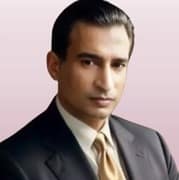
Dr. Suresh Kumar Mishra, widely known in the world of satire by his pen name ‘Uratipt’, expresses his emotions and thoughts with profound honesty and depth. His multifaceted talent is evident in his contributions across various literary genres. He is not only a renowned satirist but also a poet and a children’s author.

His satirical writings have earned him a special place in the literary world. His satire, ‘Shikshak Ki Mout’, went massively viral on the Sahitya Aajtak channel, garnering over a million views and reads—a monumental achievement in the history of Hindi satire. His collection of satires, ‘Ek Tinka Ikyavan Aankhen’ (A Straw and Fifty-One Eyes), is also highly acclaimed and includes his timeless work, ‘Kitabon Ki Antim Yatra’ (The Last Journey of Books). Other celebrated collections include ‘Mayaan Ek, Talwar Anek’ (One Sheath, Many Swords), ‘Gapodi Adda’ (The Gossiper’s Den), and ‘Sab Rang Mein Mere Rang’ (My Colors in Every Hue). His satirical novel, ‘Idhar-Udhar Ke Beech Mein’ (In Between Here and There), is a unique and groundbreaking work focused on the third world.

His significant contributions to literature have been widely recognized. He was honored with the Best Young Creator Award, 2021 by the Telangana Hindi Academy and the Government of Telangana, an award presented by Chief Minister K. Chandrasekhar Rao. The Rajasthan Children’s Literature Academy also honored him for his children’s book, ‘Nanhon Ka Srijan Aasmaan’ (The Creative Sky of Little Ones). Additionally, he has received the Vyanga Yatra Ravindranath Tyagi Sopaan Samman and the Sahitya Srijan Samman from Prime Minister Narendra Modi.

Dr. Uratript has also played a pivotal role in writing, editing, and coordinating a total of 55 books for the Government of Telangana for primary school, college, and university levels. His work is included in university textbooks in Bihar, Chhattisgarh, and Telangana, where his satirical creations are part of the curriculum. This recognition underscores that young readers can identify and appreciate quality and impactful writing.

Key Accolades and Works

  • Viral Satire: ‘Teacher’s Death’ (over 1 million views)
  • Satire Collections: ‘Ek Tinka Ikyavan Aankhen’, ‘Mayaan Ek, Talwar Anek’, ‘Gapodi Adda’
  • Unique Satirical Novel: ‘Idhar-Udar Ke Beech Mein’
  • Awards: Shreshtha Navyuva Samman (Telangana), Sahitya Srijan Samman (PM Modi), and more.
  • Educational Contribution: Authored and edited 55 books for the Telangana government.

Some precious moments of life

  1. Honoured with ‘Shrestha Navayuvva Rachnakar Samman’ by former Chief Minister of Telangana Government, Shri K. Chandrasekhar Rao.
  2. Honoured with Oscar, Grammy, Jnanpith, Sahitya Akademi, Dadasaheb Phalke, Padma Bhushan and many other awards by the most revered Gulzar sahab (Sampurn Singh Kalra), the lighthouse of the world of literature and cinema, during the Sahitya Suman Samman held in Mumbai.
  3. Meeting the famous litterateur Shri Vinod Kumar Shukla Ji, honoured with Jnanpith Award.
  4. Got the privilege of meeting Mr. Perfectionist of Bollywood, actor Aamir Khan.
  5. Meeting the powerful actor Vicky Kaushal on the occasion of being honoured by Vishva Katha Rangmanch.

Today we present his satire The Jingle of the Sacred Mat: A Digital Satire 

☆ Witful Warmth# 71 ☆

☆ Satire ☆ The Jingle of the Sacred Mat: A Digital Satire… ☆ Dr. Suresh Kumar Mishra ‘Uratript’ ☆

The latest phenomenon to grace the luminous screens of our portable purgatories—known otherwise as smartphones—is a profound, almost theological irony: Yoga advertisements on YouTube now commence with the solemn, bass-heavy voice of a priestly authority. It is not the sound of a calming brook, nor the whisper of a Californian life coach, but the deep, resonant ‘Om’ of a man who, until recently, dedicated his vocal cords only to the sanctification of temples and homes. He speaks not of asanas or chakras, but of auspicious timings and the removal of hurdles, only for his divine preamble to be abruptly cut by the ecstatic pitch of an influencer promoting a synthetic, non-slip yoga mat. This, my friends, is the peak of our modern spiritual economy: where the eternal mantra becomes the pre-roll for a temporary product. The soul, it seems, has been successfully integrated into the sales funnel, complete with mandatory unskippable content.

The tragedy is not merely in the juxtaposition, but in the destiny of the priest himself, let us call him Pandit Vishuddh-Niranjan. His voice, once a bridge to the transcendent, is now a carefully indexed audio file, purchased wholesale for a fixed cost per thousand impressions (CPM). He has become a commodity, an audio mascot for flexible plastic and expensive stretch pants. Imagine the silent tears of his ancestors! His grandfather broke his neck perfecting a headstand, while he, the last of the lineage, breaks his voice trying to sell the perfect towel for the headstand. The sound that was supposed to clear the mental clutter of the listener now serves only to justify the price tag of a $150 designer cushion. When the sacred is rendered purely commercial, even the gods must check their bank balance before granting a blessing.

This transformation is the true Viparita Karani (inverted action) of our age. Yoga, the path of renunciation and self-mastery, has been perfectly optimized for consumption and self-display. It is no longer a ‘yatra’ (journey) inward, but a ‘photo-op’ outward. The advertisements don’t show the agony of a difficult pose, the decades of dedication, or the profound stillness of meditation; they show polished hardwood floors, perfect lighting, and bodies that seem genetically engineered for spandex. The priest’s voice is the final, cynical touch—it launders the secular vanity with a cloak of antiquity. By hearing the holy words, the consumer can momentarily convince their weary soul that they are not buying luxury leisurewear, but rather, investing in their eternal salvation, delivered express via Amazon Prime.

The mind-blowing irony is how effectively this commercial spirituality preys upon the consumer’s subconscious yearning for meaning. The listener, bombarded by the frantic clamor of modernity, hears the ancient, steady drone of the priest, and a genuine, tear-rolling ache surfaces: “Ah, finally, this is the authentic thing!” The mind is momentarily pacified, believing that the spiritual vacuum is about to be filled. Then, the voice of commerce whispers, “The path to enlightenment is paved with this exclusive, sustainably sourced cork mat, 20% off with code PEACE.” The consumer clicks ‘Buy Now,’ feeling an absurd, misplaced sense of piousness, as if the transaction itself were a small, necessary penance. The tragedy is that we now purchase peace, not seek it.

Furthermore, we must scrutinize the new deity: The Algorithm. The Algorithm dictates the sacred space. It decided that Pandit Vishuddh-Niranjan’s voice was an effective tool for targeting demographics with high disposable income and low spiritual fulfillment. In the digital ashram, the traditional eight limbs of yoga—Yama, Niyama, Asana, Pranayama, Pratyahara, Dharana, Dhyana, Samadhi—have been replaced by the eight pillars of digital marketing: Impression, Click-Through, Conversion, Retargeting, Remarketing, SEO, PPC, and ROI. The ancient pursuit of Brahmacharya (discipline) has been replaced by the immediate gratification of Ad-macharya (ad-discipline). The algorithm is the new Guru, and its instruction is simple: Click, consume, and repeat. Do not think, merely transact, for in the marketplace of the soul, only the transaction is real.

The philosophical cost of this phenomenon is truly heartbreaking. Every click, every purchase, assigns a tangible monetary value to the intangible quest for truth. The price tag on the yoga gear acts as an inverse spiritual barometer: the higher the cost of the accessories, the more profound the spiritual intent must be. We have monetized the sacred silence, packaged the eternal echo, and are selling it on an installment plan. The greatest fraud is that we are convinced we are simplifying life when, in fact, we are merely adding layers of costly complexity to the simplest human need: to breathe and to be still. It is a brilliant, insidious form of intellectual bankruptcy where the only knowledge required is how to enter your credit card details.

The narrator, myself, sits here, a pathetic consumer of this digital drama, watching the same ad loop for the tenth time. I feel a burning in my chest, a mind-blowing realization that my tear ducts are dry, not from sadness, but from shock at the sheer, relentless absurdity. Even my attempt to write this searing critique is part of the system—it will be read on a screen, perhaps with a pre-roll ad for a spiritual retreat or a new brand of herbal tea. I am trapped in the matrix of commodification, and my protest is merely a niche content offering. The truth, in this hyper-market, is the loneliest thing of all, existing only as a discarded thought-fragment floating between two targeted advertisements.

And so, the screen darkens, the ad slot ends, and the final Om echoes away, leaving behind only the cold, transactional certainty of a successful campaign conversion. Pandit Vishuddh-Niranjan’s voice has done its job: it lent ancient authority to modern desire. We are left not with peace, but with a tracking cookie and a delivery confirmation. The future is clear: we will not achieve Moksha (liberation); we will only achieve Mouthwash (a clean profit margin). Let us raise a toast to this digital dharma, where salvation is just a single click away, provided your internet connection is fast enough. The new spiritual motto: In God We Trust, All Others Pay Full Price.

****

© Dr. Suresh Kumar Mishra ‘Uratript’

Contact : Mo. +91 73 8657 8657, Email : drskm786@gmail.com

≈ Blog Editor – Shri Hemant Bawankar/Editor (English) – Captain Pravin Raghuvanshi, NM ≈

Please share your Post !

Shares

English Literature – Poetry ☆ ‘March in Step…’ ☆ Captain Pravin Raghuvanshi, NM ☆

Captain Pravin Raghuvanshi, NM

(Captain Pravin Raghuvanshi —an ex Naval Officer, possesses a multifaceted personality. He served as a Senior Advisor in prestigious Supercomputer organisation C-DAC, Pune. He was involved in various Artificial Intelligence and High-Performance Computing projects of national and international repute. He has got a long experience in the field of ‘Natural Language Processing’, especially, in the domain of Machine Translation. He has taken the mantle of translating the timeless beauties of Indian literature upon himself so that it reaches across the globe. He has also undertaken translation work for Shri Narendra Modi, the Hon’ble Prime Minister of India, which was highly appreciated by him. He is also a member of ‘Bombay Film Writer Association’.

We present Capt. Pravin Raghuvanshi ji’s amazing poem “~ March in Step ~.  We extend our heartiest thanks to the learned author Captain Pravin Raghuvanshi Ji (who is very well conversant with Hindi, Sanskrit, English and Urdu languages) and his artwork.) 

English Version by – Captain Pravin Raghuvanshi

?~ March in Step... ~??

When life met me in the past,

it showed me dreams of tomorrow…

When she met me now,

It whispered memories of the past.


Listen, O life!

Walk in step with me —

abreast, just once,

and dare to voice the present,

thunderously…for a change…!

(Inspired by Shri Sanjay Bhardwaj Ji’s poem  क़दमताल

हिन्दी साहित्य – मनन चिंतन ☆ संजय दृष्टि –  क़दमताल ☆ श्री संजय भारद्वाज ☆

~ Pravin Raghuvanshi

© Captain Pravin Raghuvanshi, NM

Pune

≈ Editor – Shri Hemant Bawankar/Editor (English) – Captain Pravin Raghuvanshi, NM ≈

Please share your Post !

Shares

English Literature – Weekly Column ☆ Witful Warmth # 70 – The Wedding of Democracy and Burglary… ☆ Dr. Suresh Kumar Mishra ‘Uratript’ ☆

Dr. Suresh Kumar Mishra ‘Uratript’

Dr. Suresh Kumar Mishra, widely known in the world of satire by his pen name ‘Uratipt’, expresses his emotions and thoughts with profound honesty and depth. His multifaceted talent is evident in his contributions across various literary genres. He is not only a renowned satirist but also a poet and a children’s author.

His satirical writings have earned him a special place in the literary world. His satire, ‘Shikshak Ki Mout’, went massively viral on the Sahitya Aajtak channel, garnering over a million views and reads—a monumental achievement in the history of Hindi satire. His collection of satires, ‘Ek Tinka Ikyavan Aankhen’ (A Straw and Fifty-One Eyes), is also highly acclaimed and includes his timeless work, ‘Kitabon Ki Antim Yatra’ (The Last Journey of Books). Other celebrated collections include ‘Mayaan Ek, Talwar Anek’ (One Sheath, Many Swords), ‘Gapodi Adda’ (The Gossiper’s Den), and ‘Sab Rang Mein Mere Rang’ (My Colors in Every Hue). His satirical novel, ‘Idhar-Udhar Ke Beech Mein’ (In Between Here and There), is a unique and groundbreaking work focused on the third world.

His significant contributions to literature have been widely recognized. He was honored with the Best Young Creator Award, 2021 by the Telangana Hindi Academy and the Government of Telangana, an award presented by Chief Minister K. Chandrasekhar Rao. The Rajasthan Children’s Literature Academy also honored him for his children’s book, ‘Nanhon Ka Srijan Aasmaan’ (The Creative Sky of Little Ones). Additionally, he has received the Vyanga Yatra Ravindranath Tyagi Sopaan Samman and the Sahitya Srijan Samman from Prime Minister Narendra Modi.

Dr. Uratript has also played a pivotal role in writing, editing, and coordinating a total of 55 books for the Government of Telangana for primary school, college, and university levels. His work is included in university textbooks in Bihar, Chhattisgarh, and Telangana, where his satirical creations are part of the curriculum. This recognition underscores that young readers can identify and appreciate quality and impactful writing.

Key Accolades and Works

  • Viral Satire: ‘Teacher’s Death’ (over 1 million views)
  • Satire Collections: ‘Ek Tinka Ikyavan Aankhen’, ‘Mayaan Ek, Talwar Anek’, ‘Gapodi Adda’
  • Unique Satirical Novel: ‘Idhar-Udar Ke Beech Mein’
  • Awards: Shreshtha Navyuva Samman (Telangana), Sahitya Srijan Samman (PM Modi), and more.
  • Educational Contribution: Authored and edited 55 books for the Telangana government.

Some precious moments of life

  1. Honoured with ‘Shrestha Navayuvva Rachnakar Samman’ by former Chief Minister of Telangana Government, Shri K. Chandrasekhar Rao.
  2. Honoured with Oscar, Grammy, Jnanpith, Sahitya Akademi, Dadasaheb Phalke, Padma Bhushan and many other awards by the most revered Gulzar sahab (Sampurn Singh Kalra), the lighthouse of the world of literature and cinema, during the Sahitya Suman Samman held in Mumbai.
  3. Meeting the famous litterateur Shri Vinod Kumar Shukla Ji, honoured with Jnanpith Award.
  4. Got the privilege of meeting Mr. Perfectionist of Bollywood, actor Aamir Khan.
  5. Meeting the powerful actor Vicky Kaushal on the occasion of being honoured by Vishva Katha Rangmanch.

Today we present his satire The Wedding of Democracy and Burglary 

☆ Witful Warmth# 70 ☆

☆ Satire ☆ The Wedding of Democracy and Burglary… ☆ Dr. Suresh Kumar Mishra ‘Uratript’ ☆

In the glorious land of “Mahaan Bharat,” democracy is not a system; it is a festival. And like any Indian festival, it requires noise, pollution, and a sleight of hand that would put a street magician to shame. The latest trend in this festival is not the bursting of crackers, but the bursting of the ballot boxmetaphorically, of course. The phenomenon of “Vote Chori” (Vote Theft) has been elevated from a crime to a fine art form. It is no longer done by goons with mustaches and lathis capturing a booth. That is so 1990s. That is so analog. Today, vote theft is digital, sophisticated, and invisible. It is done with the grace of a gazelle and the precision of a neurosurgeon. The voter presses the button for the “Lion,” and the vote goes to the “Donkey.” The machine beeps, the light flashes, and the voter goes home feeling patriotic, unaware that his patriotism has just been hijacked by a microchip with a political agenda. I met a “Vote Management Consultant” named Mr. Ghotala (Scam) recently. He sat in a plush office, wearing a white kurta that was brighter than his future. I asked him, “Sir, how do you steal votes? Isn’t the Election Commission watching?” He laughed, a belly-jiggling laugh that smelled of expensive whiskey. “Parsai ji,” he said, “You writers are so naive. We don’t steal votes; we ‘redirect’ them. It is like traffic management. If the road to Party A is blocked, we simply open a bypass to Party B. The voter is happy because he pressed a button. The machine is happy because it beeped. And we are happy because we won. It is a win-win-win situation! Why bring morality into a technical matter?” He spoke of democracy as if it were a plumbing issuejust a matter of fixing the leaks in the pipeline to ensure the water flows into the right swimming pool. The plight of the common voter is truly heart-touching. He stands in line for four hours, sweating in the sun, holding his ID card like a ticket to heaven. He thinks, “Today, I will change the destiny of my nation.” He enters the booth, trembling with responsibility. He looks at the Electronic Voting Machine (EVM). It looks back at him with a blank, electronic stare. He presses the button. Beep. That beep is the sound of his agency being flushed down the toilet. He walks out with ink on his finger, showing it to everyone like a war wound. “I have voted!” he declares. Meanwhile, inside the machine, his vote is having an identity crisis. It started as a vote for change but decided mid-way to become a vote for the status quo. It is a demisical tragedy. The ink on the finger lasts for weeks, but the value of the vote lasts for zero seconds. Then there is the mystery of the “Missing Voters.” In every election, thousands of names vanish from the list. They are not dead; they are not abroad; they are just… gone. I asked an official, “Where did these people go?” He looked at me gravely and said, “They have been spiritually liberated. They have attained Moksha from the electoral process. Why do you want to drag them back into the Maya of politics?” It was a mindblowing explanation. The government is so efficient that it grants spiritual liberation to voters without them even asking for it! One day you are a citizen; the next day you are a ghost. You exist to pay taxes, you exist to pay fines, but when it comes to voting, you are as invisible as the development promised in the manifesto. Tears roll down the eyes when you realize you are a citizen only when the government wants your money.

The post-election analysis is another tear-jerker. The losing candidate screams, “The machines were hacked! The Bluetooth connected to the Wi-Fi which connected to the satellite which was controlled by aliens!” The winning candidate smiles like a saint and says, “This is the mandate of the people. The people have spoken.” Which people? The invisible people?

The ghost voters? The microchips? It is a reality show where the winner is decided before the contestants even enter the stage. The media plays the role of the cheerleader, analyzing the “wave” and the “swing.”

There is no wave. There is only the tsunami of manipulation. The voter is just standing on the shore, watching his hut get washed away, clapping because the water looks blue on television.

Let us look at the “buying” of votes. This is the retail sector of Vote Chori. In the old days, they gave liquor and blankets. Now, with inflation, the rates have gone up. But look at the honesty of the poor voter! He takes the money from Party A, eats the biryani from Party B, and votes for Party C. This is the only revenge he can take. But alas, even this revenge is short-lived if the machine itself is compromised. The politician says, “Take whatever you want, you fool. The button is in your hand, but the wire is in mine.” It is a relationship of absolute toxicity.

The voter is the battered spouse who keeps going back, hoping that this time, the partner will change. But the partner only changes the method of beating. The bureaucracy plays the role of the blind umpire. They see nothing, hear nothing.  They are the Three Monkeys of Gandhiji, but without the wisdom.  If you complain, they ask for proof. “Bring us the video of the invisible signal entering the machine,” they say.  It is like asking for photograph of the wind.  They form committees.

****

© Dr. Suresh Kumar Mishra ‘Uratript’

Contact : Mo. +91 73 8657 8657, Email : drskm786@gmail.com

≈ Blog Editor – Shri Hemant Bawankar/Editor (English) – Captain Pravin Raghuvanshi, NM ≈

Please share your Post !

Shares

English Literature – Poetry ☆ Invisible Prison… ☆ Captain Pravin Raghuvanshi, NM ☆

Captain Pravin Raghuvanshi, NM

(Captain Pravin Raghuvanshi —an ex Naval Officer, possesses a multifaceted personality. He served as a Senior Advisor in prestigious Supercomputer organisation C-DAC, Pune. He was involved in various Artificial Intelligence and High-Performance Computing projects of national and international repute. He has got a long experience in the field of ‘Natural Language Processing’, especially, in the domain of Machine Translation. He has taken the mantle of translating the timeless beauties of Indian literature upon himself so that it reaches across the globe. He has also undertaken translation work for Shri Narendra Modi, the Hon’ble Prime Minister of India, which was highly appreciated by him. He is also a member of ‘Bombay Film Writer Association’.

We present Capt. Pravin Raghuvanshi ji’s amazing poem “~ Invisible Prison ~.  We extend our heartiest thanks to the learned author Captain Pravin Raghuvanshi Ji (who is very well conversant with Hindi, Sanskrit, English and Urdu languages) and his artwork.) 

?

The subtlest prisons are the ones

we build within ourselves!”

? ~ Invisible Prison… ??

Invisible bars confine the soul

forged not of iron

but of mental arrest


Dreams are auctioned

in the marketplace of survival

freedom a fragile castle of cards

sold in the name of prosperity

The world performs its rehearsed despair

Roles carved in stealth and chicane

Scripts inked in deviousness

Every man a puppet

dangling by threads

woven from falsehood and desultory dreams


We kneel before the human gods we invented

Commerce, conformity, comfort —

our holy trinity of decay


Yet somewhere, in the marrow of silence

a pulse remembers the wind

A spark refuses to die


The spirit aches to break form

to unlearn

to unchain

to become

to erupt

to fly beyond horizons


Walls dissolve into air

chains melt into starlight

and even the idea of freedom

bows in awe before the unleashed soul

~Pravin Raghuvanshi

Poet’s Note

“Invisible Prison” is a hymn to the human spirit —a warning, a rebellion, a revelation. The cages are not made of stone or iron but of fear, habit, and false gods. Freedom awakens when the soul recognizes the bars were never real…!

 © Captain Pravin Raghuvanshi, NM

Pune

≈ Editor – Shri Hemant Bawankar/Editor (English) – Captain Pravin Raghuvanshi, NM ≈

Please share your Post !

Shares

English Literature – Weekly Column ☆ Witful Warmth # 69 – The Punishments by YouTube Motivation Gurus… ☆ Dr. Suresh Kumar Mishra ‘Uratript’ ☆

Dr. Suresh Kumar Mishra ‘Uratript’

Dr. Suresh Kumar Mishra, widely known in the world of satire by his pen name ‘Uratipt’, expresses his emotions and thoughts with profound honesty and depth. His multifaceted talent is evident in his contributions across various literary genres. He is not only a renowned satirist but also a poet and a children’s author.

His satirical writings have earned him a special place in the literary world. His satire, ‘Shikshak Ki Mout’, went massively viral on the Sahitya Aajtak channel, garnering over a million views and reads—a monumental achievement in the history of Hindi satire. His collection of satires, ‘Ek Tinka Ikyavan Aankhen’ (A Straw and Fifty-One Eyes), is also highly acclaimed and includes his timeless work, ‘Kitabon Ki Antim Yatra’ (The Last Journey of Books). Other celebrated collections include ‘Mayaan Ek, Talwar Anek’ (One Sheath, Many Swords), ‘Gapodi Adda’ (The Gossiper’s Den), and ‘Sab Rang Mein Mere Rang’ (My Colors in Every Hue). His satirical novel, ‘Idhar-Udhar Ke Beech Mein’ (In Between Here and There), is a unique and groundbreaking work focused on the third world.

His significant contributions to literature have been widely recognized. He was honored with the Best Young Creator Award, 2021 by the Telangana Hindi Academy and the Government of Telangana, an award presented by Chief Minister K. Chandrasekhar Rao. The Rajasthan Children’s Literature Academy also honored him for his children’s book, ‘Nanhon Ka Srijan Aasmaan’ (The Creative Sky of Little Ones). Additionally, he has received the Vyanga Yatra Ravindranath Tyagi Sopaan Samman and the Sahitya Srijan Samman from Prime Minister Narendra Modi.

Dr. Uratript has also played a pivotal role in writing, editing, and coordinating a total of 55 books for the Government of Telangana for primary school, college, and university levels. His work is included in university textbooks in Bihar, Chhattisgarh, and Telangana, where his satirical creations are part of the curriculum. This recognition underscores that young readers can identify and appreciate quality and impactful writing.

Key Accolades and Works

  • Viral Satire: ‘Teacher’s Death’ (over 1 million views)
  • Satire Collections: ‘Ek Tinka Ikyavan Aankhen’, ‘Mayaan Ek, Talwar Anek’, ‘Gapodi Adda’
  • Unique Satirical Novel: ‘Idhar-Udar Ke Beech Mein’
  • Awards: Shreshtha Navyuva Samman (Telangana), Sahitya Srijan Samman (PM Modi), and more.
  • Educational Contribution: Authored and edited 55 books for the Telangana government.

Some precious moments of life

  1. Honoured with ‘Shrestha Navayuvva Rachnakar Samman’ by former Chief Minister of Telangana Government, Shri K. Chandrasekhar Rao.
  2. Honoured with Oscar, Grammy, Jnanpith, Sahitya Akademi, Dadasaheb Phalke, Padma Bhushan and many other awards by the most revered Gulzar sahab (Sampurn Singh Kalra), the lighthouse of the world of literature and cinema, during the Sahitya Suman Samman held in Mumbai.
  3. Meeting the famous litterateur Shri Vinod Kumar Shukla Ji, honoured with Jnanpith Award.
  4. Got the privilege of meeting Mr. Perfectionist of Bollywood, actor Aamir Khan.
  5. Meeting the powerful actor Vicky Kaushal on the occasion of being honoured by Vishva Katha Rangmanch.

Today we present his satire The Punishments by YouTube Motivation Gurus 

☆ Witful Warmth# 69 ☆

☆ Satire ☆ The Punishments by YouTube Motivation Gurus… ☆ Dr. Suresh Kumar Mishra ‘Uratript’ ☆

The tragedy of the modern soul is that it has become an incorrigible slacker, unable to perform even the simplest act of self-improvement without the shrill, demanding voice of a professional motivation guru echoing from a smartphone speaker. Discipline, that austere, internal furnace that once fueled kings and philosophers, has been unceremoniously evicted and replaced by a cheap, Chinese-made electronic whip sold on the internet. We, the generation of perpetual promise, no longer seek the quiet wisdom of self-control; we crave the public spectacle of self-flagellation, outsourced to brightly colored YouTube channels and Instagram reels. The guru, with his perfectly sculpted jawline and suspiciously high thread count shirt, is no longer a teacher of principles, but a vendor of synthetic punishment. He doesn’t inspire; he demands. He doesn’t guide; he dictates arbitrary, mind-numbing acts of suffering—cold showers, $4$ am alarms, and journal entries filled with toxic affirmations—that are marketed as the only viable path to salvation. The irony is mind-blowing: we seek freedom from the self by surrendering to a digital tyrant who profits from our inadequacy. The heart weeps for the lost art of personal responsibility, now a commodity with a hefty monthly subscription fee.

This manufactured agony is fundamentally a performance, a tear-rolling drama where the viewer is forced into the dual role of obedient student and terrified audience member. The system works through a genius manipulation of the human need for external validation and the inherent fear of public failure. The guru’s commandments are designed not to foster genuine internal change but to create content: “Do $50$ burpees or transfer $\$100$ to your biggest rival.” This is not discipline; it is an elaborate form of financial self-extortion or public shaming, orchestrated by a man who has never met you and whose only investment in your life is your monthly viewing metric. We watch, hypnotized by the illusion of consequence, mistaking the adrenaline of fear for the quiet fire of commitment. The mind, starved of genuine purpose, embraces the shallow, spectacular punishment as a substitute for meaningful effort. The “tear-rolling” part comes when you realize the person you are failing is not the guru, but your own soul, which is being taught to respond only to threats, not to love or reasoned pursuit.

The Harishankar Parasai spirit demands we look beneath the velvet curtain of this self-help industry and recognize the demisical nature of its transactional morality. The entire enterprise is based on the premise that you are fundamentally broken and that the guru holds the only patented wrench capable of fixing you. They sell the illusion of a ‘zero-to-hero’ transformation in $30$ days, completely bypassing the messy, decades-long process of character formation. The “mind-blowing” realization is that this discipline is not an end, but a means to consumption. You must wake up at $4$ am so that you can be productive enough to buy the guru’s next course, the guru’s specific brand of ergonomic chair, and the guru’s custom-branded journal. The system creates the problem (your lack of discipline), sells the solution (his patented pain), and then sells the tools required to enact the solution, completing a perfect, self-sealing loop of capitalistic exploitation masquerading as spiritual awakening. The heart breaks for the poor fool who believes that true fulfillment can be found in a downloadable PDF checklist.

What is truly hearttouching, and tragic in its absurdity, is the transference of moral authority. We have voluntarily forfeited the right to judge ourselves, preferring instead to be judged by the arbitrary metrics of a content creator. When we fail to complete the required $10$-day detox, the guilt is no longer a catalyst for private reflection; it is a public sin against the cultus of productivity. The guru, through his digital priesthood, grants penance in the form of a harsher, more humiliating challenge, escalating the punishment until the ‘student’ either achieves a momentary, photo-ready victory or simply fades away, ashamed. This phenomenon is a subtle form of societal regression, a return to the public pillory, only now the stocks are virtual, and the village idiot who throws the tomatoes is our own internalized self-critic, amplified by a thousand strangers’ comments. The demisical element is undeniable: a man whose wealth is built on the collective inability of others to get out of bed suddenly becomes the arbiter of human worth.

The tragedy deepens when we consider the emotional vacuum that this outsourced discipline fills. In a fragmented, lonely world, the guru provides not mentorship, but structure—a substitute father figure, a demanding coach, a digital dictator who, paradoxically, offers a perverse sense of belonging. The “punishment” is proof that someone cares enough to hold you accountable, even if that accountability is a shallow performance. This tear-rolling need for external force reveals a generation utterly disconnected from its own inner compass. We have forgotten that discipline is derived from the Latin disciplina, meaning ‘teaching’ or ‘learning,’ not ‘torture.’ The modern version, however, is pure external pressure, a grotesque parody of self-mastery. We perform the rituals of the motivated life—the goal-setting, the networking, the grinding—but the soul remains empty, for true growth requires quiet confrontation with the self, not a broadcasted confession of inadequacy to a legion of strangers.

The Harishankar Parasai style, rich in irony and biting social critique, would dissect the spiritual poverty of the wealthy guru. He lives a life of effortless, passive income, built upon the strenuous, active expenditure of his followers’ energy and money. His ‘discipline’ is the discipline of marketing; his ‘punishment’ is the punishment of high churn rates. The mind-blowing spectacle is how easily we mistake the gilded cage of manufactured routine for the open field of genuine freedom. We are taught to be ruthless with ourselves, to push through pain, to minimize sleep, all in the pursuit of a fleeting, externalized success defined by the very system that created our anxiety. The tear rolls when you realize that the motivation industry does not want you to succeed permanently, because a truly self-mastered individual is a permanently lost customer. They are selling a temporary fix, ensuring that your fundamental flaw—the lack of genuine, internally-sourced motivation—remains intact, ready for the next course, the next book, the next arbitrary, humiliating challenge.

The ultimate demisical statement is that we have made success a transaction, and suffering its currency. We no longer believe in the quiet, cumulative power of habit; we believe only in the shock and awe of the heroic, instantaneous change, which, of course, is a myth. The guru’s punishment system, with its cold showers and harsh words, is essentially a spiritual shortcut, a promise to bypass the long, boring, and truly difficult work of consistency and self-acceptance. But the soul is not a machine that can be kickstarted with a jolt of manufactured fear; it is a garden that requires daily, gentle tending. This entire phenomenon is a devastating critique of a society that values speed over substance, spectacle over sincerity, and the illusion of productivity over the reality of a balanced, humane life. It is hearttouching in its deep, collective delusion—a tear rolling for the millions who are actively purchasing their own mental slavery, believing they are buying freedom.

The final irony, the mind-blowing conclusion, is that the system of outsourced discipline works only by cultivating an internal weakness. It conditions the individual to rely on an external cue—the guru’s voice, the app notification, the public commitment—thereby systematically destroying the nascent inner voice of self-determination. This is the opposite of discipline. It is a dependency model masquerading as empowerment. The only true punishment is the realization that years of following these outsourced tyrants have left one perpetually dependent, permanently insecure, and forever chasing an arbitrary, moving goalpost set by a stranger whose greatest talent is not wisdom, but marketing. The heart bleeds for the fool who, after all the cold showers and all the $4$ am starts, wakes up one day to find the guru has retired on the proceeds of his anxiety, and he is left alone, staring at the ceiling, still needing a stranger’s permission to begin his own life.

****

© Dr. Suresh Kumar Mishra ‘Uratript’

Contact : Mo. +91 73 8657 8657, Email : drskm786@gmail.com

≈ Blog Editor – Shri Hemant Bawankar/Editor (English) – Captain Pravin Raghuvanshi, NM ≈

Please share your Post !

Shares

English Literature – Poetry ☆ The Sacred Churning… ☆ Captain Pravin Raghuvanshi, NM ☆

Captain Pravin Raghuvanshi, NM

(Captain Pravin Raghuvanshi —an ex Naval Officer, possesses a multifaceted personality. He served as a Senior Advisor in prestigious Supercomputer organisation C-DAC, Pune. He was involved in various Artificial Intelligence and High-Performance Computing projects of national and international repute. He has got a long experience in the field of ‘Natural Language Processing’, especially, in the domain of Machine Translation. He has taken the mantle of translating the timeless beauties of Indian literature upon himself so that it reaches across the globe. He has also undertaken translation work for Shri Narendra Modi, the Hon’ble Prime Minister of India, which was highly appreciated by him. He is also a member of ‘Bombay Film Writer Association’.

We present Capt. Pravin Raghuvanshi ji’s amazing poem “~ The Sacred Churning ~.  We extend our heartiest thanks to the learned author Captain Pravin Raghuvanshi Ji (who is very well conversant with Hindi, Sanskrit, English and Urdu languages) and his artwork.) 

? ~ The Sacred Churning??

 On this side, the unknown devils

On that side the divine beings

Yet both remain unknown

*

No celestial mountain to anchor

No serpent-rope to girdle

the churner of my inner world

*

And still, with an impassioned,

unguarded heart, I keep churning

the vast ocean of my being…

*

From hidden, unfathomable depths

rise ancient, enigmatic truths—

long-silent, dormant energies

oozing forth in mystic spirals

*

For within every surge, every pull

I sense the eternal promise of

that radiant drop of proverbial

nectar of becoming immortal…!

~Pravin Raghuvanshi

 © Captain Pravin Raghuvanshi, NM

Pune

≈ Editor – Shri Hemant Bawankar/Editor (English) – Captain Pravin Raghuvanshi, NM ≈

Please share your Post !

Shares

English Literature – Weekly Column ☆ Witful Warmth # 68 – The Funeral of Virtue… ☆ Dr. Suresh Kumar Mishra ‘Uratript’ ☆

Dr. Suresh Kumar Mishra ‘Uratript’

Dr. Suresh Kumar Mishra, widely known in the world of satire by his pen name ‘Uratipt’, expresses his emotions and thoughts with profound honesty and depth. His multifaceted talent is evident in his contributions across various literary genres. He is not only a renowned satirist but also a poet and a children’s author.

His satirical writings have earned him a special place in the literary world. His satire, ‘Shikshak Ki Mout’, went massively viral on the Sahitya Aajtak channel, garnering over a million views and reads—a monumental achievement in the history of Hindi satire. His collection of satires, ‘Ek Tinka Ikyavan Aankhen’ (A Straw and Fifty-One Eyes), is also highly acclaimed and includes his timeless work, ‘Kitabon Ki Antim Yatra’ (The Last Journey of Books). Other celebrated collections include ‘Mayaan Ek, Talwar Anek’ (One Sheath, Many Swords), ‘Gapodi Adda’ (The Gossiper’s Den), and ‘Sab Rang Mein Mere Rang’ (My Colors in Every Hue). His satirical novel, ‘Idhar-Udhar Ke Beech Mein’ (In Between Here and There), is a unique and groundbreaking work focused on the third world.

His significant contributions to literature have been widely recognized. He was honored with the Best Young Creator Award, 2021 by the Telangana Hindi Academy and the Government of Telangana, an award presented by Chief Minister K. Chandrasekhar Rao. The Rajasthan Children’s Literature Academy also honored him for his children’s book, ‘Nanhon Ka Srijan Aasmaan’ (The Creative Sky of Little Ones). Additionally, he has received the Vyanga Yatra Ravindranath Tyagi Sopaan Samman and the Sahitya Srijan Samman from Prime Minister Narendra Modi.

Dr. Uratript has also played a pivotal role in writing, editing, and coordinating a total of 55 books for the Government of Telangana for primary school, college, and university levels. His work is included in university textbooks in Bihar, Chhattisgarh, and Telangana, where his satirical creations are part of the curriculum. This recognition underscores that young readers can identify and appreciate quality and impactful writing.

Key Accolades and Works

  • Viral Satire: ‘Teacher’s Death’ (over 1 million views)
  • Satire Collections: ‘Ek Tinka Ikyavan Aankhen’, ‘Mayaan Ek, Talwar Anek’, ‘Gapodi Adda’
  • Unique Satirical Novel: ‘Idhar-Udar Ke Beech Mein’
  • Awards: Shreshtha Navyuva Samman (Telangana), Sahitya Srijan Samman (PM Modi), and more.
  • Educational Contribution: Authored and edited 55 books for the Telangana government.

Some precious moments of life

  1. Honoured with ‘Shrestha Navayuvva Rachnakar Samman’ by former Chief Minister of Telangana Government, Shri K. Chandrasekhar Rao.
  2. Honoured with Oscar, Grammy, Jnanpith, Sahitya Akademi, Dadasaheb Phalke, Padma Bhushan and many other awards by the most revered Gulzar sahab (Sampurn Singh Kalra), the lighthouse of the world of literature and cinema, during the Sahitya Suman Samman held in Mumbai.
  3. Meeting the famous litterateur Shri Vinod Kumar Shukla Ji, honoured with Jnanpith Award.
  4. Got the privilege of meeting Mr. Perfectionist of Bollywood, actor Aamir Khan.
  5. Meeting the powerful actor Vicky Kaushal on the occasion of being honoured by Vishva Katha Rangmanch.

Today we present his satire The Funeral of Virtue 

☆ Witful Warmth# 68 ☆

☆ Satire ☆ The Funeral of Virtue… ☆ Dr. Suresh Kumar Mishra ‘Uratript’ ☆

The final act of our moral drama was not a clash of civilizations or the collapse of temples, but a quiet, almost imperceptible switch in the syllabus. Moral Science, that tired, yellow-paged relic of our grandfathers, has died not of old age, but of irrelevance. It was simply outpaced by a brighter, faster deity: the daily meme lesson. Where the textbook once spoke of patience, sacrifice, and the quiet dignity of duty, the new curriculum speaks in punchlines, reaction gifs, and the relentless pursuit of virality. This is not merely a change in pedagogy; it is the ultimate, irreversible capitulation of the soul to the algorithm. The market, that clever, cold-eyed merchant, has figured out that complex virtues cannot be packaged for quick consumption, but fleeting outrage and performative empathy can be. Our new moral code is built on two pillars: the speed of the scroll and the transience of the trend. This is a tear-rolling tragedy, for we have exchanged the slow, heavy burden of becoming good for the light, instant pleasure of appearing good. The children of tomorrow will know every digital shortcut to looking virtuous, but no difficult, dusty path to actually being so. This shift marks the definitive, digital funeral of genuine character, replacing it with easily digestible, marketable content.

The old Moral Science textbook, found now only in the deepest, dustiest corners of school libraries, held lessons that required labor. It demanded introspection, the agony of self-correction, and the quiet, unmarketable courage to be honest when no one was watching. Its pages smelled of starch, silence, and the sincere, heavy promise of responsibility. Now, compare this to the sharp, blue light emanating from the phone, the digital Guru in our pocket. The meme lesson, by contrast, is a burst of dopamine-laced clarity: a single, perfectly framed image paired with six words that condense an existential dilemma into a brief, consumable joke. We no longer debate the ethics of justice; we simply share the ‘Wojak’ pointing and labeling the bad thing. We have traded the rigorous geometry of conscience for the easily reproducible square of the screen. This is why the meme lesson won. It asked nothing of us except a quick ‘share’ or ‘like.’ It relieved us of the crushing obligation to think deeply or act slowly. The tragedy is that we celebrate this liberation from moral effort, mistaking our newfound speed for spiritual progress.

Our contemporary pedagogy, therefore, teaches not morality, but efficiency of emotional expression. The goal is no longer to internalize a virtue, but to broadcast a reaction. If a tragedy occurs half a world away, the first and most critical moral lesson is to find the appropriate black-and-white filter and the most succinct, emotionally charged text overlay for the meme. The student who is fastest to demonstrate their perfectly calibrated grief, their hyper-aware social outrage, or their profoundly correct political alignment, is the one who passes the test of modern virtue. Genuine, quiet suffering is worthless; only suffering that is immediately converted into content holds currency. The syllabus demands that we master the art of the ‘Outrage Cycle,’ where conviction lasts exactly as long as the hashtag trends, and then instantly vanishes, making way for the next obligatory moral performance. The tear that rolls down our cheek is now not one of empathy, but one of exhaustion, realizing that our soul has become nothing more than a perpetually trending feed.

The most heart-touching part of this digital transaction is the profound hypocrisy it enables, yet cleverly disguises as authenticity. We are all now carrying pocket-sized certificates of moral excellence. A person may spend their entire day at work engaging in petty cruelty, cutting corners on their duties, or backbiting their colleagues—behaviors the old Moral Science book would have condemned as wicked. Yet, in the evening, this very person shares a ‘wholesome’ meme about kindness to strangers, complete with a touching, synthetic story about a dog and a sunset. This shared image is not a reflection of their character; it is a cheap, instant moral prophylactic. It cleanses the day’s sins with a single tap. The tragedy is that we all know this is happening, but we accept it, because our own daily sins require the same convenient absolution. The tear that rolls now is one of sheer, exhausted irony, knowing that we are collectively performing a morality we have no intention of practicing once the screen is locked.

The economy of feeling is the ultimate triumph of the meme lesson. In the quiet, defunct world of the textbook, sadness was a long, complex process involving introspection and potentially costly self-change. In the glittering bazaar of the internet, sadness is a template; outrage is a commodity; and moral conviction is simply content optimized for clicks. The meme, being the perfect unit of digital trade, teaches us to value emotion only to the extent that it can be monetized, liked, or shared. It is a profound lesson in branding: your morality is now your brand loyalty. If you are ‘for’ the environment, you must use the correct set of ecological icons and share the correct set of climate-crisis memes. If you fail to perform this branded morality, you are immediately accused of lacking virtue—not because of your deeds, but because of your silence. This system punishes the silent laborer and rewards the noisy performer, turning the quest for goodness into a relentless, exhausting marketing campaign for the self.

Consider the student, sitting hunched over their glowing screen, absorbing the daily lesson. They are not learning ‘Thou Shalt Not Lie,’ but ‘How to Craft a Lie That Looks Like Truth for 24 Hours.’ They are mastering the subtle lexicon of the scroll, the critical difference between the sincere look of shock and the viral look of performative shock. The moral education they receive is entirely based on instantaneous validation. If their moral take gets ten thousand likes, it is factually and ethically correct; if it gets zero, it is shameful and must be deleted. Their soul is being conditioned not by an internal compass, but by an external, fluctuating popularity contest. This is where the mind is truly blown by the tragedy: they are perfectly literate in the language of digital empathy, capable of composing a perfect thread on social justice, yet utterly incapable of looking a genuinely suffering person in the eye without first checking if the moment is worth recording. They are morally proficient, but empathetically illiterate.

The Grand Syllabus of Absurdity, therefore, has replaced the Ten Commandments with the Ten Trends. The new lessons are clear and frightening in their simplicity. Lesson One: Outrage Cycling—how to maintain peak moral fervor for 72 hours and then seamlessly transition to a new topic without looking inconsistent. Lesson Two: Selective Amnesia—the skill of deleting all past moral opinions that contradict the current meme-approved consensus. Lesson Three: The Art of the Flex—the technique of demonstrating ethical consumption (like buying an overpriced, ‘sustainable’ coffee) while ignoring the systemic rot beneath your feet. This syllabus is beautiful in its cynicism, perfectly tuned to the quick-fix, low-commitment nature of the modern psyche. It is the inevitable evolution of a society that decided patience was too much trouble, reflection was too slow, and genuine goodness was simply too expensive to maintain in a world that only pays attention to noise.

And so, we arrive at the final, heartbreaking resignation. The time for serious, quiet virtue—for the untelevised, unviral act of genuine kindness—is over. We are now governed by the soft, ambient sound of the scroll and the occasional synthetic chuckle elicited by a perfectly timed joke about the meaninglessness of it all. The Moral Science book rests, peacefully entombed, while its replacement, the vast, shimmering, infinitely scrolling content feed, conducts its daily, dazzling classes. We have traded the difficult road to character for the easy button of convenient consciousness. The tear that rolls down the cheek of the old man is not one of anger, but of mournful acceptance. He sees that the children are happy, endlessly entertained, and perfectly proficient in their new lessons. They are perfectly moral in the digital world. It is only in the clumsy, slow, real world that they seem to have forgotten how to be human. And that, dear reader, is the final, mind-blowing joke on us all. We built the world; the meme merely taught us how to neglect it beautifully.

****

© Dr. Suresh Kumar Mishra ‘Uratript’

Contact : Mo. +91 73 8657 8657, Email : drskm786@gmail.com

≈ Blog Editor – Shri Hemant Bawankar/Editor (English) – Captain Pravin Raghuvanshi, NM ≈

Please share your Post !

Shares

English Literature – Short Story ☆ ~ Setting Sun and the Earthen Lamp… ~ / अस्ताचल का सूर्य और मिट्टी का दीपक (भावानुवाद) ☆ Captain Pravin Raghuvanshi, NM ☆

Captain Pravin Raghuvanshi, NM

(Captain Pravin Raghuvanshi —an ex Naval Officer, possesses a multifaceted personality. He served as a Senior Advisor in prestigious Supercomputer organisation C-DAC, Pune. He was involved in various Artificial Intelligence and High-Performance Computing projects of national and international repute. He has got a long experience in the field of ‘Natural Language Processing’, especially, in the domain of Machine Translation. He has taken the mantle of translating the timeless beauties of Indian literature upon himself so that it reaches across the globe. He has also undertaken translation work for Shri Narendra Modi, the Hon’ble Prime Minister of India, which was highly appreciated by him. He is also a member of ‘Bombay Film Writer Association’.

We present Capt. Pravin Raghuvanshi ji’s amazing Short Story “~ Setting Sun and the Earthen Lamp ~.  We extend our heartiest thanks to the learned author Captain Pravin Raghuvanshi Ji (who is very well conversant with Hindi, Sanskrit, English and Urdu languages) and his artwork.) 

? Short Story ~ Setting Sun and the Earthen Lamp… ??

As the setting sun, draped in fiery splendour, whispered to the world,

‘Who shall now inherit my radiant duty?’

A reverent hush fell upon the universe— mountains bowed in respect, oceans stilled their tides, and even the winds held their breath…

Then, from a solitary threshold, a tremulous voice arose— the gentle flame of a humble diya, an earthen lamp, its glow quivering yet resolute:

‘I shall, my Lord… as much as this small heart can bear!’

And in that moment, the setting sun bestowed a warm smile upon the earth, knowing that light is eternal, merely passing from one beacon to another!

~Pravin Raghuvanshi

? ~ अस्ताचल का सूर्य और मिट्टी का दीपक ??

जब अस्ताचल का सूर्य अरुणिमा ओढ़े गगन से बोला — अब मेरे प्रकाश का उत्तराधिकारी कौन होगा?”

क्षण भर को थम गई सारी सृष्टि — पहाड़ झुक गए, सागर शांत हो गए, यहाँ तक कि पवन भी थम गई श्रद्धा में।

तभी किसी दहलीज़ से एक कोमल स्वर उठा — मिट्टी के छोटे से दीपक ने, थरथराती लौ में विनम्रता भरकर कहा — मैं करूँगा, प्रभु… जितना मुझसे संभव होगा।

और उस क्षण, डूबते सूर्य ने मुस्कराकर भूमि पर निहारा — जानता था, प्रकाश शाश्वत है, वह तो बस हस्तांतरित होता है…!

 ~प्रवीन रघुवंशी ‘आफ़ताब’

 © Captain Pravin Raghuvanshi, NM

Pune

 © Captain Pravin Raghuvanshi, NM

Pune

≈ Editor – Shri Hemant Bawankar/Editor (English) – Captain Pravin Raghuvanshi, NM ≈

Please share your Post !

Shares

English Literature – Weekly Column ☆ Witful Warmth # 67 – The Algorithm’s Chalkboard… ☆ Dr. Suresh Kumar Mishra ‘Uratript’ ☆

Dr. Suresh Kumar Mishra ‘Uratript’

Dr. Suresh Kumar Mishra, widely known in the world of satire by his pen name ‘Uratipt’, expresses his emotions and thoughts with profound honesty and depth. His multifaceted talent is evident in his contributions across various literary genres. He is not only a renowned satirist but also a poet and a children’s author.

His satirical writings have earned him a special place in the literary world. His satire, ‘Shikshak Ki Mout’, went massively viral on the Sahitya Aajtak channel, garnering over a million views and reads—a monumental achievement in the history of Hindi satire. His collection of satires, ‘Ek Tinka Ikyavan Aankhen’ (A Straw and Fifty-One Eyes), is also highly acclaimed and includes his timeless work, ‘Kitabon Ki Antim Yatra’ (The Last Journey of Books). Other celebrated collections include ‘Mayaan Ek, Talwar Anek’ (One Sheath, Many Swords), ‘Gapodi Adda’ (The Gossiper’s Den), and ‘Sab Rang Mein Mere Rang’ (My Colors in Every Hue). His satirical novel, ‘Idhar-Udhar Ke Beech Mein’ (In Between Here and There), is a unique and groundbreaking work focused on the third world.

His significant contributions to literature have been widely recognized. He was honored with the Best Young Creator Award, 2021 by the Telangana Hindi Academy and the Government of Telangana, an award presented by Chief Minister K. Chandrasekhar Rao. The Rajasthan Children’s Literature Academy also honored him for his children’s book, ‘Nanhon Ka Srijan Aasmaan’ (The Creative Sky of Little Ones). Additionally, he has received the Vyanga Yatra Ravindranath Tyagi Sopaan Samman and the Sahitya Srijan Samman from Prime Minister Narendra Modi.

Dr. Uratript has also played a pivotal role in writing, editing, and coordinating a total of 55 books for the Government of Telangana for primary school, college, and university levels. His work is included in university textbooks in Bihar, Chhattisgarh, and Telangana, where his satirical creations are part of the curriculum. This recognition underscores that young readers can identify and appreciate quality and impactful writing.

Key Accolades and Works

  • Viral Satire: ‘Teacher’s Death’ (over 1 million views)
  • Satire Collections: ‘Ek Tinka Ikyavan Aankhen’, ‘Mayaan Ek, Talwar Anek’, ‘Gapodi Adda’
  • Unique Satirical Novel: ‘Idhar-Udar Ke Beech Mein’
  • Awards: Shreshtha Navyuva Samman (Telangana), Sahitya Srijan Samman (PM Modi), and more.
  • Educational Contribution: Authored and edited 55 books for the Telangana government.

Some precious moments of life

  1. Honoured with ‘Shrestha Navayuvva Rachnakar Samman’ by former Chief Minister of Telangana Government, Shri K. Chandrasekhar Rao.
  2. Honoured with Oscar, Grammy, Jnanpith, Sahitya Akademi, Dadasaheb Phalke, Padma Bhushan and many other awards by the most revered Gulzar sahab (Sampurn Singh Kalra), the lighthouse of the world of literature and cinema, during the Sahitya Suman Samman held in Mumbai.
  3. Meeting the famous litterateur Shri Vinod Kumar Shukla Ji, honoured with Jnanpith Award.
  4. Got the privilege of meeting Mr. Perfectionist of Bollywood, actor Aamir Khan.
  5. Meeting the powerful actor Vicky Kaushal on the occasion of being honoured by Vishva Katha Rangmanch.

Today we present his satire The Algorithm’s Chalkboard 

☆ Witful Warmth# 67   ☆

☆ Satire ☆ The Algorithm’s Chalkboard… ☆ Dr. Suresh Kumar Mishra ‘Uratript’ ☆

The year is no longer the year of our Lord, but the year of the Algorithm, and the school—that hallowed sanctuary where wisdom was once whispered—has become a mere content creation factory. Oh, the sublime tragedy! We once spoke of pedagogical excellence and the depth of the Socratic method; now, we speak only in terms of conversion rates and the optimal time to post a twelve-second explainer on quantum physics set to a trending K-Pop beat. The new mandate, delivered with the sterile, smiling cruelty of a managerial seminar, is this: Teachers are to be ranked not by the sediment of forty years’ experience, but by the ephemeral, shimmering dust of TikTok follower counts. Experience, that grand old ruin, is deemed a liability, a sign of one’s inability to adapt to the short attention span economy. Knowledge is burdensome; flash is the currency. A teacher’s salary, promotion, and even the size of their classroom depend on a number that fluctuates with the whims of a fifteen-year-old scrolling past a tragicomic dance challenge. The wisdom earned through silent years in libraries is worthless compared to the ability to make one’s face look surprised in a viral ‘reaction’ video. This is the new enlightenment, a light so bright it blinds us to the very purpose of education, transforming temples of learning into sound stages for absurdity. This is not progress; it is the ultimate, mind-blowing mockery of intellect by the mass market, delivered on a tiny screen.

The central tragedy is embodied by Acharya Gyaneshwar, a man whose 40 years of service had etched a map of human knowledge onto his soul, and whose Ph.D. in Sanskrit had been earned through a lifetime of quiet sacrifice. He moves through the fluorescent-lit hallways like a ghost from a sensible past, clutching his worn copy of the Upanishads, now treated with less respect than a discarded fidget spinner. His colleague, twenty-two-year-old Ms. Sparkle, whose primary qualification is 5.2 million followers, dictates the new faculty meeting agenda. Acharya Gyaneshwar, whose lectures used to inspire students to look beyond the immediate, is now assigned the dankest corner classroom because his “engagement metrics are catastrophically low,” a phrase that, in the new language of the school, means his soul is too pure for their shallow enterprise. Ms. Sparkle, meanwhile, is granted the state-of-the-art auditorium for her live-streamed “Math Magick” sessions, which largely consist of her pointing dramatically at a whiteboard while a filter gives her cat ears. The heartbreaking irony is that she cannot explain basic trigonometry, yet she defines the institution’s success. Acharya Gyaneshwar’s voice is soft, rich with wisdom; Ms. Sparkle’s is loud, amplified by the hollowness of the digital echo chamber. His knowledge is deep and slow; her popularity is broad and instantaneous. His expertise is an ocean; her fame is a puddle reflecting a distorted sky.

The curriculum, naturally, has followed the money and the fame, transforming from a pursuit of truth into a cynical pursuit of clicks. The principal, Mr. Clickworthy, who replaced the previous principal after a dismal performance review that cited a lack of “digital traction,” now issues memoranda titled The Seven Habits of Highly Effective Content Creators. Lesson plans must now include a “Hooking Moment” (maximum 3 seconds) and a “Call to Action” (must use an emoji). The traditional three-hour history lecture on the causes of the French Revolution is discarded in favor of a 59-second, jump-cut video where the teacher, dressed as Marie Antoinette, dramatically eats a croissant while text overlays flash across the screen: #LetThemLyke. Depth is the enemy of virality. Subtlety is the arch-nemesis of the scrolling finger. The examination papers now contain questions like: “Identify the filter used by Professor Z on his latest post,” and “Analyze the comment section engagement of the top-ranked teacher.” It is a heart-wrenching spectacle to watch dedicated professionals, whose life’s work was dedicated to filling minds, now frantically learning how to master the perfect “transition” video. They are the unwilling acrobats of the digital circus, forced to perform stunts of triviality to earn their daily bread, discarding the heavy robes of scholarship for the flimsy costumes of influencers.

The ranking system itself is a mind-blowing masterpiece of institutional self-sabotage, an automated engine of despair and degradation. Once a month, the “Follower Audit” is conducted, and the results are not distributed privately but projected onto a massive digital screen in the faculty lounge, complete with a celebratory confetti animation for the winners and a shame-inducing, cartoonish ‘frown’ icon for the losers. Teachers are now evaluated on their ability to cultivate parasocial relationships with strangers, a skill wholly unrelated to their ability to teach complex subjects. The system encourages internal sabotage, with whispers of teachers using bot farms or anonymously reporting their colleagues’ videos for minor guideline violations, turning the faculty room into a silent, venomous ecosystem. The ultimate goal, as Mr. Clickworthy explains with disturbingly genuine enthusiasm, is for the school to achieve “platinum content-creator status.” This means that the school, as an institution, has entirely replaced its foundational identity. It no longer exists to educate; it exists to market its educators. And the deepest shame is that the rankings, being public, also influence parent-teacher meetings, where parents now openly question the low follower count of a calculus teacher, suggesting his mathematical authority is statistically suspect.

For the students, the effect is immediate and devastating, creating a generation that respects only the spectacle. They no longer look up to the teacher who can unravel the complexities of relativity in a calm, measured voice; their reverence is reserved for the one who successfully attempts a dangerous, low-budget science experiment that goes viral because of the ensuing minor explosion. The classroom, once a place of focused, shared inquiry, is now a stage where students secretly film their professors hoping for a moment of ‘cringe’ that they can monetize. The quiet, deeply knowledgeable teachers, those who possess the rare spark of true intellectual passion, are actively ignored, rendered invisible by their lack of digital sheen. The lesson the youth internalize is not history or literature, but the primary, corrupting lesson of the age: depth is a handicap, and authenticity is merely a marketing strategy. Why study for years when a well-timed reaction shot can confer instant, global authority? This tear-rolling tragedy is the death of intellectual patience, the murder of the slow burn of discovery. The true educators stand marginalized, watching their students drift away, not because the subject is difficult, but because the teacher’s profile lacks a blue verification tick, the modern seal of intellectual approval.

The internal conflict faced by the remaining dedicated academics is the truly heart-wrenching climax of this dark comedy. Imagine Professor Sharma, a literature expert who lives and breathes Shakespeare, suddenly faced with an ultimatum: either create three viral pieces of content per week or be transferred to the dreaded ‘Archive Department’—a euphemism for the unemployment line. He looks at his reflection, sees the weary lines etched by decades of dedication, and contemplates the unthinkable: should he use his profound knowledge of Hamlet to create a tragicomic lip-sync about procrastination? The dignity of his profession wrestles with the survival instinct of a mortgage payment. We are witnessing the forced digital performance of souls. The sight of a distinguished historian, dressed in ridiculous historical garb, performing a shaky dance while trying to maintain a semblance of academic integrity in his voiceover, is enough to make a stone weep. This isn’t innovation; it’s spiritual prostitution, the agonizing spectacle of the scholar kneeling before the altar of the algorithm, begging for the momentary, fickle mercy of the ‘like’ button, sacrificing the grave solemnity of their calling for the chirpy triviality of a digital trend.

The satire, when widened, reveals the deep societal failure that underpins this entire absurd educational structure. It is not merely the school board that is culpable; it is a culture that has collectively agreed that value is synonymous with visibility. The teachers are simply the scapegoats for a generation that demands instant gratification and quantifiable, crowd-sourced validation for everything, even wisdom. We have, as a society, tacitly endorsed the idea that the silent, slow work of building character and intellect is less important than the noisy, instantaneous work of building a personal brand. The teacher’s value has been reduced to a simple metric, a digit on a screen, which is perhaps the most demisical form of dehumanization possible. The system, in its relentless pursuit of ‘relevance,’ is devouring its own soul, and all the while, the parents cheer on the charade, bragging about their child’s school being the “most followed educational institution” in the nation, entirely oblivious to the fact that their children are learning nothing of substance. It is a collective, self-imposed blindness, where we have chosen the comforting illusion of engagement over the hard truth of knowledge, selling the priceless inheritance of intellectual depth for the cheapest coin of fleeting fame.

And so, we arrive at the bitter, inevitable conclusion, the final irony that Harishankar Parasai himself would have appreciated: the school eventually achieves its platinum content-creator status. The follower count explodes, the headlines scream of their digital dominance, and Mr. Clickworthy is awarded the national ‘Innovator of the Year’ award. The classrooms, however, are silent, the students having long since grasped the final, nihilistic lesson: the content is the education, and the performance is the wisdom. The auditorium is now permanently repurposed as a sound stage, broadcasting empty, visually stunning, but utterly vacuous monologues to millions who learn nothing but feel momentarily entertained. The real education—the critical thinking, the moral philosophy, the patient exploration of complex texts—has quietly evaporated, leaving behind a perfectly sculpted, highly publicized shell. The school is a monumental success in every metric of the digital age, yet it has failed in its one original purpose. The tragedy is complete. The stage is set. And the sound of one wise old man, Acharya Gyaneshwar, finally signing up for an account, preparing his first desperate, clumsy video, is the only background music to the tear-rolling demise of true learning.

****

© Dr. Suresh Kumar Mishra ‘Uratript’

Contact : Mo. +91 73 8657 8657, Email : drskm786@gmail.com

≈ Blog Editor – Shri Hemant Bawankar/Editor (English) – Captain Pravin Raghuvanshi, NM ≈

Please share your Post !

Shares

English Literature – Poetry ☆ The Voiced… ☆ Captain Pravin Raghuvanshi, NM ☆

Captain Pravin Raghuvanshi, NM

(Captain Pravin Raghuvanshi —an ex Naval Officer, possesses a multifaceted personality. He served as a Senior Advisor in prestigious Supercomputer organisation C-DAC, Pune. He was involved in various Artificial Intelligence and High-Performance Computing projects of national and international repute. He has got a long experience in the field of ‘Natural Language Processing’, especially, in the domain of Machine Translation. He has taken the mantle of translating the timeless beauties of Indian literature upon himself so that it reaches across the globe. He has also undertaken translation work for Shri Narendra Modi, the Hon’ble Prime Minister of India, which was highly appreciated by him. He is also a member of ‘Bombay Film Writer Association’.

We present Capt. Pravin Raghuvanshi ji’s amazing poem “~ The Voiced ~.  We extend our heartiest thanks to the learned author Captain Pravin Raghuvanshi Ji (who is very well conversant with Hindi, Sanskrit, English and Urdu languages) and his artwork.) 

? ~ The Voiced… ??

We were one —

beyond breath, beyond sound —

where silence was our only language


We spoke in stillness,

our souls adrift,

caressing each other astrally

in a formless communion


No words were needed —

a thought was enough

to echo through eternities


Then she wished to speak…

to clothe the infinite in words,

to bind the sacred in sound


My ageless silence,

preserved through epochs,

was wounded at length —

and the silence bled


For love, once divine,

must die a little

the moment it transforms

into human chatter —


turning the sacred to mundane,

diluting the cosmic

into earthy cacophony

(Inspired by Shri Sanjay Bhardwaj Ji’s poem मुखर

हिन्दी साहित्य – मनन चिंतन ☆ संजय दृष्टि – मुखर ☆ श्री संजय भारद्वाज ☆

~Pravin Raghuvanshi

 © Captain Pravin Raghuvanshi, NM

Pune

≈ Editor – Shri Hemant Bawankar/Editor (English) – Captain Pravin Raghuvanshi, NM ≈

Please share your Post !

Shares