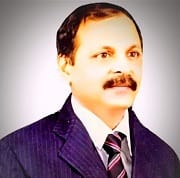
Dr. Suresh Kumar Mishra ‘Uratript’
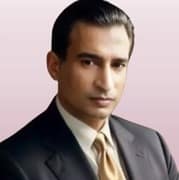
Dr. Suresh Kumar Mishra, widely known in the world of satire by his pen name ‘Uratipt’, expresses his emotions and thoughts with profound honesty and depth. His multifaceted talent is evident in his contributions across various literary genres. He is not only a renowned satirist but also a poet and a children’s author.
His satirical writings have earned him a special place in the literary world. His satire, ‘Shikshak Ki Mout’, went massively viral on the Sahitya Aajtak channel, garnering over a million views and reads—a monumental achievement in the history of Hindi satire. His collection of satires, ‘Ek Tinka Ikyavan Aankhen’ (A Straw and Fifty-One Eyes), is also highly acclaimed and includes his timeless work, ‘Kitabon Ki Antim Yatra’ (The Last Journey of Books). Other celebrated collections include ‘Mayaan Ek, Talwar Anek’ (One Sheath, Many Swords), ‘Gapodi Adda’ (The Gossiper’s Den), and ‘Sab Rang Mein Mere Rang’ (My Colors in Every Hue). His satirical novel, ‘Idhar-Udhar Ke Beech Mein’ (In Between Here and There), is a unique and groundbreaking work focused on the third world.
His significant contributions to literature have been widely recognized. He was honored with the Best Young Creator Award, 2021 by the Telangana Hindi Academy and the Government of Telangana, an award presented by Chief Minister K. Chandrasekhar Rao. The Rajasthan Children’s Literature Academy also honored him for his children’s book, ‘Nanhon Ka Srijan Aasmaan’ (The Creative Sky of Little Ones). Additionally, he has received the Vyanga Yatra Ravindranath Tyagi Sopaan Samman and the Sahitya Srijan Samman from Prime Minister Narendra Modi.
Dr. Uratript has also played a pivotal role in writing, editing, and coordinating a total of 55 books for the Government of Telangana for primary school, college, and university levels. His work is included in university textbooks in Bihar, Chhattisgarh, and Telangana, where his satirical creations are part of the curriculum. This recognition underscores that young readers can identify and appreciate quality and impactful writing.
Key Accolades and Works
- Viral Satire: ‘Teacher’s Death’ (over 1 million views)
- Satire Collections: ‘Ek Tinka Ikyavan Aankhen’, ‘Mayaan Ek, Talwar Anek’, ‘Gapodi Adda’
- Unique Satirical Novel: ‘Idhar-Udar Ke Beech Mein’
- Awards: Shreshtha Navyuva Samman (Telangana), Sahitya Srijan Samman (PM Modi), and more.
- Educational Contribution: Authored and edited 55 books for the Telangana government.
Some precious moments of life

- Honoured with ‘Shrestha Navayuvva Rachnakar Samman’ by former Chief Minister of Telangana Government, Shri K. Chandrasekhar Rao.
- Honoured with Oscar, Grammy, Jnanpith, Sahitya Akademi, Dadasaheb Phalke, Padma Bhushan and many other awards by the most revered Gulzar sahab (Sampurn Singh Kalra), the lighthouse of the world of literature and cinema, during the Sahitya Suman Samman held in Mumbai.
- Meeting the famous litterateur Shri Vinod Kumar Shukla Ji, honoured with Jnanpith Award.
- Got the privilege of meeting Mr. Perfectionist of Bollywood, actor Aamir Khan.
- Meeting the powerful actor Vicky Kaushal on the occasion of being honoured by Vishva Katha Rangmanch.
Today we present his satire The Wedding of Democracy and Burglary.
☆ Witful Warmth# 70 ☆
☆ Satire ☆ The Wedding of Democracy and Burglary… ☆ Dr. Suresh Kumar Mishra ‘Uratript’ ☆
In the glorious land of “Mahaan Bharat,” democracy is not a system; it is a festival. And like any Indian festival, it requires noise, pollution, and a sleight of hand that would put a street magician to shame. The latest trend in this festival is not the bursting of crackers, but the bursting of the ballot boxmetaphorically, of course. The phenomenon of “Vote Chori” (Vote Theft) has been elevated from a crime to a fine art form. It is no longer done by goons with mustaches and lathis capturing a booth. That is so 1990s. That is so analog. Today, vote theft is digital, sophisticated, and invisible. It is done with the grace of a gazelle and the precision of a neurosurgeon. The voter presses the button for the “Lion,” and the vote goes to the “Donkey.” The machine beeps, the light flashes, and the voter goes home feeling patriotic, unaware that his patriotism has just been hijacked by a microchip with a political agenda. I met a “Vote Management Consultant” named Mr. Ghotala (Scam) recently. He sat in a plush office, wearing a white kurta that was brighter than his future. I asked him, “Sir, how do you steal votes? Isn’t the Election Commission watching?” He laughed, a belly-jiggling laugh that smelled of expensive whiskey. “Parsai ji,” he said, “You writers are so naive. We don’t steal votes; we ‘redirect’ them. It is like traffic management. If the road to Party A is blocked, we simply open a bypass to Party B. The voter is happy because he pressed a button. The machine is happy because it beeped. And we are happy because we won. It is a win-win-win situation! Why bring morality into a technical matter?” He spoke of democracy as if it were a plumbing issuejust a matter of fixing the leaks in the pipeline to ensure the water flows into the right swimming pool. The plight of the common voter is truly heart-touching. He stands in line for four hours, sweating in the sun, holding his ID card like a ticket to heaven. He thinks, “Today, I will change the destiny of my nation.” He enters the booth, trembling with responsibility. He looks at the Electronic Voting Machine (EVM). It looks back at him with a blank, electronic stare. He presses the button. Beep. That beep is the sound of his agency being flushed down the toilet. He walks out with ink on his finger, showing it to everyone like a war wound. “I have voted!” he declares. Meanwhile, inside the machine, his vote is having an identity crisis. It started as a vote for change but decided mid-way to become a vote for the status quo. It is a demisical tragedy. The ink on the finger lasts for weeks, but the value of the vote lasts for zero seconds. Then there is the mystery of the “Missing Voters.” In every election, thousands of names vanish from the list. They are not dead; they are not abroad; they are just… gone. I asked an official, “Where did these people go?” He looked at me gravely and said, “They have been spiritually liberated. They have attained Moksha from the electoral process. Why do you want to drag them back into the Maya of politics?” It was a mindblowing explanation. The government is so efficient that it grants spiritual liberation to voters without them even asking for it! One day you are a citizen; the next day you are a ghost. You exist to pay taxes, you exist to pay fines, but when it comes to voting, you are as invisible as the development promised in the manifesto. Tears roll down the eyes when you realize you are a citizen only when the government wants your money.
The post-election analysis is another tear-jerker. The losing candidate screams, “The machines were hacked! The Bluetooth connected to the Wi-Fi which connected to the satellite which was controlled by aliens!” The winning candidate smiles like a saint and says, “This is the mandate of the people. The people have spoken.” Which people? The invisible people?
The ghost voters? The microchips? It is a reality show where the winner is decided before the contestants even enter the stage. The media plays the role of the cheerleader, analyzing the “wave” and the “swing.”
There is no wave. There is only the tsunami of manipulation. The voter is just standing on the shore, watching his hut get washed away, clapping because the water looks blue on television.
Let us look at the “buying” of votes. This is the retail sector of Vote Chori. In the old days, they gave liquor and blankets. Now, with inflation, the rates have gone up. But look at the honesty of the poor voter! He takes the money from Party A, eats the biryani from Party B, and votes for Party C. This is the only revenge he can take. But alas, even this revenge is short-lived if the machine itself is compromised. The politician says, “Take whatever you want, you fool. The button is in your hand, but the wire is in mine.” It is a relationship of absolute toxicity.
The voter is the battered spouse who keeps going back, hoping that this time, the partner will change. But the partner only changes the method of beating. The bureaucracy plays the role of the blind umpire. They see nothing, hear nothing. They are the Three Monkeys of Gandhiji, but without the wisdom. If you complain, they ask for proof. “Bring us the video of the invisible signal entering the machine,” they say. It is like asking for photograph of the wind. They form committees.
****
© Dr. Suresh Kumar Mishra ‘Uratript’
Contact : Mo. +91 73 8657 8657, Email : drskm786@gmail.com
≈ Blog Editor – Shri Hemant Bawankar/Editor (English) – Captain Pravin Raghuvanshi, NM ≈