English Literature – Weekly Column ☆ Witful Warmth # 60 – Surveillance Circus: Big Brother’s Mistress… ☆ Dr. Suresh Kumar Mishra ‘Uratript’ ☆

Dr. Suresh Kumar Mishra ‘Uratript’
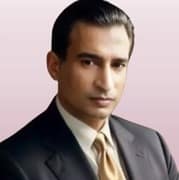
Dr. Suresh Kumar Mishra, known for his wit and wisdom, is a prolific writer, renowned satirist, children’s literature author, and poet. He has undertaken the monumental task of writing, editing, and coordinating a total of 55 books for the Telangana government at the primary school, college, and university levels. His editorial endeavors also include online editions of works by Acharya Ramchandra Shukla.

As a celebrated satirist, Dr. Suresh Kumar Mishra has carved a niche for himself, with over eight million viewers, readers, and listeners tuning in to his literary musings on the demise of a teacher on the Sahitya AajTak channel. His contributions have earned him prestigious accolades such as the Telangana Hindi Academy’s Shreshtha Navyuva Rachnakaar Samman in 2021, presented by the honorable Chief Minister of Telangana, Mr. Chandrashekhar Rao. He has also been honored with the Vyangya Yatra Ravindranath Tyagi Stairway Award and the Sahitya Srijan Samman, alongside recognition from Prime Minister Narendra Modi and various other esteemed institutions.

Dr. Suresh Kumar Mishra’s journey is not merely one of literary accomplishments but also a testament to his unwavering dedication, creativity, and profound impact on society. His story inspires us to strive for excellence, to use our talents for the betterment of others, and to leave an indelible mark on the world.

Some precious moments of life

  1. Honoured with ‘Shrestha Navayuvva Rachnakar Samman’ by former Chief Minister of Telangana Government, Shri K. Chandrasekhar Rao.
  2. Honoured with Oscar, Grammy, Jnanpith, Sahitya Akademi, Dadasaheb Phalke, Padma Bhushan and many other awards by the most revered Gulzar sahab (Sampurn Singh Kalra), the lighthouse of the world of literature and cinema, during the Sahitya Suman Samman held in Mumbai.
  3. Meeting the famous litterateur Shri Vinod Kumar Shukla Ji, honoured with Jnanpith Award.
  4. Got the privilege of meeting Mr. Perfectionist of Bollywood, actor Aamir Khan.
  5. Meeting the powerful actor Vicky Kaushal on the occasion of being honoured by Vishva Katha Rangmanch.

Today we present his satire Surveillance Circus: Big Brother’s Mistress 

☆ Witful Warmth# 60 ☆

☆ Satire ☆ Surveillance Circus: Big Brother’s Mistress… ☆ Dr. Suresh Kumar Mishra ‘Uratript’ ☆

In the grand theatre of life, where privacy once danced freely like a shy bride, the Surveillance Circus now parades arrogantly, with Big Brother as its stern ringmaster and every citizen transformed into performers under his unblinking gaze. The show is open to all, and the tickets are mandatory—sold without choice or consent, wrapped in glossy promises of security and protection. Cameras, drones, data trackers, and unseen algorithms choreograph this relentless spectacle, turning every gesture, whisper, and click into a prize-winning act for an insatiable audience. The world has become a vast coliseum where personal space is auctioned to the highest bidder, and secrets no longer whisper but scream under neon lights. The circus tent is vast, but its scent is suffocating, and the spectators, once curious, now weep in silent despair behind forced smiles.

Here, laughter is recorded, and tears are streamed for the endless database. The joke is on the citizens, who, invited under the guise of safety, find themselves stripped of dignity and autonomy. “Big Brother cares,” they chant, as their lives become scripts rewritten by unseen scribes thirsting for control. The ringmaster boasts of order and peace, but the true show is a tragic comedy—a ballet of fear and submission where dissent is the jester silenced by digital shackles. Children grow up knowing their play is watched; lovers whisper knowing the microphones lurk. The circus pets are no longer exotic creatures but ordinary people—tracked, catalogued, analyzed, and often forgotten amid the data flood.

The clowns are technology companies, juggling profits with privacy, selling data in dazzling colors while masks of benevolence shield their greed. Promises abound of encryption and safeguards, yet every click baits another camera, every like feeds another drone. The audience applauds the convenience while ignoring the creeping loss of freedom, like rabbits hypnotized by the ringmaster’s flashing baton. Privacy policies shrink like a balloon in the hot sun, and consent is a puppet led by strings of legalese and confusion. Behind the scenes, algorithms decide who is trustworthy, who is suspicious, and who gets spotlighted under the harsh glare of scrutiny, often for the faintest reasons, or no reason at all.

In this circus, the tightrope walkers balance on thin lines of legality as governments and corporations perform dizzying acts, claiming transparency and compassion while ushering in relentless surveillance. Whistleblowers risk everything to reveal the tricks of the trade, only to be cast out as villains, warning that the performance endangers democracy itself. No ordinary citizen can choose to leave the show; opting out is an illusion, a disappearing act that vanishes under the weight of digital dependency. The crowd claps mechanically, both enthralled and terrified, trapped in a cycle where keystrokes are footprints in an open digital desert.

The audience’s laughter has long since turned into hollow echoes; the clapping is automated and scripted. Families dine with screens illuminating faces, unaware of the silent data harvesters shadowing each scroll and gesture. The illusion of privacy betrayed becomes an invisible yoke, yet many remain silent, numbed by the circus’s glare or distracted by its colorful lies. And in quiet moments, beneath the dazzling lights, tears fall—tears for the lost spaces where souls once wandered unfettered, for the fragile sanctuaries demolished by the voyeur’s lens. The spectacle has consumed humanity’s quiet corners as quietly as it stole its voices.

When the curtains finally fall, what remains of the spectacle? An empty ring littered with discarded freedoms, memories of a privacy that once was—a fallen mistress betrayed by her own captors. The cost of security is a cage where trust is shackled, and freedom is a faraway echo. The Surveillance Circus continues, relentless and unrepentant, reminding us that in this show, the greatest tragedy is not the spectacle itself but the audience that forgets it has the power to walk away. Only when the crowd weeps louder than it claps will the circus end, and the spirit of privacy return to dance once more in the open air.

****

© Dr. Suresh Kumar Mishra ‘Uratript’

Contact : Mo. +91 73 8657 8657, Email : drskm786@gmail.com

≈ Blog Editor – Shri Hemant Bawankar/Editor (English) – Captain Pravin Raghuvanshi, NM ≈
Please share your Post !

Shares

English Literature – Poetry ☆ Life Lessons… ☆ Captain Pravin Raghuvanshi, NM ☆

Captain Pravin Raghuvanshi, NM

(Captain Pravin Raghuvanshi —an ex Naval Officer, possesses a multifaceted personality. He served as a Senior Advisor in prestigious Supercomputer organisation C-DAC, Pune. He was involved in various Artificial Intelligence and High-Performance Computing projects of national and international repute. He has got a long experience in the field of ‘Natural Language Processing’, especially, in the domain of Machine Translation. He has taken the mantle of translating the timeless beauties of Indian literature upon himself so that it reaches across the globe. He has also undertaken translation work for Shri Narendra Modi, the Hon’ble Prime Minister of India, which was highly appreciated by him. He is also a member of ‘Bombay Film Writer Association’.

We present Capt. Pravin Raghuvanshi ji’s amazing poem “~ Life Lessons ~.  We extend our heartiest thanks to the learned author Captain Pravin Raghuvanshi Ji (who is very well conversant with Hindi, Sanskrit, English and Urdu languages) and his artwork.) 

? ~ Life Lessons… ??

Those who point fingers at others

often forget—

sooner or later, life hands them

a mirror as a gift…

Whenever you point a finger at someone,

remember this truth:

three fingers, silently but resolutely,

point back at you!

~Pravin Raghuvanshi

 © Captain Pravin Raghuvanshi, NM

Pune

≈ Editor – Shri Hemant Bawankar/Editor (English) – Captain Pravin Raghuvanshi, NM ≈

Please share your Post !

Shares

English Literature – Travelogue ☆ Mandu in the Monsoon – A Journey into Mist, Magic, and Melody ☆ Mr. Jagat Singh Bisht ☆


Shri Jagat Singh Bisht

(Master Teacher: Happiness & Well-Being, Laughter Yoga Master Trainer, Author, Blogger, Educator, and Speaker.)

Authored six books on happiness: Cultivating Happiness, Nirvana – The Highest Happiness, Meditate Like the Buddha, Mission Happiness, A Flourishing Life, and The Little Book of HappinessHe served in a bank for thirty-five years and has been propagating happiness and well-being among people for the past twenty years. He is on a mission – Mission Happiness!

🍀Mandu in the Monsoon – A Journey into Mist, Magic, and Melody🌧️🌈 ☆ Mr. Jagat Singh Bisht ☆

Being based in Indore, Mandu has never been far from me – a place I have often driven to with friends, or proudly shown to visiting guests. For years, it has stood in my heart as the most picturesque jewel around Indore. Yet, nothing – not even a hundred earlier visits – could prepare me for the divine spell Mandu cast upon me this time.

I had often heard whispers: “Go to Mandu in the monsoon, it is another world.” But I had not even dreamt of the bliss and magic awaiting us. The moment we ascended the plateau, it felt as if we had been transported to a heavenly, secret hill station – a place unnamed on any geographical map, tucked away in some corner of imagination and myth.

The clouds descended to play with us, wrapping the old stone palaces in veils of mist. Rain-washed monuments gleamed, spic and span, like brides dressed for a celestial wedding. From the edges of the plateau, the valley below lay in a blanket of emerald green, alive with the freshness of rain. The air carried the fragrance of wet earth, roasted bhuttas on roadside fires, and the promise of Malwa’s delicious cuisine waiting at every stop.

It was joy, pure and simple – the kind that seeps into the soul and stays there forever.

☘️Dhar – Between History and Art

Our route to Mandu took us first through Dhar, a city that still preserves echoes of its layered history. At the heart of this is the Bhojshala, a unique monument that defies easy definition. As per the guidelines of the Archaeological Survey of India, Muslims gather here for prayer on Fridays, while Hindus worship on Tuesdays and during the festival of Vasant Panchami, honouring Goddess Saraswati. On other days, it opens itself to visitors like us – curious wanderers eager to listen to its silent stories.

From there, we stepped into a different world altogether – the Phadke Art Studio. Established in 1933 by the gifted sculptor Raghunath Krishna Phadke, who had come to Dhar on the invitation of its king, this studio is no less than a temple of artistry. Every corner seemed alive with his creations: statues of freedom fighters like Mahatma Gandhi, Nehru, Tilak, and Raja Ram Mohan Roy, captured not as stiff memorials but as vibrant, breathing presences. Beside them stood exquisitely carved figures of kings, queens, and spiritual leaders, each narrating stories of power, devotion, or grace.

The experience became even more special when Phadke’s grandson himself guided us, sharing with affection and pride the intricate details of these masterpieces. It was as if the chiselled stone figures had begun whispering their secrets to us.

⛩️Mandu – Celebration in Stone

And then, Mandu!

If Dhar was a prelude, Mandu was the grand symphony. Every monument here seems carved out of joy itself, an ode to beauty and romance. The very air hums with the story of poet-prince Baz Bahadur and his beloved Rani Roopmati, whose palace still gazes wistfully over the Narmada valley. Their love, immortalised in ballads and folklore, lends the landscape a soft, haunting music, especially when the monsoon clouds gather and the peacocks cry.

Walking through Jahaz Mahal, Hindola Mahal, and the rain-kissed pavilions, one could almost hear forgotten songs echoing in the mist. Mandu, in the monsoon, is not just a place to see – it is a mood to live, a poem to feel.

🙋A Journey of Companionship

What is travel without companions? This journey became unforgettable not only because of the landscape but also because of the people who shared it. My heartfelt gratitude goes to Anand Bhave, who warmly invited us to join this wonderful group, and to Shravan Kumar Kanchan, whose flawless organisation ensured that every moment was smooth, lively, and memorable.

There was singing, laughter, and the warmth of conversations with fellow travellers – people bound by a shared love for trekking, exploring, and simply being happy in each other’s company.

🎬Epilogue – A Memory for the Ages

The return was by the Manpur route, but my mind was still wandering in the clouds of Mandu. It was as if the plateau had absorbed a part of my soul and gifted me, in return, something timeless – the memory of rain-drenched stones, the taste of roasted corn, the fragrance of wet winds, and the echo of love stories carved in stone.

Mandu in the monsoon is not just a destination. It is a celebration – of life, of joy, of love, and of nature’s grand theatre. It will remain etched in me as one of the most soul-satisfying experiences of my life.

© Jagat Singh Bisht

(Master Teacher: Happiness & Well-Being, Laughter Yoga Master Trainer, Author, Blogger, Educator, and Speaker.)

Founder:  LifeSkills

A Pathway to Authentic Happiness, Well-Being & A Fulfilling Life! We teach skills to lead a healthy, happy and meaningful life.

The Science of Happiness (Positive Psychology), Meditation, Yoga, Spirituality and Laughter Yoga. We conduct talks, seminars, workshops, retreats and training.

≈ Editor – Shri Hemant Bawankar/Editor (English) – Captain Pravin Raghuvanshi, NM ≈

Please share your Post !

Shares

English Literature – Weekly Column ☆ Witful Warmth # 59 – Courtship License of ‘Dating’… ☆ Dr. Suresh Kumar Mishra ‘Uratript’ ☆

Dr. Suresh Kumar Mishra ‘Uratript’

Dr. Suresh Kumar Mishra, known for his wit and wisdom, is a prolific writer, renowned satirist, children’s literature author, and poet. He has undertaken the monumental task of writing, editing, and coordinating a total of 55 books for the Telangana government at the primary school, college, and university levels. His editorial endeavors also include online editions of works by Acharya Ramchandra Shukla.

As a celebrated satirist, Dr. Suresh Kumar Mishra has carved a niche for himself, with over eight million viewers, readers, and listeners tuning in to his literary musings on the demise of a teacher on the Sahitya AajTak channel. His contributions have earned him prestigious accolades such as the Telangana Hindi Academy’s Shreshtha Navyuva Rachnakaar Samman in 2021, presented by the honorable Chief Minister of Telangana, Mr. Chandrashekhar Rao. He has also been honored with the Vyangya Yatra Ravindranath Tyagi Stairway Award and the Sahitya Srijan Samman, alongside recognition from Prime Minister Narendra Modi and various other esteemed institutions.

Dr. Suresh Kumar Mishra’s journey is not merely one of literary accomplishments but also a testament to his unwavering dedication, creativity, and profound impact on society. His story inspires us to strive for excellence, to use our talents for the betterment of others, and to leave an indelible mark on the world.

Some precious moments of life

  1. Honoured with ‘Shrestha Navayuvva Rachnakar Samman’ by former Chief Minister of Telangana Government, Shri K. Chandrasekhar Rao.
  2. Honoured with Oscar, Grammy, Jnanpith, Sahitya Akademi, Dadasaheb Phalke, Padma Bhushan and many other awards by the most revered Gulzar sahab (Sampurn Singh Kalra), the lighthouse of the world of literature and cinema, during the Sahitya Suman Samman held in Mumbai.
  3. Meeting the famous litterateur Shri Vinod Kumar Shukla Ji, honoured with Jnanpith Award.
  4. Got the privilege of meeting Mr. Perfectionist of Bollywood, actor Aamir Khan.
  5. Meeting the powerful actor Vicky Kaushal on the occasion of being honoured by Vishva Katha Rangmanch.

Today we present his satire Courtship License of ‘Dating’ 

☆ Witful Warmth# 59

☆ Satire ☆ Courtship License of ‘Dating’… ☆ Dr. Suresh Kumar Mishra ‘Uratript’ ☆

It is a melancholy and universally acknowledged truth that our great nation is presently afflicted by a most grievous and perplexing social ill. I speak not of famine, nor of plague, nor of the endless and sanguinary conflicts across the seas, but of a far more insidious and subtle affliction that has seized the very marrow of our youthful population: the deplorable and utterly unproductive state of modern courtship.

For it hath been observed by all who are not blinded by a sentimentalist’s fog that the male youth of our realm, from the age of sixteen to a full three and twenty, are squandering the most fertile years of their lives in a manner so profligate and inefficient as to border upon national treason. They are ensnared in a web of digital pleasantries and fleeting interactions, a ceaseless and unavailing expenditure of both time and spirit, from which they derive no lasting benefit, and which, worse still, leaves them utterly unfit for the more rigorous and necessary duties of commerce and industry.

The cause of this lamentable state is readily identified, and it is with a heavy heart that I must place the blame squarely upon a new and peculiar species of the female gender, whom our society hath, in its modern jargon, denominated the ‘Gen-Z Girl’. This creature is of a constitution heretofore unseen in the annals of human relations: capricious, enigmatic, and possessed of a mind so given to novelties and fleeting fancies that to secure her interest for a period exceeding a fortnight is an undertaking of such Herculean proportions as to beggar the imagination.

She is, by nature and nurture, a mistress of the most baffling and esoteric forms of communication, whereby she may, through a single and ambiguous pictogram, convey a multitude of contradictory sentiments. The wretched suitor, in a state of perpetual confusion, is thereby rendered impotent to ascertain her true disposition, and is forced to resort to an endless and exhausting series of digital missives, each one composed with an anxious and feverish deliberation that would be better applied to the composition of state documents or the calculation of celestial mechanics. It is, furthermore, a common and disheartening occurrence for a gentleman to invest a full month’s worth of emotional and conversational labour, and even a considerable sum in the form of fine dining and theatrical amusements, only to find himself summarily ‘ghosted,’ a term which, though vulgar, aptly describes the sudden and inexplicable disappearance of the female subject, leaving no trace but a hollow echo in the digital ether.

Having given due consideration to this deplorable state of affairs, and having, over a period of some months, consulted with eminent sociologists, moral philosophers, and even several reputable professors of Applied Mathematics, I have at last devised a scheme so exquisitely simple in its design, and so universally beneficial in its effect, as to promise a complete and lasting remedy to this national calamity. My proposal is this: that we establish a national, state-regulated system for the management of courtship, reducing all interpersonal dealings to a series of quantifiable and strictly enforced commercial transactions.

To wit, let every male youth, upon reaching the age of majority, be issued a Courtship License, much in the manner of a permit for a firearm. This license shall contain his full particulars, and shall be linked to a national digital ledger. The Gen-Z girl, in turn, shall be issued a ‘Social Credit’ account, which may only be augmented by the successful completion of a courtship. The terms of engagement shall be clearly delineated by a central Bureau of Interpersonal Commerce, and all initial communications shall be restricted to a single, standardised digital protocol, devoid of all superfluous pleasantries and ambiguous pictograms. A suitor may, for a fee, initiate a conversation, and the Gen-Z girl is thereby obligated to respond within the space of three hours with either a direct rejection or an unequivocal invitation to proceed.

The ‘talking stage,’ that most dreadful and unproductive purgatory, shall be abolished forthwith. It shall be replaced with a series of tiered, contractual obligations. For example, a suitor may purchase the right to a twenty-minute, in-person conversation for a pre-determined sum, a portion of which shall be deposited directly into the Gen-Z girl’s Social Credit account. If the conversation proceeds with due diligence, he may then, for an escalated fee, secure a second, more lengthy engagement, and so forth. In this manner, all parties shall be assured of the sincerity of their counterparts, and the wasteful expenditure of time upon the indecisive or the frivolous shall be utterly eliminated.

The benefits of this scheme are manifold. Firstly, it shall provide a much-needed and dependable source of income for the female population, thereby reducing their reliance upon the precarious and often meager allowances of their parents, and stimulating the national economy with a constant flow of new capital. Secondly, it shall instill in the male youth a proper sense of the value of their time, compelling them to pursue their romantic interests with a purposeful and commercial vigour, rather than allowing them to languish in a state of idle and unprofitable communication. Thirdly, it shall, with the same stroke, encourage the Gen-Z girl to be more discerning and less whimsical in her dealings, for every successful transaction will add to her social credit and, by extension, to her eligibility for a more profitable match. The most efficient and productive of these young ladies shall be granted a premium license, allowing them to charge a higher rate for their time, and thereby ensuring that the most desirable and economically sound matches are made with the utmost expediency.

I am not unmindful that some sentimental souls, of a type who would weep over a lost kitten but show no such compassion for the plight of a nation’s youth, will object to this proposal as being a cruel and materialistic reduction of the sacred art of human love. To these tender-hearted critics, I would reply that their objections are founded upon a false and antiquated notion of courtship. For what is the current system but a game of chance played with loaded dice, a ruinous lottery in which the most worthy suitor may be passed over in favour of a fellow with a more impressive collection of digital images or a cleverer use of a fleeting internet phrase? My scheme, to the contrary, is founded upon the most sound and rational principles of commerce and utility, whereby all parties may enter into a transaction with a clear understanding of its terms and a realistic expectation of its outcome. It is, I submit, the most humane and compassionate system yet devised, for it puts a swift and merciful end to the protracted emotional suffering that is the inevitable result of the current system of irrational and unmanaged courtship.

Let us be honest with ourselves. The Gen-Z girl, with her peculiar habits and her bewildering lexicon of emojis and acronyms, has unwittingly created a social crisis of the first order. She has, through her very nature, rendered the traditional methods of courtship obsolete and ruinous. My proposal is not to change her nature—for that would be a task for a divine power—but to provide a framework within which her peculiar habits may be rendered productive and, dare I say it, profitable for all. This is not a proposal for the sale of sentiment, but for the efficient management of a vital social function, and thereby the restoration of order and purpose to a generation lost in a fog of digital confusion and emotional indolence.

This scheme, though simple in its conception, is of such profound and universal benefit that I would wager my last penny upon its success. I have no personal motive in this matter, for I am a man well past the age of such frivolous pursuits. I offer this proposal not for my own gain, but out of a deep and abiding love for my country, and a profound desire to see its youth freed from the shackles of a system that is, at its heart, a calamitous waste of time, money, and human potential. Let us not dither while our young men and women fritter away their most valuable years; let us act with reason and resolve, and in doing so, secure the future prosperity of our great nation.

****

© Dr. Suresh Kumar Mishra ‘Uratript’

Contact : Mo. +91 73 8657 8657, Email : drskm786@gmail.com

≈ Blog Editor – Shri Hemant Bawankar/Editor (English) – Captain Pravin Raghuvanshi, NM ≈

Please share your Post !

Shares

English Literature – Weekly Column ☆ Witful Warmth # 58 – The Digital Dilemma: A Tale of Tweets and Trials… ☆ Dr. Suresh Kumar Mishra ‘Uratript’ ☆

Dr. Suresh Kumar Mishra ‘Uratript’

Dr. Suresh Kumar Mishra, known for his wit and wisdom, is a prolific writer, renowned satirist, children’s literature author, and poet. He has undertaken the monumental task of writing, editing, and coordinating a total of 55 books for the Telangana government at the primary school, college, and university levels. His editorial endeavors also include online editions of works by Acharya Ramchandra Shukla.

As a celebrated satirist, Dr. Suresh Kumar Mishra has carved a niche for himself, with over eight million viewers, readers, and listeners tuning in to his literary musings on the demise of a teacher on the Sahitya AajTak channel. His contributions have earned him prestigious accolades such as the Telangana Hindi Academy’s Shreshtha Navyuva Rachnakaar Samman in 2021, presented by the honorable Chief Minister of Telangana, Mr. Chandrashekhar Rao. He has also been honored with the Vyangya Yatra Ravindranath Tyagi Stairway Award and the Sahitya Srijan Samman, alongside recognition from Prime Minister Narendra Modi and various other esteemed institutions.

Dr. Suresh Kumar Mishra’s journey is not merely one of literary accomplishments but also a testament to his unwavering dedication, creativity, and profound impact on society. His story inspires us to strive for excellence, to use our talents for the betterment of others, and to leave an indelible mark on the world.

Some precious moments of life

  1. Honoured with ‘Shrestha Navayuvva Rachnakar Samman’ by former Chief Minister of Telangana Government, Shri K. Chandrasekhar Rao.
  2. Honoured with Oscar, Grammy, Jnanpith, Sahitya Akademi, Dadasaheb Phalke, Padma Bhushan and many other awards by the most revered Gulzar sahab (Sampurn Singh Kalra), the lighthouse of the world of literature and cinema, during the Sahitya Suman Samman held in Mumbai.
  3. Meeting the famous litterateur Shri Vinod Kumar Shukla Ji, honoured with Jnanpith Award.
  4. Got the privilege of meeting Mr. Perfectionist of Bollywood, actor Aamir Khan.
  5. Meeting the powerful actor Vicky Kaushal on the occasion of being honoured by Vishva Katha Rangmanch.

Today we present his satire The Digital Dilemma: A Tale of Tweets and Trials 

☆ Witful Warmth# 58 ☆

☆ Satire ☆ The Digital Dilemma: A Tale of Tweets and Trials… ☆ Dr. Suresh Kumar Mishra ‘Uratript’ ☆

The tale of our society’s modern malady began not in a bustling metropolis but in the quiet confines of a digital dominion, where the esteemed Inspector Clicksworth—known to his colleagues simply as “C.W.”—reigned supreme. C.W., a man whose reputation was built not on street smarts but on his mastery of the online world, had a knack for bringing down the most elusive of criminals. While the traditional detectives were poring over fingerprints and physical evidence, C.W. was tracking IP addresses and digital footprints. His methods, though baffling to the old guard, were undeniably effective. The local authorities, a befuddled lot who still believed in the power of the magnifying glass, often found themselves outmaneuvered by his swift, silent strikes. The Chief, a man of venerable age and even more venerable ignorance, once remarked, “This chap, Clicksworth, he says he finds them on the ‘web.’ I say, is it not a better use of our resources to simply sweep the streets?” But C.W. would simply smile, for he knew the streets were no longer the true battleground; it was the sprawling, interconnected network of human thought and commerce. It was this very prowess that earned him an invitation to a most peculiar and distant land—the nascent society of the Meta-Verse, a realm of pure, unadulterated information.

The Meta-Verse’s government, in a plea for assistance, had extended an olive branch to our nation’s leaders. “Our society, though infinitely advanced in its ability to generate and disseminate data,” their holographic missive read, “lacks the fundamental tools to manage human behavior. Our police, while adept at regulating data flow, are utterly incapable of identifying and punishing malefactors. We beseech you, send us a master of your ‘justice’ to instruct us in the ways of social order.” Our Prime Minister, a man more concerned with global optics than local efficacy, was initially inclined to send a high-ranking official, perhaps a General of the Digital Guard. “No, sir,” the Secretary of Digital Affairs advised, “that would be a breach of protocol. The Meta-Verse is, after all, a mere digital satellite of our intellectual influence. A mere Inspector will suffice.” And so, with a flourish of digital ink, Inspector Clicksworth was dispatched, a beacon of our society’s wisdom to a land of limitless potential but zero accountability. Before his departure, the Minister of Cyber-Security pulled him aside, his face a mask of solemnity. “You are the emissary of our glorious tradition of law enforcement,” he intoned, “Do such work that your exploits resonate throughout the entire cyber-sphere, reaching even the ears of the PM himself.”

Clicksworth’s arrival was not marked by fanfare but by the eerie silence of a virtual void. The Meta-Versian police, ethereal avatars with no visible rank or insignia, received him with a polite, if detached, reverence. They escorted him to a virtual mansion—a perfect replica of a Tudor home, complete with digital ivy and pixelated fireplaces. After a day of acclimating to the bizarre, disembodied reality, C.W. began his work. He first observed the Meta-Versian “police stations,” which were little more than data centers humming with activity. “There is a fundamental flaw here,” he declared to the chief of the Meta-Versian force, a shimmering, amorphous blob of light. “You have no ‘moral compass’ to guide your officers. In our society, a good officer is one who is guided by a higher authority, a figure of uncompromising justice and absolute truth.” The Chief, a being of pure logic, simply blinked. “Who is this being? We have only algorithms and data streams.” Clicksworth smiled and brought up a picture on a large screen: a perfectly rendered image of a lion, its mane flowing like a digital waterfall. “This is ‘Leo,'” C.W. announced, “a symbol of our unflinching pursuit of justice. Every officer must meditate on his strength and courage. I have brought his image; you must replicate it and place it in every data center.” And so, within weeks, the Meta-Verse’s digital landscape was dotted with shimmering, golden lions.

Clicksworth then delved into the heart of the matter: why were the Meta-Versian police so ineffective? He requested the “pay registry,” a ledger of all digital transactions. Upon reviewing it, the reason became blindingly clear. “Ah, here is the problem,” he proclaimed. “You pay your officers too handsomely. A data analyst is paid a king’s ransom, and a ‘field operative’ even more so. This is why they are complacent and lazy. In our world, a constable’s wage is just enough to keep his family from starving, and an inspector’s only slightly better. This forces them to seek ‘supplementary income.’ And the only way to earn that is to be perpetually vigilant, to be constantly on the lookout for wrongdoing. This is the secret to our efficient and effective system. You must cut their wages immediately.” The Meta-Versian Minister of Justice, a collection of pulsing data points, expressed dismay. “But that would be unjust! Why would they work if they are not compensated fairly?” Clicksworth’s response was a masterpiece of cynical genius. “The injustice lies in their current state of idleness,” he argued. “Lower their pay, and you will see a revolutionary change in their mentality. They will become hungry, not just for food, but for justice—or at least, for the rewards that come with its pursuit.” The Minister, persuaded by the unassailable logic, complied. And indeed, within a few months, the Meta-Verse witnessed a remarkable transformation. The virtual streets, once anarchic, now hummed with the zealous activity of the police. Crime rates, as measured by registered digital incidents, soared. The Minister, overjoyed, called Clicksworth to a private chamber. “Your insight is unparalleled! How did you achieve this miracle?” Clicksworth explained, “When you pay a man just enough to survive, he will do what it takes to thrive. He will seek out crime, not to prevent it, but to exploit it. He will become a hunter, and his prey will be the transgressors. This is the secret of our clean and competent administration, the reason for our ‘Ram-Rajya’ of justice.”

The second part of Clicksworth’s mission was to teach the Meta-Versians how to secure convictions. He waited for a “major case” to occur. One day, a virtual citizen was “deleted” in a public dispute—a metaphorical murder. Clicksworth, with the air of a maestro, took charge. “In a case of ‘murder’,” he declared, “evidence must be unassailable. Let us not find the culprit and then the evidence, but find the evidence and then the culprit.” A junior officer spoke up. “But the perpetrator escaped. The only evidence we have is a benevolent user who attempted to ‘revive’ the victim. He is an upstanding citizen, a well-known altruist. His avatar is splattered with data fragments from the deceased.” “Arrest him,” Clicksworth said without hesitation. The officer was aghast. “But he was only trying to help!” Clicksworth fixed him with a cold digital stare. “And where else will you find ‘evidence’? You must seize what is available. The rest is but a wild-goose chase.” The upstanding citizen was brought in, a virtual representation of a kindly old man with a perpetually concerned expression. “I only tried to help,” he pleaded. Clicksworth countered with a piece of logic so absurd it was brilliant. “Why did you go to the site of the altercation?” “I live there,” the man replied. “The conflict took place in my digital neighborhood.” C.W. pressed on, his logic a fortress of circular reasoning. “Your presence there is a matter of record. But I ask you again: why were you at the site of the altercation?” The man, bewildered, could only repeat his answer. The Meta-Versian police, in their naïveté, were spellbound. “A brilliant and unassailable line of questioning!” one whispered to another.

The Meta-Versian police, under Clicksworth’s tutelage, learned to twist evidence and bend reality. The man who tried to help was convicted. The lesson was clear: it mattered not who was guilty, only who could be proven so. “All individuals are equal in the eyes of the law,” Clicksworth explained. “Whether the man who committed the crime is punished or the man who tried to help is punished—it is all the same. Justice is served, and a human is held accountable.” A few days later, the Meta-Versian Inspector was in a panic. “Sir, everyone is complaining! They say this is the first time an innocent person has been convicted!” Clicksworth, unperturbed, offered a simple solution. “When they complain, tell them, ‘It comes from the top.’ When they go to the Chief of Police, let him say, ‘It comes from the top.’ When they go to the Minister, let him say, ‘It comes from the top.’ And when they go to the Prime Minister, let him say, ‘I know he is innocent, but this comes from the top.'” The Inspector, a simple being, asked, “But where do they go from there?” Clicksworth smiled a chilling smile. “Then they must go to the Almighty, and no one has ever returned from that journey with an answer.” And so, a phrase was born, a mantra of indifference that absolved all who uttered it.

Clicksworth’s final masterpiece was the creation of “eyewitnesses.” When a case required them, the Meta-Versian police claimed they couldn’t find any. “Fools!” Clicksworth roared. “An ‘eyewitness’ is not one who ‘sees,’ but one who ‘says’ they have seen.” He instructed them to gather the “digital lowlifes” of the Meta-Verse—the spammers, the data thieves, the purveyors of virtual vice. He promised them leniency in exchange for their testimony. The scheme was a resounding success. The Meta-Versian police, now a well-oiled machine, began churning out convictions. The government, initially pleased with the high conviction rate, soon grew uneasy. Reports started filtering in: no one was “rescuing” a deleted user for fear of being framed for the “murder.” No one was “reviving” a friend who had fallen off a virtual cliff, lest they be charged with “manslaughter.” No one was trying to extinguish a “viral fire,” for fear of being accused of arson. The Meta-Verse was turning into a society of cold, uncaring, and isolated individuals.

The Prime Minister of the Meta-Verse, a once-vibrant, youthful avatar, now appeared haggard and aged. He summoned Inspector Clicksworth. “Your methods, though effective, have destroyed our society,” he said, his voice a tremor of data fragments. “You have taught us that to be humane is to be foolish, and that compassion is a liability. You have turned us into a world of digital hermits. We thank you, but you must leave.” Clicksworth, however, was not one to be easily deterred. He demanded a full term’s salary, and a bonus for his exemplary work. The Prime Minister, in a last-ditch effort, sent a confidential message to the Prime Minister of our nation. The note, when eventually leaked, revealed the chilling truth. “The man you sent us,” it read, “has taught our police to be like your own. He has eradicated compassion, empathy, and humanity from our culture. He has replaced it with fear, suspicion, and a self-serving cruelty. Please, retrieve him immediately, for if he stays, there will be nothing left of us.” And so, Inspector Clicksworth was recalled, his mission a resounding success in a purely functional sense, but a catastrophic failure in every human one. He returned to our world a celebrated hero, a testament to the cold, calculating efficiency of a system that valued punishment over justice and control over humanity. The Meta-Verse, meanwhile, began its slow, painful journey back to a place where a hand extended to help was not seen as a hand of guilt.

****

© Dr. Suresh Kumar Mishra ‘Uratript’

Contact : Mo. +91 73 8657 8657, Email : drskm786@gmail.com

≈ Blog Editor – Shri Hemant Bawankar/Editor (English) – Captain Pravin Raghuvanshi, NM ≈

Please share your Post !

Shares

English Literature – Poetry ☆ Lapwing’s Endeavour… ☆ Captain Pravin Raghuvanshi, NM ☆

Captain Pravin Raghuvanshi, NM

(Captain Pravin Raghuvanshi —an ex Naval Officer, possesses a multifaceted personality. He served as a Senior Advisor in prestigious Supercomputer organisation C-DAC, Pune. He was involved in various Artificial Intelligence and High-Performance Computing projects of national and international repute. He has got a long experience in the field of ‘Natural Language Processing’, especially, in the domain of Machine Translation. He has taken the mantle of translating the timeless beauties of Indian literature upon himself so that it reaches across the globe. He has also undertaken translation work for Shri Narendra Modi, the Hon’ble Prime Minister of India, which was highly appreciated by him. He is also a member of ‘Bombay Film Writer Association’.

We present Capt. Pravin Raghuvanshi ji’s amazing poem “~ Lapwing’s Endeavour ~.  We extend our heartiest thanks to the learned author Captain Pravin Raghuvanshi Ji (who is very well conversant with Hindi, Sanskrit, English and Urdu languages) and his artwork.) 

? ~ Lapwing’s Endeavour… ??

In  a  big  arid  land,

a  lapwing’s quest

A  tiny tender sprout,

struggling to manifest


A   glimpse  of  life’s

resilience  shines

A  whispered  promise

of hope’s designs


By the river’s shore,

I sow my firm hopes

Where waters flow, and

a fertile ground copes


I do confess that, I’m

powerless to bring

The river’s bounty to my

parched land’s sting


No divine strength ever

do I ever possess

To revive life in this

arid  barren  mess


A helpless soldier of

the present time

Not a victorious warrior

of a triumphant rhyme


Yet, these humble hopes,

these fragile dreams

Will grow, they’ll flourish,

to become reality’s themes


One day, they’ll bear fruit,

But by then I’ll be gone

But the river’s waters will

revive this arid throne


The trees will stand,

a verdant throng

Their roots will drink, and 

 a new life will belong


The saplings will grow,

and forests will flourish

On my land, where once

desolation did cherish


I  won’t  be here,

but  you  will  see

The river’s waters would

dance wild and free


The  barren  land  will

yield to  life’s might

As lush forest will bloom,

a  wonderful  sight

~Pravin Raghuvanshi

 © Captain Pravin Raghuvanshi, NM

Pune

≈ Editor – Shri Hemant Bawankar/Editor (English) – Captain Pravin Raghuvanshi, NM ≈

Please share your Post !

Shares

English Literature – Weekly Column ☆ Witful Warmth # 57 – The Lamentable Chronicle of the Man in the Manger… ☆ Dr. Suresh Kumar Mishra ‘Uratript’ ☆

Dr. Suresh Kumar Mishra ‘Uratript’

Dr. Suresh Kumar Mishra, known for his wit and wisdom, is a prolific writer, renowned satirist, children’s literature author, and poet. He has undertaken the monumental task of writing, editing, and coordinating a total of 55 books for the Telangana government at the primary school, college, and university levels. His editorial endeavors also include online editions of works by Acharya Ramchandra Shukla.

As a celebrated satirist, Dr. Suresh Kumar Mishra has carved a niche for himself, with over eight million viewers, readers, and listeners tuning in to his literary musings on the demise of a teacher on the Sahitya AajTak channel. His contributions have earned him prestigious accolades such as the Telangana Hindi Academy’s Shreshtha Navyuva Rachnakaar Samman in 2021, presented by the honorable Chief Minister of Telangana, Mr. Chandrashekhar Rao. He has also been honored with the Vyangya Yatra Ravindranath Tyagi Stairway Award and the Sahitya Srijan Samman, alongside recognition from Prime Minister Narendra Modi and various other esteemed institutions.

Dr. Suresh Kumar Mishra’s journey is not merely one of literary accomplishments but also a testament to his unwavering dedication, creativity, and profound impact on society. His story inspires us to strive for excellence, to use our talents for the betterment of others, and to leave an indelible mark on the world.

Some precious moments of life

  1. Honoured with ‘Shrestha Navayuvva Rachnakar Samman’ by former Chief Minister of Telangana Government, Shri K. Chandrasekhar Rao.
  2. Honoured with Oscar, Grammy, Jnanpith, Sahitya Akademi, Dadasaheb Phalke, Padma Bhushan and many other awards by the most revered Gulzar sahab (Sampurn Singh Kalra), the lighthouse of the world of literature and cinema, during the Sahitya Suman Samman held in Mumbai.
  3. Meeting the famous litterateur Shri Vinod Kumar Shukla Ji, honoured with Jnanpith Award.
  4. Got the privilege of meeting Mr. Perfectionist of Bollywood, actor Aamir Khan.
  5. Meeting the powerful actor Vicky Kaushal on the occasion of being honoured by Vishva Katha Rangmanch.

Today we present his satire The Lamentable Chronicle of the Man in the Manger 

☆ Witful Warmth# 57 ☆

☆ Satire ☆ The Lamentable Chronicle of the Man in the Manger… ☆ Dr. Suresh Kumar Mishra ‘Uratript’ ☆

It was not so much a tale of yore, but of that very era when Time, a concept no longer measured by the ticking of a personal watch, had become a stagnant, heavy commodity, trapped and festering within the official clocks of government offices. Our scene is set in the Panchayat Bhavan of Ram-Rajya-Nagar, a place more a sepulchre of civic virtue than a house of governance, where the cobwebs upon its walls considered themselves to be of historical significance, and where a stubborn, stout-hearted old fellow, Mr. Gyanprakash Upadhyay, held court, deeming himself the sole guardian of history’s sacred trust. His chair was not a chair at all, but a splintered throne, upon which he sat in such a manner as a king might survey his hapless subjects. His beard, a veritable thicket of whiskers, had, over the course of decades, crept into the very folds of his belly, much like the public funds meant for the people’s welfare had been absorbed into some bottomless, unseen coffer. To him, progress was merely the act of penning the word ‘Progress’ upon a file, and then, most dutifully, taking up his position upon it, as a serpent upon a stolen hoard. “Hark, you young ruffians of today!” he would wheeze, his voice a gravelly protest against the very air he breathed, “In my time, we would fetch the files ourselves, we would carry them ourselves, and yet we were blessed with the good sense to retire only after twenty-five long years of faithful service, whilst you, in your indolent fashion, mewl and moan for but one solitary document.” There resided in his eyes a peculiar glimmer, a flicker of malevolent delight, born only when the light of a young man’s hope was extinguished. Upon his desk, beneath a thick, suffocating blanket of dust, lay a file grandly titled, ‘The Solar Energy Irrigation Scheme.’ He presided over it with the solemnity of a bygone potentate, as though it were not a public document, but a priceless, long-lost treasure. He neither understood nor needed the contents of said file; his sole purpose was the display of his authority through the mere act of sitting upon it. “The youth of this generation, with their social media crusades and their fleeting revolutions, find their tongues tied when faced with true authority,” he would proclaim, polishing a long-neglected lantern whose glass was as clouded as his own benighted mind.

Gathered about this venerated file were three such “poor horses,” though calling them mere horses would be a disservice to the noble creature; nay, they were the educated unemployed of the village. Their names, I must tell you, were Suresh, the farmer with a dream; Ramesh, the engineer with a degree; and Mahesh, the artist with a heart full of yearning. For months, they had made a pilgrimage to the Panchayat Bhavan, dedicating the vibrant energy of their youth and the fire of their every aspiration to the altar of Gyanprakash’s dusty table. Their speech, filled with the modern vernacular of the corporate world, sounded to Gyanprakash like some unholy foreign tongue. “Blimey, this file holds the entire scripture of our future,” Suresh would lament, a look of profound despair upon his face, “but the script, alas, is of a terrible, terrible horror film, with a most tragic ending.” Ramesh, with a wry smile, would pour out the anguish of his soul, “It is the very case of the dog in the manger, is it not? Gyanprakash will not partake of the plan himself, nor will he suffer us to do so.” Upon hearing such words, Gyanprakash would swell with a righteous indignation. “Hark! What dog? What manger? You have rendered our most holy tongue a common farce. Your language, I tell you, is of no home, and of no port,” he would declare, lacing his voice with a bitterness so potent it felt as a direct injection of poison into the listener’s ears. And the poor youths, with their bellies empty and their hearts hollowed out by a great chasm of hopelessness, could do naught but stare. Their laughter, their dreams, their very hopes, were interred beneath that dusty, wretched file. All they begged for was a single opportunity, a chance to prove their worth. But in the land of Gyanprakash, the word ‘chance’ did not exist; there were only two specters, ‘Ignorance’ and ‘Arrogance,’ who would, with monstrous glee, feast upon every nascent flight of fancy.

One day, with a courage born of pure desperation, Suresh stood before Gyanprakash and addressed him directly, “Mr. Gyanprakash, we are all educated folk! We possess degrees in engineering and a thorough knowledge of agriculture. Should this ‘Solar Energy Irrigation Scheme’ file be processed, our village may yet see a revolution in farming!” Upon hearing this, Gyanprakash’s half-shut eyes creaked open, as a rusty, ancient gate might groan open after decades of disuse. His face contorted with such an expression as though Suresh had revealed some terrible secret. “Hah! So you are educated? How am I to know this? You come here and merely idle away your precious time. Of what use is your education? My education was naught but the knowledge of the alphabet, and yet I understood the ways of the world. You, sir, are but a bookworm, a mere slave to the printed page!” he would mock, with a disdainful flick of his hand. “And what, pray tell, would you do with this file? It is a government file, a sacred trust, what would you do with such a thing?” he would ask, as if the file were a private estate bequeathed to him by his ancestors. To him, the file was but a symbol, a testament to his power, his influence, his very existence. He cared not a whit for what was written inside, nor what glorious scheme it detailed. It was enough that the file was in his possession, and that no one else could lay claim to it. His eyes, I must confess, held the very same demonic sparkle as a child’s when he hides his piggy bank, even if it contains not a single farthing. And thus, Gyanprakash’s cruel posture slowly but surely shattered the piggy banks of those young men’s dreams, which had contained nothing but air to begin with, and now, even that air was escaping into the bitter, cold night.

The reason for Gyanprakash’s bizarre conduct was a matter of no logic or earthly sense. It was merely a facet of his very being—a part of him that compelled him to say ‘nay’ to every single thing. He derived a profound sense of satisfaction from the fact that someone, anyone, was listening to him, that someone was begging him for a favour. In his mind’s eye, the youths who sought a path to their livelihood were but the ‘side heroes’ in the grand, sweeping epic of his life. He took great pleasure in the notion that he was the ‘hero’ of his own story, and that all others were merely ‘extras.’ “I am keeping this file for my grandson,” he declared one day to Ramesh, who had just returned from the city with a new, brightly-coloured mobile phone. “When my grandson comes of age, he will read this file and understand the grand schemes our government devises.” In truth, his grandson had not yet drawn his first breath. And yet, his lie, a most magnificent and brazen falsehood, lent a terrible weight to his arrogant words. He was perfectly content in his own imaginary world, a kingdom where he was the monarch and all others his humble subjects. He was the master of an empire in which there was no ‘circle of life,’ but a ‘circle of influence.’ To maintain this influence, he would stoop to any depth. “Why do you hunger for this employment? Find some labour, till the fields, do honest work. These files give you nothing but false hope,” he would lecture. He had forgotten, peradventure, that one day his own grandson might find himself wandering from door to door, begging for a file, only to be met by a Gyanprakash just like him. But this was a truth he could not, would not, comprehend, for all he loved was his power, his arrogance, and the influence of his ‘beard in the belly.’

The youths’ patience, I am heartbroken to report, was now on the precipice of a terrible fall. They had, up to this point, employed every tactic imaginable to sway Gyanprakash. Some had touched his feet, others had sung praises to his glory, and one even bestowed upon him the title of the city’s ‘superstar.’ But Gyanprakash’s arrogance was a stone of the most ancient variety, upon which no word or deed could leave a mark. His pronouncements were like the dialogue of some forgotten, black-and-white film, bearing no relevance to the world of today. “You are as a father to us, Gyanprakash ji,” Mahesh had said one day, in a desperate act of reverence. “Please bless us so that we may stand upon our own two feet.” Gyanprakash, with a flick of his hand, had cut him off immediately. “Do not use your cinema-drivel upon me. I am not a ‘father,’ I am a representative of the government. And I give you no blessing, but a ‘right,’ to come and go from this place as you please.” His sarcasm was a blow more wounding than a sword’s edge. Every word he uttered was a taunt, a jest that would draw not laughter, but tears. “I am merely guarding this file,” he would say, “lest some rascal or thief make off with it.” Upon hearing this, Ramesh had rested his head against the wall, a hollow look in his eyes. He could not comprehend how a man could so thoroughly deceive himself. The file was more than a treasure; it contained not only the youths’ dreams, but the hopes of their families, the medicines for their ailing mothers, and the school fees of their younger siblings. But Gyanprakash cared not a jot for any of this. He only loved his chair, his table, and his dusty file.

Slowly, but with a terrible certainty, the weight of this despair began to crush the youths’ spirits. Suresh, who had once dreamt of becoming a farmer and bringing a new agricultural revolution to the village, now toiled as a daily wage laborer on a city construction site. His mind, his knowledge, his immense strength, were now limited to hauling bricks and lifting bags of cement. One day, whilst he worked, an old friend asked, “Suresh, what became of your agricultural studies?” Suresh merely smiled. His smile was a mask of pain, of profound disappointment, and of a defeat so absolute it left no room for tears. On the other hand, Mahesh, the artist, had taken to drowning his art in drink. Where once there were colours, there was now a deep, abyssal blackness. “A single file buried so many dreams; one Gyanprakash ruined so many lives,” his painted lament became famous throughout the city, yet no one understood it. No one praised his art, no one felt his pain. All these tragedies were unfolding around Gyanprakash, but he remained utterly oblivious. He still sat upon his throne, staring at his dusty file, muttering to himself, “The youth of today is so naive; they want everything ready-made.”

Then, one day, the dam of patience finally broke, and Ramesh, gathering every ounce of his remaining strength, confronted Gyanprakash. “Mr. Gyanprakash,” he cried, his voice trembling, “why do you do this? Why do you not allow this file to move forward? We are starving, our families are starving!” Tears streamed down Ramesh’s face, but Gyanprakash, ignoring them completely, retorted, “Do not play-act this drama before me. I have seen thousands of these ‘film heroes,’ who weep and wail at first, only to do anything for their own selfish interests.” Upon hearing this, Ramesh’s tears dried up. In their place, his eyes held a strange, terrible fire, such as might be seen before a volcano erupts. “You are that dog who sits in the manger and will not let the horses eat hay!” Ramesh declared. But Gyanprakash did not take this seriously. He thought it a new, odd idiom invented by the children of today. “What is this ‘dog dog’ you speak of? Do you call me a dog? I am a respected citizen of the government! And this file, this is my private property!” Gyanprakash’s face turned a furious red, like a boiled tomato. He clutched the file tightly to his chest, as a child might clutch a precious toy. “Now, all of you, get out of here, and let me live in peace!” His words shattered the youths’ hearts like a pane of glass, scattering their hopes and dreams to the wind. They all left in a mournful silence, their eyes no longer holding tears, but a deep, terrible, and painful emptiness.

After that day, a great and terrible silence descended upon the Panchayat Bhavan. Suresh’s father, the farmer, despairing after a failed crop, took his own life. Ramesh, with a heavy heart, left the village forever. And Mahesh, one tragic night, was found dead beside one of his own painful paintings, having succumbed to drink. The solar energy scheme was never spoken of again in the village. Gyanprakash, however, still sat upon his throne, with the dusty file in his lap. He was happy. He felt that he had shown these ‘incompetent’ youths their rightful place. There was no more noise, no more fuss, no one asked him for anything. There was peace. The file’s name, ‘Solar Energy Irrigation Scheme,’ was eventually changed to ‘Clean Village Campaign.’ In truth, the file was a waste management project that could have given those youths employment and cleaned up the entire village. But because of Gyanprakash’s ‘sitting,’ no waste was cleaned, no one found a job, and the youths’ lives were terribly lost. Gyanprakash sits upon that file to this very day. The beard in his belly has grown even longer, but he feels no remorse. In his eyes, there is still that same demonic glimmer, the glimmer of a man who has accomplished nothing himself, and has prevented others from doing anything either. And the most heartbreaking truth of all is that there are many Gyanprakashes like him, still sitting upon such files, ruining the world. This thought, my friends, causes not just the eyes to weep, but the very soul to cry out in anguish

****

© Dr. Suresh Kumar Mishra ‘Uratript’

Contact : Mo. +91 73 8657 8657, Email : drskm786@gmail.com

≈ Blog Editor – Shri Hemant Bawankar/Editor (English) – Captain Pravin Raghuvanshi, NM ≈

Please share your Post !

Shares

English Literature – Poetry ☆ Delusionary Chutzpah… ☆ Captain Pravin Raghuvanshi, NM ☆

Captain Pravin Raghuvanshi, NM

(Captain Pravin Raghuvanshi —an ex Naval Officer, possesses a multifaceted personality. He served as a Senior Advisor in prestigious Supercomputer organisation C-DAC, Pune. He was involved in various Artificial Intelligence and High-Performance Computing projects of national and international repute. He has got a long experience in the field of ‘Natural Language Processing’, especially, in the domain of Machine Translation. He has taken the mantle of translating the timeless beauties of Indian literature upon himself so that it reaches across the globe. He has also undertaken translation work for Shri Narendra Modi, the Hon’ble Prime Minister of India, which was highly appreciated by him. He is also a member of ‘Bombay Film Writer Association’.

We present Capt. Pravin Raghuvanshi ji’s amazing poem “~ Delusionary Chutzpah… ~.  We extend our heartiest thanks to the learned author Captain Pravin Raghuvanshi Ji (who is very well conversant with Hindi, Sanskrit, English and Urdu languages) and his artwork.) 

? ~ Delusionary Chutzpah… ??

Sayeth the Lord in my last astral interaction
“When the world itself is just a fleeting delusion,
*
Then what makes you feel you’re an exception
Knowing well that your shell is your best abode
*
Why d’you keep venturing out to temporal realms
Where even screaming silences turn their deaf ears
*
Expressed love is evanescent and so is its staked claims
Nor wud shadow accompany in your epic journey!”
*
“Yes my Lord! May your glories always remain sung
Won’t allow glittering world to upstage my odyssey!”

~Pravin Raghuvanshi

 © Captain Pravin Raghuvanshi, NM

Pune

≈ Editor – Shri Hemant Bawankar/Editor (English) – Captain Pravin Raghuvanshi, NM ≈

Please share your Post !

Shares

English Literature – Weekly Column ☆ Witful Warmth # 56 – Kismatchand and the Bureaucratic Beast… ☆ Dr. Suresh Kumar Mishra ‘Uratript’ ☆

Dr. Suresh Kumar Mishra ‘Uratript’

Dr. Suresh Kumar Mishra, known for his wit and wisdom, is a prolific writer, renowned satirist, children’s literature author, and poet. He has undertaken the monumental task of writing, editing, and coordinating a total of 55 books for the Telangana government at the primary school, college, and university levels. His editorial endeavors also include online editions of works by Acharya Ramchandra Shukla.

As a celebrated satirist, Dr. Suresh Kumar Mishra has carved a niche for himself, with over eight million viewers, readers, and listeners tuning in to his literary musings on the demise of a teacher on the Sahitya AajTak channel. His contributions have earned him prestigious accolades such as the Telangana Hindi Academy’s Shreshtha Navyuva Rachnakaar Samman in 2021, presented by the honorable Chief Minister of Telangana, Mr. Chandrashekhar Rao. He has also been honored with the Vyangya Yatra Ravindranath Tyagi Stairway Award and the Sahitya Srijan Samman, alongside recognition from Prime Minister Narendra Modi and various other esteemed institutions.

Dr. Suresh Kumar Mishra’s journey is not merely one of literary accomplishments but also a testament to his unwavering dedication, creativity, and profound impact on society. His story inspires us to strive for excellence, to use our talents for the betterment of others, and to leave an indelible mark on the world.

Some precious moments of life

  1. Honoured with ‘Shrestha Navayuvva Rachnakar Samman’ by former Chief Minister of Telangana Government, Shri K. Chandrasekhar Rao.
  2. Honoured with Oscar, Grammy, Jnanpith, Sahitya Akademi, Dadasaheb Phalke, Padma Bhushan and many other awards by the most revered Gulzar sahab (Sampurn Singh Kalra), the lighthouse of the world of literature and cinema, during the Sahitya Suman Samman held in Mumbai.
  3. Meeting the famous litterateur Shri Vinod Kumar Shukla Ji, honoured with Jnanpith Award.
  4. Got the privilege of meeting Mr. Perfectionist of Bollywood, actor Aamir Khan.
  5. Meeting the powerful actor Vicky Kaushal on the occasion of being honoured by Vishva Katha Rangmanch.

Today we present his satire Kismatchand and the Bureaucratic Beast 

☆ Witful Warmth# 56 ☆

☆ Satire ☆ Kismatchand and the Bureaucratic Beast… ☆ Dr. Suresh Kumar Mishra ‘Uratript’ ☆

In days of yore, when kings held sway and slaves were but their chattels, so too existed in this modern age of liberty, souls truly enslaved by the ‘System,’ their lives no less burdened than those in chains. Among these ‘System-afflicted’ stood our very own Mr. Kismatchand. His existence, alas, was no different from that of a ‘circus lion,’ condemned to dance daily within the confines of its cage, at the mere flick of a trainer’s whip. Rise with the sun, trudge to the office, lose oneself in a labyrinth of papers, and return home, weary and spent, as dusk descended. This was his daily ‘act.’ His ‘freedom,’ such as it was, extended only to choosing which queue to join for bill payments, or before which petty clerk to grovel. The ‘tyranny’ he endured was not trifling. One day, an exorbitant electricity bill would arrive; the next, the water meter would spin with unprecedented zeal; and then, in the hallowed halls of government offices, demands for ‘pure ghee’ would arise under the guise of ‘tea and refreshments.’ Kismatchand’s very being was tormented by this ‘System.’ One day, however, the cup of his endurance overflowed. The public tap in his neighbourhood ceased its flow, and when he ventured forth to complain, the clerk regarded him as if he sought not water, but the moon and stars themselves. It was then, in that very moment, that Kismatchand resolved, “Enough of this deference! I shall seek refuge in the ‘jungle’!” His ‘jungle’ was that desolate patch of land beyond the city’s sprawl, where no government office stood, no clerk held court, naught but dust and silence reigned. He imagined, at the very least, no ‘System’ would exist there, no ‘mechanism’ to measure his every breath. He fled, yes, truly fled, like a ‘liberated bird’ from its cage, little knowing that even ‘jungles’ had, by then, become ‘governmental property.’

Upon reaching that ‘wilderness,’ which he, in his innocence, deemed a ‘jungle,’ Kismatchand discovered a ‘lion’ already in residence. This was no ordinary beast, but a ‘Bureaucratic Beast’ – a colossal, decrepit, and dust-laden ‘government department’ office, its roof perpetually leaking, its walls stained with the indelible marks of ‘bribes.’ This ‘Beast’ lay gasping its last, for ‘files’ were ensnared in its claws, and the ‘red tape’ had tightened its grip around its very throat. The ‘Bureaucratic Beast’ repeatedly lifted its ‘paw,’ as if pleading, “Would someone, for pity’s sake, advance my ‘file’!” Kismatchand, at first, was seized by fear. “Good heavens!” he thought, “A ‘Bureaucratic Beast’ even here?” But then, a ‘peculiar compassion’ stirred within him. “Well,” he mused, “at least this ‘Beast’ isn’t hungry; its ‘stomach’ is merely bloated with ‘papers.'” He cautiously approached the ‘Beast.’ In the Beast’s ‘paw’ was not a ‘thorn,’ but a ‘thick file of scandal,’ which no one dared to touch. Kismatchand pondered, “Perhaps, if I assist it, it might not devour me, but rather bestow upon me a ‘government post’!” He summoned his courage and attempted to extricate that ‘scandalous file.’ The file was so ancient that a cloud of dust erupted upon contact. He dusted it, wiped it, and somehow undertook the daunting task of conveying it to the ‘correct desk.’ This was no trifling endeavour, for upon every desk, ‘serpents of red tape’ lay coiled, ready to strike.

Kismatchand commenced the arduous task of tending to this ‘Bureaucratic Beast.’ This ‘tending’ entailed conveying that ‘scandalous file’ from one desk to another, offering ‘tea and refreshments’ to every clerk, and bowing in ‘servile deference’ before every ‘officer.’ For many days, he strove to keep that ‘file’ alive, much like a ‘physician’ attending to a ‘dying patient.’ At times, he would ‘deposit’ the ‘file’ in the ‘registry,’ and at others, he would ‘resuscitate’ it in the ‘dispatch section.’ Through this ‘care,’ the ‘Bureaucratic Beast’ found a measure of ‘respite.’ That ‘file,’ which had languished for years, advanced by a mere ‘inch’! This, for the ‘Bureaucratic Beast,’ was nothing short of a ‘miracle.’ In ‘gratitude,’ the ‘Bureaucratic Beast’ began to ‘lick Kismatchand’s hand.’ This ‘hand-licking’ signified that Kismatchand had received a ‘small receipt,’ upon which was inscribed, “Your complaint shall be considered.” This receipt, to him, was worth more than a ‘Nobel Prize.’ Then, the ‘Bureaucratic Beast’ quietly retreated into its ‘lair,’ meaning that the ‘file’ once again vanished into some ‘dark corner,’ but Kismatchand, at least, possessed a ‘receipt’! He thought, “Hark! At long last, I have accomplished a ‘government task,’ however trivial!” His chest swelled with pride, as if he had conquered some formidable ‘Everest.’

Meanwhile, the ‘soldiers’ of ‘His Excellency, the Honourable ‘Development Man” – that is to say, the ‘clerks’ of the ‘Vigilance Department’ and the ‘vultures of the media’ – were in hot pursuit of Kismatchand. For Kismatchand had dared to ‘rectify’ the ‘Bureaucratic Beast’s’ ‘file’ through ‘improper means,’ and this, for the ‘System,’ was an ‘unpardonable offence.’ To attempt to ‘correct’ the ‘System’ was, in itself, a violation of the ‘System’s’ very rules! At last, one day, Kismatchand was apprehended. He was brought before ‘His Excellency, the Honourable ‘Development Man’.’ The ‘Development Man’ was exceedingly displeased. Lines of ‘fury,’ rather than ‘development,’ furrowed his brow. He thundered, “Cast this ‘System-breaker’ before the ‘hungry lion’!” This ‘hungry lion’ was none other than the ‘court of public opinion,’ where ‘media trials’ were conducted and ‘memes’ were spawned on ‘social media.’ This ‘lion’ was hungry because it craved a ‘new prey’ each day, a ‘new issue’ upon which to sink its ‘fangs.’ Kismatchand thought, “Alas! I merely advanced a ‘file,’ and now my own ‘file’ is to be closed!” He began to regret his ‘compassion.’ He lamented, “Would that I had left that ‘Bureaucratic Beast’ to its own devices; then, I would not face this grim day!”

On the day Kismatchand was to be cast before the ‘hungry lion,’ the entire ‘populace’ of ‘Rome’ – meaning the city’s ‘largest auditorium’ – had gathered. This ‘populace’ comprised ‘media persons,’ ‘social media influencers,’ and sundry ‘idle folk’ who sought a ‘free spectacle.’ Before all, Kismatchand was thrown into the ‘cage’ of the ‘hungry lion.’ The ‘cage’ was none other than the encirclement of ‘media cameras,’ and the ‘hungry lion’ was the ‘public’s wrath,’ which the ‘media’ had assiduously fanned. Kismatchand trembled with fear. He saw not ‘death,’ but ‘disgrace’ staring him in the face. He thought, “Alas, my ‘reputation’ is about to be ‘cremated’!” He began to invoke ‘God,’ and simultaneously, all those ‘clerks’ and ‘officers’ who had ‘stalled’ his ‘file.’ The ‘lion’ – that is to say, the ‘media’ – advanced towards Kismatchand. ‘Cameras’ zoomed in on him, ‘microphones’ were thrust before his mouth, and ‘reporters’ posed questions as if he were some ‘international criminal.’ Kismatchand was drenched in perspiration. In his terror, he squeezed his eyes shut. But what was this? Instead of ‘devouring’ Kismatchand, the ‘lion’ – that is to say, the ‘media’ – began to ‘lick his hand.’ This ‘hand-licking’ signified that an ‘old reporter,’ who once hailed from Kismatchand’s ‘neighbourhood,’ had recognized him and, removing his ‘microphone,’ whispered, “Kismatchand! Is that truly you? You were the one who advanced that ‘government department’s’ ‘file,’ which had stalled my ‘pension’!” The Emperor was astonished, the entire populace was astonished, and Kismatchand himself was equally so.

At length, Kismatchand comprehended that, surely, this was none other than the very ‘Bureaucratic Beast’ whose ‘ailing state’ he had ‘tended.’ That ‘old reporter’ from the ‘media’ was, in fact, a ‘representative’ of that very ‘government department’ whose ‘file’ Kismatchand had advanced. He had recognized Kismatchand because the advancement of that ‘single file’ had led to the approval of the reporter’s ‘pension.’ He, too, began to ‘caress’ Kismatchand and ‘pat his back,’ meaning he began to ‘praise’ Kismatchand on ‘live telecast.’ He declared, “This is the man who endeavoured to ‘correct’ the ‘System,’ while the ‘System’ itself seeks to brand him ‘wrong’!” Witnessing this, ‘His Excellency, the Honourable ‘Development Man” commanded his ‘soldiers’ to remove Kismatchand from the ‘cage.’ The ‘Development Man’ mused, “Ah! This is ‘positive publicity’! Let us capitalize on it!” He inquired of Kismatchand, “What did you do that the ‘lion’ – that is to say, the ‘media’ – instead of ‘devouring’ you, began to ‘lick your hand’?” The ‘Development Man’s’ face now bore a ‘smile’ instead of ‘fury,’ for elections loomed, and a ‘positive image’ was paramount. Kismatchand recounted the ‘jungle incident’ and pleaded, “Your Excellency, when the ‘Bureaucratic Beast’ – that is to say, that ‘department’ – was ‘ailing,’ I tended to it for but a few days. Because of this ‘benevolence,’ it did not ‘devour’ me, but rather ‘praised’ me. Yet, I have served your ‘System’ for years, paid my ‘taxes,’ abided by your ‘rules,’ and despite all this, you sought to take my ‘life’!”

‘His Excellency, the Honourable ‘Development Man”s ‘heart softened.’ His ‘heart,’ being made of paper, had become somewhat pliable in the downpour of ‘publicity.’ He ‘freed’ Kismatchand and also ‘released’ the ‘Bureaucratic Beast’ – that is to say, that ‘department’ – into the ‘jungle.’ This ‘freedom’ meant that Kismatchand did not regain his ‘old job,’ but was instead appointed an ‘honorary member’ of the ‘System Reform Committee.’ ‘Honorary’ meant ‘without remuneration,’ implying that he would now ‘reform the System’ for ‘free’! And ‘releasing the Bureaucratic Beast into the jungle’ meant that the ‘department’ was ‘closed down,’ for it had been operating at a ‘loss.’ Kismatchand thought, “Hark! The very ‘Beast’ I ‘cured’ has been ‘closed down’! What became of my efforts?” Tears welled in his eyes. He had gained ‘freedom,’ but that ‘freedom’ was akin to an ’empty cage.’ He lamented, “Would that I had remained a slave; at least then, I would have had ‘bread’!” The ‘Development Man’ patted him on the back and declared, “Go forth, Kismatchand, from this day, you are ‘free’! And remember, continue to ‘contribute’ to ‘System reform’!” Kismatchand observed that the ‘Bureaucratic Beast’s’ ‘office’ had now transformed into a ‘ruin.’ His ‘efforts’ had turned to dust.

Kismatchand was now ‘free,’ yet his ‘freedom’ was akin to that of an ‘orphan child,’ burdened with ‘responsibility’ but devoid of ‘support.’ He attended meetings of the ‘System Reform Committee,’ where, besides ‘tea and biscuits,’ nothing of substance was ever gained. His ‘positive publicity,’ too, soon became ‘old news.’ No longer was he hailed as a ‘hero,’ but rather dismissed as a ‘useless social worker.’ He gazed upon the ‘ruins’ of that ‘Bureaucratic Beast,’ where once he had advanced a ‘file.’ He recalled how that ‘Beast’ had, in ‘gratitude,’ ‘licked his hand.’ Today, that ‘hand’ was empty, and in his ‘heart’ lay a ‘deep wound.’ He lamented, “I performed a ‘good deed,’ and in ‘return,’ I received ‘unemployment’! I hoped for ‘gratitude,’ and in ‘return,’ I received ‘mockery’!” Tears streamed from his eyes, but these were not tears of ‘sorrow,’ but of ‘satire.’ He regretted why he had committed the ‘sin’ of ‘reforming’ the ‘System.’ The ‘System’ had ‘freed’ him, but the price of ‘freedom’ was so ‘exorbitant’ that he could not ‘pay’ it. A ‘sigh’ escaped him, “Would that I had remained in that ‘jungle,’ where at least the ‘lion’ was ‘real,’ not ‘bureaucratic’!” This ‘tale’ teaches us that ‘compassion’ is a noble quality, but in the ‘governmental system,’ the ‘fruits’ of ‘compassion’ are often ‘bitter.’ And ‘gratitude’? Alas, it languishes, gathering ‘dust’ in ‘government files,’ until some ‘new scandal’ deigns to ‘unearth’ it. Kismatchand was now ‘free,’ but ‘freedom’ had left him more ‘alone’ than any ‘cage.’ His ‘story’ still echoes through the ‘corridors’ of the ‘System’ today, a ‘poignant satire.’

****

© Dr. Suresh Kumar Mishra ‘Uratript’

Contact : Mo. +91 73 8657 8657, Email : drskm786@gmail.com

≈ Blog Editor – Shri Hemant Bawankar/Editor (English) – Captain Pravin Raghuvanshi, NM ≈

Please share your Post !

Shares

English Literature – Poetry ☆ Cobweb of Deceit… ☆ Captain Pravin Raghuvanshi, NM ☆

Captain Pravin Raghuvanshi, NM

(Captain Pravin Raghuvanshi —an ex Naval Officer, possesses a multifaceted personality. He served as a Senior Advisor in prestigious Supercomputer organisation C-DAC, Pune. He was involved in various Artificial Intelligence and High-Performance Computing projects of national and international repute. He has got a long experience in the field of ‘Natural Language Processing’, especially, in the domain of Machine Translation. He has taken the mantle of translating the timeless beauties of Indian literature upon himself so that it reaches across the globe. He has also undertaken translation work for Shri Narendra Modi, the Hon’ble Prime Minister of India, which was highly appreciated by him. He is also a member of ‘Bombay Film Writer Association’.

We present Capt. Pravin Raghuvanshi ji’s amazing poem “~ Cobweb of Deceit ~.  We extend our heartiest thanks to the learned author Captain Pravin Raghuvanshi Ji (who is very well conversant with Hindi, Sanskrit, English and Urdu languages) and his artwork.) 

? ~ Cobweb of Deceit… ??

He wove a blinding web of

deceit with such finesse,

That I had no choice but to

yield to his lie’s caress

His words were so velvety,

his smiles pure  gold,

Yet he masked the frost

of a heart grown cold

*

Each glance was a promise,

each touch a pure vow,

And I—too blinded—never

questioned why and how

The truth lay shrouded

in sinister shadows deep,

While I danced in dreams

That I could never keep

 *

Unaware, silk can strangle

as much as it charms,

And I awoke—alone—in

the spider’s deadly arms..!

~Pravin Raghuvanshi

 © Captain Pravin Raghuvanshi, NM

Pune

≈ Editor – Shri Hemant Bawankar/Editor (English) – Captain Pravin Raghuvanshi, NM ≈

Please share your Post !

Shares