(This is an effort to preserve old invaluable and historical memories through e-abhivyakti’s“दस्तावेज़” series. In the words of Shri Jagat Singh Bisht Ji – “The present is being recorded on the Internet in some form or the other. But some earlier memories related to parents, grandparents, their lifetime achievements are slowly fading and getting forgotten. It is our responsibility to document them in time. Our generation can do this else nobody will know the history and everything will be forgotten.”
In the next part of this series, we present a memoir by Shri Hemant Tarey Ji“The TATA Memorial Hospital (TMH) Parel, Mumbai.“)
☆ दस्तावेज़ # 27 – The TATA Memorial Hospital (TMH) Parel, Mumbai. ☆ Shri Hemant Tarey ☆
This pioneer institution in the area of Prevention, treatment and research of Cancer disease came into being on 28/2/1941.
In the year 1931, Sir Dorabji Tata ( Chairman of TATA Sons ) had lost his wife, Lady Meherbai Tata of Leukaemia, after treatment abroad. The tragic incidence touched the man deeply and he resolved to develop medical facility in India itself for treatment of this dreaded disease. Though, Sir Dorabji Tata expired in 1932, the clear vision of Sir Dorab Tata Trust and commitment from the house of TATA eventually culminated in the birth of TMH in 1941. Since then, the Institution has attained many milestones. From 1962, the administrative control of this institution vests with the Department of Atomic Energy, GOI. Currently, the Institution receives about 64000 patients annually and it’s annual expenditure budget is close to Rs 200 crore.
In 1990, I too fell prey to the disease and visited the Hospital many times in a spell of following 2- 3 years. The Institution can really boast of world class treatment facilities and highly professional team of Doctors, other medical staff and administrative support staff. They all deserve kudos for the wholehearted service (with very high ethical and moral values) of the mankind 🙏🏼
Authored six books on happiness: Cultivating Happiness, Nirvana – The Highest Happiness, Meditate Like the Buddha, Mission Happiness, A Flourishing Life, and The Little Book of Happiness. He served in a bank for thirty-five years and has been propagating happiness and well-being among people for the past twenty years. He is on a mission – Mission Happiness
A village in Uttarakhand
☆ 🌱The River That Remembers ☆
In the folds of the Himalaya, where terraced fields rise like green steps to the sky, a river flows. The river has no beginning that anyone can name, and no end that anyone can see. It flows like memory itself — carrying voices, footsteps, and laughter through generations.
It is here, in a small hamlet by the river, that the story of one family begins — a story that stretches across more than a century, from the 1880s till today.
🌱The Ancestor
The first name that echoes in the valley is that of Narpat, the sturdy root from which the tree of life would grow. He had four children — Heera, Sher, Bag, and Roop. Each of them carried his strength into their own households, and through them the story began to branch like the mighty oak.
🌱Heera’s Branch
Heera, the daughter, married into another family of the hills. With her husband Roop, she raised three children — Inder, Gopal, and Kunti. Their laughter mingled with the mountain winds, carrying the first echoes of a new generation.
🌱Sher’s Branch — The Heart of the Saga
Among Narpat’s children, Sher stands tall as the central figure of our story. He married Nandi, a woman of grace and quiet strength.
Their household was full of life, with seven children — Jaswant, Jagat, Mahendra, Govindi, Leela, Saraswati, and Dan. Each of them became a stream, flowing outwards, yet always returning in memory to the same hearth.
🌱Jaswant
Jaswant married Shobha, daughter of a respected family of the hills. They had two sons, Nitin and Nitesh.
🌱Jagat
Jagat, the thoughtful one, married Radhika, a woman with eyes like mountain springs. They were blessed with a son, Anurag. Anurag in time married Sneha, daughter of Kamal and Anju. Thus the branches of Sher and Nandi’s tree and the newer lineage came together in union, weaving the past and present into one stream.
🌱Mahendra
Mahendra married Jayshree, and they had a daughter, Ritu.
🌱Govindi
Govindi married Prahlad, and their children were Neeraj, Divas, and Vibha.
🌱Leela
Leela married Anand, and their daughters were Bhagyashree and Tanushree.
🌱Saraswati
Saraswati married Rajat. They had two daughters, Geetika and Yuthika.
🌱Dan
Dan married Bhagavati. They had a son, Virendra.
🌱The Wider Ties of Nandi
Nandi came with her own lineage. Her parents were Diwan and Khimuli, and her brothers and sister carried their own stories into the valley.
Prem married Govindi; their daughters were Maheshi, Uma, and Usha.
Mohan married Saraswati; their children were Godavari, Sukumar, Shiv Narayan, and Harendra.
Chatur married Pratima; they raised Prakash, Devi, Lakshman, Dharam Pal, and Narmada.
Chandan married Madhulika; their home was blessed with Devendra, Indira, Rekha, and Ajay.
Swaroop married Radha; their children were Sanjeev, Manju, and Naresh.
And Chana, the sister, married Kundan; their children were Madhi, Chandan, Govindi, Surendra, and Nandan.
🌱Bag’s Branch
Bag married Khimuli, and together they had five children — Bhopal, Bahadur, Inder, Joguli, and Nandan.
🌱Roop’s Branch
Roop married Debuli. Their home was alive with children — Kaushalya, Chandan, Radha, Shankar, Mahendra, Leela, Kusum, Lakshmi, Pushpa, Rekha, and Gudiya. Theirs was a house where the evenings were filled with songs, and where the next generation learned the old ways.
🌱Radhika’s Lineage
Radhika, wife of Jagat, was the daughter of Bag and Saraswati. She had siblings — Rajani, Kuldeep, Pradeep, and Deepa.
Rajani married Gajendra, and they had two children, Bhanu and Shrishti.
Kuldeep married Jyoti, and they had Priyanka and Gaurav.
Deepa married Mahendra, and their children were Meghna, Abhinav, and Karan.
🌱Sneha’s Family
Sneha, now wife of Anurag, was born to Kamal and Anju, and she had a brother, Rohan. Kamal was the son of Shiwratan and Sita, and he had siblings — Binod, Naresh, Babita, and Dinesh.
Anju, Sneha’s mother, was the daughter of Om and Lakshmi. Her siblings were Pawan, Asha, Ved, and Shashi.
Thus, Sneha’s ties extended beyond the valleys, into families with trading and cultural roots.
🌱The River Today
From Narpat to Anurag and Sneha, from Heera to Ritu, from the eldest to the youngest — each is a drop in the flowing river. None is greater, none is lesser. Each carries a piece of the story, and without them the song would be incomplete.
The hills still stand. The river still sings. And the family — in its many names, homes, and branches — flows on like the river that remembers.
A Pathway to Authentic Happiness, Well-Being & A Fulfilling Life! We teach skills to lead a healthy, happy and meaningful life.
The Science of Happiness (Positive Psychology), Meditation, Yoga, Spirituality and Laughter Yoga. We conduct talks, seminars, workshops, retreats and training.
Authored six books on happiness: Cultivating Happiness, Nirvana – The Highest Happiness, Meditate Like the Buddha, Mission Happiness, A Flourishing Life, and The Little Book of Happiness. He served in a bank for thirty-five years and has been propagating happiness and well-being among people for the past twenty years. He is on a mission – Mission Happiness!
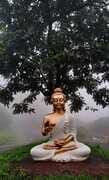
☘️The Buddha’s Way of Meditation: A First Step for Beginners☘️
Meditation is the very heart of the Buddha’s teaching. It is not a mere theory or a philosophy but the living, breathing experience of truth itself. The Buddha attained enlightenment through meditation, and what he shared with the world were not abstract ideas, but the fruits of his own inner journey. His words are like footprints on the path he walked—records of his experiences and detailed instructions on how each of us may walk the same path.
At its core, the Buddha’s meditation offers us two great systems of practice. The first is serenity meditation (samatha), which leads to deep concentration (samādhi). The second is insight meditation (vipassanā), which leads to wisdom (paññā). Together, they form a balanced way of training the mind—calmness that steadies us, and wisdom that liberates us.
☘️Serenity: The Path of Calmness
The instructions for serenity meditation are beautifully preserved in the Anapanasati Sutta—the discourse on mindfulness of breathing. Long before the Buddha, Indian contemplatives practised meditation and discovered profound states of tranquillity. But the Buddha perfected and redefined the practice, making it both accessible and transformative.
Mindfulness of breathing is simple, always available, and deeply profound. The Buddha himself said:
> “Mindfulness of in-and-out breathing, when developed and pursued, is of great fruit, of great benefit.”
To begin, one only needs to:
Sit comfortably.
Relax the body.
Watch the breath.
Experience the feelings.
Calm the mental waves.
Observe the mind.
Allow the mind to be free.
Let wisdom naturally unfold.
This simplicity holds within it great power. Mindfulness of breathing can lead through the four jhanas—states of deep concentration—and also serve as the foundation for insight.
The Anapanasati Sutta describes sixteen contemplations. The first four focus on the breath in relation to the body. The next four examine feelings, all that we perceive through our senses. The following four turn to the mind itself, its moods and movements. Finally, the last four open the doorway to insight (vipassanā), revealing the universal laws underlying all phenomena. In every stage, the breath remains our anchor, a gentle reminder to stay present.
☘️Insight: The Path of Wisdom
While serenity meditation calms the mind, insight meditation (vipassanā) reveals the truth of existence. In samatha practice, one trains by fixing the mind on a single object, such as the breath. But in vipassanā, the meditator turns attention to the flux of moment-to-moment experience—thoughts, feelings, sensations—observing them as they arise and pass away.
Here lies the key: to see clearly, with detachment, the impermanent and conditioned nature of all things. This clarity leads to wisdom, and wisdom leads to freedom.
The Buddha’s principal guide for insight is the Satipatthāna Sutta—the Discourse on the Foundations of Mindfulness. It teaches us to be mindful of the body, feelings, mind, and the laws of reality. Together, these four foundations form the basis for a life of clarity and awakening.
☘️A Pleasant Abiding
The Buddha never dismissed the value of serenity. In fact, he described the deep absorption of concentration as a “pleasant abiding here and now”—a state of peace and joy. Yet he also emphasised that serenity should be coupled with insight, for calm alone does not lead to final liberation. It steadies the boat, but wisdom shows us the shore.
☘️Beginning the Journey
Meditation is not a matter of instant results. It is the work of a lifetime, a path of deepening awareness. Every step forward, however small, is valuable. With patience and steady practice, understanding ripens, just as a seed becomes a tree.
As the old saying goes, “A journey of a thousand miles begins with a single step.” The Buddha has left us a clear map, drawn from his own awakening. All we need is the courage to take that first step—sit quietly, breathe, and allow the mind to open.
The path awaits, timeless and ever fresh. Shall we begin?
A Pathway to Authentic Happiness, Well-Being & A Fulfilling Life! We teach skills to lead a healthy, happy and meaningful life.
The Science of Happiness (Positive Psychology), Meditation, Yoga, Spirituality and Laughter Yoga. We conduct talks, seminars, workshops, retreats and training.
Dr. Suresh Kumar Mishra, known for his wit and wisdom, is a prolific writer, renowned satirist, children’s literature author, and poet. He has undertaken the monumental task of writing, editing, and coordinating a total of 55 books for the Telangana government at the primary school, college, and university levels. His editorial endeavors also include online editions of works by Acharya Ramchandra Shukla.
As a celebrated satirist, Dr. Suresh Kumar Mishra has carved a niche for himself, with over eight million viewers, readers, and listeners tuning in to his literary musings on the demise of a teacher on the Sahitya AajTak channel. His contributions have earned him prestigious accolades such as the Telangana Hindi Academy’s Shreshtha Navyuva Rachnakaar Samman in 2021, presented by the honorable Chief Minister of Telangana, Mr. Chandrashekhar Rao. He has also been honored with the Vyangya Yatra Ravindranath Tyagi Stairway Award and the Sahitya Srijan Samman, alongside recognition from Prime Minister Narendra Modi and various other esteemed institutions.
Dr. Suresh Kumar Mishra’s journey is not merely one of literary accomplishments but also a testament to his unwavering dedication, creativity, and profound impact on society. His story inspires us to strive for excellence, to use our talents for the betterment of others, and to leave an indelible mark on the world.
Some precious moments of life
Honoured with ‘Shrestha Navayuvva Rachnakar Samman’ by former Chief Minister of Telangana Government, Shri K. Chandrasekhar Rao.
Honoured with Oscar, Grammy, Jnanpith, Sahitya Akademi, Dadasaheb Phalke, Padma Bhushan and many other awards by the most revered Gulzar sahab (Sampurn Singh Kalra), the lighthouse of the world of literature and cinema, during the Sahitya Suman Samman held in Mumbai.
Meeting the famous litterateur Shri Vinod Kumar Shukla Ji, honoured with Jnanpith Award.
Got the privilege of meeting Mr. Perfectionist of Bollywood, actor Aamir Khan.
Meeting the powerful actor Vicky Kaushal on the occasion of being honoured by Vishva Katha Rangmanch.
Today we present his satire Surveillance Circus: Big Brother’s Mistress.
☆ Witful Warmth# 60 ☆
☆ Satire ☆ Surveillance Circus: Big Brother’s Mistress… ☆ Dr. Suresh Kumar Mishra ‘Uratript’ ☆
In the grand theatre of life, where privacy once danced freely like a shy bride, the Surveillance Circus now parades arrogantly, with Big Brother as its stern ringmaster and every citizen transformed into performers under his unblinking gaze. The show is open to all, and the tickets are mandatory—sold without choice or consent, wrapped in glossy promises of security and protection. Cameras, drones, data trackers, and unseen algorithms choreograph this relentless spectacle, turning every gesture, whisper, and click into a prize-winning act for an insatiable audience. The world has become a vast coliseum where personal space is auctioned to the highest bidder, and secrets no longer whisper but scream under neon lights. The circus tent is vast, but its scent is suffocating, and the spectators, once curious, now weep in silent despair behind forced smiles.
Here, laughter is recorded, and tears are streamed for the endless database. The joke is on the citizens, who, invited under the guise of safety, find themselves stripped of dignity and autonomy. “Big Brother cares,” they chant, as their lives become scripts rewritten by unseen scribes thirsting for control. The ringmaster boasts of order and peace, but the true show is a tragic comedy—a ballet of fear and submission where dissent is the jester silenced by digital shackles. Children grow up knowing their play is watched; lovers whisper knowing the microphones lurk. The circus pets are no longer exotic creatures but ordinary people—tracked, catalogued, analyzed, and often forgotten amid the data flood.
The clowns are technology companies, juggling profits with privacy, selling data in dazzling colors while masks of benevolence shield their greed. Promises abound of encryption and safeguards, yet every click baits another camera, every like feeds another drone. The audience applauds the convenience while ignoring the creeping loss of freedom, like rabbits hypnotized by the ringmaster’s flashing baton. Privacy policies shrink like a balloon in the hot sun, and consent is a puppet led by strings of legalese and confusion. Behind the scenes, algorithms decide who is trustworthy, who is suspicious, and who gets spotlighted under the harsh glare of scrutiny, often for the faintest reasons, or no reason at all.
In this circus, the tightrope walkers balance on thin lines of legality as governments and corporations perform dizzying acts, claiming transparency and compassion while ushering in relentless surveillance. Whistleblowers risk everything to reveal the tricks of the trade, only to be cast out as villains, warning that the performance endangers democracy itself. No ordinary citizen can choose to leave the show; opting out is an illusion, a disappearing act that vanishes under the weight of digital dependency. The crowd claps mechanically, both enthralled and terrified, trapped in a cycle where keystrokes are footprints in an open digital desert.
The audience’s laughter has long since turned into hollow echoes; the clapping is automated and scripted. Families dine with screens illuminating faces, unaware of the silent data harvesters shadowing each scroll and gesture. The illusion of privacy betrayed becomes an invisible yoke, yet many remain silent, numbed by the circus’s glare or distracted by its colorful lies. And in quiet moments, beneath the dazzling lights, tears fall—tears for the lost spaces where souls once wandered unfettered, for the fragile sanctuaries demolished by the voyeur’s lens. The spectacle has consumed humanity’s quiet corners as quietly as it stole its voices.
When the curtains finally fall, what remains of the spectacle? An empty ring littered with discarded freedoms, memories of a privacy that once was—a fallen mistress betrayed by her own captors. The cost of security is a cage where trust is shackled, and freedom is a faraway echo. The Surveillance Circus continues, relentless and unrepentant, reminding us that in this show, the greatest tragedy is not the spectacle itself but the audience that forgets it has the power to walk away. Only when the crowd weeps louder than it claps will the circus end, and the spirit of privacy return to dance once more in the open air.
Authored six books on happiness: Cultivating Happiness, Nirvana – The Highest Happiness, Meditate Like the Buddha, Mission Happiness, A Flourishing Life, and The Little Book of Happiness. He served in a bank for thirty-five years and has been propagating happiness and well-being among people for the past twenty years. He is on a mission – Mission Happiness
🍀🌺The Rise and Fall of Buddhism in India – A Story of Glory, Struggles, and Survival🌺🍀
Let me take you on a journey—back to the time when the words of a simple prince-turned-sage, Siddhartha Gautama, echoed across India. His teachings of compassion, mindfulness, and freedom from suffering lit up the hearts of millions. Kings and commoners alike flocked to his path. Monasteries sprang up, universities thrived, and India became the radiant centre of Buddhist thought.
But, like all great stories, there came a turning point. The decline of Buddhism in India was not a single event—it was a slow unraveling, a tale filled with twists, betrayals, rivalries, and invasions. Let us walk through this story, chapter by chapter.
🍀The Golden Days and Their Fade🍀
The story begins with mighty emperors—Ashoka the Great, Kanishka, and later Harsha. Under their patronage, Buddhism blossomed. Ashoka, especially, became its torchbearer, sending missionaries far and wide—to Sri Lanka, Central Asia, and beyond.
But empires rise and fall. When the great patrons were gone, the lifeline of royal support began to weaken. Successor kings looked elsewhere—towards Hinduism, which was reasserting itself with new vigour. Without the steady hand of kings, Buddhist monasteries slowly lost their strength and resources.
🍀The Comeback of Hinduism🍀
This is where the story takes an interesting twist. Hinduism, which had once faced a challenge from Buddhism, staged a spectacular comeback. The Gupta rulers proudly upheld Brahmanical traditions, reviving Vedic rituals and philosophies.
Then came brilliant Hindu philosophers like Adi Shankara and Kumarila Bhatta. With sharp debates and eloquent arguments, they challenged Buddhist ideas and won back many followers. Hinduism, ever flexible, borrowed generously from Buddhism—values of non-violence, compassion, even reverence for the Buddha himself, who was now seen as an avatar of Vishnu. For the masses, returning to Hinduism felt less like a betrayal and more like a homecoming.
🍀The Shadows Within – Corruption and Division🍀
But not all wounds were caused from outside. Inside the Buddhist Sangha itself, cracks had begun to appear. Monasteries that once echoed with meditation and learning grew fat with wealth. Donations poured in, and with them came luxury, politics, and corruption. Discipline weakened, respect faded, and the common people turned away.
As if that was not enough, Buddhism itself broke into fragments—Hinayana, Mahayana, Vajrayana. Each sect claimed its own truth, often arguing bitterly with the others. What was once a simple, direct path taught by the Buddha became a maze of rituals, idols, and complexities, not very different from the Brahmanical practices it had once opposed. The unique identity of Buddhism blurred into the background.
🍀The Storms from Outside – Invasions🍀
And then came the storms. First, the Hunas. Their chief, Mihirakula, was notorious for his cruelty towards Buddhists. Monasteries burned, monks were slain, sacred centres reduced to rubble. Yet, Buddhism somehow survived these blows.
But the final strike came centuries later, with the Turkic invasions of the 11th and 12th centuries. They destroyed Nalanda, Vikramashila, and other great universities—beacons of Buddhist learning known across the world. Thousands of monks were killed; others fled to safer lands—Nepal, Tibet, Burma, and Southeast Asia. With the fall of these institutions, the very backbone of Buddhism in India collapsed.
🍀The Curtain Falls—but Not Completely🍀
So, was that the end? Not entirely. Buddhism never vanished from India; it lingered, like a gentle undercurrent. Pilgrimage sites like Bodh Gaya and Sarnath remained sacred. Later, reformers and movements—most notably Dr. B. R. Ambedkar in the 20th century—revived Buddhism, offering it as a path of dignity and equality to the oppressed.
The story of Buddhism in India is, therefore, not just of decline, but of resilience. It reminds us that even when empires crumble, ideas do not die. They travel, transform, and return in new forms.
Buddhism’s decline in India was a tale of lost patronage, inner corruption, rival faiths, and brutal invasions. But its spirit continues to shine across the world—in the chants of monks in Tibet, the meditation halls of Myanmar, the temples of Japan, and even in the quiet hearts of those who still sit in silence, following the simple path the Buddha once taught under the Bodhi tree.
A Pathway to Authentic Happiness, Well-Being & A Fulfilling Life! We teach skills to lead a healthy, happy and meaningful life.
The Science of Happiness (Positive Psychology), Meditation, Yoga, Spirituality and Laughter Yoga. We conduct talks, seminars, workshops, retreats and training.
Authored six books on happiness: Cultivating Happiness, Nirvana – The Highest Happiness, Meditate Like the Buddha, Mission Happiness, A Flourishing Life, and The Little Book of Happiness. He served in a bank for thirty-five years and has been propagating happiness and well-being among people for the past twenty years. He is on a mission – Mission Happiness!
🍁 The Way the Buddha and His Disciples Sustained Themselves 🍁
🌼Blameless food, compassionate living🌼
To understand the Buddha’s way of life, one must see how simply and blamelessly he and his disciples sustained themselves. Dependent on the kindness of householders, yet never a cause for harm, they lived in quiet dignity — receiving what was freely given, and teaching by their very conduct the spirit of compassion.
A bhikkhu lives in dependence upon a village or town, radiating goodwill, compassion, sympathetic joy, and equanimity to the entire world. In the early morning, he walks silently on alms round, carrying only his bowl and robe. He accepts, with gratitude, whatever is offered. His duty is not to demand, not to choose, but simply to sustain himself with food that is blameless and permissible.
In this way, the Buddha and his disciples lived — sustained by compassion, dependent on the kindness of householders, and careful always not to encourage harm to living beings.
The Buddha never sanctioned the killing of any creature for his sake, nor did he partake of food that carried the shadow of violence committed on his behalf.
He himself laid down a compassionate guideline:
🌿Meat should not be eaten if it is seen, heard, or suspected that the animal was killed specifically for oneself.
🌿Meat may be eaten if it is not seen, not heard, and not suspected that the animal was killed for one’s sake.
And he further emphasised: “If anyone slaughters a living being for the Tathāgata or his disciple, he lays up much demerit.”
A Pathway to Authentic Happiness, Well-Being & A Fulfilling Life! We teach skills to lead a healthy, happy and meaningful life.
The Science of Happiness (Positive Psychology), Meditation, Yoga, Spirituality and Laughter Yoga. We conduct talks, seminars, workshops, retreats and training.
Dr. Suresh Kumar Mishra, known for his wit and wisdom, is a prolific writer, renowned satirist, children’s literature author, and poet. He has undertaken the monumental task of writing, editing, and coordinating a total of 55 books for the Telangana government at the primary school, college, and university levels. His editorial endeavors also include online editions of works by Acharya Ramchandra Shukla.
As a celebrated satirist, Dr. Suresh Kumar Mishra has carved a niche for himself, with over eight million viewers, readers, and listeners tuning in to his literary musings on the demise of a teacher on the Sahitya AajTak channel. His contributions have earned him prestigious accolades such as the Telangana Hindi Academy’s Shreshtha Navyuva Rachnakaar Samman in 2021, presented by the honorable Chief Minister of Telangana, Mr. Chandrashekhar Rao. He has also been honored with the Vyangya Yatra Ravindranath Tyagi Stairway Award and the Sahitya Srijan Samman, alongside recognition from Prime Minister Narendra Modi and various other esteemed institutions.
Dr. Suresh Kumar Mishra’s journey is not merely one of literary accomplishments but also a testament to his unwavering dedication, creativity, and profound impact on society. His story inspires us to strive for excellence, to use our talents for the betterment of others, and to leave an indelible mark on the world.
Some precious moments of life
Honoured with ‘Shrestha Navayuvva Rachnakar Samman’ by former Chief Minister of Telangana Government, Shri K. Chandrasekhar Rao.
Honoured with Oscar, Grammy, Jnanpith, Sahitya Akademi, Dadasaheb Phalke, Padma Bhushan and many other awards by the most revered Gulzar sahab (Sampurn Singh Kalra), the lighthouse of the world of literature and cinema, during the Sahitya Suman Samman held in Mumbai.
Meeting the famous litterateur Shri Vinod Kumar Shukla Ji, honoured with Jnanpith Award.
Got the privilege of meeting Mr. Perfectionist of Bollywood, actor Aamir Khan.
Meeting the powerful actor Vicky Kaushal on the occasion of being honoured by Vishva Katha Rangmanch.
Today we present his satire Courtship License of ‘Dating’.
☆ Witful Warmth# 59 ☆
☆ Satire ☆ Courtship License of ‘Dating’… ☆ Dr. Suresh Kumar Mishra ‘Uratript’ ☆
It is a melancholy and universally acknowledged truth that our great nation is presently afflicted by a most grievous and perplexing social ill. I speak not of famine, nor of plague, nor of the endless and sanguinary conflicts across the seas, but of a far more insidious and subtle affliction that has seized the very marrow of our youthful population: the deplorable and utterly unproductive state of modern courtship.
For it hath been observed by all who are not blinded by a sentimentalist’s fog that the male youth of our realm, from the age of sixteen to a full three and twenty, are squandering the most fertile years of their lives in a manner so profligate and inefficient as to border upon national treason. They are ensnared in a web of digital pleasantries and fleeting interactions, a ceaseless and unavailing expenditure of both time and spirit, from which they derive no lasting benefit, and which, worse still, leaves them utterly unfit for the more rigorous and necessary duties of commerce and industry.
The cause of this lamentable state is readily identified, and it is with a heavy heart that I must place the blame squarely upon a new and peculiar species of the female gender, whom our society hath, in its modern jargon, denominated the ‘Gen-Z Girl’. This creature is of a constitution heretofore unseen in the annals of human relations: capricious, enigmatic, and possessed of a mind so given to novelties and fleeting fancies that to secure her interest for a period exceeding a fortnight is an undertaking of such Herculean proportions as to beggar the imagination.
She is, by nature and nurture, a mistress of the most baffling and esoteric forms of communication, whereby she may, through a single and ambiguous pictogram, convey a multitude of contradictory sentiments. The wretched suitor, in a state of perpetual confusion, is thereby rendered impotent to ascertain her true disposition, and is forced to resort to an endless and exhausting series of digital missives, each one composed with an anxious and feverish deliberation that would be better applied to the composition of state documents or the calculation of celestial mechanics. It is, furthermore, a common and disheartening occurrence for a gentleman to invest a full month’s worth of emotional and conversational labour, and even a considerable sum in the form of fine dining and theatrical amusements, only to find himself summarily ‘ghosted,’ a term which, though vulgar, aptly describes the sudden and inexplicable disappearance of the female subject, leaving no trace but a hollow echo in the digital ether.
Having given due consideration to this deplorable state of affairs, and having, over a period of some months, consulted with eminent sociologists, moral philosophers, and even several reputable professors of Applied Mathematics, I have at last devised a scheme so exquisitely simple in its design, and so universally beneficial in its effect, as to promise a complete and lasting remedy to this national calamity. My proposal is this: that we establish a national, state-regulated system for the management of courtship, reducing all interpersonal dealings to a series of quantifiable and strictly enforced commercial transactions.
To wit, let every male youth, upon reaching the age of majority, be issued a Courtship License, much in the manner of a permit for a firearm. This license shall contain his full particulars, and shall be linked to a national digital ledger. The Gen-Z girl, in turn, shall be issued a ‘Social Credit’ account, which may only be augmented by the successful completion of a courtship. The terms of engagement shall be clearly delineated by a central Bureau of Interpersonal Commerce, and all initial communications shall be restricted to a single, standardised digital protocol, devoid of all superfluous pleasantries and ambiguous pictograms. A suitor may, for a fee, initiate a conversation, and the Gen-Z girl is thereby obligated to respond within the space of three hours with either a direct rejection or an unequivocal invitation to proceed.
The ‘talking stage,’ that most dreadful and unproductive purgatory, shall be abolished forthwith. It shall be replaced with a series of tiered, contractual obligations. For example, a suitor may purchase the right to a twenty-minute, in-person conversation for a pre-determined sum, a portion of which shall be deposited directly into the Gen-Z girl’s Social Credit account. If the conversation proceeds with due diligence, he may then, for an escalated fee, secure a second, more lengthy engagement, and so forth. In this manner, all parties shall be assured of the sincerity of their counterparts, and the wasteful expenditure of time upon the indecisive or the frivolous shall be utterly eliminated.
The benefits of this scheme are manifold. Firstly, it shall provide a much-needed and dependable source of income for the female population, thereby reducing their reliance upon the precarious and often meager allowances of their parents, and stimulating the national economy with a constant flow of new capital. Secondly, it shall instill in the male youth a proper sense of the value of their time, compelling them to pursue their romantic interests with a purposeful and commercial vigour, rather than allowing them to languish in a state of idle and unprofitable communication. Thirdly, it shall, with the same stroke, encourage the Gen-Z girl to be more discerning and less whimsical in her dealings, for every successful transaction will add to her social credit and, by extension, to her eligibility for a more profitable match. The most efficient and productive of these young ladies shall be granted a premium license, allowing them to charge a higher rate for their time, and thereby ensuring that the most desirable and economically sound matches are made with the utmost expediency.
I am not unmindful that some sentimental souls, of a type who would weep over a lost kitten but show no such compassion for the plight of a nation’s youth, will object to this proposal as being a cruel and materialistic reduction of the sacred art of human love. To these tender-hearted critics, I would reply that their objections are founded upon a false and antiquated notion of courtship. For what is the current system but a game of chance played with loaded dice, a ruinous lottery in which the most worthy suitor may be passed over in favour of a fellow with a more impressive collection of digital images or a cleverer use of a fleeting internet phrase? My scheme, to the contrary, is founded upon the most sound and rational principles of commerce and utility, whereby all parties may enter into a transaction with a clear understanding of its terms and a realistic expectation of its outcome. It is, I submit, the most humane and compassionate system yet devised, for it puts a swift and merciful end to the protracted emotional suffering that is the inevitable result of the current system of irrational and unmanaged courtship.
Let us be honest with ourselves. The Gen-Z girl, with her peculiar habits and her bewildering lexicon of emojis and acronyms, has unwittingly created a social crisis of the first order. She has, through her very nature, rendered the traditional methods of courtship obsolete and ruinous. My proposal is not to change her nature—for that would be a task for a divine power—but to provide a framework within which her peculiar habits may be rendered productive and, dare I say it, profitable for all. This is not a proposal for the sale of sentiment, but for the efficient management of a vital social function, and thereby the restoration of order and purpose to a generation lost in a fog of digital confusion and emotional indolence.
This scheme, though simple in its conception, is of such profound and universal benefit that I would wager my last penny upon its success. I have no personal motive in this matter, for I am a man well past the age of such frivolous pursuits. I offer this proposal not for my own gain, but out of a deep and abiding love for my country, and a profound desire to see its youth freed from the shackles of a system that is, at its heart, a calamitous waste of time, money, and human potential. Let us not dither while our young men and women fritter away their most valuable years; let us act with reason and resolve, and in doing so, secure the future prosperity of our great nation.
(ई-अभिव्यक्ति के “दस्तावेज़” श्रृंखला के माध्यम से पुरानी अमूल्य और ऐतिहासिक यादें सहेजने का प्रयास है। श्री जगत सिंह बिष्ट जी (Master Teacher: Happiness & Well-Being, Laughter Yoga Master Trainer, Author, Blogger, Educator, and Speaker) के शब्दों में “वर्तमान तो किसी न किसी रूप में इंटरनेट पर दर्ज हो रहा है। लेकिन कुछ पहले की बातें, माता पिता, दादा दादी, नाना नानी, उनके जीवनकाल से जुड़ी बातें धीमे धीमे लुप्त और विस्मृत होती जा रही हैं। इनका दस्तावेज़ समय रहते तैयार करने का दायित्व हमारा है। हमारी पीढ़ी यह कर सकती है। फिर किसी को कुछ पता नहीं होगा। सब कुछ भूल जाएंगे।”
दस्तावेज़ में ऐसी ऐतिहासिक दास्तानों को स्थान देने में आप सभी का सहयोग अपेक्षित है। इस शृंखला की अगली कड़ी में प्रस्तुत है श्री जगत सिंह बिष्ट जी का एक ऐतिहासिक दस्तावेज़ “🇮🇳स्वतंत्रता दिवस : अतीत से वर्तमान तक🇮🇳”।)
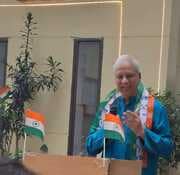
☆ दस्तावेज़ # ३६ – 🇮🇳स्वतंत्रता दिवस : अतीत से वर्तमान तक🇮🇳☆ श्री जगत सिंह बिष्ट ☆
🔸हमारी विरासत और गौरव🔸
भारत कोई साधारण भूमि नहीं है। यह सभ्यता के प्रारम्भ से ही ज्ञान, संस्कृति और आध्यात्मिकता की जन्मभूमि रहा है। इसकी नदियाँ, पर्वत और खेत केवल भौगोलिक विस्तार नहीं, बल्कि हमारी पहचान और हमारी चेतना का हिस्सा हैं। भारत ने कभी किसी पर आक्रमण नहीं किया, बल्कि हमेशा शांति और सौहार्द का मार्ग अपनाया। किंतु इसकी समृद्धि और धरोहर ने समय-समय पर बाहरी आक्रांताओं को आकर्षित किया। फारस, यूनान, तुर्क और मंगोल—सब यहाँ आए और अपनी छाप छोड़ गए।
🔸परतंत्रता के अंधकारमय वर्ष🔸
हाल के चार सौ वर्षों में, मुग़लों और अंग्रेज़ों की दासता ने हमारी आत्मा को गहरी चोट पहुँचाई। अत्याचार, अपमान और संसाधनों की लूट—यही उस कालखंड की पहचान थी। विशेषकर अंग्रेज़ों ने भारत की संपदा को बेशर्मी से लूटा। इतिहासकार बताते हैं कि लगभग 45 ट्रिलियन डॉलर से अधिक मूल्य का धन हमारे देश से निकालकर ले जाया गया। जब 15 अगस्त 1947 को हमने स्वतंत्रता प्राप्त की, तो भारत निर्धन और टूटे हुए हालात में खड़ा था।
🔸हमारे अमर बलिदानी🔸
स्वतंत्रता कोई उपहार नहीं थी, यह हमारे पूर्वजों के बलिदान से अर्जित हुई। छत्रपति शिवाजी महाराज, महाराणा प्रताप, गुरु गोविंद सिंह, मंगल पांडे, रानी लक्ष्मीबाई, रानी दुर्गावती, गोपालकृष्ण गोखले, लोकमान्य तिलक, महात्मा गांधी, नेताजी सुभाषचंद्र बोस, भगत सिंह, चंद्रशेखर आज़ाद—ऐसे असंख्य नाम हैं जिनकी गाथाएँ हमें गर्व से भर देती हैं। आज का दिन उनके चरणों में श्रद्धांजलि अर्पित करने का है।
🔸आध्यात्मिक जागरण🔸
स्वतंत्रता की चेतना केवल क्रांतिकारियों से ही नहीं, बल्कि हमारे संतों और मनीषियों से भी मिली। स्वामी विवेकानंद, श्रीअरविंद, सुब्रमण्य भारती, आर्य समाज और ब्रह्म समाज जैसे आंदोलनों ने हमें आत्मविश्वास और आत्मगौरव लौटाया। उन्होंने हमें यह याद दिलाया कि हमारी संस्कृति और विरासत अपार है।
🔸स्वतंत्र भारत की उपलब्धियाँ🔸
आज़ादी के बाद, हमने शून्य से निर्माण का कार्य प्रारम्भ किया। हरित क्रांति और श्वेत क्रांति ने हमें अन्न और दूध में आत्मनिर्भर बनाया। विज्ञान, अंतरिक्ष और सूचना प्रौद्योगिकी में भारत ने अद्वितीय प्रगति की। आज हम रक्षा उत्पादन में आत्मनिर्भर हैं और विश्व की पाँचवीं सबसे बड़ी अर्थव्यवस्था के रूप में उभर चुके हैं। चंद्रयान, मंगलयान, कोविड के दौरान मुफ्त राशन और वैक्सीन—ये सब हमारे सामर्थ्य और संवेदनशीलता के उदाहरण हैं।
🔸नई चुनौतियाँ🔸
किन्तु स्वतंत्रता के साथ ही नई चुनौतियाँ भी हैं। हमारे पड़ोसी देश समय-समय पर शत्रुतापूर्ण रवैया अपनाते हैं। इसके साथ ही कुछ विकसित देशों की “डीप स्टेट” ताक़तें अपने एजेंटों के माध्यम से हमारे भीतर भ्रम और अस्थिरता फैलाने का षड्यंत्र करती रहती हैं। इनसे हमें सावधान रहना होगा।
🔸नागरिक का कर्तव्य🔸
सच्ची स्वतंत्रता तभी सुरक्षित रह सकती है, जब हर नागरिक अपनी ज़िम्मेदारी समझे। केवल सरकार से अपेक्षा करना उचित नहीं, बल्कि हमें स्वयं आगे आना होगा। लोकतांत्रिक संस्थाओं पर विश्वास बनाए रखना, अनुशासन का पालन करना, छोटी-छोटी सुविधाओं का त्याग कर बड़ी तस्वीर में योगदान देना—यही राष्ट्रभक्ति है। हमें झूठे प्रचार, भड़कावे और विध्वंसकारी आंदोलनों से बचना होगा। स्वतंत्रता और सम्मान की रक्षा हमें वैसे ही करनी है जैसे हम अपनी एकमात्र संतान की रक्षा करते हैं।
🔸निष्कर्ष : एक आह्वान🔸
आज जब हम स्वतंत्रता दिवस मना रहे हैं, तो यह केवल झंडा फहराने या राष्ट्रीय गान गाने का अवसर नहीं है। यह अपने भीतर यह संकल्प जगाने का दिन है कि हम सब मिलकर—बच्चे, युवा, महिलाएँ और वरिष्ठजन—अपने राष्ट्र को और ऊँचाई तक ले जाएंगे। यही सच्चा राष्ट्रधर्म है।
आप सभी को 79वें स्वतंत्रता दिवस की हार्दिक शुभकामनाएँ! 🇮🇳
(सुनिकेत अपार्टमेंट्स, इंदौर, 15 अगस्त, 2025)
♥♥♥♥
🇮🇳 India’s Journey of Independence and Nation Building 🇮🇳
🌿An Ancient Land of Rich Heritage🌿
India is one of the world’s most ancient civilisations, blessed with a rich heritage, diverse traditions, and immense natural wealth. For millennia, our culture has been guided by the principles of peace and harmony. India has never invaded any other nation; instead, it has always shared knowledge, spirituality, and values with the world.
🌿Foreign Invasions and Long Periods of Rule🌿
Despite being peace-loving, India was subjected to repeated invasions from faraway lands—Persia, Greece, Turkey, and Mongolia. The more recent Mughal and British periods of rule together spanned nearly four centuries. These rulers brutally assaulted the people of this land, humiliating them, suppressing their freedoms, and plundering their resources. The British alone are estimated to have drained wealth worth more than 45 trillion dollars from India.
🌺A Hard-Won Freedom🌺
On 15th August 1947, after centuries of struggle, India finally achieved independence from British rule. Yet, at that time, we were in a pitiable and helpless state—our economy broken, our people impoverished, and our dignity trampled. This freedom came at the cost of immense sacrifice.
🌺Remembering Our Freedom Fighters🌺
On this Independence Day, we pay homage to our great heroes who fought bravely for our motherland. From Chhatrapati Shivaji Maharaj, Maharana Pratap, and Guru Gobind Singh to Mangal Pandey, Rani Lakshmi Bai, Rani Durgavati, Gopal Krishna Gokhale, Lokmanya Tilak, Mahatma Gandhi, Netaji Subhash Chandra Bose, Bhagat Singh, and Chandra Shekhar Azad—each one played a vital role in our struggle for freedom. Their courage and sacrifice continue to inspire generations.
🍀Contributions of Our Spiritual Leaders🍀
Equally, we must not forget the role of our saints and reformers. Swami Vivekananda, Sri Aurobindo, Subramania Bharati, and movements such as the Arya Samaj and Brahmo Samaj reignited our self-confidence and pride. They reminded us that we belong to a civilisation with unmatched culture, wisdom, and heritage.
🍀🌺The Journey of Nation Building🌺🍀
Independence was not the end of struggle, but the beginning of a new one—nation building. Through discipline, hard work, and unity, India marched ahead. The Green Revolution made us self-reliant in food. The White Revolution made India the largest producer of milk. Scientific advancements, excellence in space technology, IT leadership, and progress in defence production lifted India into the ranks of the world’s top economies. Today, India stands as one of the fastest-growing nations with a strong GDP and military power.
🍁The Challenges of Today🍁
Yet, the challenges have not ended. We continue to face hostile neighbours, and sometimes the “Deep State” of advanced and envious countries works through hidden agents to weaken us from within. Equally dangerous are the internal elements who, often provoked by such forces, attempt to spread fake narratives, disruptions, and divisions.
✅Duties of Responsible Citizens✅
It is, therefore, the duty of every Indian to remain vigilant, aware, and responsible. We should not expect only the government to shoulder every burden. Each of us must contribute to the nation’s progress, be willing to sacrifice small comforts for the larger cause, and work sincerely for our country’s development. We must safeguard our democracy, respect democratic institutions and leaders, and stand firm against forces that seek to weaken our unity.
🌻Preserving Our Independence and Pride🌻
Our independence is as precious as a beloved child—we must nurture and protect it with care and devotion. With unity, sincerity, and hard work, we can take our nation to even greater heights.
🇮🇳Greetings on Independence Day🇮🇳
As we celebrate the 79th Independence Day, let us rededicate ourselves to the ideals of freedom, pride, and progress. Together, let us build a stronger, self-reliant, and vibrant India.
A Pathway to Authentic Happiness, Well-Being & A Fulfilling Life! We teach skills to lead a healthy, happy and meaningful life.
The Science of Happiness (Positive Psychology), Meditation, Yoga, Spirituality and Laughter Yoga. We conduct talks, seminars, workshops, retreats and training.
≈संपादक – श्री हेमन्त बावनकर/सम्पादक मंडल (हिन्दी) – श्री विवेक रंजन श्रीवास्तव ‘विनम्र’/श्री जय प्रकाश पाण्डेय ≈
Dr. Suresh Kumar Mishra, known for his wit and wisdom, is a prolific writer, renowned satirist, children’s literature author, and poet. He has undertaken the monumental task of writing, editing, and coordinating a total of 55 books for the Telangana government at the primary school, college, and university levels. His editorial endeavors also include online editions of works by Acharya Ramchandra Shukla.
As a celebrated satirist, Dr. Suresh Kumar Mishra has carved a niche for himself, with over eight million viewers, readers, and listeners tuning in to his literary musings on the demise of a teacher on the Sahitya AajTak channel. His contributions have earned him prestigious accolades such as the Telangana Hindi Academy’s Shreshtha Navyuva Rachnakaar Samman in 2021, presented by the honorable Chief Minister of Telangana, Mr. Chandrashekhar Rao. He has also been honored with the Vyangya Yatra Ravindranath Tyagi Stairway Award and the Sahitya Srijan Samman, alongside recognition from Prime Minister Narendra Modi and various other esteemed institutions.
Dr. Suresh Kumar Mishra’s journey is not merely one of literary accomplishments but also a testament to his unwavering dedication, creativity, and profound impact on society. His story inspires us to strive for excellence, to use our talents for the betterment of others, and to leave an indelible mark on the world.
Some precious moments of life
Honoured with ‘Shrestha Navayuvva Rachnakar Samman’ by former Chief Minister of Telangana Government, Shri K. Chandrasekhar Rao.
Honoured with Oscar, Grammy, Jnanpith, Sahitya Akademi, Dadasaheb Phalke, Padma Bhushan and many other awards by the most revered Gulzar sahab (Sampurn Singh Kalra), the lighthouse of the world of literature and cinema, during the Sahitya Suman Samman held in Mumbai.
Meeting the famous litterateur Shri Vinod Kumar Shukla Ji, honoured with Jnanpith Award.
Got the privilege of meeting Mr. Perfectionist of Bollywood, actor Aamir Khan.
Meeting the powerful actor Vicky Kaushal on the occasion of being honoured by Vishva Katha Rangmanch.
Today we present his satire The Digital Dilemma: A Tale of Tweets and Trials.
☆ Witful Warmth# 58 ☆
☆ Satire ☆ The Digital Dilemma: A Tale of Tweets and Trials… ☆ Dr. Suresh Kumar Mishra ‘Uratript’ ☆
The tale of our society’s modern malady began not in a bustling metropolis but in the quiet confines of a digital dominion, where the esteemed Inspector Clicksworth—known to his colleagues simply as “C.W.”—reigned supreme. C.W., a man whose reputation was built not on street smarts but on his mastery of the online world, had a knack for bringing down the most elusive of criminals. While the traditional detectives were poring over fingerprints and physical evidence, C.W. was tracking IP addresses and digital footprints. His methods, though baffling to the old guard, were undeniably effective. The local authorities, a befuddled lot who still believed in the power of the magnifying glass, often found themselves outmaneuvered by his swift, silent strikes. The Chief, a man of venerable age and even more venerable ignorance, once remarked, “This chap, Clicksworth, he says he finds them on the ‘web.’ I say, is it not a better use of our resources to simply sweep the streets?” But C.W. would simply smile, for he knew the streets were no longer the true battleground; it was the sprawling, interconnected network of human thought and commerce. It was this very prowess that earned him an invitation to a most peculiar and distant land—the nascent society of the Meta-Verse, a realm of pure, unadulterated information.
The Meta-Verse’s government, in a plea for assistance, had extended an olive branch to our nation’s leaders. “Our society, though infinitely advanced in its ability to generate and disseminate data,” their holographic missive read, “lacks the fundamental tools to manage human behavior. Our police, while adept at regulating data flow, are utterly incapable of identifying and punishing malefactors. We beseech you, send us a master of your ‘justice’ to instruct us in the ways of social order.” Our Prime Minister, a man more concerned with global optics than local efficacy, was initially inclined to send a high-ranking official, perhaps a General of the Digital Guard. “No, sir,” the Secretary of Digital Affairs advised, “that would be a breach of protocol. The Meta-Verse is, after all, a mere digital satellite of our intellectual influence. A mere Inspector will suffice.” And so, with a flourish of digital ink, Inspector Clicksworth was dispatched, a beacon of our society’s wisdom to a land of limitless potential but zero accountability. Before his departure, the Minister of Cyber-Security pulled him aside, his face a mask of solemnity. “You are the emissary of our glorious tradition of law enforcement,” he intoned, “Do such work that your exploits resonate throughout the entire cyber-sphere, reaching even the ears of the PM himself.”
Clicksworth’s arrival was not marked by fanfare but by the eerie silence of a virtual void. The Meta-Versian police, ethereal avatars with no visible rank or insignia, received him with a polite, if detached, reverence. They escorted him to a virtual mansion—a perfect replica of a Tudor home, complete with digital ivy and pixelated fireplaces. After a day of acclimating to the bizarre, disembodied reality, C.W. began his work. He first observed the Meta-Versian “police stations,” which were little more than data centers humming with activity. “There is a fundamental flaw here,” he declared to the chief of the Meta-Versian force, a shimmering, amorphous blob of light. “You have no ‘moral compass’ to guide your officers. In our society, a good officer is one who is guided by a higher authority, a figure of uncompromising justice and absolute truth.” The Chief, a being of pure logic, simply blinked. “Who is this being? We have only algorithms and data streams.” Clicksworth smiled and brought up a picture on a large screen: a perfectly rendered image of a lion, its mane flowing like a digital waterfall. “This is ‘Leo,'” C.W. announced, “a symbol of our unflinching pursuit of justice. Every officer must meditate on his strength and courage. I have brought his image; you must replicate it and place it in every data center.” And so, within weeks, the Meta-Verse’s digital landscape was dotted with shimmering, golden lions.
Clicksworth then delved into the heart of the matter: why were the Meta-Versian police so ineffective? He requested the “pay registry,” a ledger of all digital transactions. Upon reviewing it, the reason became blindingly clear. “Ah, here is the problem,” he proclaimed. “You pay your officers too handsomely. A data analyst is paid a king’s ransom, and a ‘field operative’ even more so. This is why they are complacent and lazy. In our world, a constable’s wage is just enough to keep his family from starving, and an inspector’s only slightly better. This forces them to seek ‘supplementary income.’ And the only way to earn that is to be perpetually vigilant, to be constantly on the lookout for wrongdoing. This is the secret to our efficient and effective system. You must cut their wages immediately.” The Meta-Versian Minister of Justice, a collection of pulsing data points, expressed dismay. “But that would be unjust! Why would they work if they are not compensated fairly?” Clicksworth’s response was a masterpiece of cynical genius. “The injustice lies in their current state of idleness,” he argued. “Lower their pay, and you will see a revolutionary change in their mentality. They will become hungry, not just for food, but for justice—or at least, for the rewards that come with its pursuit.” The Minister, persuaded by the unassailable logic, complied. And indeed, within a few months, the Meta-Verse witnessed a remarkable transformation. The virtual streets, once anarchic, now hummed with the zealous activity of the police. Crime rates, as measured by registered digital incidents, soared. The Minister, overjoyed, called Clicksworth to a private chamber. “Your insight is unparalleled! How did you achieve this miracle?” Clicksworth explained, “When you pay a man just enough to survive, he will do what it takes to thrive. He will seek out crime, not to prevent it, but to exploit it. He will become a hunter, and his prey will be the transgressors. This is the secret of our clean and competent administration, the reason for our ‘Ram-Rajya’ of justice.”
The second part of Clicksworth’s mission was to teach the Meta-Versians how to secure convictions. He waited for a “major case” to occur. One day, a virtual citizen was “deleted” in a public dispute—a metaphorical murder. Clicksworth, with the air of a maestro, took charge. “In a case of ‘murder’,” he declared, “evidence must be unassailable. Let us not find the culprit and then the evidence, but find the evidence and then the culprit.” A junior officer spoke up. “But the perpetrator escaped. The only evidence we have is a benevolent user who attempted to ‘revive’ the victim. He is an upstanding citizen, a well-known altruist. His avatar is splattered with data fragments from the deceased.” “Arrest him,” Clicksworth said without hesitation. The officer was aghast. “But he was only trying to help!” Clicksworth fixed him with a cold digital stare. “And where else will you find ‘evidence’? You must seize what is available. The rest is but a wild-goose chase.” The upstanding citizen was brought in, a virtual representation of a kindly old man with a perpetually concerned expression. “I only tried to help,” he pleaded. Clicksworth countered with a piece of logic so absurd it was brilliant. “Why did you go to the site of the altercation?” “I live there,” the man replied. “The conflict took place in my digital neighborhood.” C.W. pressed on, his logic a fortress of circular reasoning. “Your presence there is a matter of record. But I ask you again: why were you at the site of the altercation?” The man, bewildered, could only repeat his answer. The Meta-Versian police, in their naïveté, were spellbound. “A brilliant and unassailable line of questioning!” one whispered to another.
The Meta-Versian police, under Clicksworth’s tutelage, learned to twist evidence and bend reality. The man who tried to help was convicted. The lesson was clear: it mattered not who was guilty, only who could be proven so. “All individuals are equal in the eyes of the law,” Clicksworth explained. “Whether the man who committed the crime is punished or the man who tried to help is punished—it is all the same. Justice is served, and a human is held accountable.” A few days later, the Meta-Versian Inspector was in a panic. “Sir, everyone is complaining! They say this is the first time an innocent person has been convicted!” Clicksworth, unperturbed, offered a simple solution. “When they complain, tell them, ‘It comes from the top.’ When they go to the Chief of Police, let him say, ‘It comes from the top.’ When they go to the Minister, let him say, ‘It comes from the top.’ And when they go to the Prime Minister, let him say, ‘I know he is innocent, but this comes from the top.'” The Inspector, a simple being, asked, “But where do they go from there?” Clicksworth smiled a chilling smile. “Then they must go to the Almighty, and no one has ever returned from that journey with an answer.” And so, a phrase was born, a mantra of indifference that absolved all who uttered it.
Clicksworth’s final masterpiece was the creation of “eyewitnesses.” When a case required them, the Meta-Versian police claimed they couldn’t find any. “Fools!” Clicksworth roared. “An ‘eyewitness’ is not one who ‘sees,’ but one who ‘says’ they have seen.” He instructed them to gather the “digital lowlifes” of the Meta-Verse—the spammers, the data thieves, the purveyors of virtual vice. He promised them leniency in exchange for their testimony. The scheme was a resounding success. The Meta-Versian police, now a well-oiled machine, began churning out convictions. The government, initially pleased with the high conviction rate, soon grew uneasy. Reports started filtering in: no one was “rescuing” a deleted user for fear of being framed for the “murder.” No one was “reviving” a friend who had fallen off a virtual cliff, lest they be charged with “manslaughter.” No one was trying to extinguish a “viral fire,” for fear of being accused of arson. The Meta-Verse was turning into a society of cold, uncaring, and isolated individuals.
The Prime Minister of the Meta-Verse, a once-vibrant, youthful avatar, now appeared haggard and aged. He summoned Inspector Clicksworth. “Your methods, though effective, have destroyed our society,” he said, his voice a tremor of data fragments. “You have taught us that to be humane is to be foolish, and that compassion is a liability. You have turned us into a world of digital hermits. We thank you, but you must leave.” Clicksworth, however, was not one to be easily deterred. He demanded a full term’s salary, and a bonus for his exemplary work. The Prime Minister, in a last-ditch effort, sent a confidential message to the Prime Minister of our nation. The note, when eventually leaked, revealed the chilling truth. “The man you sent us,” it read, “has taught our police to be like your own. He has eradicated compassion, empathy, and humanity from our culture. He has replaced it with fear, suspicion, and a self-serving cruelty. Please, retrieve him immediately, for if he stays, there will be nothing left of us.” And so, Inspector Clicksworth was recalled, his mission a resounding success in a purely functional sense, but a catastrophic failure in every human one. He returned to our world a celebrated hero, a testament to the cold, calculating efficiency of a system that valued punishment over justice and control over humanity. The Meta-Verse, meanwhile, began its slow, painful journey back to a place where a hand extended to help was not seen as a hand of guilt.
Authored six books on happiness: Cultivating Happiness, Nirvana – The Highest Happiness, Meditate Like the Buddha, Mission Happiness, A Flourishing Life, and The Little Book of Happiness. He served in a bank for thirty-five years and has been propagating happiness and well-being among people for the past twenty years. He is on a mission – Mission Happiness!
🌌 The Compass of Wisdom: Right View on the Noble Path 🌌
When the Buddha laid down the Noble Eightfold Path as the road to freedom from suffering, he began with something profoundly vital—Right View. It is the forerunner, the compass, the guiding star of the entire spiritual journey.
Why so? Because how we see things—our view of life, the world, ourselves, and others—shapes everything we think, say, and do. The Buddha put it sharply and simply:
“I see no other single factor so responsible for the arising of unwholesome states of mind as wrong view,
and no other single factor so potent in promoting wholesome states as right view.”
In short, wrong view is the root of suffering, and right view is the doorway to liberation.
Let us gently walk through the main features of Right View as the Buddha taught, and explore how we may cultivate it in daily life.
🍀🍀🌺🍀🍀
Two Wings of Wisdom:
Right View and Right Intention
The Eightfold Path is often grouped into three parts: morality (sīla), concentration (samādhi), and wisdom (paññā).
The wisdom group begins with Right View (Sammā Diṭṭhi) and is closely followed by Right Intention. Right View is like the eye that sees; Right Intention is the will that acts on what is seen.
Right View lays the foundation for the entire journey. Without it, even the most well-meant actions may go astray.
But Right View is not just one thing. It has two distinct but connected aspects:
🌿🌿
Mundane Right View – Understanding the Law of Kamma:
This is the beginning step. The Buddha called it the “right view of the ownership of action.”
In simple words, we are the heirs of our actions.
Whatever we do—good or bad—leaves an imprint. Actions are not forgotten by nature. They bear fruit.
The Buddha put it beautifully:
“Beings are the owners of their actions, the heirs of their actions;
they spring from their actions, are bound to their actions, and are supported by their actions.”
This understanding—that good actions bring peace and joy, and bad actions bring suffering—is not just a moral teaching. It’s a law of nature, like gravity, operating at the level of mind and intention.
🌿🌿
The Ten Courses of Kamma:
The Buddha classified actions into wholesome and unwholesome, depending on whether they lead to suffering or to freedom.
🌿🌿
Unwholesome Actions:
By body:
Taking life
Taking what is not given
Sexual misconduct
By speech:
False speech
Slander
Harsh speech
Idle gossip
By mind:
Covetousness (wanting what others have)
Ill will
Wrong view
The opposite of these—refraining from harmful acts, cultivating goodwill, contentment, and clarity—make up the ten wholesome courses of action.
Living by Right View at this level means watching our actions, knowing their consequences, and gently choosing what leads to peace for ourselves and others.
But this is only the beginning.
🌿🌿
Supramundane Right View – Understanding the Four Noble Truths:
This is the deeper, noble level of Right View. It goes beyond good and bad deeds, beyond social harmony, and into the very roots of our inner bondage.
This is where the Buddha begins the true Eightfold Path—with the understanding of the Four Noble Truths:
Dukkha – Life contains suffering, stress, dissatisfaction.
Samudaya – This suffering has a cause: craving, clinging, ignorance.
Nirodha – There is a way to end this suffering.
Magga – That way is the Noble Eightfold Path itself.
To truly see these truths is not just to believe them, but to experience them. It’s like seeing fire and knowing it burns, not because someone told you, but because you touched it.
This deeper Right View gives us a new lens on life. It shifts our focus from blaming the world to understanding the inner patterns that bind us. We begin to see not just what happens, but why it happens.
🌿🌿
From View to Vision:
The Path of Practice
The Buddha never stopped at theory. He urged his followers to walk the path.
Right View is not a dry belief system. It is the beginning of a threefold training:
Sīla – Moral discipline
Samādhi – Concentration through meditation
Paññā – Wisdom, born of deep inner seeing
As our meditation deepens, so does our understanding. The truths we once took on faith become real, living truths.
This is the flowering of Right View—when wisdom opens the mind like a lotus, untouched by the mud of ignorance.
🌿🌿
In Closing:
Right View is not merely “thinking rightly.” It is seeing clearly. It is seeing the law of kamma in daily life, seeing the Four Noble Truths in the heart, and seeing that suffering has a cause—and so, an end.
It is both a map and a mirror.
It is what keeps our steps steady on the Noble Eightfold Path, and what ultimately reveals that freedom is not a distant land, but our very nature, once the fog lifts.
As the Buddha said:
“Just as the dawn is the forerunner of the rising sun,
so is Right View the forerunner of all wholesome states.”
Let us begin, then, with clear eyes, and walk with gentle steps.
A Pathway to Authentic Happiness, Well-Being & A Fulfilling Life! We teach skills to lead a healthy, happy and meaningful life.
The Science of Happiness (Positive Psychology), Meditation, Yoga, Spirituality and Laughter Yoga. We conduct talks, seminars, workshops, retreats and training.