Dr. Suresh Kumar Mishra ‘Uratript’
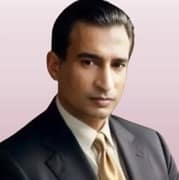
Dr. Suresh Kumar Mishra, widely known in the world of satire by his pen name ‘Uratipt’, expresses his emotions and thoughts with profound honesty and depth. His multifaceted talent is evident in his contributions across various literary genres. He is not only a renowned satirist but also a poet and a children’s author.
His satirical writings have earned him a special place in the literary world. His satire, ‘Shikshak Ki Mout’, went massively viral on the Sahitya Aajtak channel, garnering over a million views and reads—a monumental achievement in the history of Hindi satire. His collection of satires, ‘Ek Tinka Ikyavan Aankhen’ (A Straw and Fifty-One Eyes), is also highly acclaimed and includes his timeless work, ‘Kitabon Ki Antim Yatra’ (The Last Journey of Books). Other celebrated collections include ‘Mayaan Ek, Talwar Anek’ (One Sheath, Many Swords), ‘Gapodi Adda’ (The Gossiper’s Den), and ‘Sab Rang Mein Mere Rang’ (My Colors in Every Hue). His satirical novel, ‘Idhar-Udhar Ke Beech Mein’ (In Between Here and There), is a unique and groundbreaking work focused on the third world.
His significant contributions to literature have been widely recognized. He was honored with the Best Young Creator Award, 2021 by the Telangana Hindi Academy and the Government of Telangana, an award presented by Chief Minister K. Chandrasekhar Rao. The Rajasthan Children’s Literature Academy also honored him for his children’s book, ‘Nanhon Ka Srijan Aasmaan’ (The Creative Sky of Little Ones). Additionally, he has received the Vyanga Yatra Ravindranath Tyagi Sopaan Samman and the Sahitya Srijan Samman from Prime Minister Narendra Modi.
Dr. Uratript has also played a pivotal role in writing, editing, and coordinating a total of 55 books for the Government of Telangana for primary school, college, and university levels. His work is included in university textbooks in Bihar, Chhattisgarh, and Telangana, where his satirical creations are part of the curriculum. This recognition underscores that young readers can identify and appreciate quality and impactful writing.
Key Accolades and Works
- Viral Satire: ‘Teacher’s Death’ (over 1 million views)
- Satire Collections: ‘Ek Tinka Ikyavan Aankhen’, ‘Mayaan Ek, Talwar Anek’, ‘Gapodi Adda’
- Unique Satirical Novel: ‘Idhar-Udar Ke Beech Mein’
- Awards: Shreshtha Navyuva Samman (Telangana), Sahitya Srijan Samman (PM Modi), and more.
- Educational Contribution: Authored and edited 55 books for the Telangana government.
Some precious moments of life

- Honoured with ‘Shrestha Navayuvva Rachnakar Samman’ by former Chief Minister of Telangana Government, Shri K. Chandrasekhar Rao.
- Honoured with Oscar, Grammy, Jnanpith, Sahitya Akademi, Dadasaheb Phalke, Padma Bhushan and many other awards by the most revered Gulzar sahab (Sampurn Singh Kalra), the lighthouse of the world of literature and cinema, during the Sahitya Suman Samman held in Mumbai.
- Meeting the famous litterateur Shri Vinod Kumar Shukla Ji, honoured with Jnanpith Award.
- Got the privilege of meeting Mr. Perfectionist of Bollywood, actor Aamir Khan.
- Meeting the powerful actor Vicky Kaushal on the occasion of being honoured by Vishva Katha Rangmanch.
Today we present his satire The Threadless Charkha.
☆ Witful Warmth# 128 ☆
☆ Satire ☆ The Threadless Charkha… ☆ Dr. Suresh Kumar Mishra ‘Uratript’ ☆
Leaning against the damp, flaking wall of the town’s oldest Sarvodaya Ashram and Khadi Village Industries pavilion was an antique teakwood spinning wheel. It had languished there for twenty years, its wheel conspicuously stripped of every scrap of spun yarn. The iron spindle rested in faded disrepair, though the smoothed, buffed indentations on its wooden handle still offered mute testimony to calloused fingers that once spun dreams of economic self-reliance.
Directly below the veranda, perched on a cracked cement plinth, sat old Pandit Gangadhar every morning at seven sharp, anchored by his seasoned bamboo cane. Draped in a torn white khadi kurta with a grimy rag thrown over his shoulder, Gangadhar spent entire days locked in an unblinking staring contest with the threadless relic.
Meanwhile, just past the portico, the grounds buzzed with the high-octane pageantry of Gandhi Jayanti. A glittering motorcade of luxury sedans disgorged haute couture fashion designers peddling “organic linen,” high-ranking Khadi Board mandarins, and spotless, starch-creased politicians. From the decorated stage, massive loudspeakers bombarded the lawns with deafening sermons celebrating the humble spinning wheel and the gospel of self-reliance. Naturally, neither the bespoke corporate delegates nor the crisp administrative directors spared a glance for the cobwebbed timber tucked away in the corridor.
Whenever Dayaram, the veteran peon, hurried past clutching a basket of raw cotton, the old man’s motionless vigil would send a shiver through him. Gangadhar would invariably ask in a raspy, quavering croak: “Tell me, Dayaram, on this grand circus of Gandhi Jayanti, has any decree arrived to thread this naked spindle with a poor weaver’s yarn? Or are we strictly rationing out silk-threaded podium homilies to the flock today?”
Dayaram would merely lower his eyes, let out a well-rehearsed administrative sigh, and shuffle quietly into the bureaucratic haze.
The Khadi Promotion Board had recently acquired a brand-new Regional Chief Executive Director straight from the central ministry: Dr. Animesh Vajpayee, a notoriously stiff martinet, an evangelist of corporate textiles, and an absolute worshiper of administrative spit-and-polish. Whenever Vajpayee stepped out of his gleaming state sedan to inspect the newly air-conditioned digital boutique, his eyes unfailingly snagged on old Gangadhar parked on the cracked cement, staring devoutly at a discarded piece of carpentry.
To a modern bureaucrat curating global sustainable-fashion weeks, a tattered geriatric folding his hands before a lump of antique scrap looked less like reverence and more like unauthorized architectural loitering.
When the ceremonial spinning session wrapped up and the luminaries retired to the air-conditioned VIP lounge to graze on salted cashews and exchange performance metrics, Vajpayee dismissed his security detail and marched straight up to Gangadhar.
“Look here, old man,” the Director barked in his best administrative bass. “Why choke the main veranda day in and day out? If you are looking for a freedom fighter’s dependent pension or a festive Khadi rebate coupon, join the queue at the clerk’s window inside. Staring a hole through an obsolete contraption won’t wipe out the poverty of this nation’s weavers.”
Gangadhar joined his palms with maddening serenity. “Director Sahib, I am not here to hustle for welfare crumbs or rebate tokens. I am merely keeping vigil for the day when this wheel recovers the stolen self-respect that was ripped from this very doorstep years ago.”
Vajpayee scoffed at the riddle. “What stolen self-respect? The ministry burns through millions every Gandhi Jayanti offering festive discounts and handing out motorized solar spinning wheels. What grand cosmic mystery could possibly cling to this flea-market timber?”
Pandit Someshwar, a retired master spinner who had spent forty years cataloging every frayed thread, squeaking spindle, and budget reallocation in the ashram, stepped forward. “Do not dismiss him as a crank, Director. Twenty years ago, when imported polyester and cheap synthetics snuffed out the hearths of traditional village spinners, Gangadhar’s only son, Satyakama, stood right on this veranda and lit the fiercest torch for indigenous self-reliance this province had ever seen.”
Vajpayee raised an eyebrow. “And what did this prodigy accomplish that supposedly ties him to a threadless spool?”
“He was the state’s brightest, most uncompromising young Gandhian researcher,” Someshwar recalled with a heavy sigh. “When commercial mills bled artisans dry by paying pennies for their sweat, Satyakama spent nights coaching destitute weavers at this very wheel. He turned this frame and swore a solemn oath: until the last unclothed laborer in this town wore homespun cloth, he would never bend the knee to corporate textile cartels.”
Gangadhar reached out, his trembling fingertips lightly grazing the dry circumference of the wheel. “Yes, Sahib. My Satyakama stood on these bricks and told me: ‘Bapu, this isn’t just a frame of wood; it is the gear that turns freedom into bread for the hungry.’ He swore that the day he returned from Delhi with the National Commission’s charter granting complete village autonomy, he would mount the sacred yarn upon this wheel himself and seat me as the guest of honor on the nation’s grandest nonviolence pavilion.”
Pricked by administrative curiosity, Vajpayee marched into the dusty archives to unearth the twenty-year-old case file of the Weavers’ Cooperative Union. Flipping through the brittle, classified pages, the ground vanished beneath his polished oxfords.
The archival trail laid bare a classic corporate buyout: twenty years ago, just as Satyakama’s crusade threatened to blow the lid off the counterfeit-khadi syndicates, an international cartel of synthetic fashion houses and luxury pret-a-porter brands stepped in with standard corporate leverage. Rather than fight the movement, they bought the crusader: an appointment as Managing Director of their global sustainable-apparel subsidiary, sweetened with a discreet twenty-five percent equity stake.
Satyakama promptly junked his vows, forgot the wooden wheel, signed the non-disclosure agreements, and reinvented himself into the country’s premier billionaire luxury-khadi tycoon. Today, his high-end overseas boutiques sold artisanal kurtas for thousands of dollars apiece to global fashionistas, while the traditional artisans who inspired the brand starved in forgotten alleys.
Vajpayee walked back out into the sun with wobbly knees, his executive swagger completely liquidated. “Old man…” he stammered, his throat dry, “your savior of the looms didn’t emancipate the weavers. He became their boutique auctioneer.”
Tears carved silent tracks down the old man’s face, though his gaze remained anchored to the barren wheel.
“I have known he was bought for a very long time, Sahib,” Gangadhar whispered softly. “I only sit here every day to check one simple thing: when our decorated grandees gather on stage to perform their tearful tributes to Gandhian simplicity, after having traded their own heritage and their own spinner father’s yarn for high-fashion profit margins—does this deaf society catch even the faintest whiff of rot rising from the shroud of monetized freedom? Or are the cashews in the VIP lounge simply too savory to notice?”
Vajpayee stood completely paralyzed, staring at the naked, threadless wheel, as the entire high-tech Khadi pavilion choked on the suffocating, shameful silence of an old father’s quiet grief.
****
© Dr. Suresh Kumar Mishra ‘Uratript’
Contact : Mo. +91 73 8657 8657, Email : drskm786@gmail.com
≈ Blog Editor – Shri Hemant Bawankar/Editor (English) – Captain Pravin Raghuvanshi, NM ≈


